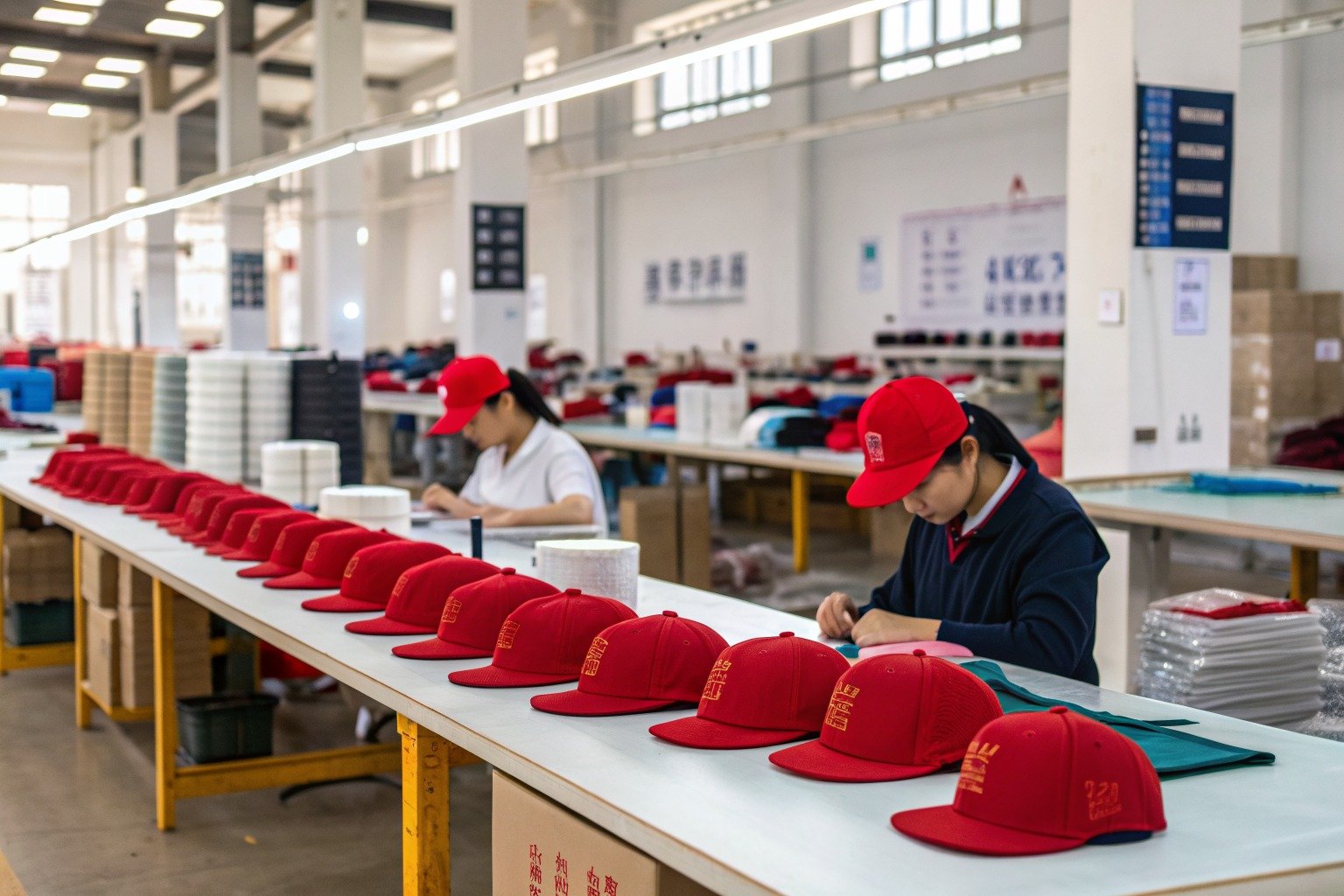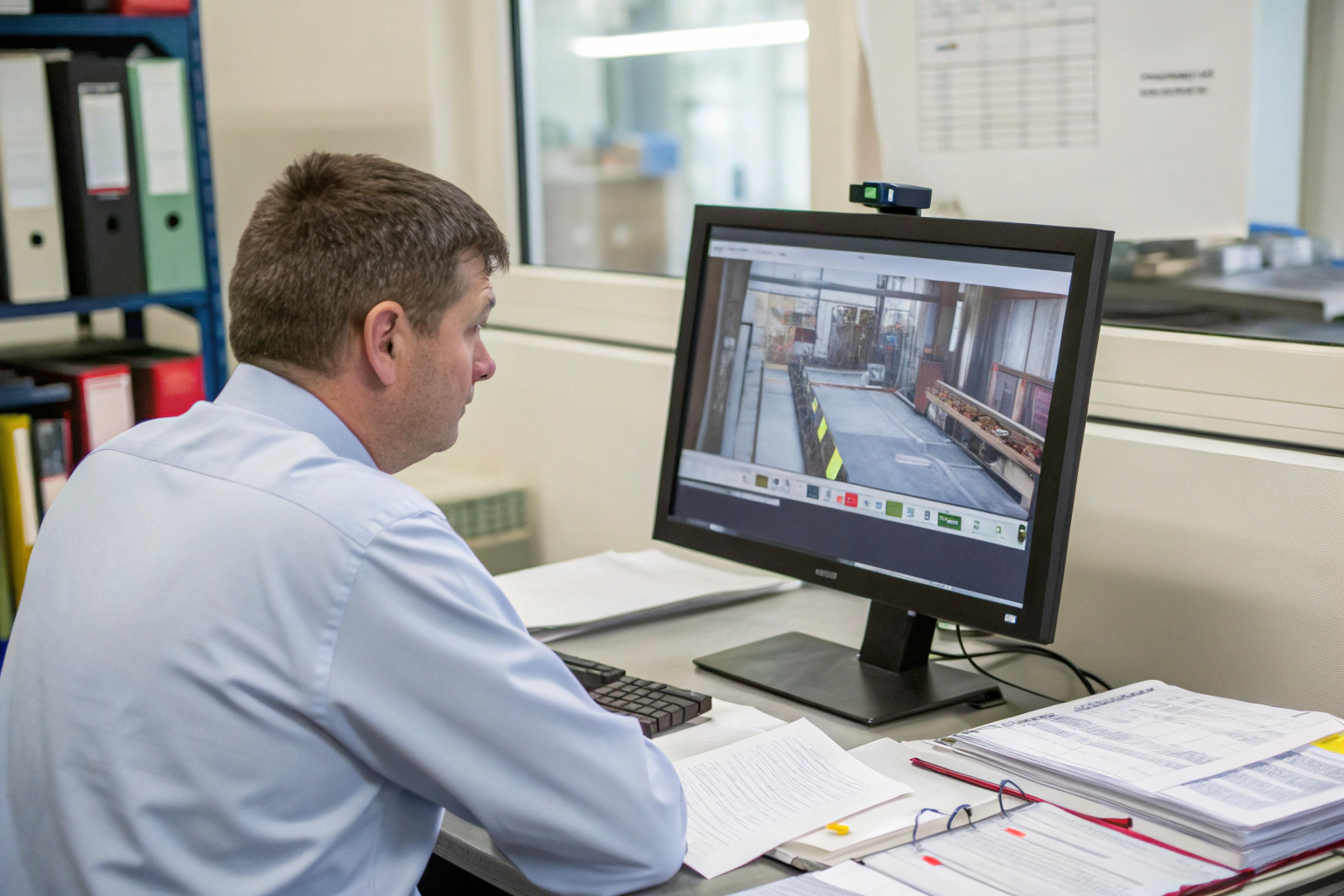
A quality manager from a major American department store chain called me three years ago with an unusual request. He had just rejected an entire shipment of belts from a competitor factory because the buttons popped off during a routine inspection. The factory had sent photos of the belts. They had sent lab test reports. But they could not, or would not, send a video of the actual button test being performed on the actual production belts. He told me, "Photos show me the result. A video shows me the process. I need to see the test happening with my own eyes, on the belts that are going into my stores." That conversation fundamentally changed how we document quality control at AceAccessory. We started recording our button pull tests on video for every belt order, and we quickly discovered that US importers were not just asking for this as a nice-to-have. For many of them, it was becoming a hard requirement.
US importers ask for factory videos of the button test on belts because video documentation provides verifiable proof that the required safety and durability testing was actually performed on the correct production units, not staged with specially prepared samples. Unlike static photographs or paper test reports, video captures the continuous, unedited process of the test being set up, the force gauge being attached to the button, the tension being applied, and the final result. This documentation is critical for three reasons. First, it protects the importer against product liability claims under US consumer product safety regulations, because the video serves as evidence of due diligence in quality assurance. Second, it satisfies the compliance requirements of major US retailers, many of whom now mandate video-recorded third-party or factory testing as part of their vendor agreements. Third, it catches test fraud, where a factory might test a specially reinforced sample instead of a randomly selected production unit, by showing the entire selection and testing process in a single, unbroken video clip.
Button failure on a belt is not a minor quality issue. It is a safety hazard. A button that detaches from a child’s belt can become a choking hazard. A snap button that fails on a belt being used for functional purposes, like a tool belt or a uniform belt, can cause injury or equipment damage. US importers operate in a legal environment where product liability lawsuits are a constant business risk. The video of the button test is a layer of legal protection. At AceAccessory, we now include video documentation of all critical safety tests as a standard part of our quality control package for US-bound shipments. Let me explain exactly why this practice has become so important and how it works.
What Is the Button Pull Test and Why Is It Required
The button pull test, formally known as the button attachment strength test, is a standardized method for measuring how much force is required to pull a button, snap, or similar fastener off a garment or accessory. For belts, the test is critical because belt buttons and snaps are subjected to repeated tension stress during normal use. Every time a wearer fastens or unfastens the belt, the button is pulled. Over time, a poorly attached button will loosen and eventually detach. The test simulates this stress in a controlled, measurable way and confirms that the button attachment meets minimum safety standards.
The button pull test for belts is required under US consumer product safety regulations, specifically the ASTM F963 standard for children’s products and the broader ASTM D7142 standard for button attachment strength on adult apparel and accessories. For children’s belts, the test is mandatory because a detached button is a small part that presents a choking hazard for children under three years old. The test uses a calibrated force gauge that applies a steadily increasing tensile force to the button until it either detaches or reaches the required minimum strength, typically 90 newtons or approximately 20 pounds of force for children’s products, and higher for adult products. The button must withstand this force for a specified hold time, usually 10 seconds, without detaching, cracking, or deforming in a way that creates a sharp edge or a small part.
The test sounds simple, but the details matter enormously. The gauge must be calibrated. The pull speed must be controlled. The angle of pull must be correct. The selection of test samples must be random and representative. A poorly performed test can give a false pass, which puts consumers at risk, or a false fail, which causes unnecessary production delays. This is why US importers do not just want the test result. They want to see the test being performed correctly.
How Does ASTM F963 Apply to Belt Button Safety?
ASTM F963 is the Standard Consumer Safety Specification for Toy Safety, published by ASTM International. It is a comprehensive standard that covers a wide range of potential hazards in children’s products. While belts are not toys, the small parts requirement of ASTM F963 is often applied by US importers and retailers to any children’s accessory that could reasonably end up in a young child’s hands or mouth. A button on a child’s belt, if detached, is a small part. Under ASTM F963, a small part is any object that fits completely into a small parts cylinder, which has dimensions approximating the mouth of a child under three years old. If a button fits into that cylinder, and if it can be detached with less than the specified force, the product fails the safety requirement and is considered a hazardous product. The legal implications are serious. The Consumer Product Safety Commission, the CPSC, has the authority to issue mandatory recalls for children’s products that present a choking hazard. A recall is a catastrophic event for a brand. It involves public notification, product retrieval from consumers, refunds or replacements, and reporting to the CPSC. The financial cost and the reputational damage can be business-ending. The button pull test, performed and documented correctly, is the primary defense against this risk. It proves that the buttons on the belts were tested before shipment and met the required strength standard. The video documentation adds an extra layer of credibility. If the CPSC investigates a product, having video evidence of the actual test being performed on the actual production units is far more persuasive than a paper test report that could have been fabricated. Many US importers now specify that button testing must be performed according to ASTM F963 even for adult belts, as a best practice and a risk mitigation measure. The standard is well-known, well-documented, and legally defensible.
What Equipment Is Used in a Professional Button Pull Test?
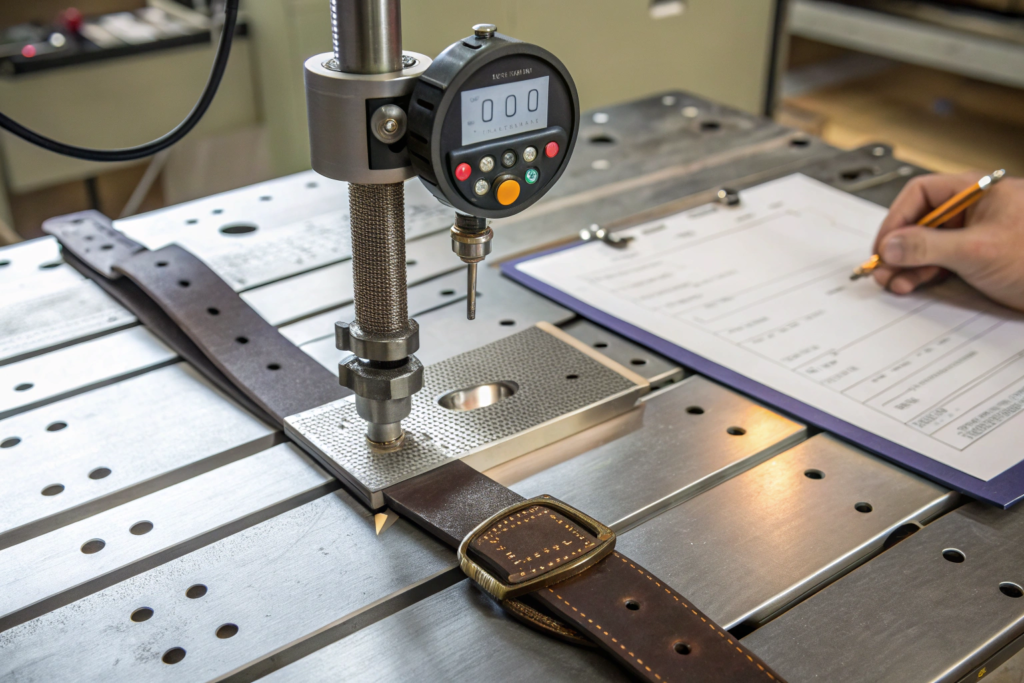
A professional button pull test requires specific, calibrated equipment. The centerpiece is a force gauge, also called a tension meter or a pull tester. This is a handheld or stand-mounted device that measures the tensile force being applied. Modern force gauges are digital, with a load cell that converts mechanical force into an electrical signal displayed on a screen. The gauge must be calibrated regularly, typically every six to twelve months, and the calibration certificate must be traceable to national or international standards. The force gauge is used with a clamp attachment. The clamp is a small, vise-like mechanism that grips the button securely without damaging it. The clamp jaws are often padded or shaped to fit around the button without slipping. The clamp is attached to the force gauge via a threaded connection. For belt testing, the belt must be held securely during the test. This is done with a belt clamp or a flat plate fixture that holds the belt strap flat and prevents it from moving or stretching during the pull. The force gauge may be mounted on a motorized test stand for the most consistent results. The motorized stand pulls the gauge upward at a precisely controlled speed, typically 100 millimeters per minute, which eliminates the variability of a human hand pulling. For factory-based testing, a handheld gauge is more common because it is portable and can be used on the production floor. When a handheld gauge is used, the operator must be trained to pull at a smooth, steady rate. This is one of the key things that US importers look for in the video. An operator yanking the gauge quickly is not performing a valid test. An operator pulling slowly and steadily is. The force gauge records the peak force, the maximum force applied before the button detaches or the test stops. This peak force is the result that is recorded and reported.
Why Do Importers Distrust Photo-Only Quality Reports
The shift from photo-based quality reports to video-based documentation is driven by hard experience. US importers have learned, sometimes through costly lawsuits or recalled products, that photographs can be deceptive. A photo shows a single moment in time. It can be carefully staged to hide defects. It can be taken of a different product than the one being shipped. It can be edited. The button pull test is particularly susceptible to photo-based fraud because the test process, not just the result, is what matters. A photo of a button still attached after a test does not prove that the test was performed correctly, or that the button was actually pulled to the required force.
US importers distrust photo-only quality reports for button tests because photographs are static, easily staged, and provide no verifiable evidence of the test process. A photo of a force gauge showing a passing number proves nothing if the gauge was not actually attached to the belt button when the photo was taken. A photo of a button still attached to a belt after a "test" does not show whether the required force was actually applied, or whether the button was pulled at the correct angle and speed. Importers have encountered cases where factories tested specially reinforced samples instead of random production units, photographed the passing results, and shipped substandard products. They have seen photos of force gauges that were never calibrated, or that had the peak hold function manipulated to display a false reading. The video format addresses all of these concerns by capturing the continuous, unbroken sequence from sample selection through test setup through test execution through result display.
The demand for video documentation is part of a broader trend toward supply chain transparency. Importers want to see inside the factory, not just receive a report from it. Video provides that visibility. Here is a deeper look at the two most common types of photo-based deception.
How Can Static Photos Misrepresent Test Results?
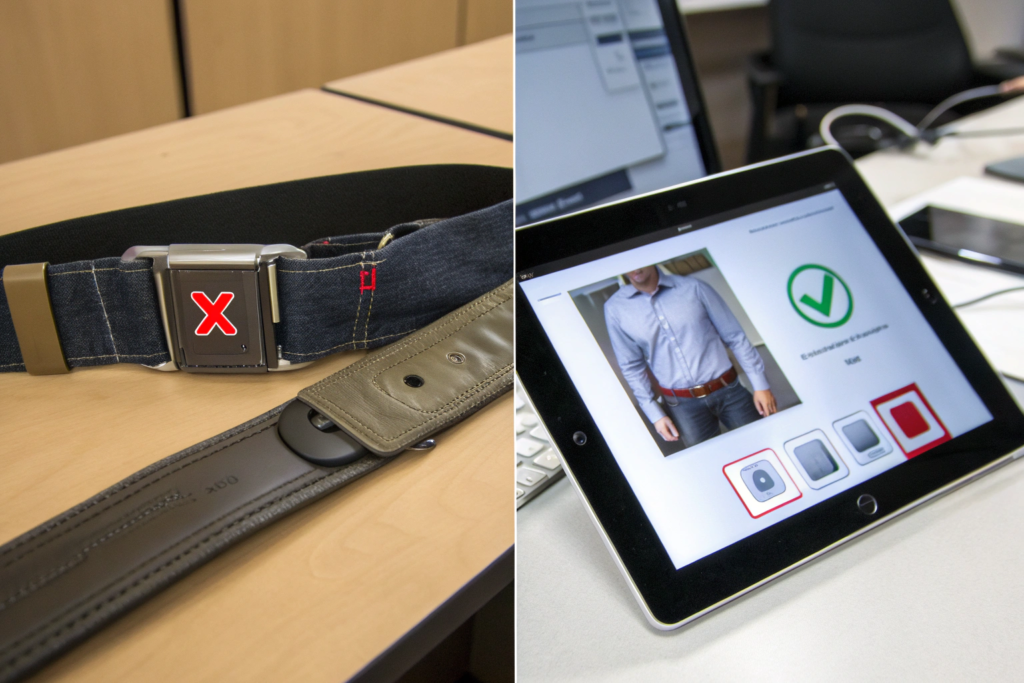
There are several ways that a static photograph can misrepresent a button pull test result, and unfortunately, all of them have been used by unethical factories at some point. The simplest method is to photograph a different product. A factory produces one batch of belts with properly reinforced buttons, tests those, photographs the results, and then ships a different batch with cheaper, weaker buttons. The photo shows a passing result. The shipped product fails. Without a video showing the sample being taken from the actual shipment cartons, there is no way to verify that the tested product and the shipped product are the same. Another method is to manipulate the force gauge. A digital force gauge has a peak hold function that freezes the highest reading on the display. An operator can attach the gauge to a fixed object, pull to a high reading, and then photograph the gauge next to an untested belt. The photo shows a passing force reading. The belt was never actually tested. Some gauges can be manually reset to a specific peak value, or the calibration can be tampered with to give higher readings. A third method is to photograph the button after a weak test. An operator pulls the button to a low force, far below the standard, but the button does not quite detach. The operator photographs the button still attached and claims it passed. The force reading is conveniently cropped out of the photo, or a different gauge reading is shown. The belt passes the photo inspection but fails in reality. All of these deceptions are possible because a photo is a single data point. It shows a result without showing how that result was achieved. A video is a continuous data stream. It shows the process, and the process either matches the standard or it does not.
What Information Does a Video Capture That Photos Miss?
A video of a button pull test captures five critical pieces of information that static photos cannot provide. First, sample provenance. The video shows the inspector selecting the belt from a specific carton, identified by its shipping mark or barcode. The belt is visible continuously from the moment it is selected to the moment the test is completed. There is no opportunity to swap the belt for a specially prepared sample off-camera. Second, gauge calibration status. The video can show the force gauge’s calibration sticker, with the calibration date and the serial number, before the test begins. This proves that the gauge is within its calibration period. Third, test setup and technique. The video shows how the belt is secured, how the clamp is attached to the button, and the angle of pull. A pull at a 90-degree angle to the belt surface is the standard. A pull at an angle can give a falsely high reading because the button is being sheared rather than pulled. The video shows whether the pull angle was correct. Fourth, pull speed and smoothness. The video captures the rate at which the force is applied. A jerky, rapid pull can generate a momentary force spike that is not representative of real-world use. A slow, steady pull is the correct technique. The video shows whether the operator followed the procedure. Fifth, the real-time force reading. The video captures the force gauge display continuously during the pull. The viewer can see the force climb, see where the button detaches or where the test is held, and see the final peak reading. The reading is seen in context, as part of the test, not as an isolated number. Together, these five pieces of information create a complete, verifiable record of the test. It is very difficult to fake a continuous video that includes all of these elements. This is why US importers trust video.
What Must Be Included in a Valid Button Test Video
US importers are increasingly specific about what they require in a button test video. A vague video of a hand pulling on a button is not sufficient. The video must meet certain criteria to be accepted as valid quality documentation. These criteria are designed to ensure the test is genuine, the sample is representative, the equipment is calibrated, and the result is unambiguous. A video that meets these standards can be used as evidence in a product liability defense. A video that does not is just a marketing clip.
A valid button test video for US importers must include seven essential elements. First, a clear, unbroken shot from start to finish with no cuts, edits, or jumps that could conceal a sample swap or a test manipulation. Second, a carton identification segment where the inspector shows the shipping carton label, including the purchase order number, style number, and quantity, and then opens the carton and removes the test sample on camera. Third, a gauge calibration verification where the force gauge’s calibration sticker with the date and serial number is shown close-up to the camera. Fourth, a complete test procedure showing the belt being secured, the clamp being attached to the button, the pull being applied at the correct angle and speed, and the gauge display continuously visible. Fifth, a clear result display where the peak force reading is held on the gauge display and shown close-up to the camera for at least five seconds. Sixth, a post-test inspection where the button and the attachment area are shown to the camera to document whether the button detached, cracked, or caused any damage to the belt material. Seventh, a date and time stamp, either from the camera metadata or from a visible clock in the shot, to verify when the test was performed relative to the shipment date.
The requirement for an unbroken shot is the most critical and the most frequently violated. If the camera stops and restarts, even for a moment, the chain of custody of the sample is broken. The importer has no way to know what happened during the gap. A properly produced test video is a single continuous file. Let me explain the two elements that are most often overlooked.
Why Must the Carton Label Be Shown Before Testing?
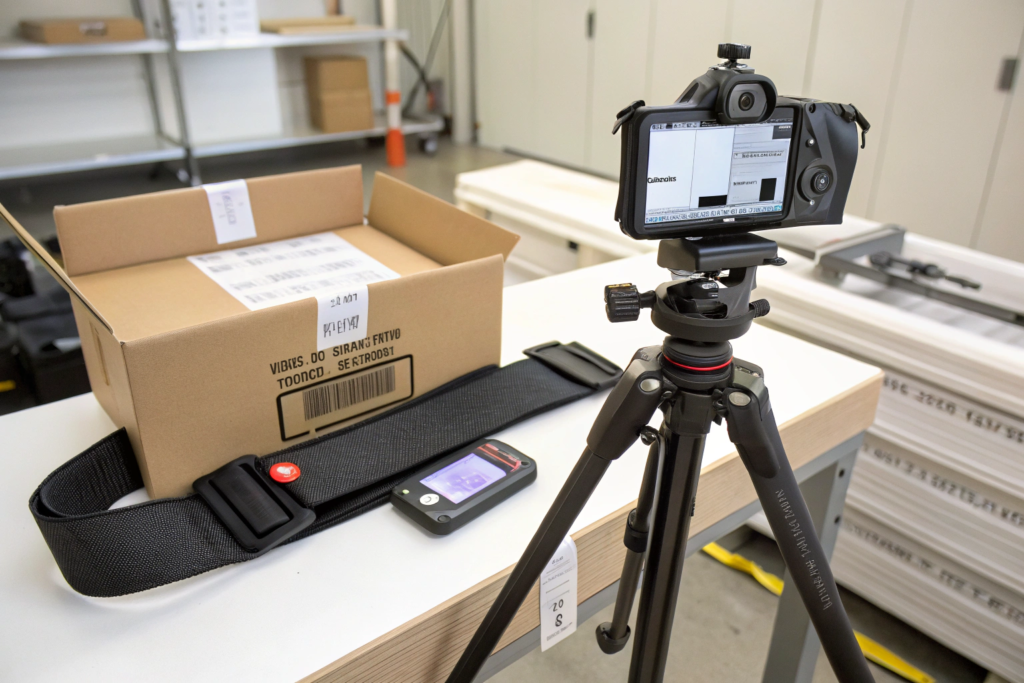
The carton label is the link between the test and the shipment. The label contains the purchase order number, the style number, the color code, the quantity, and often a barcode or a unique shipment identifier. By showing the carton label on camera before the carton is opened, the video establishes that the test sample came from the specific shipment that the importer is buying. Without this step, the importer cannot verify that the tested belts are the same belts that are being shipped. The carton opening must also be shown. The inspector should show the sealed carton, demonstrate that the seal is intact, and then cut the seal or open the carton on camera. This prevents the possibility that a prepared sample was placed in a previously opened carton. The inspector should reach into the carton and remove a belt from the middle of the stack, not from the top. A dishonest factory might place a specially prepared sample on top of the carton for the inspector to "randomly" select. Reaching into the middle demonstrates genuine random sampling. The carton label should also be cross-referenced with the purchase order and the packing list. In our videos, our QC inspector holds the carton label up to the camera and then holds the purchase order next to it, showing that the PO numbers match. This may seem excessive, but for US importers who have been burned by shipment discrepancies, it is exactly the level of detail they need to see. The carton identification segment of the video typically takes less than 30 seconds, but it is the most important 30 seconds for establishing the validity of the entire test.
What Should the Force Gauge Display Show During the Test?
The force gauge display must be continuously visible during the pull. This is the technical heart of the video. The gauge should be oriented so that the camera can clearly see the digital display. The preferred setup is to have the force gauge mounted on a test stand, with the display facing the camera. If a handheld gauge is used, the operator must hold it in a way that does not block the camera’s view of the display. The display should show the real-time force reading during the pull. The viewer should see the numbers increasing from zero, climbing steadily, and either holding at the target force or peaking and then dropping if the button detaches. The peak hold function should be activated. When the test is complete, the gauge will display the peak force reading. The operator should hold this reading for at least five seconds, moving the gauge closer to the camera if necessary, so the viewer can clearly read the number. The gauge display should also show the unit of measurement. Force can be measured in newtons, kilograms-force, or pounds-force. The required test force, typically 90 newtons for children’s products, should be confirmed in the correct unit. A common mistake is for the gauge to be set to pounds-force when the standard is specified in newtons, leading to confusion and potentially invalid results. The gauge display should also be checked for any error indicators or low battery warnings. A gauge with a low battery may give inaccurate readings. All of this is visible in a well-shot video and provides the importer with confidence that the test was performed correctly and the result is valid.
How Do Button Test Videos Protect Against Legal Liability
The legal environment for consumer products in the United States is among the most stringent in the world. Product liability laws hold importers, brands, and retailers responsible for the safety of the products they sell. If a button detaches from a belt and causes an injury, particularly to a child, the legal consequences can include costly settlements, court-ordered damages, and mandatory regulatory actions. In this environment, documentation is not just a business practice. It is a legal shield. The button test video is a piece of evidence that can be presented in court or to a regulatory agency to demonstrate that the importer exercised reasonable care in ensuring product safety.
Button test videos protect US importers against legal liability by serving as documented proof of due diligence in product safety testing. In a product liability lawsuit, the plaintiff must prove that the product was defective and that the defect caused injury. The importer can defend against this by showing that they took reasonable steps to inspect and test the product before it entered the market. A video-recorded button pull test, performed on a random sample from the actual shipment using calibrated equipment, is compelling evidence of reasonable care. It can be the difference between a successful defense and a costly settlement. Additionally, under the Consumer Product Safety Act, importers are required to issue a report to the CPSC within 24 hours of discovering a product defect that could create a substantial hazard. Having video evidence that the product was tested and passed before shipment can help an importer argue that any failure was an isolated manufacturing defect rather than a systemic design or quality issue, potentially avoiding a broader recall.
The legal value of the video depends on its quality and its adherence to standardized test methods. A video of a poorly performed test is worse than no video at all, because it documents the importer’s failure to follow proper procedures. This is why the standards for what must be included in the video are so important. Let me explain two key legal concepts.

How Does Due Diligence Documentation Reduce Recall Risk?
Due diligence is a legal concept that refers to the reasonable steps a person or company takes to satisfy a legal requirement or to investigate and understand a risk. In the context of consumer product safety, due diligence means the importer did not simply assume the product was safe. They took active, documented steps to verify its safety. If a product is later found to be defective, the importer’s due diligence record is examined by the CPSC and by any court hearing a liability case. A strong due diligence record can significantly reduce the consequences of a product failure. The CPSC has the authority to negotiate a corrective action plan with an importer rather than forcing a mandatory recall. An importer with a documented history of rigorous testing, including video records, is in a much stronger negotiating position than an importer with no testing records. The corrective action might be a targeted refund program rather than a full public recall, which saves the brand enormous cost and reputational damage. Due diligence also affects the scope of a recall. If a defect is traced to a single production batch, and the importer can prove with video evidence that every batch was tested and that only one batch showed the defect, the recall can be limited to that specific batch. Without batch-level testing documentation, the CPSC may require a recall of all products from all batches, assuming the defect could be widespread. The video provides the batch-level traceability that makes a limited recall possible. At AceAccessory, we archive all button test videos by purchase order number, style, and production date. If an importer needs to investigate a quality issue three years later, we can retrieve the specific test video for that specific batch. This level of documentation is what US importers need to manage their long-term liability risk.
Can a Test Video Satisfy Retailer Compliance Requirements?
Major US retailers, including department stores, big-box chains, and online marketplaces, have their own compliance requirements that go beyond government regulations. These retailers conduct their own vendor audits and require specific testing documentation as a condition of doing business. Many of these retailers have now added video documentation to their vendor manuals. A typical requirement might read, "For all products with buttons, snaps, or similar fasteners, the vendor must provide video documentation of the button pull test performed on random production samples from each shipment." The retailer’s compliance team reviews these videos. If a video is missing, incomplete, or shows improper test technique, the shipment can be rejected at the distribution center, even if the products are physically fine. The retailer is protecting its own liability and its own brand reputation. A product failure in a major retailer’s store reflects on the retailer, not just on the brand. The retailer wants to be able to show, if challenged, that they required and received video evidence of safety testing. This requirement is becoming more common, not less. As video technology becomes cheaper and easier to use, retailers are raising their documentation standards. A factory that cannot provide video test documentation is effectively locked out of doing business with these retailers. We have had clients tell us directly that our willingness to provide comprehensive video QC documentation was a deciding factor in their vendor approval process. It signals that we understand the US market, we take compliance seriously, and we have nothing to hide.
Conclusion
The factory video of the button test on belts has become a standard requirement for US importers because it solves a fundamental trust problem in global supply chains. The importer cannot be at the factory to watch every test. The factory is thousands of miles away, in a different time zone, operating under a different legal system. The importer needs a way to verify that the testing was done, that it was done correctly, and that it was done on the actual products being shipped. A video provides that verification. It captures the test as a continuous, unbroken process, from carton opening to final result, making it extremely difficult to fake. It documents the specific products, the calibrated equipment, the correct technique, and the passing result. It serves as a legal record that can be used to defend against liability claims and to satisfy retailer compliance requirements.
At AceAccessory, we have embraced video QC documentation not as a burden but as a competitive advantage. Our quality control team is trained in video production as well as test procedures. We use standardized setups with proper lighting, tripod-mounted cameras, and clear, uncluttered backgrounds. Every button pull test is recorded, archived, and made available to our clients through a secure online portal. We include the test video along with the traditional inspection report, the AQL sampling data, and the compliance certificates. Our US clients tell us that this comprehensive documentation package makes their own compliance work significantly easier and reduces the time their shipments spend in retailer quality audits.
If you are sourcing belts for the US market and you need a manufacturing partner who understands the documentation requirements, who can provide video evidence of safety testing, and who treats compliance as a core part of production rather than an afterthought, I invite you to contact us. Reach out to our Business Director, Elaine, at elaine@fumaoclothing.com. Tell her about your product specifications and your compliance documentation needs. She can provide sample test videos, walk you through our QC documentation process, and help you build a supply chain that protects your brand and your customers. Do not settle for a photo when you can have proof.