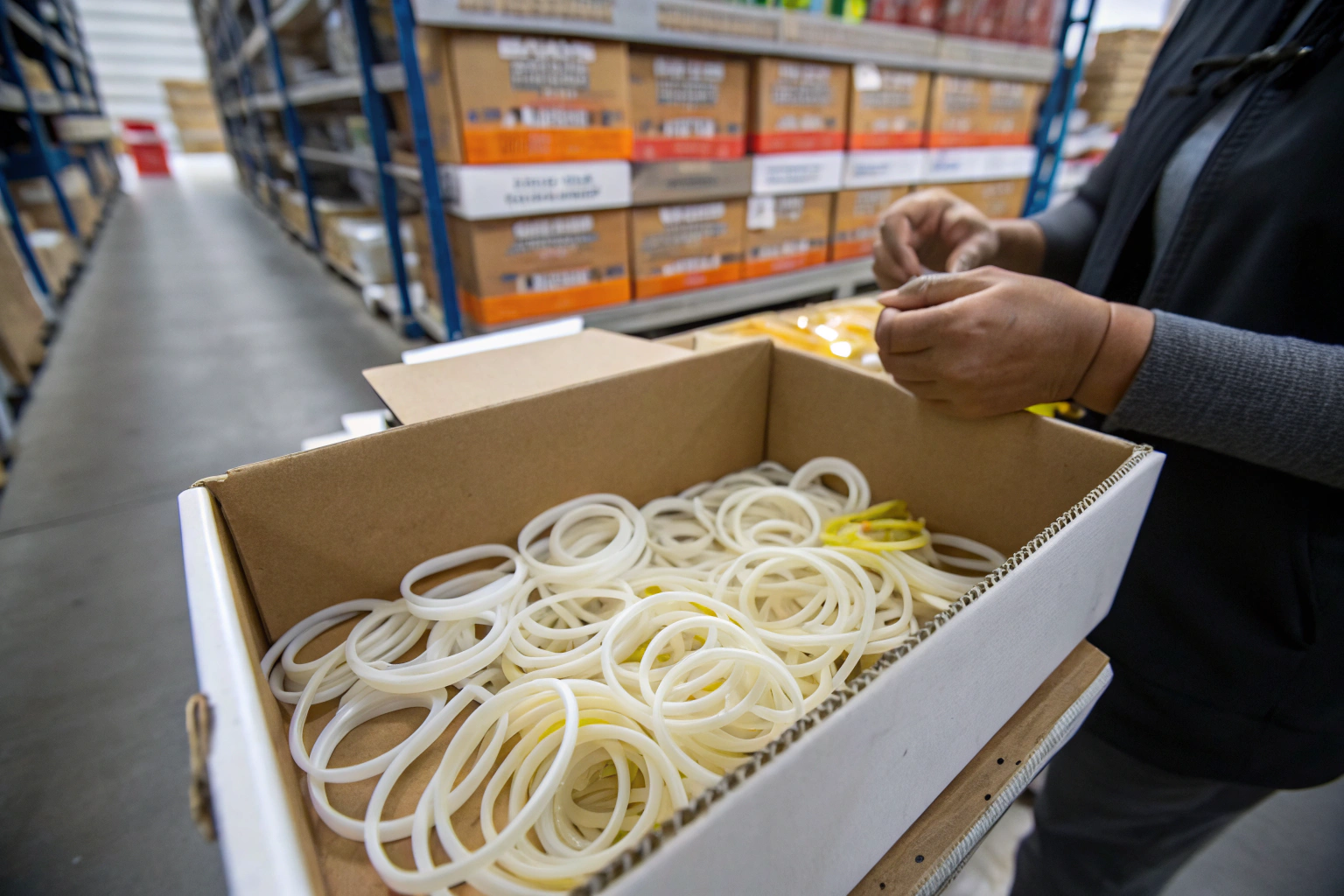
A buyer from a Canadian drugstore chain called me in late February with a problem that had blindsided her. She had received a shipment of white elastic hair bands the previous August, stored them in her warehouse through the fall, and shipped them to stores in January for the spring reset. When the store managers opened the cartons, the once-bright white elastic had turned a dingy, uneven yellow. The product looked old, damaged, and unsellable. She had to pull the entire line from the shelves, issue a credit to the stores, and absorb a five-figure loss. The worst part was the confusion. The hair bands had been perfect when they left our factory. What had happened in those few months of storage? That question launched me into a deep investigation of elastic yellowing, and what I learned has changed how we manufacture and package every white elastic product we produce.
To avoid yellowing on white elastic hair bands during storage, you must control four factors simultaneously. First, the elastic material must be formulated with anti-yellowing stabilizers that prevent phenolic antioxidant yellowing, the most common cause of discoloration in white elastics. Second, the hair bands must be packaged in materials that do not contain BHT or other phenolic compounds that can migrate into the elastic and cause gas fading. Third, the storage environment must be cool, dark, and well-ventilated, avoiding exposure to UV light, high temperatures, and atmospheric pollutants like nitrogen oxides. Fourth, the storage duration must be managed on a first-in-first-out basis, with white elastic products not held in inventory for more than six months without inspection.
Yellowing on white elastic is not a simple problem with a single cause. It is a complex chemical phenomenon that can be triggered by the elastic formulation itself, by the packaging materials, by the storage environment, or by a combination of all three. I have seen entire shipments ruined because a factory used the wrong antioxidant in the elastic compound. I have seen yellow stripes appear on white hair bands exactly where they touched a cardboard insert. I have seen bands stored near a warehouse window turn yellow on the light-exposed side while the dark side remained white. Understanding the chemistry and the environmental factors is essential for anyone who sources white elastic products. At AceAccessory, we have implemented a comprehensive anti-yellowing protocol that addresses every stage from raw material selection to final packaging. Let me walk you through exactly what causes yellowing and how to prevent it.
What Causes White Elastic Hair Bands to Yellow Over Time
Understanding why white elastic turns yellow requires a short chemistry lesson, but I will keep it practical. Elastic bands, whether made from polyester, nylon, or rubber, are complex polymer systems. They contain the base polymer, plus a cocktail of additives. These additives include plasticizers to make the elastic flexible, antioxidants to prevent degradation during processing, and pigments like titanium dioxide to make the elastic white. Some of these additives, particularly certain types of antioxidants, can react with environmental factors over time and produce yellow-colored compounds. The yellowing is not the elastic breaking down. It is a color change caused by a chemical reaction in the additive system.
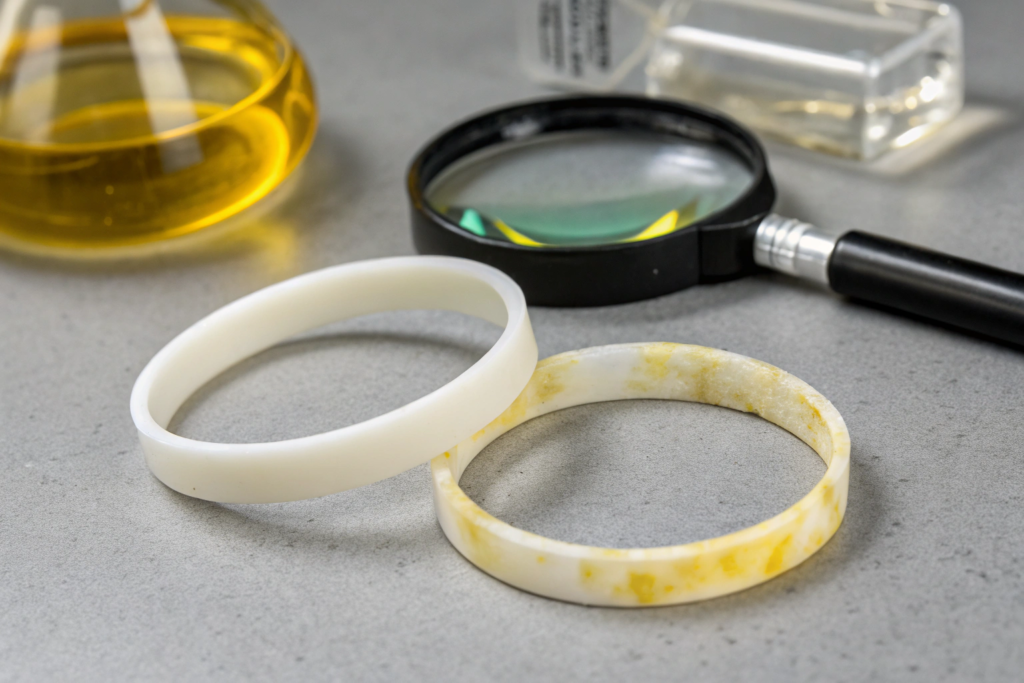
The yellowing of white elastic hair bands during storage is primarily caused by three chemical mechanisms. Phenolic antioxidant yellowing occurs when BHT, butylated hydroxytoluene, or similar hindered phenol antioxidants used in the elastic formulation react with nitrogen oxides in the air to form yellow-colored quinone compounds. This is the most common and most frustrating type of yellowing because it develops during storage, even in sealed packaging, and is accelerated by heat and humidity. Gas fading is a related phenomenon where phenolic compounds from external sources, such as cardboard packaging, polyethylene bags, or even fumes from forklift exhaust, migrate into the elastic and react to form yellow discoloration. UV-induced yellowing is a separate mechanism where ultraviolet light from sunlight or fluorescent lighting breaks down the polymer structure or the optical brighteners, causing a yellow or brown discoloration that is often patchy and concentrated on light-exposed areas.
Each of these mechanisms requires a different prevention strategy. There is no single magic solution. You have to address all three pathways simultaneously to guarantee that white elastic hair bands will stay white through the supply chain and onto the retail shelf. Let me break down the two most insidious chemical causes.
How Do Phenolic Antioxidants Cause Yellowing in Stored Elastic?
This is the chemistry that surprised me the most when I first researched it, because it is so counterintuitive. Antioxidants are added to elastic to protect it. They prevent the polymer from oxidizing and becoming brittle during the high-heat manufacturing process. Without antioxidants, the elastic would degrade. So antioxidants are necessary. The problem is that the most commonly used antioxidants, hindered phenols like BHT, are themselves susceptible to a secondary reaction. When BHT is exposed to nitrogen oxides, NOx gases, which are present in tiny amounts in normal air, it forms a yellow-colored compound called a quinone methide. This reaction is slow at room temperature but accelerates with heat and humidity. What makes this so devastating for white products is that very small amounts of the yellow compound are highly visible against a white background. A concentration of just a few parts per million can cause a noticeable yellow tint. The reaction can occur even in sealed polybags because nitrogen oxides are small molecules that can permeate through plastic packaging over time. This type of yellowing is often called "gas fading" when the NOx comes from an external source like polluted air or forklift exhaust. But the same chemistry can occur from NOx that is generated inside the elastic itself, from the breakdown of other additives. The solution is to use non-phenolic antioxidants, or to use phenolic antioxidants that are specifically designed to be non-yellowing. These are more expensive, which is why many factories do not use them unless the buyer specifically requires them. We have switched our entire white elastic production to BHT-free, non-yellowing antioxidant systems. The cost increase per hair band is a fraction of a cent. The avoided cost of yellowing returns is enormous.
Can Packaging Materials Transfer Yellowing Chemicals to Hair Bands?
Yes, and this is a problem that is often overlooked because buyers focus on the product and forget about the packaging. Many common packaging materials contain phenolic compounds that can migrate into the elastic and cause yellowing. The most common culprit is cardboard. Recycled cardboard, in particular, contains residual lignin and various processing chemicals, including phenolic compounds. When a white elastic hair band is in direct contact with cardboard for an extended period, those chemicals can transfer to the elastic. The yellow stain often appears exactly where the elastic touched the cardboard, creating a stripe or a pattern that matches the packaging. Polyethylene bags can also be a problem. Low-quality PE bags may contain BHT as an antioxidant in the plastic film itself. The BHT can volatilize inside the sealed bag and be absorbed by the elastic. Clear PVC packaging is even more problematic, as PVC often contains plasticizers and stabilizers that are potent yellowing agents. Even the adhesive on a sticker or a label can be a source of phenolic compounds. We have seen cases where a white hair band was perfectly white except for a yellow spot exactly where a price sticker was applied. The adhesive had migrated into the elastic. The solution is to specify packaging materials that are certified as BHT-free and non-yellowing. We use only virgin, acid-free cardboard for inserts and hang tags that contact white elastic products. We use polybags made from BHT-free, anti-static polyethylene. We avoid PVC entirely for white products. We test all new packaging materials by sealing a sample of white elastic with the packaging in a glass jar and placing it in a warm oven at 50 degrees Celsius for 72 hours. This accelerated aging test reveals any yellowing potential before the packaging is approved for production use.
How to Test Elastic Hair Bands for Yellowing Before Production
The best way to avoid yellowing complaints is to catch the problem before production, not after the goods are in your warehouse. This requires testing the actual elastic material under conditions that simulate long-term storage, compressed into a few days. Accelerated aging tests are standard practice in the textile and polymer industries, but many accessory buyers and even many factories do not use them. They rely on the elastic supplier’s word that the material is "non-yellowing." That is not good enough. A supplier’s formulation can change without notice. A new batch of raw material can have a slightly different additive package. The only way to be certain is to test.
Testing white elastic hair bands for yellowing potential requires performing an accelerated aging test before production begins. The most reliable method is a phenolic yellowing test, often called the Courtaulds test, where the elastic sample is wrapped in a BHT-impregnated paper, placed between glass plates under a controlled pressure, and heated at 50 degrees Celsius for 16 hours. The sample is then removed and compared to an untested control sample using a gray scale or a spectrophotometer. A Delta E color change of less than 1.5 is considered passing. Additionally, a UV exposure test should be performed by placing samples in a QUV accelerated weathering tester or simply in direct sunlight for 48 hours, with color measurement before and after exposure. A packaging compatibility test, where the elastic is sealed with the actual packaging materials and heated, should also be conducted to identify any external sources of yellowing.
These tests are not expensive to run. They require a small oven, some glass plates, BHT-impregnated test paper, and a color measurement device. The investment in testing is tiny compared to the cost of a yellowing recall. We run these tests on every new batch of white elastic before we cut a single hair band. Let me explain the two most important tests.
What Is a Phenolic Yellowing Test and How Is It Performed?
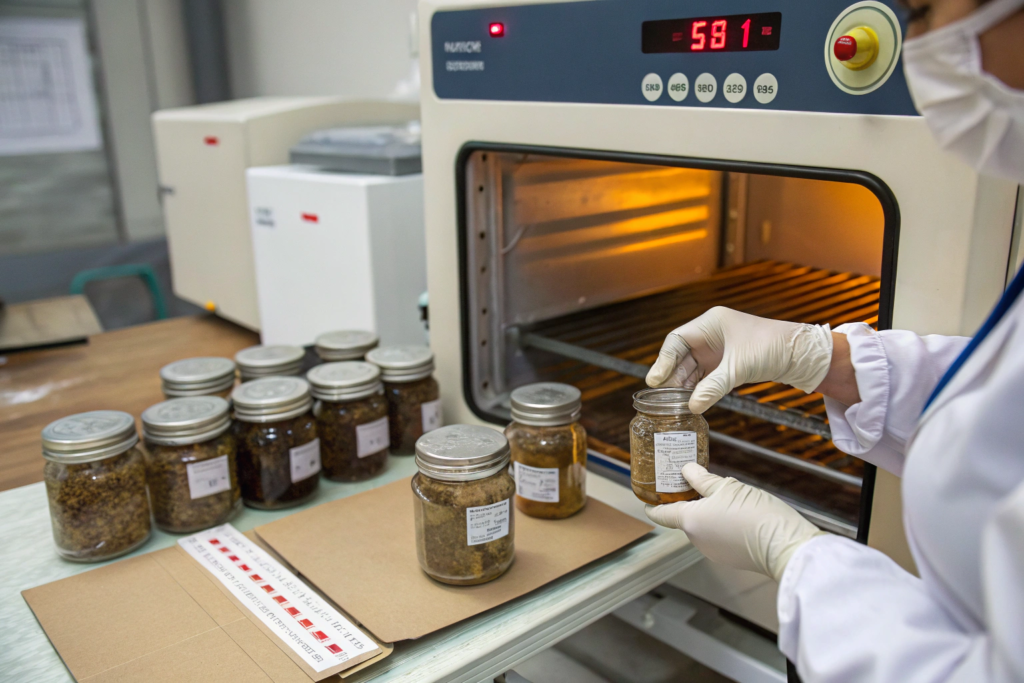
The phenolic yellowing test is the industry standard for predicting whether a white or pastel-colored textile or elastic will yellow during storage. It is formally described in ISO 105-X18, a standard published by the International Organization for Standardization, and it is also known as the Courtaulds test after the company that developed it. The test directly assesses the material’s susceptibility to the BHT-NOx reaction I described earlier. The procedure is straightforward. A sample of the white elastic is cut to a standard size. A piece of test paper that has been impregnated with BHT is wrapped around the elastic sample. The wrapped sample is then sandwiched between two glass plates, and a standard weight is placed on top to apply consistent pressure. The entire assembly is placed in an oven at 50 degrees Celsius, plus or minus 2 degrees, for 16 hours. The BHT in the test paper simulates the phenolic compounds that the elastic might encounter from packaging or from its own antioxidant system. The elevated temperature accelerates the chemical reaction. After 16 hours, the sample is removed, allowed to cool, and compared to an unexposed control sample from the same batch. The comparison is done visually using a standard gray scale for staining, where Grade 5 means no visible change and Grade 1 means severe yellowing. A passing grade is typically 4 or above, meaning a very slight change that is barely perceptible. For a more precise measurement, we use a spectrophotometer to measure the CIE Lab color values of both the exposed and unexposed samples. The Delta E value, which is a calculation of the total color difference, should be less than 1.5. A Delta E below 1.0 is imperceptible to the human eye. We also look at the b value specifically. The b axis in the Lab color space measures yellowness versus blueness. A positive b value indicates yellow. The change in the b value, Delta b, is the most direct measure of yellowing. We aim for a Delta b of less than 1.0. If a batch fails the phenolic yellowing test, we reject the elastic material and work with our supplier to reformulate with a non-yellowing antioxidant system.
How Can You Simulate Long-Term Storage Conditions Quickly?
The phenolic yellowing test is specific to one chemical mechanism. But yellowing can also be caused by other factors, like UV exposure, heat alone, or interactions with specific packaging materials. A comprehensive testing protocol includes multiple accelerated aging scenarios. A heat aging test is the simplest. A sample of the white elastic is placed in a dark oven at 70 degrees Celsius for 7 days. This simulates the thermal stress of a hot warehouse or a shipping container in summer. The color is measured before and after. Any yellowing caused purely by thermal degradation of the polymer or the optical brighteners will show up in this test. A UV exposure test simulates the effect of sunlight or fluorescent store lighting. We use a QUV accelerated weathering chamber, which cycles between UV light exposure and condensation to simulate outdoor conditions. A 48-hour QUV cycle approximates months of indoor fluorescent light exposure. If a QUV chamber is not available, a simple sunlight test can be done by placing samples in a south-facing window for several days, with half of each sample covered by aluminum foil to create a clear exposed versus unexposed comparison. The packaging compatibility test is the one I consider most practical for buyers. Take the actual hair bands, packaged exactly as they will be shipped, in the polybag, with the hang tag, with the cardboard insert, and seal them. Place the sealed package in an oven at 50 degrees Celsius for 72 hours. Then open the package and inspect the bands under a daylight lamp. Look for any yellowing, especially in areas that were in direct contact with the cardboard or the polybag. Look for any unevenness or patchiness. If the bands are still bright white after this test, you can have high confidence that they will survive normal storage and retail conditions without yellowing.
What Packaging Solutions Prevent Elastic Discoloration
Packaging is your product’s first line of defense against yellowing. The wrong packaging can actively cause yellowing, as we discussed with phenolic compounds in cardboard and BHT in polybags. The right packaging creates a protective micro-environment that shields the white elastic from external yellowing agents. This is not just about choosing "good" materials. It is about understanding the chemical compatibility between the product and its packaging, and designing a packaging system that is inert and protective.
The optimal packaging solution for preventing yellowing on white elastic hair bands uses three key elements. A BHT-free, virgin polyethylene or polypropylene bag that does not contain phenolic antioxidants and has been certified by the supplier as non-yellowing for textile products. Acid-free, lignin-free cardboard or paperboard for any inserts or hang tags, preferably made from virgin pulp rather than recycled content. And a sealed package design, either heat-sealed polybags or tightly closed header card bags, that minimizes air exchange and prevents nitrogen oxide gases from the outside environment from reaching the elastic. For premium products, adding a small oxygen absorber or activated carbon sachet inside the sealed bag can provide an additional level of protection by scavenging any residual pollutants.
The cost difference between standard packaging and yellowing-safe packaging is minimal. BHT-free polybags might cost a few cents more per hundred bags. Acid-free cardboard might add a small premium. The total packaging cost increase per unit is fractions of a cent. Compared to the cost of a yellowing recall, it is the best insurance you can buy. Here is a closer look at the packaging choices that matter most.
Why Should You Use BHT-Free Polybags for White Accessories?
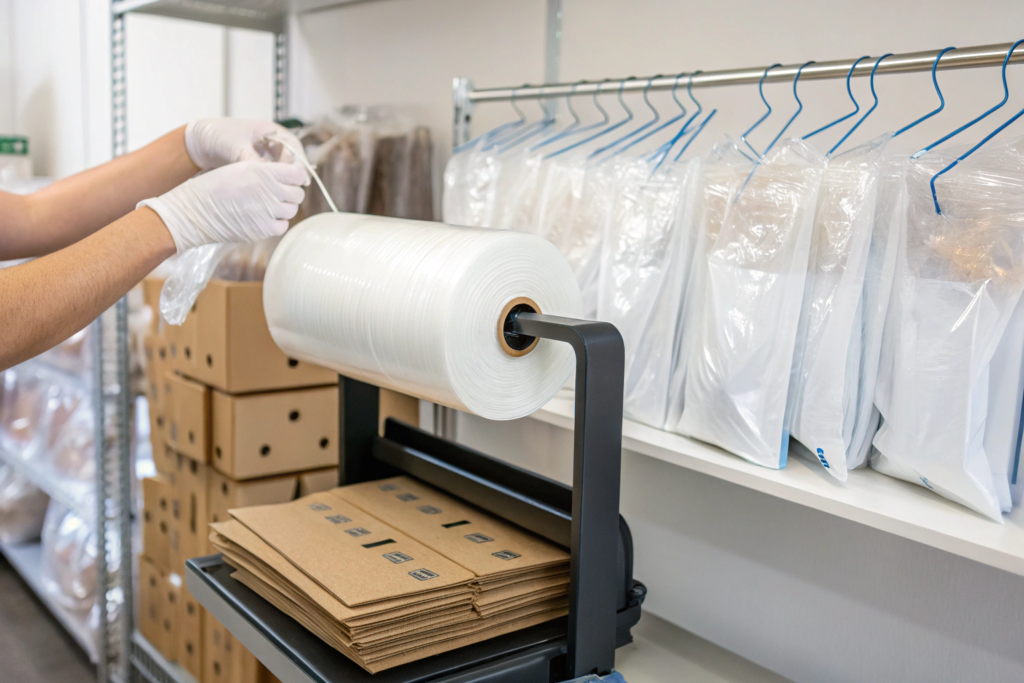
Standard polyethylene bags, the kind that most factories use by default, often contain BHT as an antioxidant. The BHT is added to the polyethylene during the film manufacturing process to prevent the plastic from degrading during extrusion. The problem is that BHT is a small, volatile molecule. It migrates to the surface of the plastic film and can then transfer to whatever is inside the bag. When the bag is sealed, the BHT vapors accumulate inside the bag and are absorbed by the elastic. Over weeks and months, the reaction with nitrogen oxides produces the characteristic yellow discoloration. BHT-free polybags eliminate this problem. The polyethylene is formulated with alternative, non-phenolic antioxidants that do not cause yellowing. These bags are widely available from packaging suppliers, but they must be specifically requested. A factory will not use them unless you specify it. When we order polybags for white elastic products, the purchase order to the bag supplier explicitly states "BHT-free, non-yellowing grade, suitable for white textile products." We also request a certificate of compliance from the bag supplier and we run our own packaging compatibility test on every new batch of bags. Another consideration is the bag material itself. Polypropylene, PP, is inherently less likely to cause phenolic yellowing than polyethylene, PE, because PP is typically manufactured with different additive packages. Clear PP bags are a good option for white accessories, though they are slightly more expensive and have a different feel, more crinkly and less soft than PE. For brands that want to avoid plastic entirely, a paper-based packaging system can work, but the paper must be acid-free, lignin-free, and BHT-free, and it must not be in direct contact with the elastic without a protective barrier layer.
Does Sealed Packaging Help or Hurt Yellowing Prevention?
Sealed packaging is a double-edged sword. On the positive side, a hermetically sealed bag prevents nitrogen oxides and other atmospheric pollutants from reaching the elastic. If the elastic itself is non-yellowing and the packaging materials are BHT-free, a sealed environment locks in the pristine condition and can extend the shelf life significantly. On the negative side, if there is any source of yellowing inside the sealed bag, such as a cardboard insert that contains phenols or an elastic that contains BHT-based antioxidants, sealing the bag concentrates the yellowing agents and accelerates the reaction. A sealed bag is an accelerator, not a cause. It makes whatever is inside happen faster. The decision to use sealed packaging should be based on your confidence in the materials. If you have tested the elastic and the packaging and confirmed they are non-yellowing, seal the bags. The protection outweighs the risk. If you are uncertain about the materials, an open or breathable packaging system might be safer because it allows any yellowing gases to dissipate rather than accumulate. A breathable packaging could be a simple paper band, an open-ended polybag, or a header card with a bag that has ventilation holes. The trade-off is that breathable packaging exposes the product to dust, handling, and atmospheric pollutants. For most retail applications, sealed packaging is preferred for hygiene and presentation reasons. The solution is to seal with confidence by using only tested, non-yellowing materials.
What Storage Conditions Preserve White Elastic Best
Even the best-formulated elastic and the best-designed packaging can be defeated by poor storage conditions. Heat, humidity, light, and polluted air are the enemies of white elastic. Each one accelerates the chemical reactions that cause yellowing. A warehouse that is hot and stuffy in the summer, a storage room with a large window that lets in afternoon sun, a stockroom located near a loading dock where forklift exhaust drifts in, all of these conditions can cause yellowing on products that would have remained white under proper storage. Controlling the storage environment is the final and often the most neglected step in preventing yellowing.
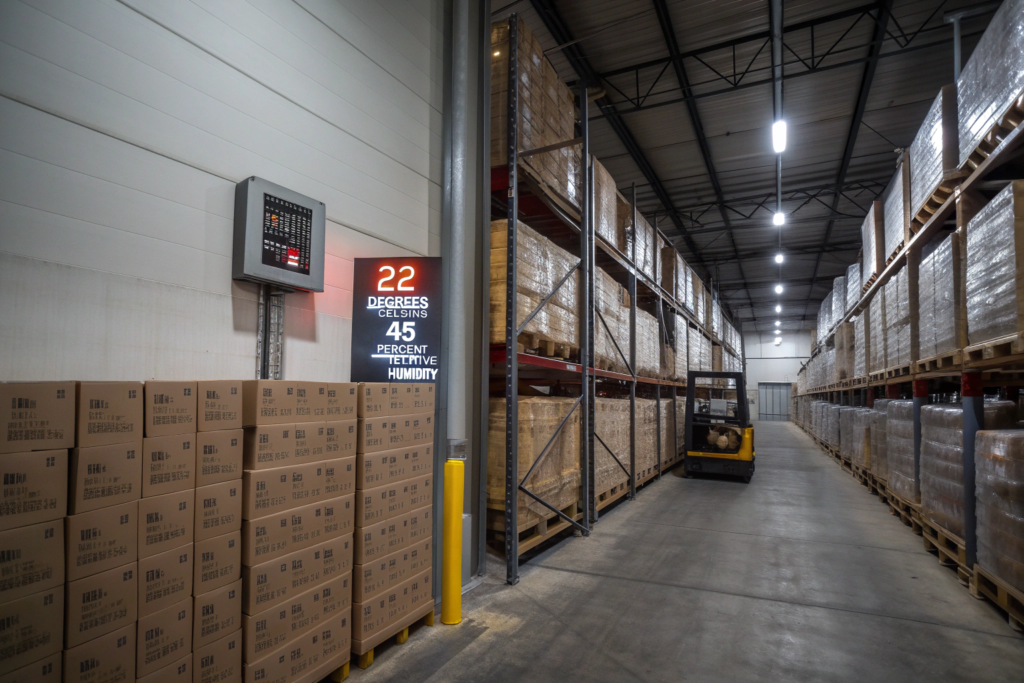
The optimal storage conditions for white elastic hair bands are a cool, dark, and dry environment with minimal air exchange. The temperature should be maintained below 25 degrees Celsius, ideally between 18 and 22 degrees. The relative humidity should be kept below 55 percent to prevent moisture from accelerating chemical reactions. The storage area must be completely shielded from direct sunlight and from direct exposure to fluorescent lighting, as UV radiation is a powerful yellowing agent. The area must be well-ventilated to prevent the accumulation of nitrogen oxides from vehicle exhaust or industrial emissions, but the products themselves should be in sealed cartons. Cartons should be stored away from any heat source, such as radiators, heating ducts, or exterior walls that receive direct sun, and should not be stored directly on concrete floors where moisture can wick up.
These conditions are achievable in most modern warehouses with basic climate control. The key is awareness. Many warehouse managers simply do not know that white elastic products are sensitive to storage conditions. A simple training session and a printed storage guideline can make a significant difference. Here are the two most critical storage factors.
How Do Temperature and Humidity Affect Elastic Yellowing?
Temperature is a direct accelerator of chemical reactions. A rule of thumb in chemistry is that the rate of a reaction doubles for every 10 degrees Celsius increase in temperature. The phenolic yellowing reaction is no exception. A white elastic hair band stored at 30 degrees Celsius will yellow much faster than one stored at 20 degrees Celsius, even if all other factors are identical. This is why shipments that arrive in summer, or that sit in a hot container at a port, are at higher risk of yellowing than shipments that arrive in winter. Humidity is a co-factor. Moisture does not directly cause the yellowing reaction, but it can accelerate it by acting as a solvent that helps the phenolic compounds migrate and react. High humidity also promotes mold and mildew growth, which can cause its own type of discoloration. The combination of high heat and high humidity is the worst-case scenario. A warehouse in Miami in August, without air conditioning, is an extreme environment for white elastic products. The solution is climate control. If your warehouse is not fully climate-controlled, at minimum, store white elastic products in the coolest, driest part of the facility. Use fans and dehumidifiers during hot, humid months. Monitor the temperature and humidity with data loggers that record the conditions over time. If you are using a third-party logistics provider, specify the storage temperature and humidity requirements in your contract and audit the facility to confirm compliance.
Why Should White Products Be Stored Away From Light Sources?
Light, especially the ultraviolet component of sunlight and fluorescent lighting, is a potent yellowing agent for white textiles and elastics. UV light has enough energy to break chemical bonds in the polymer and in the optical brighteners. Optical brighteners are chemicals added to white fabrics to absorb UV light and re-emit it as blue light, making the white appear brighter and whiter. When UV light breaks down optical brighteners, they lose their brightening effect and the underlying yellow tone of the natural polymer becomes visible. The product looks like it has yellowed, though what has actually happened is that the whitening agent has been destroyed. UV light can also directly degrade the elastic polymer, causing a yellow-brown discoloration that is different from the phenolic yellowing. This type of yellowing is often patchy. The side of the product that faced the light source will be yellow, while the shaded side remains white. A clear polybag offers no UV protection. The light passes right through. The solution is to store white elastic products in opaque cartons, away from windows and away from direct fluorescent lighting. If products must be displayed in a retail environment under bright lights, the lighting should be filtered to remove UV wavelengths, or the display time should be limited with stock rotated regularly. For warehouse storage, keep the cartons closed and sealed. Do not leave open cartons sitting under fluorescent lights for extended periods. Simple warehouse practices like turning off lights in storage aisles when not in use can make a measurable difference over the months that products sit in inventory.
Conclusion
Preventing yellowing on white elastic hair bands during storage is a challenge that spans chemistry, packaging engineering, and warehouse management. It is not a single fix but a system of interconnected controls. The journey starts with the elastic formulation itself. Specifying BHT-free, non-yellowing antioxidant systems in the elastic compound eliminates the most common root cause of phenolic yellowing. Testing every batch of elastic with the ISO 105-X18 phenolic yellowing test before production confirms that the material will perform as promised. Packaging the finished hair bands in BHT-free polybags with acid-free, virgin cardboard inserts creates a protective micro-environment that does not introduce new yellowing agents. Sealing the packaging locks out atmospheric pollutants, provided the materials inside are clean. And storing the finished goods in a cool, dark, dry warehouse, away from sunlight, fluorescent lights, and exhaust fumes, preserves the whiteness through the supply chain and onto the retail shelf.
At AceAccessory, we have made white elastic preservation a core competency. We learned these lessons through years of supplying major retailers who have zero tolerance for yellowed product on their shelves. Our white elastic hair bands, headbands, and other white accessories are manufactured with non-yellowing elastic formulations sourced from audited suppliers. Every batch is tested before production. Our packaging materials are specified and tested for non-yellowing compatibility. And we advise our clients on proper storage conditions to protect their inventory after it leaves our factory.
If you source white elastic hair bands or any white elastic accessories, and you want a manufacturing partner who treats yellowing prevention as seriously as you do, I invite you to contact us. Reach out to our Business Director, Elaine, at elaine@fumaoclothing.com. Tell her about your product specifications and any yellowing issues you have experienced in the past. She can provide samples of our non-yellowing white elastic products, share our testing protocols, and help you set up a supply chain that delivers bright white products that stay bright white, from factory to customer.