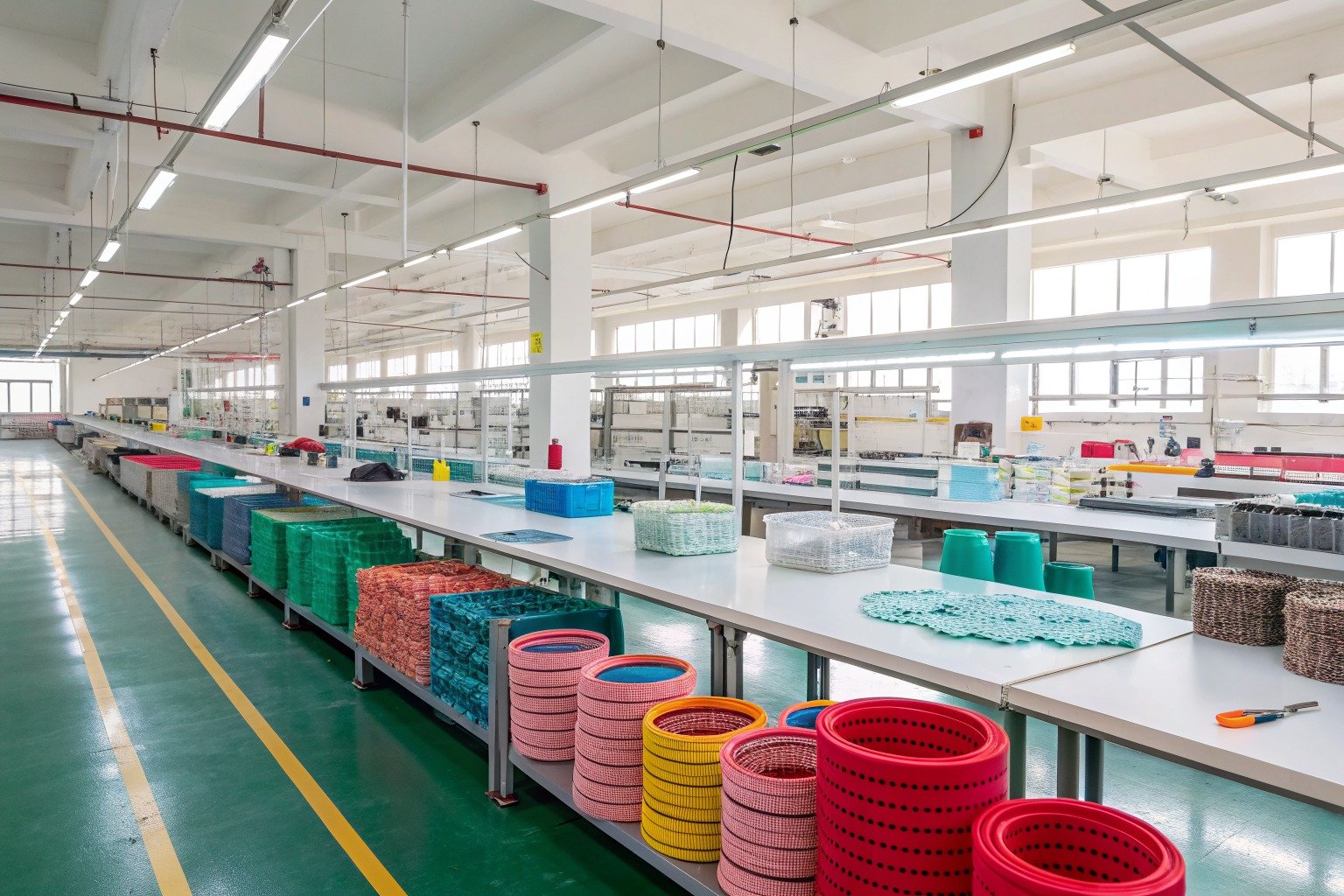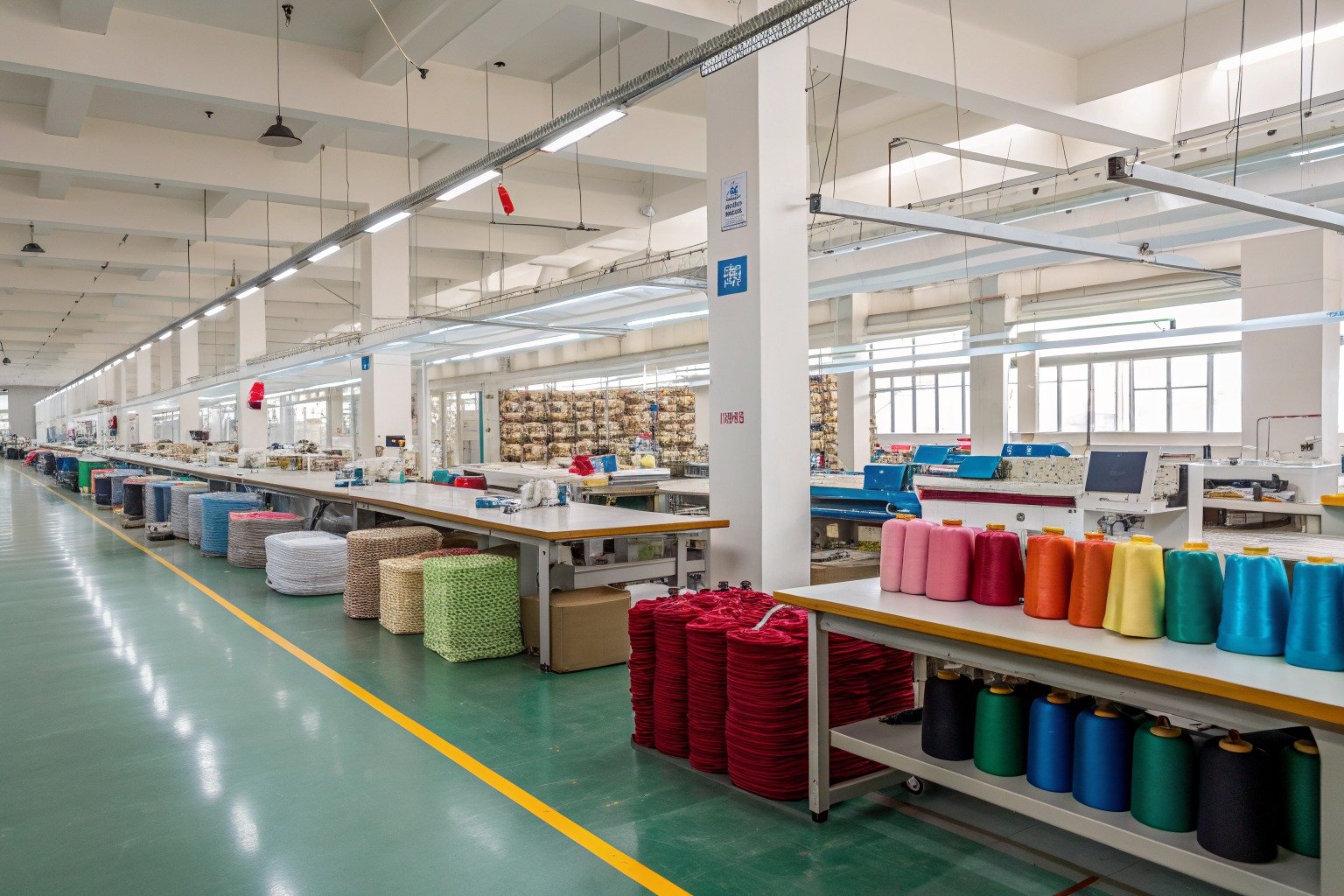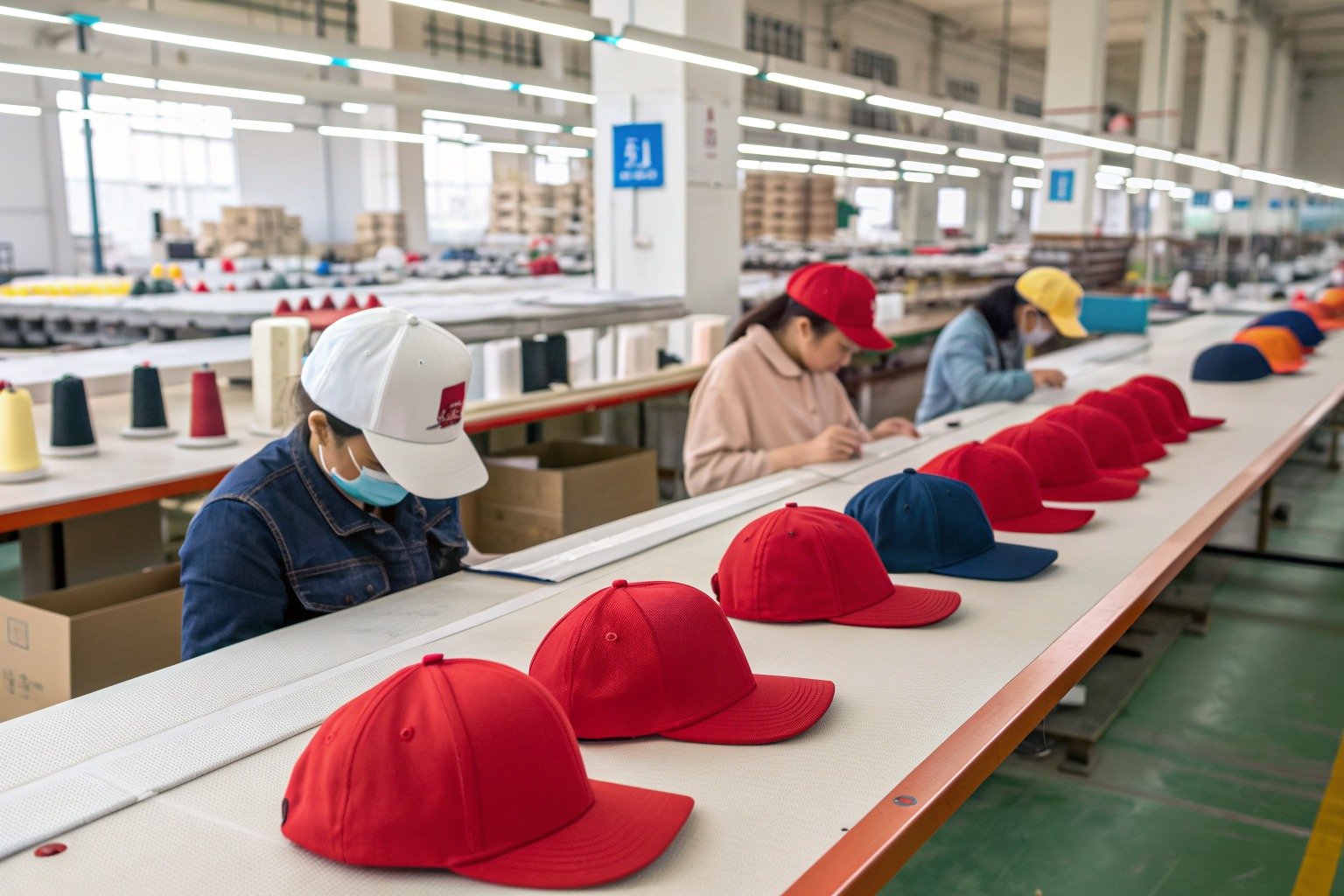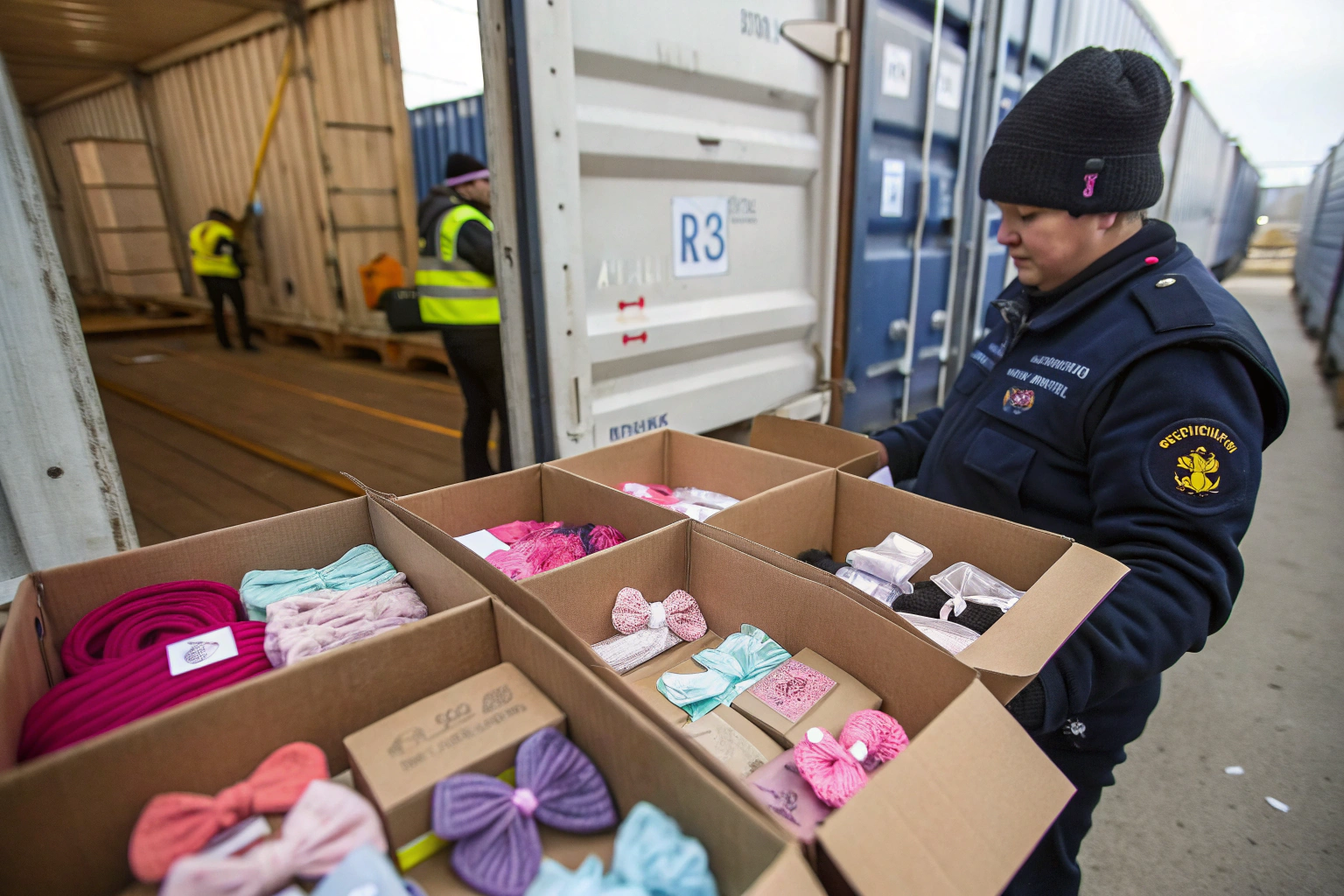
I remember a shipment we prepared three years ago for a new client in Moscow. It was a beautiful collection of children’s hair clips, headbands, and small knitted gloves. We had packed everything perfectly, used our standard English-language safety labels, and shipped the container on time. Two weeks later, I received an urgent email. The shipment was stuck at Russian customs. The inspector had opened a carton of hair clips, saw no Russian-language safety information, and immediately flagged the entire container. My client had to pay storage fees, hire a local compliance consultant, and wait three weeks while we rushed printed Russian labels to be applied at the warehouse. The delay cost him the first month of the back-to-school sales window. That experience taught me a lesson I never forgot. Russian-language safety labeling on children’s accessories is not a preference or a nice-to-have. It is a hard legal requirement enforced at the border by a certification system that is very different from what American and European buyers are used to.
Russian buyers require Russian-language safety labels on kids’ accessories because it is a mandatory legal requirement under the Eurasian Economic Union’s Technical Regulation TR CU 007/2011 "On the Safety of Products Intended for Children and Adolescents." This regulation demands that all children’s products sold in Russia, Belarus, Kazakhstan, Armenia, and Kyrgyzstan carry safety information, manufacturer details, age recommendations, and care instructions entirely in the Russian language. Without this labeling, customs authorities will reject the shipment at the border, regardless of the quality of the actual product.
Understanding this system is not just about avoiding customs delays. It is about being a reliable, professional supplier who removes friction for your buyer. Russian importers operate in a market with strict state oversight of consumer goods, especially children’s products. When I demonstrate to a new Russian client that we already understand EAC certification and Russian labeling requirements, I see their shoulders relax. They know they are dealing with a factory that will not create expensive surprises. At AceAccessory, we now treat Russian-language labeling as a standard part of our production workflow for clients serving the EAEU market. Let me walk you through exactly why this matters so much and how to get it right.
What Is the EAC Certification for Kids’ Accessories
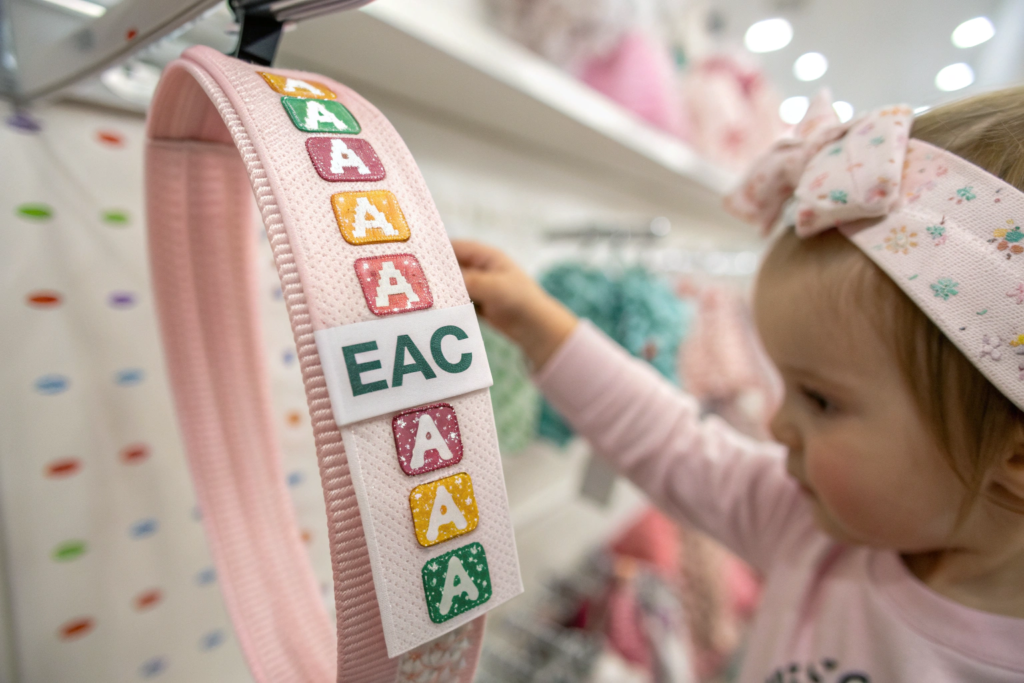
The Eurasian Conformity mark, commonly called the EAC mark, is the gateway to the Russian market. If you want to sell children’s hair bands, belts, shawls, or gloves in Russia, your products must carry this mark. It is not optional. It is the equivalent of the CE mark in the European Union, but with its own specific requirements and its own testing protocols. The EAC mark tells the consumer and the government that the product has been tested and certified to meet the safety standards of the Eurasian Economic Union, which includes Russia, Belarus, Kazakhstan, Armenia, and Kyrgyzstan.
The EAC certification for kids’ accessories is a mandatory conformity assessment required by Technical Regulation TR CU 007/2011, which covers all products intended for children and adolescents. This certification verifies that the accessories meet strict limits for harmful chemicals, have no sharp edges or choking hazards, and are labeled with all required safety information in the Russian language. Importers must obtain either a Certificate of Conformity or a Declaration of Conformity before the goods cross the EAEU border.
Many new exporters confuse the EAC mark with a simple translation exercise. It is much more than that. The certification process involves sending product samples to an accredited testing laboratory in Russia or another EAEU member state. The lab tests for formaldehyde content in textiles, heavy metals in metal clips and snaps, phthalates in plastic components, and physical safety hazards like small parts that could detach. Only after the lab issues a positive test report can the Russian importer register the Declaration of Conformity. The EAC mark then becomes legally valid.
How Does TR CU 007/2011 Affect Children’s Accessories?
TR CU 007/2011 is a comprehensive document. It covers every product category that touches a child’s body, from baby bottles to school uniforms to hair accessories. For our product range, which includes hair clips, headbands, belts, and gloves, the regulation sets specific biological and chemical safety requirements. The formaldehyde level in any textile component touching the skin cannot exceed 75 micrograms per gram for products for children over one year old, and even lower for infants. The pH of the textile must be neutral to slightly acidic. Metal parts like hair clip springs and buckle prongs must be free of nickel release above 0.5 micrograms per square centimeter per week. The regulation also sets physical safety standards. No sharp edges are allowed. Small parts like decorative beads on a hair band must withstand a 90-newton pull test without detaching, to prevent a choking hazard. The regulation divides children’s products by age group, and the labeling must clearly state the intended age. A hair clip designed for a 5-year-old has different mechanical safety requirements than one designed for a 12-year-old. As a manufacturer, we must understand these distinctions and build our products to the correct standard from the design phase. I cannot simply take a hair clip designed for the European market, where EN 71 standards apply, and assume it will pass TR CU testing. The test methods and limits are slightly different, and a failure in the Russian lab can block an entire shipment.
What Is the Difference Between EAC and European CE Marking?
This is a question I get from almost every new European client who wants to expand into Russia. Superficially, the EAC mark and the CE mark look similar in concept. Both are conformity marks that indicate compliance with applicable regulations. But there are critical operational differences. The CE mark allows the manufacturer or importer to self-declare conformity for many product categories, including most fashion accessories. The testing can often be done in-house or through a European lab, and the documentation is filed, not pre-approved by a government body before the goods ship. The EAC system is more centralized and state-controlled. For children’s products, the testing must be performed by a laboratory accredited by the Russian Federal Service for Accreditation, Rosakkreditatsiya. The test report must be in Russian and entered into a unified government database. The Declaration of Conformity is registered by a legal entity located within the EAEU, which is typically your Russian buyer or their appointed representative. You, as a Chinese manufacturer, cannot hold the EAC declaration yourself unless you have a legally registered entity in Russia. Another key difference is labeling. A CE-marked product can have safety information in any official EU language. An EAC-marked product must have safety information in Russian, specifically. English-only labels are automatically non-compliant. Even bilingual labels where Russian is presented in a smaller font size than English can be rejected by an inspector. The Russian language text must be clear, legible, and permanently attached. I always advise my clients to treat the EAC process as a separate, parallel track from CE compliance. Trying to shortcut it with European documentation alone will fail at the border.
What Must Be Included on Russian Kids’ Safety Labels
Getting the content of the label right is just as important as obtaining the EAC certification. A correctly formatted label is the visible proof of compliance that the customs inspector sees first. If the label is missing any required element, the inspector does not need to open a test report to reject the shipment. They can simply point to the missing information and issue a violation notice. I have learned to treat the Russian label as a legal document, not a marketing afterthought. Every word on it serves a compliance purpose.
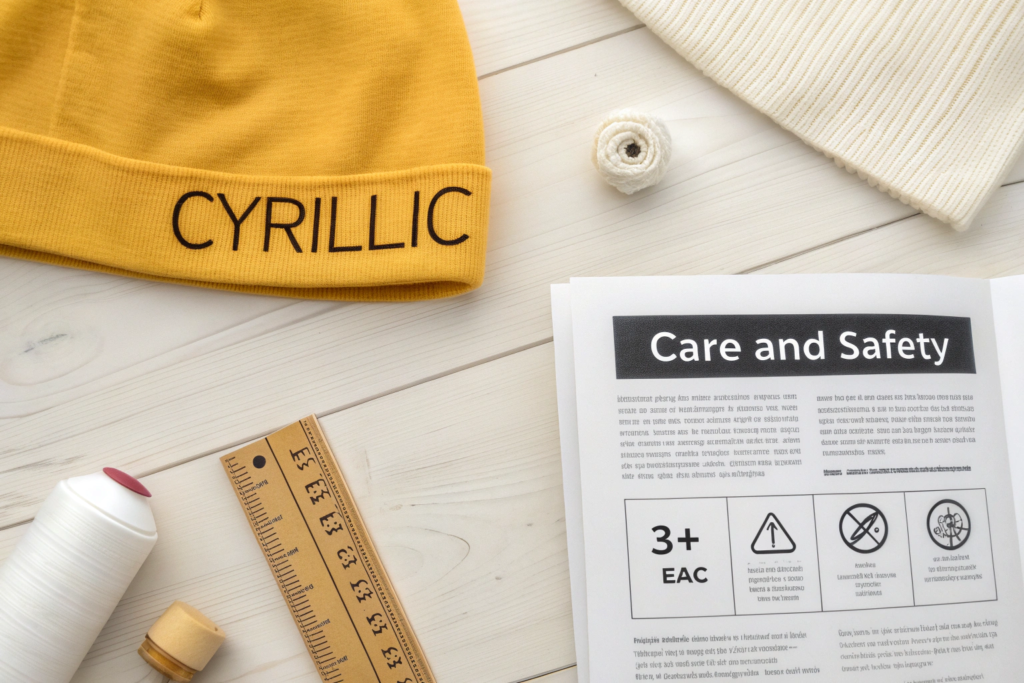
A compliant Russian-language safety label for kids’ accessories must include the product name in Russian, the country of manufacture, the name and legal address of the manufacturer or authorized representative in the EAEU, the age recommendation clearly stated, the EAC conformity mark, the composition of materials by percentage, care instruction symbols with Russian explanatory text, and the date of manufacture. If the product is imported, the importer’s details must also appear on the label or the packaging.
Missing even one of these elements can cause a shipment hold. I have a checklist that our QC team follows for every order destined for Russia. We verify the label against the EAC certificate to ensure the manufacturer name and address exactly match what is registered in the Rosakkreditatsiya database. A typo in the address is a compliance failure. The stakes are high, especially for children’s products where regulatory scrutiny is at its maximum.
Why Is Age Classification Critical on Children’s Product Labels?
Age classification is not a suggestion. It is a safety determination with legal consequences. A children’s hair clip labeled for ages "3+" has been tested and certified for the specific hazards relevant to a 3-year-old child. The primary hazard is choking. The small parts regulation in TR CU 007/2011 strictly prohibits small parts in products intended for children under 3 years old. If a hair clip has a small decorative charm that could detach, it cannot be labeled for children under 3. If the product is labeled without an age, or with a vague statement like "for kids," the customs inspector will assume the worst case, which is that it could be given to an infant. This triggers the most stringent testing and labeling requirements. I have seen shipments of perfectly safe hair clips for 8-year-olds rejected because the label said "for children" without specifying the age group, and the inspector applied infant product standards to them. The correct format is a clear statement: "Для детей старше 3 лет" or "For children over 3 years old." The age classification also affects the chemical testing. Products for children under 1 year have the strictest formaldehyde limits. Products for adolescents have slightly relaxed limits. If your label does not specify the age, the lab must test to the infant standard, and your product may fail unnecessarily. I always ask my Russian buyers to provide the exact Russian-language age phrase they want on the label before we begin production. We then use that exact phrase, character for character, on the approved label artwork.
How Should Manufacturer and Importer Details Appear on EAC Labels?
The traceability requirement in the EAEU system is strict. The consumer and the regulator must be able to identify exactly who is responsible for the product’s safety. The label must show the name of the manufacturer and their legal address. For products made in our factory in China, the label must state the full legal name of the manufacturer and the country of manufacture, which is "Китай" for China. But there is a critical nuance. The EAEU requires an authorized representative located within the EAEU territory to be named on the label. This is typically the Russian importer. The label must include their company name, legal address, and contact information. This is the entity that holds the EAC Declaration of Conformity and is legally responsible to the Russian government for the product’s compliance. We cannot just print our Chinese factory address and leave it at that. The customs inspector must see a Russian legal entity on the label. I work closely with my clients to get their exact Russian-language legal name and address as it appears on their registration documents. We never translate it ourselves or guess the transliteration. A single wrong letter can cause a rejection. The format must follow the Russian convention: Company Name, Street Address, City, Region, Postal Code, Country (Russia). The phone number or website is optional but recommended for consumer confidence. We proofread these details multiple times, and we send a digital proof to the client for final sign-off before any labels are printed. This collaboration is essential and has saved our clients from countless border headaches.
How to Print Compliant Russian Labels for Kidswear Accessories
Printing Russian labels correctly requires attention to both the visual quality and the physical durability. A label that fades after three washes or peels off the product is a non-compliant label. The regulation requires that the information be "indelible, legible, and accessible for inspection." This means the printing method and the label material must survive the product’s expected lifetime, including washing, wearing, and normal handling. At AceAccessory, we have invested in specific label printing and attachment methods for our Russian-market products, because a poorly attached label is a compliance risk that can surface months after the sale, during a random market surveillance inspection.
Printing compliant Russian labels for children’s accessories requires using durable label materials like woven satin, nylon taffeta, or coated Tyvek, combined with thermal transfer or screen-printing methods that produce fade-resistant Cyrillic text. The label must be sewn directly into a seam for textile products or permanently adhered with industrial adhesive for hard goods like hair clips. Hang tags alone are not sufficient, because they can be removed, and the regulation requires the safety information to remain with the product permanently.
I learned the hard way that a paper hang tag attached with a plastic swift tack is not a compliant label. A hang tag is marketing. The safety label must be part of the product. We use different attachment methods depending on the accessory type, and I want to share the specifics so you can specify your requirements correctly to any factory you work with.
Which Label Materials Survive Washing and Wear Best?
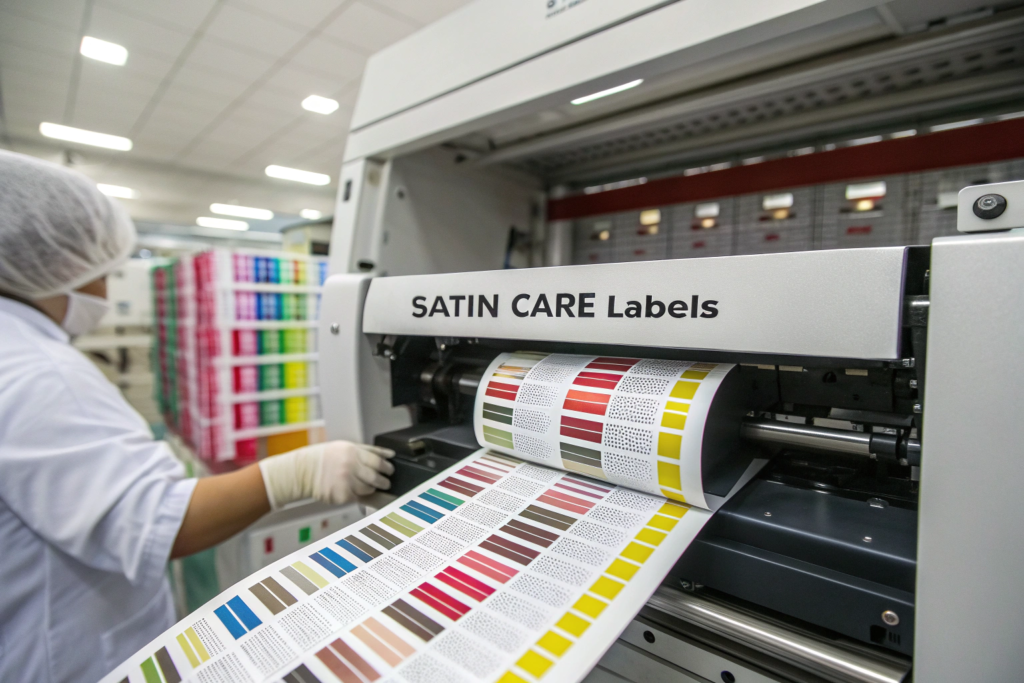
The choice of label material depends on the product category. For textile accessories like children’s scarves, gloves, and knit caps, the gold standard is woven satin polyester labels. These are soft against a child’s skin, do not irritate, and can be sewn flat into a side seam or along the inner hem. The text is woven into the fabric using jacquard looms or printed using thermal transfer with a hot-press cure. Thermal transfer on woven satin produces very sharp Cyrillic characters that survive dozens of machine washes without fading. We have tested our labels through 50 wash cycles at 40 degrees Celsius, and the text remains perfectly legible. For waterproof or coated accessories, like a child’s rain poncho or a laminated bib, woven labels are not ideal because the sewing needle creates holes that compromise the waterproofing. We use a flexible, matte-coated nylon label with a high-bond adhesive backing. The adhesive is heat-activated and pressure-bonded to the coated fabric surface. This label can be wiped clean and does not fray at the edges. For hard accessories like plastic hair clips or metal barrettes, a sewn or adhesive fabric label is not practical. We use a direct pad-printing process to apply the required Russian safety information directly onto the non-visible surface of the clip. The ink is a two-part epoxy-based formulation that cures hard and resists scratching. Alternatively, we use a small printed polypropylene label with a permanent acrylic adhesive, which we apply to a recessed area on the back of the accessory. The key requirement is permanence. The label material must resist the oils from a child’s hair and the friction from regular use.
Should Safety Labels Be Sewn In or Sticker-Applied?
The decision between sewn-in and sticker-applied labels is not just about manufacturing convenience. It is about the product type and the regulatory expectation. For any textile product where the label can be sewn in without affecting the function, sewing is the preferred and most compliant method. Sewn labels are considered permanent. A Russian customs inspector can see the sewn-in label and immediately know it cannot be removed without scissors. This is the highest standard of permanence. We use a lockstitch sewing machine with a fine needle to attach labels to scarves, hats, and gloves. The label is folded into the seam allowance so only the printed surface is visible, creating a clean, professional finish. For products where sewing is impossible, such as a solid resin hair clip or a molded plastic belt buckle, sticker-applied labels are acceptable but must meet a higher durability standard. The adhesive must be permanent, not removable. We test our sticker labels using a peel adhesion test based on the ASTM D3330 standard. The label is applied to the product material and conditioned for 24 hours. Then a force gauge measures how many newtons are required to peel the label off. A pass is 15 newtons or above. We also test the label’s resistance to common substances a child’s accessory might encounter, including water, mild shampoo, and skin oils. If the label edge lifts or the print smudges, we reformulate the adhesive or the topcoat. I recommend that Russian buyers always specify their preference for label attachment in their purchase order. If they have had issues with peeling labels in the past, we can upgrade the adhesive or switch to a mechanical attachment like a riveted metal plate for high-value items.
What Happens If Russian Customs Finds Non-Compliant Labels
The moment a customs inspector in Russia identifies a non-compliant label on a children’s accessory, a chain of costly consequences begins. This is not a hypothetical scenario. It happens regularly to importers who cut corners or work with factories that do not understand EAEU requirements. I have guided several clients through the aftermath of a customs hold, and the stress is immense. The goods are physically trapped. The sales season is ticking away. Storage fees are accumulating daily. And the resolution process is bureaucratic and time-consuming.
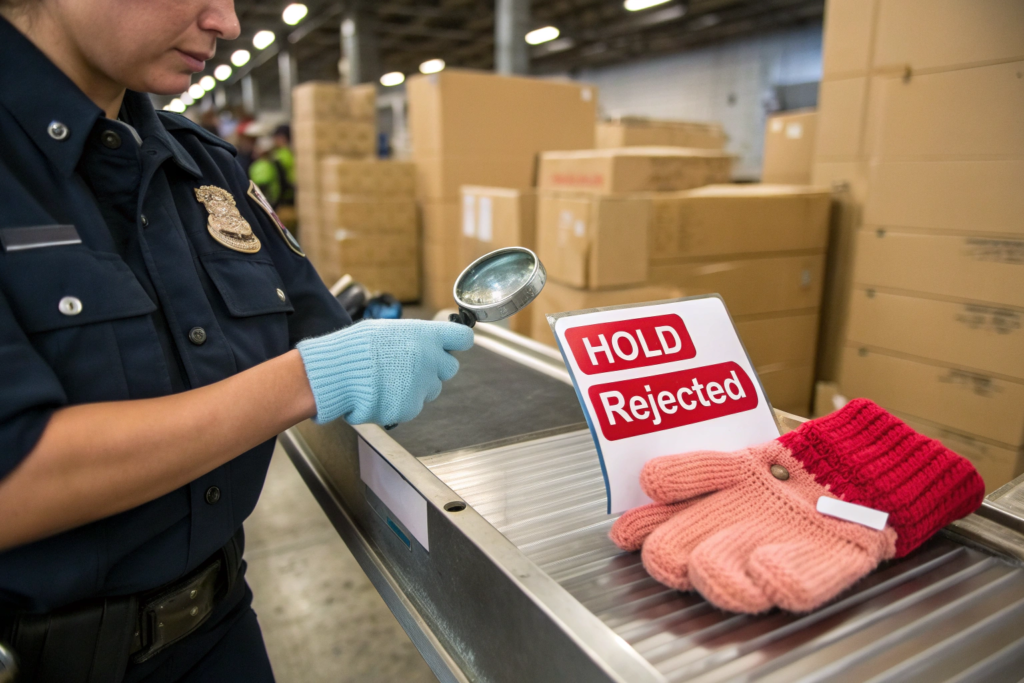
If Russian customs finds non-compliant labels on imported children’s accessories, the shipment is immediately placed under customs detention and the importer is issued an official violation notice. The goods cannot enter the Russian market until the labeling is corrected to meet TR CU 007/2011 standards. This can require relabeling at a bonded warehouse, which incurs storage fees, labor costs, and administrative fines. In severe cases of repeated non-compliance, customs can order the re-export or destruction of the goods at the importer’s expense.
Understanding the specific penalties and the remediation options helps you appreciate why Russian buyers are so insistent on getting the labels right from the factory. They are not being difficult. They are protecting their business from a regulatory trap that can erase their entire profit margin on a shipment. Here is what happens in practice.
What Are the Financial Penalties for Incorrect Labeling?
The direct costs of a labeling violation begin the moment the shipment is flagged. The Russian Federal Customs Service charges daily storage fees for containers held in their bonded warehouse. These fees vary by port and container size, but a standard 40-foot container can accumulate charges of several hundred dollars per day. A three-week hold can generate storage fees that wipe out the profit on the entire shipment. On top of storage, there is the cost of the relabeling work itself. The importer must hire an approved contractor who has access to the customs-controlled area. This contractor opens every carton, removes the non-compliant labels or applies compliant labels over them, and repacks the goods under the supervision of a customs officer. The labor cost for this is significantly higher than factory labeling. We are talking about three to five times the per-unit cost. Then there are the administrative fines. The Code of Administrative Offenses of the Russian Federation, specifically Article 14.43 and Article 14.46, covers violations of technical regulations and labeling requirements. Fines for a first offense against a legal entity can range from 100,000 to 300,000 rubles, which is roughly equivalent to 1,000 to 3,000 US dollars. For repeat offenses, the fines escalate and can be accompanied by a suspension of the importer’s business activities for up to 90 days. A 90-day ban on selling products during the peak children’s shopping season is a business-ending event. Beyond the government fines, there is also the reputational damage. Russian retailers who face empty shelves because a shipment is stuck in customs may cancel future orders and switch to a more reliable supplier. The true financial cost of a labeling violation often extends far beyond the immediate fines and fees.
Can Non-Compliant Labels Be Fixed After Shipment Arrival?
Technically, yes, but the process is painful and expensive. The importer must petition the customs authority for permission to carry out corrective labeling within the bonded warehouse zone. This petition must include a detailed plan of how the labels will be corrected, a sample of the new compliant label, and a commitment to cover all supervision costs. If customs approves, the work can begin. The corrective label is usually an over-sticker, a self-adhesive label with the missing Russian-language information and the EAC mark, which is applied directly over the non-compliant part of the original label or on a visible adjacent location. The challenge is that the over-sticker must meet all the same durability and legibility standards as the original label. A cheap paper sticker that falls off immediately after purchase does not satisfy the requirement. We have produced emergency over-sticker batches for clients in this exact situation. We print them on durable waterproof vinyl with a high-tack adhesive and express ship them to the bonded warehouse. The lead time on this is typically five to seven days for printing and shipping, which adds to the storage clock. Some product types are harder to fix than others. A sewn-in woven label on a knit cap is easy to cover with an over-sticker. A pad-printed safety mark on a plastic hair clip is almost impossible to correct without damaging the product. In that case, the only option may be to insert a separate compliant leaflet into the packaging and argue to customs that the leaflet constitutes adequate information, but this is a weaker compliance argument and depends on the inspector’s discretion. The best strategy, by far, is to get the labels right at the factory. The cost of doing it correctly during production is a fraction of a cent per unit. The cost of fixing it under customs detention is measured in thousands of dollars and sleepless nights.
Conclusion
Russian-language safety labeling on children’s accessories is not a bureaucratic quirk. It is a well-established legal framework designed to protect children from unsafe products and to ensure that parents and caregivers have access to critical safety information in a language they can understand. The journey we took through this topic has shown that the EAC certification system, anchored by TR CU 007/2011, is mandatory and unforgiving. You have seen how the EAC mark differs from the European CE mark, requiring state-accredited laboratory testing and a legally registered Russian entity to hold the Declaration of Conformity. You now know exactly what must appear on the label, from the age classification to the manufacturer and importer details, and that missing any element triggers a customs hold. The label itself is a technical product. The material must survive washing and wear, and the attachment method must be permanent. Sewn-in labels for textiles and adhesive or pad-printed labels for hard goods each have their own compliance standards. And if something goes wrong, the penalties are severe, including daily storage fees, relabeling costs, government fines, and the potential destruction of the goods.
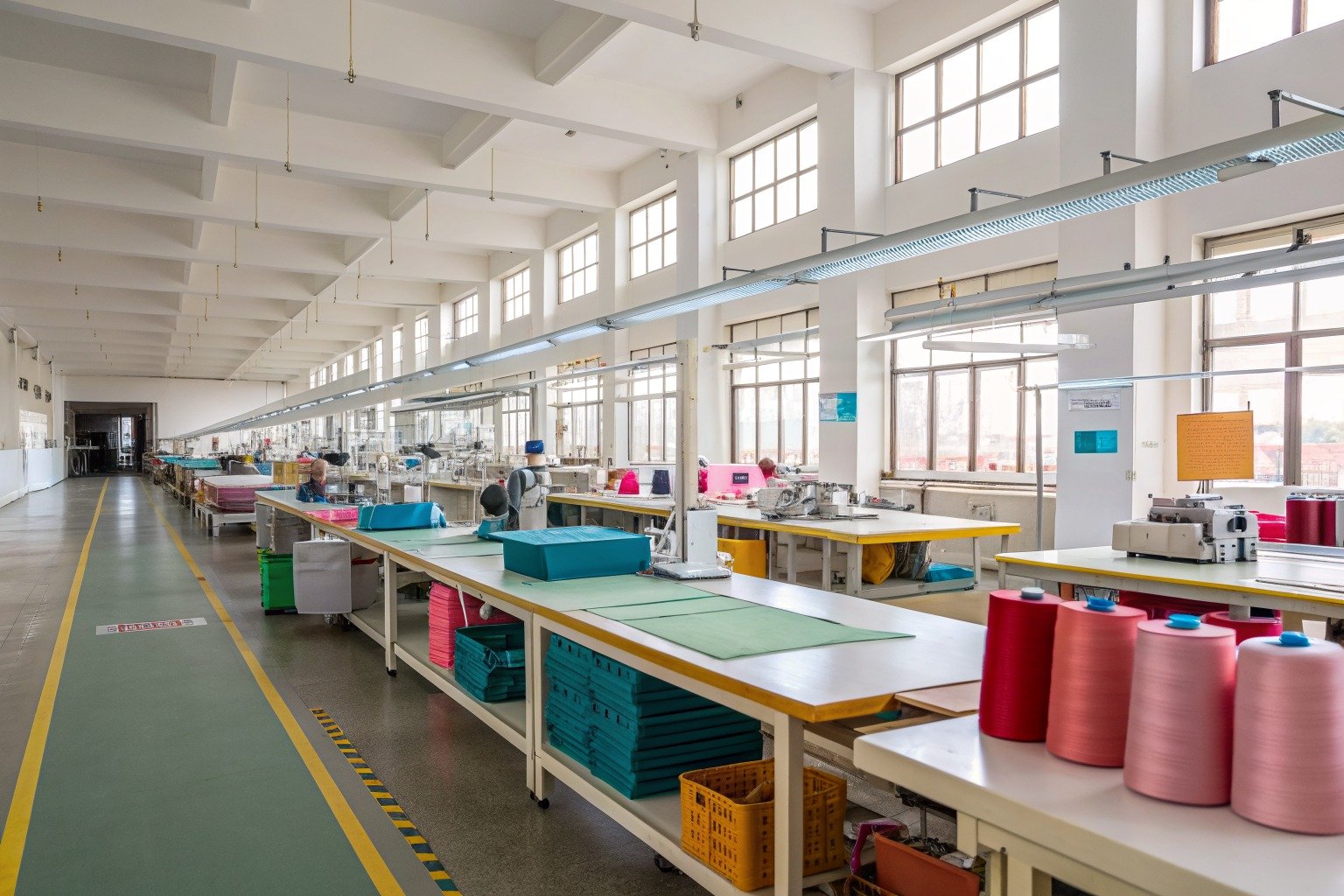
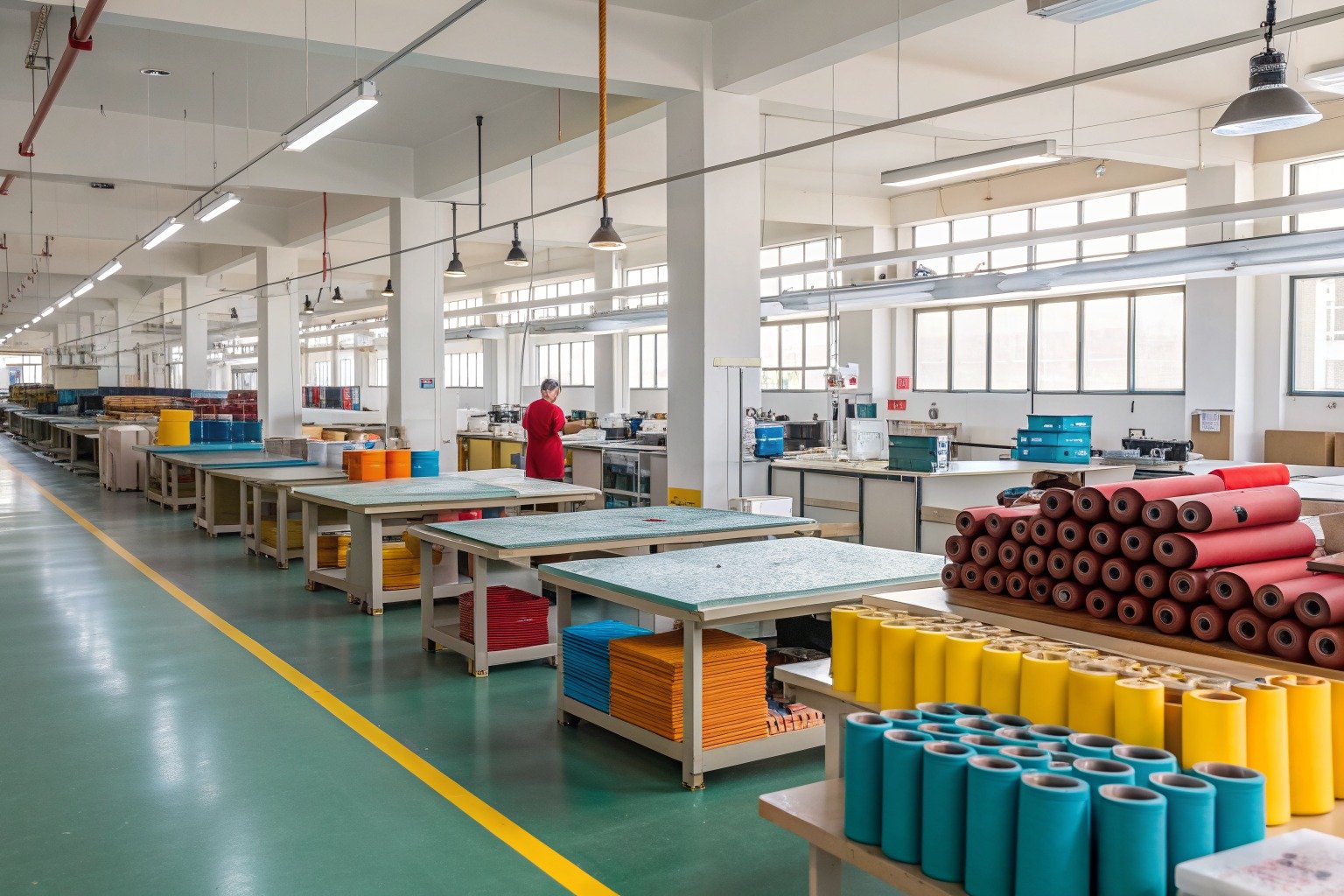
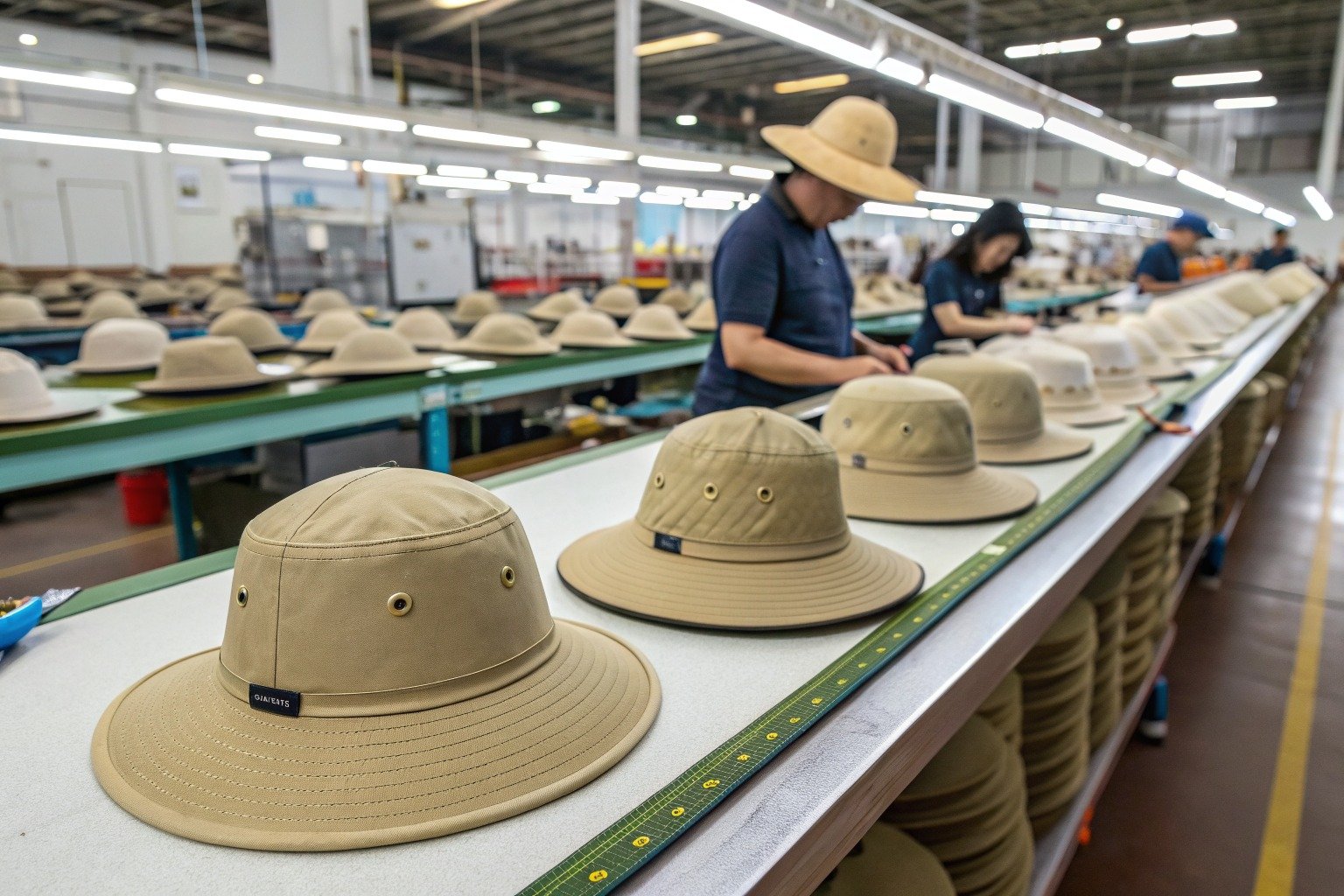
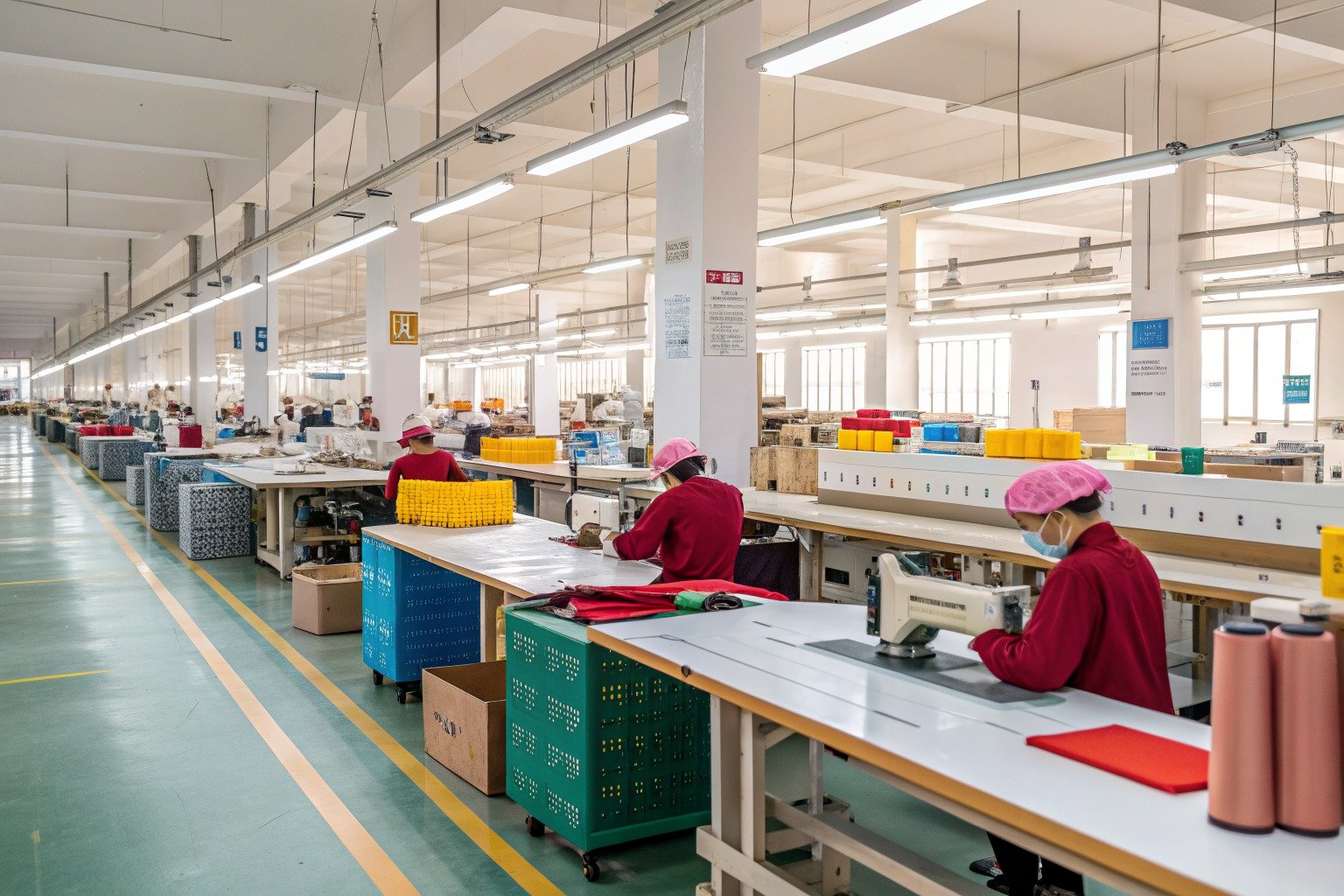
At AceAccessory, we have internalized these requirements into our standard operating procedures. Our factory in Zhejiang has the label printing, testing, and attachment capabilities to produce fully EAC-compliant children’s accessories without drama. Our project managers understand the Russian regulatory landscape and can guide you through the documentation requirements. We treat every order bound for Russia, Belarus, or Kazakhstan with the compliance rigor that these markets demand. We do not want our clients to experience the stress of a customs detention. We want their shipments to clear the border smoothly and arrive on retail shelves exactly when they are supposed to.
If you are sourcing children’s hair accessories, hats, scarves, gloves, or any other kids’ products for the Russian or EAEU market, let us handle the compliance complexity for you. Reach out to our Business Director, Elaine, at elaine@fumaoclothing.com. She can review your product specifications, advise on the EAC certification pathway, and provide a quotation for fully compliant, Russian-labeled accessories manufactured in our modern, quality-controlled factory. Do not let a missing label block your access to one of the largest children’s markets in the world.