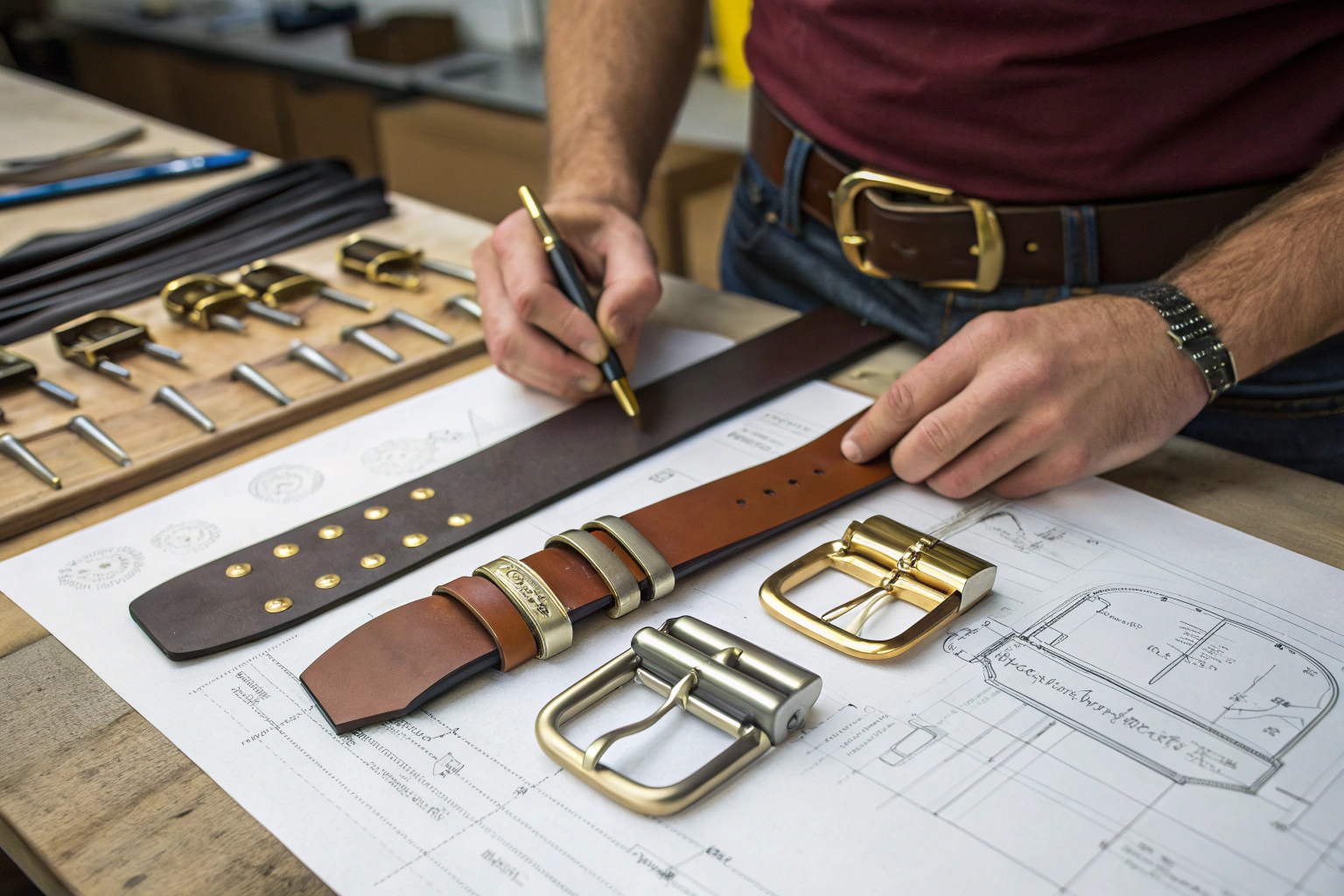
A buyer from a Texas-based western wear brand once called me with a calendar problem. He had finalised his belt designs for the upcoming season, but his previous hardware supplier had quoted him an eight-week lead time for custom belt tips and keepers. The designs were not complex. They were simple oval tips with a debossed brand logo and matching rectangular keepers. Eight weeks was going to cause him to miss his delivery window to his retail accounts. He asked me if there was any way to produce custom metal hardware faster without sacrificing quality. I told him the timeline depends on the process, and the process starts with the right design decisions.
Custom metal belt tips and keepers can be produced in 15 to 25 working days for die-cast zinc alloy designs, and 20 to 30 working days for stamped brass or steel designs. The timeline covers mold or die fabrication, casting or stamping, plating, polishing, and quality inspection. A simple design with an existing mold base can ship in as little as 10 working days. A complex design requiring new tooling and multi-step finishing takes the full timeline.
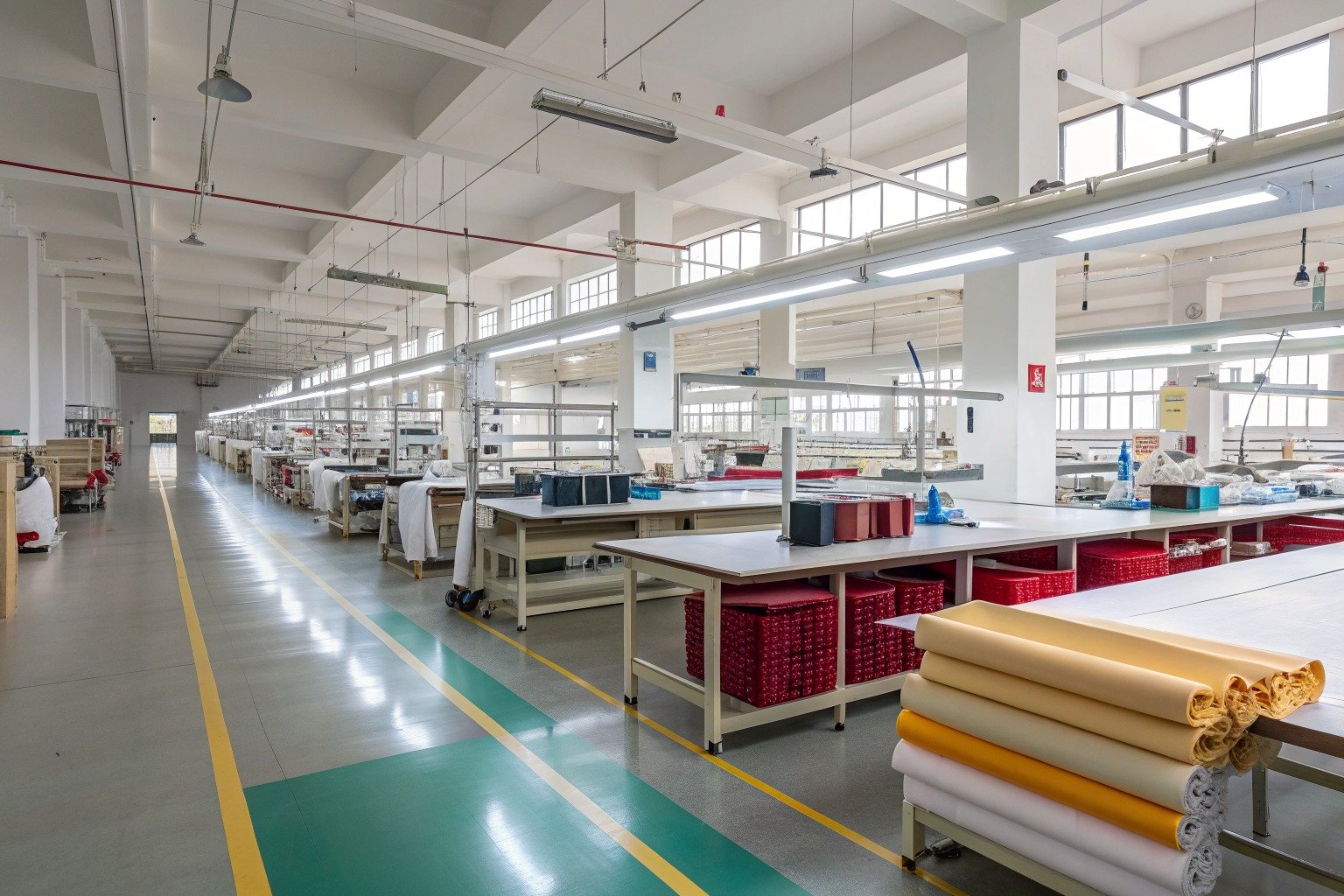
At Shanghai Fumao, our metal hardware workshop produces belt tips and keepers for brands across North America and Europe. We know exactly where the time goes in the production process and how to compress the timeline without compromising quality. Let me walk you through the process so you can plan your production calendar with confidence.
What Are the Key Production Methods for Metal Belt Tips and Keepers?
The production method determines the timeline. The two most common methods for producing metal belt tips and keepers are die casting and metal stamping. Each method has different tooling requirements, different production speeds, and different design capabilities.
Die casting uses a zinc alloy that is melted and injected under pressure into a steel mold. The metal fills the mold cavity and solidifies into the exact shape of the design. Die casting is ideal for belt tips and keepers with three-dimensional detail, complex curves, debossed or embossed logos, and sculptural shapes. The mold cost is higher than a stamping die, but the per-unit cost is lower at volume, and the design freedom is greater.
Metal stamping uses a flat sheet of brass, steel, or zinc that is pressed between a male and female die to cut and form the shape. Stamping is ideal for flat or simply curved designs, clean geometric shapes, and designs with cut-out details. The die cost is lower than a casting mold, but the design is limited to what can be formed from a flat sheet. Stamped parts can be bent or folded in secondary operations to create three-dimensional forms like keepers.
Why Does Die Casting Offer Greater Design Freedom for Belt Tips?
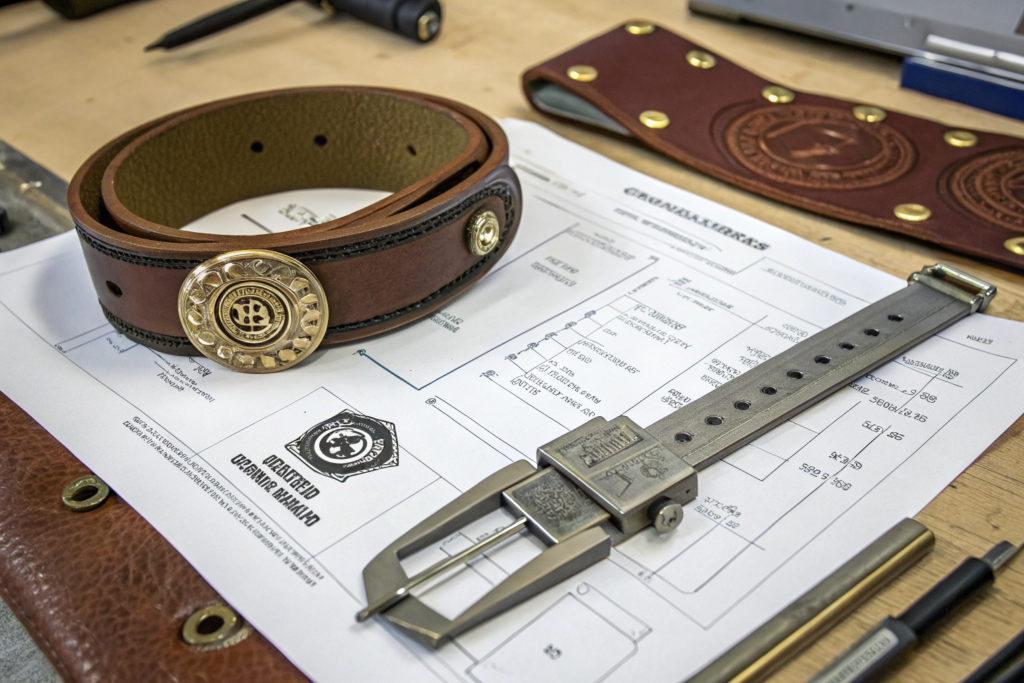
Die casting captures every detail of the mold cavity. If the mold has a finely engraved logo, the casting reproduces that logo with high fidelity. If the mold has a textured surface, the casting reproduces the texture. The process can produce parts with varying wall thickness, internal cavities, and complex three-dimensional curves that stamping cannot achieve.
For a belt tip that wraps around the end of a leather strap, die casting can produce the curved profile, the prong attachment points, and the decorative face in a single piece. The tip comes out of the mold as a complete part. Stamping would require multiple forming operations and possibly welding to achieve the same geometry. The design freedom of die casting allows a brand to create a distinctive, signature hardware shape that is instantly recognisable. If your brand is developing custom metal hardware for leather goods, die casting is the method that removes design constraints.
What Are the Advantages of Stamping for Belt Keepers?
Belt keepers are the small loops that hold the free end of the belt strap flat against the body. They are typically simple rectangular or curved shapes. Stamping is well-suited to this geometry. A strip of brass or steel is fed through a progressive die that cuts and forms the keeper shape in a continuous operation. The process is fast and efficient.
Stamped keepers have a clean, consistent edge. The metal grain follows the bend, which gives the keeper strength. Stamped keepers can be produced with a spring temper that allows them to grip the belt strap securely without deforming. The die cost is lower than a casting mold, and the production speed is higher. For a brand that needs a functional, cost-effective keeper with a clean finish, stamping is the appropriate method. For a brand that wants a keeper with a sculptural shape or a detailed logo, die casting may be the better choice. Understanding the metal forming process for fashion accessories helps you select the right method for each component.
What Is the Mold and Die Making Timeline?
The mold or die is the tool that shapes the metal. Making this tool is the longest single stage in the production timeline. A die-casting mold for a belt tip or a keeper takes 10 to 15 working days to fabricate. A stamping die takes 7 to 12 working days. The timeline depends on the complexity of the design and the current workload of the mold-making workshop.
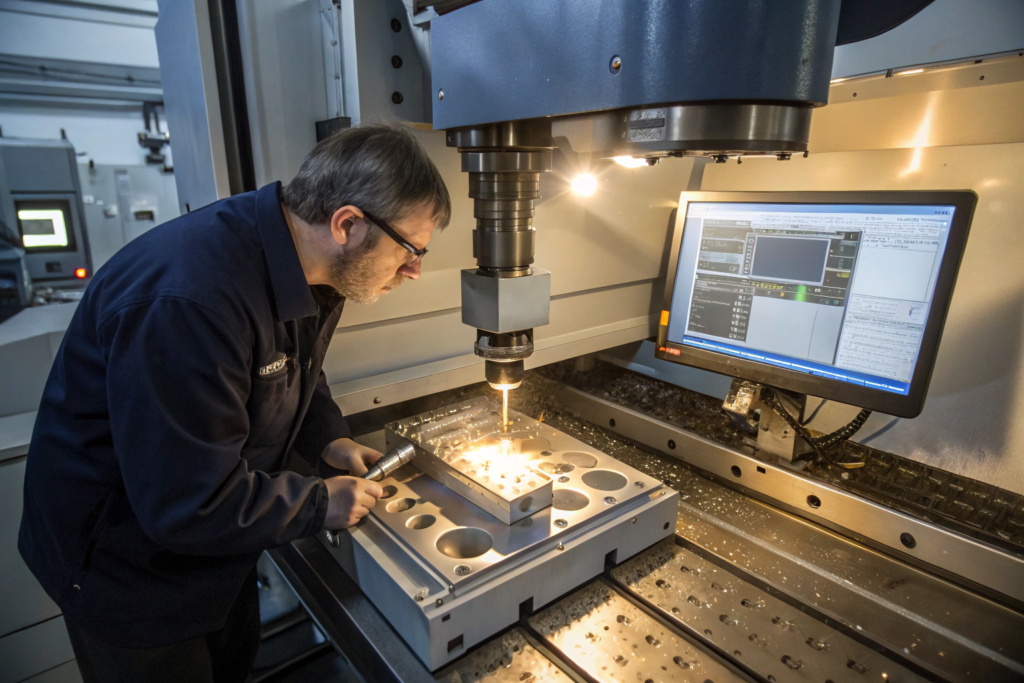
The process starts with your approved 3D CAD file. Our mold engineers review the design for manufacturability. They check that the part can be ejected from the mold without locking. They check wall thicknesses and draft angles. They design the mold or die in CAD, program the CNC machine, and cut the steel. After machining, the mold cavity is hand-polished by a skilled mold polisher. The polishing quality determines the surface finish of the final part. A high-gloss belt tip requires a mirror-polished mold cavity. The polishing can take several days for a complex shape with fine detail.
How Long Does a Die-Casting Mold Take for a Custom Belt Tip?
A standard die-casting mold for a belt tip takes 12 to 15 working days from approved CAD to a test-ready mold. The mold is cut from tool steel on a CNC machining center. The cavity, the runner system, the ejector pin holes, and the cooling channels are all machined in sequence. After machining, the mold is heat-treated to harden the steel. Heat treatment takes one to two days depending on the steel grade.
After heat treatment, the mold cavity is polished. A simple polished finish takes one to two days. A complex finish with fine engraving takes longer. The mold is then assembled and test-run. We cast a small batch of sample tips and inspect them for dimensional accuracy, surface finish, and detail reproduction. If adjustments are needed, the mold is modified and tested again. The mold is approved for production only when the test samples meet every specification. If you are planning a custom die-cast hardware project, the mold timeline is the critical path item that determines your earliest ship date.
What Is the Timeline for a Simple Stamping Die?
A stamping die for a belt keeper or a flat belt tip takes 7 to 10 working days to fabricate. The die is simpler than a casting mold because it does not require a runner system, cooling channels, or a complex ejection mechanism. The die is cut from tool steel, heat-treated, and tested on a stamping press.
The test samples are inspected for edge quality, dimensional accuracy, and form. For a keeper, the bend radius and the gap between the ends are critical dimensions that affect how the keeper fits on the belt strap. For a tip, the prong hole placement and the overall length are critical. The die is adjusted until the samples meet the specification. The total timeline from approved CAD to production-ready die is typically two weeks or less. Professional metal stamping die fabrication is faster than die-casting mold fabrication because the tool is less complex.
How Does Plating and Finishing Affect the Production Timeline?
After the metal parts are cast or stamped, they must be finished. The finish is the colour, the shine, and the surface texture that the consumer sees and touches. Plating, polishing, and antiquing are separate processes that add days to the production timeline.
The base metal, typically zinc alloy or brass, is first polished to remove any surface imperfections, mold lines, or stamping burrs. The polishing is done by hand or by tumbling with abrasive media. After polishing, the parts are cleaned to remove any polishing compound or oil. The plating process then applies a thin layer of metal to the surface. Common finishes include gold, silver, nickel, brass, and copper. An antiqued finish adds a dark patina to the recessed areas, creating a vintage look. A clear lacquer or e-coat is applied as a final protective layer.
What Is the Standard Timeline for Gold or Silver Plating?
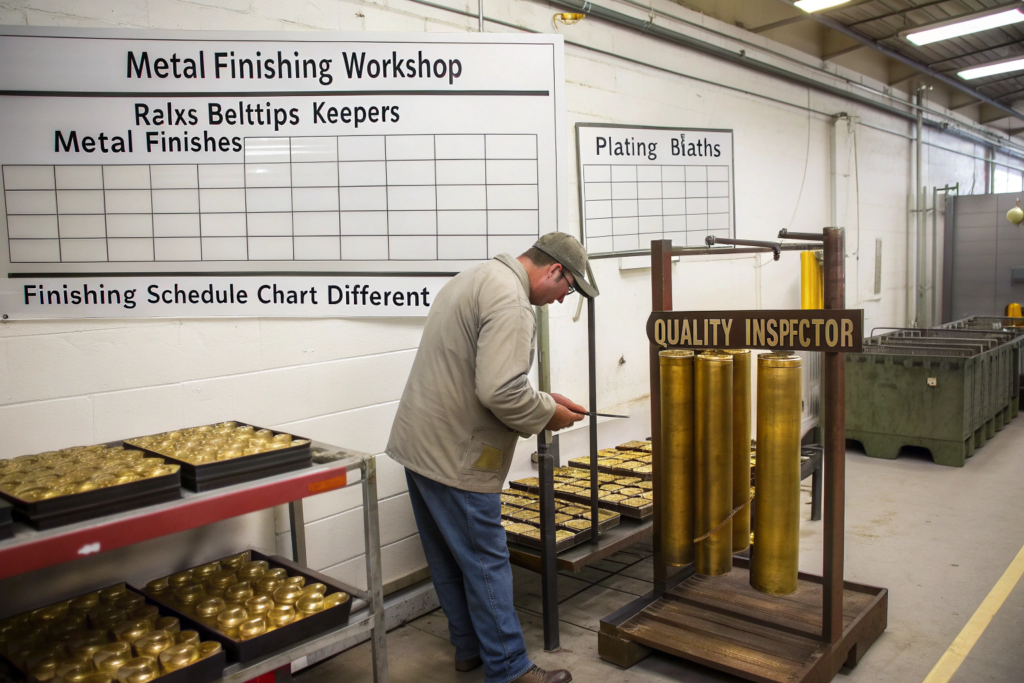
The plating process itself is relatively fast. The parts are immersed in a series of chemical baths. The actual plating takes minutes per rack. The timeline is extended by the pre-plating polishing and the post-plating quality inspection.
A standard plating timeline is 3 to 5 working days from the start of polishing to the finished, inspected parts. This includes hand polishing, barrel polishing for high-volume orders, cleaning, plating, drying, and QC inspection. Rush orders can be expedited to 2 working days if the plating line has capacity. The plating thickness is measured with an XRF or a coulometric gauge to ensure it meets the specified minimum. For a belt tip that will experience daily wear, the plating must be thick enough to resist abrasion. A thin, cheap plating will wear through to the base metal within months. We specify plating thickness in microns and verify it on every production lot. Understanding metal plating standards for fashion accessories ensures your hardware maintains its appearance through the product’s expected lifespan.
How Does Antiquing Add Time and Character to the Finish?
An antiqued finish requires an additional process step after plating. The plated parts are coated with a darkening solution that settles into the recessed areas. The surface is then wiped or lightly polished to remove the darkening from the raised areas, leaving the dark patina only in the crevices. This creates a contrast that highlights the design details and gives the hardware a vintage, heritage appearance.
The antiquing process adds one to two working days to the finishing timeline. It is a manual process that requires skill and judgement. The technician must apply the darkening evenly, control the dwell time, and wipe with the right pressure to achieve the desired contrast. An over-antiqued tip looks dirty. An under-antiqued tip lacks definition. The approved reference sample is the standard that the antiquing technician matches. Each production lot is compared to the approved sample under standardised lighting. If you are developing antiqued metal finishes for accessories, the hand-crafted nature of the process is what gives it character and what requires QC discipline.
How Can You Shorten the Timeline for Your Custom Hardware Order?
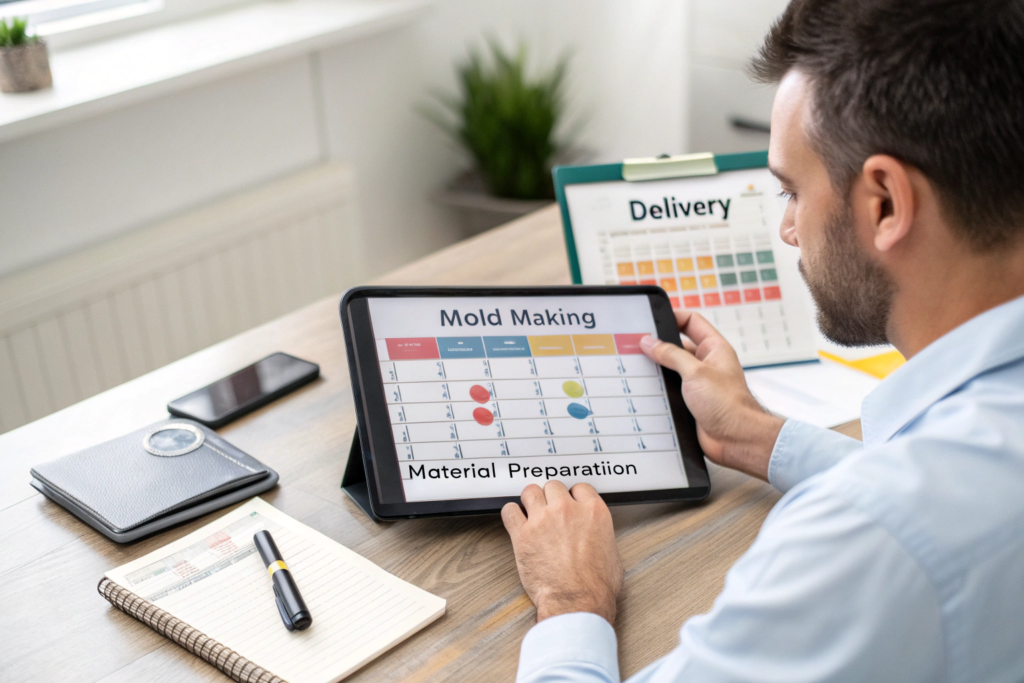
The total timeline for custom metal belt tips and keepers can be compressed by making strategic decisions early. The biggest time-saver is choosing a design that can be produced from an existing mold base, or selecting a finish that does not require multiple process steps.
I advise every client to discuss their timeline openly with our project manager before finalising the design. We can identify the elements that add time and suggest alternatives that deliver the same aesthetic with a faster turnaround. A small change in the design or the finish can save a week or more.
Why Does Using an Existing Mold Base Save Two Weeks?
If your belt tip design can be adapted to an existing mold base, the mold-making stage is eliminated or greatly reduced. We have a library of standard belt tip and keeper shapes. If your design is a variation on an existing shape, we can often modify an existing mold rather than build a new one from scratch. The modification takes a few days instead of two weeks.
This option is available when the overall dimensions and the attachment method match an existing design, and the difference is in the surface detail, such as a different logo or a different border pattern. The logo can be engraved into the existing mold cavity. The border can be modified. The functional geometry remains the same. The timeline drops from four to five weeks to two to three weeks. I encourage clients to review our existing shape library before commissioning a fully custom mold. The cost saving is significant, and the time saving often makes the difference between hitting and missing a seasonal delivery window. Professional product development timeline optimisation starts with leveraging existing assets wherever possible.
How Does a Single-Finish Order Ship Faster Than a Mixed-Finish Order?
A production order with a single finish is simpler and faster than an order with multiple finishes. If all 5,000 belt tips are polished and plated in gold, the finishing process is a continuous flow. If half are gold and half are silver, the batch must be split, two plating lines set up, and two QC inspections performed.
The same applies to a mixed order of tips and keepers. If the tips and keepers are all the same finish, they can be polished and plated together. If they are different finishes, they must be processed separately. A single-finish, single-component order can move through finishing in three to five days. A mixed-finish, multi-component order can take seven to ten days. If you can consolidate your finishes, you can compress your timeline. If you need multiple finishes, plan for the additional time. We will provide a realistic timeline estimate based on your specific order composition. Understanding production batching efficiency helps you make informed decisions about product line planning.
Conclusion
Custom metal belt tips and keepers take 15 to 30 working days from design approval to finished parts, depending on the production method, the tooling requirements, and the finish complexity. Die-cast zinc alloy designs with detailed tooling and multi-step finishing take the full timeline. Stamped brass or steel designs with simple finishing take less time. A design that fits an existing mold base can ship in as little as 10 to 15 working days.
The timeline is driven by mold and die fabrication, which takes one to two weeks, and by plating and finishing, which takes three to seven days. Strategic decisions about design adaptation and finish consolidation can compress the timeline without sacrificing quality. The key is to involve the factory in the design conversation early, before the design is locked, so that timeline optimisation can be part of the process.
At Shanghai Fumao, our metal hardware workshop has the in-house mold-making, die-casting, stamping, and finishing capabilities to produce custom belt tips and keepers to your exact specifications. Our project managers will provide a detailed timeline at the quotation stage and keep you updated throughout the production process. We treat your hardware as a critical brand touchpoint, not a commodity component.
If you are developing custom belt hardware and need a reliable timeline commitment from a factory with the in-house capabilities to deliver, please contact our Business Director Elaine at elaine@fumaoclothing.com. Send her your design files, your finish preferences, and your required delivery date. She will provide a detailed production timeline, a quotation, and a dedicated project manager to guide your hardware from CAD to finished product.