
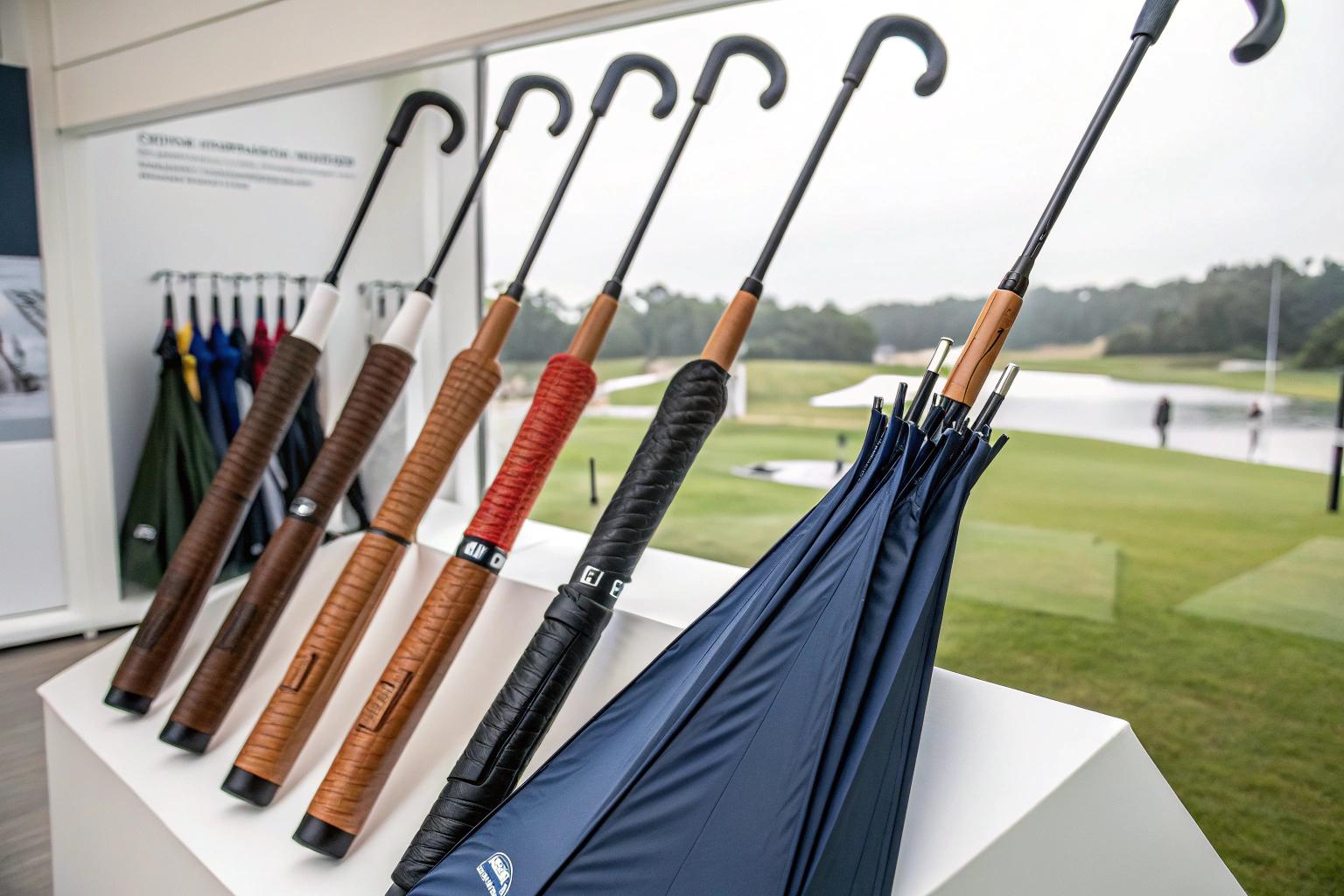
A buyer from a major golf equipment brand visited our showroom last quarter. He was not interested in the canopy fabric. He walked straight to the handle samples and spent fifteen minutes gripping each one. He closed his eyes as he held them. He was simulating a wet glove on a rainy back nine. He told me his brand had received customer complaints about their previous umbrella handle becoming slippery when wet. One negative review on a golf forum had spread and impacted sales. He needed a handle that performed flawlessly under the worst conditions a golfer could face. That conversation shaped everything I am about to share with you.
The most common 2026 umbrella handle designs for golf brands are the straight ergonomic rubber handle, the classic curved wooden crook handle, the performance contoured silicone grip, and the dual-molded comfort grip with an integrated auto-open button. The unifying trend across all designs is wet-weather performance, with materials and textures engineered to maintain grip security when hands are damp, gloved, or both.
Our factory produces umbrellas for golf brands across North America and Europe. We have watched handle design evolve from a simple necessity into a competitive differentiator. Let me walk you through the four handle styles that are defining the 2026 golf umbrella market.
Why Are Straight Ergonomic Rubber Handles the Market Leader?
The straight handle is the workhorse of the golf umbrella world. It accounts for the largest volume of our production. It is not the flashiest design, but when executed well, it is the most versatile and the most reliable across the widest range of conditions.
The straight handle’s dominance comes from its compatibility with golf bag storage. Most golf bags have a dedicated umbrella sleeve or clip. A straight handle slides in and out easily. A curved crook handle can snag. This functional advantage matters to the golfer who is pulling out and stowing the umbrella multiple times during a round. Convenience drives preference.
What Grip Patterns and Textures Perform Best in Wet Conditions?
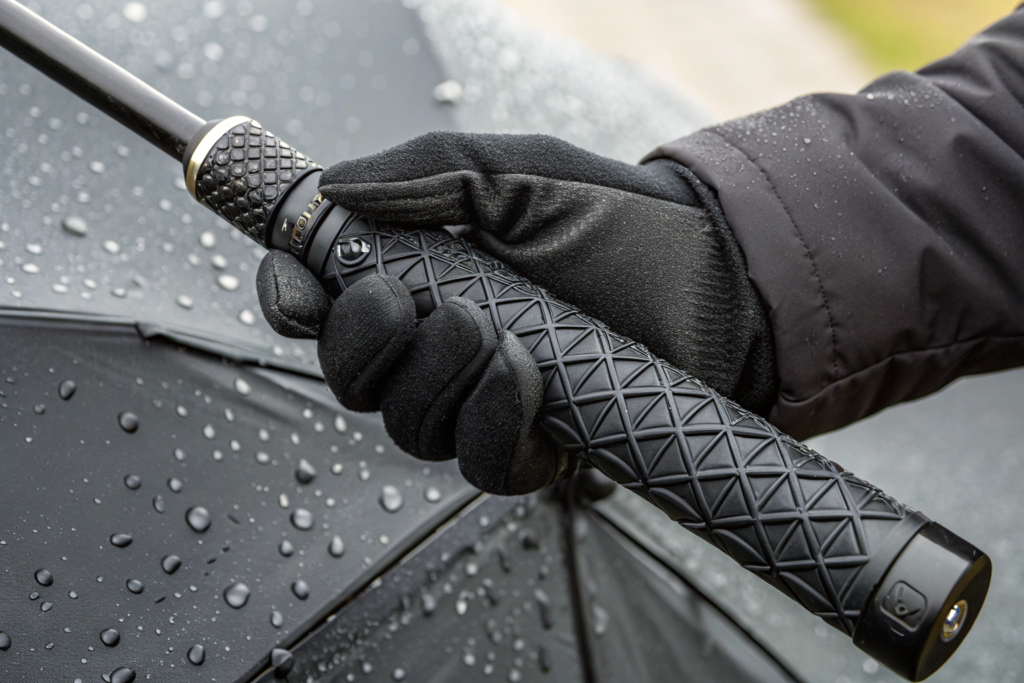
A smooth rubber handle is a hazard in the rain. The 2026 straight handles use multi-directional grip patterns that channel water away from the palm. Diamond knurling, horizontal micro-ribs, and hexagonal texturing are the three most common patterns we produce. Each pattern creates channels for water to escape, leaving the contact surface drier than a smooth finish.
We mold these grip patterns directly into the rubber during injection molding. The pattern is not applied later. It is integral to the handle. This means it never wears off, peels, or smooths out over time. A handle that looks textured but becomes slick when wet is using a surface coating, not a molded pattern. For golf brands, we recommend a pattern depth of at least 0.5 millimeters. Shallower patterns clog with water and lose effectiveness. Deeper patterns provide better drainage and maintain grip longer. Understanding ergonomic grip design principles helps you specify a handle that performs when your customer needs it most.
How Does Material Composition Affect Durability and Comfort?
The straight handles we produce for golf brands use thermoplastic elastomer, or TPE, over a polypropylene core. The TPE provides the soft, grippy feel and the water-channeling surface. The polypropylene core provides structural rigidity and attachment strength to the umbrella shaft.
The TPE formulation matters. We use a UV-stabilized TPE that resists degradation from sunlight. Golf umbrellas spend hours in the sun, propped in a bag or held on the course. Non-stabilized rubber can become sticky or brittle after a season of sun exposure. The TPE also includes an anti-microbial additive that prevents mold and mildew growth in the grip texture. A damp handle stored in a golf bag trunk is a perfect environment for mold. The additive prevents this without affecting the grip feel. For brands marketing premium golf accessories, material quality is a point of differentiation that discerning golfers notice and appreciate.
What Makes the Curved Wooden Crook Handle a Timeless Choice?
The curved wooden crook handle never disappears from the market. It represents the heritage and tradition of the game. A brand that offers a wooden handle is signaling that it values golf’s history, even if the rest of its product line is performance-driven.
The crook handle’s functional advantage is hanging. The curve hooks over a golf bag edge, a bench, or a clubhouse rack. A straight handle requires a dedicated sleeve. A crook handle hangs anywhere. This simple utility has kept the design relevant for over a century. In 2026, the crook handle continues to hold a stable, if not growing, share of the premium segment.
Which Wood Species and Finishes Are Preferred for 2026?
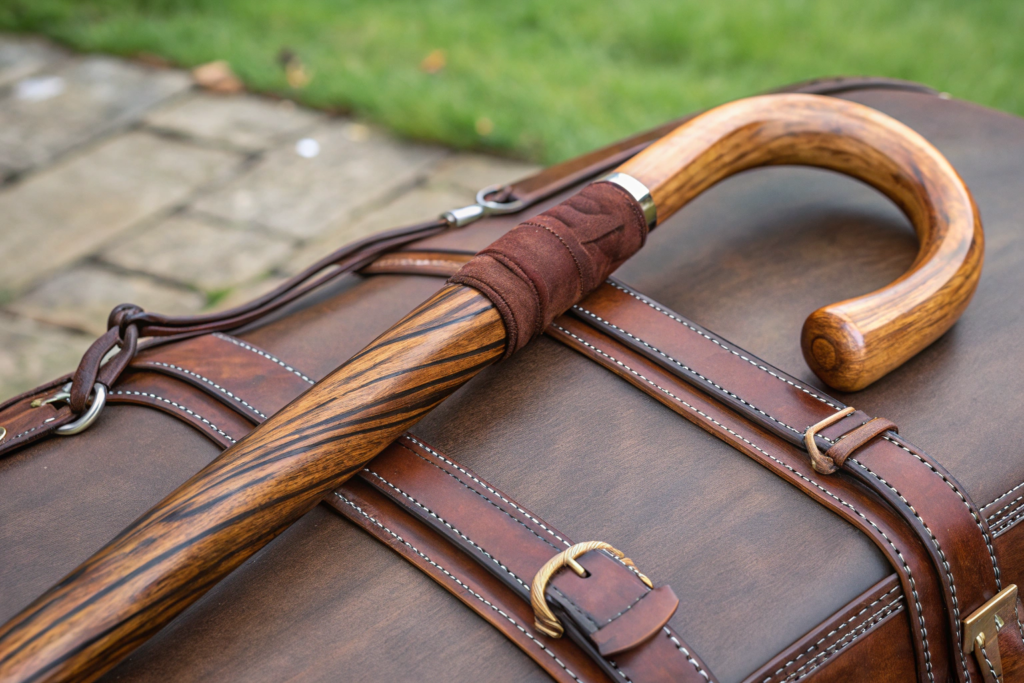
Mahogany, beech, and walnut are the three wood species we most commonly use for crook handles. Mahogany offers a rich, dark grain and excellent stability in changing humidity. Beech is lighter in color and weight, making it a popular choice for brands that want a more contemporary natural look. Walnut provides a deep, dark tone that pairs beautifully with black or navy canopies.
The finish trend for 2026 is satin, not gloss. A high-gloss varnish looks like furniture. A satin finish looks like a tool. It feels warmer in the hand. It hides minor scratches from regular use. It photographs better because it does not create harsh reflection points. The finish also includes a water-resistant topcoat that protects the wood from rain exposure. A wooden handle that absorbs water will swell, crack, or discolor. The protective topcoat is essential for a product that will be used in the rain. Understanding wood finishing for outdoor products is critical for a golf umbrella handle that will survive seasons of wet conditions.
How Does the Crook Shape Affect Storage and Handling?
The crook shape is iconic but not without trade-offs. The curve adds length to the handle, making the overall umbrella longer when closed. This can be a storage challenge for some golf bags. The curve also creates a specific hand position. The hand naturally grips the straight section below the curve. The curve itself is not gripped. It is the hanging feature.
Some 2026 designs are moderating the curve. Instead of a full 180-degree hook, we are producing a gentler 120-degree bend that still functions as a hanger but adds less overall length and fits more comfortably in a modern golf bag’s side pocket. This modified crook is gaining traction with brands that want the heritage look without the storage penalty. If your brand is evaluating golf bag compatibility with accessories, consider how the handle shape interacts with current bag designs.
How Are Performance Contoured Silicone Grips Elevating Function?
The performance contoured grip is the fastest-growing handle category for 2026. It borrows design language from cycling, skiing, and other grip-intensive sports and applies it to the golf umbrella. The grip is shaped to match the hand’s anatomy, with finger grooves, a thumb rest, and sometimes a palm swell.
This is the handle for the golfer who thinks of their umbrella as equipment, not an afterthought. The same golfer who has custom-fitted clubs and performance rain gear wants an umbrella handle that feels engineered, not just wrapped. The contoured grip signals technical competence. It is the umbrella equivalent of a performance grip on a driver.
What Ergonomic Features Define the Contoured Grip?
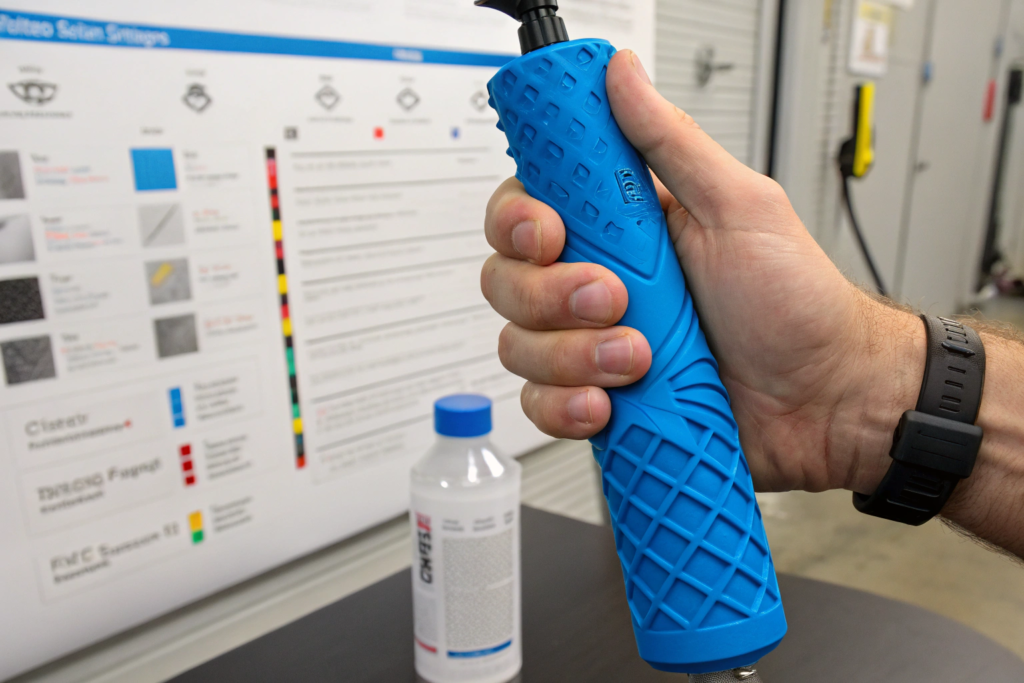
Finger grooves are the most visible feature. The underside of the handle has three or four shallow grooves where the fingers naturally rest. The grooves are not deep enough to force a specific hand position. They are subtle guides that encourage a consistent, secure grip. The thumb rest on the top or side of the handle provides a natural index point that aligns the hand correctly every time.
A palm swell, which is a slight bulge in the upper portion of the grip where the palm contacts, distributes pressure across the hand. This reduces fatigue when holding the umbrella for an entire round. The contoured grip is often asymmetrical, designed for a right hand or a left hand. We produce both orientations, and ambidextrous versions with symmetrical contours. The right-hand version typically outsells the left-hand version four to one, but left-handed golfers are a loyal and underserved market. Offering a left-handed grip is a brand differentiator that builds loyalty with a specific segment. If you are developing ergonomic sports equipment, consider handedness in your product line planning.
Why Does Silicone Outperform Rubber in Extreme Wet Conditions?
Silicone is inherently more hydrophobic than rubber. Water beads and rolls off silicone more readily. Silicone also maintains its grip coefficient when wet better than most rubber compounds. A wet silicone grip still feels grippy. A wet rubber grip can feel slick.
Silicone is also more chemically resistant. It does not degrade from contact with sunscreen, insect repellent, or hand sanitizer, all of which can soften or discolor rubber grips. Golfers apply these products to their hands and then grip the umbrella. A handle that degrades from chemical exposure will develop sticky spots or discoloration within a season. We use a platinum-cured silicone for our premium contoured grips. It is more expensive than peroxide-cured silicone but offers better compression set resistance and longer color stability. The higher material cost is justified for a premium golf product where performance failure leads to negative reviews. Professional silicone material specifications for sporting goods ensure the grip compound is appropriate for the demanding golf environment.
What Advantages Do Dual-Molded Comfort Grips Offer?
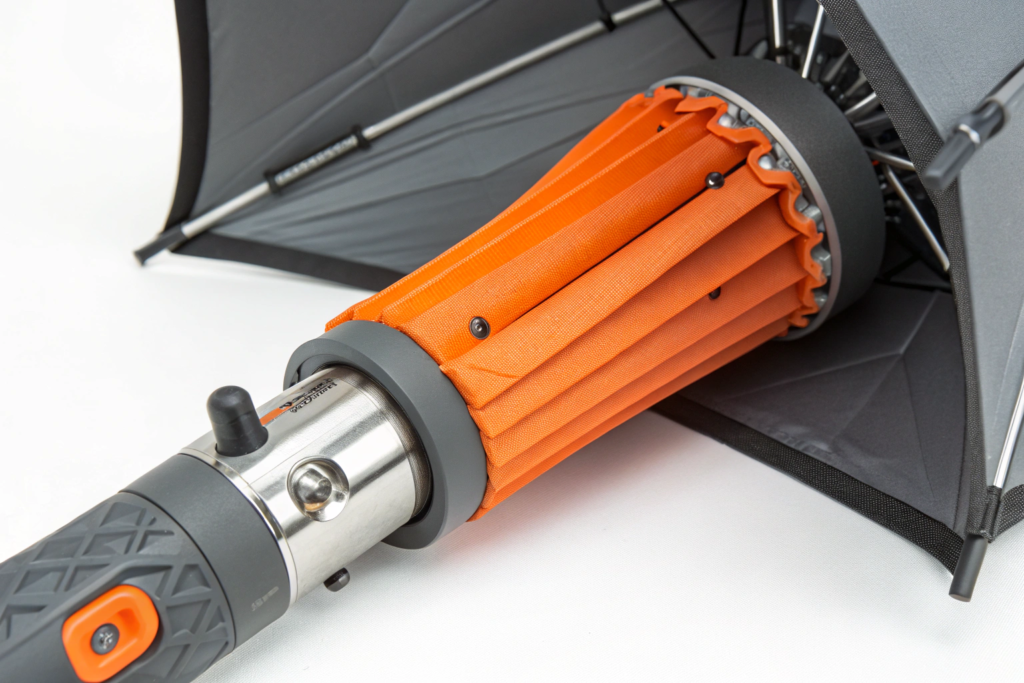
Dual-molding, sometimes called two-shot molding or overmolding, is a manufacturing process that combines two different materials in a single handle. A rigid inner core provides structural attachment to the umbrella shaft. A soft outer layer provides the gripping surface. The two materials are chemically bonded during the molding process, so they never separate.
This is not a handle with a glued-on grip sleeve. It is a single, unified component made from two materials. The bond is permanent. The grip will not twist, slip, or peel away from the core, even after years of use. This durability is a key selling point for golf brands that want to offer a lifetime guarantee or at least a multi-season durability promise.
How Does Dual-Molding Integrate the Auto-Open Button?
The auto-open button is a critical functional component on modern golf umbrellas. It must be easy to press with a thumb, even with a wet glove. It must be reliable for thousands of open-close cycles. It must not corrode or stick. Integrating the button into a dual-molded handle allows for a seamless, weather-sealed button design.
We mold the button housing directly into the hard inner core. The button itself is a separate component that fits into this housing with a silicone O-ring seal. The O-ring prevents water from entering the umbrella shaft through the button opening. A poorly sealed button is a common failure point on low-quality umbrellas. Water enters, the internal mechanism rusts, and the auto-open fails. Our button design has been tested to 5,000 open-close cycles with a water spray applied during testing. The mechanism must function flawlessly at the end of the test. Understanding auto-open umbrella mechanism design helps you evaluate the quality of this critical component beyond its appearance.
Why Are Customizable Color Combinations Valuable for Branding?
Dual-molding creates an opportunity for brand customization that single-material handles cannot match. The inner core can be one color. The outer grip can be another color. The button can be a third color. These colors can match the brand’s logo palette or the umbrella canopy colors.
A golf brand with a distinctive color identity, think of the bright red and black of a major equipment brand, can carry that identity through to the umbrella handle. The handle becomes a brand touchpoint, not just a functional component. We produce dual-molded handles with the brand’s core color as the rigid structure and the accent color as the soft grip. Some brands add a debossed or embossed logo on the handle end cap or along the grip surface. The logo is molded in, not printed on, so it never wears off. This level of branded accessory customization turns a generic umbrella into a brand-specific product that strengthens customer loyalty with every use.
Conclusion
The 2026 golf umbrella handle market is defined by four dominant designs, each serving a different segment of the golf consumer. The straight ergonomic rubber handle leads in volume with its wet-weather grip patterns and UV-stabilized TPE construction. The curved wooden crook handle endures in the premium and heritage segment with satin-finished hardwoods and gentle curve modifications for modern bag compatibility. The performance contoured silicone grip is the growth story, bringing anatomical ergonomics and superior wet grip to the serious golfer. The dual-molded comfort grip offers structural durability, integrated button sealing, and unmatched branding customization.
The common thread across all four styles is wet-weather performance. The 2026 golf umbrella handle is not just a thing to hold. It is an engineered interface between the golfer and the elements. Every design decision, from the grip pattern depth to the material hydrophobicity to the button seal integrity, is made with rain in mind.
At Shanghai Fumao, we manufacture all four handle styles for golf brands across North America and Europe. Our in-house mold-making capability allows us to customize any of these designs to your brand’s specifications. Our material sourcing team can match your brand colors in TPE, silicone, and wood finish. Our assembly line integrates the handle with your chosen canopy, shaft, and frame to deliver a complete, performance-tested golf umbrella.
If you are developing a golf umbrella for your 2026 collection and need a factory that understands both the performance requirements and the branding opportunities of handle design, please contact our Business Director Elaine at elaine@fumaoclothing.com. Share your brand guidelines, your target retail price point, and your preferred handle style. She will provide samples, a detailed quotation, and a production timeline that aligns with your golf season launch.




