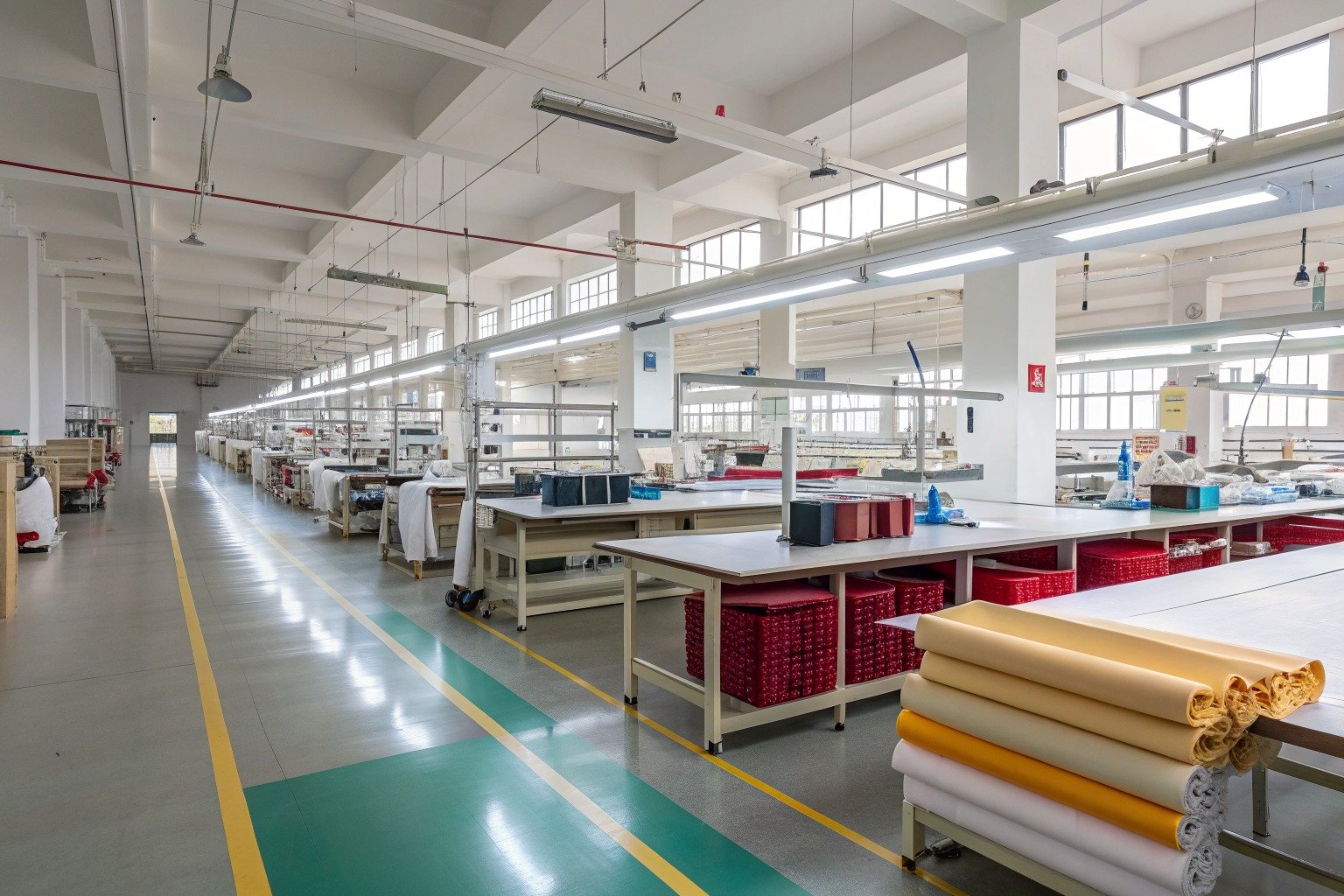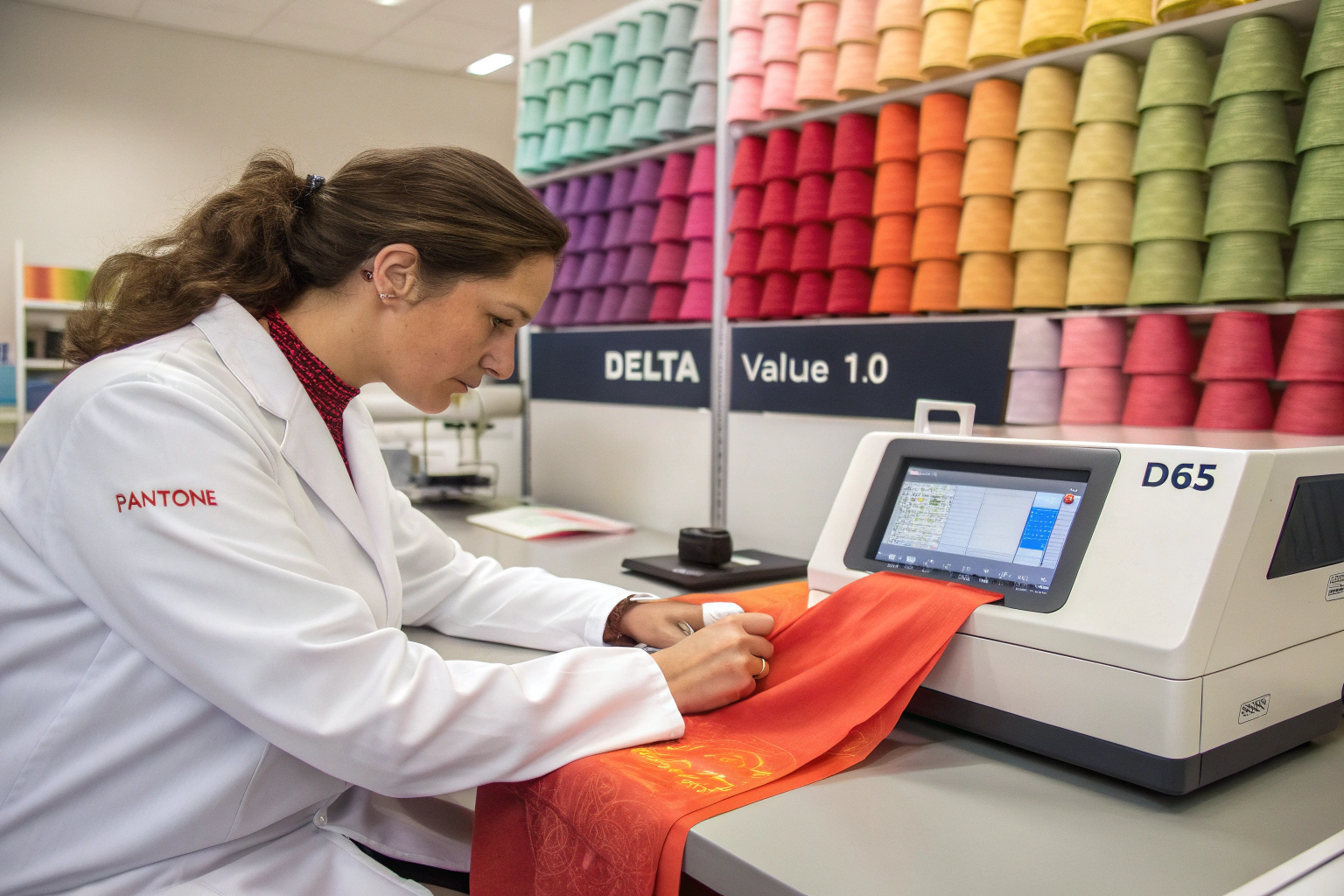
A buyer from a major European fashion chain once sat in our meeting room and placed two of our scarves side by side on the table. One was from a shipment delivered in March. The other was from a reorder delivered in September. She had been burned before by suppliers whose colors drifted between production batches, and her retail customers had noticed the inconsistency on the store shelf. She looked at the two scarves for a long moment, holding them under the window light, then under the overhead lamp. Finally, she nodded. "They are identical," she said. "How do you do that across six months and 50,000 units?" That question gets to the heart of what separates a professional accessories manufacturer from a workshop that merely assembles products.
We ensure consistent color matching across 50,000 pieces of scarves and hats through a closed-loop color management system that controls the color from the raw yarn dyeing stage through the finished product inspection. The system has four integrated stages. Digital color specification using spectrophotometric data rather than visual approval alone. Laboratory-controlled dye formulation with precision weighing and computerized recipe management. Real-time production monitoring using in-line color measurement on the knitting and weaving floor. And a statistically rigorous final inspection using AQL sampling under standardized D65 lighting with a Delta E tolerance of 1.5 or less.
This is not a single clever trick. It is a disciplined industrial process that we have refined over years of producing coordinated accessory collections where scarves, hats, and gloves must match perfectly on a retail display. I want to walk you through each stage of the system, explain the technology and the human expertise behind it, and show you why color consistency at scale is a solved problem when the right processes are in place.
How Does Digital Color Specification Eliminate the Guesswork in Large Orders?
Color is light, not opinion. This is the foundational principle of our color management system. When a buyer describes a color as "a warm navy blue," they are expressing a subjective visual impression that can mean different things to different people under different lighting. When we specify a color as L 25.3, a 2.1, b* -15.7 under D65 illuminant, we are defining it as a set of numerical coordinates in a three-dimensional color space that a machine can measure, verify, and reproduce identically every time.
The shift from visual to digital color specification eliminates the single largest source of color inconsistency in large accessory orders: the ambiguity of human perception. Two people can look at the same swatch and see different colors. The same person can look at the same swatch under warm store lighting and cool office lighting and see different colors. A spectrophotometer eliminates this variability. It measures the light reflected from the fabric surface across the full visible spectrum and calculates the exact location of that color in the CIELAB color space. This numerical specification becomes the single source of truth for every subsequent color decision.
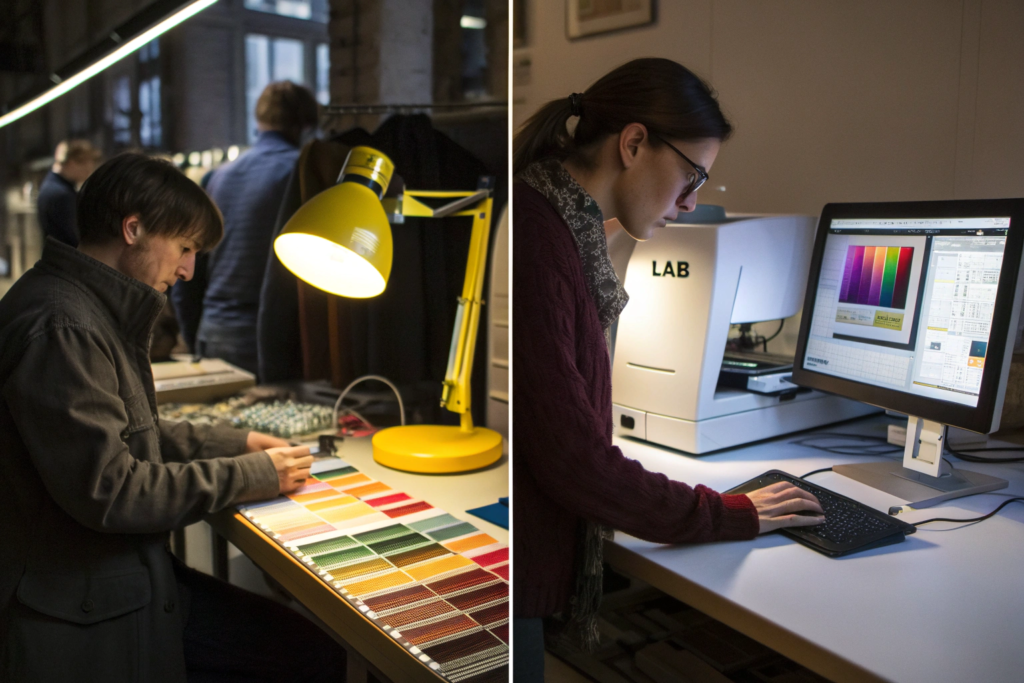
What is a spectrophotometer and how does it standardize color communication?
A spectrophotometer is an optical instrument that measures the intensity of light reflected from a surface at each wavelength across the visible spectrum, typically from 400 to 700 nanometers. When we measure a scarf fabric, the spectrophotometer illuminates the surface with a controlled light source, captures the reflected light, and generates a spectral reflectance curve. This curve is a fingerprint of the color that is independent of lighting conditions and independent of the observer’s subjective perception. The instrument then calculates the color’s coordinates in the CIELAB color space, a three-dimensional model where L represents lightness from 0 (black) to 100 (white), a represents the position on a green-to-red axis, and b* represents the position on a blue-to-yellow axis. This numerical color specification is universally understood by dye houses, fabric mills, and quality control laboratories. It eliminates the need for subjective language like "make it slightly warmer" or "it needs more depth." The target color is a set of numbers, and the production color either falls within the agreed tolerance of those numbers or it does not. This spectrophotometer color measurement is the foundation of industrial color control.
Why is the D65 lightbox the standard for accessory color approval?
The light source under which a color is viewed changes the perceived color. This phenomenon, called metamerism, is the reason a scarf and hat that match perfectly under store lighting can look mismatched in daylight. The D65 lightbox standardizes the viewing environment. D65 is an internationally recognized standard illuminant that simulates natural noon daylight with a correlated color temperature of 6500 Kelvin. When we evaluate a color match, both the approved standard and the production sample are placed side by side in a D65 lightbox, and the comparison is made under this controlled, standardized illumination. We also verify the match under additional light sources, typically a warm incandescent source to simulate home lighting and a cool fluorescent source to simulate office or store lighting, to ensure the match is not metameric. A color pair that matches under all three light sources is a true spectral match, not a conditional one. This standardized D65 lighting for color assessment is a requirement of every serious color quality program.
How Does the Laboratory Dyeing Process Ensure Repeatable Color Formulation?
Before a single cone of yarn enters the dye bath for a 50,000-piece order, the exact color formula has been developed and validated in a laboratory environment that precisely replicates the bulk production conditions. This laboratory stage is where the color matching happens, not on the factory floor. The bulk dye house follows a recipe. It does not invent one on the spot.
The laboratory dyeing process begins with the spectrophotometric target data for the desired color. Our colorist, a specialist with years of experience in textile dye chemistry, selects the appropriate dye classes for the fiber type. Polyester requires disperse dyes. Cotton requires reactive or direct dyes. Wool requires acid dyes. The colorist uses a computerized color matching system that predicts the dye formula based on the spectral reflectance target and a database of dye calibration data. The predicted formula is then tested in a laboratory dyeing machine, a miniature version of the bulk dyeing vessel that processes a small fabric sample through the exact same temperature curve, pressure, and liquor ratio as the bulk production will use.
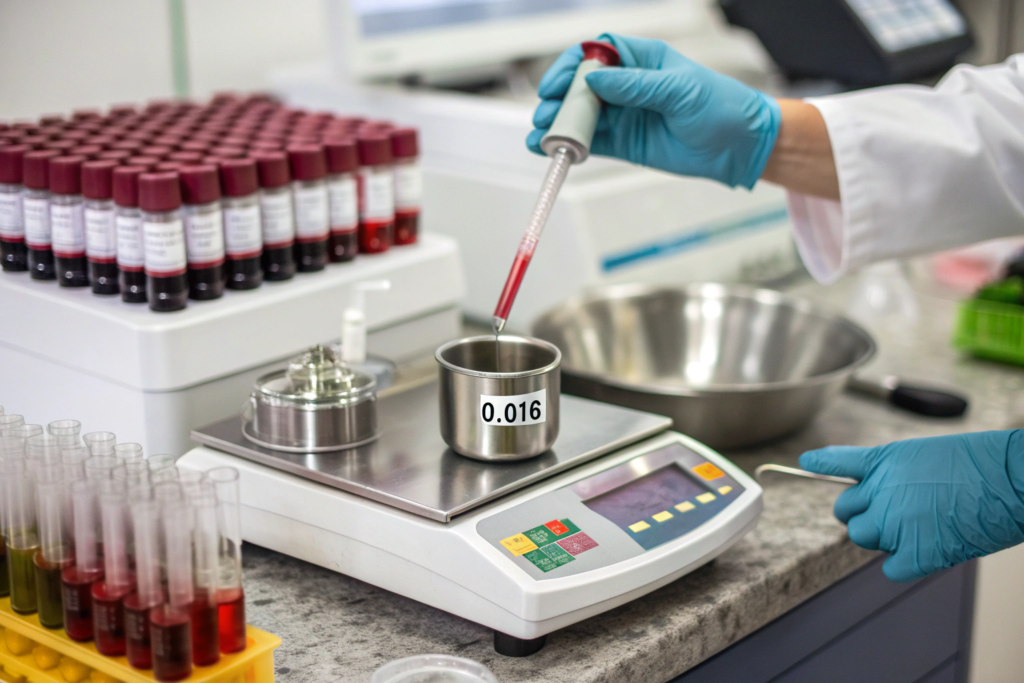
How does computerized recipe management prevent drift between batches?
The recipe management system is the memory of our color program. Every successful dye formula is stored in a digital database with its exact ingredient list, the dye concentrations, the auxiliary chemicals, the temperature profile, and the processing time. When a reorder is placed six months later for the same scarf color, we do not start from scratch. The colorist retrieves the stored recipe and runs a laboratory verification dyeing to confirm the formula still produces the target color with the current lot of raw yarn. If the new yarn lot has a slightly different base shade, a common occurrence with natural fibers, the colorist makes a minor adjustment to the formula to compensate. This adjustment is documented and appended to the recipe history. The textile dye recipe management system ensures that the color produced in March and the color produced in September are chemically identical, not just visually similar.
What is the difference between lab dips and bulk dye lot verification?
A lab dip is a small-scale dyeing test performed on a swatch of fabric to confirm the dye formula before bulk production begins. We produce lab dips for every new color and every reorder where the yarn lot has changed. The lab dip is measured against the target standard using the spectrophotometer. If the Delta E, the numerical color difference, exceeds 1.0, the formula is adjusted and a new lab dip is produced. This iterative process continues until the lab dip achieves a Delta E of 1.0 or less. The approved lab dip becomes the physical and digital reference standard for the bulk production run. However, a lab dip is not the final verification. The bulk dye lot itself must be verified. When the production yarn comes out of the bulk dyeing machine, a sample is taken from the beginning, middle, and end of the batch. Each sample is measured against the approved lab dip standard. If any sample exceeds a Delta E of 1.5, the entire dye lot is held for investigation and correction. This lab dip to bulk production process is the quality bridge between the laboratory and the factory floor.
How Is Color Consistency Maintained Across Different Materials in the Same Collection?
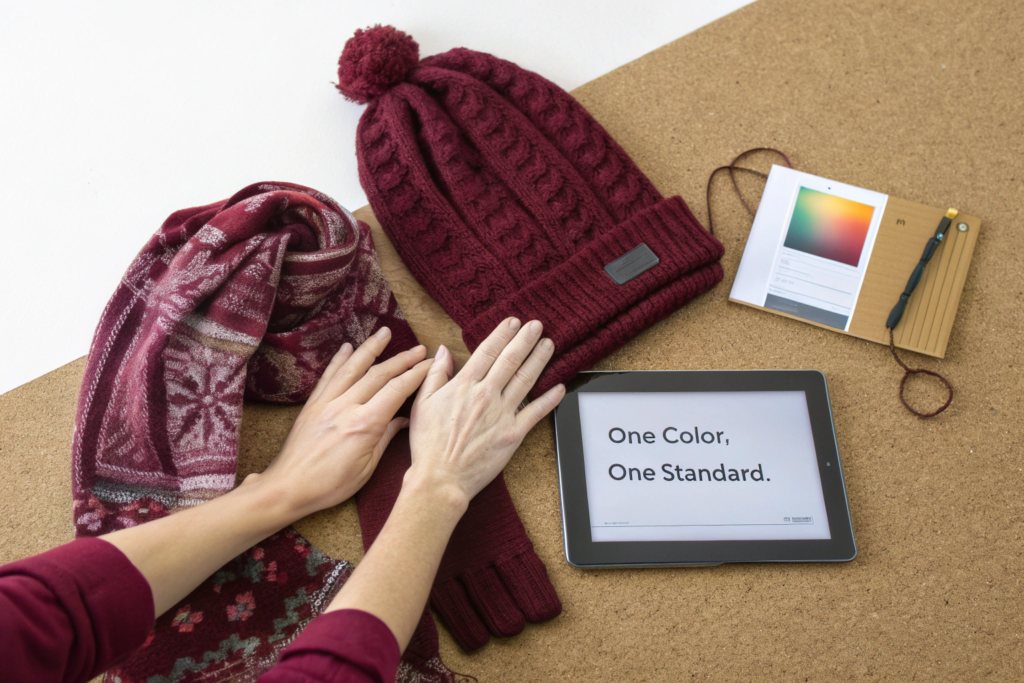
A matching scarf and hat set is the ultimate test of color consistency. The scarf may be made from a lightweight woven silk blend with a smooth, glossy surface. The hat may be made from a bulky knitted acrylic yarn with a matte, textured surface. The same dye formula that produces a perfect color on one material will not necessarily produce the same visual color on the other. The material’s fiber content, surface texture, and luster all affect how the color is perceived.
We solve this cross-material matching challenge by establishing a single digital color standard that serves as the target for both materials, but developing separate dye formulations optimized for each fiber type. The visual match is verified under the D65 lightbox, and the spectral match is verified by spectrophotometer measurement. The goal is not identical spectral curves, which is physically impossible for different materials, but identical perceived color under standardized lighting.
Why does the same dye appear different on silk, acrylic, and wool?
The interaction between a dye molecule and a fiber is a chemical relationship. Acid dyes bond to the protein structures in wool and silk through ionic and hydrogen bonds, producing a deep, rich color with a characteristic warmth. Disperse dyes penetrate the hydrophobic structure of polyester through a diffusion process at high temperature, producing color that is physically locked inside the fiber. Reactive dyes form covalent bonds with the cellulose molecules in cotton, producing color that is chemically part of the fiber itself. The same visual color on three different fibers requires three completely different dye chemistries, and the spectral reflectance curves will be different even though the visual color matches. Understanding this textile dye-fiber chemistry is essential for realistic color expectations in mixed-material collections.
How do we ensure the scarf and hat in a gift set are a perfect match?
For a gift set where a scarf and hat are packaged together, the color match is verified not just against a digital standard, but directly against each other. After both products are manufactured, a sample of the scarf and a sample of the hat are placed side by side in the D65 lightbox. The visual assessment is performed by a trained colorist and confirmed by spectrophotometer measurement of both items. If the match is acceptable, the pair becomes the physical reference standard for the bulk inspection. During the final quality control inspection, the AQL sampling procedure includes a specific check where scarves and hats are pulled from the production lot and compared to each other, not just to the individual standards. This paired comparison catches any subtle drift that might have occurred independently in each production line. The accessory color coordination quality control process ensures that the gift set the customer opens looks like a single, intentional design.
What Final Inspection Protocols Guarantee 50,000 Identical Pieces?
The final inspection is the last line of defense in the color consistency system. The spectrophotometer has verified the lab dip. The dye house has verified the bulk dye lot. The production floor has monitored the color in real time. The final inspection is where all of this upstream work is validated against the finished product, and where the statistical rigor of the AQL sampling methodology ensures that any color variation that did occur is caught before the goods leave the factory.
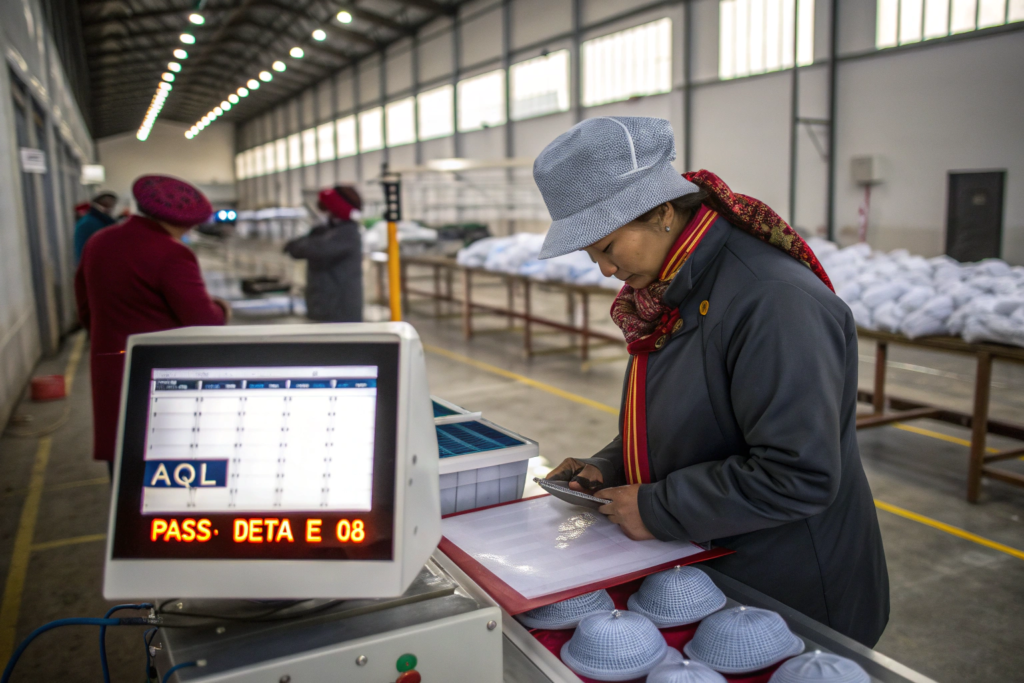
For a 50,000-piece order of scarves and hats, the inspection process is not a casual glance at a few random pieces. It is a structured, statistically valid sampling procedure that inspects a defined number of units drawn from across the entire production lot, evaluates each unit against objective color standards, and makes an accept-or-reject decision based on predetermined defect thresholds.
How does AQL sampling work for color consistency in large lots?
The AQL, Acceptable Quality Limit, sampling system defines the number of units to be inspected based on the total lot size and the desired inspection level. For a lot of 50,000 units using General Inspection Level II, the inspector examines a random sample of 500 units. For color consistency specifically, each sampled unit is evaluated against the approved color standard under the D65 lightbox. A color deviation that exceeds a Delta E of 1.5 is classified as a major defect. The AQL tables specify the maximum number of major defects allowed. If the number of color defects in the sample exceeds this acceptance number, the entire lot fails the inspection and is held for 100% sorting. This AQL statistical sampling for color inspection is an internationally recognized standard that provides a defensible, objective basis for accepting or rejecting a production batch.
What happens when a color defect is found during final inspection?
When a color defect is identified during final inspection, the response is not limited to that single unit. The inspector notes the specific nature of the defect, a shade too light, a shade too yellow, and traces it back to the production record. The affected production batch is quarantined. A root cause investigation determines whether the issue is isolated to a specific dye lot, a specific production shift, or a specific machine. If the issue is isolated, the affected units are sorted out, and the clean units are released. If the issue is systemic across the entire lot, the lot is rejected and the entire order may need to be re-dyed or reproduced. This is a rare but necessary outcome. The cost of reproducing an order is high, but the cost of shipping 50,000 mismatched accessories to a retail partner is higher. The corrective action process for color defects is a defined procedure that turns a problem into a process improvement.
Conclusion
Consistent color across 50,000 scarves and hats is not achieved by hoping the dye house gets it right. It is achieved by building a closed-loop system where color is specified digitally, formulated in a laboratory, monitored during production, and verified statistically at final inspection. Each stage of the system has a defined standard, a measurement tool, and an accept-or-reject threshold. There is no subjectivity, no "looks close enough," and no reliance on memory or opinion.
We have walked through the spectrophotometric color specification that replaces visual guesswork with numerical precision. The laboratory dyeing process that develops repeatable recipes under controlled conditions. The cross-material matching techniques that ensure a scarf and hat in a gift set are visually identical. And the AQL final inspection protocols that provide statistical confidence that 50,000 units meet the same color standard.
If you are developing a coordinated accessory collection where color consistency between scarves, hats, and gloves is critical to your brand’s presentation, we can provide our color management capability statement and sample reports from previous large-scale orders. Our Business Director Elaine manages our quality assurance partnerships and can arrange a demonstration of our color measurement and matching process. Contact her directly at elaine@fumaoclothing.com. Color is not subjective. Your customers’ expectations should not be either.