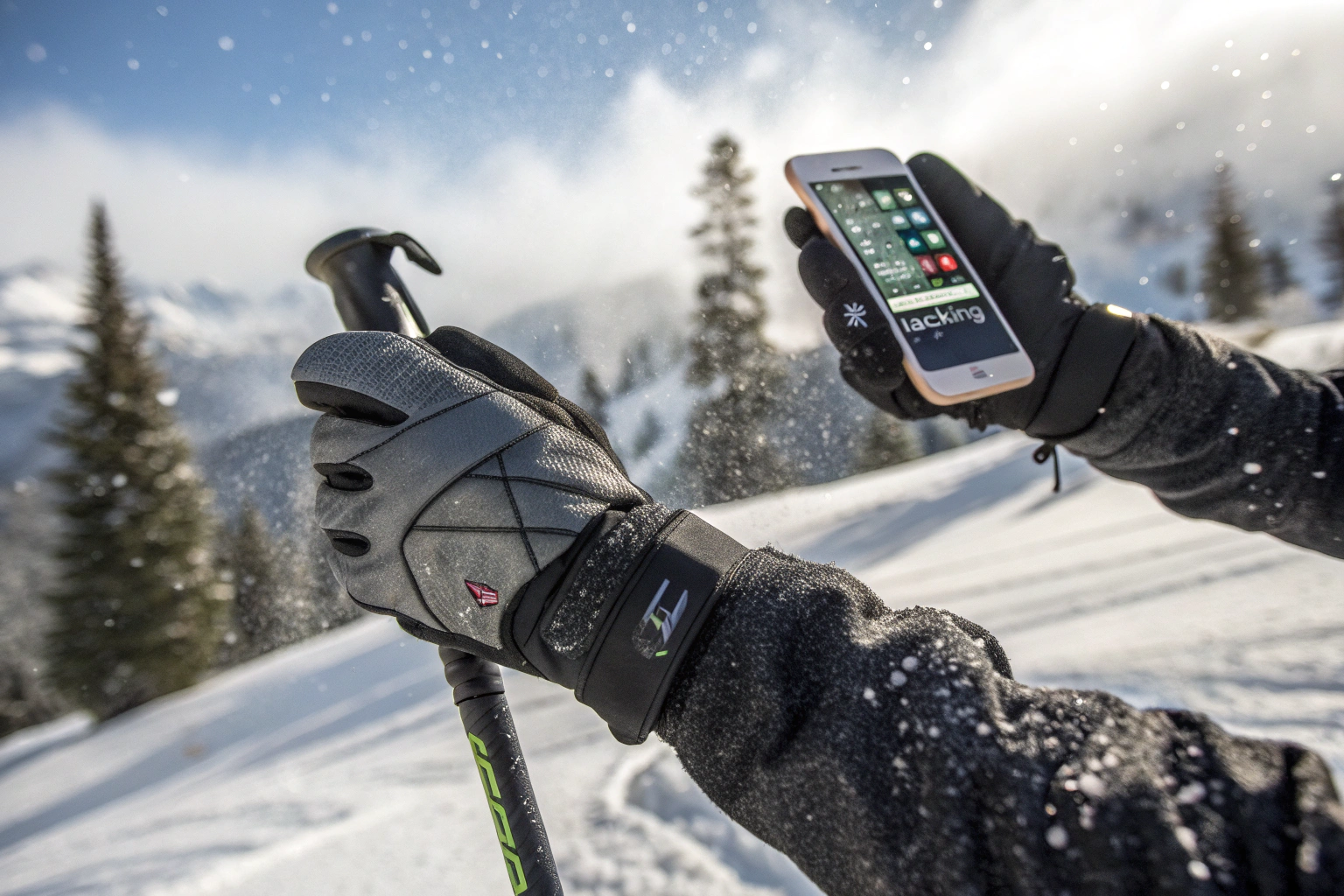
I stood at the base of a Colorado ski resort last January, watching a group of frustrated snowboarders pull off their expensive gloves for the fifth time in an hour to answer their phones. Their fingers were red and stiff from the cold. One of them dropped his phone in the snow. Another’s touchscreen barely registered her frozen fingertip. They had bought "touchscreen compatible" gloves that did not work when it actually mattered. I walked over, introduced myself, and handed them prototypes of the gloves we were developing for a European ski brand. They tested them on the spot. The screen responded instantly. No glove removal. No frozen fingers. The relief on their faces told me everything I needed to know about where this market is heading in 2026.
The 2026 glove trends for touchscreen winter sports are defined by four major shifts. Conductive technology has moved beyond a gimmicky fingertip patch to full-finger, wash-durable conductivity that works at minus-twenty degrees. Heating systems are no longer bulky, wired contraptions but ultra-thin, app-controlled carbon fiber elements that integrate invisibly into the glove lining. Sustainable insulation materials, recycled PrimaLoft, plant-based synthetic fills, and biodegradable membranes, have reached performance parity with virgin petroleum-based products. And modular designs are emerging, with removable liners, interchangeable outer shells, and wrist straps that double as phone leashes.
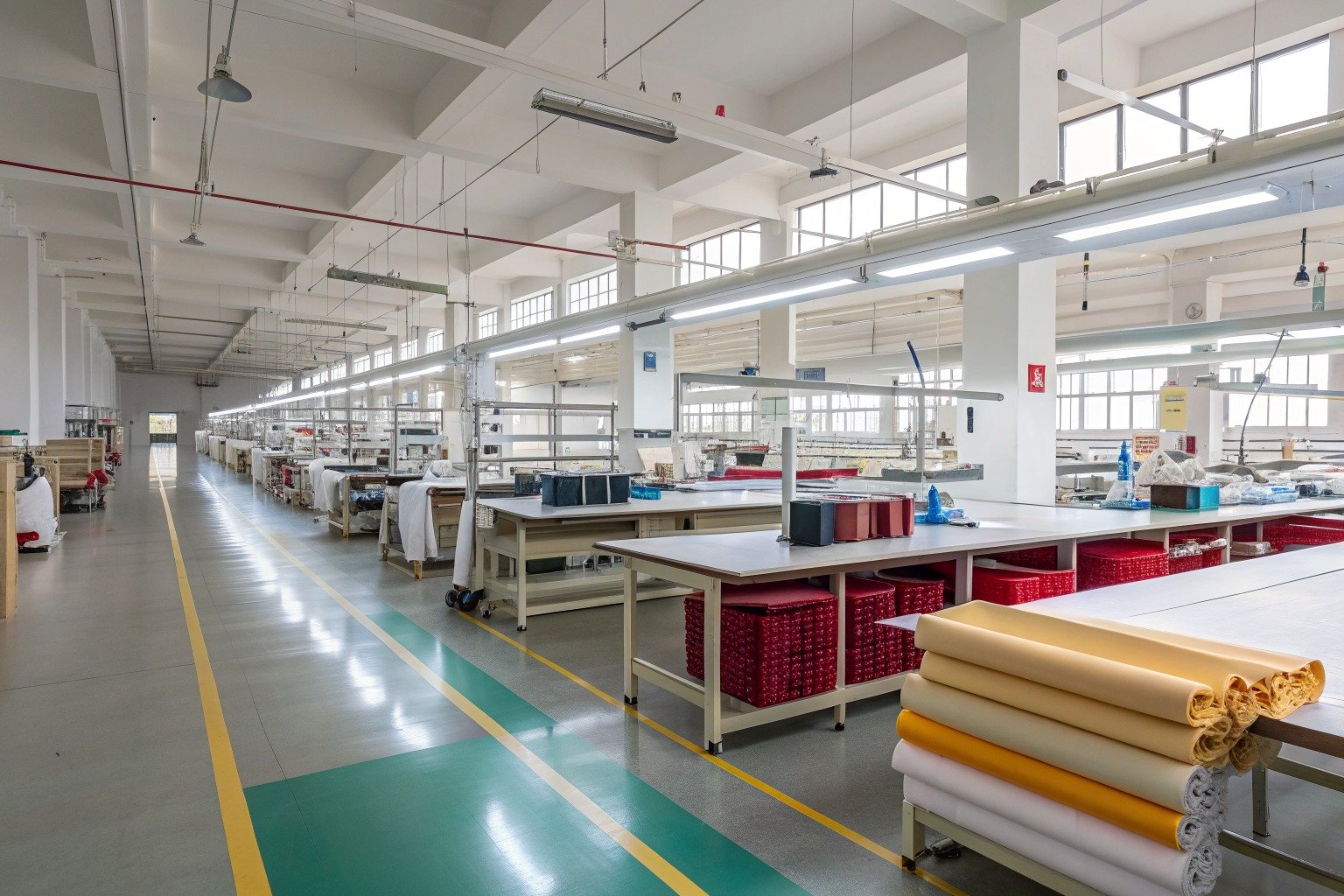
In our Zhejiang factory, we have spent the past two years retooling our glove production line to meet these trends. We have tested dozens of conductive yarns, evaluated heating elements from multiple suppliers, and developed construction techniques that marry technical performance with the sleek, low-profile aesthetic that modern winter sports enthusiasts demand. I want to share exactly what is trending, what works technically, and how your brand can position itself to capture this rapidly growing market segment.
What Touchscreen Conductive Technologies Are Replacing the Basic Fingertip Patch?
The original touchscreen glove was a simple concept. Sew a small patch of conductive fabric onto the tip of the index finger and thumb, and call it a day. For the first generation, this was acceptable. But serious winter sports users quickly discovered the limitations. The patch wore off after a season of heavy use. It lost conductivity when wet. It created a bulky, awkward feel on the fingertip that interfered with fine motor control for zipping jackets or adjusting bindings. And it only worked on one or two fingers, forcing the user to poke at their phone with an extended index finger like they were using a 2007-era PDA.
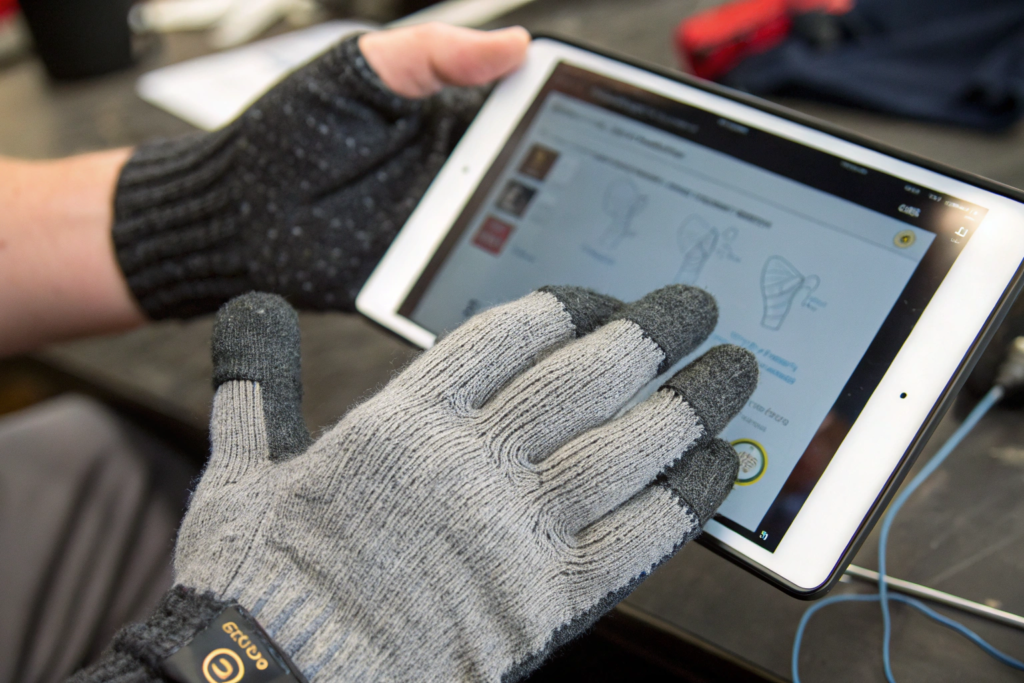
The 2026 standard is full-finger conductivity integrated directly into the yarn structure of the glove. The conductive element is not a patch applied on top. It is a fiber, usually a silver-coated nylon or a carbon-infused polyester, that is knitted or woven directly into the fingertip area of the glove during the manufacturing process. This creates a seamless, durable, and truly functional touchscreen interface that covers all five fingertips. The user can swipe, pinch, type, and scroll naturally without thinking about which finger to use.
How does nano-silver yarn technology create seamless conductivity?
Nano-silver yarn is the enabling technology behind the next generation of touchscreen gloves. The process begins with a standard nylon or polyester filament yarn. This yarn is submerged in a bath containing silver nanoparticles that bond to the fiber surface at a molecular level. The result is a yarn that looks and feels like normal textile yarn but has the electrical conductivity of metal. When this yarn is knitted into the fingertip area of a glove, it creates a conductive bridge between the user’s skin and the capacitive touchscreen. The screen detects the electrical charge from the user’s body, transmitted through the silver-coated fibers, and registers the touch. Unlike a surface-applied patch, the nano-silver yarn conductivity is three-dimensional. It works even when the yarn is compressed, stretched, or wet. It survives repeated washing because the silver is bonded to the fiber, not printed on the surface. We source our nano-silver yarn from suppliers who test for conductive textile durability and provide wash-cycle certification. A quality nano-silver yarn should maintain at least 90% conductivity after 50 machine wash cycles.
Why is full-hand conductivity replacing the "two-finger poke" approach?
Full-hand conductivity is not just a luxury feature. It is a functional necessity for modern winter sports. Skiers and snowboarders use their phones for navigation on resort apps, for scanning lift passes, for capturing and editing social media content on the mountain, and for emergency communication. These tasks require multi-touch gestures, pinching to zoom on a trail map, swiping through photo galleries, and typing messages quickly. A two-finger patch cannot support these gestures. Full-hand conductivity, where all five fingertips and sometimes the palm are treated with conductive yarn, allows the user to interact with their device naturally without removing their gloves. This technology also supports the growing use of touchscreen ski pass systems that require the user to tap a gloved hand against a scanner at the lift gate. A glove that only works on the index finger may not trigger the scanner reliably. Full-hand conductivity solves this problem.
How Are Integrated Heating Systems Changing Winter Sports Glove Design?
Heated gloves have existed for decades, but until recently they were bulky, uncomfortable, and unreliable. The heating elements were thick wires that created hot spots and restricted finger movement. The battery packs were heavy brick-like objects strapped awkwardly to the wrist. The wiring connections were fragile and prone to failure at the exact moment they were needed most. Winter sports enthusiasts viewed heated gloves as a niche product for people with circulation problems, not as a mainstream performance accessory.
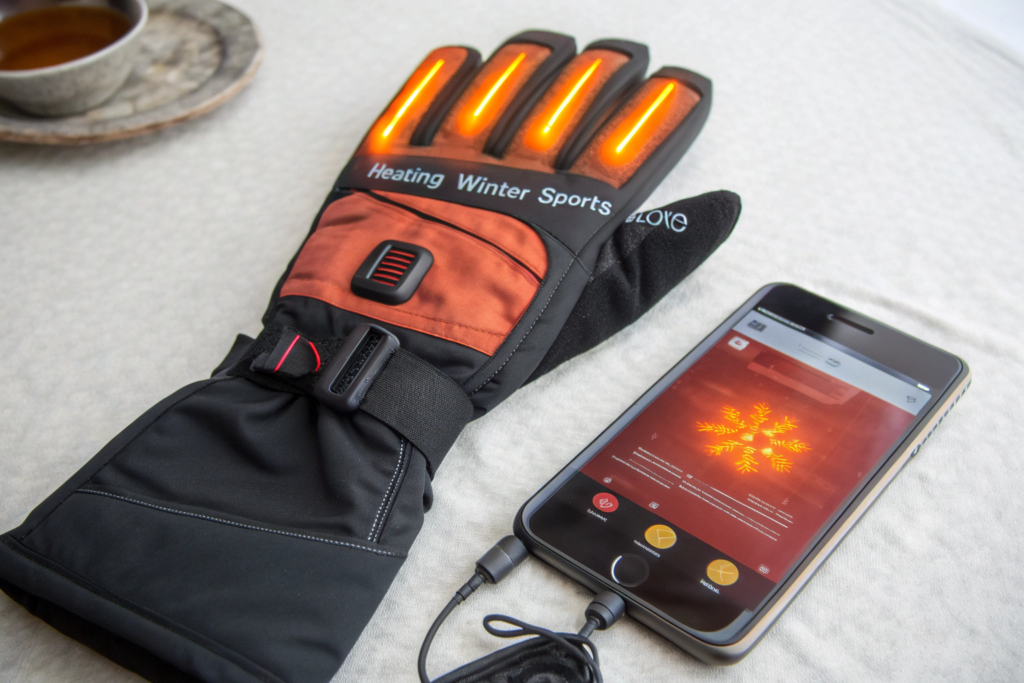
The 2026 generation of heated gloves has completely shed this legacy. Carbon fiber heating elements, as thin as a sheet of paper, are laminated directly into the glove lining. They distribute heat evenly across all five fingers and the back of the hand. Lithium-polymer batteries, the same technology used in high-end smartphones, are slim enough to fit invisibly into a zippered compartment on the glove’s gauntlet cuff. Bluetooth connectivity allows the user to control the heat level from a phone app without removing the gloves. The entire system is waterproof, machine-washable, and adds minimal bulk.
How do carbon fiber heating elements compare to traditional wire systems?
Traditional wire heating elements are exactly what they sound like. Thin metal wires sewn into a serpentine pattern inside the glove lining. These wires create heat through electrical resistance, but they do so unevenly. The area directly along the wire path is warm. The area between the wires is cold. This creates a striped pattern of warmth and chill that is uncomfortable and inefficient. Carbon fiber heating elements work differently. Carbon fiber is a conductive material that can be formed into a thin, flexible sheet. When electricity passes through the carbon fiber sheet, the entire surface heats uniformly. There are no hot spots and no cold gaps. The carbon fiber element is also significantly more durable than wire. It can flex thousands of times without breaking, which is essential for a glove that is constantly bending and gripping. The carbon fiber heating technology also heats up faster than wire, reaching the target temperature within thirty seconds rather than several minutes. For a skier who has just finished a cold chairlift ride and wants immediate warmth, this speed is a tangible performance advantage.
What battery life and control features do users expect in 2026?
The 2026 heated glove user expects a full day of warmth on a single charge. This means a minimum of six to eight hours of continuous heat on a medium setting from a single battery pack. The battery itself must be rechargeable via a standard USB-C port, which has become the universal charging standard, and must support pass-through charging so the user can power the gloves from a portable power bank during an extended backcountry trip. Bluetooth app control is now the expected standard. The user pairs the gloves with a smartphone app that displays the current battery level for each glove, allows independent temperature control for the left and right hand, and offers a pre-heating function that warms the gloves to a target temperature before the user even steps outside. These smart heated glove features are not futuristic concepts. They are the baseline specifications for any brand competing in the premium winter sports glove market in 2026.
What Sustainable Insulation Materials Are Winning the Winter Sports Market?
Sustainability has moved from a niche marketing angle to a core performance requirement in the winter sports market. The outdoor consumer is environmentally aware by definition. They spend their leisure time in natural environments, and they are increasingly unwilling to purchase products made from materials that harm those environments. The 2026 sustainable insulation market is not about compromise. The materials that are winning are those that match or exceed the performance of virgin synthetics while offering a verified environmental benefit.
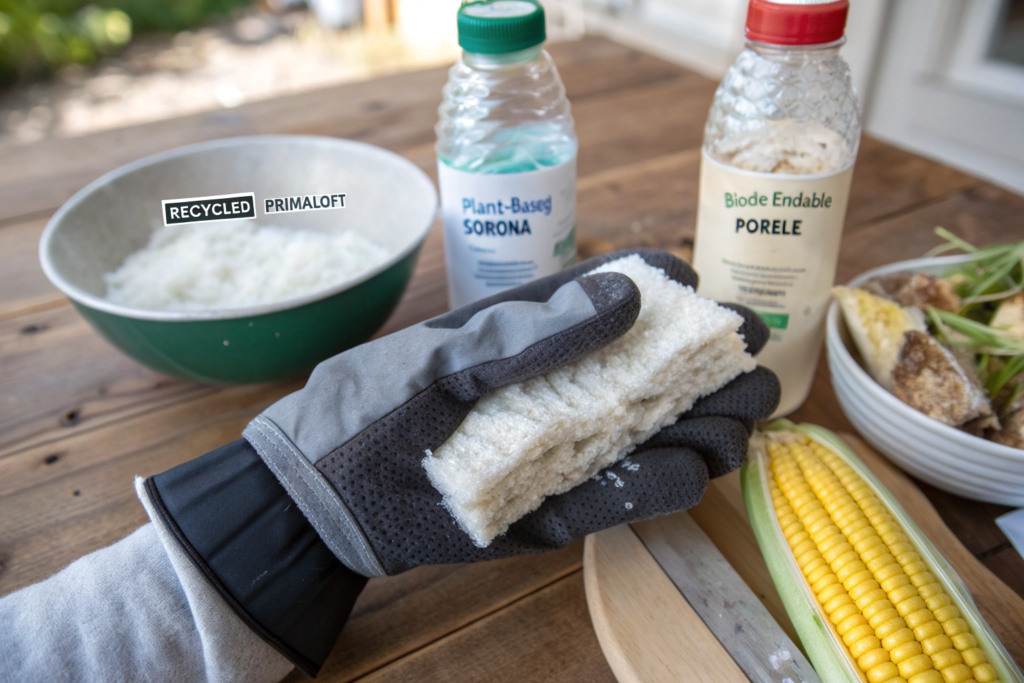
Three categories of sustainable insulation are driving the market. Recycled synthetic fills, led by PrimaLoft, which use post-consumer plastic bottles as the raw material. Plant-based synthetic fills, such as Sorona, which use corn starch as a partial feedstock. And biodegradable waterproof membranes that break down at the end of the glove’s useful life instead of persisting in landfills for centuries. These materials are not just "eco-friendly" in marketing copy. They carry specific, verifiable certifications that retail buyers and consumers are learning to recognize.
How does recycled PrimaLoft perform compared to virgin synthetic insulation?
PrimaLoft is the gold standard of synthetic insulation, originally developed for the US military as a water-resistant alternative to down. Recycled PrimaLoft is made from post-consumer PET plastic bottles that are shredded, melted, and extruded into ultra-fine polyester microfibers. These microfibers are then processed into a fluffy, down-like insulation that traps warm air in millions of tiny pockets. In standardized thermal resistance testing, recycled PrimaLoft performs identically to virgin PrimaLoft at the same gram weight. It provides the same warmth, the same compressibility, and the same ability to retain warmth when wet, which is the critical advantage synthetic insulation has over natural down. The difference is in the raw material source, not the performance. Recycled PrimaLoft carries the Global Recycled Standard certification, which verifies the recycled content through the entire supply chain. For a winter sports brand, this means the insulation in their gloves carries a verified sustainability story that aligns with their customers’ values.
What are plant-based Sorona and biodegradable membranes offering the market?
Sorona is a partially bio-based synthetic polymer developed by DuPont. Approximately 37% of the polymer is derived from corn starch through a fermentation process, replacing petroleum-based ingredients with a renewable resource. The resulting fiber has a unique semi-crystalline molecular structure that provides excellent resilience and compression recovery. In glove insulation, Sorona offers a softer, more supple hand-feel than traditional polyester fills, which translates to better dexterity for the wearer. On the membrane side, biodegradable waterproof membranes like Porelle Bio use a polyurethane chemistry designed to break down in landfill conditions within a few years, compared to the centuries required for traditional PTFE membranes like Gore-Tex. These biodegradable textile innovations are at the cutting edge of sustainable material science. They address the end-of-life problem that has plagued synthetic outdoor gear for decades. A glove with a biodegradable membrane can be marketed as a product designed for circularity, not just for performance.
How Are Modular and Multi-Functional Designs Reshaping Winter Gloves?
The days of owning a different pair of gloves for every condition are fading. The 2026 winter sports consumer wants versatility. They want a glove system that adapts to changing weather, changing activity levels, and the changing demands of a day that might start with a freezing chairlift ride, continue with an intense uphill skin track, and end with après-ski drinks where they are scrolling through photos on their phone.
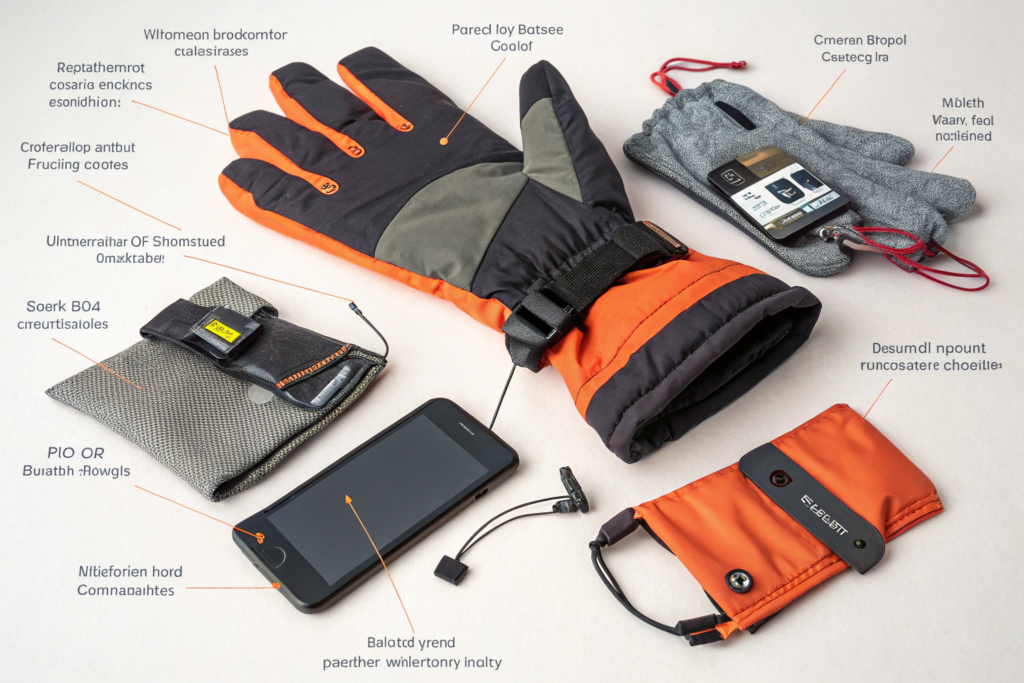
Modular design addresses this desire by creating glove systems with interchangeable components. The most common configuration is a two-part system with a waterproof, windproof outer shell and a removable, touchscreen-compatible inner liner. The liner can be worn alone during high-exertion activities like cross-country skiing or winter running, where breathability and dexterity are more important than waterproofing. The shell and liner together provide full protection for downhill skiing or snowmobiling. When the liner eventually wears out from heavy use, it can be replaced without replacing the entire glove system.
Why are removable liner systems becoming a must-have feature?
The removable liner system solves a problem that every winter sports enthusiast has experienced. On a warm spring skiing day, the waterproof shell is too hot, and the hands sweat. On a frigid January morning, a single-layer glove is not warm enough. The removable liner allows the user to tailor their hand protection to the exact conditions of the moment. The liner, typically made from a merino wool blend or a recycled polyester fleece with full-hand touchscreen conductivity, can be worn independently for tasks that require maximum dexterity, adjusting equipment, using a phone, or driving to the mountain. When the weather turns, the liner snaps or zips into the outer shell, creating an integrated, two-layer glove with the warmth and weather protection of a traditional single-purpose design. This modular glove system design also extends the product’s lifespan. The liner, which absorbs sweat and experiences the most wear, can be washed separately and replaced independently of the expensive outer shell.
What additional utility features are consumers demanding beyond touchscreen?
The 2026 winter sports glove is becoming a multi-functional platform. A zippered pocket on the back of the hand or integrated into the gauntlet cuff provides secure storage for an RFID ski pass, a hotel room key, or a credit card. A retractable phone leash, a coiled lanyard that attaches to the phone case and tucks into a small pocket on the glove, prevents the dreaded phone drop from the chairlift. A soft, absorbent nose wipe panel on the thumb, a feature long appreciated by winter athletes, is being upgraded to an antimicrobial fabric that resists odor and bacterial buildup. An integrated goggle squeegee, a small rubber blade on the index finger, allows the wearer to clear snow and ice from their goggles without removing their gloves. These utility features in winter gloves are not gimmicks. They are solutions to specific, recurring problems that winter sports enthusiasts encounter every day they are on the mountain.
Conclusion
The winter sports glove market in 2026 is being reshaped by technology, sustainability, and a deepening understanding of how real users interact with their gear on the mountain. The basic fingertip patch that sufficed for the first generation of touchscreen gloves is being replaced by nano-silver yarns that provide full-hand, wash-durable conductivity. Bulky wire heating systems are giving way to paper-thin carbon fiber elements controlled by smartphone apps. Virgin petroleum insulation is being challenged by recycled and plant-based alternatives that perform identically while carrying verified sustainability certifications. And the single-purpose glove is evolving into a modular system with removable liners and integrated utility features that serve the athlete from first chair to last call.
The brands that win in this market are the ones that understand these trends not as isolated features to check off a list, but as an integrated design philosophy. The touchscreen conductivity, the insulation, the heating system, and the modular construction must work together as a cohesive whole. The glove that achieves this integration will be the glove that winter sports enthusiasts reach for every morning they head to the mountain.
If your brand is developing a touchscreen winter sports glove line for the 2026 season, we can provide samples of our nano-silver conductive fabrics, our carbon fiber heating elements, and our recycled insulation options. We can build a modular glove system that meets your target price point and performance specifications. Our Business Director Elaine manages our technical glove programs and can discuss material options, minimum order quantities, and development timelines. Reach out to her directly at elaine@fumaoclothing.com. Let’s create a glove that your customers never want to take off.