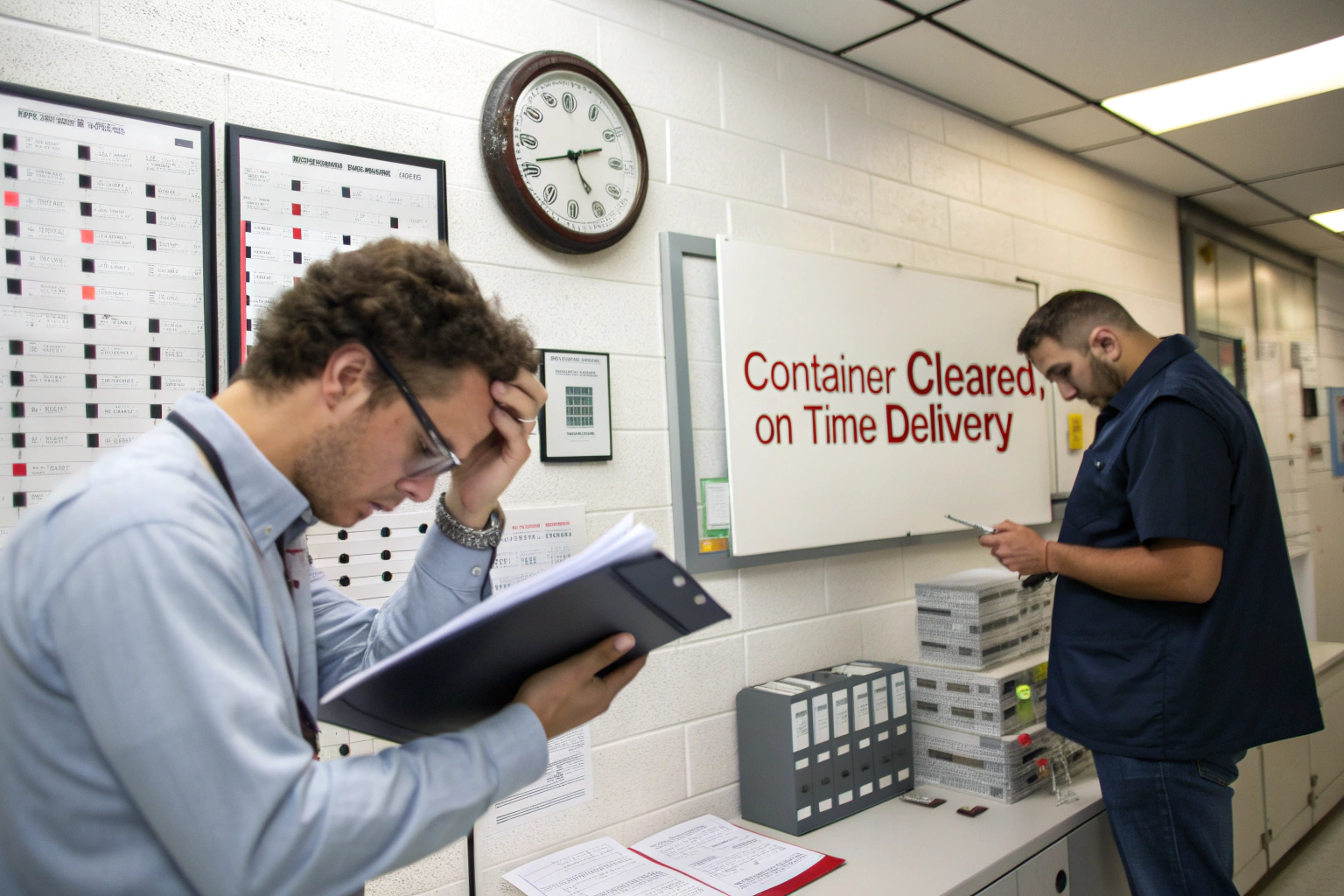
A few seasons ago, I sat in a sterile conference room at a major department store’s headquarters in New York. Across the table, a senior buyer slid a piece of paper toward a brand owner I was partnering with. It was a chargeback notice for $17,000. The brand had shipped a collection of winter accessories two weeks late, missing the store’s rigid floor-set window. The goods were beautiful. The quality was perfect. None of that mattered. They missed the deadline, so the store fined them three percent of the invoice value for every day of delay, capped at fifteen percent. The brand’s entire margin on that order vanished. They did not lose the money because of a manufacturing defect. They lost it because of a logistics failure that could have been prevented.
You avoid late delivery fees from US retail clients by building a production and shipping schedule that treats the retail compliance deadline as an immovable anchor, adding mandatory buffer days for every stage of the timeline, and never, ever promising a delivery date the factory has not explicitly confirmed against their actual production capacity. Late delivery fees, called chargebacks in the retail industry, are not acts of nature. They are the predictable consequence of a planning gap between the factory’s promised ship date and the retailer’s required delivery date.
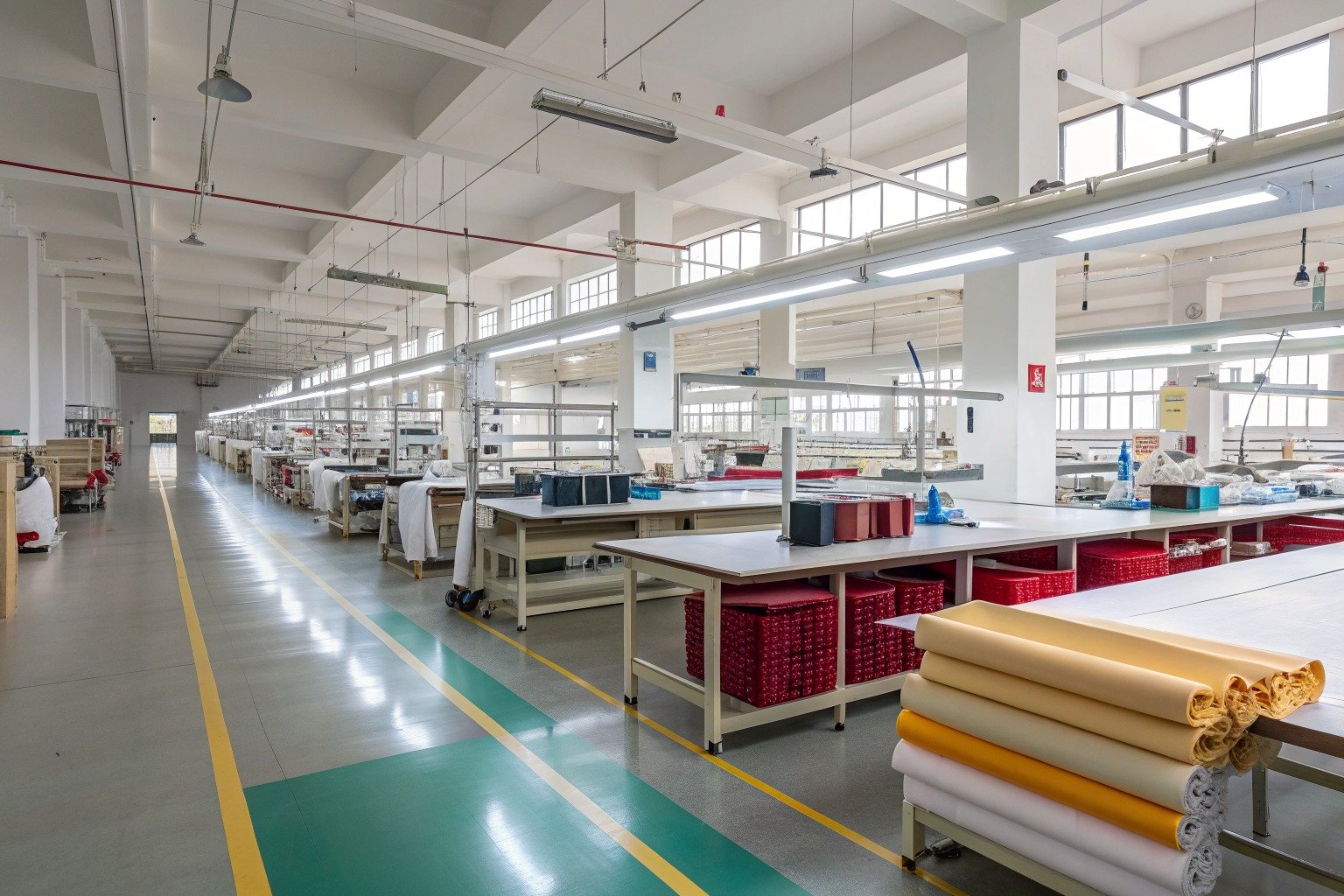
In our Zhejiang factory, we have been shipping to major US retailers, department stores, and big-box chains for nearly two decades. We have learned exactly where timelines break, what the chargeback clauses look like, and how to design a production schedule that protects the brand’s margin. I want to share the specific mechanics of retail delivery compliance, the timeline building method that prevents late fees, and the communication protocols that keep everyone aligned when problems inevitably arise.
What Are US Retail Chargebacks and How Do They Work?
A chargeback is a financial penalty that a retailer deducts from the payment they owe a brand for violating a term of the vendor agreement. Late delivery is one of the most common chargeback triggers, but it is far from the only one. Retailers also issue chargebacks for incorrect labeling, missing barcodes, non-compliant packaging, and early deliveries that arrive before the warehouse appointment window. Each of these penalties is defined in a document called the vendor compliance manual, which every brand selling to a major retailer must read, understand, and follow.
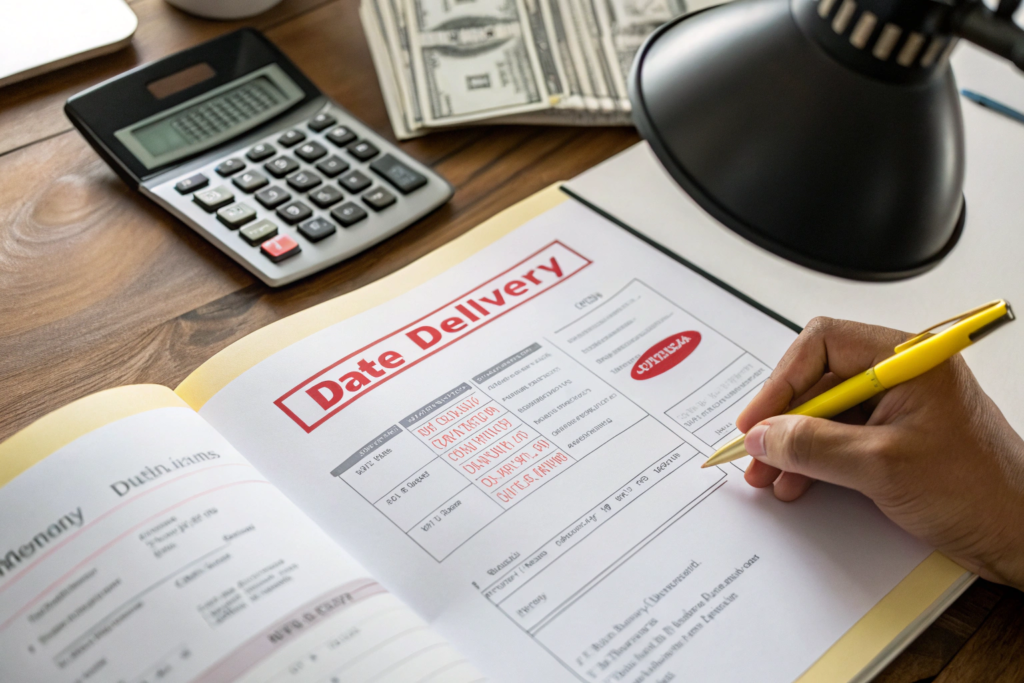
Late delivery chargebacks are typically calculated as a percentage of the invoice value of the late goods. The percentage often starts at three percent and can escalate with each day of delay, capped at a maximum that can reach fifteen or twenty percent. This means a $50,000 shipment that arrives five days late can generate a chargeback of $7,500 or more. For a brand operating on a 40% gross margin, that single chargeback can wipe out nearly half the profit on the order. Understanding the exact terms for each retail client, because they differ, is not optional. It is a prerequisite for staying profitable.
How do major retailers structure their vendor compliance penalty clauses?
Each major retailer has its own vendor compliance manual, and the late delivery terms vary in important details. Target and Walmart operate strict "must-arrive-by" date systems with escalating penalties that increase daily. Department stores like Macy’s and Nordstrom have specific delivery windows tied to floor-set dates, and missing the window triggers not only a financial penalty but also a potential cancellation of the order entirely, leaving the brand with custom-made goods and no buyer. E-commerce giants like Amazon have a "confirmed delivery date" system where repeated late deliveries can result in the suspension of selling privileges, a penalty far more severe than any financial chargeback. The common thread is a zero-tolerance approach to late deliveries. The retailer has allocated shelf space, planned marketing, and scheduled labor around the arrival of the goods. A late shipment creates a hole on the shelf and a frustrated store manager. The chargeback is the retailer’s way of compensating for that disruption. This retail vendor compliance guide explains the standard industry framework. The brand’s responsibility is to know the specific terms for each retail partner and to build a supply chain that meets the strictest standard among them.
What is the difference between "ship date" and "delivery date" in retail compliance?
The distinction between the ship date and the delivery date is the most common source of confusion and the most frequent cause of late delivery chargebacks. The ship date is the date the goods leave the factory’s loading dock. The delivery date is the date the goods arrive at the retailer’s designated warehouse or distribution center. The retailer’s compliance clock is almost always based on the delivery date, not the ship date. A brand that promises a delivery date based on an estimated transit time, without accounting for port congestion, customs holds, or trucking delays, is promising a date they do not control. We always quote our delivery commitments to brands as a reliable ship date from our factory, with a recommended transit buffer based on the current ocean freight and port conditions. The brand then calculates the delivery date by adding a realistic transit window, not an optimistic one, to our confirmed ship date. This separation of responsibility is critical. The factory commits to the ship date. The brand, working with their freight forwarder, commits to the delivery date. Neither party promises what they cannot directly control.
How Should You Build a Production Timeline That Guarantees On-Time Delivery?
A reliable delivery timeline is not built forward from the order date. It is built backward from the delivery deadline. This is the single most important principle of retail logistics, and it is the one that most inexperienced brands violate. They place the order, ask the factory how long production takes, add the transit time, and hope the resulting date falls before the retail deadline. When it does not, they pressure the factory to compress the production schedule, which leads to quality shortcuts and, ironically, further delays from rejected inspection lots.
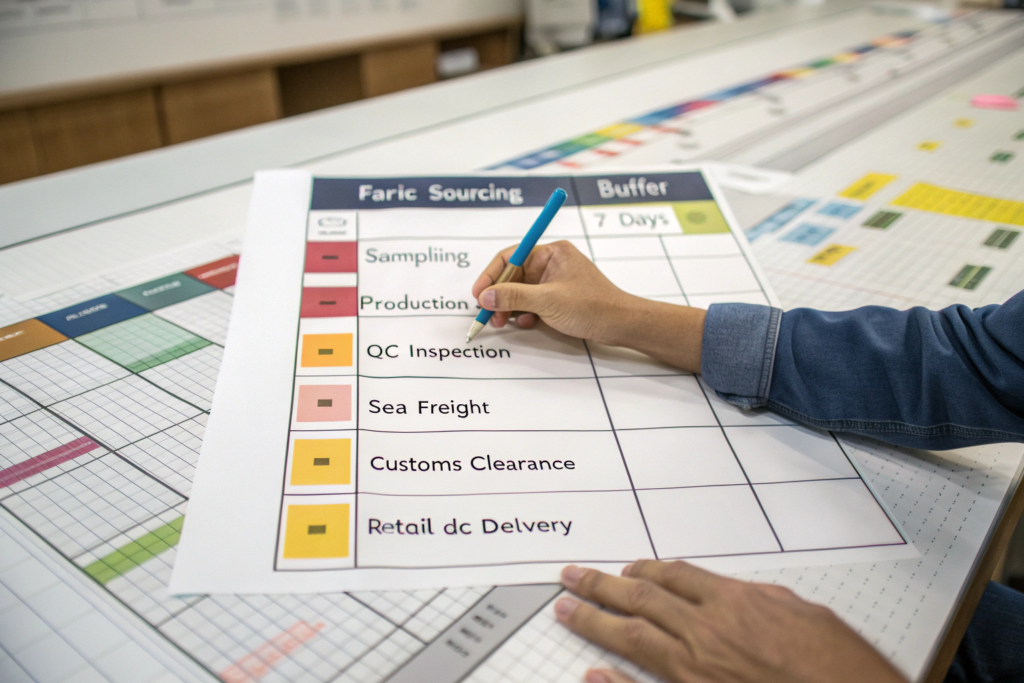
The correct method starts with the retailer’s required delivery date. You subtract the transit time, subtract the customs clearance time, subtract the quality control inspection time, subtract the bulk production time, subtract the sampling and approval time, and subtract the raw material sourcing time. The resulting date is the date by which the order must be placed. If that date is in the past, the timeline is already impossible, and you must renegotiate the delivery window with the retailer or decline the order. This backward planning approach surfaces timeline conflicts early, when they can still be resolved through honest conversation rather than costly excuses.
Why is a backward-planning approach from the delivery deadline essential?
A backward-planning approach treats the delivery deadline as a fixed, non-negotiable anchor and builds the entire production and logistics sequence around it. Starting from the deadline forces realistic conversations about each stage. How long does ocean freight actually take from Shanghai to Los Angeles during peak season, when vessels are fully booked and containers roll to the next sailing. How long do customs exams take when the chosen port is experiencing congestion. How many days of buffer are needed for a third-party inspection and potential rework. When each of these questions is answered honestly and the timeline is totaled, the required order placement date may be surprisingly early. This approach also identifies the critical path, the sequence of activities that cannot be delayed without delaying the entire project. The factory knows that the fabric must be ordered by a specific date, the pre-production sample must be approved by a specific date, and the goods must be ready for the vessel booking by a specific date. This backward planning methodology is standard practice in project management for a reason. It works.
How much buffer time should be built into each stage of the timeline?
Buffer time is not a sign of poor planning. It is a sign of experience. Every stage of the production and logistics timeline is subject to variability. Machines break. Fabric shipments are delayed by weather. Vessel schedules shift. Customs officers select containers for random exams. A timeline with no buffer is a wish, not a plan. We recommend specific buffers for each stage. Raw material sourcing should have a ten-day buffer because dye lot approvals and fabric shipments from the mill to the factory are frequently delayed. Bulk production should have a five-day buffer to account for minor machine downtime or operator absences. Ocean freight should have a seven-day buffer because port congestion and vessel schedule reliability are unpredictable. The total buffer across all stages should be approximately three to four weeks for a standard sixty-day production timeline. This buffer time in supply chain strategy is the difference between a calm, controlled delivery and a panicked, costly scramble. The buffer is consumed by real delays. When it is not consumed, the goods arrive early, and early delivery, provided it is within the retailer’s allowed window, is always better than late.
How Can Communication with Your Factory Prevent Deadline Disasters?
A late delivery is rarely a surprise to the factory. The factory knows when the fabric is delayed. The factory knows when a machine has broken down. The factory knows when the production yield was lower than expected and more units must be produced to fill the order. The problem is not that factories do not know about delays. The problem is that they often do not communicate them to the buyer until it is too late for the buyer to take corrective action.
The most effective way to prevent silent delays is to establish a structured communication rhythm that requires the factory to report progress at defined milestones, not just when the goods are finished. A weekly progress update with photographs of the production floor, a count of completed units, and a confirmation that the ship date is still valid is a reasonable request that professional factories accept. If the factory misses a milestone, the buyer knows immediately and can begin contingency planning.

What weekly progress updates should a buyer request from the factory?
The weekly progress update should include three specific pieces of information. First, a photograph of the production in progress, showing the actual goods on the cutting table, the sewing line, or the finishing station. This photograph should include a visible date marker, a handwritten sign or a dated newspaper, to confirm it was taken that week. Second, a production count, expressed as a percentage of the total order completed. This allows the buyer to track whether the production pace is on schedule to meet the ship date. Third, a confirmation of the current estimated ship date, with an explicit statement that the date is still valid or a revised date if a delay has occurred. This supplier communication protocol does not require the factory to write a long report. A simple email with a photo, a number, and a date is sufficient. The value is in the discipline of the weekly check-in, which surfaces problems while there is still time to solve them.
Why is a "no surprises" policy critical for managing retail delivery expectations?
A "no surprises" policy is an agreement between the buyer and the factory that any issue that could affect the delivery date will be communicated immediately, not hidden until the originally promised date passes. This requires the factory to trust that the buyer will respond to bad news with problem-solving rather than punishment. When a factory knows that reporting a one-week fabric delay will result in a collaborative conversation about air freight options or retail renegotiation, rather than an angry email and a cancelled order, they are far more likely to report the delay early. We have built our client relationships on this principle. When a problem arises, we tell the client immediately, explain the cause, propose a solution, and confirm the revised timeline. This transparent supply chain communication has saved countless orders from the cascade of delays that occurs when a small problem is hidden until it becomes a large one.
What Contingency Plans Should Be Ready for Common Shipping Delays?
Even the best-planned timeline can be disrupted by events outside the factory’s control. A vessel that was scheduled to load on Tuesday rolls to the following week because the ship is overbooked. A container is selected for a random customs exam at the port of entry, adding five to seven days to the clearance timeline. A labor slowdown at the destination port delays trucking by a week. These events are not rare. They are routine occurrences in international logistics. A brand that has no contingency plan for these events is a brand that will pay chargebacks.
Contingency planning means identifying the most likely disruption scenarios and preparing a response in advance, including the cost and the decision trigger. When the disruption occurs, the response is not a panicked scramble. It is the execution of a pre-approved plan. The factory, the brand, and the freight forwarder all know what will happen and who will pay for it.
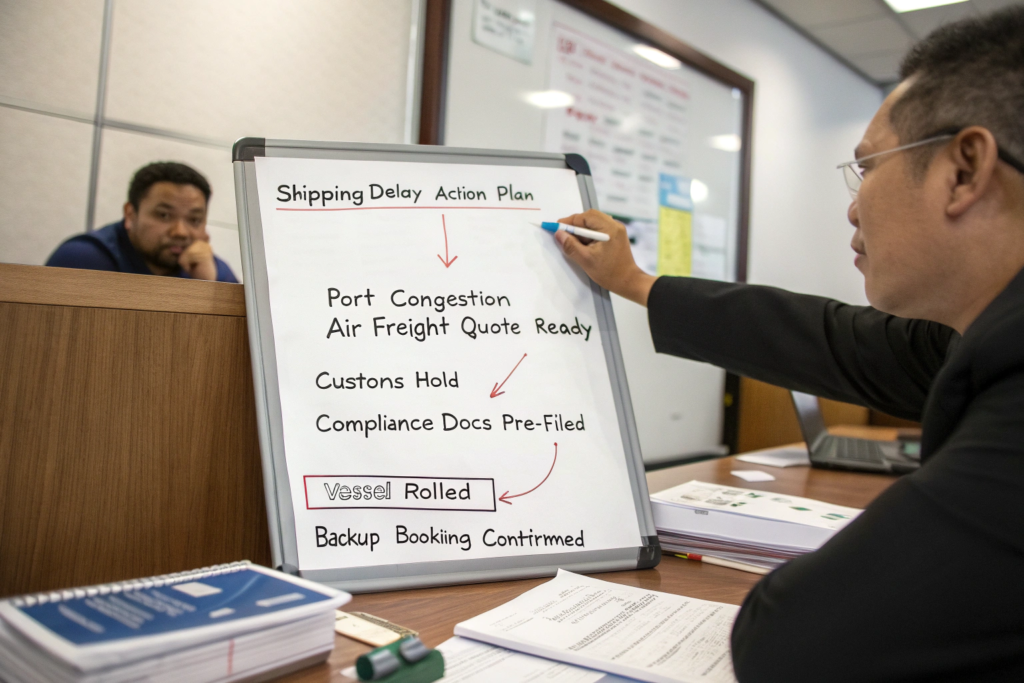
When should air freight be used to protect a retail delivery window?
Air freight is the most powerful tool for recovering a timeline that has been compressed by a production or shipping delay. It is also expensive. The decision to use air freight should not be made in a panic when the goods are already sitting at the port. It should be a pre-calculated option with a clear trigger point. We work with our brand clients to establish an air freight contingency plan at the beginning of each order. The plan includes a pre-negotiated air freight rate from a trusted forwarder, a calculation of the air freight cost as a percentage of the order value, and an agreement on who bears the cost under different scenarios. If the delay is caused by a factory production issue, we typically absorb a portion of the air freight cost. If the delay is caused by a vessel schedule change outside the factory’s control, the brand and the factory may split the cost. The trigger point is usually when the ocean freight timeline no longer meets the delivery deadline with at least a three-day buffer. At that point, the contingency is activated, and the goods move by air. This air freight contingency planning converts a potential chargeback into a manageable, pre-approved expense.
How can a backup freight forwarder save a shipment from port congestion?
Port congestion is the most common cause of late deliveries that neither the factory nor the brand can control. When every forwarder is trying to move containers through the same congested port, having a relationship with a second forwarder who has access to different vessel alliances or different trucking capacity can make the difference between a container that moves and one that sits. We maintain relationships with multiple freight forwarders and can route a shipment through a less congested port, even if it means a slightly longer trucking leg, to avoid the bottleneck. This freight logistics flexibility is a resource that an experienced factory offers. A brand working with a factory that has only one freight routing option is a brand exposed to single-point failure. Ask your factory what alternative routing options are available before the order ships, not after the delay occurs.
Conclusion
Avoiding late delivery fees from US retail clients is not about luck or hoping that everything goes smoothly. It is about building a system that anticipates variability, absorbs disruption, and communicates transparently at every stage. The chargeback notice on the buyer’s desk is the final symptom of a planning failure that began months earlier, when the production timeline was built forward from the order date instead of backward from the delivery deadline.
We have walked through the mechanics of retail vendor compliance, the chargeback structures that penalize late deliveries, the backward planning methodology that creates realistic timelines, the communication rhythms that surface problems before they become crises, and the contingency plans that provide escape routes when external disruptions strike. Each of these elements is a component of a delivery reliability system that protects your brand’s margin and your retail relationships.
If you are placing orders for delivery to major US retailers and want a manufacturing partner who understands the financial consequences of a missed deadline, we can build a production and logistics timeline that aligns with your compliance requirements. We will provide weekly progress updates, pre-negotiated air freight contingency rates, and realistic ship dates that we commit to in writing. Our Business Director Elaine manages our retail compliance accounts and can discuss your specific delivery requirements. Contact her directly at elaine@fumaoclothing.com. Your delivery deadline is not a suggestion. We treat it as a promise.