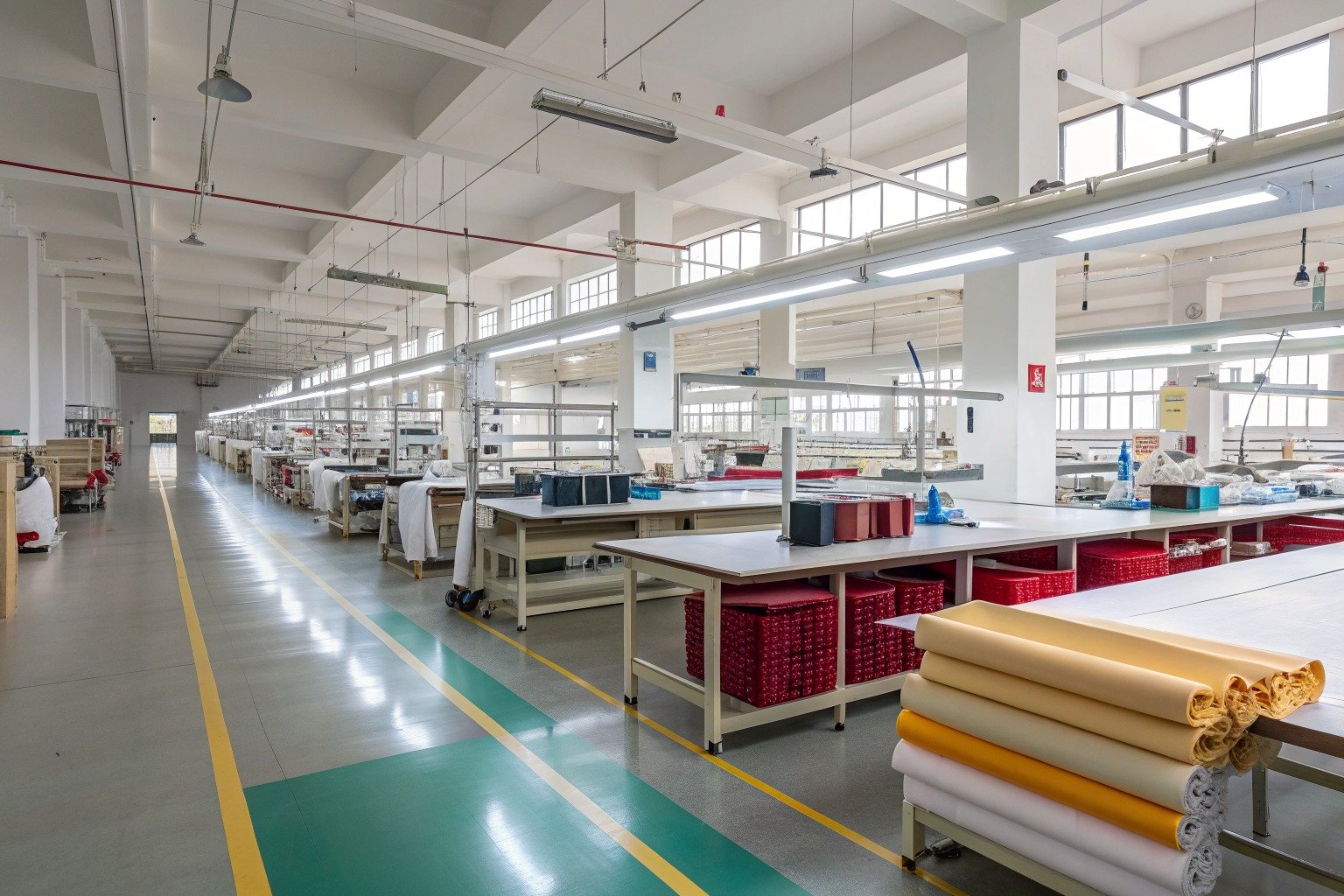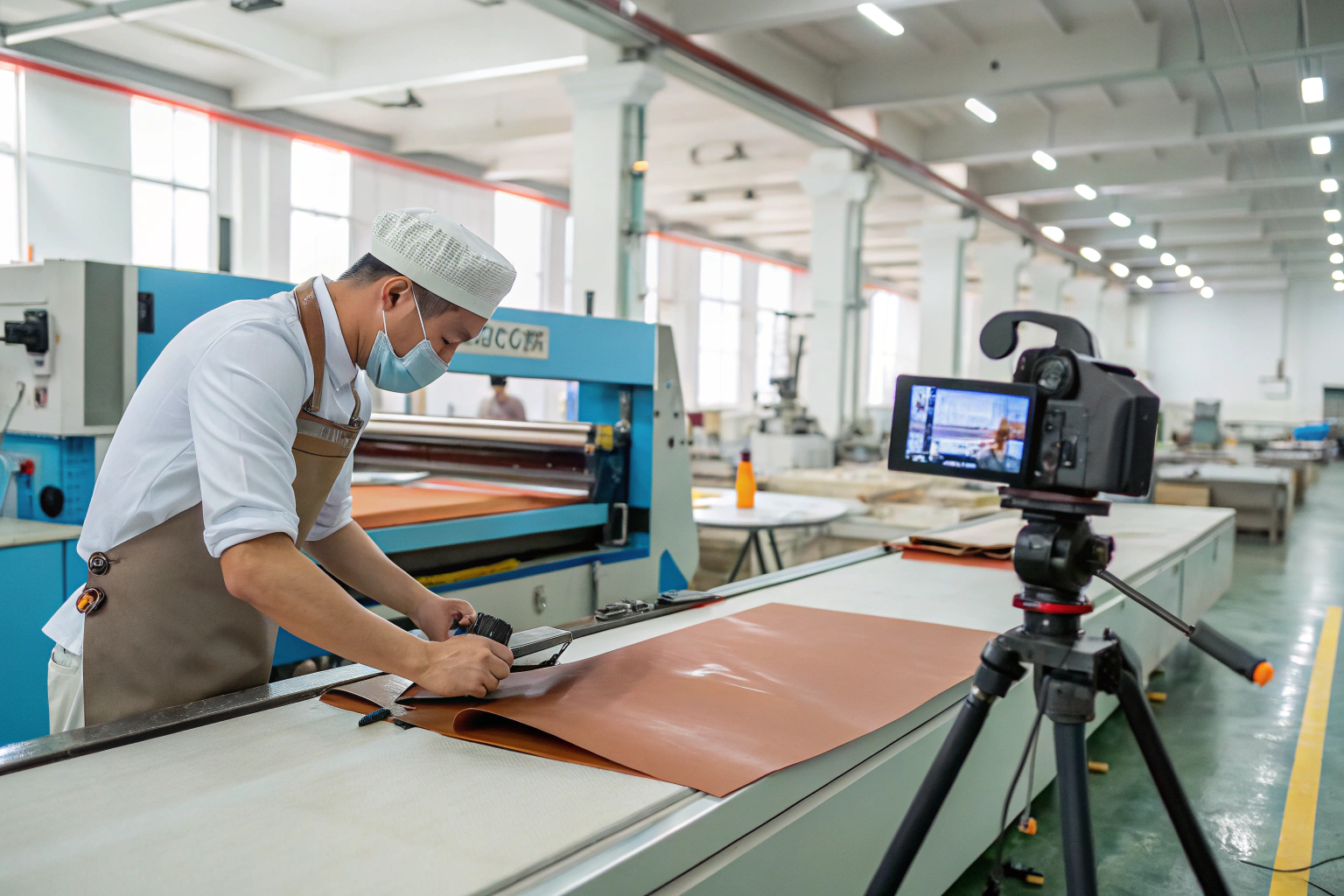
Five years ago, I lost a promising relationship with a Texas-based belt brand before it even started. The buyer asked for a simple factory floor video of our belt cutting process. I hesitated. At that time, our cutting area was functional but cluttered, with raw material rolls stacked on the floor and workers in casual street clothes rather than proper uniforms. I sent a few still photographs instead, carefully framed to hide the mess. The buyer went silent for a week and then politely declined to proceed. He later told a mutual contact that if I was unwilling to show the cutting floor, I was hiding something. He was right. That rejection was the wake-up call that drove me to reorganize our entire production floor and embrace radical transparency as a business philosophy.
US importers ask for factory floor videos of belt cutting because this specific operation reveals more about a factory’s true capabilities and standards than any certificate or sample ever could. The cutting stage is where raw material becomes product. It is the moment of maximum material risk. A poorly maintained cutting die, an improperly calibrated press, or an untrained operator can destroy hundreds of dollars of leather in a single shift. The video answers questions that a polished sample cannot. Is the factory actually cutting the belts themselves, or are they outsourcing this critical step to an uncontrolled third party. Are the workers using the material the buyer specified, or are they substituting a cheaper lookalike. Is the workspace clean enough to prevent oil stains and dirt transfer onto the leather surface. Is the equipment modern and well-maintained, or is it a relic from the 1980s held together with tape and hope.
In the years since that lost sale, I have built our factory’s transparency infrastructure. We now proactively offer factory floor videos to every new client, not just of belt cutting but of every critical production stage. This practice has become one of our most powerful sales tools and our strongest defense against the distrust that plagues international sourcing relationships. I want to explain exactly what US importers are looking for in these videos, how they evaluate what they see, and why this seemingly simple request has become a standard due diligence practice in the fashion accessories industry.
What Specific Details Do US Buyers Look for in a Belt Cutting Video?
When a US buyer watches a belt cutting video, they are not passively enjoying a factory tour. They are conducting a forensic audit. Their eyes are trained on specific details that predict the quality of the finished product and the reliability of the factory. They are looking at the condition of the cutting dies, the type and quality of the raw material being fed into the press, the operator’s technique and safety practices, and the general organization of the workspace. Each of these details is a data point in a mental scorecard that determines whether the factory earns their trust.
A veteran buyer can watch a 90-second cutting video and accurately predict the defect rate of the order. They know that a dull cutting die produces belts with rough, frayed edges that will never finish cleanly. They know that leather stacked directly on a dirty floor will pick up grit and oil that ruins the surface. They know that an operator who rushes the material feed alignment will produce belts with crooked cuts that cannot be sold at full price. This is not intuition. It is pattern recognition built from years of receiving shipments that looked nothing like the approved sample.
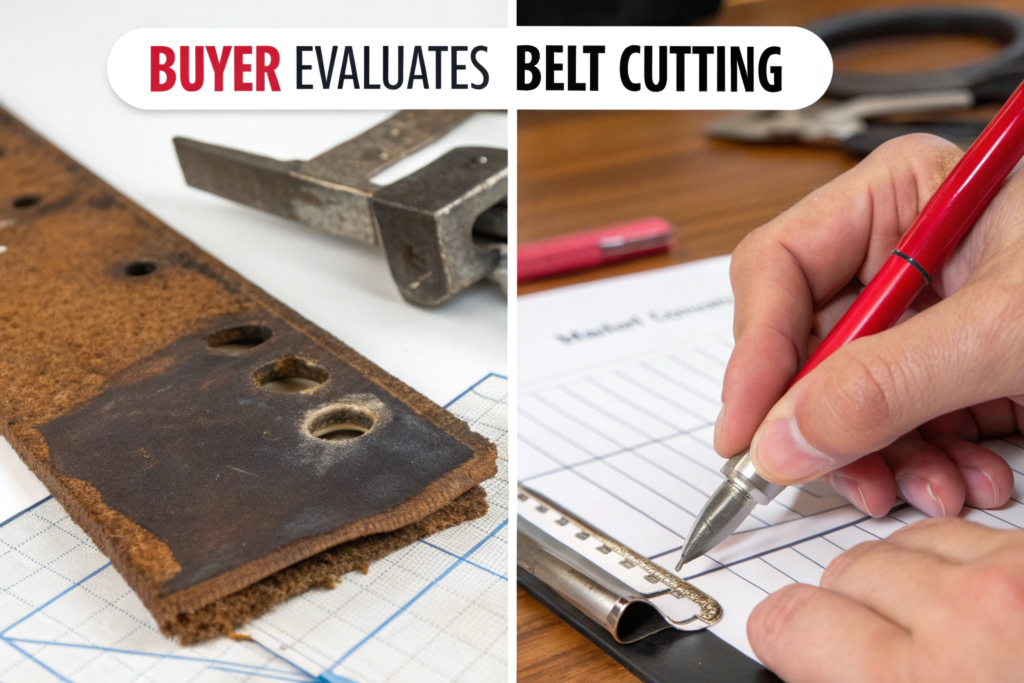
Why is the condition of the cutting die a critical quality indicator?
The cutting die is the heart of the belt cutting operation. It is a metal blade, usually steel, shaped to the exact profile of the belt strap, including the tip shape and the buckle hole positions. A sharp, well-maintained die cuts through leather cleanly in a single press stroke. The cut edge is smooth, perpendicular to the surface, and free of tearing or fraying. A dull or damaged die tears the leather rather than cutting it. The edge is rough and fibrous. The shape is distorted, especially at the pointed tip and the tight curves of the buckle holes. These defects are difficult and expensive to correct in the finishing stages. Edge painting can hide some roughness, but it cannot restore a clean, precise cut. In the video, the buyer looks for the shine of a sharp blade edge. They look for a clean, effortless cut that releases from the die without tugging or tearing. They also look at the die storage area in the background. Well-organized dies hanging on labeled racks indicate a factory that values its tooling and maintains it properly. Dies piled in a corner indicate the opposite. This cutting die maintenance is a direct predictor of the edge quality of the finished belt.
How does the raw material appearance in the video verify your specifications?
The cutting video is the buyer’s opportunity to see the actual raw material that will become their belts. They compare what they see on the screen to the material specification they agreed upon. Is the leather the correct color and grain pattern. Is it full-grain leather with visible natural markings, or is it a corrected-grain leather with an artificial embossed texture. Is the thickness consistent across the hide. If the buyer specified vegetable-tanned Italian leather and the video shows a hide with a plasticky surface and a uniform, printed-looking grain, the alarm bells go off. The video also reveals material handling practices. Is the leather stored flat on racks, or is it folded and stacked in a way that creates permanent crease lines. Are the hides covered to protect them from dust and light, or are they exposed to the factory environment. These details tell the buyer whether the factory respects the material or treats it carelessly. Careless material handling produces belts with scuffs, creases, and color inconsistencies that cannot be fixed. The video also confirms that the factory actually has the material in stock. A supplier who claims to have sourced the specified leather but cannot show it being cut on the factory floor may be outsourcing the cutting to a workshop the buyer never approved. This is a common and damaging form of unauthorized subcontracting. The leather quality verification happens in real time through the video feed.
How Does a Cutting Video Prove Ethical and Compliant Manufacturing?
Beyond the technical quality indicators, the cutting video serves as a window into the factory’s social compliance and ethical manufacturing practices. US importers face increasing pressure from consumers, regulators, and retail partners to verify that their supply chains are free from forced labor, unsafe working conditions, and environmental violations. The US Customs and Border Protection has the authority to detain shipments suspected of being produced with forced labor under the Uyghur Forced Labor Prevention Act. Major retailers require suppliers to pass social compliance audits. The cutting video is a real-time, unfiltered look at the working conditions on the factory floor.
A buyer watching the video scans the background for details that confirm or contradict the factory’s compliance claims. They look at the workers’ ages and general demeanor. They look for visible safety equipment, clear exit paths, and adequate lighting. They note whether the workers appear rushed, stressed, or fearful, or whether they appear focused and professional. These observations are not a substitute for a formal third-party social compliance audit, but they provide a valuable real-time supplement to the audit report.
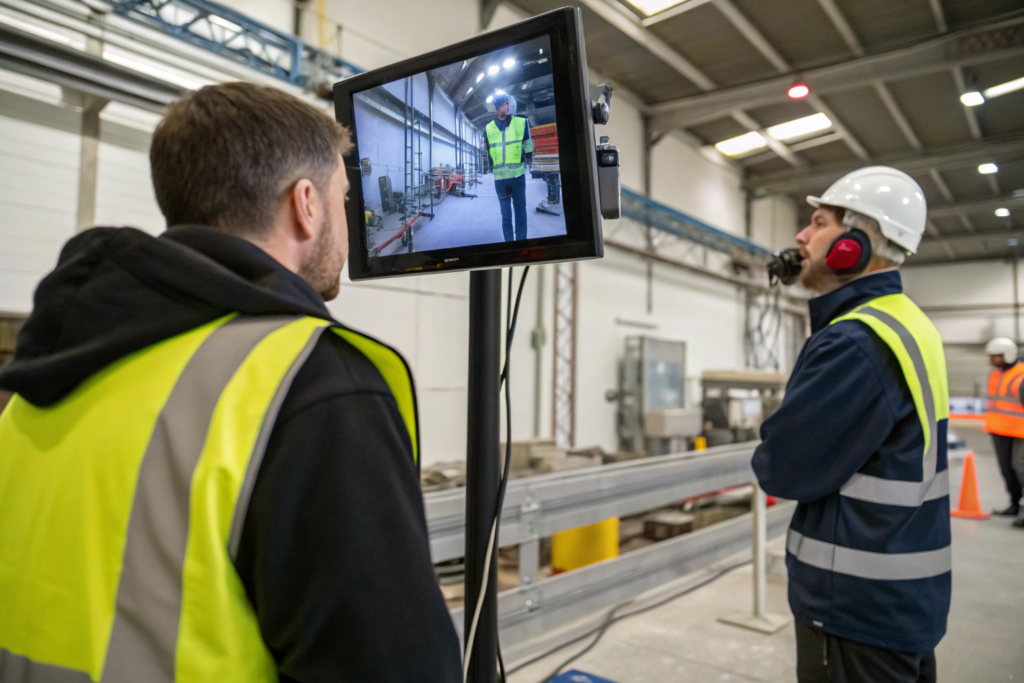
What worker safety and welfare signs do buyers scan for in the background?
The background of a cutting video is as important as the foreground. A buyer scans for specific safety and welfare indicators. Do the workers operating the hydraulic cutting presses wear the required personal protective equipment, specifically cut-resistant gloves and safety glasses. Are the presses equipped with two-hand activation controls that prevent the operator’s hands from entering the cutting zone while the press cycles. This is a non-negotiable safety feature. A press without this safeguard is an amputation waiting to happen. Is the cutting area clean and free of leather scraps and debris that create slip and trip hazards. Are the electrical cables organized and suspended overhead, or are they tangled on the floor creating a fire and shock risk. Is there visible fire extinguishing equipment mounted on the walls. Is the lighting bright and even, or are workers straining to see their work in dim conditions. These workplace safety standards are universal indicators of a professionally managed factory. A buyer who sees workers in street clothes, without gloves, operating unguarded presses in a dimly lit, cluttered space will conclude immediately that the factory is a safety hazard and a legal liability, regardless of the quality of the belt samples.
How does the video help verify the absence of unauthorized subcontracting?
Unauthorized subcontracting is a persistent problem in the fashion accessories industry. A supplier accepts an order, but instead of producing it in their own factory as agreed, they outsource the work to a smaller, cheaper, and often unregulated workshop. The buyer’s approved social compliance audit applies to the supplier’s factory, not to the unknown subcontractor. The cutting video helps prevent this deception. A buyer who has visited the supplier’s factory or reviewed photos of it can compare the video feed to their reference images. Is the cutting area in the same building. Are the machines the same models. Are the workers wearing the same uniforms. Inconsistencies raise immediate red flags. We combat this by including a live date and time stamp on our cutting videos, along with a sign in the frame showing the buyer’s company name and purchase order number. This proves that the video was recorded on a specific date for a specific client and was not a pre-recorded stock video of a different factory. We also welcome live video calls where the buyer can direct the camera operator to show specific areas of the factory floor. This supply chain transparency practice is the most effective defense against subcontracting fraud. A factory that is unwilling to show its cutting floor in real time is a factory that may not actually be cutting your belts.
What Equipment and Technology Should a Modern Belt Cutting Video Showcase?
The equipment visible in the cutting video tells the buyer what level of precision and consistency they can expect from the production run. There is a world of difference between a factory cutting belts with a hand-operated clicker press and a factory using a computer-controlled hydraulic beam press with laser alignment. Both can produce a cut piece of leather. The difference lies in the consistency of the cut across thousands of units, the efficiency of material utilization, and the safety of the operator.
A modern belt cutting video should showcase equipment that is current, well-maintained, and appropriate for the order volume. For a small artisanal order of fifty hand-finished belts, a manual clicker press operated by a skilled craftsman is perfectly appropriate and signals craft authenticity. For an order of 10,000 belts destined for a national retail chain, the buyer expects to see automated or semi-automated equipment that guarantees dimensional consistency across the entire production run. The equipment tells the story of the factory’s production philosophy.
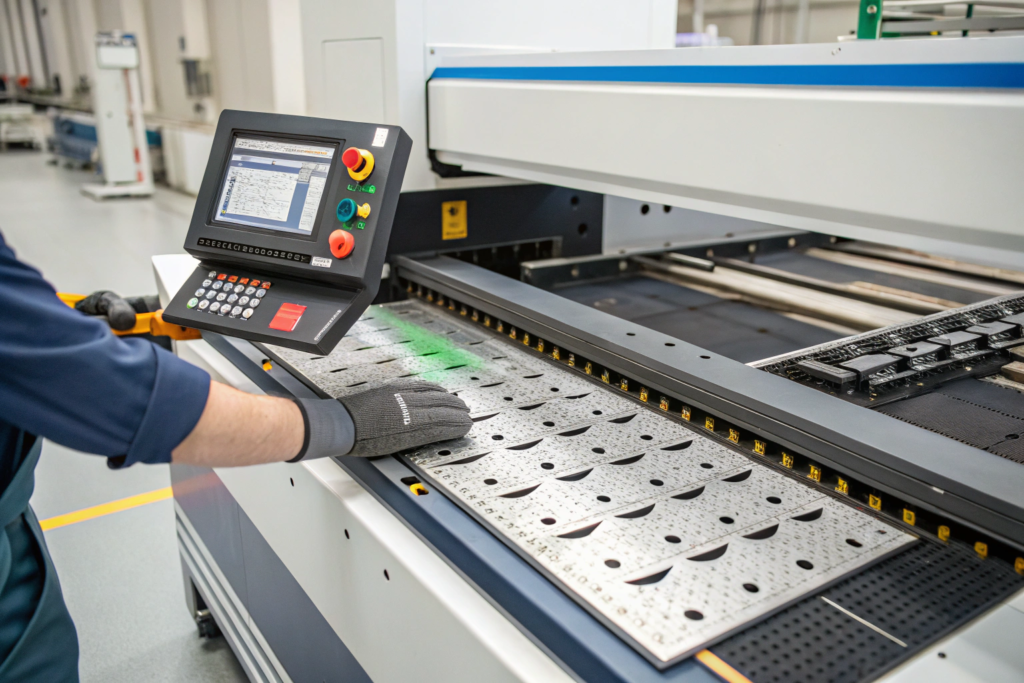
Why does a hydraulic beam press signal higher production consistency?
A hydraulic beam press distributes cutting force evenly across the entire surface of the cutting die through a large, flat beam. This is fundamentally different from a swing-arm clicker press, where the force is concentrated at a single point and the operator manually swings the arm to apply pressure across the die. The beam press produces a uniform cut across the entire belt shape in a single, controlled stroke. The pressure is digitally set and automatically maintained. The result is that belt number one and belt number 5,000 are cut with identical force, producing identical edge quality and dimensional accuracy. A swing-arm press relies on the operator’s skill and consistency. Fatigue, distraction, and variation between operators produce variation in the cut quality. For a national retail brand that requires every belt on the shelf to look identical, the beam press is the expected standard. In the video, the buyer also looks at the press brand and age. A well-known brand like Atom or Cesco indicates investment in quality equipment. A rusty, unbranded machine with improvised repairs signals cost-cutting and potential reliability problems. The hydraulic cutting press technology is a visible signal of the factory’s commitment to consistent quality.
How does laser guide alignment demonstrate material optimization?
Leather is an expensive raw material. A factory that cuts belts without optimizing the layout of the dies on the hide wastes material, and that waste is ultimately paid for by the buyer through higher per-unit costs. A laser guide alignment system projects a visual grid or the exact die outline onto the leather surface, showing the operator precisely where to place the die for maximum material utilization. The operator positions the die to avoid natural hide defects, scars, insect bites, and stretch marks, and to nest the belt shapes closely together to minimize waste between cuts. In the video, the visible laser guide tells the buyer that the factory is thinking about material yield. This is a sign of a professionally managed production floor. It also indicates that the factory is likely to hit the agreed-upon material usage rate, which prevents surprise cost increases or the temptation to substitute cheaper material to maintain margin. The laser cutting guide systems represent a modest investment that pays for itself quickly in material savings. A factory that has made this investment is a factory that thinks long-term.
How Can Importers Use Cutting Videos to Build Long-Term Supplier Relationships?
The cutting video is not just a one-time due diligence checkpoint. It is a relationship-building tool that, when used consistently over multiple orders, creates a shared understanding between the buyer and the factory that no specification sheet can match. Each video becomes part of a visual conversation. The buyer sees the cutting process, provides feedback, and that feedback is visibly incorporated into the next video. This iterative loop builds trust incrementally and creates a sense of partnership that transcends the transactional buyer-supplier dynamic.
We have found that clients who regularly receive and review cutting videos develop a deeper appreciation for the complexity of the manufacturing process. They stop sending vague instructions like "make the edge cleaner" and start sending specific, actionable feedback like "the die on the left side of the press is producing a slightly rougher edge than the right, can you sharpen it before the next run." This level of collaboration improves product quality and reduces the time spent on sample revisions and defect negotiations.
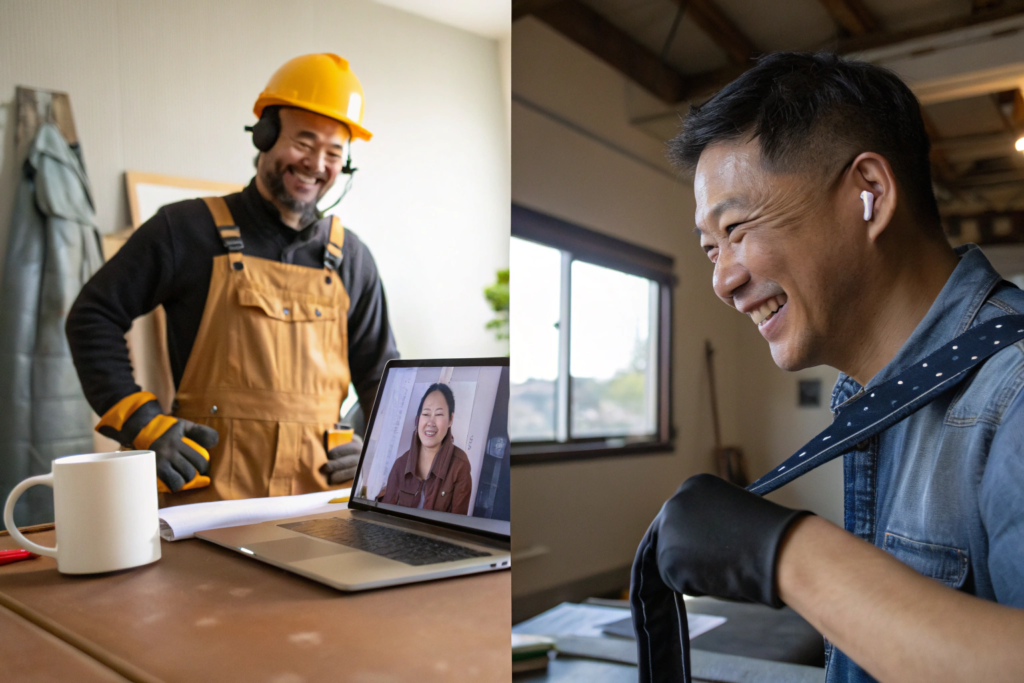
How does regular video sharing create a collaborative quality feedback loop?
A single cutting video sent before the first production run is a valuable baseline. A cutting video sent before every production run is a continuous improvement system. We send a brief cutting video to our long-term clients at the start of each order. The buyer reviews it, often within hours, and provides feedback. If the leather hide looks slightly lighter than the approved reference sample, we adjust the dye batch before cutting the full quantity. If the belt tip shape looks slightly different from the last order, we check the die for wear and sharpen or replace it if necessary. This feedback loop catches problems when they affect one or two belts, not when they affect an entire container of finished goods. It also gives the buyer a sense of control and visibility that reduces anxiety and builds confidence. They sleep better knowing they saw their actual belts being cut from their actual leather. This collaborative quality management approach transforms the relationship from an inspection-based dynamic, where the buyer catches defects after the fact, to a prevention-based dynamic, where the buyer and the factory catch potential issues together before they become defects.
Why do cutting videos strengthen your negotiating position on future orders?
A library of cutting videos is an asset in price and terms negotiations. When a buyer has documented evidence that a factory consistently uses the specified materials, maintains its equipment, and operates a clean, safe floor, the buyer has objective justification for accepting a slightly higher unit price compared to an unverified competitor. The videos de-risk the purchase. A known, verified supplier is worth a premium over an unknown supplier offering a lower quote. Conversely, a factory that can demonstrate its quality and compliance through video evidence is in a stronger position to justify its pricing to buyers who are shopping on price alone. The video evidence shifts the conversation from "trust me" to "see for yourself." We have used our video library to win orders from buyers who initially chose a cheaper competitor, experienced quality or delivery failures, and returned to us because they remembered the transparency we offered. The supplier relationship value is built on this accumulated evidence of reliability. Each cutting video is a deposit in the trust account that pays dividends over the life of the partnership.
Conclusion
The request for a factory floor video of belt cutting is not a sign of a difficult, distrustful buyer. It is a sign of a professional buyer who has been burned before and is determined not to be burned again. This buyer has learned that samples can be handcrafted by a specialist while production is outsourced to the lowest bidder. This buyer has learned that certificates can be borrowed, photoshopped, or simply expired. The cutting video is the closest thing to a factory visit that a remote buyer can access. It is a real-time, unfiltered look at the operation that will determine the quality of their inventory and the reputation of their brand.
We have explored the specific details buyers evaluate in these videos, from the sharpness of the cutting die to the condition of the leather hide. We have seen how the background of the video reveals the factory’s safety culture and social compliance, and how live video calls prevent unauthorized subcontracting. We have examined the equipment signals that distinguish a precision production operation from a manual workshop. And we have discussed how regular video sharing builds a collaborative quality feedback loop that improves product and strengthens relationships over time.
If you are a US importer looking for a belt supplier that will proactively show you your belts being cut from your specified materials on a clean, modern, well-managed factory floor, we welcome the opportunity to earn your trust. We will send you a cutting video of your first sample order without you having to ask. It is our standard practice, not a special concession. Our Business Director Elaine manages our US client relationships and can coordinate live video calls that fit your schedule and time zone. Reach out to her directly at elaine@fumaoclothing.com. Let’s start a relationship built on transparency from the very first cut.