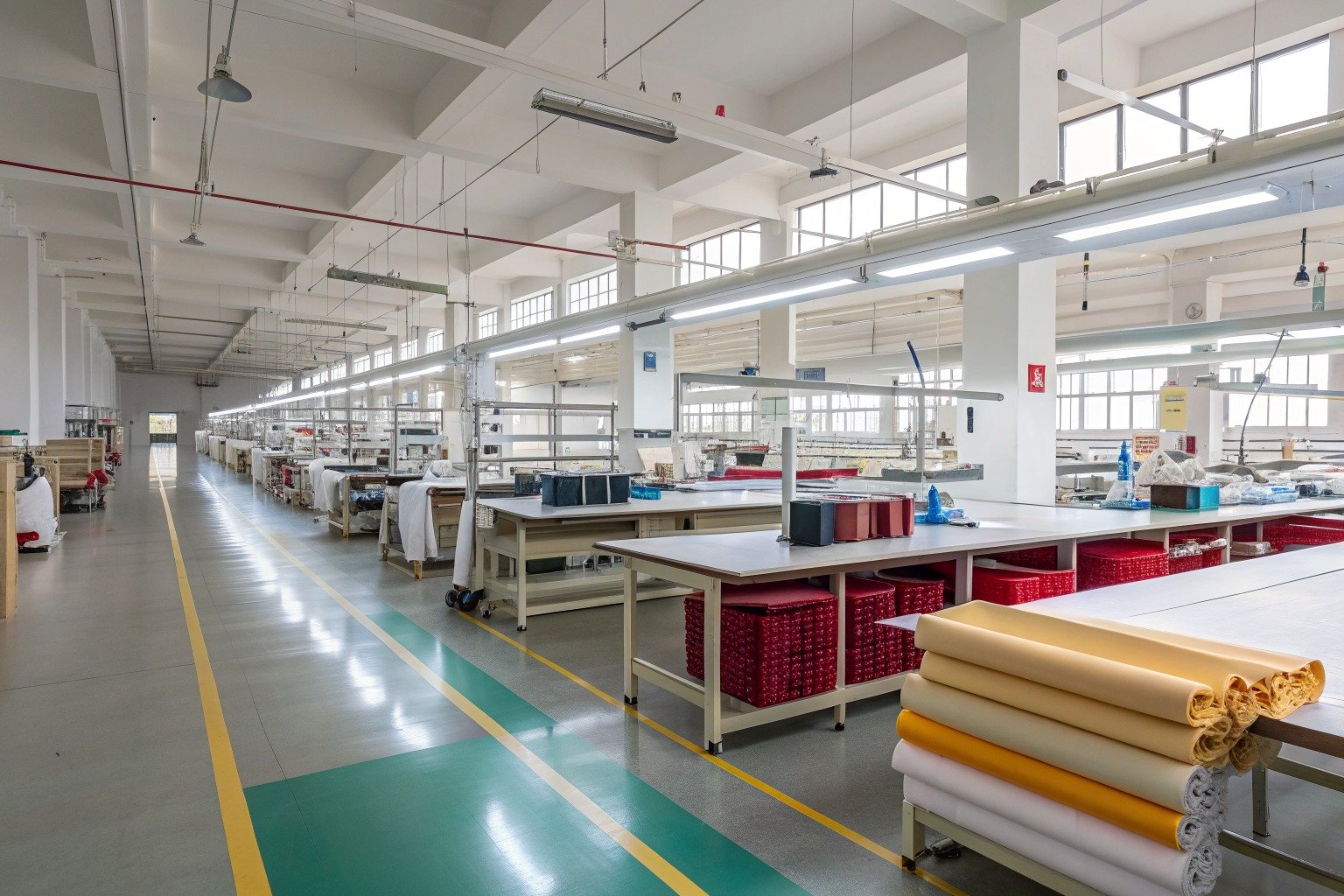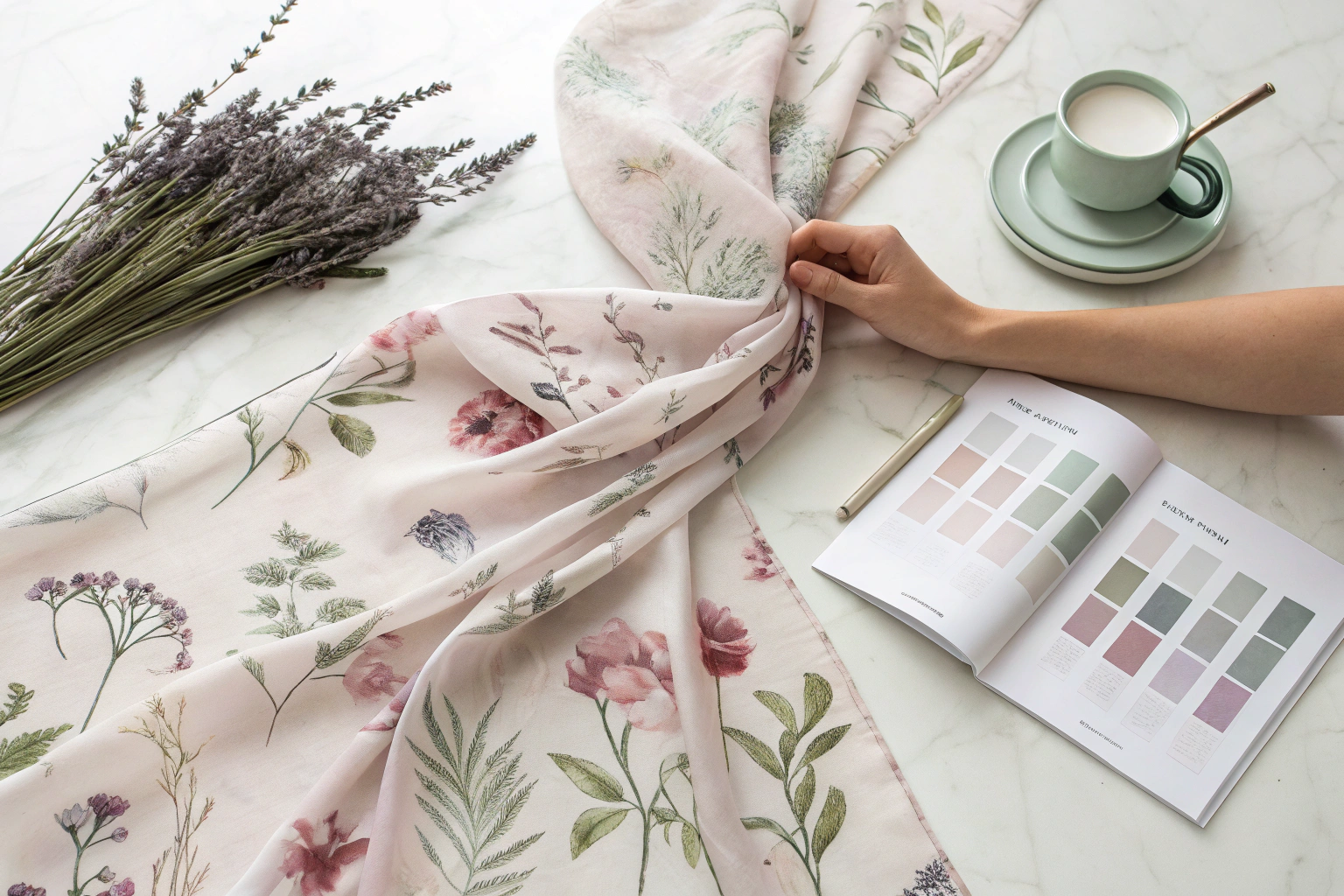
You hold a vintage georgette scarf in your hands. The fabric is whisper-light, semi-sheer, with a subtle crepe texture that catches the light. The print is a delicate floral in muted mauve and sage. You want to recreate this exact fabric and print quality for your brand’s spring collection. You email five Chinese scarf manufacturers with the sample photo. Three reply: "We don’t make georgette. Only satin and twill." One replies: "Yes, we can do it," and sends back a sample in heavy, shiny polyester chiffon that looks like a costume. The last factory sends a sample that is the right fabric weight but the print is blurry, the colors bleeding at the edges, and the hand feel is stiff and scratchy. None of them understand that georgette is not just "thin polyester." It is a specific yarn twist, weave structure, and print process.
To get a Chinese scarf manufacturer to produce high-quality georgette prints, you must find a factory that has in-house fabric sourcing from a specialized georgette weaving mill, uses a dual-head digital textile printer capable of printing on sheer, lightweight fabrics with a pretreated surface, and applies a low-temperature steam fixation process that sets the disperse dyes without shrinking or stiffening the delicate crepe texture. You must also provide a physical reference sample, specify the fabric weight in grams per square meter, not in "momme," and approve a printed strike-off on the actual production fabric before any bulk order is cut.
Georgette is a technical fabric, not a generic thin scarf material. I want to explain exactly what makes georgette different from chiffon and crepe de chine, how we source and handle this fabric in our Zhejiang facility, what printing and fixation parameters preserve its distinctive drape, and how to communicate your requirements to the factory so the sample you receive matches the vision in your head.
What Exactly Is Georgette Fabric and How Does It Differ from Chiffon?
The words "georgette" and "chiffon" are often used interchangeably by non-specialist manufacturers. This is the first sign that a factory does not understand what they are making. The two fabrics look similar to an untrained eye, but they are constructed from different yarns, woven differently, and have a distinctly different hand feel and drape.
Georgette is a lightweight, semi-sheer fabric woven from highly twisted crepe yarns in both the warp and weft directions, creating a springy, slightly rough texture with a matte, granular surface. Chiffon is also lightweight and semi-sheer but is woven from single twisted yarns, giving it a smoother, softer, more fluid drape and a slightly shinier surface. Georgette feels crisp and springy to the touch. Chiffon feels soft and slippery. A manufacturer who cannot articulate this difference in their first email does not weave or print georgette regularly.
The yarn twist is the key differentiator. Georgette yarns are twisted to 2,500 to 3,000 turns per meter, creating a high-torque thread that gives the woven fabric its characteristic bounce. This high twist also makes the fabric more difficult to print on because the yarn’s twist memory causes the fabric to shrink and distort slightly when exposed to the heat and moisture of the steam fixation process. Our custom scarf production process accounts for this shrinkage by pre-shrinking the fabric before printing.
What are the standard weights for georgette used in fashion scarves?
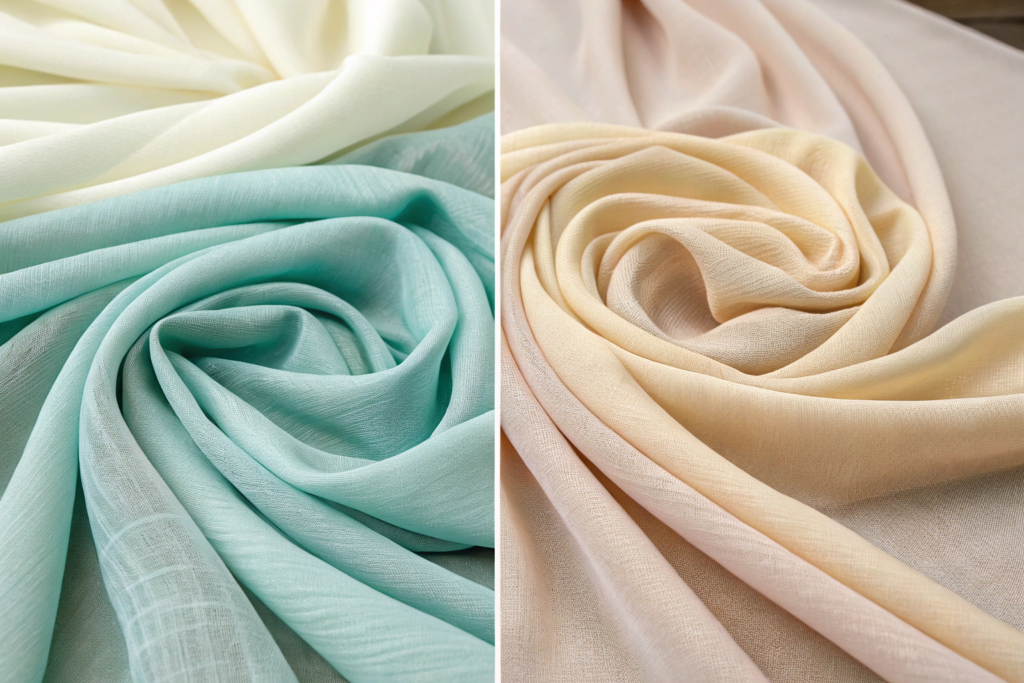
Georgette is produced in a range of weights: 8-momme georgette, approximately 35 GSM, is ultra-sheer and used for layering scarves; 10-momme, approximately 43 GSM, is the most common weight for a standard fashion square scarf; 12-momme, approximately 52 GSM, is heavier and more opaque, suitable for scarves with a denser print or for cooler weather. We specify fabric weight in GSM, grams per square meter, rather than momme, because GSM is a direct physical measurement. Momme is a silk-industry term that varies slightly depending on the silk type.
How does the crepe texture affect print sharpness and color saturation?
The granular, pebbled surface of georgette scatters light. A print on a smooth satin reflects light directly back at the viewer, creating vibrant, saturated color. The same print on georgette absorbs some light into the texture peaks and valleys, creating a softer, more muted, "vintage" color effect. This is a feature of georgette, not a defect. A skilled printer accounts for this by increasing the ink saturation slightly, so the final print on the textured surface matches the intended color. A factory unfamiliar with georgette will print at standard saturation settings and produce a faded, washed-out result.
How Should Georgette Be Prepared and Handled Before Printing?
Georgette is a high-twist fabric with a strong memory. Fresh off the weaving loom, it is tight, crinkled, and dimensionally unstable. If you print directly onto loom-state georgette, the fabric will shrink and distort during steam fixation, pulling the print out of alignment and creating a puckered, uneven surface.
Georgette must be prepared for printing by first running it through a hot-water relaxation bath at 60 degrees Celsius for 30 minutes. This allows the twisted yarns to release their torque and shrink to their stable dimensions. The fabric is then dried on a tensionless conveyor dryer that maintains the relaxed width and prevents the fabric from stretching under its own weight. After drying, the fabric is calendered at a low pressure to flatten the crepe peaks slightly, creating a more uniform printing surface without destroying the texture.
We perform this preparation step in-house before any georgette fabric enters our printing room. A factory that prints on unprepared georgette produces scarves that shrink and distort the first time the consumer hand-washes them. The print registration shifts, and the scarf loses its square shape, becoming a parallelogram.
What pre-treatment chemistry helps the disperse dye bond to georgette?
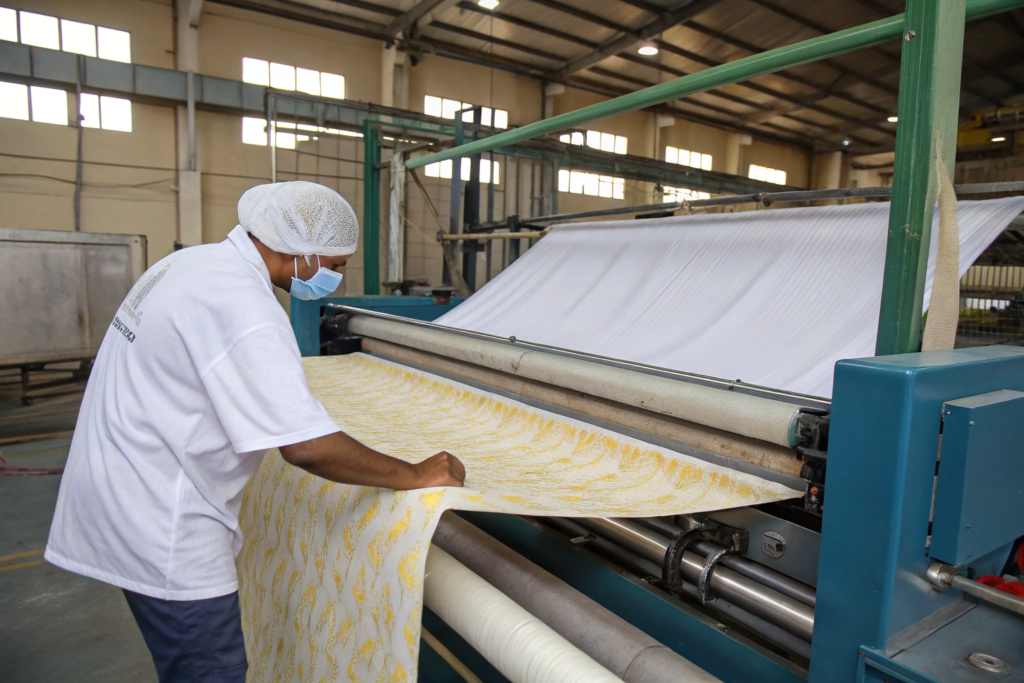
Polyester georgette is hydrophobic. It repels water, and by extension, water-based print inks. The fabric must be pre-treated with a thin coating of a hydrophilic agent and a dye-fixation accelerator before printing. This coating is applied in the relaxation bath. It makes the fabric surface temporarily water-absorbent so the inkjet droplets sit precisely where they land and do not bleed along the crepe grain. The coating also catalyzes the dye-fixation reaction during steaming, improving color yield by up to 15%.
How does the tension control during printing prevent image distortion?
A standard roll-to-roll digital printer applies tension to pull the fabric through the print zone. On a smooth satin, this tension is harmless. On a high-twist georgette, excessive tension stretches the fabric lengthwise, and the printed image elongates. When the tension releases after printing, the fabric springs back, and the image compresses, turning circles into ovals. Our printer uses a conveyor-belt feed system that supports the fabric on a sticky, moving belt through the entire print zone, applying zero longitudinal tension.
What Digital Printing Inks and Processes Work Best on Georgette?
Georgette is thin, textured, and heat-sensitive. A standard pigment ink sits on the fabric surface and creates a stiff, plasticky hand feel that kills the soft drape of the scarf. A standard disperse dye requires high-temperature fixation that can shrink or stiffen the delicate crepe.
The best printing ink for polyester georgette is a high-energy disperse dye ink formulated for low-temperature fixation at 130 degrees Celsius rather than the standard 180 degrees. This lower fixation temperature protects the fabric texture. The ink is a nano-dispersion with particle sizes below 200 nanometers, allowing it to penetrate the twisted yarn structure and deliver color saturation through the fabric to the reverse side, which is essential for a sheer scarf.
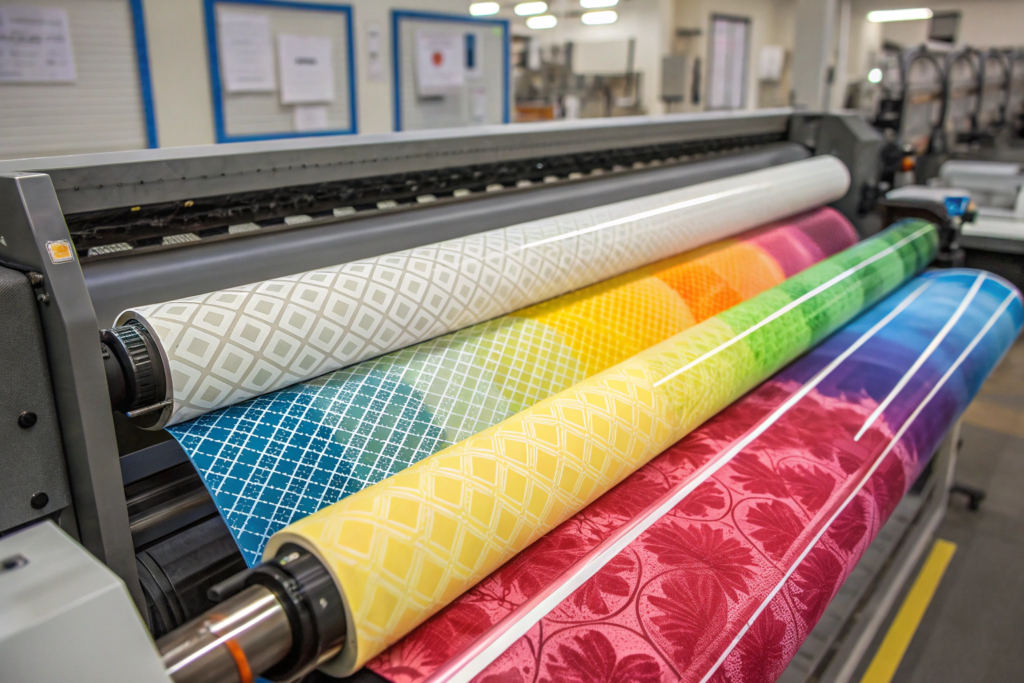
We print georgette with an 8-color digital textile printer with additional light cyan and light magenta channels for smooth gradient transitions, critical for watercolor and photographic prints. The ink is jetted at 1,200 DPI resolution. After printing, the fabric moves directly to the steam fixation chamber without intermediate rolling, which would smear the wet ink.
How does low-temperature steam fixation preserve the georgette texture?
Standard polyester disperse dye fixation occurs at 180 degrees Celsius for 30 minutes. At this temperature, polyester fibers soften and can permanently set in a flattened, compressed state if the fabric is under any pressure during steaming. Our low-temperature fixation process uses a specialized steam chamber that operates at 130 degrees Celsius for 45 minutes with a pressureless, hanging fabric transport. The longer time compensates for the lower temperature, achieving identical dye penetration without the risk of texture loss.
What is the reduction clearing process for a printed georgette scarf?
After fixation, any excess surface dye must be removed or the scarf will bleed color when the customer hand-washes it. The fabric undergoes a reduction clearing wash with sodium hydrosulfite and a mild detergent at 60 degrees Celsius. This is followed by a cold rinse and a softener bath that restores the fabric’s original crisp-crepe hand feel. The scarf then dries in a tension-free conveyor dryer. This full post-processing sequence is essential for wash fastness.
What Strike-Off and Sampling Process Confirms the Print Quality Before Bulk?
A digital print file on a computer screen looks completely different from a printed image on textured, semi-sheer georgette. The colors are different. The brightness is different. The transparency is different. The only way to confirm the print quality is a physical strike-off on the actual production fabric.
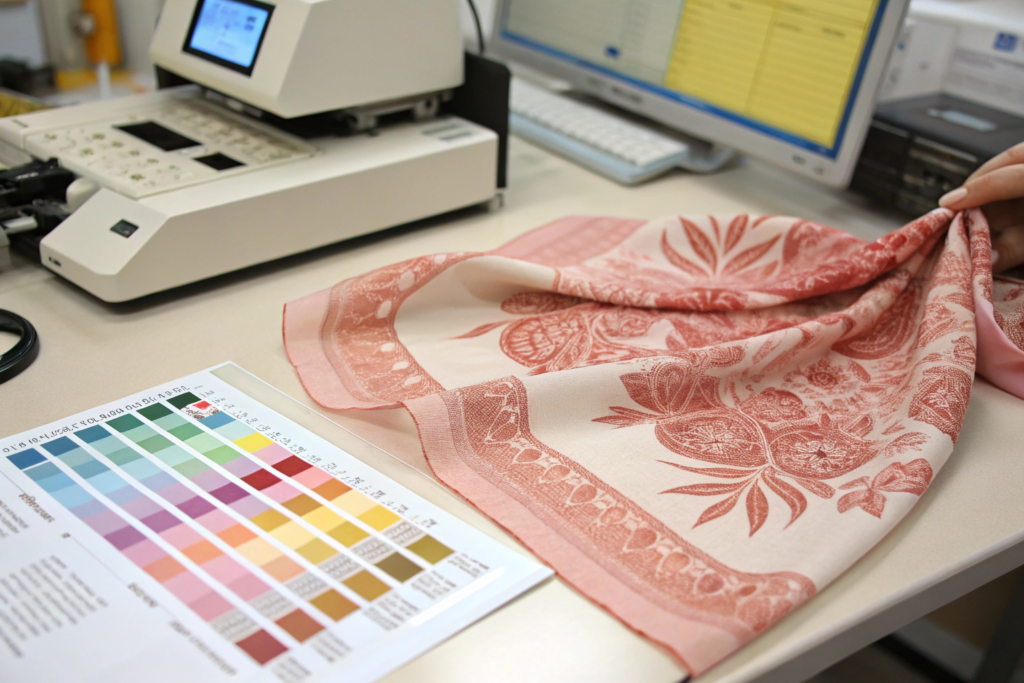
Our strike-off process for a georgette scarf involves printing a small section of the design, typically 30 by 30 centimeters, onto the prepared georgette fabric, running it through the full fixation, clearing, and softening sequence, and then shipping the finished strike-off to the buyer for approval. The strike-off is accompanied by a spectrophotometer color reading showing the Delta E value of the printed colors against the buyer’s Pantone references. The buyer approves the strike-off visually and numerically before the bulk print run begins.
This strike-off step catches 90% of the color and texture issues that would otherwise ruin a bulk order. The buyer sees the exact fabric, the exact print colors, and the exact hand feel. Adjustments can be made to the color profile or the softener level before a single meter of bulk fabric is printed.
How many strike-off rounds are typical before bulk approval?
With a clear Pantone reference and a physical fabric swatch provided by the buyer, the first strike-off is approved approximately 70% of the time. If adjustments are needed, a second strike-off adds 3 to 4 days to the sampling timeline. We strongly encourage buyers to provide a physical fabric reference, not just a digital photo, because the texture and transparency of georgette cannot be communicated through a screen image.
What are the minimum order quantities for a custom georgette print scarf?
Digital printing on georgette requires no screen engraving or dye vat preparation, so the minimum order for a custom print is lower than for traditional screen printing. We can produce a custom georgette scarf print starting at 300 units per design and colorway. The per-unit cost is higher for this small quantity than for a 5,000-unit order, but there is no setup charge penalty. Our georgette scarf production capacity supports both small boutique runs and large retail orders.
Conclusion
Producing a high-quality printed georgette scarf requires a manufacturer that understands the fabric’s unique yarn twist, its need for pre-shrinking and tension-free handling, the specific low-temperature disperse dye fixation process that preserves the crepe texture, and the reduction clearing sequence that ensures wash fastness. A factory that calls georgette "like chiffon" or prints on loom-state fabric without preparation will produce a stiff, distorted, bleeding scarf that fails at the first hand wash.
Our Zhejiang facility runs a dedicated georgette production line with the relaxation baths, conveyor-belt digital printers, low-temperature steam fixation chambers, and reduction clearing equipment required for this fabric. We stock georgette in standard weights and pre-treat it in-house before printing.
If you have a georgette print design and need a manufacturer that treats this fabric with the respect it deserves, contact our Business Director, Elaine. She will send you a georgette sample swatch book with our standard weights and a sample strike-off of your design on the actual fabric. Write to her at elaine@fumaoclothing.com. Let’s create a georgette scarf that floats, not stiffens.