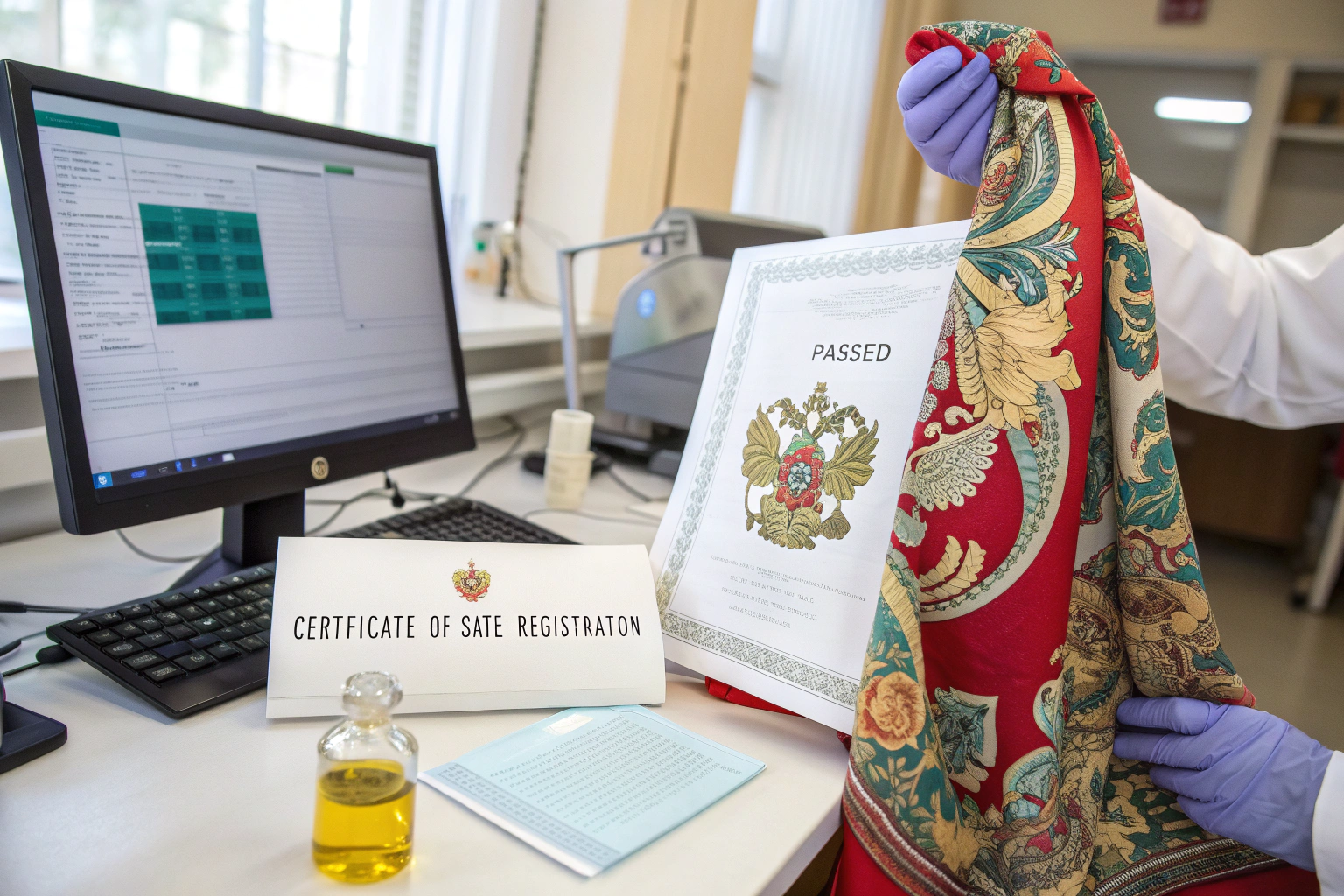
You finalize a contract with a Russian distributor for 20,000 printed scarves. The price is agreed. The delivery terms are signed. Then the distributor’s logistics manager sends an email: "Please provide the Certificate of State Registration, the Russian sanitary-epidemiological certificate for these products." You forward the request to your factory. They reply: "What certificate? We only have OEKO-TEX." Your distributor explains that without this specific Russian government document, the scarves will be seized at the Sheremetyevo customs warehouse, and the entire shipment will be destroyed or re-exported at your cost. The document you have never heard of is the single most important piece of paper for your entire Russian order.
Russian importers ask for sanitary certificates on fabric accessories because the Eurasian Economic Union Technical Regulation TR CU 007/2011 mandates that all textile products intended for prolonged skin contact must undergo mandatory state registration and receive a Certificate of State Registration, the SGR, issued by the Russian Federal Service for Surveillance on Consumer Rights Protection and Human Wellbeing, Rospotrebnadzor. This certificate confirms the product has been laboratory tested against a specific list of chemical, toxicological, and hygiene parameters and is safe for human use.
This is not a voluntary quality standard like OEKO-TEX. It is a legally binding government regulation enforced at the customs border. A shipment without an SGR is not just delayed. It is illegal to place on the Russian market. I want to explain exactly what this certificate covers, what laboratory tests are required, how a Chinese factory can obtain it, and why working with a manufacturer who already holds these certificates for their fabric accessories saves you months of bureaucratic delay and thousands of dollars in potential customs penalties.
What Is the TR CU 007/2011 Regulation and What Does It Cover?
The Eurasian Economic Union, comprising Russia, Belarus, Kazakhstan, Armenia, and Kyrgyzstan, operates a unified system of technical regulations. These regulations are legally equivalent to EU REACH or US CPSIA in their respective markets. For textile products, the governing regulation is TR CU 007/2011, "On the Safety of Products Intended for Children and Adolescents," and for adult accessories, the broader TR CU 017/2011, "On the Safety of Light Industry Products."
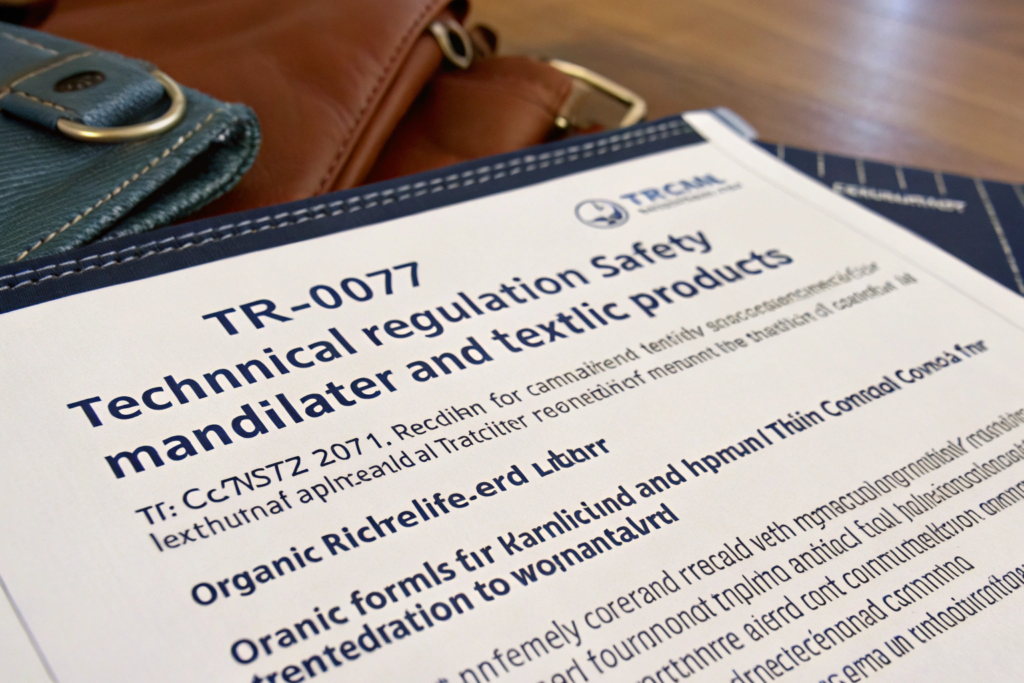
TR CU 007/2011 is the technical regulation that mandates safety requirements for all textile, leather, and fur products that contact human skin, including fabric hair bands, scarves, belts, and gloves. It sets specific migration limits for heavy metals, formaldehyde, and a range of organic chemicals, and it requires that these products undergo mandatory conformity assessment before being placed on the EAEU market. For accessories worn directly against the skin, the regulation typically requires a Certificate of State Registration, not just a simpler Declaration of Conformity.
A Declaration of Conformity, the simpler document, is a manufacturer’s self-declaration of compliance, backed by test reports from an accredited laboratory. The Certificate of State Registration is a higher level of control. It requires the application to be submitted to Rospotrebnadzor, reviewed by a government expert, and issued as a state document. Products that contact the skin of sensitive areas, the scalp, the neck, the face, or products marketed to children, almost always fall into the SGR category.
What specific products require the Certificate of State Registration versus the Declaration?
Hair bands and hair clips, in contact with the scalp, require the SGR. Scarves and shawls, in prolonged contact with the neck, require the SGR. Belts, if worn over clothing, may only require a Declaration. Gloves, in prolonged contact with hand skin, require the SGR. The Russian distributor or a Russian certification specialist makes this determination based on the specific Customs Union tariff code.
How does the EAEU regulation differ from EU REACH in its approach?
REACH is chemical-specific and applies to substances and articles across all industries. TR CU 007 is product-category-specific and covers physical safety factors as well, such as seam strength, flammability, and electrostatic properties, alongside chemical migration limits. A product that passes OEKO-TEX may still fail a TR CU test because TR CU tests for a slightly different list of chemicals at slightly different limit values.
What Chemical and Hygiene Tests Are Required for an SGR Certificate?
The SGR is not a paper exercise. It is issued only after a designated EAEU-accredited laboratory has physically tested samples of the product and issued a formal test report. The factory must ship physical samples of the fabric accessory to the testing laboratory, which may be located in Russia or, in some cases, an accredited laboratory in China that is recognized by the EAEU system.
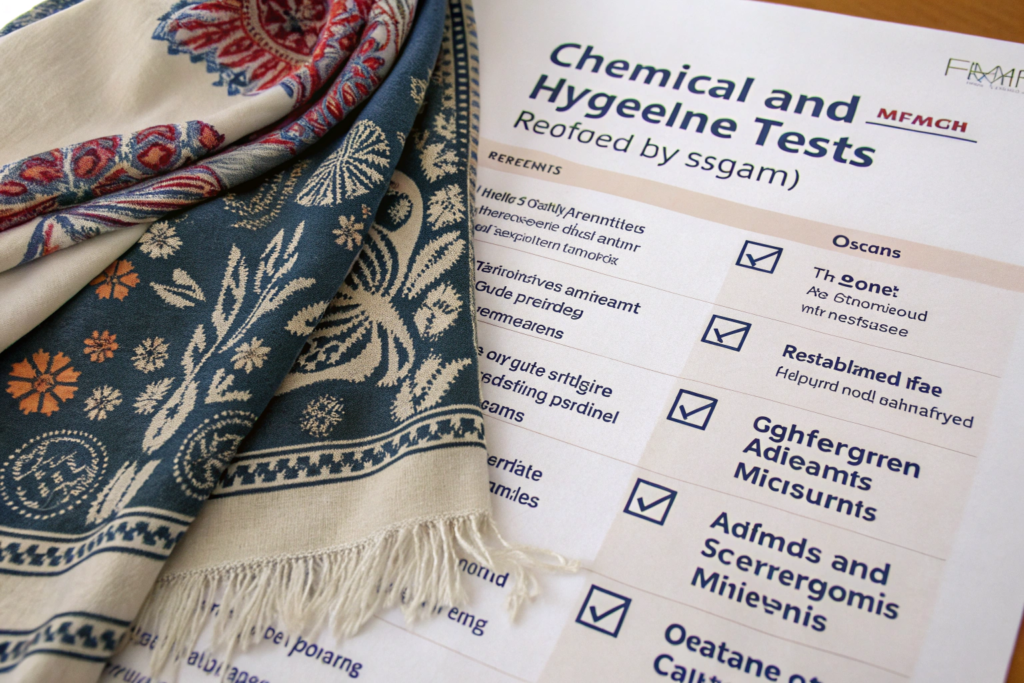
The chemical and hygiene tests required for an SGR on a fabric scarf include: migration levels of formaldehyde, which must be below 75 micrograms per cubic meter in air or 300 milligrams per kilogram in water extract; heavy metals such as lead, arsenic, cadmium, and mercury extractable in a sweat simulant; banned AZO dyes releasing any of 22 carcinogenic amines; organotin compounds used as biocides; and a skin irritation index tested on a biological model, typically an in-vitro reconstructed human epidermis assay that measures cell viability after 24 hours of contact.
The list of test parameters is specified by Rospotrebnadzor’s expert based on the product’s material composition, the dye types used, and the presence of any synthetic coatings or prints. A printed polyester scarf with a metallic foil print will undergo a different test suite than a plain-dyed cotton scarf.
How long does the SGR testing and registration process take?
The laboratory testing typically takes 15 to 20 working days after the samples are received. The Rospotrebnadzor expert review and the issuance of the certificate take an additional 10 to 15 working days. The total process from sample submission to certificate issuance is approximately 6 to 8 weeks.
Can OEKO-TEX Standard 100 test reports substitute for SGR tests?
No. OEKO-TEX is a voluntary, private certification recognized by many European brands, but it is not recognized by the Russian government as equivalent to TR CU 007 testing. The Rospotrebnadzor expert requires tests performed by a laboratory accredited specifically within the EAEU accreditation system to the GOST standards referenced in the technical regulation.
How Can a Chinese Factory Obtain an SGR for Its Accessories?
A Chinese factory cannot directly apply for an SGR in its own name unless it has a registered legal entity in Russia. The typical route is that the Russian importer, the distributor, acts as the applicant for the SGR, using their legal entity in Russia. The Chinese factory’s role is to provide the required technical documentation and physical samples, and to ensure the production process consistently meets the tested parameters.
A Chinese factory supports the SGR application by providing the Russian importer with a detailed material composition breakdown, the exact dye and chemical formulations used, a letter of authorization allowing the importer to act as the applicant, and three to five physical product samples for laboratory testing. The factory must also commit to maintaining identical materials and production methods for all subsequent shipments under that certificate, as any material change invalidates the SGR and requires a new registration.
Our factory has supported multiple Russian clients through this process. We prepare a standardized "SGR Support Package" for each accessory SKU, containing the material datasheets, the dye and chemical supplier declarations, the OEKO-TEX certificate as a supporting document, and the physical samples in sealed, labeled bags.

What happens if the factory changes a dye supplier after the SGR is issued?
The SGR is specific to the product tested. If the factory changes the dye formulation, the fabric supplier, or any chemical input, the SGR is technically no longer valid. A new SGR application with new samples is required. This is why Russian importers strongly prefer factories with stable, documented supply chains.
Who pays for the SGR testing and registration, the importer or the factory?
The cost is typically borne by the importer, as the certificate is issued in their name. However, for large, long-term contracts, the factory may agree to share or absorb the initial registration cost as a partnership investment. The total cost for SGR testing and registration for a single textile accessory SKU ranges from $800 to $2,500, depending on the complexity of the test suite.
What Happens at Customs If a Fabric Accessory Shipment Arrives Without an SGR?
The Russian customs authority operates a risk-based inspection system. A shipment of fabric accessories declared under a tariff code that triggers the SGR requirement will be flagged in the system automatically if no SGR number is provided in the customs declaration.
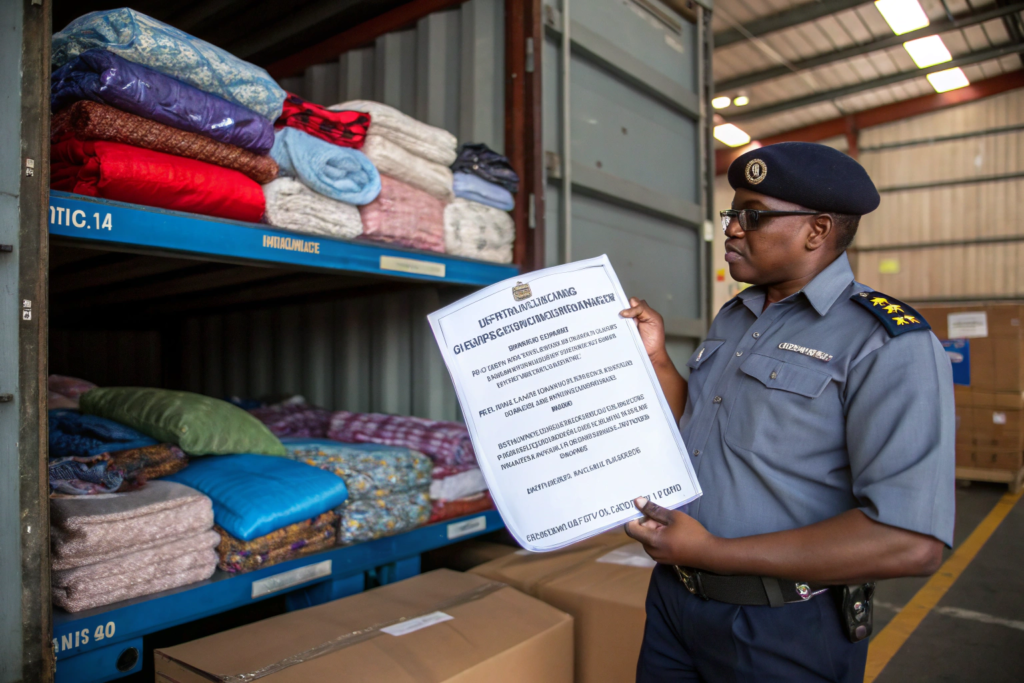
If a fabric accessory shipment arrives without a required SGR, the customs officer will detain the goods and issue a notice to the importer demanding the certificate within a specified period, typically 10 to 30 days. If the certificate cannot be produced, the goods are classified as non-compliant and prohibited from entry. The importer faces a choice: re-export the goods back to the country of origin at their own expense, or have the goods destroyed under customs supervision. Administrative fines on the importer range from 100,000 to 300,000 rubles for the violation.
Re-exporting a full container of scarves back to China costs thousands of dollars in freight and terminal fees. Destroying the goods incurs destruction and disposal fees. Both outcomes result in a total loss of the order revenue and a severely damaged relationship with the Russian distributor.
Can an SGR be obtained after the goods have arrived at customs?
In some cases, an expedited application can be made while the goods are held in a temporary storage warehouse, but the standard testing timeline of 15 to 20 working days often exceeds the customs detention period. The goods are released only after the SGR is issued and presented to customs. The storage fees at a customs bonded warehouse add significant cost.
Is there any exemption for small sample shipments?
Small shipments intended for exhibition, testing, or as non-commercial samples are generally exempt from mandatory conformity assessment. However, a commercial shipment of any size that is intended for retail sale triggers the full conformity assessment requirement.
Conclusion
The Russian sanitary certificate, the Certificate of State Registration under TR CU 007/2011, is a mandatory government safety registration for fabric accessories that contact the skin. It requires laboratory testing for formaldehyde, heavy metals, banned AZO dyes, and skin irritation, conducted by an EAEU-accredited laboratory. A shipment without this certificate cannot legally enter the Russian market and faces detention, fines, and destruction. The Chinese factory’s role is to provide stable, documented materials and support the importer’s application process with technical datasheets and physical samples.
Our Zhejiang facility has supported SGR applications for multiple Russian importers of hair bands, scarves, and fabric belts. We maintain a documented, stable supply chain for dyes and fabrics, and we prepare the SGR Support Package for every new SKU destined for the Russian market.
If you are preparing a Russian order for fabric accessories and need a factory that understands the sanitary certificate process, contact our Business Director, Elaine. She will send you our standard SGR Support Package template, a sample OEKO-TEX certificate, and the material datasheets required by the Russian testing laboratory. Write to her at elaine@fumaoclothing.com. Let’s get your scarves through Sheremetyevo customs without a single bureaucratic delay.