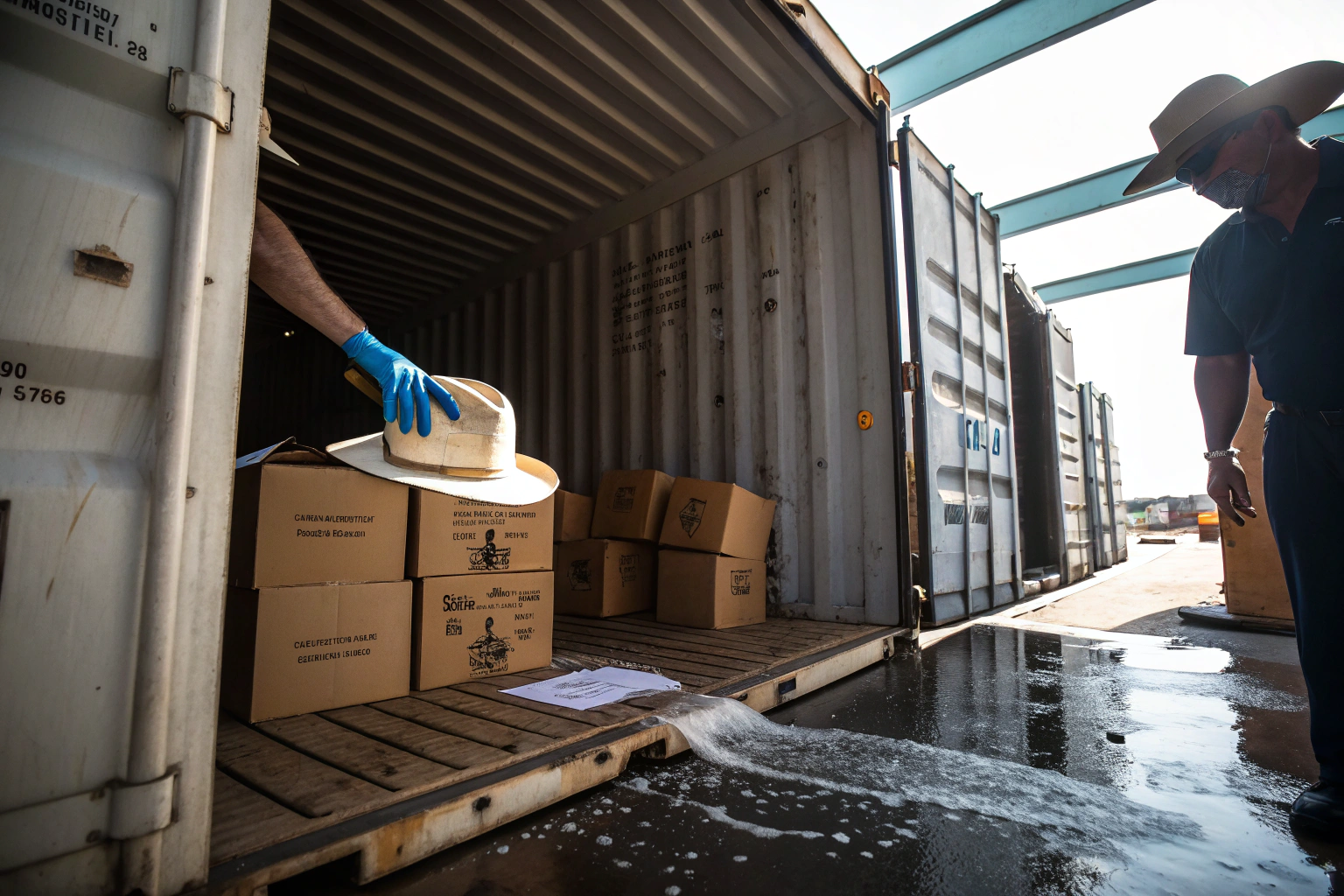
You ship a pallet of 500 hand-woven Panama straw hats from our Zhejiang factory to a luxury resort boutique in Miami. The invoice value is $45,000. The hats are individually blocked, hand-finished, and packed in custom hat boxes. The container arrives at the Port of Miami. The consignee opens the container and finds that a leak in the roof panel allowed seawater to drip onto the top cartons for 28 days at sea. Forty hats are stained with salt rings, their brims warped beyond repair. The loss is $3,600. Your freight forwarder points to the fine print on the bill of lading: "Carrier liability limited to $500 per package." A carton of 10 hats is one package. Your maximum recovery is $500, against a $3,600 loss. The general cargo insurance you thought you had does not cover what you thought it covered.
The best way to insure a shipment of high-value straw hats is to purchase an "All Risks" marine cargo insurance policy with a "Warehouse to Warehouse" clause, covering the full commercial invoice value plus 10% to cover freight and incidental costs, with the loss payable to your company. This policy covers physical loss or damage from any external cause during the entire transit from our factory loading dock to the buyer’s warehouse, including loading, ocean transit, unloading, and inland trucking. The premium for a $49,500 policy on a $45,000 invoice plus 10% shipment to the US is typically 0.3% to 0.5% of the insured value, roughly $150 to $250.
Standard carrier liability is not insurance. It is a limited, fault-based liability that compensates you for pennies on the dollar. As a professional fashion accessories manufacturer, we have seen too many buyers learn this lesson the hard way. I want to explain exactly what coverage you need, what exclusions to watch for, how to document a claim properly, and why insuring straw hats requires a slightly different approach than insuring a shipment of steel bolts.
What Is the Difference Between Carrier Liability and All-Risk Cargo Insurance?
The carrier who transports your goods, the shipping line, the airline, the trucking company, is legally obligated to deliver your goods in the same condition as received. But their liability is heavily limited by international conventions, and it only applies if you can prove the carrier was negligent, a high legal bar.
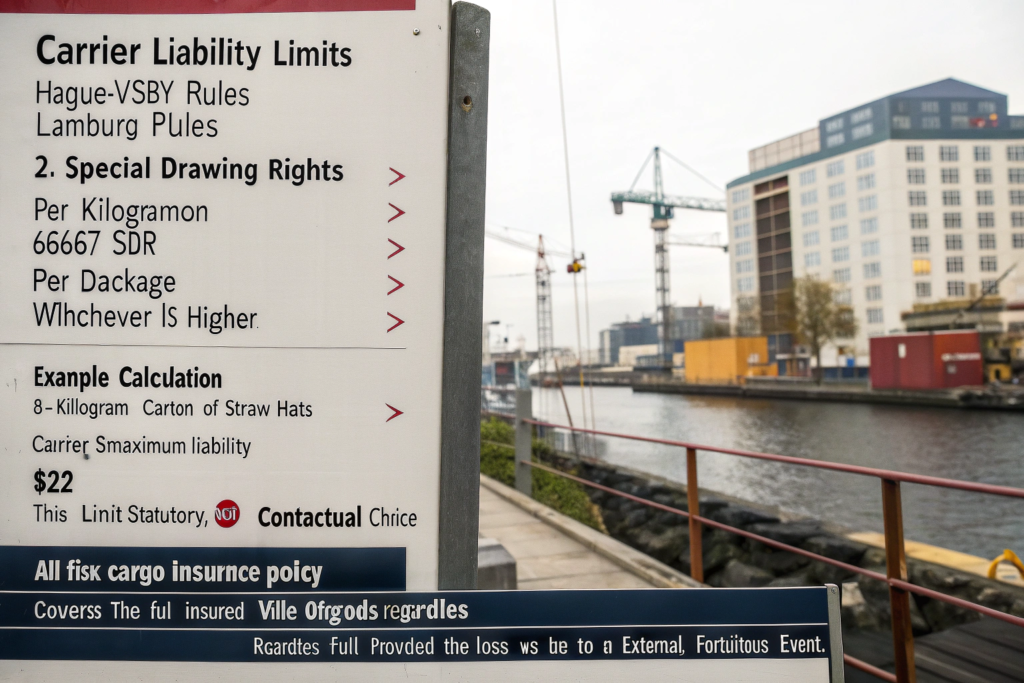
Carrier liability is limited by the Hague-Visby Rules or the Hamburg Rules to a maximum of 2 Special Drawing Rights per kilogram or 666.67 SDR per package, whichever is higher. For a carton of straw hats weighing 8 kilograms, the carrier’s maximum liability is approximately $22. This is statutory limitation, not a contractual choice. All-Risk cargo insurance, by contrast, covers the full insured value of the goods regardless of who was at fault, as long as the loss was caused by an external, fortuitous event.
The critical difference is the standard of proof. Under an All-Risk policy, you prove that the goods were in good condition at the point of origin, with a clean bill of lading and our factory inspection report, and that they arrived damaged. The insurer pays the claim and then decides whether to pursue recovery from the carrier. You do not have to prove carrier negligence. This is why we always recommend buyers of our custom straw hats secure their own cargo insurance rather than relying on carrier liability alone.
What does "All Risks" actually mean in marine cargo insurance?
Despite the name, "All Risks" does not cover everything. It covers all risks of physical loss or damage from any external cause, unless specifically excluded. The standard exclusions are: inherent vice, meaning the product destroyed itself from within, like a wet straw hat molding because it was packed wet at the factory; delay, meaning you lost the selling season but the hats themselves are not damaged; war, strikes, riots, and civil commotion unless a separate strike rider is purchased; and nuclear radiation. It is crucial to understand that mold damage from a container roof leak is covered. Mold damage from a hat being packed damp is not covered because that is inherent vice.
How is the insured value calculated for a shipment of straw hats?
The insured value should be the Commercial Invoice Value plus the Freight Cost plus an uplift of 10% to cover incidental expenses like customs duties and survey fees that you cannot recover from the sale of damaged goods. For a $45,000 invoice with $2,500 freight, the insured value is $47,500 plus 10%, which is $52,250. If you underinsure and only cover the invoice value, the average clause kicks in, and any claim will be proportionally reduced by the percentage of underinsurance. Our export documentation team always advises clients to insure at invoice plus freight plus 10% to avoid this trap.
Why Do Straw Hats Require Specific Packaging Warranties for Insurance?
Straw is a natural, hygroscopic material. It absorbs moisture from the air. It crushes under weight. It snaps if bent sharply. An insurer who routinely covers steel auto parts will look at a shipment of Panama hats and see an inherently fragile cargo. The insurer will require specific packaging warranties before they quote a reasonable premium.
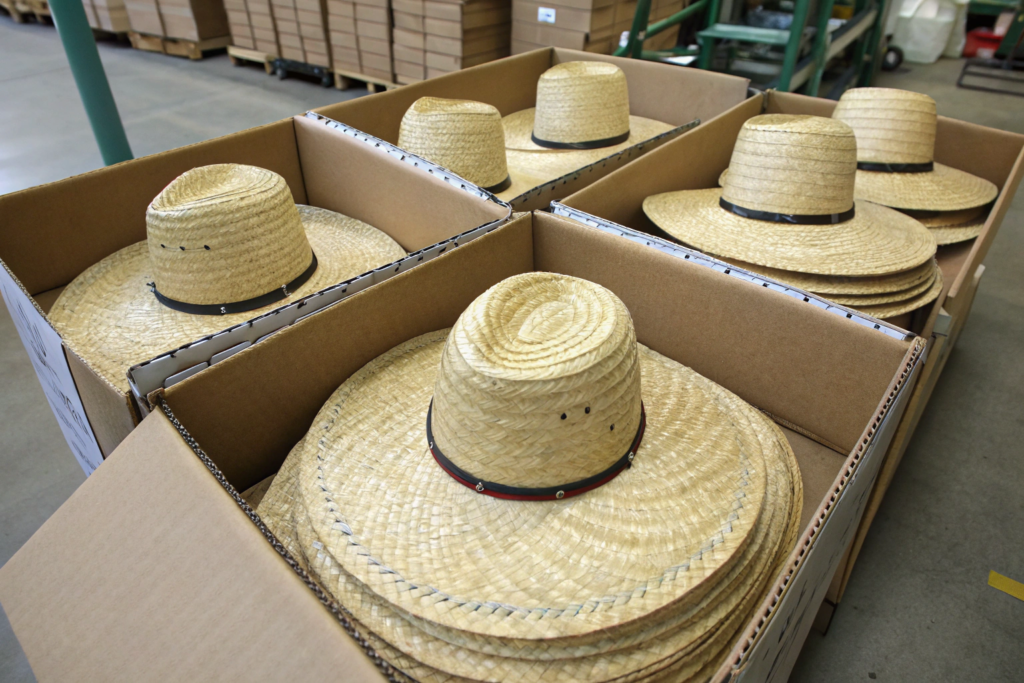
Straw hats require specific packaging warranties because their inherent fragility creates a higher risk of crushing, water absorption, and brim warping. The insurer will typically require that each hat is individually supported with an acid-free tissue form inside the crown, placed in a rigid, corrugated hat box with a minimum 32 ECT crush resistance rating, and that the master shipping carton is lined with a moisture-barrier polyethylene film and strapped to a pallet with edge board protectors.
We pack every high-value straw hat shipment to exceed these insurer requirements. Each hat is blocked onto a rigid cardboard form, covered in a breathable Tyvek sleeve, and placed in a custom-fit chipboard hat box. The hat boxes are packed into a heavy-duty double-wall corrugated master carton with a waterproof polyethylene liner. The cartons are palletized, corner-boarded, and stretch-wrapped. Our production and packing team photographs the packing process for every high-value order, providing the visual evidence insurers require.
What is a "packing survey" and why might an insurer require one?
For shipments over $50,000, the insurer may require a pre-shipment packing survey conducted by an independent surveyor, such as SGS, at our factory. The surveyor inspects the packing method, photographs the process, and issues a survey report certifying that the packing meets the insurer’s requirements. This is a one-time cost of $300 to $500, but it can reduce the insurance premium by 15% to 20%. We coordinate with the surveyor on behalf of our clients, providing access to the factory floor and the packing specifications for review.
How does the packaging quality affect the insurance premium rate?
A shipment packed in rigid hat boxes with moisture barriers and palletized securely will receive a premium rate of 0.3% to 0.4%. The same hats shipped loose in a single-wall carton will receive a rate of 0.8% to 1.2%, or the insurer may decline to quote entirely. Good packaging is the cheapest insurance premium reduction tool available. We have refined our hat packaging standards over years of shipping to high-end boutiques, and our methods consistently earn the lowest premium rates from marine underwriters.
What Is the Step-by-Step Claim Process When Damaged Hats Arrive?
The container arrives. You find damage. The clock is ticking. Every action you take or fail to take in the next 48 hours determines whether the insurer pays your claim or denies it based on a policy condition breach.
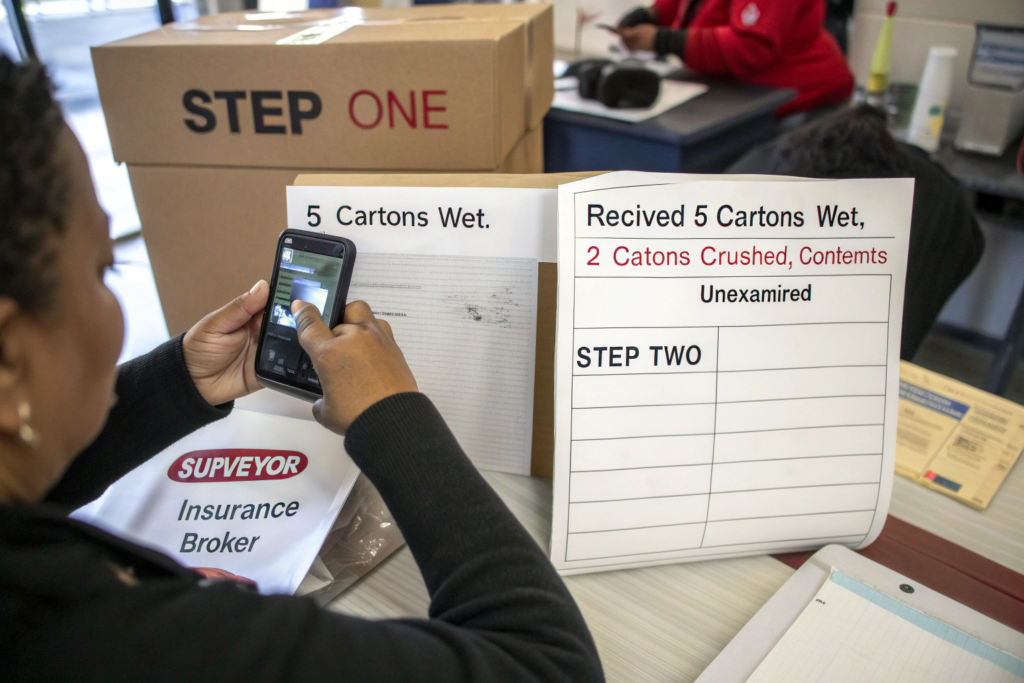
The step-by-step claim process is: one, do not dispose of any damaged goods or packaging and photograph the damage from multiple angles before moving anything; two, immediately notify the carrier in writing and note the damage on the delivery receipt before signing it, using specific language such as "Received 5 cartons wet, 2 cartons crushed, contents unexamined"; three, notify your insurance broker or the insurer’s claims hotline within 24 hours and request a cargo survey; four, the surveyor inspects the damage, determines the cause and extent of the loss, and issues a survey report; five, submit the claim with the survey report, the commercial invoice, the bill of lading, the packing list, and your correspondence with the carrier.
The most common claim denial reason is a clean delivery receipt. If the consignee signs for the goods without noting any damage, the insurer has a strong defense that the damage occurred after the carrier’s liability ended, during the consignee’s own handling. Train your warehouse team to inspect every carton before signing. Our logistics coordination team emails a damage-inspection checklist to every buyer before their shipment arrives, reducing the risk of a procedural error.
How long does the claims process typically take for a documented loss?
A well-documented claim with a survey report, photographs, and a clean paper trail is typically settled within 15 to 30 days by a standard cargo insurer. Claims without a survey report or with missing documentation can drag on for months. We maintain a complete shipping documentation archive for every order, including the commercial invoice, the bill of lading, the packing list with photographs, and the pre-shipment QC report, so our buyers can reconstruct the paper trail instantly.
What is a "Notice of Loss" versus a formal claim in cargo insurance?
A Notice of Loss is a preliminary notification that loss has occurred. It stops the clock and preserves your rights under the policy. A formal claim is the full documentation package submitted for settlement. Send the Notice of Loss within 24 hours of discovering damage, even if you don’t yet have all the supporting documents ready. Most marine insurance policies require written notice within three days of delivery, and failure to meet this deadline is a common exclusion trigger.
Should You Purchase Insurance Through the Freight Forwarder or Directly from an Underwriter?
Many buyers purchase cargo insurance through their freight forwarder because it is convenient. One email, one checkbox, and the insurance is added to the shipping invoice. The convenience hides a cost in coverage breadth and claims handling.
Purchasing insurance through a freight forwarder is convenient but often provides narrower coverage with a higher deductible and a less responsive claims process because the forwarder’s policy is a group policy, not a policy issued specifically to you. Purchasing an annual open cargo policy directly from a marine insurance underwriter provides broader coverage, a lower deductible, and a direct relationship with the insurer’s claims adjuster who is incentivized to resolve your claim quickly to retain your annual premium.
We recommend our high-value straw hat clients secure an annual open cargo policy from a specialist marine insurer. An annual policy covers all shipments automatically, eliminating the need to arrange insurance per shipment. The premium is based on the estimated total annual shipment value and is adjusted quarterly based on actual shipments. Our sourcing and logistics team can introduce buyers to a marine insurance broker who specializes in fashion accessories and understands the specific risks of straw hat shipments.
What is the cost comparison between forwarder insurance and an annual open policy?
Forwarder insurance typically costs 0.5% to 0.8% of the insured value per shipment. An annual open policy from a direct underwriter costs 0.2% to 0.35% of the annual shipment value. For a brand shipping $250,000 of accessories per year, the annual policy saves $500 to $1,200 in premium and provides significantly more robust coverage. According to industry analysis, the claims acceptance rate for direct policies is consistently higher than for forwarder group policies.
What happens if a forwarder’s insurance denies a claim?
You have no direct contractual relationship with the forwarder’s insurer. Your only recourse is to argue through the forwarder, who is not a claims professional. With a direct policy, you communicate directly with the insurer’s claims adjuster, and if a dispute arises, you have the policy contract as a direct legal instrument. The International Union of Marine Insurance recommends direct policies for any business shipping more than $100,000 annually, precisely because of this claims-handling advantage.
Conclusion
Insuring a shipment of high-value straw hats requires an All-Risk marine cargo policy with Warehouse-to-Warehouse coverage, an insured value of invoice plus freight plus 10%, and strict adherence to packaging warranties that include individual hat boxes and moisture barriers. The claim process depends on photographing damage before moving anything, noting damage on the delivery receipt, and engaging a surveyor immediately. An annual open cargo policy purchased directly from a marine underwriter provides broader coverage at a lower cost than per-shipment insurance purchased through a freight forwarder.
Our Zhejiang factory packs high-value straw hats to exceed insurer packaging requirements, with rigid hat boxes, moisture barriers, and palletized shipping. We provide the pre-shipment inspection reports, the packing photographs, and the clean bill of lading documentation that insurers expect. Our logistics team guides buyers through the insurance selection process and the claims documentation sequence, ensuring no procedural error compromises a valid claim.
If you are shipping high-value straw hats and need guidance on insurance coverage, packing standards, or documentation, contact our Business Director, Elaine. She can connect you with our recommended marine insurance broker and provide our standard packing specification sheet for insurer approval. Write to her at elaine@fumaoclothing.com. Let’s make sure your hats arrive in the same perfect condition they left our factory.