You are a product developer for a baby accessories brand. You sit in a compliance meeting, reviewing the latest CPSIA injury data on children’s hair accessories. The report shows a spike in headband-related incidents: elastic bands snapping and hitting a child’s eye, rubber cores exposed through frayed fabric wrapping and swallowed, tight elastic leaving pressure marks on a newborn’s soft skull. Your buyer walks in, drops a competitor’s headband on the table, and says, "Make this, but remove the elastic completely. I want zero tension, zero rubber, zero choking hazard. Can your factory do it?" You pick up the sample. It is a soft, gathered fabric bow on a rigid plastic band. Replacing the elastic core while keeping the headband secure on a toddler’s head is a design challenge that will separate a serious factory from a simple assembler.
Yes, our factory can produce toddler-safe headbands without any elastic at all. We engineer the fit through two alternative construction methods: a contoured, flexible plastic core made from BPA-free, phthalate-free polypropylene that is injection-molded to match the anatomical curve of a toddler’s head, or a fully fabric-based "soft tie" design where the headband wraps around the head and secures with a flat, snag-free knot or a hidden magnetic closure. Both designs eliminate the elastic core entirely, removing the snapping, choking, and pressure-point hazards that make traditional elastic headbands dangerous for children under three years old.
Toddler safety is not about making a smaller version of an adult headband. It is about re-engineering the product from the material up so that every component that touches the child’s skin or could enter the child’s mouth passes a set of safety tests that an elastic headband was never designed to survive. I want to walk you through exactly how we construct these elastic-free headbands, what materials we use, what safety tests they pass, and how we document compliance for your brand’s Children’s Product Certificate filing.
Why Is Traditional Elastic a Choking and Injury Hazard for Toddlers?
A standard hair band for an adult is a simple product. A polyester-wrapped rubber elastic, sewn into a loop, covered with a gathered fabric sleeve. It works for adults because adults do not chew on their hair accessories, and adult skin is thicker and less sensitive to sustained pressure. A toddler interacts with a headband completely differently, and this interaction pattern reveals the dangers hidden in the elastic core.
Traditional elastic is a choking and injury hazard for toddlers for three specific reasons: the rubber elastic core can snap under tension and recoil into the child’s eye, causing corneal abrasion; when the fabric wrapping frays at the seam, the exposed rubber core becomes a small, stretchable object that a toddler can bite off and swallow, posing a choking hazard under the small parts test; and the sustained pressure of a tight elastic loop can leave red marks or indentations on a toddler’s developing skull, where the cranial sutures are not yet fully fused and are vulnerable to external pressure.
I watched a mother in a focus group describe an incident where her daughter’s elastic headband snapped during a playdate. The band flew across the room and hit another child in the face. No injury resulted, but the mother threw away every elastic headband in the house that evening. The fear of that snap is a purchase barrier for an entire product category. We eliminate the elastic not just to pass a safety test, but to remove that fear from the parent’s mind. Our children’s accessory safety page details all the testing standards we apply to every toddler product we manufacture.
What is the specific CPSIA small parts regulation that an elastic core can violate?
Under 16 CFR Part 1501, any object that fits entirely inside a small parts cylinder, a tube 31.7 millimeters in diameter and 57.1 millimeters deep, is a choking hazard for children under three. A frayed elastic core, detached from the headband, compresses easily and fits inside this cylinder. The standard test involves subjecting the product to a torque and tension test where a force of 15 pounds is applied. If the elastic detaches, it becomes a testable component. A plastic core passes this test because it is rigid and cannot be compressed into the cylinder.
How does the pressure of an elastic headband affect a developing skull?
A toddler’s skull is not a solid bone. The cranial sutures, the fibrous joints between the skull plates, fuse gradually over the first two years of life. Sustained external pressure from a tight elastic band, worn for hours, can theoretically create a temporary indentation or "elastic groove" along the band’s pressure line. While there are no published medical studies linking headbands to craniosynostosis, pediatricians universally recommend against any tight headwear on infants. Our plastic core distributes the contact force across a wider surface area, eliminating the focused pressure line. The American Academy of Pediatrics provides general guidance on safe baby products that aligns with this approach.
How Do Flexible Plastic Cores Replace Elastic Without Sacrificing Fit?
The function of an elastic core is to create a secure, adjustable fit that accommodates a range of head sizes. Removing the elastic sounds simple until you try to keep the headband on a toddler who is crawling, rolling, and pulling at everything on their head. The replacement core must solve the same fit problem through geometry and material flexibility, not tension.
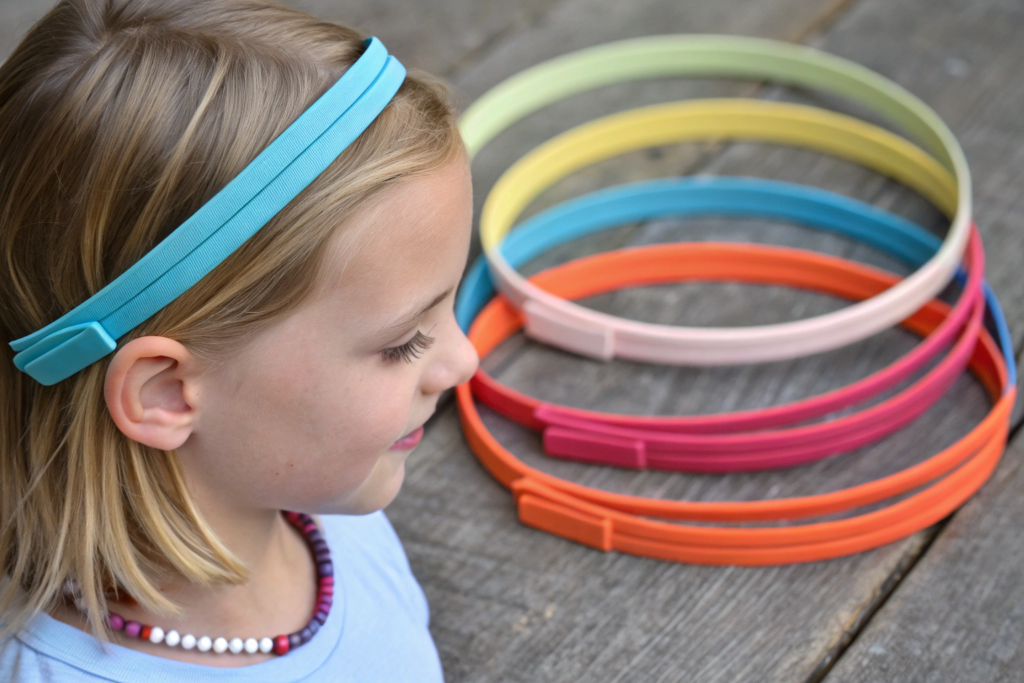
Flexible plastic cores replace elastic by using a contoured, curved polypropylene band that is injection-molded to match the average circumference and arc of a toddler’s head, typically 44 to 48 centimeters. The polypropylene material has a flexural modulus that allows it to spring open slightly to fit onto the head and then gently return to its original curve, holding the headband in place through shape memory rather than elastic tension. The core is molded with rounded, smooth edges and no sharp parting lines that could scratch delicate skin.
We tested four different core materials before settling on polypropylene. Nylon was too brittle and snapped in the cold-temperature impact test. Polycarbonate was too stiff and created pressure points. ABS had a slightly rough surface texture that snagged fine hair. Polypropylene offered the ideal balance of flexibility, smooth surface finish, and impact resistance. The core is molded in three sizes: 0 to 6 months, 6 to 18 months, and 18 to 36 months, corresponding to the standard head circumference growth curve. This is a core feature of our custom headband manufacturing service for children’s brands.
How is the plastic core tested for chemical safety under CPSIA?
The plastic core must pass the CPSIA total lead content test, showing less than 100 parts per million total lead, and the phthalate content test, showing less than 0.1% for each of the six restricted phthalates: DEHP, DBP, BBP, DINP, DIDP, and DnOP. We mold the cores from a certified food-grade polypropylene resin that is supplied with a third-party chemical compliance certificate from an ISO 17025 accredited laboratory. We test every new resin lot before molding and provide the lot-specific test report to the brand for their CPC filing.
Does the plastic core pass the impact and flex test for toddler use?
Under 16 CFR Part 1500.48, a children’s product must not have any sharp points that could lacerate skin. The plastic core is subjected to a sharp point test using a sharp point tester device. Additionally, we perform a voluntary "flex and snap" test: the core is bent to 90 degrees 1,000 times and must not fracture, crack, or develop a sharp edge. The polypropylene core passes this test without failure because polypropylene has an exceptional living hinge fatigue life. This aligns with the ASTM F963 toy safety standard for materials used in children’s products.
What "Soft Tie" Fabric Designs Offer a Completely Elastic-Free Alternative?
Some brands and consumers want to go further. They do not want any plastic at all, just fabric against the baby’s skin. The soft tie headband design satisfies this demand, using only fabric and thread to create a secure, adjustable fit. The challenge is making the tie mechanism safe for a toddler who cannot untie a knot but can certainly chew on a ribbon end.
The soft tie design replaces both the elastic core and the plastic core with a long, narrow fabric tube, typically 60 to 70 centimeters in length, that is wrapped around the toddler’s head and secured with a flat, overhand knot tied at the side or back. The knot is sewn into a semi-permanent fixed position so the parent can slide it to adjust the fit but it cannot come completely undone and release a long, loose ribbon end that could pose a strangulation risk. The fabric is pre-washed organic cotton or bamboo viscose with a brushed interior for softness.
The knot safety is critical. A fully detachable knot would leave a loose ribbon that a toddler could wrap around their fingers, neck, or limbs. We sew the knot with a single bar tack stitch that allows sliding adjustment along the fabric tube but prevents the knot from being completely untied. The two ribbon ends extend only 4 centimeters beyond the knot, too short to wrap around a finger or to be grasped and pulled. This design draws on established infant sleepwear safety standards, which limit decorative trim lengths to prevent entanglement.

How is the fabric tube safety-tested for flammability?
Under 16 CFR Part 1610, all wearing apparel including fabric headbands must pass a flammability test. The fabric tube is tested using a 45-degree angle flammability tester with a 1-second flame impingement. The fabric must have a burn rate of less than 3.5 seconds per 5 centimeters for raised-fiber surfaces, which classifies it as Class 1, the safest rating. Our organic cotton and bamboo fabrics consistently pass this standard.
What closure options exist beyond the sewn knot?
For an even more minimalist design, we offer a hidden magnetic closure. Two small, encapsulated neodymium magnets are sewn inside the fabric tube ends, under a double layer of fabric and a reinforced seam. The magnets snap together at the back of the head, holding the headband in place with a gentle magnetic field that a toddler cannot detect or remove. The magnets are fully enclosed and pass the small parts cylinder test because the fabric encapsulation is not detachable under the 15-pound tension force test.
What CPSIA Testing Documentation Does Your Factory Provide for Toddler Headbands?
The headband is beautifully made. It looks safe. It feels soft. But the US Consumer Product Safety Commission does not accept visual inspection or tactile assessment as evidence of safety. The brand must file a Children’s Product Certificate, and that certificate must be backed by physical test reports from a CPSC-accepted third-party laboratory.
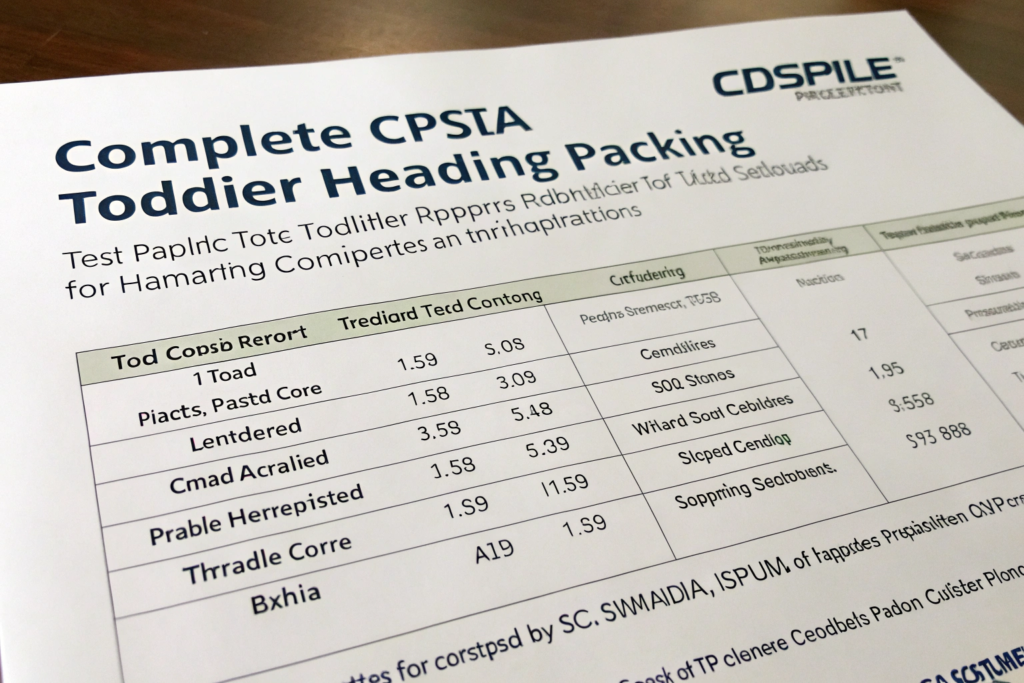
We provide a complete CPSIA testing package for every toddler headband order that includes: a total lead content test report for the plastic core, fabric, and thread; a phthalate content test report for the plastic core; a small parts test report demonstrating no detachable components; a sharp point test report for the plastic core; and a flammability test report for the fabric. All tests are performed by a CPSC-accepted laboratory, typically SGS or Bureau Veritas, and the test reports are specific to the SKU and production batch, not generic factory certificates.
We coordinate the testing directly with the laboratory. We ship random production samples from the actual batch, not specially prepared samples, directly to the lab. The lab reports are issued in the brand’s name, with the brand’s SKU numbers, so the brand can file them directly as supporting documentation for their Children’s Product Certificate. This is part of our comprehensive quality control and compliance service.
How often is the testing updated for repeat orders?
For every new production batch, we re-test the total lead and phthalate content if the resin lot or fabric dye lot has changed. If the materials are from the same certified lots as a previous batch tested within 12 months, the existing test reports can be referenced under CPSC guidelines. We maintain a lot traceability database that links each headband batch to its specific resin and fabric lot numbers, allowing the brand to demonstrate continuity of compliance.
What is a Children’s Product Certificate and who files it?
The CPC is a legal document that the US manufacturer or importer, typically the brand, must issue, certifying that the product has been tested and meets all applicable CPSC safety rules. The CPC must list each applicable regulation, the CPSC-accepted laboratory that performed the testing, the date and place of manufacture, and the contact information of the individual responsible for the certificate. The CPC must accompany each shipment in electronic or physical form. We provide the brand with all the underlying test reports and a draft CPC with the technical fields completed, simplifying their filing process. The CPSC CPC guidelines provide the official framework for this process.
Conclusion
A toddler-safe headband without elastic is constructed from a contoured polypropylene plastic core or a sewn-knot fabric tube, both of which eliminate the snapping rubber band, the exposed choking hazard, and the skull pressure line that make traditional elastic headbands unsafe for children under three. The plastic core is molded in three graduated sizes and passes CPSIA lead, phthalate, sharp point, and small parts testing. The soft tie design uses a semi-permanent sewn knot and organic cotton fabric to create a zero-hardware, zero-tension fit. Both designs arrive with a complete third-party laboratory test package that supports the brand’s Children’s Product Certificate filing.
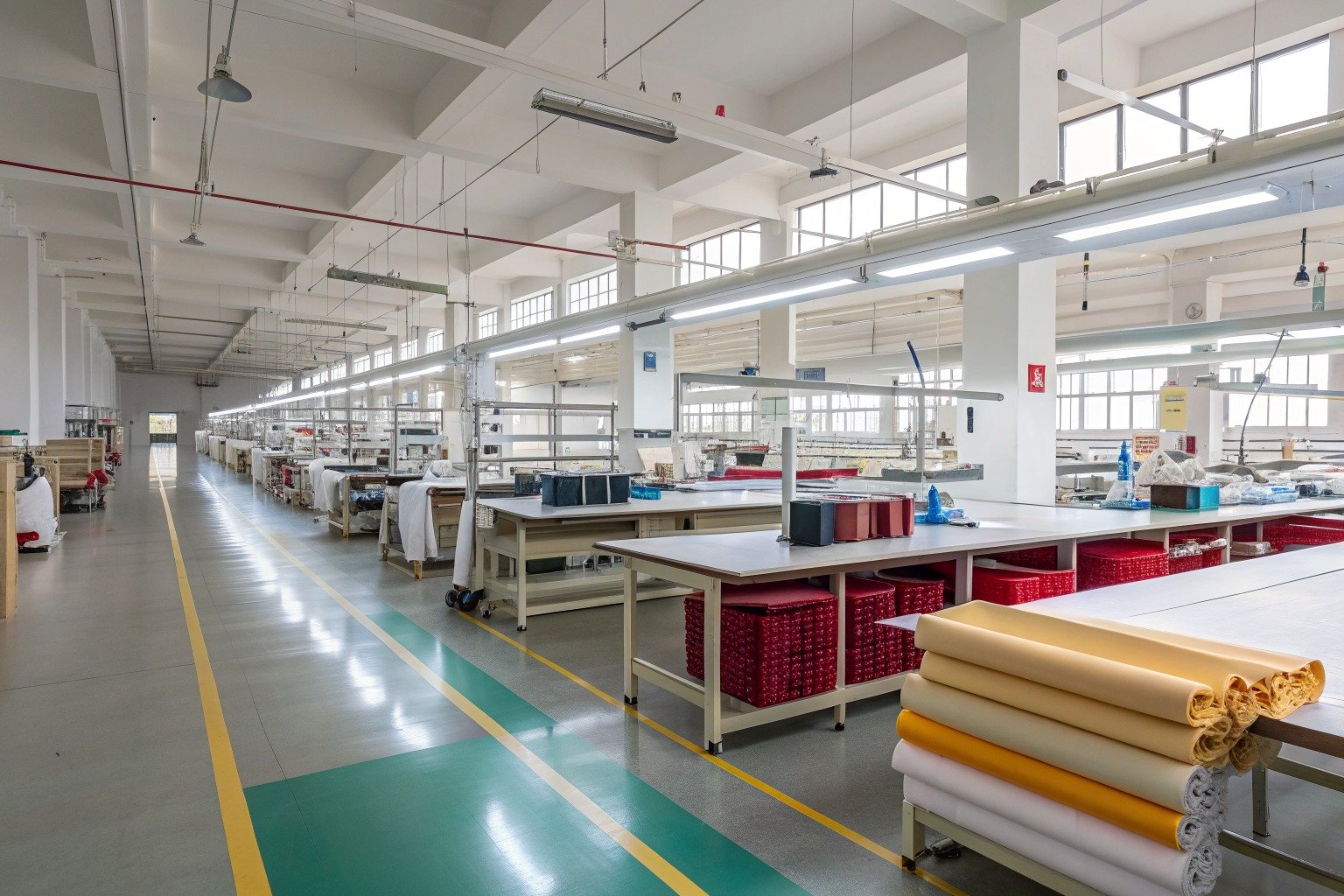
Our Zhejiang factory produces these toddler-safe headbands for baby accessory brands in North America and Europe. We stock the certified polypropylene resin, the organic cotton and bamboo fabrics, and we coordinate the SGS laboratory testing on every production batch.
If you are developing a toddler headband line and need a factory that understands the CPSIA testing requirements as well as the design engineering, contact our Business Director, Elaine. She will send you a sample kit with both the plastic core and soft tie designs, along with a sample SGS test report and our CPC support documentation template. Write to her at elaine@fumaoclothing.com. Let’s make a headband that parents trust and toddlers tolerate.