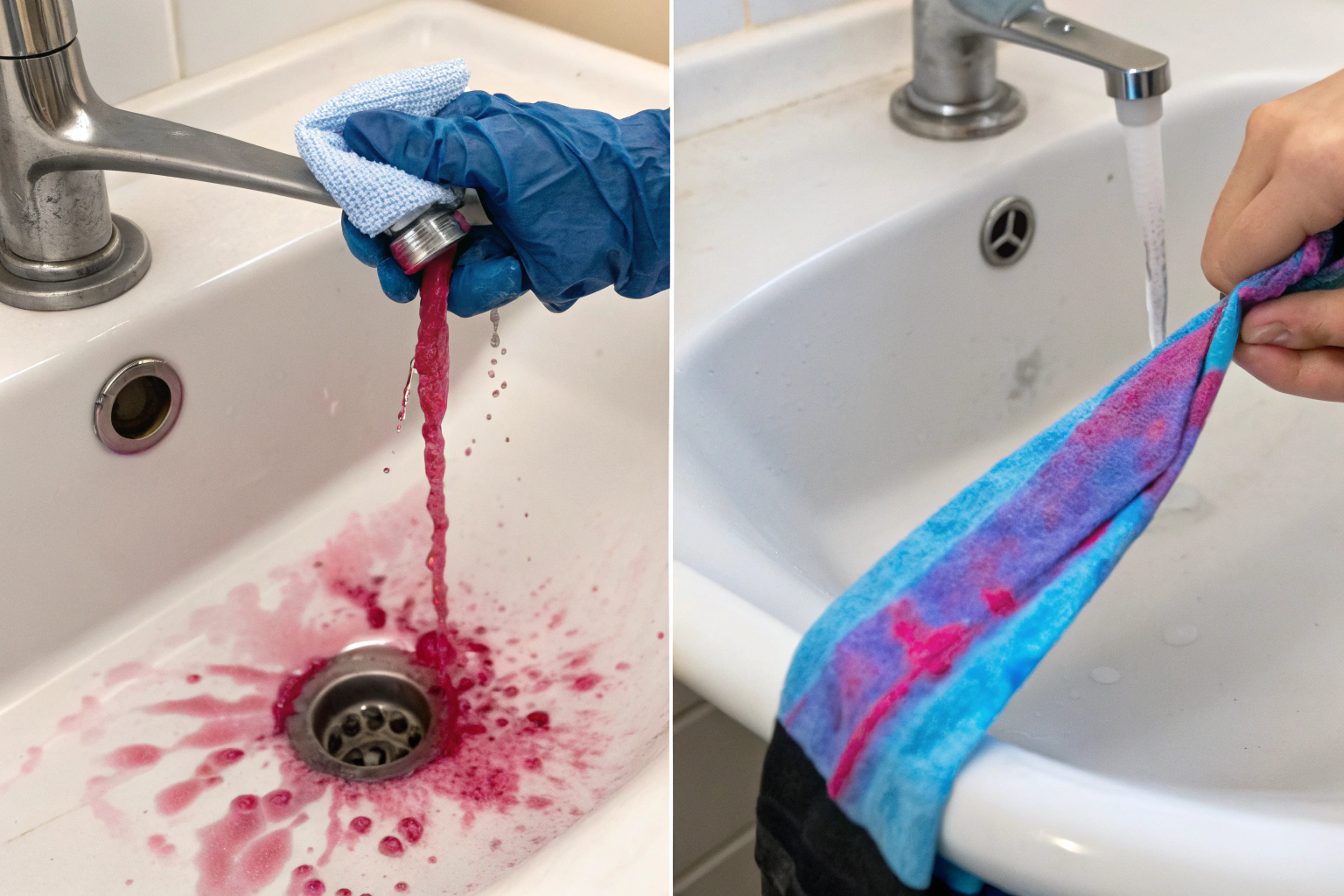
You hand-wash a brand-new printed hair band in cold water with a gentle detergent, just like the care label says. You squeeze out the excess water, lay it flat to dry, and come back an hour later to find the vibrant floral print now looks like a ghost of itself. The colors are muted. The edges are blurred. The black outlines have bled into the white background, turning the whole thing a murky grey. You didn’t do anything wrong. The print simply wasn’t fixed to the fabric properly. The dye molecules were sitting on the surface of the polyester fibers, and the first contact with water released them like chalk from a blackboard.
You avoid color fading on printed hair bands after washing by specifying three technical requirements at the production stage: the fabric must be printed with high-energy disperse dyes, not low-cost pigment inks, and then fixed through a high-temperature steam fixation process at 130 degrees Celsius for 45 minutes. After fixation, the fabric must undergo a reduction clearing wash that removes all unfixed, surface-bound dye molecules before the hair band is even sewn. A properly fixed and cleared disperse dye print will withstand 30 machine wash cycles at 40 degrees Celsius with a colorfastness rating of 4.5 on the grey scale.
Color fading is not an inevitable consequence of washing. It is a process failure that occurs when the factory skips the reduction clearing step to save time, or uses pigment ink that sits on the fabric surface like dried paint rather than penetrating into the fiber core. I want to explain exactly how dye fixation works at the molecular level, what testing you can request to verify the process was done correctly, and how our Zhejiang facility ensures every printed hair band leaves with zero surface dye residue.
What Is the Difference Between Pigment Ink and Disperse Dye for Polyester?
The word "printed" covers two completely different chemical processes. A consumer cannot tell the difference by looking at a dry hair band on a shelf. Both look colorful. Both feel smooth. But the first time water touches them, one print becomes part of the fabric and the other washes down the drain.
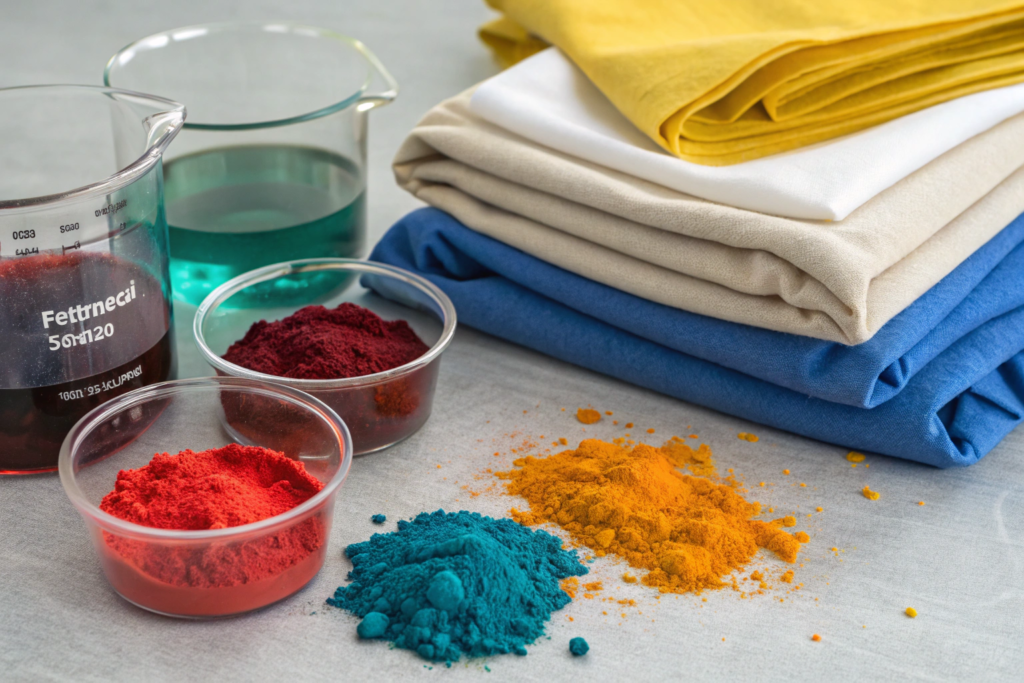
Pigment ink is an opaque, colored particle suspended in a liquid binder. When printed onto polyester fabric, the binder glues the pigment particle to the fiber surface like a microscopic sticker. This sticker dissolves in warm water and detergent, releasing the pigment. Disperse dye is a molecule that, at high temperature, sublimates from a solid directly into a gas and diffuses into the hollow core of the polyester fiber. Once inside, the dye molecule is physically trapped within the polymer matrix. It cannot be washed out because it is not sitting on the surface.
We print all our polyester hair bands with disperse dyes, never pigment inks. The cost is higher, the process is slower, and the fixation requires a steam chamber. But the print that emerges from that steam chamber is chemically part of the fiber, not a coating on top of it.
Why do some factories use pigment ink despite its poor wash fastness?
Pigment ink printing is fast and cheap. The printer jets the ink onto the fabric, the fabric passes under a heat lamp to dry the binder, and it is ready to cut and sew within minutes. No steam chamber. No reduction clearing. No water treatment plant. A factory that competes on price alone will choose this path because the buyer cannot see the difference at the receiving inspection, only after the first wash.
How can a buyer distinguish between a pigment print and a disperse dye print by touch?
A pigment print often has a slightly stiff, plasticky hand feel because the binder sits on the fabric surface. A properly fixed disperse dye print has no hand feel at all. The fabric feels exactly the same on the printed area as on the unprinted area. Run your finger across the boundary between a printed and unprinted section. If you feel a ridge or a texture change, it is likely a pigment print.
How Does the Steam Fixation Process Lock Dye Into Fabric Fibers?
Disperse dye printed onto polyester is not yet fixed. It sits as a dry powder on the fiber surface. If you touch the fabric at this stage, the dye rubs off on your fingers. The fixation step transforms this loose powder into a permanent part of the fiber.
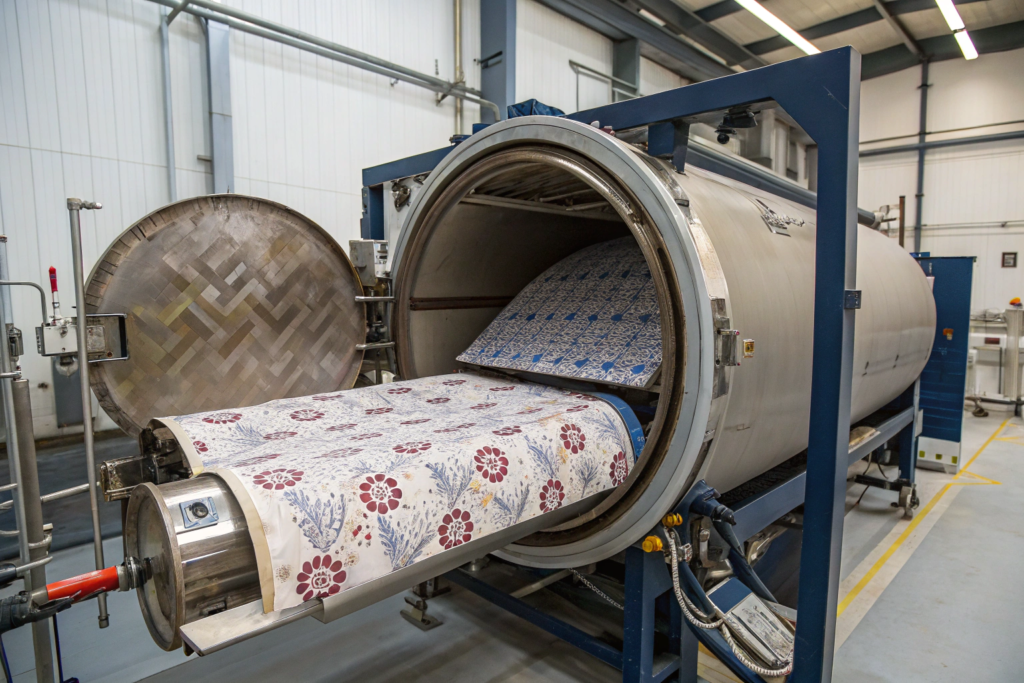
Steam fixation locks disperse dye into polyester fibers by heating the printed fabric in a sealed, pressurized steam chamber at 130 degrees Celsius. The high-temperature steam opens the amorphous regions of the polyester polymer, creating microscopic gaps between the polymer chains. The disperse dye molecules simultaneously sublimate into a gas. The gaseous dye molecules diffuse into the open polymer gaps. When the fabric cools, the gaps close, trapping the dye molecules permanently inside the fiber.
The critical parameters are temperature and time. At 130 degrees Celsius for 45 minutes, the dye penetration is complete. At 110 degrees for 20 minutes, the penetration is partial. The print looks good initially but fades after three or four washes as the trapped, partially diffused dye molecules gradually migrate back out of the fiber. Our steam fixation chamber has automated temperature controls that log the time-temperature curve for every batch.
What happens if the steam temperature fluctuates during fixation?
Uneven temperature produces uneven fixation. The areas of fabric exposed to lower temperature will have a higher unfixed dye content and will fade faster. This creates a patchy, mottled appearance after washing. Our chamber circulates steam with high-velocity fans to maintain a uniform temperature throughout the load.
Is steam fixation required for natural fibers like cotton?
Cotton uses reactive dyes, not disperse dyes. Reactive dyes require a different fixation chemistry, typically a high-pH alkaline environment and high temperature. The principle is similar: drive the dye molecule into the fiber and form a chemical bond. For cotton hair bands, we use a reactive dye digital print process with a steam fixation step at 102 degrees Celsius for 30 minutes.
What Is a Reduction Clearing Wash and Why Is It Critical for Colorfastness?
After steam fixation, the fabric contains two types of dye: the dye that successfully diffused into the fiber, which is permanent, and the dye that condensed back onto the fiber surface during cooling, which is loose. This loose surface dye is the source of color bleeding during the first wash.
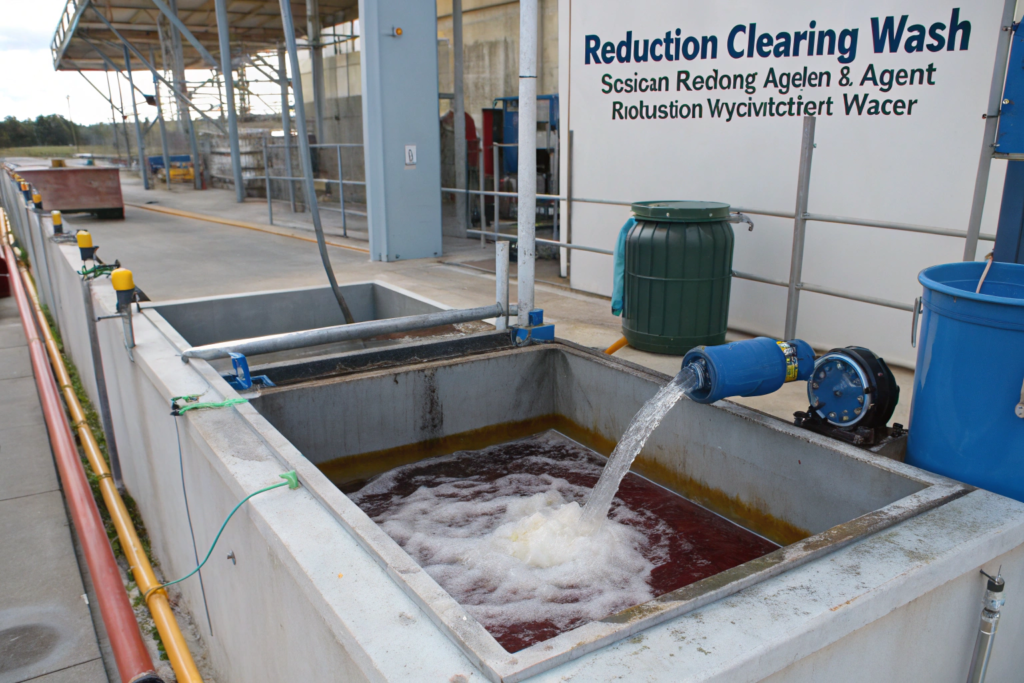
A reduction clearing wash removes the loose, unfixed surface dye using a chemical reducing agent, typically sodium hydrosulfite, and a surfactant detergent in a warm water bath at 60 degrees Celsius. The reducing agent breaks down the surface dye molecules into colorless, water-soluble fragments that rinse away. After reduction clearing, the fabric contains only the dye molecules locked inside the fibers. No loose dye remains to bleed into the wash water.
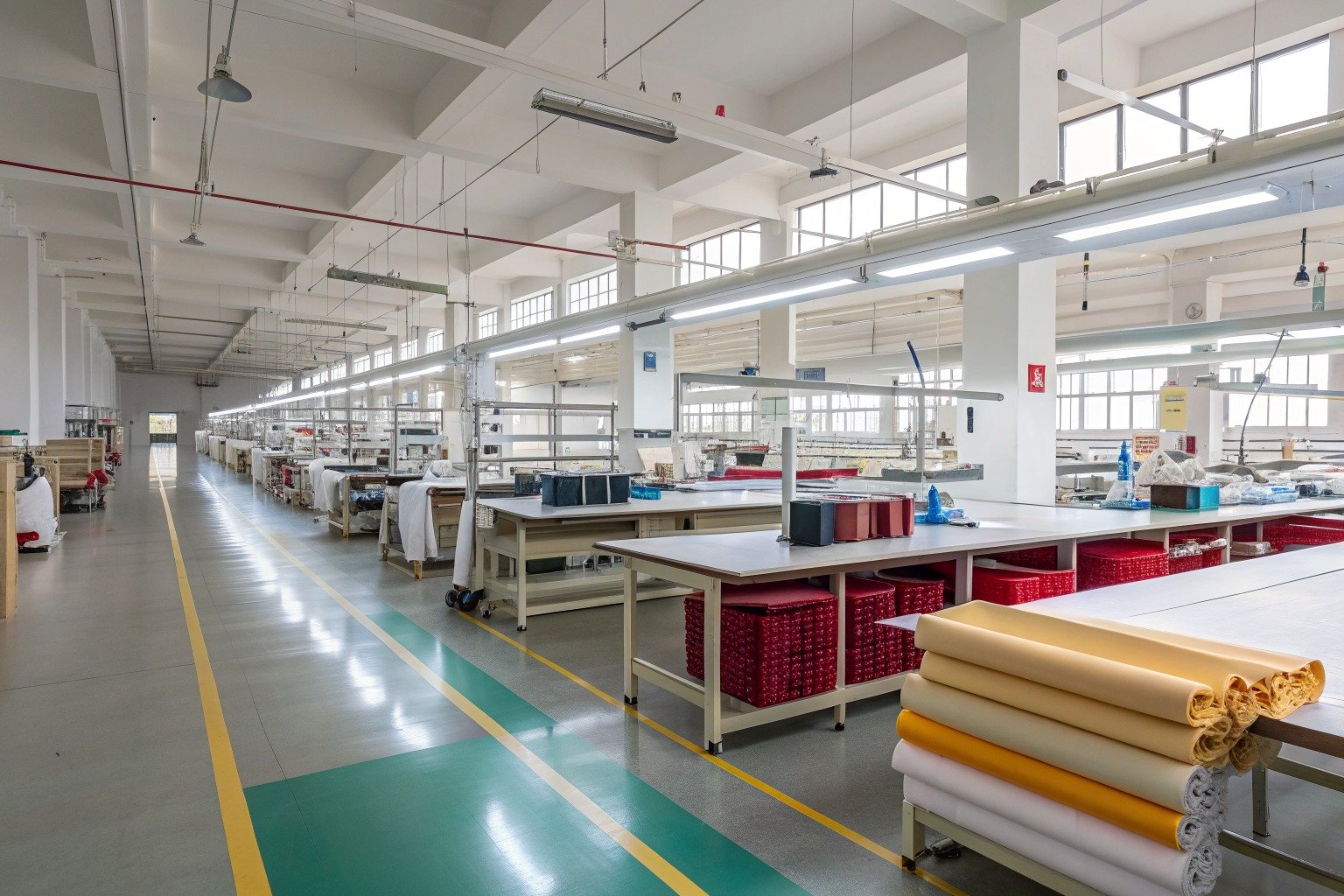
This step is the most commonly skipped step in cheap accessory production. It adds cost, chemical handling, and waste water treatment. A factory that is not vertically integrated may send the fabric to an outside dye house for fixation, and the dye house may skip the clearing wash to save time. We perform reduction clearing in-house as a mandatory step for every printed fabric batch.
How can you test if a factory performed the reduction clearing step?
Request a ‘bleeding test’ on a finished hair band sample before production commences. To conduct the test, carefully immerse the hair band in a clear glass filled with cold, fresh water, adding a single drop of mild, fragrance-free detergent to the surface. Using a delicate spoon or your fingertips, stir the water and hair band gently for precisely 30 seconds, ensuring even contact between the hair fibers and the liquid.
Does the reduction clearing process affect the hand feel of the fabric?
A properly executed reduction clearing wash actually improves hand feel by removing the residual dye chemicals and any stiffness from the printing binder. The fabric emerges softer and more supple than an uncleared print.
What In-House Testing Simulates Multiple Wash Cycles Before Shipment?
A factory’s verbal assurance that "the print is fixed" is not a reliable quality guarantee. The only proof is a physical wash test performed on a random sample of finished hair bands from the actual production batch before they are packed into cartons.
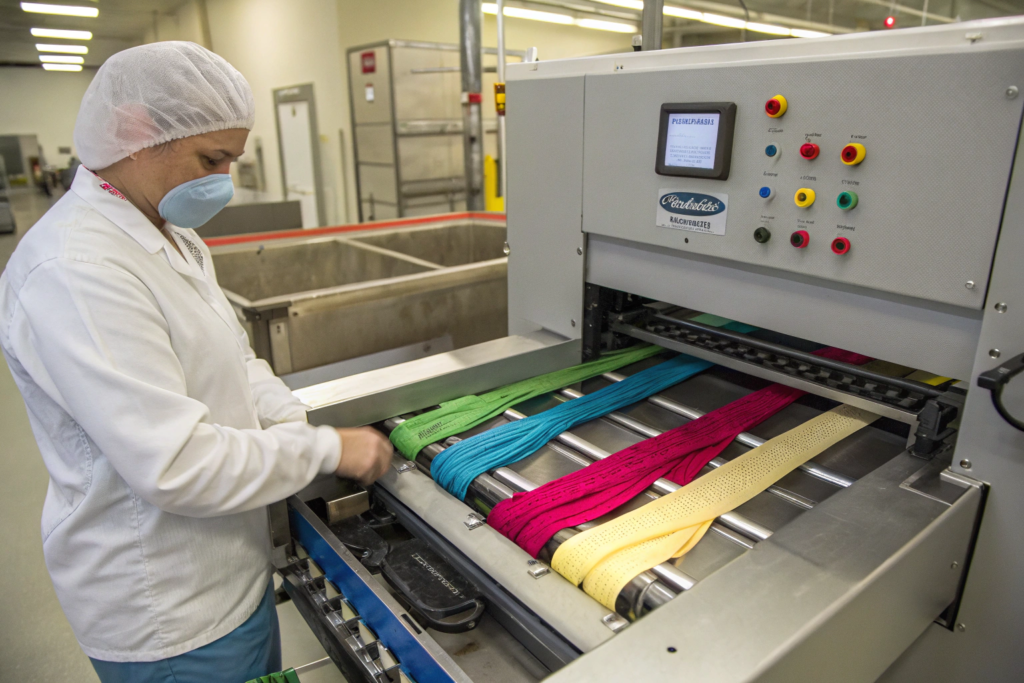
Our in-house testing simulates multiple wash cycles using an AATCC standard accelerated laundering machine. We pull five random hair bands from each 1,000-unit production batch and wash them at 40 degrees Celsius with standard detergent for 30 cycles. After washing, the print is compared against a sealed, unwashed reference sample under a D65 daylight lamp. The color change is measured with a spectrophotometer and must register a grey scale rating of 4.5 or higher, indicating virtually no visible fading to the human eye.
We photograph the washed sample next to the unwashed reference and include this photo in the batch QC report sent to the buyer. If the washed sample shows any visible fading, the entire batch is quarantined, the print process parameters are reviewed, and a new batch is printed and tested.
What is the difference between a grey scale rating of 4 and a rating of 3?
A grey scale rating of 4.5 means the color change is perceptible only with close, side-by-side comparison under controlled lighting. A rating of 4 means a slight color difference is visible to a trained eye. A rating of 3 means the fading is obvious to any consumer. We set our internal pass threshold at 4.5, well above the 4.0 that most retail buyer specifications require.
Does the wash test also check for fabric shrinkage?
Yes, the hair band’s dimensions are measured before and after the 30-cycle wash. The length and width must not change by more than 3%. Elastic hair bands are pre-shrunk by a steam relaxation process before cutting, so any residual shrinkage is minimal.
Conclusion
Color fading on a printed hair band is the visible symptom of a skipped process step, either a pigment ink was used where a disperse dye was required, the steam fixation was run at too low a temperature, or the reduction clearing wash was omitted to save time and chemical cost. Preventing fading requires a factory that prints with disperse dyes, fixes at 130 degrees Celsius for a full 45 minutes, clears all unfixed surface dye in a reduction bath, and verifies the result with a 30-cycle accelerated wash test on every batch.
Our Zhejiang facility operates the full print-fix-clear-wash sequence in-house for all polyester and natural fiber hair accessories. We publish the batch wash test results to our buyers as a standard QC deliverable, not a special request.
If you have experienced color fading on a previous hair band order and need a manufacturer that guarantees wash fastness, contact our Business Director, Elaine. She will send you a sample hair band printed with our process, along with a video of the water-bleed test and a copy of our standard wash test report. Write to her at elaine@fumaoclothing.com. Let’s produce prints that outlast the hair band elastic.