You pick up a cloth bucket hat from a trendy streetwear rack. The fabric is a beautiful washed canvas. The brim is the perfect width. The crown sits just right. Then you look at the top button. It is a cheap, shiny, gold-colored plastic hemisphere with a visible mold seam, the exact same generic button found on a thousand gas-station trucker caps. In that one square centimeter of plastic, the entire premium feel of the $45 hat collapses. A hat’s top button is a micro-billboard. The 2026 consumer notices it, and the 2026 designer is specifying it with as much intention as the outer fabric.
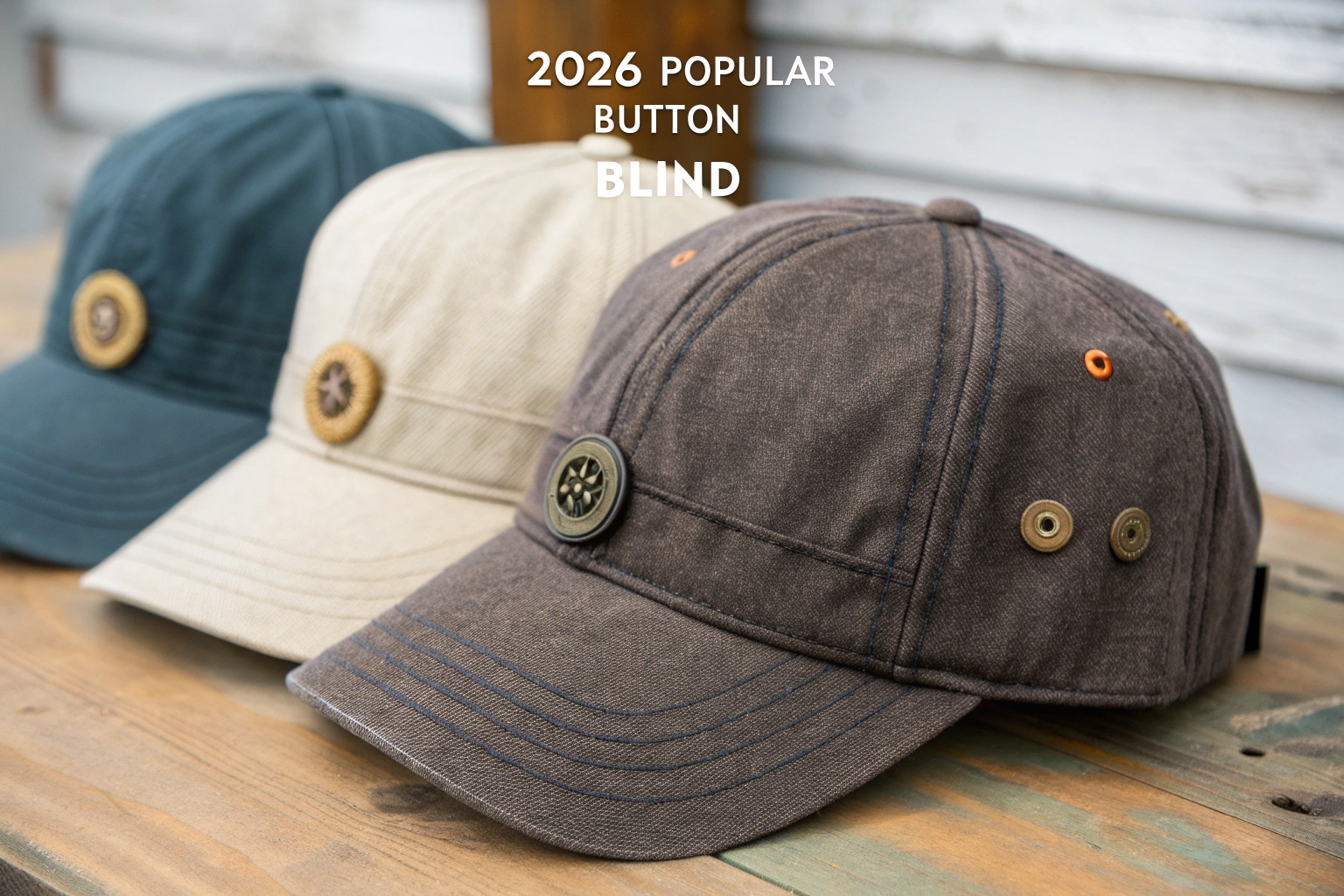
The 2026 popular button styles for cloth hats are defined by three distinct aesthetics: the "blind" wrapped button where the fabric of the hat crown is precisely pleated over a low-profile flat core, creating a seamless, all-over-fabric look; the engraved matte metal rivet button in sandblasted brass or darkened zinc alloy, flush-mounted to sit nearly flat against the crown; and the sculptural contrast button in Corozo nut or recycled resin, acting as a deliberate, jewelry-like focal point in a contrasting color to the crown fabric.
The top button is no longer an afterthought sewn on from a bin of 10,000 generic stock pieces. It is a design element that communicates the hat’s price tier, sustainability story, and brand identity in the first second of eye contact. I want to break down each button style, the machinery required to attach it without puckering the crown fabric, and why the choice of button tells the consumer everything they need to know about the quality of the hat underneath.
Why Are "Blind" Fabric-Wrapped Buttons Dominating Premium Hat Crowns?
The top button on a hat has a functional origin. It covers the raw intersection point of the crown panels and hides the structural stitching that holds the hat’s geometry together. A standard plastic button covers the seam but announces its presence loudly. A fabric-wrapped blind button makes the seam disappear entirely.
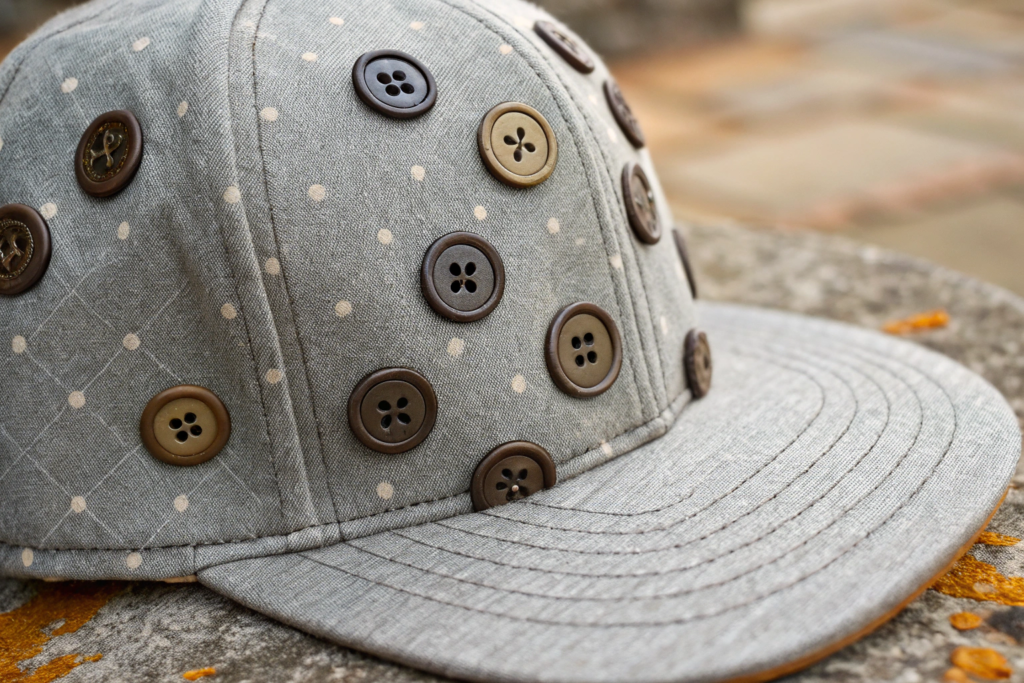
Blind fabric-wrapped buttons are dominating premium hat crowns because they achieve a seamless, monolithic fabric appearance on the hat’s most visible surface. The button is created by cutting a small circle of the exact crown fabric, wrapping it around a thin, flat aluminum core using a precision die press, and hand-stitching it over the crown intersection point. The fabric pattern continues uninterrupted across the button, making the structural cover indistinguishable from the surrounding crown.
The key to a successful blind button is zero visible plastic edge. A cheap fabric button uses a thick, domed plastic shell that creates a visible lip where the fabric tucks underneath. Our blind button uses a 0.8mm-thick flat aluminum disk with no return edge. The fabric is wrapped around the disk, pleated on the underside, and stitched with a matching thread. The result is a button that sits completely flat and appears to be made of the same continuous piece of fabric as the crown.
How does the die press prevent fabric fray on a fabric-wrapped button?
The edge of the fabric circle is cut slightly oversized and folded under the aluminum disk using a two-part die. The die applies even, concentric pressure, creating perfect, uniform pleats on the underside. The raw fabric edge is enclosed inside the button, never exposed. This prevents the fraying that occurs on hand-folded buttons, which quickly develop loose threads after a few washes.
Does the blind wrapped button work on patterned and striped fabrics?
Yes, and the effect is especially striking on a striped fabric. The stripe pattern is cut so the line continues straight across the button, matching the crown panel alignment. This requires precise pattern matching during the cutting stage. Our cutting table uses a laser-aligned pattern match guide to ensure the button circle is cut from the exact correct section of the fabric.
What Engraved Metal Rivet Styles Are Replacing Generic Gold Shanks?
The shiny gold hemisphere with the visible mold line has been the default hat button for fifty years. It communicates mass production and cost engineering. The 2026 menswear and workwear-inspired hat trend demands a different visual language: matte, industrial, and functional.
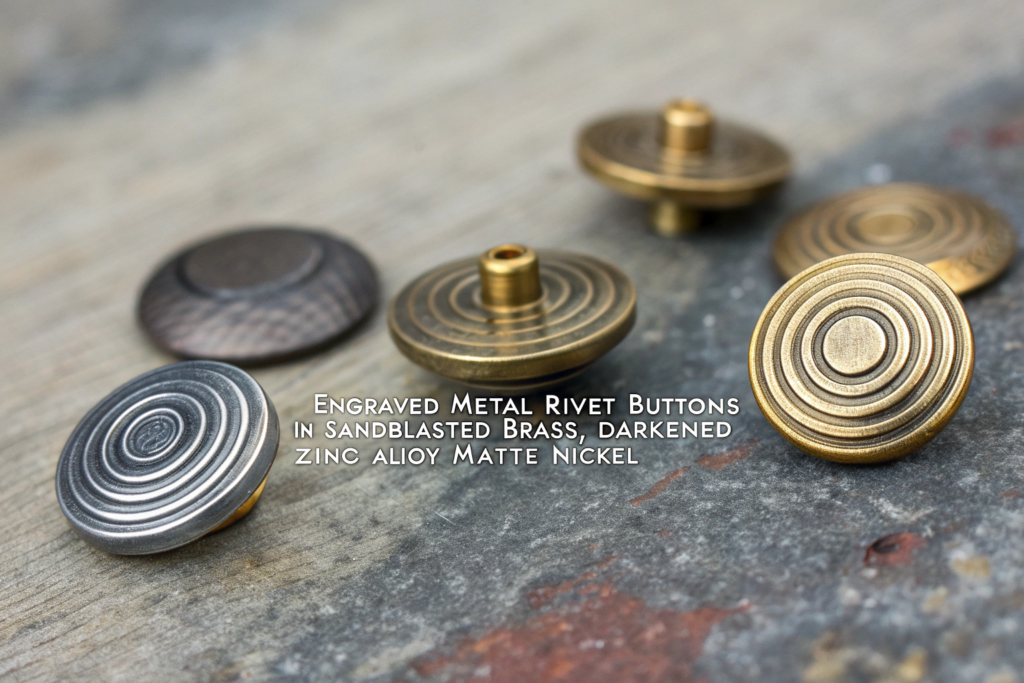
Engraved metal rivet buttons in sandblasted brass, darkened zinc alloy, or matte nickel are replacing generic gold shanks by offering a low-profile, flush-mounted attachment that reads as functional hardware rather than cheap decoration. These buttons are CNC-machined or die-cast with a micro-engraved brand logo or a simple concentric circle pattern, and they attach via a threaded post and backplate rather than a traditional sew-through shank.
The rivet attachment system is a major functional improvement. A sewn shank button sits slightly above the crown surface, wobbles when touched, and can be pulled off with moderate force. A threaded post rivet passes through the crown intersection, screws into a flat backplate on the interior, and tightens flush against the fabric. The button is mechanically fixed, not dangling on a thread. It sits 2mm proud of the fabric surface, compared to 6mm for a sewn shank.
How is the micro-engraved logo protected from wear on a metal button?
The engraving is recessed 0.3mm below the button surface, so the high points of the button absorb any friction from stacking or brushing against surfaces. The recessed engraving is then filled with a matte black enamel that contrasts with the sandblasted metal surface. The enamel is baked at 120 degrees Celsius, bonding permanently to the metal and resisting chip-out for the life of the hat.
What corrosion protection is needed for a metal hat button?
Hats absorb sweat, and sweat contains salt. A raw brass or zinc button will develop white powdery oxidation or green verdigris within a single summer of wear. We apply a clear, baked-on electrophoretic lacquer to every metal button. This coating seals the metal from salt, moisture, and skin acids, preserving the original matte finish for years.
What Corozo Nut Buttons Offer a Sustainable, Sculptural Alternative?
The consumer who pays a premium for a sustainably marketed hat in 2026 reads the hangtag. A plastic button contradicts the organic cotton, natural dye, biodegradable story printed on the tag. The Corozo nut button resolves this dissonance.
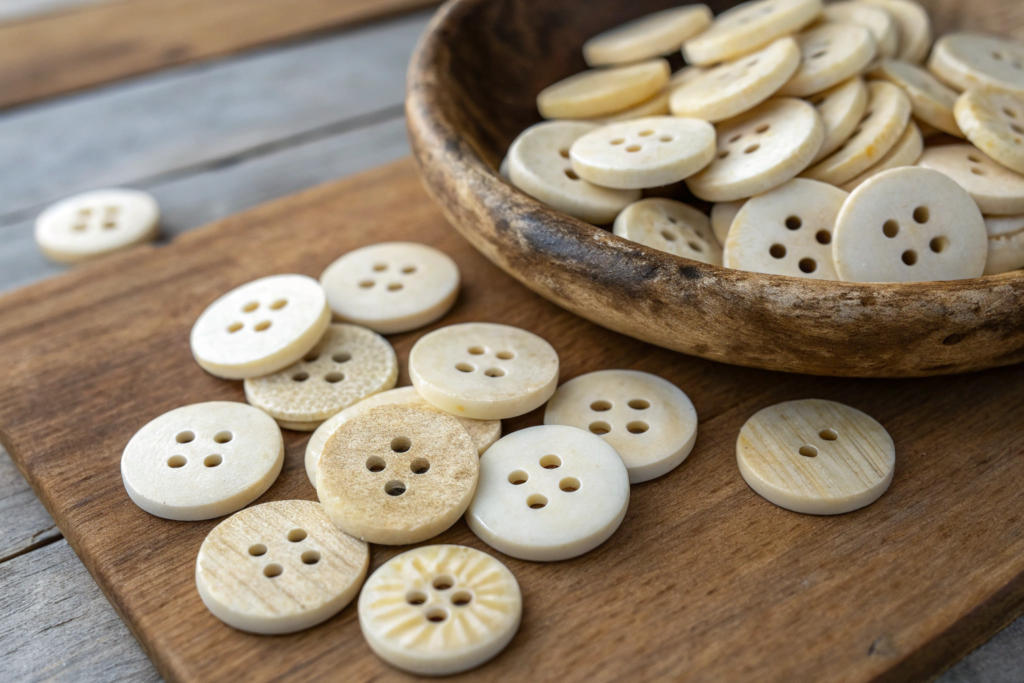
Corozo nut buttons offer a 100% plant-based, biodegradable alternative to plastic that carries a natural, fine grain pattern similar to ivory but harvested from the tagua palm nut without harming the tree. The nut is a seed that falls naturally, is collected, dried, sliced into blanks, and CNC-carved into a custom button shape. Every button has a unique grain pattern, making each hat subtly distinct, a feature that appeals to the artisanal, small-batch ethos of the 2026 market.
We source our Corozo blanks from a certified sustainable harvester in Ecuador. The blanks are carved in our Zhejiang facility on a small CNC lathe programmed to cut the client’s specific button profile, from a simple low dome to a textured, ridged design. The carved button is tumbled with natural waxes to a soft, semi-matte sheen with a pleasant, warm tactile feel.
How does the cost of Corozo compare to plastic and metal?
Corozo is more expensive than plastic by a factor of three to four, approximately $0.25 to $0.40 per button compared to $0.05 to $0.10 for a standard plastic dome. However, it is comparable in cost to a CNC-machined brass button. The cost is absorbed into the premium retail price of a sustainably marketed hat with a retail price point above $40.
Does the Corozo button require special care instructions for the consumer?
Corozo is a natural cellulose material, similar to a very dense wood. It can be gently hand-washed and air-dried. It should not be soaked for hours or machine-dried on high heat, which can cause cracking. The hat care label includes a short note: "Gently spot clean Corozo button. Do not machine dry." This care instruction reinforces the premium, natural product narrative.
How Do You Attach a Button Without Puckering the Crown Fabric?
The attachment method is the difference between a crisp, professional crown center and a gathered, puckered mess. A top button attaches at the exact intersection of four, six, or eight crown panel seams. The fabric thickness at this point is up to six times the thickness of a single panel layer. A standard button shank and thread simply cinch these thick seam allowances together, creating radial puckers.
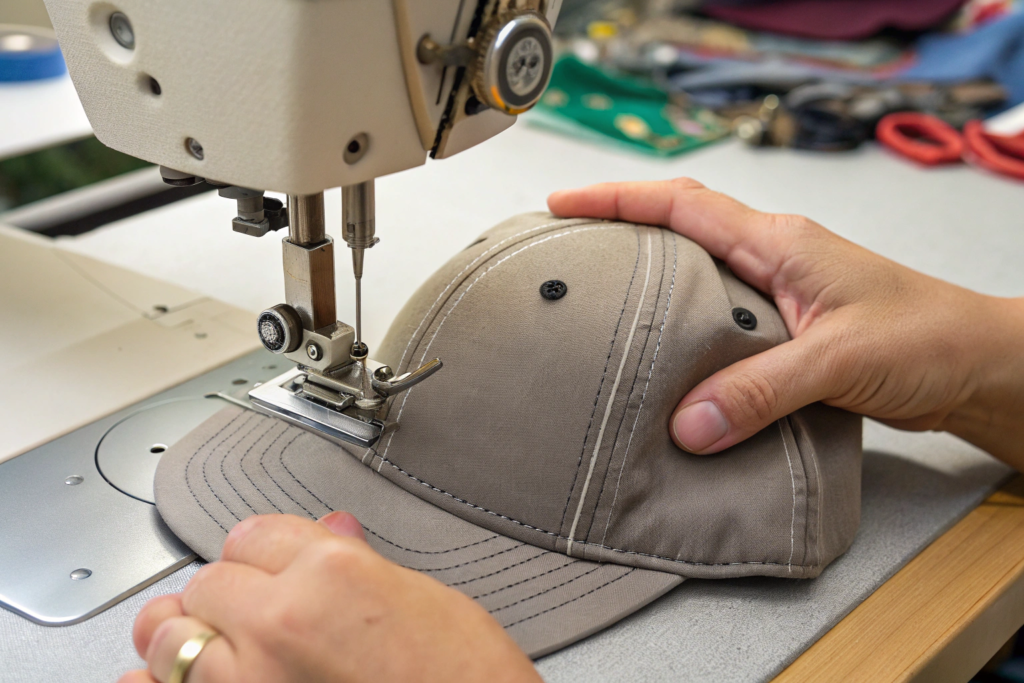
We attach a button without puckering by using a flat, non-shank button base and a horizontal stitch that passes through the seam allowances only, not through the outer fabric surface. The button is stitched to the internal intersection of the seam allowances using a lockstitch machine with a specialized cylindrical feed arm that accesses the inside of the hat crown. The stitch tension is set specifically for the accumulated seam allowance thickness, and the stitch never penetrates the visible outer crown fabric.
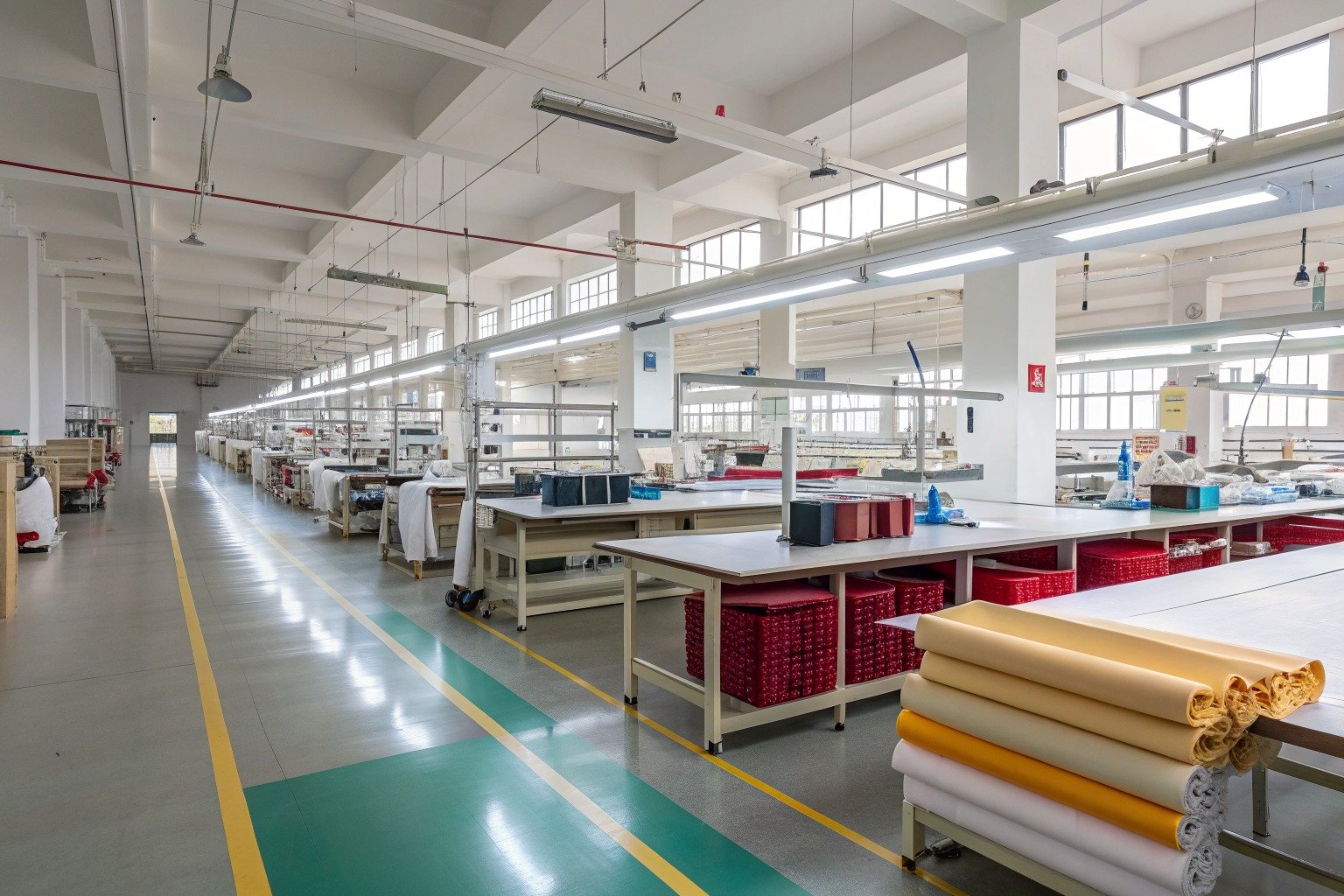
Our sewing team uses a specialized cylinder-arm machine with a narrow, curved needle plate that fits inside the confined space of a finished hat crown. The operator inserts the hat crown over the cylinder arm, positions the button on the exterior, and sews from the inside, catching only the internal seam allowance folds. The outer fabric remains untouched.
What is the ideal thread type for a button that will be stressed by handling?
A bonded nylon thread with a Tex 60 thickness provides the optimal balance of thinness for invisibility and tensile strength for durability. A Tex 60 bonded nylon has a breaking strength of approximately 4.5 kilograms. The button attachment must survive a "pull test" where a force of 3 kilograms is applied vertically to the button for 10 seconds without detachment.
How do you handle the attachment of a threaded post rivet without access to the inside?
For a threaded post rivet, the post is inserted from the outside through the crown intersection. The hat is then turned inside out, a specialized operation for a finished hat, and the backplate is threaded onto the post and tightened with a small torque screwdriver set to a specific torque value that compresses the fabric without cutting it. The hat is then turned right-side out and steamed to restore the crown shape.
Conclusion
The 2026 top button on a cloth hat is a deliberate material choice that signals the hat’s price tier and brand values. The blind fabric-wrapped button creates an uninterrupted fabric surface for premium minimalism. The engraved matte metal rivet communicates functional, workwear-inspired durability. The Corozo nut button tells a sustainability story that aligns with the organic cotton and natural dyes in the rest of the hat. The attachment method, hidden internal stitching or threaded post riveting, ensures the button sits flat and secure without puckering the crown.
Our Zhejiang factory stocks these button types in multiple sizes and finishes. Our sewing team operates the cylinder-arm machines needed for invisible internal button attachment, and our CNC lathe cuts custom Corozo and metal button profiles. We treat the hat button as a design element worthy of specification, not a generic afterthought.
If you are designing a cloth hat collection and want to specify a button that elevates the product, contact our Business Director, Elaine. She will send you a sample card with our blind wrapped, engraved metal, and Corozo button options, along with a cross-section showing the attachment method. Write to her at elaine@fumaoclothing.com. Let’s top your hat with a button that tells the right story.