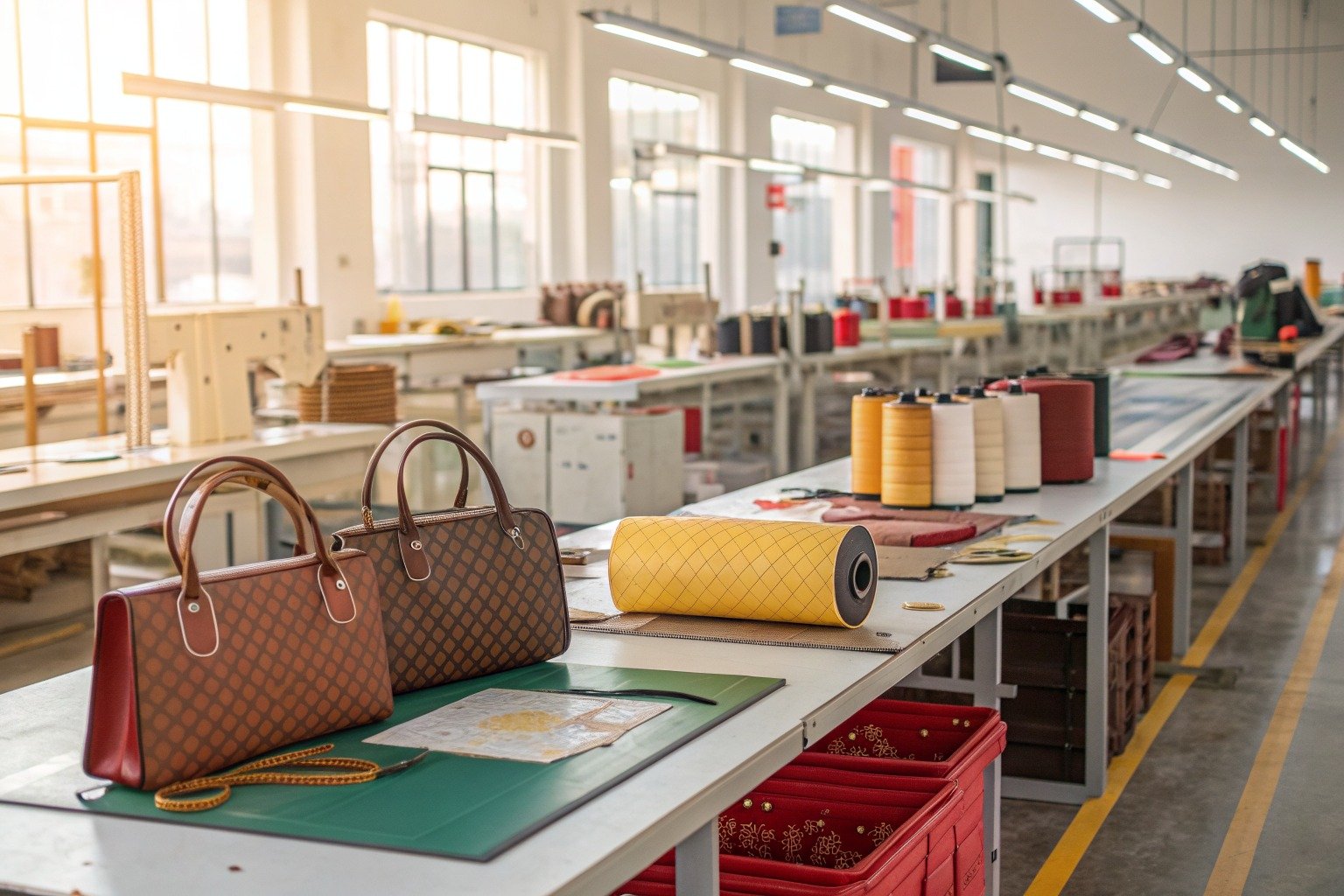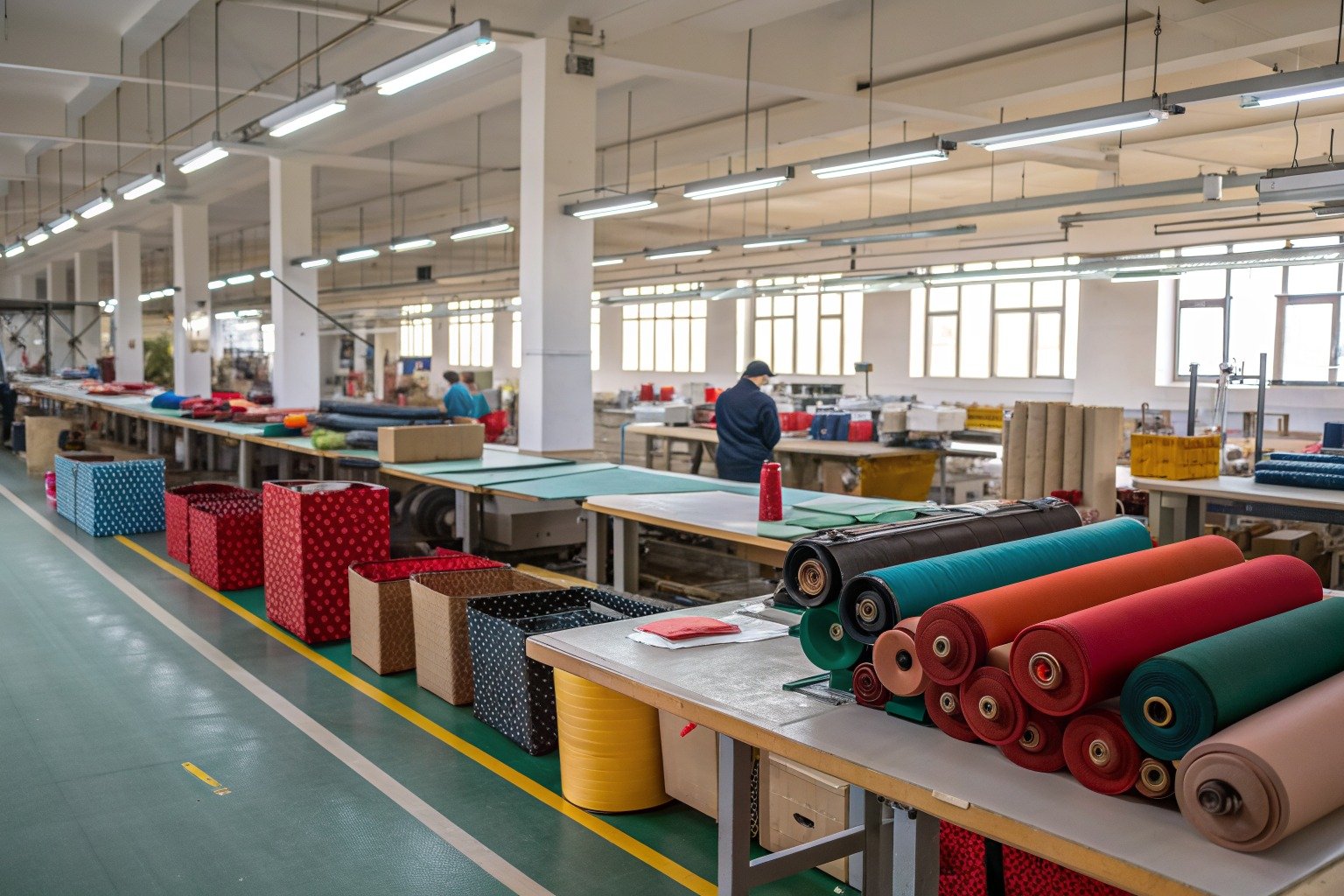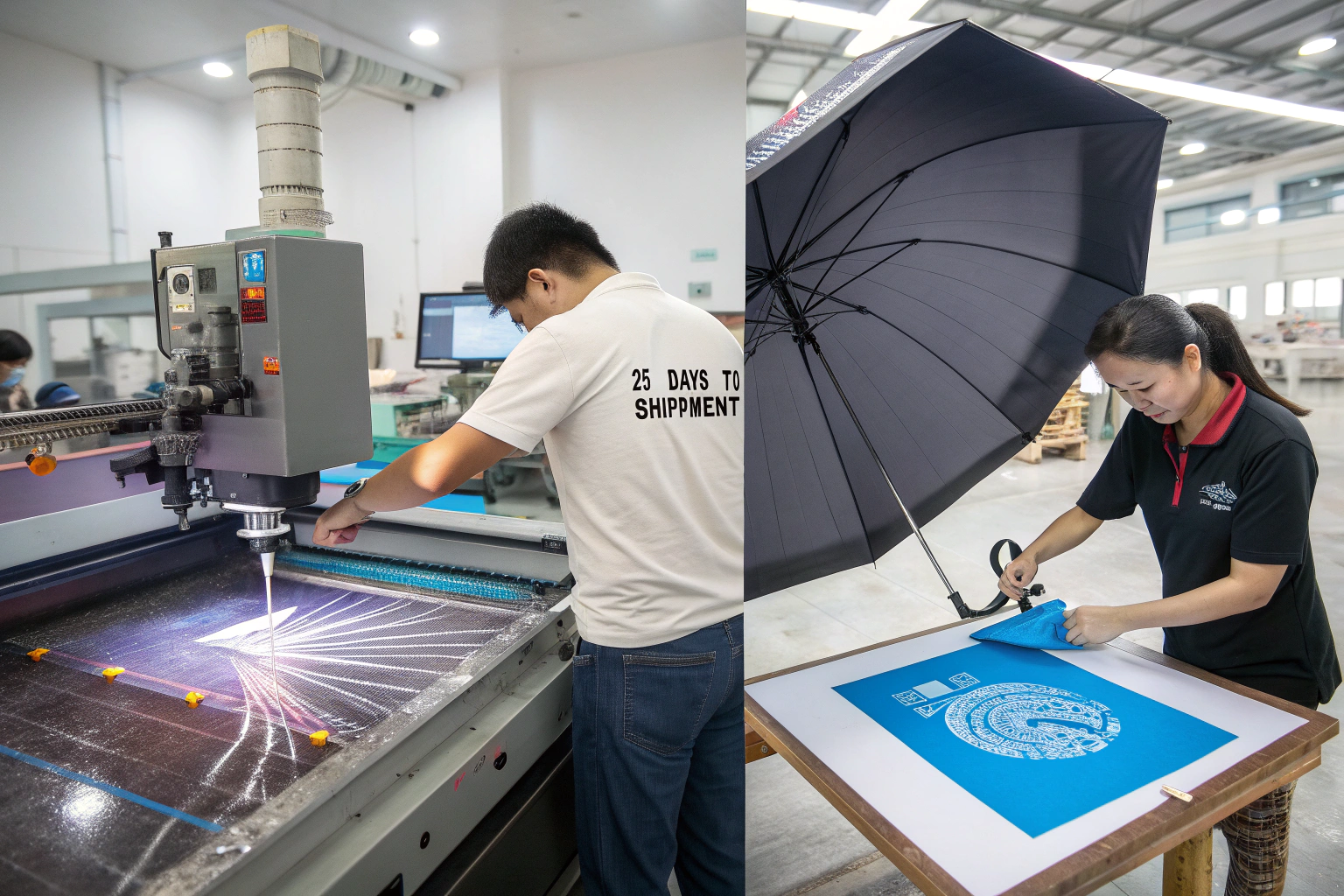
You finalize your brand’s new logo on a Friday afternoon. The marketing team wants 5,000 custom umbrellas with the updated logo ready for a nationwide sales conference in six weeks. You email your umbrella supplier. They reply on Monday morning: "Mold for new logo button, 15 days. Canopy screen printing plates, 10 days. Production and assembly, 30 days. Earliest ship date, eight weeks from now." The conference happens. Your sales team hands out a generic umbrella with the old logo. The rebranding moment fizzles. The 5,000 umbrellas arrive two weeks later and sit in a warehouse for a year.
We produce 5,000 custom umbrellas with a new logo in 25 to 30 calendar days from logo artwork approval to container loading. This timeline uses a parallel-track workflow: the logo button mold is machined concurrently with the canopy screen-printing screen engraving, the shaft and rib frame components are pulled from our pre-stocked inventory of standard umbrella hardware, and the assembly line is pre-scheduled to run the order as a single batch over five production days.
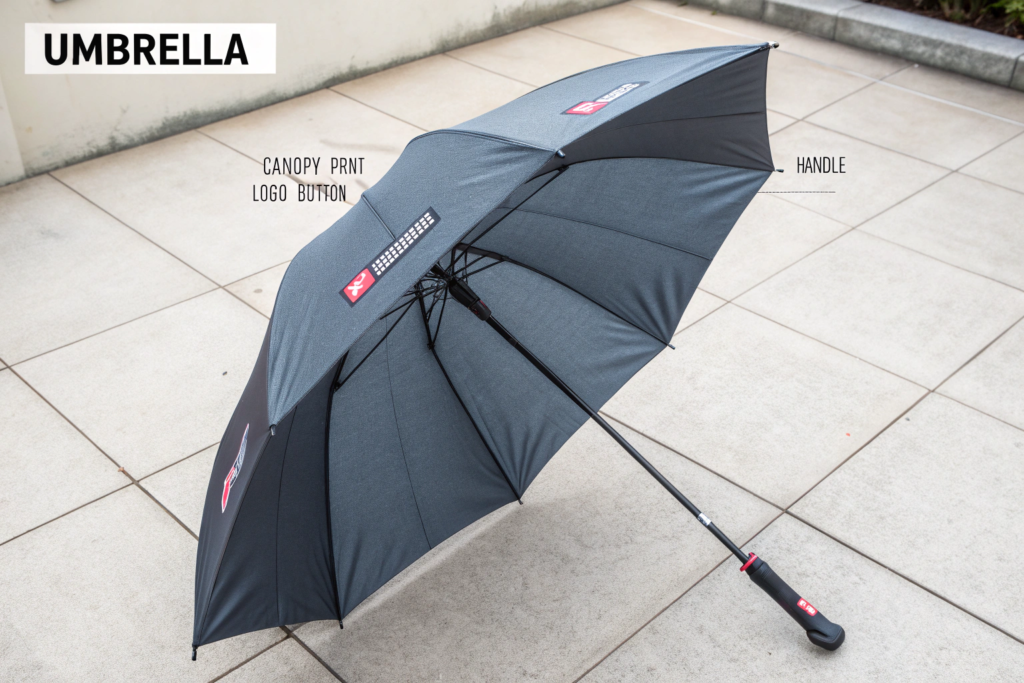
An umbrella is not a custom injection-molded part from scratch. It is an assembly of standard components, shaft, ribs, handle, canopy, with the brand identity applied to specific surfaces: the canopy print, the handle heat-stamp, and the logo button. The custom elements take time. The standard components are already on the shelf. I want to walk you through exactly how we parallelize the custom tooling, which standard components reduce the lead time to below 30 days, and how we ship a 5,000-unit custom umbrella order faster than most factories can produce 1,000 generic units.
What Pre-Stocked Standard Components Slash the Umbrella Lead Time?
An umbrella is an assembly of roughly 40 individual components: the shaft tube, the rib linkage, the stretcher, the spring, the runner, the handle, the tip, the canopy fabric, the label, and the logo button. Of these 40 components, only three typically require customization for a new brand logo: the canopy print, the logo button or badge, and sometimes a heat-stamped logo on the handle. The remaining 37 components are standard hardware that we stock in bulk.
Our standard component inventory eliminates 20 to 25 days of procurement lead time from a custom umbrella order. We maintain a buffer stock of 50,000 black manual-open shafts, 50,000 automatic-open frames, 30,000 curved plastic handles in black, and 20,000 straight wooden handles in a climate-controlled warehouse. When a logo order arrives, we pull the hardware from this existing stock, and customization begins immediately on the canopy and logo components.
This buffer stock is the single biggest speed advantage. A factory that orders shafts from a hardware supplier after receiving a customer’s purchase order loses three weeks waiting for the shaft manufacturer’s production queue and shipping. We own the shaft inventory. It sits on our shelf. The order starts the day the logo artwork is approved.
Does the frame color need to match the canopy color?
A black frame is universally neutral and works with any canopy color. We stock our buffer in black because it eliminates the color-matching delay. If a buyer requests a specific Pantone-matched frame color, such as a navy blue shaft to match a brand’s corporate identity, the frame must be custom powder-coated, which adds 7 to 10 days to the lead time.
How do we ensure the stock components are mechanically compatible with the custom canopy?
The canopy cutting pattern is designed to fit our standard rib length. We use a 6-rib, 65-centimeter rib length as our standard frame. The canopy panel template is parameterized to this rib arc, ensuring the fabric tension is correct when the canopy is sewn onto the standard frame. We do not need to adjust the frame to fit the canopy.
How Is a Logo Button Mold Machined in Under 15 Days?
The logo button is the small, often circular badge that sits at the very top of the umbrella canopy, holding the fabric to the shaft tip. It is small, roughly 18 millimeters in diameter, but it is the highest-visibility branding location on the entire umbrella. A custom logo button requires a custom injection mold.
We machine a logo button mold in 10 to 12 calendar days using a hardened S136 tool steel that is CNC-machined in our in-house tool room, then hand-polished by a mold finisher. The button geometry is standardized, a domed disk with a threaded post on the back, so the mold base is a pre-built template. Only the cavity face with the logo engraving is custom-machined, which saves 5 to 8 days compared to building a mold from a blank block.
The mold design file is derived from the client’s vector logo. The designer extrudes the logo paths into a 0.3-millimeter-deep cavity in the CAD software, adds draft angles so the molded part ejects cleanly, and generates the CNC toolpaths. The mold block is clamped into our Haas CNC mill, and the cavity face is machined in an overnight run.
Is it faster to heat-stamp the logo onto the canopy instead of creating a custom button?
Heat-stamping a logo onto the canopy fabric near the hem is a viable branding alternative if the project timeline is under 18 days, too short for a mold. It requires no tooling, only a heated brass stamp pressed onto the canopy fabric with metallic or pigment foil. The stamp is machined in three days from brass plate. Heat-stamped canopies can ship in 18 to 20 days but the visual result is a flat, metallic print, not the dimensional, premium feel of a custom logo button.
What if the logo design is too complex for a small button?
A highly detailed logo with fine serif text or photo-realistic elements may not reproduce clearly at an 18-millimeter diameter. We advise the client to simplify the logo for the button and reserve the detailed artwork for the larger canopy print area. Alternatively, we offer a larger, 28-millimeter oval badge that mounts on the shaft below the handle, providing a larger branding canvas.
What Canopy Screen-Printing Setup Allows a 5,000-Unit Run in a Week?
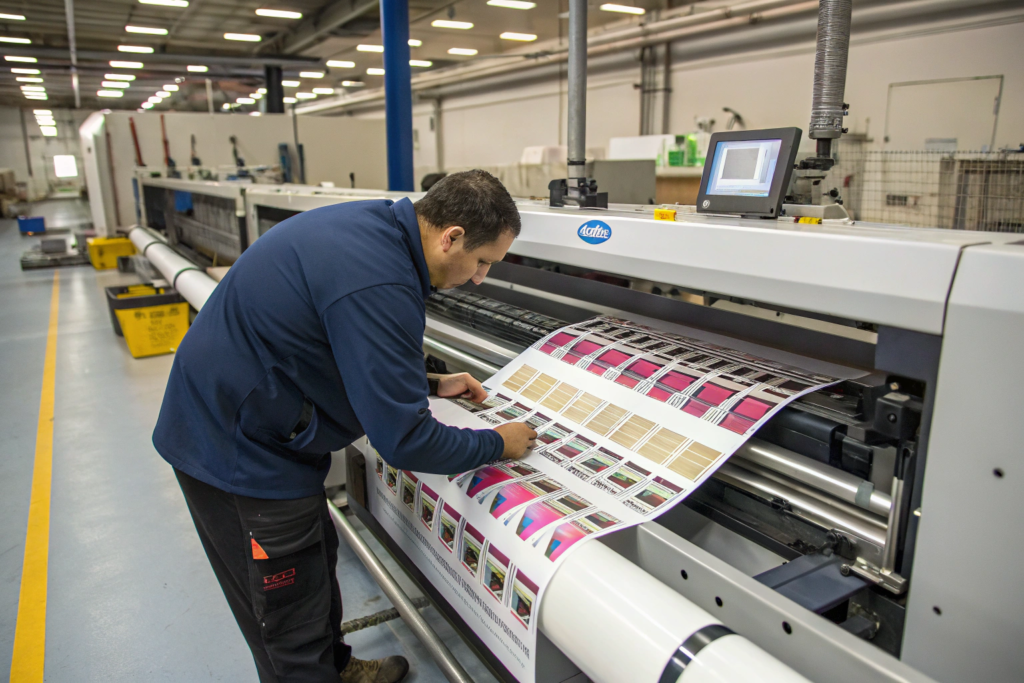
A 5,000-unit umbrella canopy run requires a printing method that is fast enough to produce volume but precise enough to render a logo accurately. Screen printing is the standard, but the screen preparation and color registration process can consume precious days.
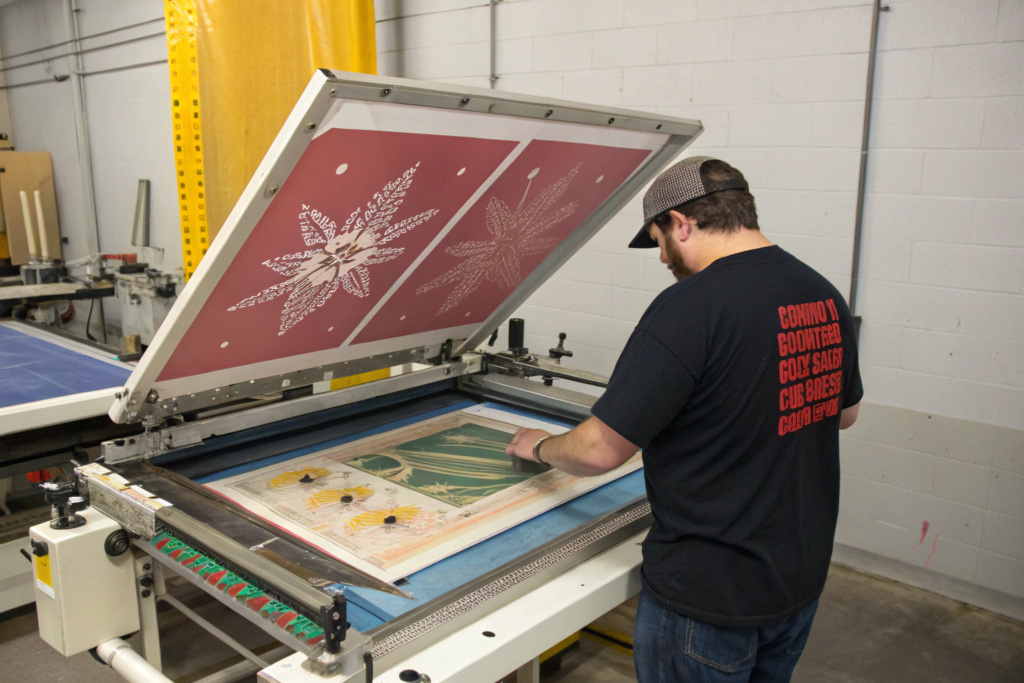
Our canopy screen-printing setup uses a pre-coated, photo-emulsion screen that we image directly from the client’s approved artwork file using a computer-to-screen laser exposure unit. This eliminates the film-positive exposure step and reduces screen preparation from eight hours to two hours. The screen is mounted on a rotary carousel press with laser alignment guides. A single operator prints 1,200 canopy panels per eight-hour shift, meaning a 5,000-panel run completes in roughly four shifts, just over two calendar days with overtime.
The ink is a flexible, weather-resistant PVC-free ink that air-cures at room temperature in 30 minutes. The printed panels are rack-dried vertically, inspected for registration, and passed to the canopy sewing station. The entire print-to-sew pipeline for 5,000 units completes in seven to eight working days.
How is logo color accuracy ensured on a fast-turn run?
The ink is mixed to a Pantone TCX formula in our ink kitchen. A test print is pulled onto a canopy fabric swatch, flash-cured with a heat gun, and measured against the client’s approved Pantone chip under a D65 light booth. The ink is adjusted in 2% pigment increments until the Delta E is below 1.5. This color match process takes one hour and is performed before the production run begins.
Can the canopy be digitally printed instead for even faster turnaround?
Digital printing on umbrella canopy fabric is faster for sampling but slower for a 5,000-unit production run. A digital printer produces roughly 100 panels per hour, so 5,000 panels would take 50 hours of continuous printing, plus slower ink curing. Digital printing is ideal for small runs but screen printing is faster for 5,000 units once the screen is prepared.
What Boxing and Palletizing Configuration Ships 5,000 Umbrellas Efficiently?
Five thousand umbrellas occupy significant container volume. A standard compact umbrella in its individual sleeve measures approximately 30 centimeters by 5 centimeters by 5 centimeters. Five thousand units, if packed loosely, would fill a chaotic jumble of cartons. Efficient palletization determines whether the shipment fills a 20-foot container cost-effectively or wastes space and money.
We pack 5,000 umbrellas in 50 master cartons of 100 units each, stacked on 10 standard 110-by-110-centimeter pallets, five cartons per pallet layer, five layers high. Each carton measures 62 by 32 by 25 centimeters. The total palletized volume is approximately 12 cubic meters, roughly half a 20-foot container. The cartons are stretch-wrapped, edge-boarded, and strapped to the pallet with poly strapping.
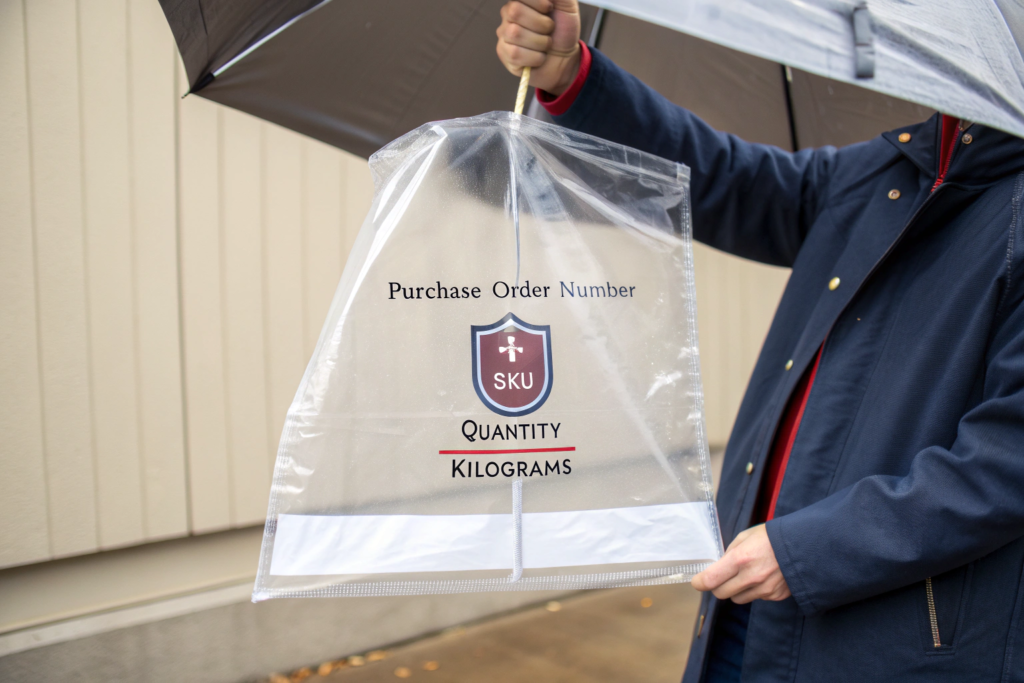
The individual umbrella sleeve is a clear polypropylene bag with a resealable adhesive flap. The custom logo is printed on the sleeve, visible through the bag. We print the sleeve in-house on a flexographic printer. Each carton is labeled with the purchase order number, the SKU, the quantity, and the carton weight in kilograms.
How long does the palletizing and container loading take after production finishes?
Palletizing 50 cartons takes a team of two warehouse workers approximately three hours. Loading the 10 pallets into a 20-foot container with a forklift takes roughly 45 minutes. The container is photographed at the factory dock with the doors open, showing the pallet configuration, and the photos are emailed to the buyer as the loading confirmation.
What is the container shipping transit time to a US or European distribution center?
From Ningbo to Los Angeles, the ocean transit is 14 to 16 days on a direct service. From Ningbo to Rotterdam, the transit is 28 to 32 days. Air freight is available for rush orders and reduces transit to 4 to 6 days but multiplies the freight cost by approximately six times. We advise clients to plan the ocean transit into the overall project timeline and to approve logo artwork early to allow the full production window.
Conclusion
Five thousand custom umbrellas with a new logo can be produced in 25 to 30 calendar days when the factory pre-stocks standard shafts, ribs, and handles, machines the logo button mold in-house in 10 days, screen-prints the canopy panels in two days, and assembles and palletizes the order in a single streamlined production batch. The timeline is achievable without cutting quality corners because the customization is focused on the logo button and canopy print, while the structural umbrella hardware is pulled from proven, pre-existing inventory.
Our Zhejiang facility runs these custom umbrella sprints regularly for corporate gift programs, brand activations, and conference giveaways. We hold the 50,000-unit hardware buffer, we machine molds in our own tool room, and we print canopy panels on our rotary carousel press. Our project manager sends daily production photos so you watch your umbrellas move from screen printing to assembly to pallet loading.
If your brand has a new logo and a deadline, do not let a slow supplier kill the rebranding moment. Contact our Business Director, Elaine today. She will send you a 25-day production calendar, a canopy Pantone matching guide, and a sample umbrella with a custom logo button so you can feel the quality you will receive. Write to her at elaine@fumaoclothing.com. Let’s put your new logo in 5,000 hands, right on time.