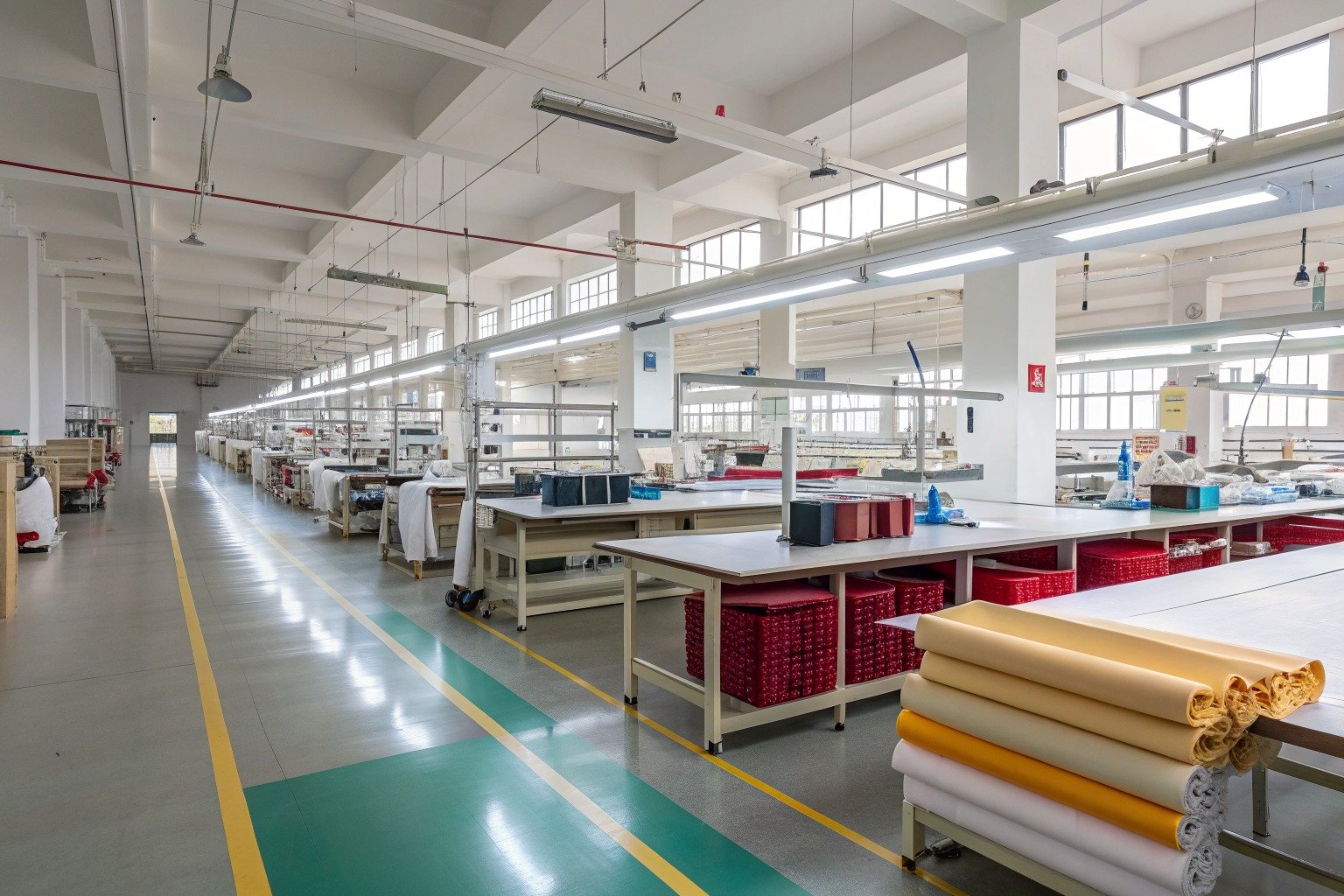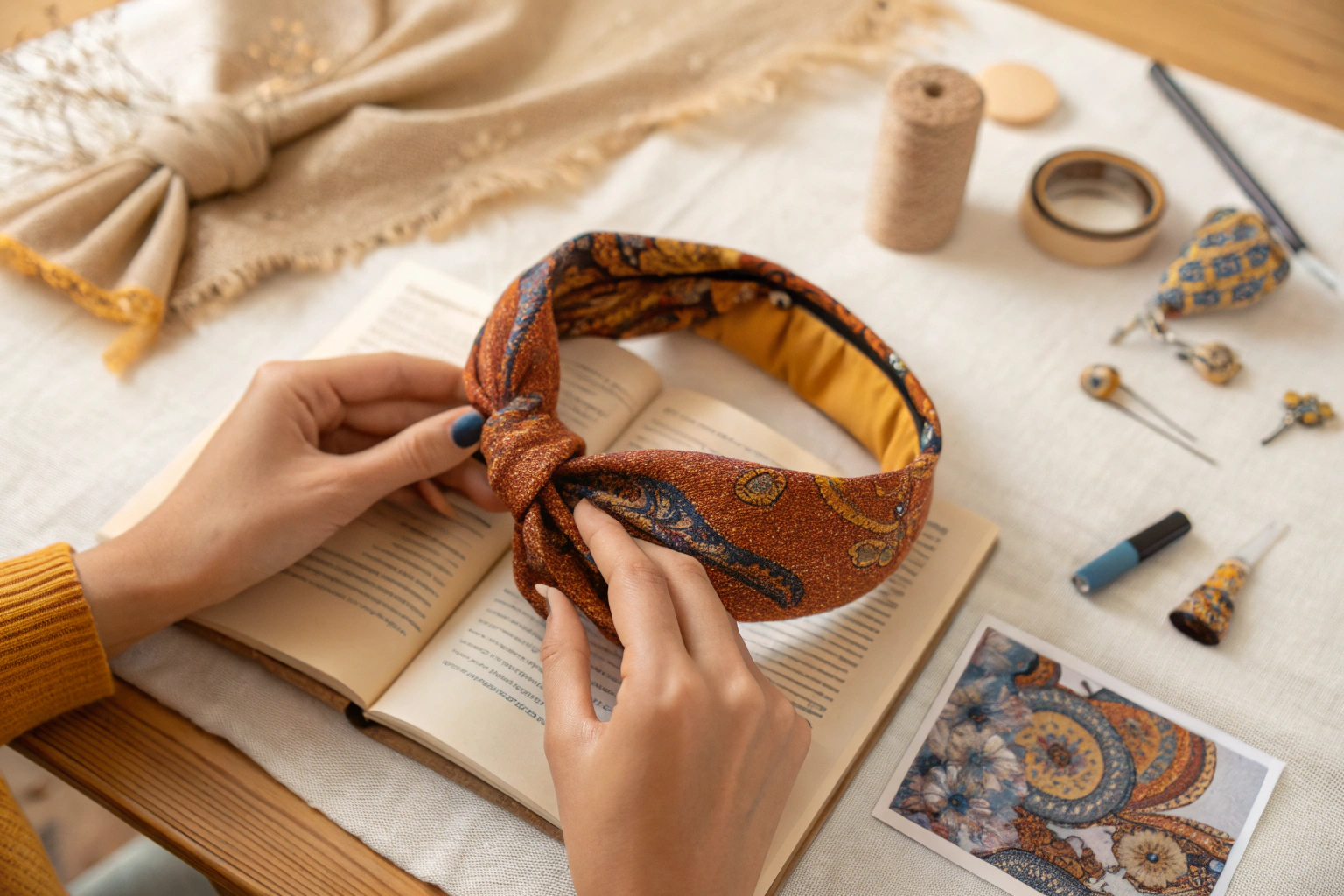
You scroll through Pinterest and freeze on a specific bohemian headband. The paisley pattern weaves through deep terracotta and indigo tones. The edges have a worn, sun-faded softness that looks like a vintage market find. You sketch the concept, email five factories, and the responses crush your excitement. One factory sends back a photo of a neon polyester print that looks like a carnival costume. Another tells you the washed-out vintage effect is "impossible to control." The real problem is not your vision. It is a translation gap between a complex artistic aesthetic and the standard high-speed production lines optimized for solid colors.
To get a Chinese hair band factory to successfully produce bohemian print headbands, you must provide a precise physical reference sample, specify pigment-dye processes rather than reactive dyes, request a pre-washed crinkle cotton or modal base fabric, and clearly define the acceptable variance for the "imperfect" edges that define the boho look. The conversation shifts from "make it perfect" to "make it perfectly imperfect."
Bohemian prints live in the details of the dye bleeding slightly into the weave, the soft hand feel of a washed finish, and the muted, dusty color palette. These are not defects. They are the design. I want to show you exactly how to brief the factory, what fabric bases allow that specific vintage drape, and how to avoid the common trap of receiving a shiny, stiff headband that belongs in a discount bin.
What Fabric Base Gives That Soft, Worn Bohemian Drape?
The foundation is not the print. It is the hand feel. A stiff, shiny polyester satin decorated with a paisley print is not bohemian. It is a costume. The authentic boho drape requires the fabric to move like a well-worn linen shirt. It must slouch, wrinkle softly, and feel dry to the touch, never slippery or cold against the forehead.
The best fabric base for a bohemian drape is a lightweight crinkle cotton-modal blend, typically 60% cotton and 40% modal, with a weight around 120 to 140 GSM. The cotton provides the matte, dry texture, while the modal adds a subtle fluidity and prevents the fabric from feeling like stiff bandage gauze.
We achieve the worn look not by damaging the fabric, but by treating it with a bio-washing enzyme bath before the printing stage. The enzyme gently eats the fuzz on the yarn surface, creating a smooth, slightly faded patina that looks naturally aged. This process also removes starch and sizing chemicals, so the hair band arrives soft and ready to wear, not scratchy or stiff.
Why avoid polyester for authentic bohemian looks?
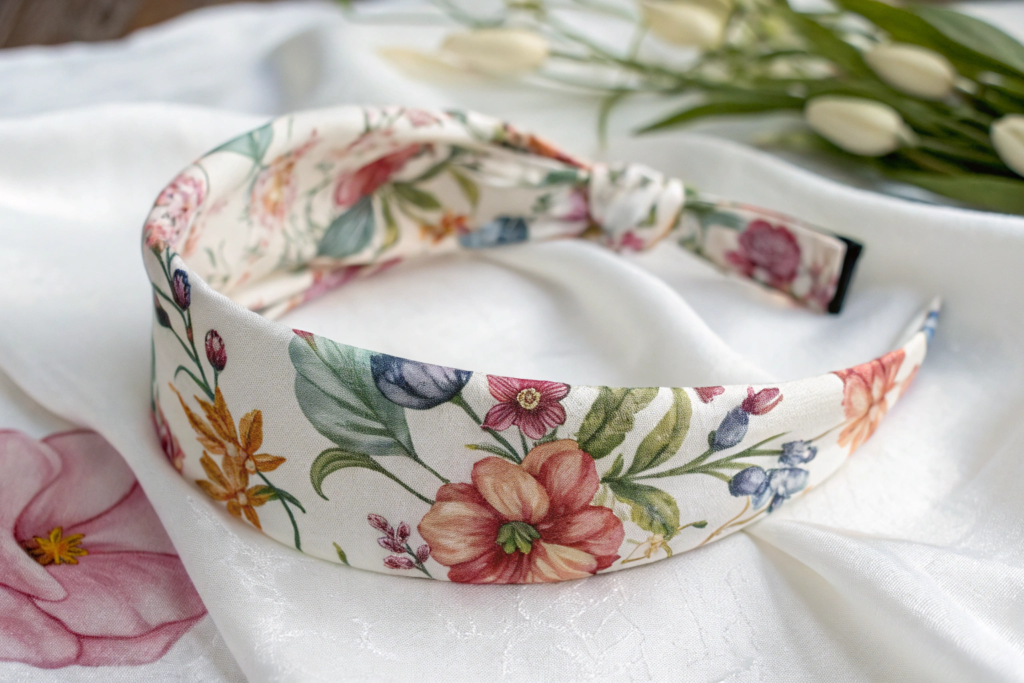
Polyester holds dye with aggressive, bright precision. The colors lock in like plastic. Bohemian prints require a slight "bleed" where the black outline of a paisley motif softens into the ecru background. Cotton absorbs dye unevenly compared to polyester, and that uneven absorption is the magic. It creates the tonal variation that mimics hand block-printing. When a buyer from a festival-wear brand touches a cotton-modal headband, they instantly recognize it as authentic.
How does the crinkle texture survive shipping and washing?
A pre-crinkled fabric achieves its texture through a wet-compression and heat-setting process. We soak the fabric, twist it under tension, and bake it dry at a controlled high temperature. This sets the crinkle into the memory of the cotton fiber. It will not flatten out in a shipping carton. When the end customer washes a shawl or headband, the crinkle returns as soon as it air-dries.
How to Specify the Exact Paisley and Floral Print Technique?
You send a digital file of a beautiful watercolor floral. The factory prints it using a standard heat-sublimation process onto polyester. The result is a sharp, glossy, photo-realistic image on a shiny white background. It screams "mall kiosk," not "Coachella field." The print technique must match the tactile quality of the fabric base, or the illusion breaks.
The correct print technique for a bohemian headband is pigment printing with a soft binder, not heat sublimation. Pigment ink sits on the fabric surface and cures with heat, naturally fading and softening over multiple washes just like a vintage garment. This creates a lived-in patina that reactive dyes or sublimation inks cannot replicate.
Reactive dyes bond chemically with the cellulose fiber and become part of the yarn. The resulting color is sharp and permanent. Bohemian prints avoid sharpness. Pigment prints sit on the surface and will micro-crack and fade at the edges over time, exactly like an antique fabric found in a Moroccan souk.
How do we communicate the "faded vintage" effect clearly?
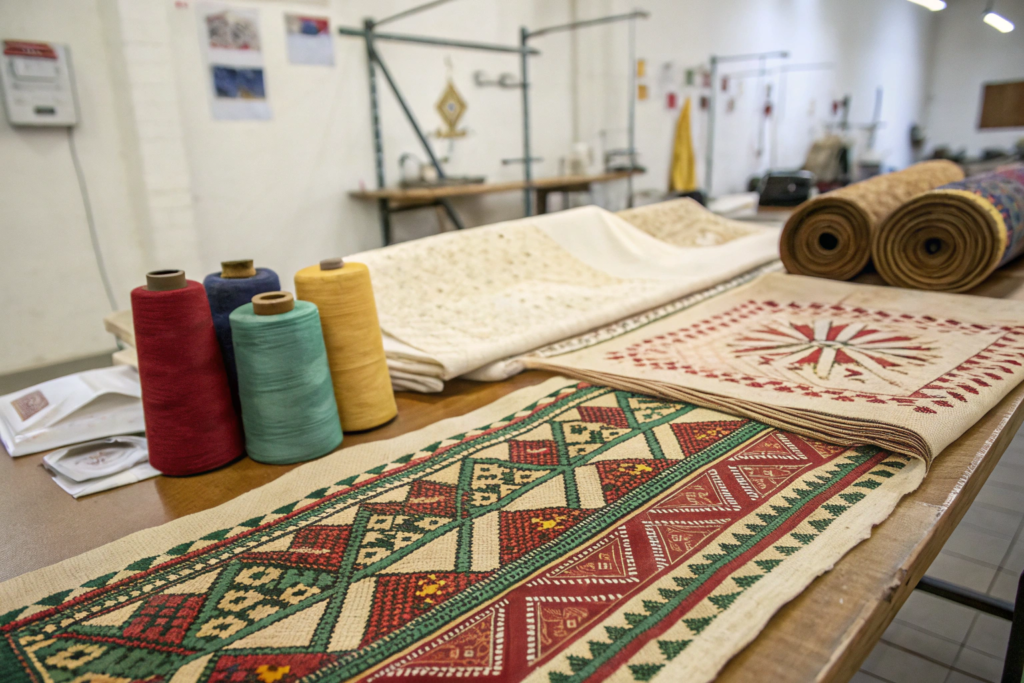
Never use the words "faded" alone. A factory might interpret that as a cheap, washed-out print with low opacity. Use specific commercial references. I ask buyers to send me a Pantone TCX reference for the solid color and a percentage scale. "The terracotta ground should be dyed at 70% saturation of Pantone 17-1524 TCX." This quantifies the faded look. We run a strike-off sample on a small piece of actual cotton fabric and ship it for approval before cutting a single bulk meter.
What about metallic gold accents in the paisley?
Standard gold plastisol ink looks thick and rubbery. We use a burnished bronze or a low-luster gold foil stamp for accents. Foil stamping on a soft cotton base creates a beautiful irregular crackle texture after washing, because the foil and the cotton shrink at slightly different rates. This effect is highly desirable in the boho accessories market, adding depth without shiny plastic glare.
Can a Factory Replicate a True Washed-Out Vintage Dye Effect?
The vintage dye effect is the hardest thing to mass-produce consistently. A true vintage garment faded because of sun exposure, sweat, and a hundred hand-wash cycles. A factory cannot replicate a decade of wear in a single finishing bath without precise chemical control. However, we can simulate the destination point.
Yes, a factory can replicate a washed-out vintage dye effect consistently by using a two-stage bio-garment wash process. First, the finished headband is dyed to a slightly darker shade than the target. Then, it undergoes a controlled enzyme wash with pumice stones that physically abrades the surface color and softens the fabric simultaneously.
We use a neutral cellulase enzyme that attacks the surface fiber ends where the dye sits most heavily. The fabric comes out of the industrial washer looking sun-bleached and soft. The key parameter is the wash cycle duration. A 20-minute enzyme wash gives a light fading. A 45-minute wash gives a heavily distressed look.
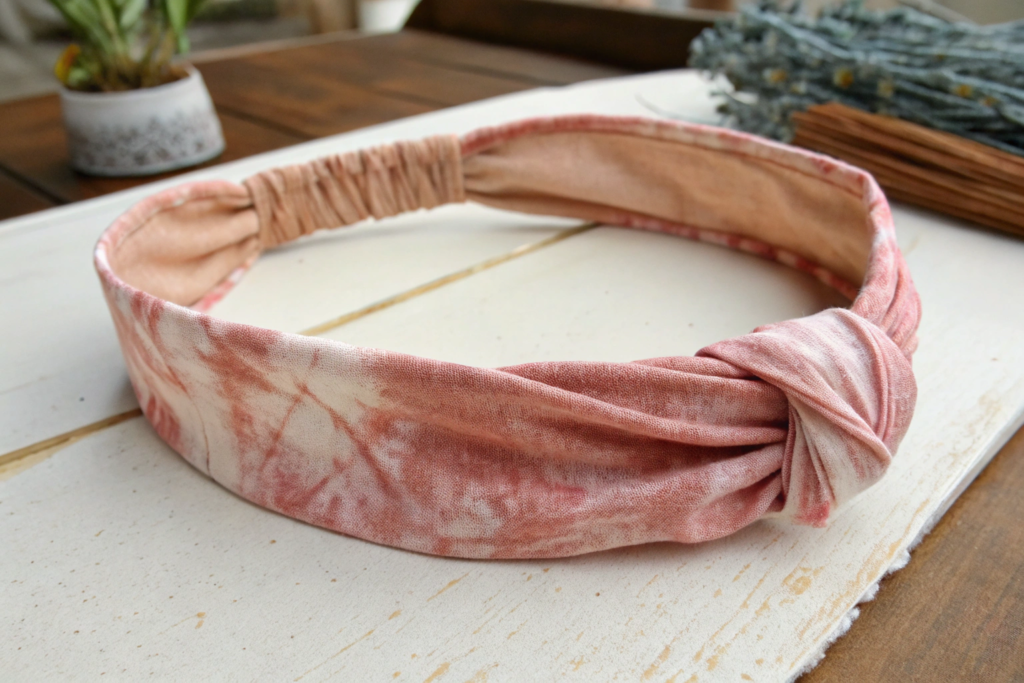
How do we control consistency across a 5,000 unit order?
Bohemian prints cannot look robotic. Each headband must look slightly unique, but not so different that customers complain about a bait-and-switch. We establish an upper and lower limit of acceptable fading using sealed standard samples. The upper limit is a slightly darker "reference A" band. The lower limit is a lighter "reference B" band. Every production batch must fall visually between these two sealed samples, ensuring the collection feels artisanal but controlled.
What is the difference between pigment dye and garment dye?
Pigment dye colors the surface of the finished fabric. Garment dye colors the entire cut-and-sewn headband in a bath. For the most authentic vintage look, I recommend garment dyeing. The dye pools slightly darker in the seam allowances and gathers, creating natural shading around the elastic stitches. This shadow effect is impossible to achieve with a flat printed roll.
How to Avoid Cultural Design Misunderstandings in Production?
A paisley motif is not a generic squiggle. It carries deep historical roots in Persian and Indian textile traditions. European boutique buyers are highly sensitive to authenticity. A headband that offers a "Navajo" print with a Chinese factory’s generic tribal interpretation can land a brand in a cultural appropriation scandal. The design briefing stage must handle cultural references with respect and precision.
To avoid cultural misunderstandings, provide original vintage textiles as physical reference artifacts rather than asking the factory to "design something tribal." Direct the factory to reproduce the specific motif scales, thread colors, and layout geometry from your exact sample, without adding creative modifications or mixing unrelated ethnic symbols in the same repeat pattern.
I have seen factories independently add a random lotus flower to a kilim-inspired geometric band, which dilutes the design’s integrity. The solution is to lock the repeat pattern at the CAD stage before engraving the screens. We invite the buyer to approve a digital mockup showing the exact layout of the paisley, the border stripe, and the negative ecru space.
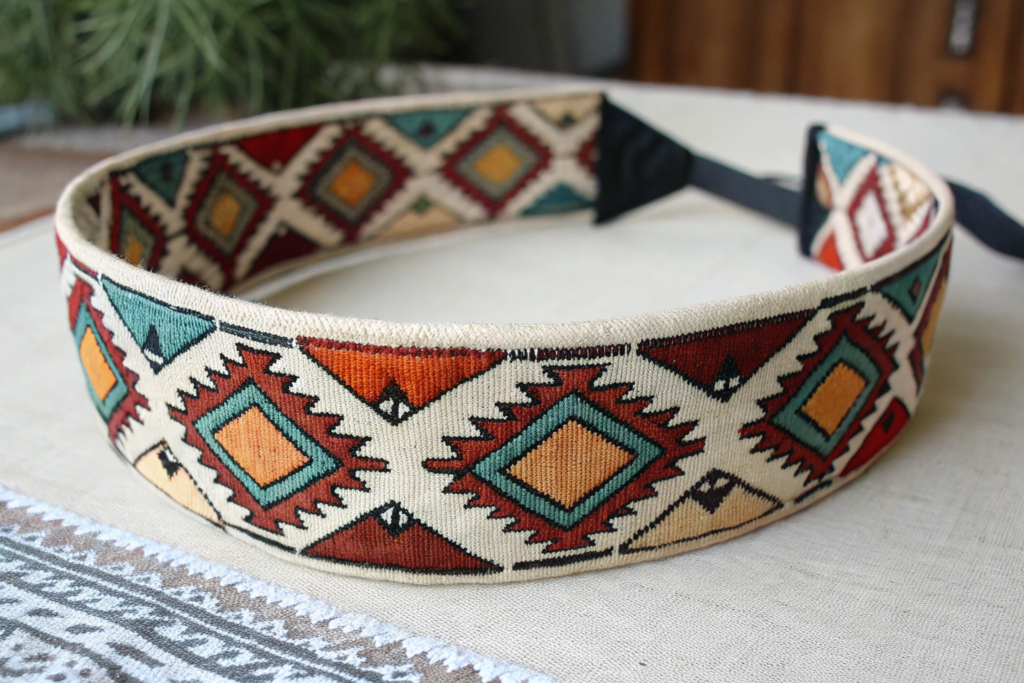
What is the risk of using generic "tribal" clip art?
The risk is a cease-and-desist letter, but more commonly, it is a social media call-out that goes viral within a small niche community. Authentic bohemian consumers often know the difference between an Ottoman carnation motif and a generic vector swirl. Using public domain archival prints from museums is safer. We often print fabric using high-resolution scans of 19th-century European paisley shawls that are clearly in the public domain, avoiding modern copyright entanglements.
How should a buyer communicate the desired edge finish?
A bohemian headband almost never has a clean, folded narrow hem. It looks surgical and lifeless. The preferred finish is a soft raw edge with a fraying allowance, or a blanket stitch in a matching yarn. We specify the fray depth precisely. "Leave a 4mm unhemmed edge that will gently fray over time." Washing the hair bands after hemming encourages the controlled fray before it reaches the consumer, ensuring the final product looks intentionally soft, not unfinished.
Conclusion
Producing an authentic bohemian print headband is a collaboration between your artistic eye and the factory’s technical mastery of dyes, washes, and fabric bases. The difference between a cheap-looking boho knockoff and a premium boutique piece lies entirely in the enzyme wash duration, the pigment ink softness, and the refusal to use shiny polyester. You lead with reference samples and a clear tolerance for controlled imperfection.
Our factory in Zhejiang loves these projects. We work with pigment dyes, garment washing machines, and crinkle cotton bases daily. We understand that a bohemian headband should feel like a second skin, not a stiff hair accessory. Our design team can take your vintage scarf reference and translate it precisely into a repeatable, high-quality production run.
If you have a bohemian concept you want to bring to life, do not settle for generic factory stock. Reach out to our Business Director, Elaine. She will guide you through the fabric options, dye methods, and strike-off sampling process. Write to her at elaine@fumaoclothing.com. Let’s create a headband that tells a story with every fiber.