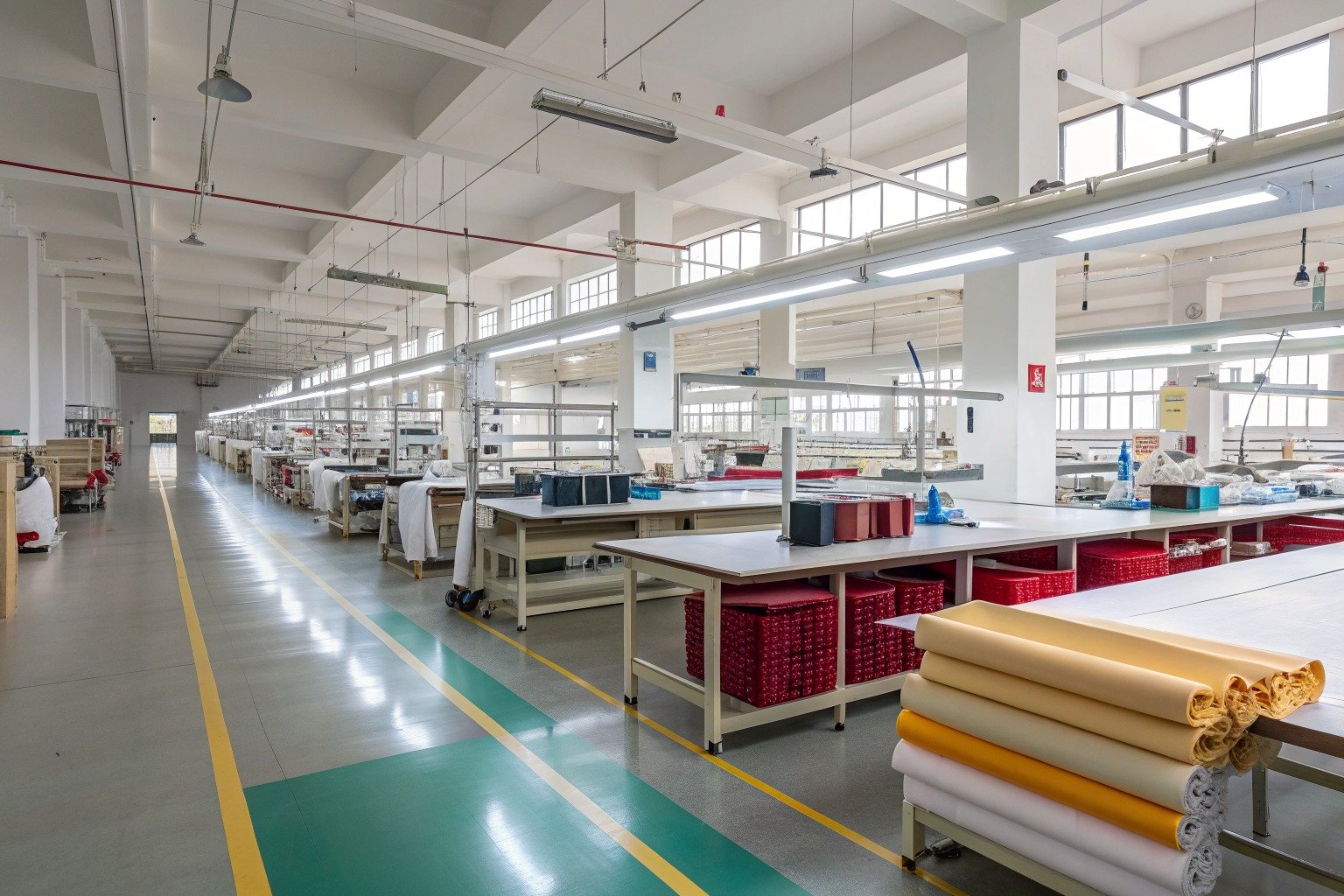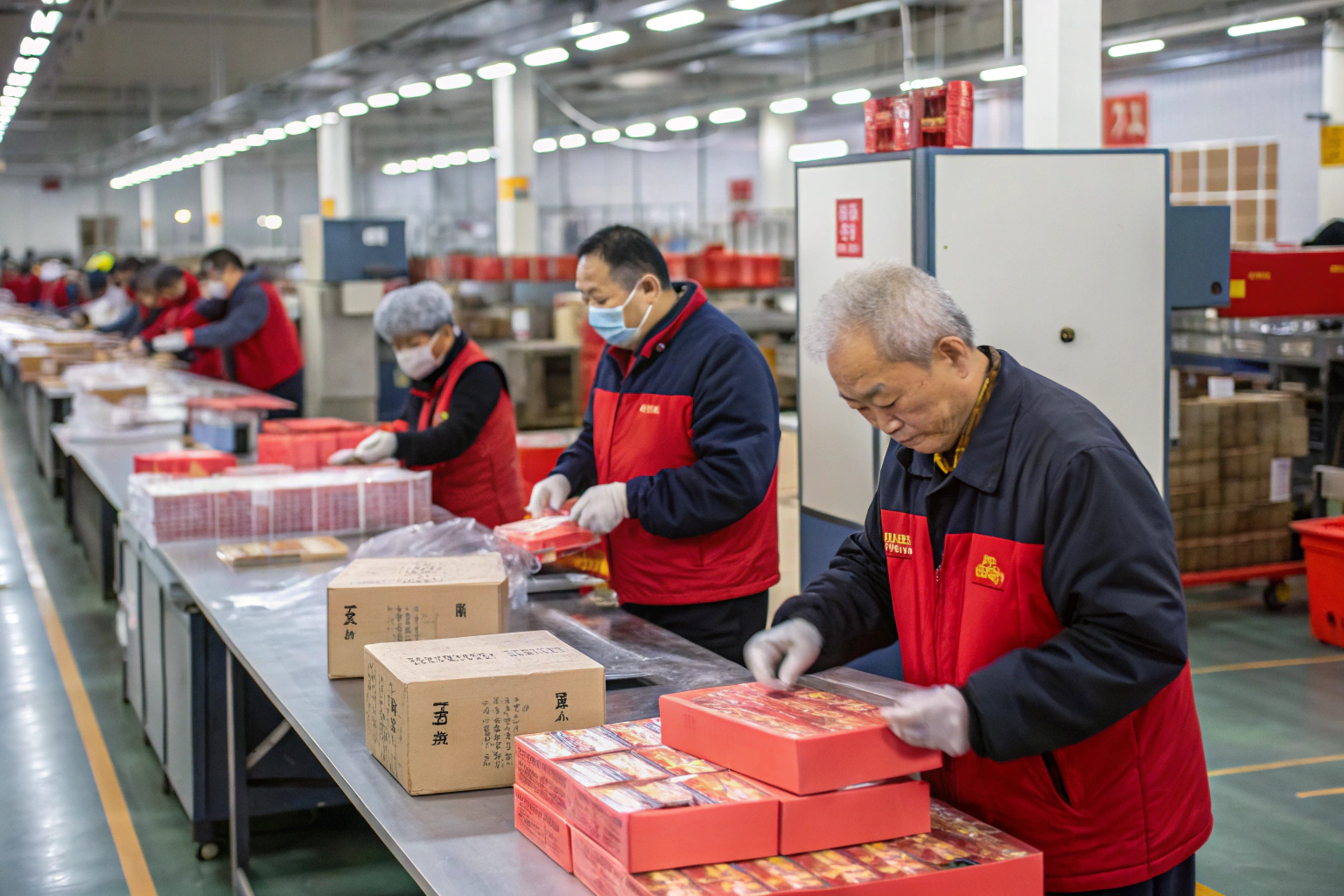
You land a massive purchase order from a major retailer on January 10th. Their buyer wants 15,000 custom hair bands delivered to their Los Angeles warehouse by February 20th. You celebrate the win, then immediately feel the cold dread. Chinese New Year starts in two weeks. The entire country will shut down for half a month. The factory gates will lock, the lights will go dark, and your shipment will sit in limbo while the retail window slams shut. A normal factory will shrug and tell you to wait until mid-February to even start. Your order becomes a casualty of the calendar.
We handle a rush order during Chinese New Year by activating a pre-negotiated skeleton crew of senior technicians who remain on standby, raw materials that we stockpile in December specifically for holiday rush clients, and a premium logistics network that books confirmed vessel space before the pre-holiday crunch fully chokes the ports. We do not close completely. We downshift strategically.
This ability to deliver during the lunar holiday is not magic. It is the result of years of relationship-building with our workers, aggressive pre-December inventory planning, and a deep understanding that Western retail calendars do not pause for Eastern holidays. I want to explain exactly how we pull this off without burning out our team or compromising the stitching quality on your scarves and caps.
What Pre-Holiday Stockpiling Strategy Prevents Raw Material Shortages?
The biggest lie in manufacturing is "we will source the yarn after you pay the deposit." In the four weeks before Chinese New Year, the upstream supply chain collapses in a slow-motion cascade. The dye houses stop accepting new batches around January 15th. The metal plating factories drain their chemical tanks and go offline by January 18th. If your rush order for metal-tipped hair clips needs a specific gold-plated spring, and we do not already own it, you are dead in the water.
Our pre-holiday stockpiling strategy involves purchasing and warehousing a 60-day buffer of our top 50 core raw materials by December 1st. This includes greige cotton-modal fabric rolls for headbands, uncut acetate sheets for hair claws, solid brass wire for belt buckles, and blank polybag packaging in standard sizes. We sit on this physical inventory so that a January rush order feeds from our shelf, not a closed supplier’s warehouse.
We call this the "war chest." It ties up working capital, and many factory owners hate carrying inventory. I love it. It means that when Ron from Texas emails on January 12th saying he needs 8,000 scarves in a custom ombre dye, we walk over to the raw fabric rack, pull the greige bolts, and start mixing the color bath within hours. We do not spend three days calling a fabric mill that already turned off its looms.
Which specific materials do we never let drop below a safety threshold?
We track inventory levels on a live dashboard that projects consumption based on confirmed orders. The non-negotiables are: 120GSM cotton-modal base for hair bands, natural rubber elastic core, spring steel wire in 0.8mm diameter, standard brass sheet for buckles, and 190T polyester pongee for umbrellas. If any of these dip below a 45-day supply in November, our procurement team orders aggressively before the price surge hits. This buffer is the physical foundation that makes a Chinese New Year rush order even possible to accept.
How do we convince raw material suppliers to deliver during their shutdown?
We don’t. It is nearly impossible to force a dye house to run their boilers during the holiday. Instead, we pre-negotiate "last batch" slots. We pay a 15% rush premium to our local dye partners to run our fabric through their vats on January 14th, their final operating day. They are happy to earn the extra margin before closing. We are happy because our belts and fabric trims are colored and cured, ready for sewing when our own team returns.
How Do You Retain a Skilled Skeleton Crew During the National Holiday?
Chinese New Year is sacred. Workers travel for 20 hours standing on a packed train to see their elderly parents. They will not stay in a dormitory just to stitch a few hundred baseball caps for a foreign buyer. Any factory owner who forces a full production line to skip the holiday will have a mutiny on their hands and zero workers in March.
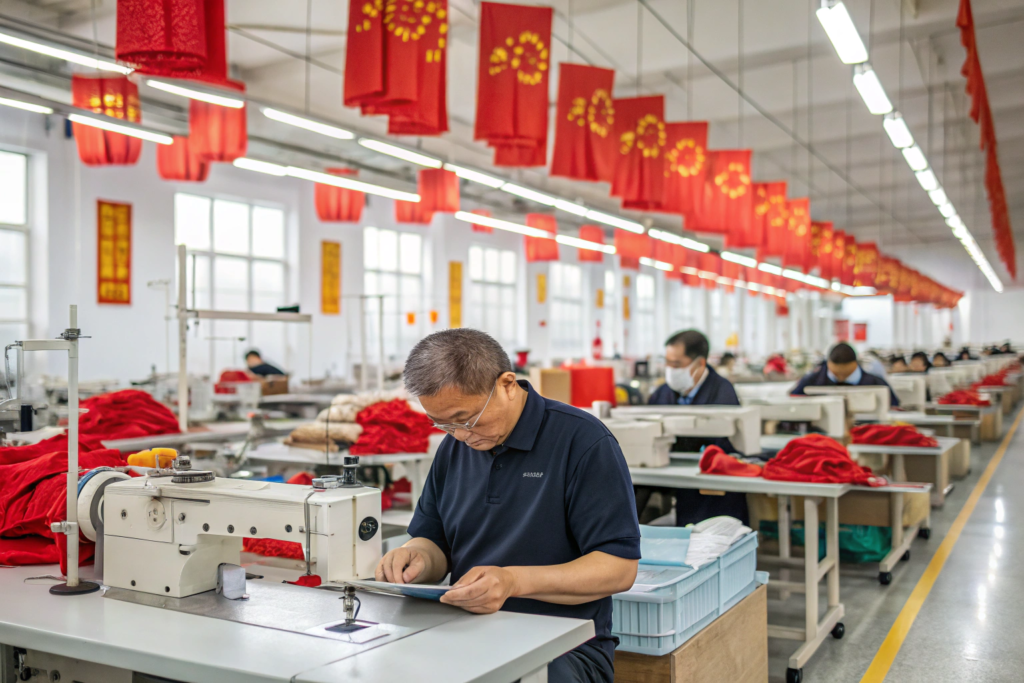
We retain a skilled skeleton crew of 18 to 25 senior technicians by offering triple overtime pay, a guaranteed bonus paid on the eve of the holiday, and flexible post-holiday leave so they can travel home after the peak congestion. These workers are volunteers, not conscripts. They choose to stay because we treat the arrangement as a lucrative partnership, not a demand.
We begin asking for volunteers in November. We present the specific order volume and the required dates. Our most experienced seamstresses and QC inspectors, often those saving for a child’s university tuition or a house down payment, opt in. They know they will work hard for five intense days, earn a substantial premium, and then take a relaxed vacation in late February when ticket prices are cheap and trains are empty.

What is the psychological contract with this holiday crew?
I personally cook a massive pre-New Year dinner for the skeleton crew in our factory canteen. We close the factory together on the final night, share a meal of dumplings and fish, and I hand each worker their red envelope bonus in person. This ritual builds a deep loyalty. The crew feels respected. They are not "covering the phones." They are producing high-quality shawls and gloves with pride because we made them feel like essential partners, not disposable labor.
How does a smaller crew maintain stitching quality standards?
Speed is the enemy of quality on a skeleton crew. We do not set aggressive piece-rate quotas during the holiday period. We switch to a gentle hourly rate with a completion bonus. The QC inspector, who is part of the skeleton crew, checks every single piece individually. There is no "batch sampling." For a 500-unit emergency order of fashion accessories for a celebrity launch, the inspector physically touches and stretches every single elastic band before it enters the packing carton.
What Shipping Guarantees Exist Despite the Port Congestion Peak?
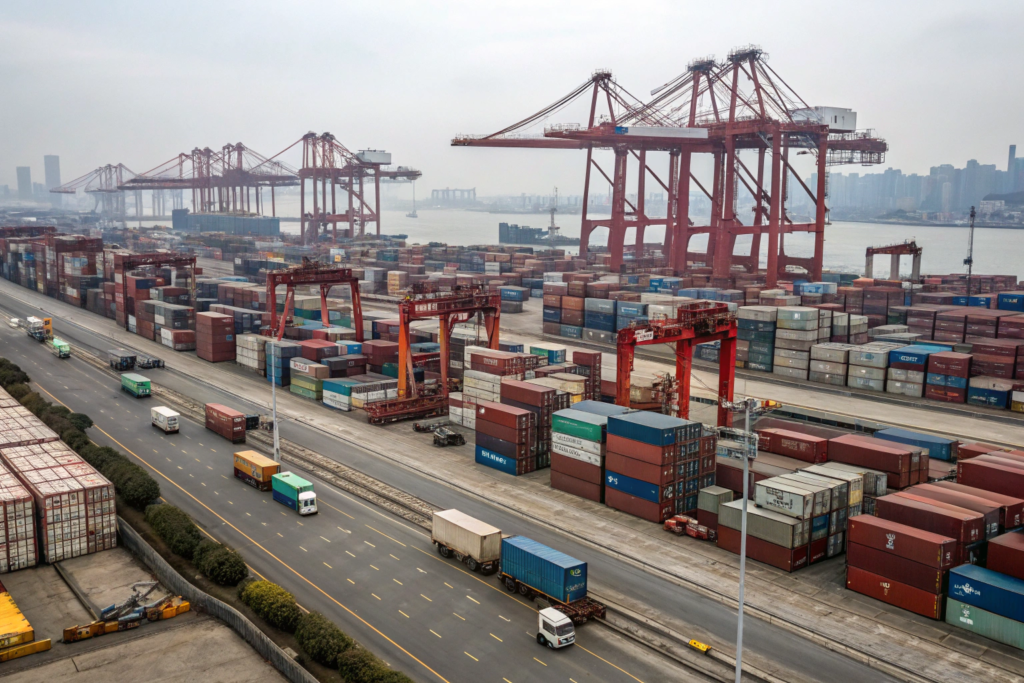
The week before Chinese New Year is the busiest week on earth for Chinese export ports. Every factory tries to shove their containers onto a vessel simultaneously. Shanghai and Ningbo yards overflow. Truckers demand cash bribes to even pick up a container. Getting a container onto a ship during this chaos requires more than a booking confirmation email.
We guarantee shipping during the CNY peak by activating a bonded warehouse consolidation service and using a premium "Diamond Tier" freight contract with Maersk and COSCO that carries a guaranteed equipment and space clause. This clause commits the carrier to load our container even when the vessel is overbooked, in exchange for a pre-negotiated 25% surcharge on the freight rate.
We do not wait for a trucker to become available. We pre-book our trucking slots for January 15th through January 25th in early December. Our logistics coordinator physically visits the container yard on the morning of loading to ensure our pre-allocated container is not "borrowed" by another factory’s desperate shipping manager.
How does the bonded warehouse strategy reduce terminal chaos?
We move finished rush order goods to a bonded warehouse zone on January 16th, before the terminal madness peaks. The customs export declaration is filed electronically from this zone. The container is stuffed and sealed inside the bonded warehouse compound under camera surveillance. This avoids the 8-hour truck queues that form at the main Ningbo gate on January 20th. The container moves directly to the vessel with a fast-lane customs clearance.
What happens if a vessel still rolls our confirmed booking?
The "Diamond Tier" clause mandates the carrier to rebook us onto the next available vessel at their cost, not ours, and provides a $150 per day compensation for any delay beyond 48 hours. We share this compensation directly with you, the client, as a discount on your next straw hat or accessory order. This aligns our financial pain with yours and motivates our team fiercely to secure a space that actually sails.
Can You Split a Large Rush Order Across Multiple Subcontractor Lines?
Sometimes a rush order is simply too big for our skeleton crew. 20,000 pieces cannot be hand-stitched by 20 people in five days. We need parallel production power. However, blindly tossing your design to an unfamiliar subcontractor during the holiday is a recipe for counterfeit materials and shoddy seams.
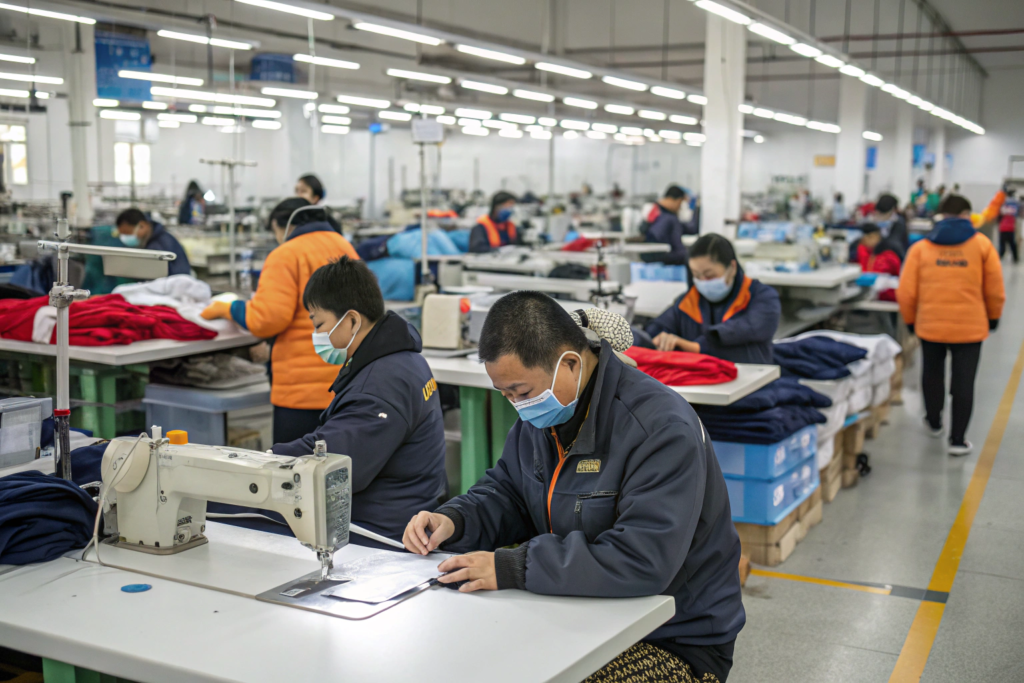
We split a large rush order safely by only activating our pre-audited, certified satellite workshops that operate within a 30-minute drive of our Zhejiang headquarters. Our project manager visits each satellite line on the first production day to install our calibrated QC tools, drop off the exact raw materials, and audit the first five finished pieces against our master sample before the line runs at full speed.
We do not share your client’s brand labels with the satellite. We attach the labels ourselves at our central packing station after the components return. This reduces the risk of your branded items leaking into the grey market or being overproduced and sold out the back door.
How do you enforce quality parity between our factory and the satellite?
We send our own QC inspector to live at the satellite workshop for the duration of the run. They carry the sealed approval sample, the Pantone swatch of the exact dye lot, and a calibrated digital tension meter for the elastic hair ties. The satellite owner knows they will be paid only after our inspector signs the "Completion and Conformity" certificate. If a batch fails, the satellite pays for the wasted raw material. This financial accountability keeps their needles sharp and their colors precise.
What about the security of custom molds and unique prints?
We protect your custom intellectual property fiercely. The satellite workshop receives the mold pre-set in its injection machine or the silk screen already burned onto a frame. They do not receive the CAD files or the master mold. We deliver the tooling sealed in a locked case, and we retrieve it personally after the run is complete. For custom-print fabric belts or branded caps, we keep the screen-printing exclusively in-house, sending only cut-and-sew assembly to the outside line.
Conclusion
Chinese New Year does not have to be a wall that crushes your retail calendar. It is a challenge that separates factories with deep operational discipline from those running a hand-to-mouth operation. We have spent years refining the war chest inventory buffer, the volunteer skeleton crew system, and the Diamond Tier freight contracts precisely so that our clients’ businesses do not stop when our nation celebrates.
Our project managers remain reachable throughout the holiday period, answering emails within hours, not weeks. We treat a January 12th panic not as an annoyance but as an opportunity to prove why working with a premium manufacturer in Zhejiang is a strategic advantage for your accessory brand.
If you are holding a purchase order and the calendar is looking impossible, do not assume every door is closed. Contact our Business Director, Elaine immediately. She will assess your volume, check the raw buffer stock levels, and give you a brutally honest, realistic timeline for a Chinese New Year delivery to America or Europe. Write to her at elaine@fumaoclothing.com. Let’s turn that holiday panic into an on-time delivery.