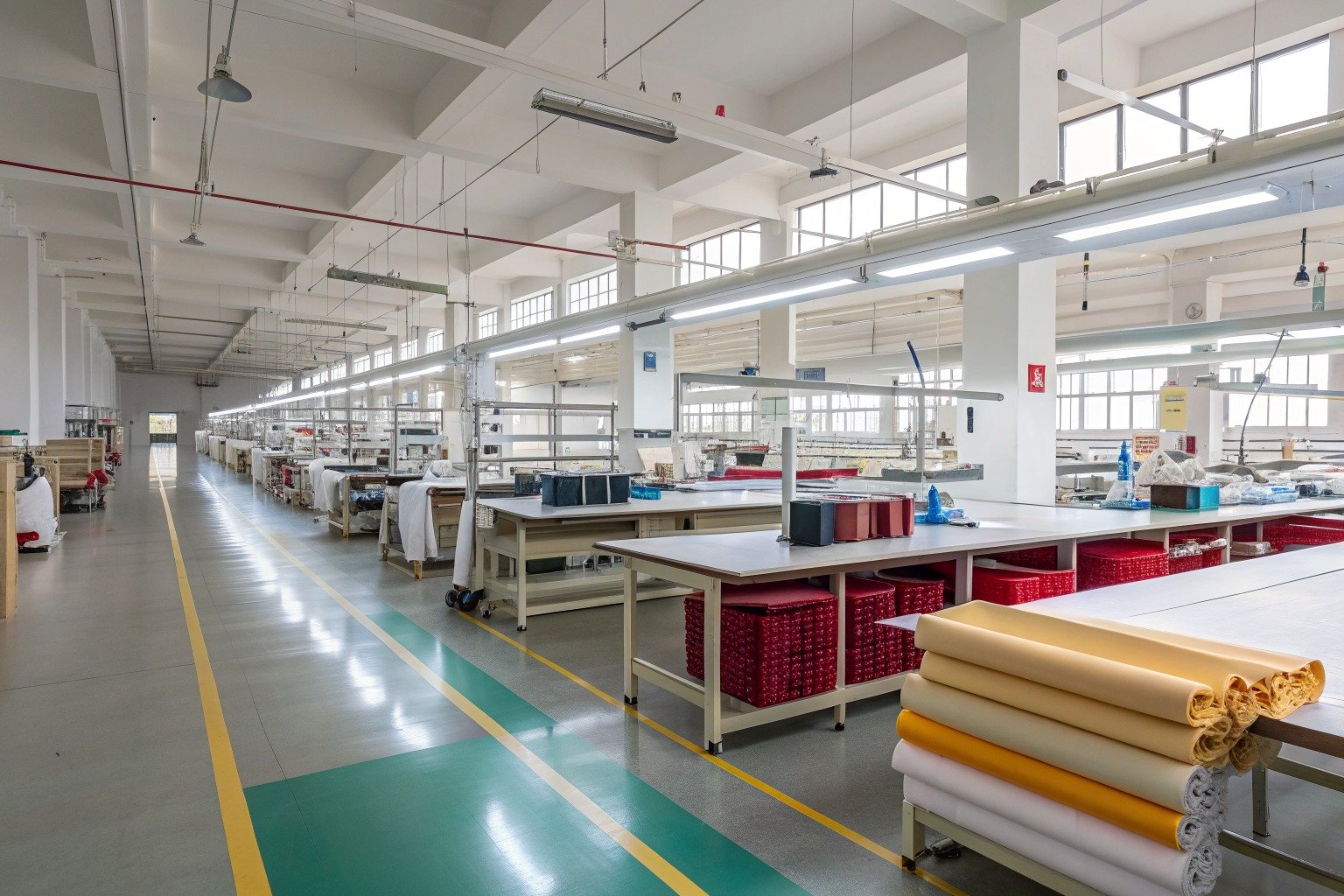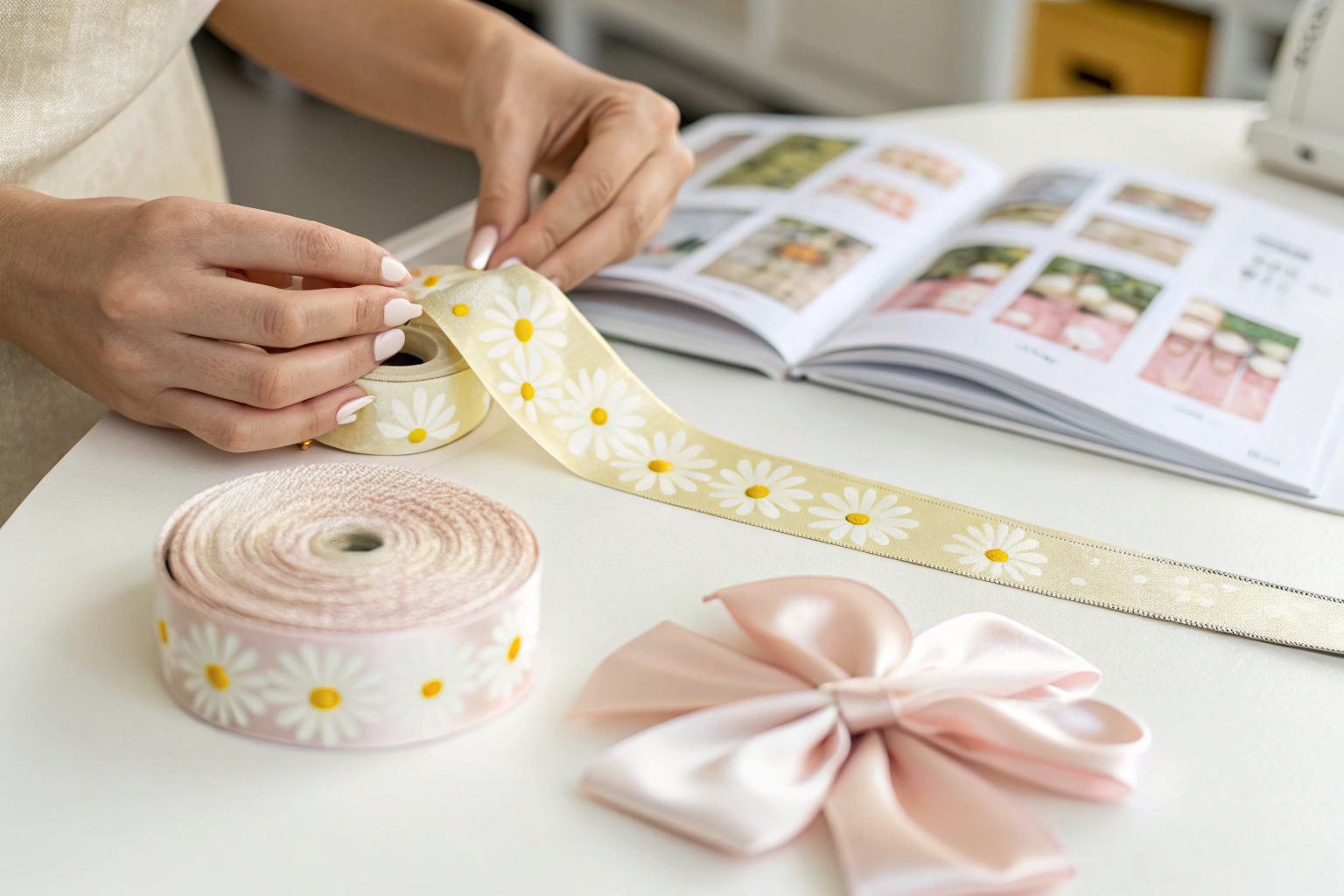
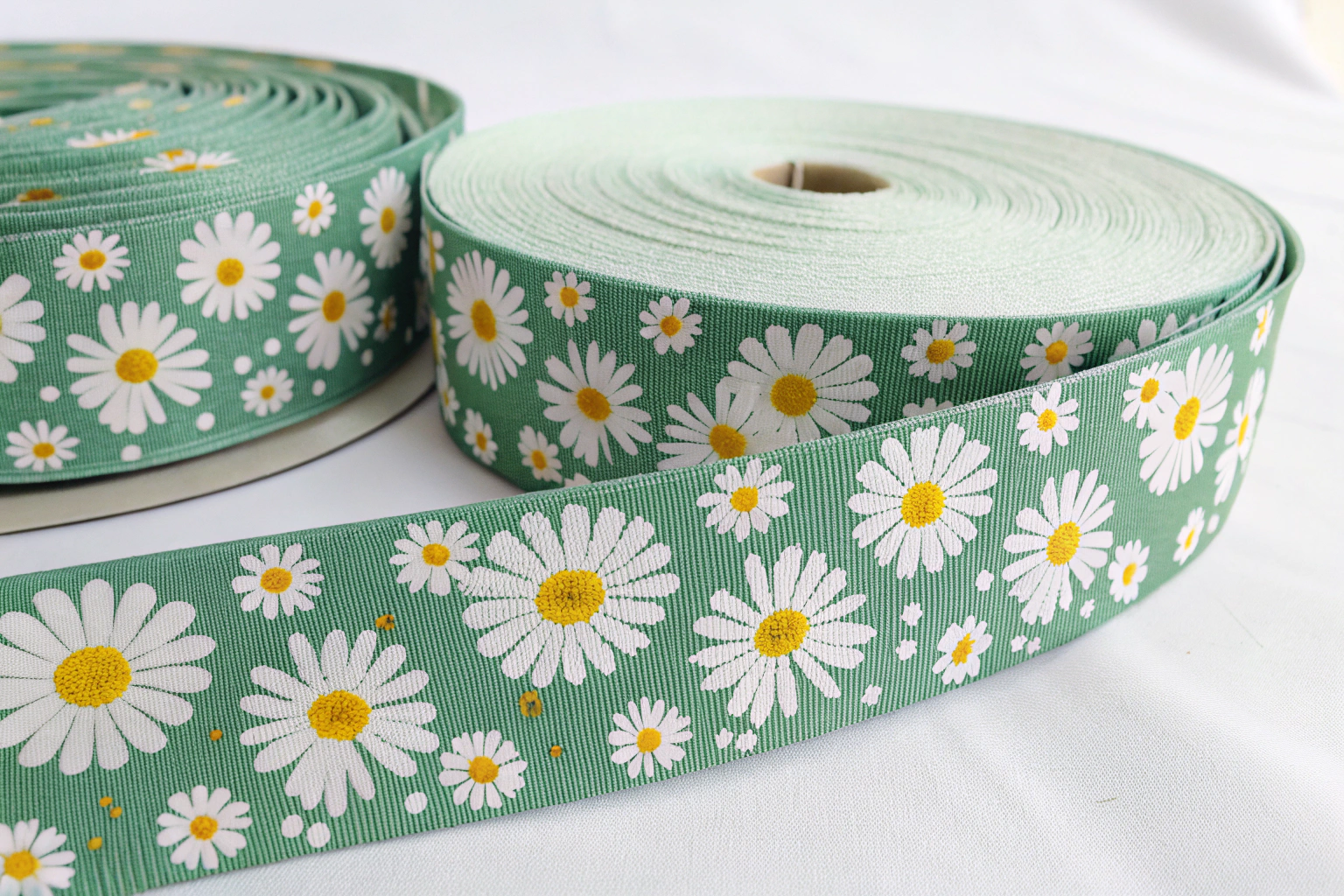
You find the perfect grosgrain ribbon texture on a supplier’s website. You envision it printed with your signature tiny daisy pattern on a soft buttercream background. You email the factory, excited to launch your own line of hair bows. The reply comes back: "MOQ 10,000 meters per design." Your stomach sinks. You are a small boutique. You need 500 meters to test the market, not 10,000 meters to fill a warehouse. The conversation feels dead on arrival because the factory only speaks the language of massive volume.
The minimum order for custom printed ribbon for hair bows in our factory starts at 500 meters per design and colorway for standard width grosgrain or satin ribbon. This lower threshold is possible because we use digital textile printing technology with a short setup path, rather than traditional rotary screen printing that requires expensive cylinder engraving and huge dye vat preparation.
You do not need to buy a lifetime supply of ribbon just to launch a single seasonal collection. The technology has changed, and the smart factories have changed with it. I want to explain exactly how we structure low minimums without killing your unit cost, what hidden charges disappear with digital printing, and how you can mix multiple designs within a single production batch to test different patterns simultaneously.
Why Do Traditional Factories Set Massive Ribbon Printing Minimums?
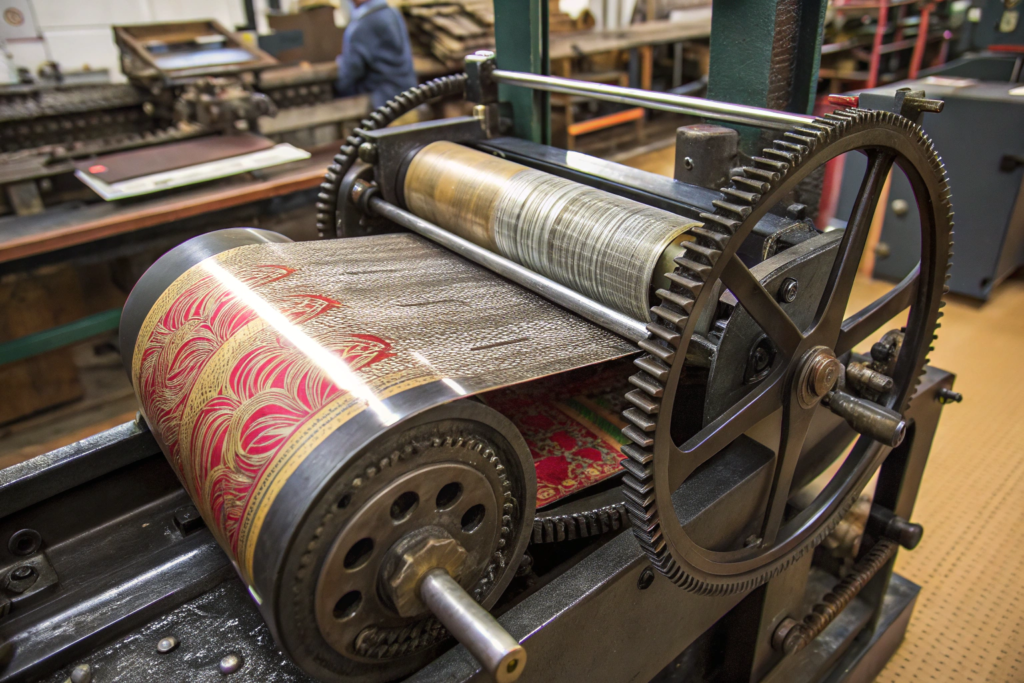
Old-school ribbon printing relies on a technique called rotary screen printing. A metal cylinder engraved with your pattern spins at high speed, pressing dye through a mesh onto the ribbon fabric. This machine is a beast. It punches out 50 meters per minute, which sounds great until you realize the setup is the problem.
Traditional factories set massive minimums because engraving a single rotary screen cylinder costs between $300 and $600, and cleaning the industrial dye bath between color changes wastes hundreds of liters of water and kilos of pigment. The factory needs to run at least 5,000 meters just to recover the setup cost and chemical waste, making anything smaller a direct financial loss.
I visited a legacy mill in Jiangsu that refused to touch an order under 3,000 meters. The owner walked me to the screen storage room, and it was stacked floor to ceiling with heavy metal cylinders. Every single one of those cylinders cost him $450 to engrave. He physically could not accept small orders because the cost of stopping his machine, swapping the cylinder, and flushing the color lines would eat his entire month’s margin on hair bows and ribbon accessories.
What chemicals get wasted during the color change process?
A rotary screen press uses a thick paste dye that sits in an open trough. When you switch from deep navy blue to soft buttercream yellow, the operator must scrub the trough, the pump, and the screen mesh manually with water and solvents. Any remaining blue pigment contaminates the yellow batch, turning it muddy green. The waste water from this cleaning process has to be treated chemically before it leaves the factory drain. For a small hair clip ribbon of 200 meters, the cleaning cost exceeds the value of the ribbon itself, which is why legacy mills keep their MOQs sky-high.
How does cylinder engraving cost create an invisible barrier?
The cylinder is a solid steel roller that a laser etches with your daisy pattern permanently. You cannot erase it and re-engrave a new design. Once you pay for it, you own it, but it is locked to that single design. If your floral pattern flops in the market, the cylinder becomes a paperweight. This fixed asset is why traditional accessories suppliers hesitate to onboard new brands testing multiple designs.
How Does Digital Printing Enable a 500-Meter Starter Order?
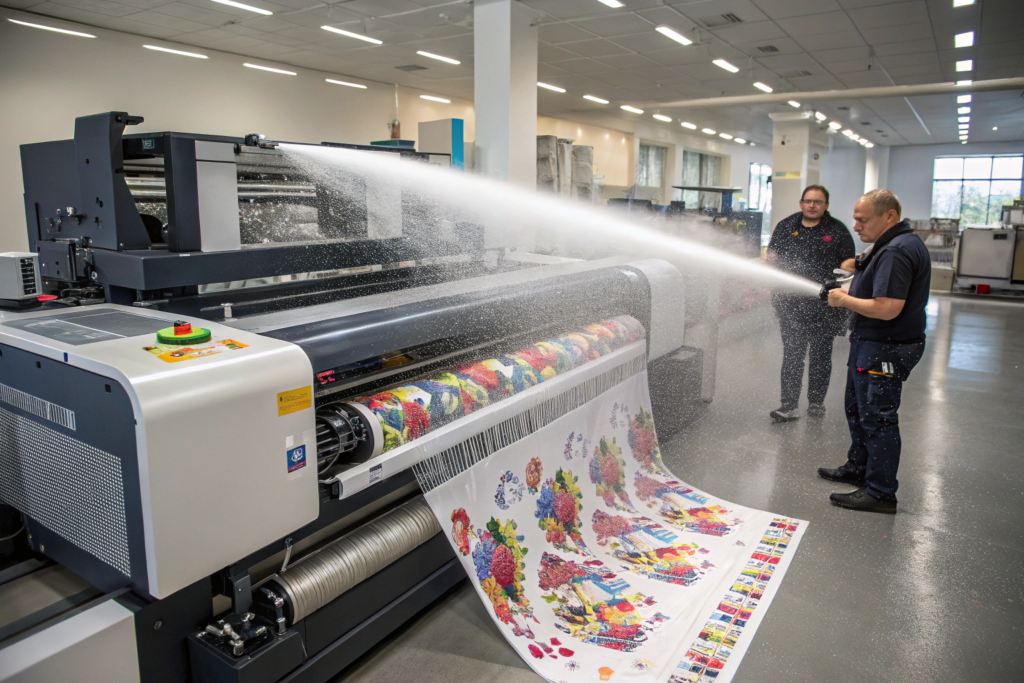
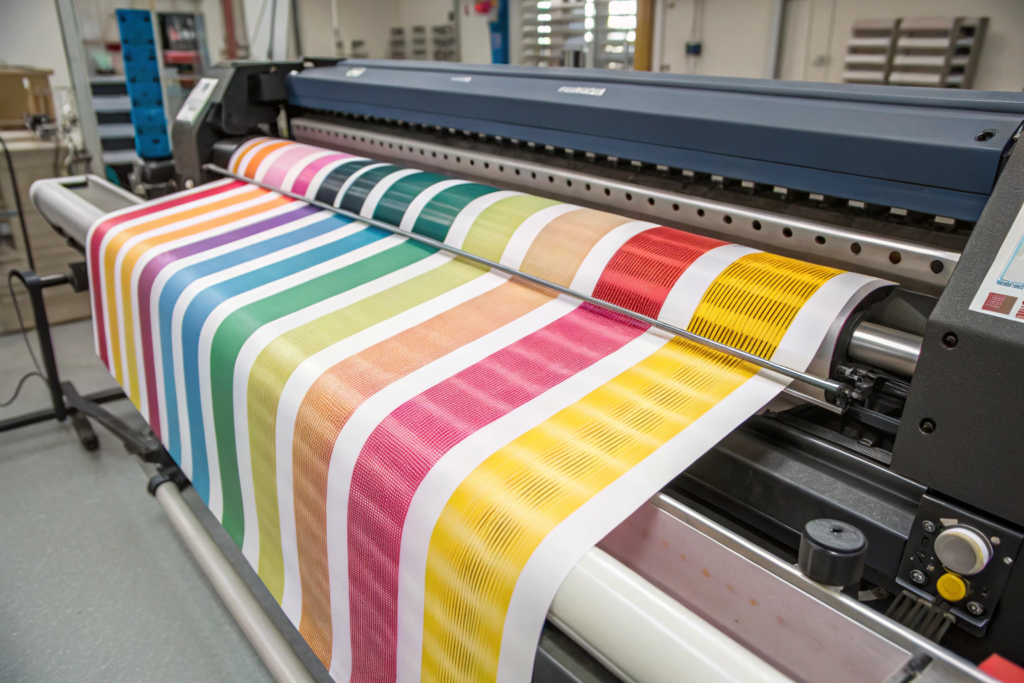
The game-changer arrived about six years ago with the maturation of high-speed digital textile printers. These machines work like a giant inkjet printer, spraying microscopic droplets of pigment directly onto the ribbon surface without any physical contact. There is no cylinder. There is no dye trough.
Digital printing enables a 500-meter starter order by eliminating the physical screen cylinder and the chemical wash-down entirely. The printer software switches designs with a mouse click, allowing a 15-minute changeover between designs. The pigment is applied precisely where needed, so color contamination does not exist, which makes short runs profitable instead of disastrous.
We invested heavily in this digital capacity specifically to serve the boutique and small brand market in America and Europe. A digital printer head jets ink measured in picoliters onto the hair bands and ribbon fabric. When your 500-meter daisy ribbon finishes, we load the next digital file for the polka dot ribbon, wipe the printhead gently with a lint-free cloth, and press start. No water. No solvent flush. Just a file switch.
What is the actual ink cost comparison for short runs?
Digital pigment ink costs roughly 20% more per liter than traditional rotary paste dye. For a 500-meter run, this ink premium is dwarfed by the zero-dollar setup cost. Your landed cost per meter for 500 meters digitally printed is roughly $1.20 compared to $0.80 for 10,000 meters rotary printed, but you avoid spending $3,000 on 9,500 meters of dead inventory. The math works. We break even on digital at around 1,200 meters, and below that, digital is the only rational choice for custom accessories.
Can digital printing match the wash-fastness of screen printing?
Early digital printing washed out after five cycles. The 2026 generation of pigment inks we use is fundamentally different. The ink chemistry includes a polymer binder that crosslinks with the polyester or cotton fiber under heat curing at 160 degrees Celsius. We test every ribbon batch by washing a sample bow ten times in a standard home machine with warm water. The color must retain a grey scale rating of 4 or higher against the original swatch for your gloves and bows to ship.
What Artwork Files Do You Need for a Smooth Design Submission?
The ribbon looks beautiful in your Canva mockup. But a Canva file is a 72 DPI RGB image on a screen. A ribbon printing machine needs a very different language. Sending the wrong file type causes the factory to email you back with "artwork not usable," and your production timeline stretches by a week while you scramble.
For a smooth design submission, you need to provide a vector file saved as an Adobe Illustrator .ai or .eps format, with all text converted to outlines and colors specified as Pantone TCX codes. The file must be at a 1:1 scale or 50% scale, with a transparent background and a clear indication of the repeat length in millimeters for continuous patterns.
A raster file, a JPEG or PNG at 300 DPI, works only if the design is a non-repeating placement print or a photographic image. For a repeating daisy pattern that seamlessly tiles along a 25mm grosgrain, the vector file is non-negotiable because the edges must align mathematically.
Why are Pantone TCX codes critical for textile matching?
Your screen glows blue light. The ribbon reflects light. A "soft pink" on a Macbook screen can print as peach, salmon, or beige depending on the color profile. We demand Pantone TCX codes because those swatches are physical fabric chips dyed on actual cotton. Our print technician holds the physical Pantone chip against the digitally printed strike-off sample under a standard D65 daylight lamp. If they do not match, we adjust the ink curve before the bulk run touches fabric belts.
What is the repeat distance and why does it matter?
The repeat distance is the length of one complete pattern cycle before the daisy pattern starts again. If you specify a 150mm repeat, the daisy chain appears exactly every 15 centimeters along the ribbon. We need this number to set the step motor on the printer. If you do not specify it, we standardize to a 100mm repeat, which might cut your daisy in half at the seam of the hair bow. A clean repeat makes the ribbon look professional.
Can You Mix Multiple Ribbon Widths and Colors in One Batch?
A small brand launching a collection rarely needs 500 meters of a single color. You need 150 meters of daisy on pink, 150 meters of daisy on blue, and 200 meters of a coordinating stripe. The old-school factory would treat these as three separate MOQs, leaving you with a bill for 1,500 meters.
Yes, you can mix multiple ribbon widths and colors within a single 500-meter batch as long as the base material is the same polyester or cotton quality. We run them sequentially on the digital printer, treating each colorway as a separate print run with no setup charge. The 500-meter minimum applies to the total batch, not per individual color.
This mixing capability is the single biggest unlock for boutique owners. You can test three colorways with your audience, see which sells fastest on Etsy or in your online store, and reorder only the winner without sitting on 350 meters of dusty loser ribbon.
Are there upcharges for switching ink colors between designs?
No. The digital printer head holds eight ink cartridges, cyan, magenta, yellow, black, plus light cyan, light magenta, grey, and an orange gamut extender. Every color your design needs is mixed on the fly from these base cartridges. Swapping from a blue colorway to a pink colorway simply changes the recipe in the software. The machine does not stop. You pay the same per-meter price for each color within the batch for your straw hats and ribbon trim projects.
What if I need grosgrain and satin in the same order?
The base substrate change is real. Grosgrain has a ribbed texture that absorbs ink differently from smooth satin. We treat these as two sub-batches. If your total order is 500 meters, you can split 250 meters of grosgrain and 250 meters of satin. We do a quick printhead height adjustment, which takes ten minutes, not a full chemical wash. This flexibility lets you create a full hair accessory collection with varied textures under one small order.
Conclusion
The era of being locked out of custom ribbon because you are not a mass-market giant is over. Digital textile printing has democratized access. You can now order 500 meters of bespoke printed ribbon for your hair bows, mix colors, combine widths, and test the market without bankrupting your inventory budget. The key is finding a factory that has invested in the modern printer heads and the Pantone library, and one that speaks the language of vectors and repeats.
Our facility in Zhejiang runs these digital printers daily for small and medium brands across North America and Europe. We understand the economics of a starter brand and will never pressure you into ordering a 10,000-meter bulk roll just to hit an arbitrary factory quota. We want your ribbon order to be the start of a long partnership.
If you have a daisy, a stripe, or a logo you want to see on a physical satin or grosgrain ribbon, now is the time to get a strike-off sample. Reach out to our Business Director, Elaine. She will explain the vector file specs, quote your 500-meter starter batch, and send you a physical color proof within days. Write to her at elaine@fumaoclothing.com. Let’s put your signature print on a ribbon that ties up your brand perfectly.