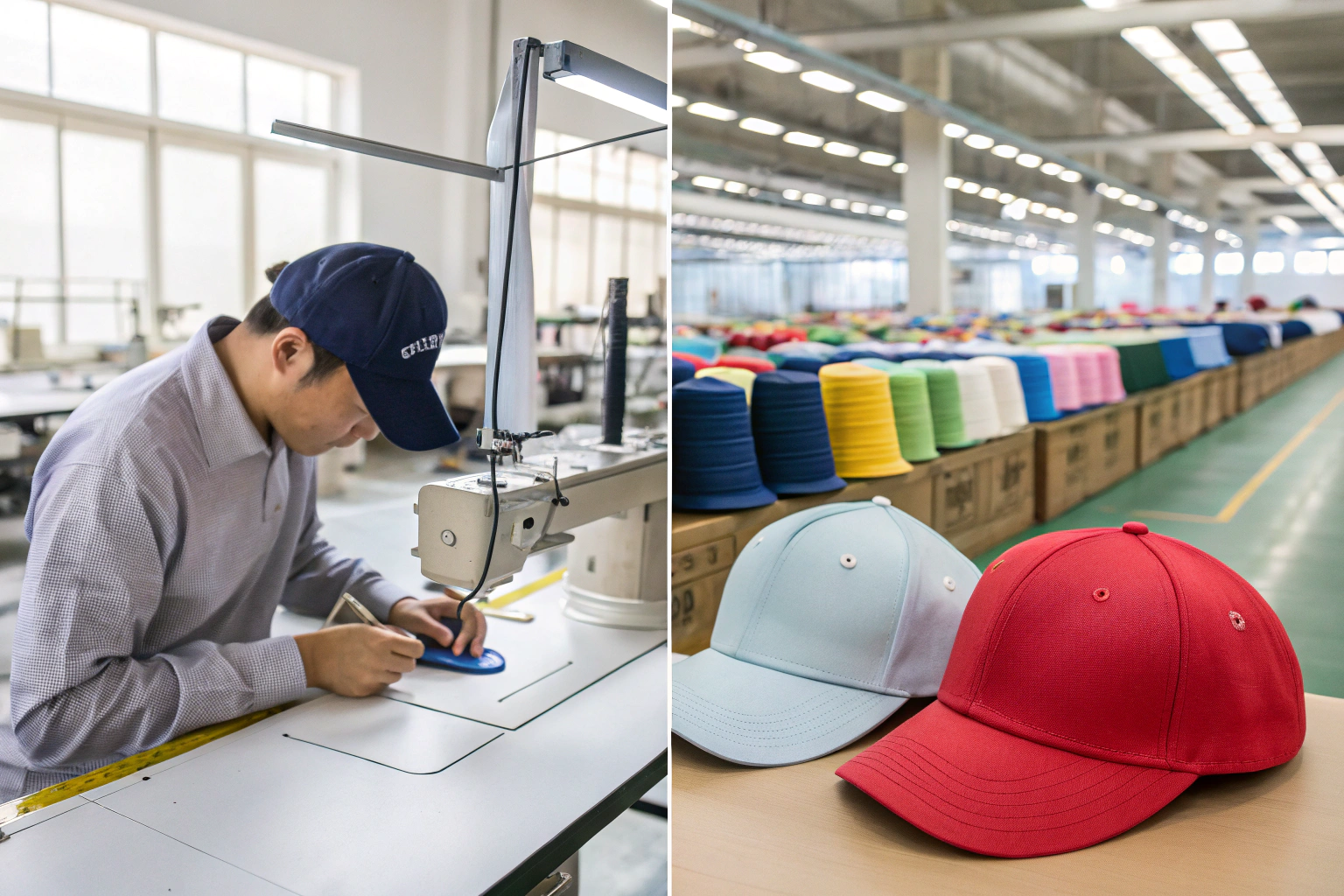
You find a factory that stitches a perfect structured cap with a stiff, high crown. You order 2,000 pieces, and they arrive looking crisp. Then you ask them to make a relaxed, unstructured dad cap for the same brand, and they send back a sample that looks like a rigid box sitting awkwardly on the model’s head. The factory simply does not understand how to switch between the two constructions. You now face the nightmare of splitting your order across two separate vendors, doubling your logistics work volume and risking color mismatches between your cap styles.
Yes, we produce both flat unstructured caps and firm structured caps on a single integrated production line in our Zhejiang factory. The key lies in our interchangeable buckram press for the front panels, our modular crown seam-taping stations, and a team of sewers cross-trained to pivot between the relaxed drape of a dad cap and the architectural stiffness of a snapback within the same shift.
You should not need two separate supply chains for two silhouettes of the same product category. A baseball cap is a baseball cap at its core, a crown, a visor, and a closure. The difference between a flat unstructured cap and a high-profile structured cap lives in the internal materials and the seam engineering, not in a completely separate factory. I want to walk you through exactly how we flip the line from one style to the other, what invisible components create the structure, and why our quality control team checks stitch tension differently for each silhouette.
What Internal Components Make a Cap Structured Versus Unstructured?
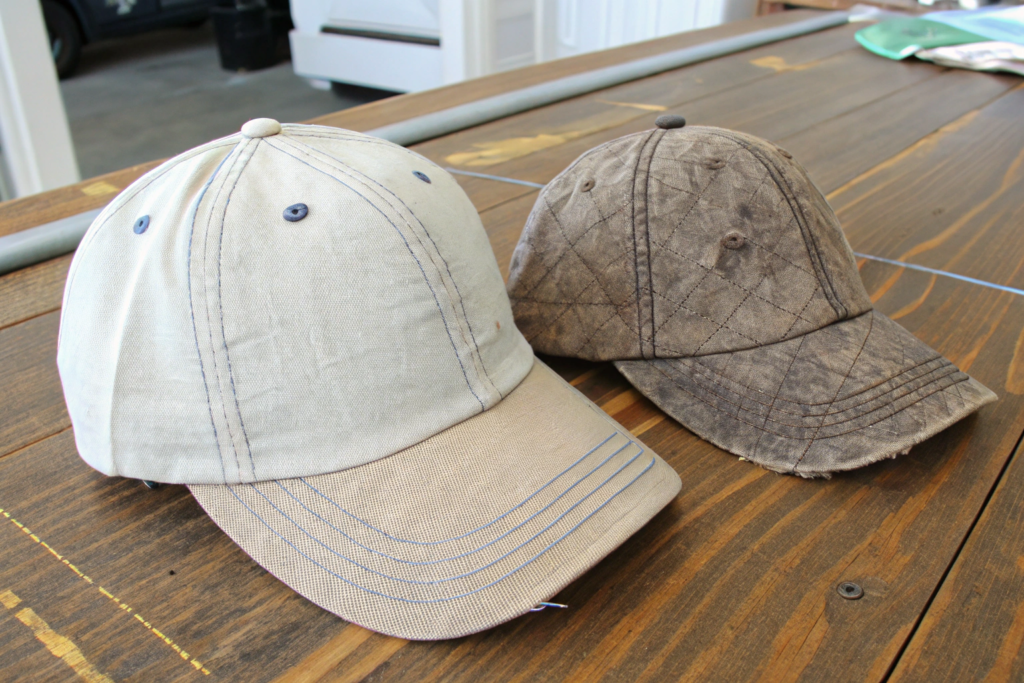
The visible fabric is only half the story. A man on the street sees a navy cotton cap. The factory floor sees a completely different animal depending on what lives inside the front two crown panels. An unstructured cap feels like a well-worn t-shirt on your head. A structured cap stands at attention even when it sits alone on a shelf.
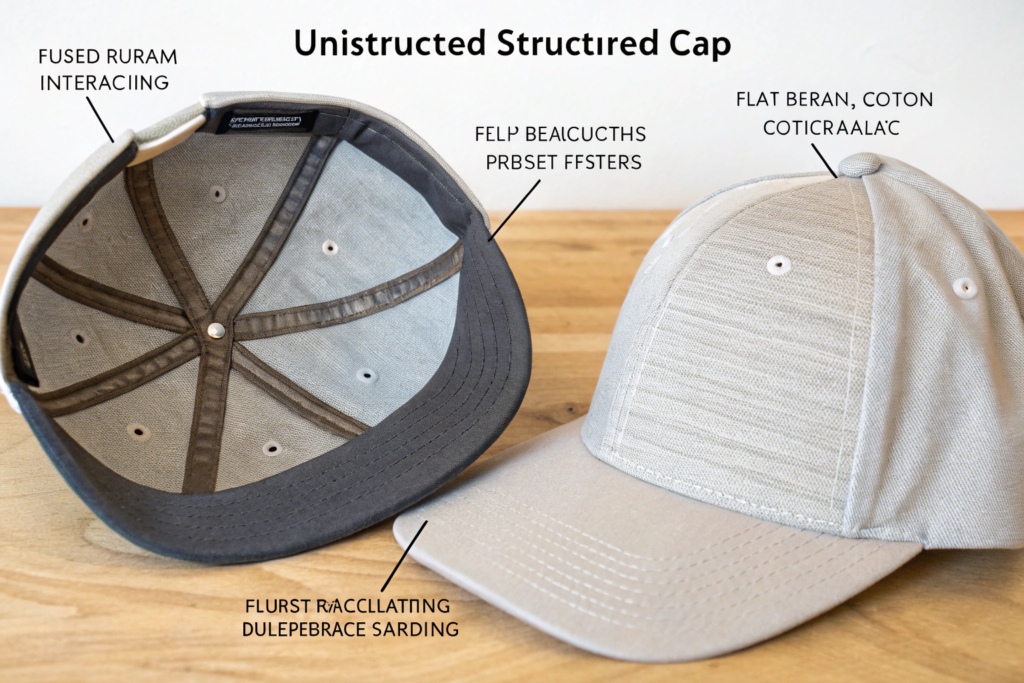
The component that makes a cap structured is a fused buckram interfacing, a stiff, woven cotton or polyester fabric impregnated with a heat-activated resin, that gets pressed flat onto the back of the front crown panels. An unstructured cap skips the buckram entirely and relies only on a lightweight, flexible polyester mesh backing or no backing at all, letting the fabric mold naturally to the head shape.
We stock five different grades of buckram in our raw material library. A soft buckram with a light resin coating gives a gentle shape retention perfect for a women’s fashion cap. A heavy, stiff buckram with a thick resin coat creates that sharp, vertical front that streetwear brands demand for their logo embroidery on baseball caps. The press that fuses this buckram to the fabric runs at 140 degrees Celsius and applies three bars of even pressure. We switch out a soft buckram sheet for a stiff one in under two minutes.
How does a buckram press work exactly?
The operator lays the cut fabric panel face down on the lower platen. They lay the buckram sheet on top, resin-side touching the fabric back. They close the heated upper platen down with pneumatic pressure. The heat activates the resin, melting it slightly into the weave of the outer cotton twill. The fabric and the buckram become one fused laminate. For a 3,000-piece run of custom hats, we dedicate one press operator solely to this fusing station, feeding panels to the four sewing lines downstream.
What replaces buckram in a true unstructured dad cap?
Nothing rigid. We use a soft, featherweight 50 GSM non-woven interfacing that feels like tissue paper. Its only job is to give the seam a tiny bit of stability so the panel does not stretch and distort during a 50-panel-an-hour sewing marathon. The soft interfacing adds zero height to the crown when the finished fabric caps sit in a shipping carton, they collapse perfectly flat, which saves 30% on freight volume compared to the rigid boxes needed for structured crowns.
Can Your Sewing Line Switch Profiles in a Single Shift?
A rigid structured cap requires a different stitch tension, a different needle size, and a different finger feel from the sewer compared to a soft cap. A sewer who has been yanking stiff buckram under a needle for four hours will instinctively pull too hard on a soft, unstructured panel and pucker the seam. The muscle memory fights the material.
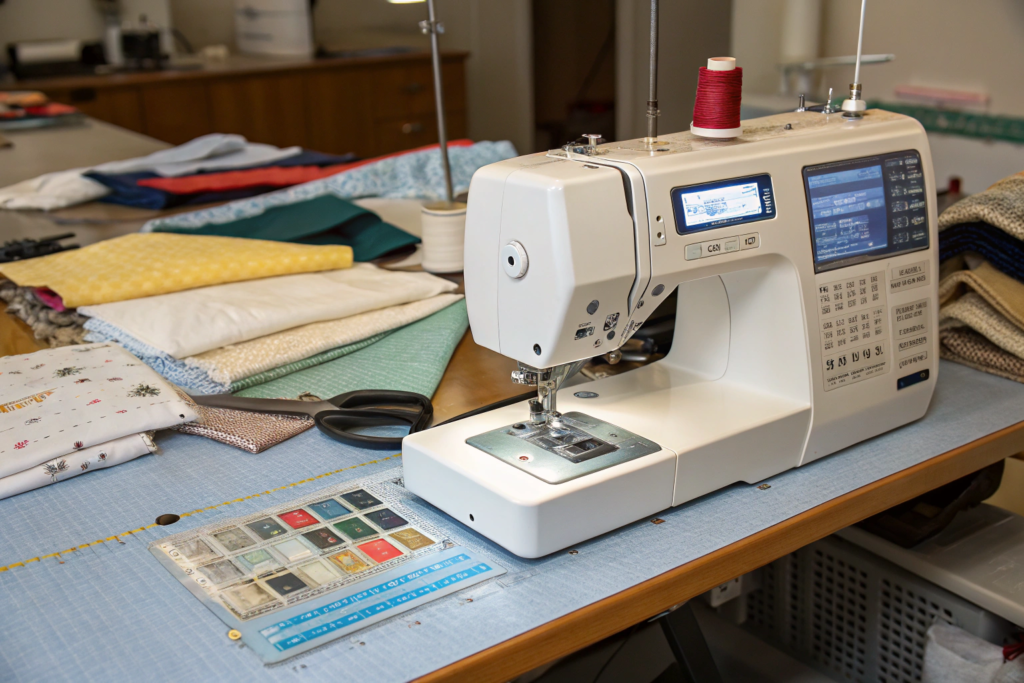
Our sewing line switches profiles in a single shift by programming our electronic feed machines with two preset parameter packages. Profile A sets a lower top tension and a slower feed dog speed for the unstructured cotton to prevent fabric slip and puckering. Profile B tightens the tension and increases the presser foot pressure to drive the heavy buckram-fused panels through the needle without skipped stitches.
We do not ask the sewer to guess. They touch a button on the digital control panel. The machine recalibrates. They swap the needle from a size 10 ballpoint for the soft cotton to a size 14 sharp for the stiff buckram-fused twill. This needle swap prevents broken tips and bloody fingertips.
What stitch type difference matters most between the two profiles?
The topstitch on the visor brim is the truth-teller. For a structured cap, we use a 4mm double-needle chainstitch that sits bold and proud, acting like a visual frame. For an unstructured cap, we switch to a 2.5mm single-needle edge stitch that lies flat and subtle, blending into the relaxed vibe. We have this detail documented in our production manual for each client’s baseball caps and summer hats, ensuring consistency between repeat orders.
How does visor insertion change between the two cap types?
A structured visor contains a rigid polyethylene board stitched inside the fabric shell. This board requires a specific pre-curved die-cut shape and a specialized binding machine to sew the curved edge smoothly without wrinkles. An unstructured dad cap visor often uses a thinner, flexible board that we replace with a fusible foam layer, soft enough to roll up. We have two visor insertion stations positioned side-by-side. One station does rigid curve binding. The other does soft flat fusing. Materials feed to each from clearly labeled racks.
How to Ensure Consistent Embroidery Quality on Soft Versus Firm Panels?
Embroidery on a firm, flat structured panel is easy mode. The fabric sits still like a tabletop as the needle punches 8,000 stitches of dense logo coverage. Embroidery on a soft, unstructured panel is a high-risk game. The fabric squishes and shifts under the needle pressure, causing puckering where the cotton gathers like a scar around the dense lettering.
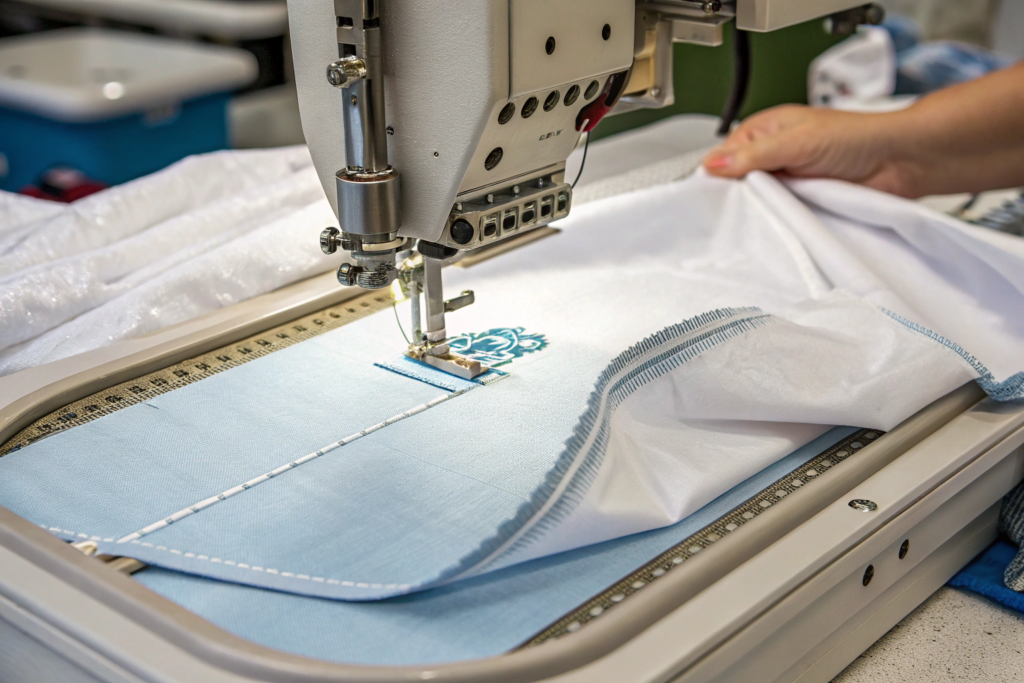
We ensure consistent embroidery quality by switching to a water-soluble topping film and a heavier cutaway backing stabilizer for soft unstructured panels. The topping film creates a temporary hard surface that holds the cotton flat during the stitch punching, preventing the needle from dragging the fabric down into the throat plate.
We dissolve the topping film after embroidery by spraying a fine mist of warm water. The fabric relaxes back to its natural soft state, but the stitches sit clean and flat. For a structured panel, we skip the topping film and use a lighter tear-away stabilizer since the buckram already provides the solid stitching base, saving raw material time.
What stitch density adjustments prevent the dreaded "puckered logo"?
A structured panel accepts dense lettering at 0.4mm stitch spacing. A soft panel puckers at anything tighter than 0.55mm spacing. Our digitizer creates two separate embroidery files for the same logo. The "structured file" runs a dense satin stitch at 0.4mm. The "unstructured file" runs an open tatami fill at 0.55mm, reducing the total stitch count and thus the needle penetration trauma. We keep both files on our server, clearly named by accessories supplier standards.
How do we test embroidery durability on a soft, washable cap?
The consumer will throw a dad cap in the washing machine inside-out. We simulate this ten times before releasing the shipment. A lab washing machine tumbles the cap for ten cycles. The embroidery must show zero thread breaks and zero fabric distortion. If the soft panel puckers after wash number seven, we increase the backing stabilizer weight by one grade and re-test. This cycle repeats until the custom caps, belts, and hats pass our strict durability sheets.
What Quality Control Gates Catch Defects Unique to Each Cap Style?
A structured cap fails when the buckram wrinkles or the crown height measures short. An unstructured cap fails when the fabric grain distorts or the soft crown collapses into a shapeless blob. You cannot inspect these two products with the same checklist. We use a split QC gate system, one lane for structured, one lane for unstructured, both feeding into a final common packing station.
Our dedicated QC gates catch style-specific defects by using a purpose-built measurement jig for each profile. The structured jig checks crown height, seam symmetry, and buckram smoothness. The unstructured jig checks drape coefficient, seam puckering index, and visor flatness roll. Each inspector physically places the cap on the correct form before signing the approval ticket.
The structured cap form is a hard plastic dome that mimics a head shape but pushes outward with calibrated resistance. If the buckram crinkles during the pulling-on process, the inspector hears the crackle and rejects the piece instantly. The unstructured cap drapes over a soft fabric mannequin head with no internal resistance.
What is the crown height tolerance for a high-profile structured cap?
The customer expects a sharp, 11-centimeter vertical front for a snapback. A deviation of even 0.5 centimeters makes the cap look sloppy. We set the QC go-no go gauge at exactly 11 centimeters, with a 0.3 centimeter tolerance. The inspector slides the cap front into the gauge channel. If it scrapes below 10.7 centimeters or bulges above 11.3 centimeters, it fails.
How do we prevent the unstructured cap seam from twisting the grain?
Soft, flat caps are cut from lightweight cotton twill that has a directional grain. If a sewer pulls the panel slightly off-axis during assembly, the finished cap twists to the left on the wearer’s head. Our QC inspector for unstructured wears a white cotton glove and runs their finger straight down the center seam. They check the grain line with a clear plastic protractor grid. The seam must run perfectly perpendicular to the visor within a one-degree tolerance. This tiny check prevents the "crooked cap" return from your customer’s customer.
Conclusion
Running flat and structured baseball caps on one production line is not a compromise. It is an operational advantage when the factory has invested in modular stations, cross-trained sewers, and dual-spec QC gauges. The core assets, the sewing machines, the embroidery heads, the visor binding equipment, serve both silhouettes with smart parameter adjustments, not total line teardowns.
Our factory in Zhejiang handles both profiles daily for brands across America and Europe. We stock five grades of buckram, four types of interfacing, and two visor board densities. Your structured logo cap and your relaxed dad cap ship in the same container, color-matched perfectly across styles, because both came from the same quality system under the same supervision.
If you are planning a cap collection that mixes structured snapbacks with soft unstructured dad caps, do not split the order across two unknown factories. Reach out to our Business Director, Elaine. She will send you physical samples of both profiles from the same line, so you can feel the construction consistency yourself. Write to her at elaine@fumaoclothing.com. Let’s build a cap program that covers every head shape and every style preference with no sourcing chaos.