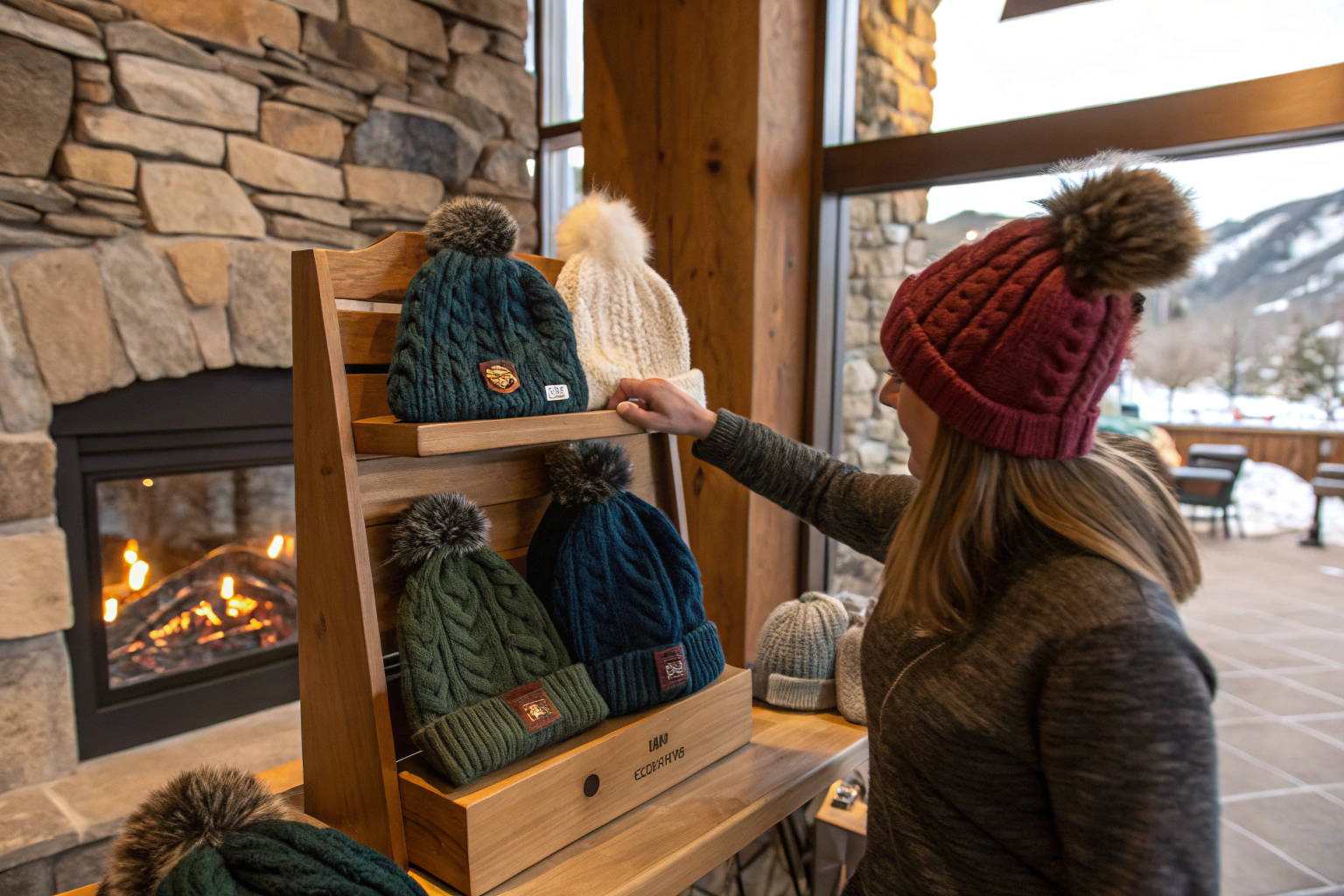
I walked through a ski resort gift shop in Vail last December, watching tourists browse the accessory displays. The shop manager, a friend of a client, told me something that stuck. She said her beanie wall was her highest-margin category in the entire store, more profitable per square foot than the branded outerwear or the souvenir mugs. But she also said she returned more unsold beanies at the end of the season than any other category because the styles she ordered in March had already fallen out of guest expectations by the time December arrived. The lesson was clear. Ski resort beanies are a fast-moving, emotionally driven purchase, and the trends shift just fast enough that guessing wrong costs real money. Getting the 2026 buy right means knowing which materials, textures, color stories, and branding techniques will make a cold guest reach for their wallet.
The 2026 beanie trends for ski resort gift shops are defined by five clear directions. Luxe natural fibers with tactile, substantial hand-feel in alpaca, merino, and cashmere blends. Chunky statement textures including oversized cable knits, ribbed structures, and bouclé yarns. Faux fur pom-poms in tonal and contrasting colors, which remain the single highest-velocity visual feature at retail. Sustainability storytelling through recycled fiber content and natural undyed wool shades. And subtle brand integration using leather patches, tonal embroidery, and metal logo hardware rather than loud printed logos that guests perceive as free swag rather than a premium purchase. I will break down each trend with specific material recommendations, color palettes, and style guidance so your 2026 beanie assortment sells through at full margin from first snow to spring slush.
Why Are Natural and Premium Blended Fibers Driving 2026 Beanie Sales?
The 2026 ski resort customer is not buying a beanie to keep their head warm. They have beanies at home that do that. They are buying a beanie because it feels incredibly soft in their hand, because it looks beautiful with their ski jacket, and because wearing it reminds them of the resort experience long after they have returned to their everyday life. The fiber content of the beanie is the foundation of that emotional and tactile appeal. Generic acrylic beanies at a $20 price point still sell in volume, but the growth margin, the premium shelf positioning, and the brand halo all belong to natural and premium blended fibers.
Which Specific Wool and Alpaca Blends Command the Highest Retail Markup?
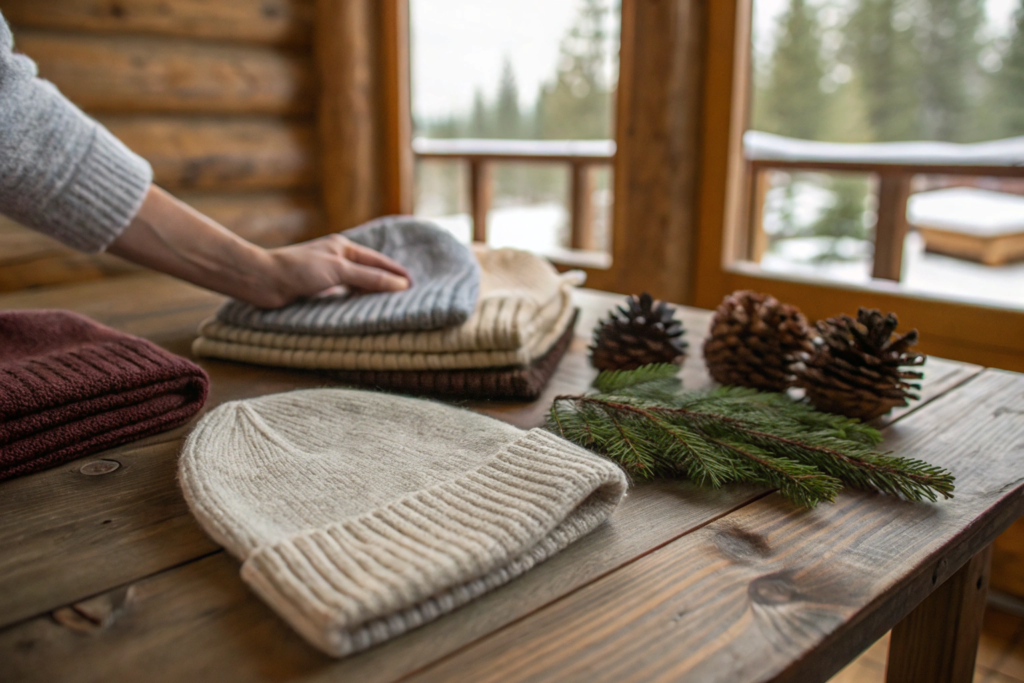
The fiber blends that generate the highest perceived value and the highest retail markups for ski resort gift shops in 2026 are those that combine tactile luxury with functional performance. A baby alpaca and merino wool blend, typically in an 80/20 or 70/30 ratio, is the premium standard. Baby alpaca provides an exceptionally soft, silky hand feel with a subtle natural sheen that photographs beautifully for the guest’s vacation social media posts. Merino wool adds elasticity and shape retention that pure alpaca lacks. A beanie made from this blend retails comfortably in the $45 to $75 range in a resort setting, with the higher end reserved for styles with additional features like a faux fur pom or a leather brand patch.
A cashmere and extra-fine merino blend, often in a 50/50 ratio, occupies the ultra-premium tier. The cashmere contributes unmatched softness and an immediate luxury hand feel that the guest recognizes the moment they pick the beanie up. The merino provides durability and helps the beanie maintain its shape after repeated wear. This blend retails in the $65 to $120 range at resort gift shops. The price point is aspirational, which is exactly what a resort gift shop needs. A guest on vacation is in a spending mindset. A $90 cashmere-blend beanie with a beautiful faux fur pom and a leather logo patch is an accessible luxury that the guest will wear for years and that will remind them of their trip every time.
Pure organic merino wool in a fine 19.5-micron gauge, certified by the Responsible Wool Standard, is the entry point for the natural fiber premium tier. It retails lower than the alpaca and cashmere blends, in the $35 to $55 range, and appeals to the sustainability-conscious guest who cares about fiber origin. The Responsible Wool Standard certification provides an independent, verifiable sustainability claim that the gift shop can display on a hangtag, adding credibility to the premium price.
How Do Recycled Polyester and Eco-Blends Fit the Resort Sustainability Narrative?
Sustainability is no longer a differentiator in ski resort retail. It is a baseline expectation among the demographic that books ski vacations. A beanie made from recycled polyester, typically sourced from post-consumer plastic bottles and spun into a soft, high-loft yarn, retails in the $25 to $45 range. This fiber choice appeals to the guest who wants an affordable, functional beanie. It carries a sustainability story that the gift shop can communicate through simple hangtag messaging, such as this beanie was made from six recycled bottles, but it does not carry the luxury hand-feel of a natural fiber.
The most compelling eco-blend for 2026 combines recycled polyester with a natural fiber, such as a 50% recycled polyester and 50% organic cotton blend, or a recycled polyester and wool blend. These blended yarns offer a better hand feel than pure recycled polyester, a more interesting heathered visual texture, and a sustainability story that combines recycled content with natural, renewable fiber content. The retail price point for these blends falls in the $30 to $50 range, a sweet spot for the guest who wants the sustainability credentials but is not ready to pay the premium for pure alpaca or cashmere.
Undyed and naturally colored wool is a niche but growing trend that resonates strongly in resort markets with an environmental ethos. Wool from specific sheep breeds produces natural shades of cream, grey, and brown that require no synthetic dye. A beanie in undyed wool with a simple, minimalist design and a hangtag explaining the natural color story retails at a premium, in the $40 to $60 range, because the product is genuinely unique and the story is authentic. Sustainability claims that are backed by verifiable certifications resonate far more than vague green marketing, and textile sustainability certifications provide a reference for which standards carry genuine weight with informed consumers.
What Textures and Knit Structures Are Replacing Plain Stockinette?
Texture is the visual and tactile hook that makes a guest stop at the beanie display and reach out to touch. In the 2026 season, the trend is decisively away from flat, plain stockinette stitch beanies, which read as basic and commodity-grade. The guest can buy a plain knit beanie at any discount store or airport kiosk. The ski resort gift shop must offer textures that look and feel special, justifying the premium price and the emotional purchase.
Why Are Chunky Cable Knits and Bouclé Yarns Trending?
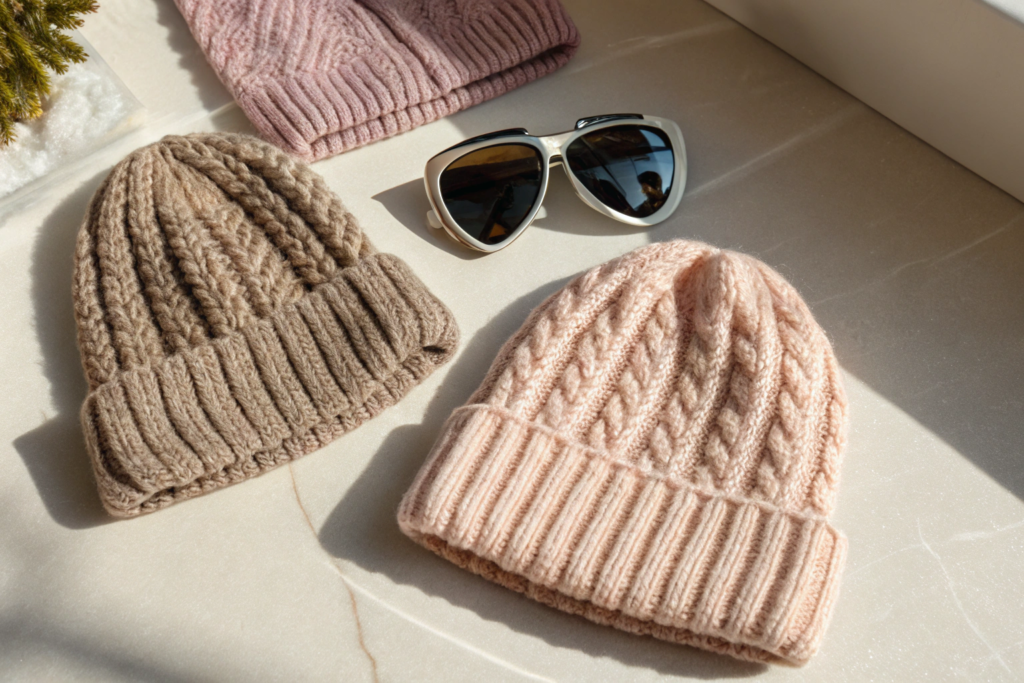
Chunky cable knits are the dominant texture story for 2026 resort beanies. A traditional Aran-style cable, scaled up in a chunky-gauge yarn, creates deep, shadow-catching ridges and twists that give the beanie a handcrafted, substantial appearance. The oversized cable reads as cozy, artisanal, and expensive, even when produced on modern knitting machines. The key to this trend is proportion. The cable must feel oversized relative to a standard beanie. A thin, timid cable on a fine-gauge beanie misses the trend. A bold, wide cable that wraps around the crown makes a statement.
Bouclé yarns are the second major texture trend. Bouclé is a yarn with a looped, curly surface that creates a soft, nubby, almost fleece-like fabric texture. A bouclé beanie has a cloud-like softness and a visually rich, irregular surface. It photographs beautifully and feels incredibly plush to the touch. Bouclé yarns in natural cream, soft pastel, and muted earth tones are particularly effective for the resort market because they evoke a sense of warmth, comfort, and après-ski luxury. The production consideration with bouclé is that the loopy surface can snag more easily than a smooth knit, so quality control on yarn twist and loop security is important.
A secondary but notable texture trend is the fine-ribbed beanie with a subtle metallic Lurex or shimmer thread twisted into the yarn. This adds a barely-there sparkle that catches the light on the slopes and transitions the beanie from a daytime ski accessory to an evening après-ski piece. The metallic effect must be subtle, a glint, not a glitter, to maintain the elevated resort aesthetic.
How Are Faux Fur Pom-Poms Evolving in Size, Color, and Attachment?
The faux fur pom-pom is no longer a trend. It is a category staple that drives a measurable increase in sell-through rate when executed well. The evolution for 2026 is in three directions. Larger, more dramatic pom sizes, tonal and monochromatic color palettes, and detachable pom designs for versatility.
The oversized pom, seven to ten centimeters in diameter in fluffy, long-pile faux fur, is the premium standard. It makes the beanie look more expensive, more playful, and more photogenic. A beanie with an oversized faux fur pom retails for a meaningful premium over the same beanie with no pom. The pom is the feature that justifies the gift shop price point in the guest’s mind. The color direction for 2026 favors tonal poms that match the beanie body color for a cohesive, monochromatic look, and natural fur tones such as cream, grey, and soft brown that complement a range of beanie colors. Bright, contrasting poms still sell, but the volume has shifted toward the tonal palette.
Detachable pom-poms, secured with a snap or an elastic loop and button system, allow the guest to remove the pom for washing or to change the look of the beanie. This feature adds a small increase in manufacturing cost but provides a meaningful selling point. The hangtag or the gift shop signage can highlight the removable pom for easy care and styling versatility. Market research into fashion accessory trends indicates that functional details that enhance product longevity, such as removable trims, are increasingly valued by consumers making discretionary accessory purchases.
What Color Palettes and Branding Techniques Define 2026 Resort Beanies?
Color and branding are the two primary means by which a resort gift shop beanie communicates its value and its connection to the resort experience. The guest is buying a souvenir, yes, but they want a beautiful souvenir that they will actually wear. The color must complement their ski wardrobe and their everyday winter wardrobe. The branding must feel elevated and intentional, not like a corporate giveaway.
Which Colors Are Replacing Traditional Bright Ski Hues for 2026?
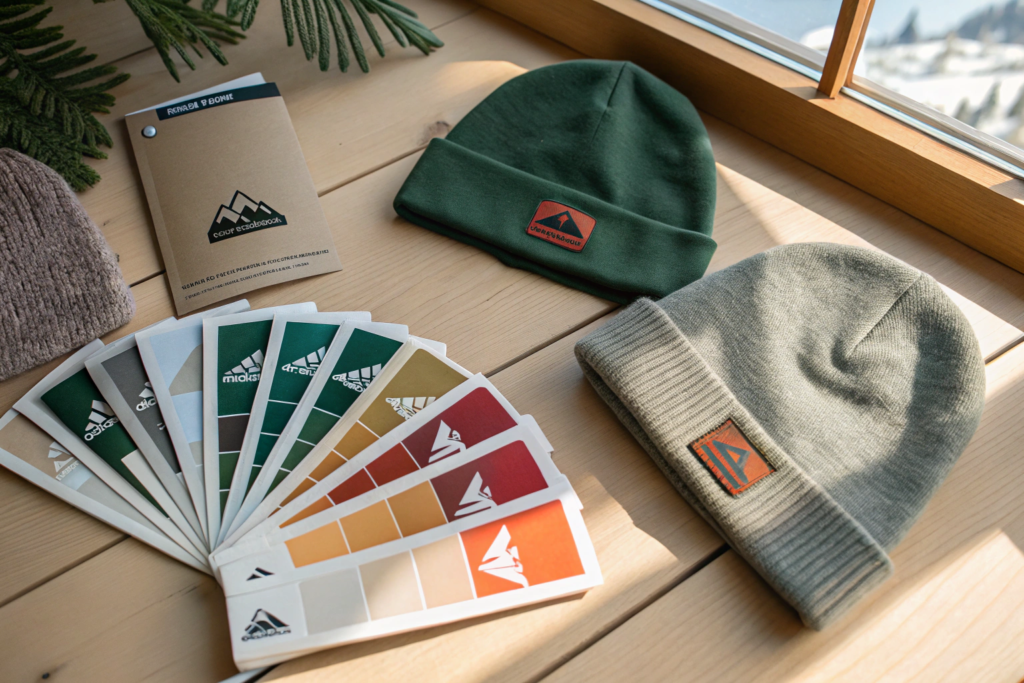
The 2026 ski resort color palette is shifting decisively away from the bright, saturated primaries and neon accents that dominated previous seasons. The new palette is grounded, warm, and inspired by the natural alpine environment. Warm cream and undyed natural white form the new neutral anchor. These shades look luxurious, pair with every ski jacket color, and photograph well against snow.
Heathered grey in light to medium charcoal tones is the most versatile color in the assortment. It sells to both men and women, it hides wear, and it carries a gender-neutral appeal that broadens the customer base. Deep forest green and spruce are the new navy. These rich, natural greens evoke alpine forests and feel fresh compared to the saturated navy blues that have saturated the market for years. Muted terracotta and warm rust are the accent colors of the season. They provide a pop of warmth against the white and grey of the winter landscape without the harshness of a bright orange or red.
Icy blue and soft lavender remain in the palette for the guest who wants a pastel option, but these shades are now executed in heathered, slightly dusty tones rather than clear, bright pastels. The overall effect is a palette that feels sophisticated, natural, and unisex, exactly what a premium resort gift shop needs to appeal to a broad, design-conscious guest demographic.
What Branding Methods Feel Premium Without Looking Promotional?
The branding technique on a resort beanie is what differentiates a cherished souvenir from a freebie. The 2026 premium branding methods are all variations on a theme of subtlety. A small, blind-debossed or foil-stamped leather patch, sewn onto the folded cuff, is the highest-perceived-value branding technique. The leather must be genuine, not faux leather or PU, and the logo treatment must be minimal. A small mountain icon, a resort initial, or a discreet wordmark in a blind deboss, meaning no color fill, is the premium execution. This reads as a quality brand detail, not an advertisement.
Tonal embroidery directly on the knit cuff is the second major branding technique for 2026. The logo is embroidered in a thread color that matches or is one shade lighter or darker than the beanie body color. The subtlety of the tonal execution makes the logo feel integrated into the design rather than stamped on top of it. A tonal embroidered logo reads as a premium garment detail, not a promotional imprint. This technique is particularly effective on heathered and marled yarns where the tonal thread blends with the visual texture.
Small metal logo hardware, such as a pewter-finished pin attached to the cuff, or a metal logo charm affixed to the hangtag that the customer keeps after purchase, are emerging as a 2026 branding accent. The metal hardware elevates the perceived value and provides a tangible brand reminder that lives beyond the beanie itself. The production cost is slightly higher, but the retail price premium that a metal logo detail commands more than compensates. At AceAccessory, our accessory branding development team works with resort clients to select the branding technique that aligns with their brand positioning, ensuring the finished product communicates luxury and place, not promotion.
How Should Gift Shops Structure Their Beanie Assortment for Maximum Sell-Through?
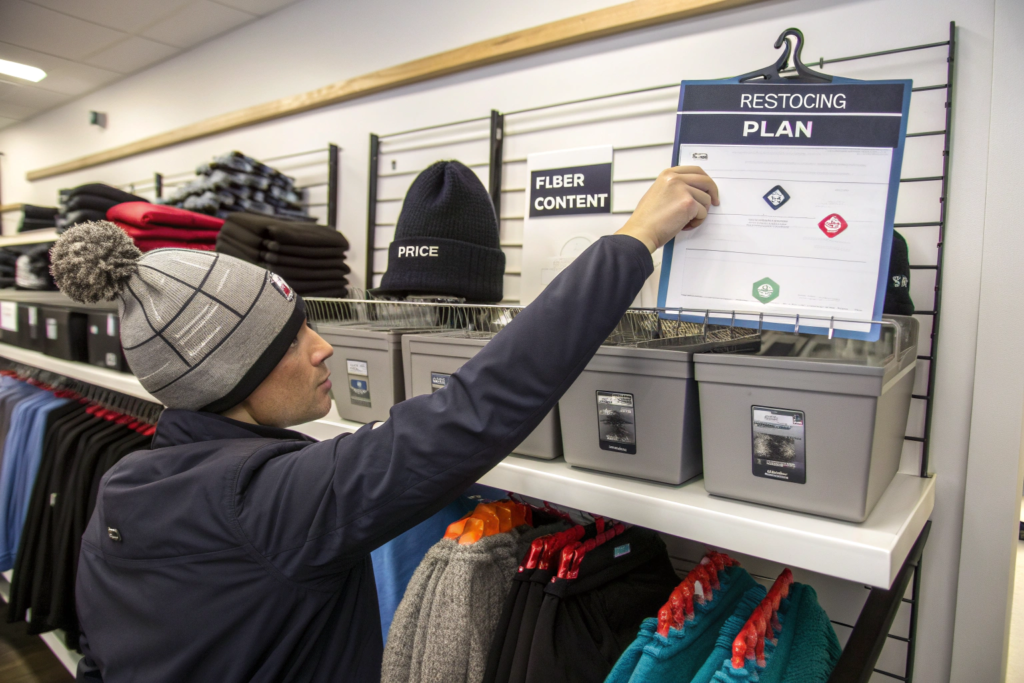
A beautiful beanie that is priced wrong, displayed poorly, or ordered in the wrong size run will not sell, regardless of how perfectly it aligns with the season’s trends. Structuring the beanie assortment for maximum sell-through requires intentional decisions about price architecture, size inclusivity, and fixture presentation. The resort gift shop buyer who treats these operational details as seriously as the trend research is the buyer who reports a clean, profitable season.
What Is the Right Good, Better, Best Price Architecture?
A three-tier price architecture ensures that the beanie category serves every guest who walks into the shop, from the budget-conscious teenager to the luxury-seeking couple on an anniversary trip. The Good tier, representing approximately 40% of the unit buy and priced at $25 to $35, consists of acrylic and recycled polyester blends in solid colors and simple textures. These are the volume drivers, the beanies that sell to families buying for multiple people, and the styles that move quickly during peak holiday traffic. The margin percentage is lower, but the unit volume generates category cash flow.
The Better tier, representing 40% of the unit buy and priced at $40 to $65, is the core assortment. Merino wool blends, heathered yarns, subtle textures, and tonal branding define this tier. These beanies appeal to the guest who wants a noticeable upgrade in quality and is willing to pay for it. The margin percentage is healthy, and the sell-through is reliable because the price is aspirational but not exclusionary.
The Best tier, representing 20% of the unit buy and priced at $70 to $120, consists of alpaca and cashmere blends, chunky cables, oversized faux fur poms, and premium branding details. These are the halo products that make the entire beanie wall look elevated. They may sell in lower unit volumes, but they generate the highest absolute margin dollars per unit sold, and they attract the guest who will post about the purchase on social media, generating free marketing for the resort and the shop.
How Should One-Size and Unisex Fits Be Adapted for Modern Demographics?
The traditional one-size knit beanie, designed to stretch and fit an average adult head, still represents the majority of the category. However, the modern resort guest demographic is diverse, and a single fit does not actually fit everyone equally well. Offering a slouchier, slightly roomier fit in selected styles accommodates guests with longer or thicker hair who find standard beanies too tight or who want the relaxed, casual silhouette that reads as current. This is not a separate SKU. It is a design choice within the standard size range that the factory can execute by adjusting the knit tension and the crown shaping.
Explicitly offering a small but meaningful number of SKUs in a large fit, perhaps labeled as "Roomier Fit" on the hangtag, captures the guest who has historically struggled to find a beanie that fits comfortably. This is both an inclusivity gesture and a commercial opportunity. A guest who has given up on finding a beanie that fits them, and who discovers one on your fixture, becomes a loyal customer for life.
The unisex design approach for resort beanies means offering colors and styles that are not coded as strictly masculine or feminine. Heathered greys, forest greens, natural creams, and muted earth tones in clean, classic knit structures appeal across gender. The gendered assumptions of past decades, blue for men, pink for women, are increasingly irrelevant to the resort guest. A unisex assortment simplifies inventory management, broadens the customer base for every SKU, and aligns with modern retail best practices. Industry guidance on retail inventory management reinforces the profitability benefits of a well-structured, right-sized assortment that minimizes end-of-season markdowns.
Conclusion
The 2026 beanie trends for ski resort gift shops represent a clear evolution toward tactile luxury, subtle branding, natural and recycled material stories, and grounded, alpine-inspired color palettes. Alpaca and merino blends, cashmere touches, chunky cable knits, oversized tonal faux fur poms, and blind-debossed leather logo patches are the specific style elements that will drive full-margin sell-through. The bright, promotional aesthetic of past seasons is being replaced by a sophisticated, unisex, sustainability-aware approach that treats the beanie as a premium accessory purchase, not just a souvenir.
Structuring the assortment into a Good, Better, Best price architecture ensures that the beanie category serves every guest demographic, from the volume-driven impulse buyer to the luxury seeker. Offering fit options that acknowledge the diversity of head sizes and hair types, and embracing a unisex design approach to color and style, aligns the category with modern guest expectations. The ski resort guest in 2026 is purchasing a beanie that will live in their winter wardrobe for years, and every time they wear it, they will remember the resort where they bought it. That emotional connection is what transforms a commodity accessory into a high-margin, repeat-purchase category.
If your resort gift shop is planning its 2026 beanie buy and you need a manufacturing partner who can translate these trend directions into a cohesive, retail-ready assortment at your specific price architecture, contact our Business Director Elaine at elaine@fumaoclothing.com. Send her your target price tiers, your branding guidelines, and any specific fiber or sustainability requirements. She can coordinate trend-aligned samples, provide pricing across your Good, Better, Best structure, and deliver a development calendar that ensures your 2026 beanies are on the shelf before the first snowflake falls.