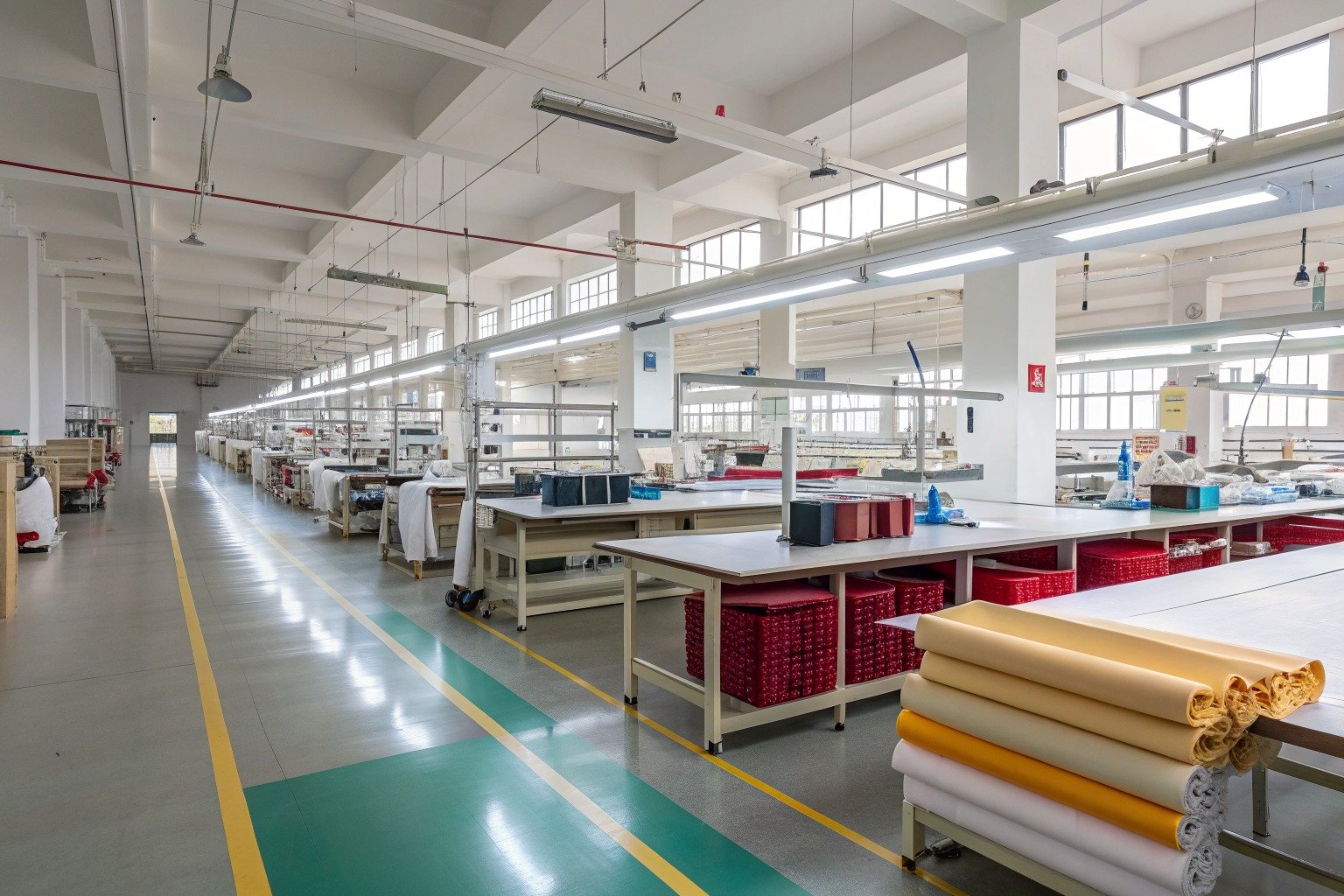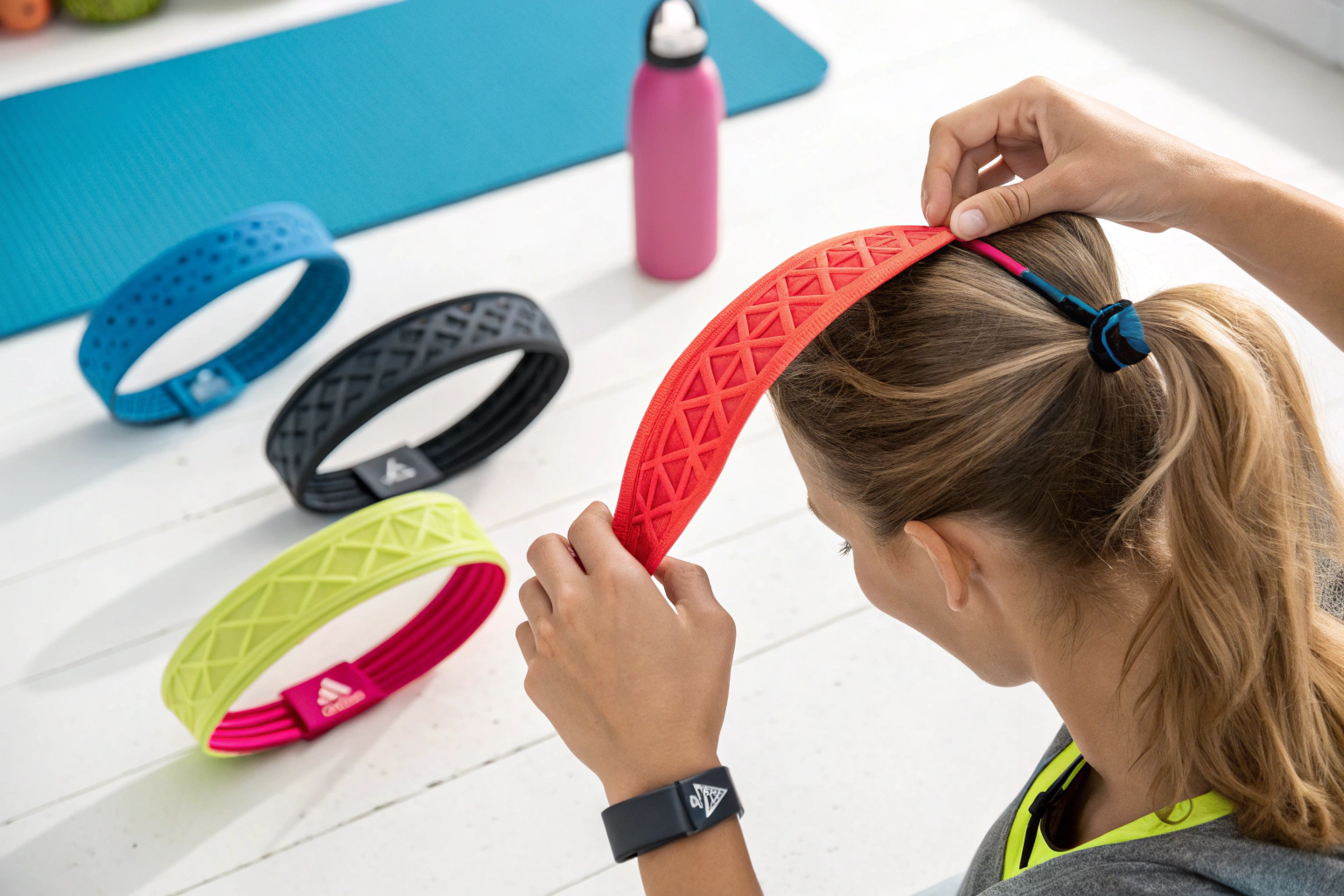
I had a conversation last year with a founder of a growing athleisure brand. She had built a loyal following around her performance leggings and sports bras, and her customers kept asking for hair ties that could survive their workouts. The thin elastic bands they were using snapped mid-burpee. The fabric-covered bands absorbed sweat and grew bacteria. She knew she needed a custom silicone solution, but she assumed silicone production meant huge molds, high minimum orders, and months of waiting. I showed her our development process for silicone hair bands, and her first custom samples arrived at her office in under three weeks. Today, her branded silicone hair bands are one of her top-three selling accessories, and she reorders quarterly.
Yes, AceAccessory can produce custom silicone hair bands for sports brands. We manufacture silicone hair bands in custom colors matched to your brand palette, with your logo or pattern debossed, embossed, or printed on the band surface. We offer custom formulations for grip texture, elasticity, and thickness, so your hair band performs exactly as your active customer needs it to. Our minimum order quantities for custom silicone bands are structured to accommodate both emerging sports brands testing their first accessory line and established brands ordering for nationwide retail distribution. I will explain the material options, the customization techniques, the performance standards, and the development timeline so you can make an informed decision about integrating custom silicone hair bands into your sports accessory collection.
What Types of Silicone Materials Are Used for Performance Hair Bands?
Not all silicone is the same, and sports brands in particular need to understand the difference between material grades. The silicone you find in a kitchen spatula is not the same as the silicone in a high-performance hair band that will be stretched hundreds of times, exposed to sweat and UV light, and expected to return to its original shape every time. The material formulation directly affects the band’s elasticity, grip, durability, and skin safety, and specifying the right formulation is the first decision in the development process.
What Is the Difference Between Solid Silicone and Liquid Silicone Rubber?
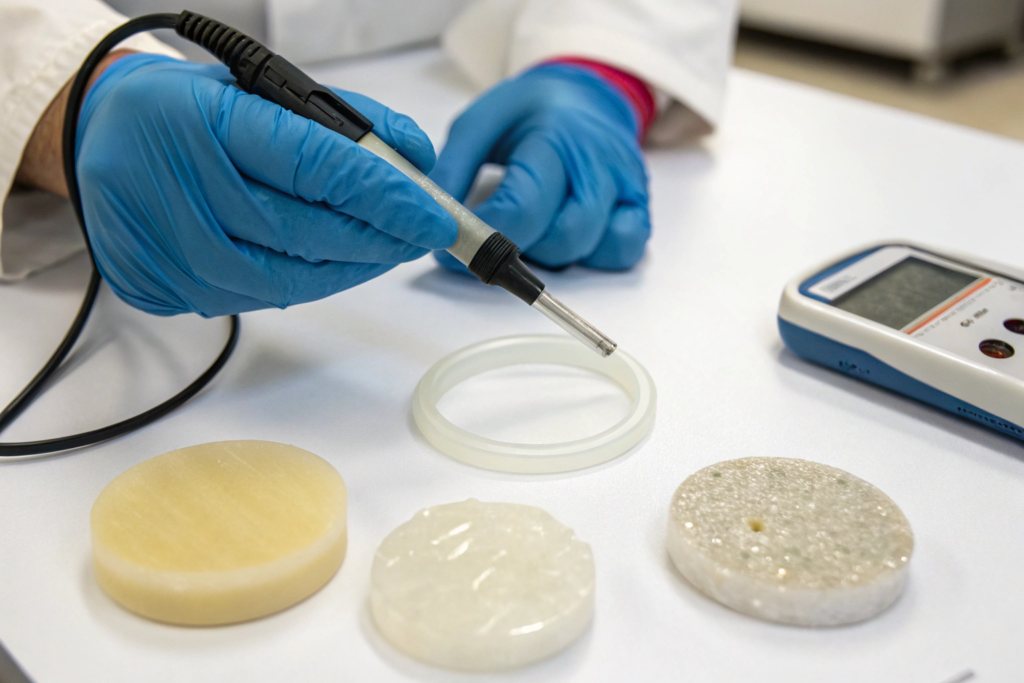
Solid silicone and liquid silicone rubber are the two primary forms of silicone used in hair band manufacturing, and they have different processing methods, different performance characteristics, and different cost structures. Solid silicone, also called high-consistency rubber, comes in a gum-like form that is milled, mixed with additives including colorants and curing agents, and then compression molded under heat and pressure into the final band shape. Solid silicone bands are known for excellent tear strength, good resistance to compression set, and a slightly firmer, more tactile feel that provides a secure grip on the hair without slipping.
Liquid silicone rubber, often abbreviated as LSR, is a two-part platinum-cured system that is mixed and injected into a heated mold cavity where it cures rapidly. LSR processing is highly automated, which makes it cost-effective at high volumes. LSR bands offer exceptional clarity for translucent color effects, very consistent part-to-part dimensions, and a naturally smooth, almost silky surface texture. The platinum cure also means that LSR is inherently skin-safe and hypoallergenic, a critical requirement for accessories worn directly against the skin during exercise when pores are open and skin may be sensitized by sweat.
The performance difference between the two materials matters for sports applications. Solid silicone bands tend to have slightly higher tensile strength, making them more resistant to snapping under extreme stretch. LSR bands tend to have lower compression set, meaning they recover their original shape and diameter more completely after being stretched repeatedly or stored in a stretched position for an extended period. For a sports brand, the choice typically comes down to the desired feel in the hand and the production volume. Lower volumes favor solid silicone compression molding because the tooling is less expensive. Higher volumes favor LSR injection molding because the per-unit cost drops more steeply as quantities increase. Materials that meet medical-grade or skin-contact standards for silicone rubber provide an objective reference for verifying that your chosen formulation is appropriate for prolonged skin contact during intense physical activity.
How Do Custom Durometer and Elasticity Specs Affect Performance?
The durometer of a silicone hair band is a measure of its hardness, typically expressed on the Shore A scale. This number directly affects how the band feels in the user’s hand, how tightly it grips the hair, and how many stretch cycles it can endure before losing elasticity. A silicone band with a Shore A hardness of 20 to 30 feels soft, pliable, and gentle on the hair. It stretches easily and is comfortable for all-day wear and for users with fine or fragile hair. A band with a Shore A hardness of 40 to 50 feels noticeably firmer. It provides a stronger grip that holds a ponytail securely through high-impact activities like running, jumping, and HIIT workouts, but it may feel too tight for some users if worn for extended periods.
The elasticity specification, which is related to but distinct from durometer, defines how far the band can be stretched before permanent deformation occurs. A band formulated for high elasticity can be stretched to two or even three times its resting diameter and will snap back to its original size. A band with lower elasticity may stretch to only 1.5 times its diameter before the material begins to yield and the band does not fully recover. Sports brands need to specify both the durometer and the elongation at break for their bands, not just one or the other, because a band can be soft but have poor elasticity, or firm but have excellent stretch recovery, and the ideal balance depends on the intended use.
Our development team can produce sample bands at different durometer levels for you to test with your own hair types and your own workout routines. The sample round includes bands at the low, middle, and high end of the recommended durometer range for sports hair bands. You determine through your own wear testing which hardness level feels right for your customer demographic.
What Customization Options Are Available for Sports Brand Silicone Bands?
Customization is what transforms a generic silicone hair band into a branded sports accessory. The customization options for silicone bands are extensive because silicone is a highly formable material that accepts color, texture, and marking at the manufacturing stage, not as a secondary process. The customization techniques you choose define your brand’s presence on the product and the visual and tactile identity of the band.
How Are Logos and Patterns Applied to Silicone Hair Bands?
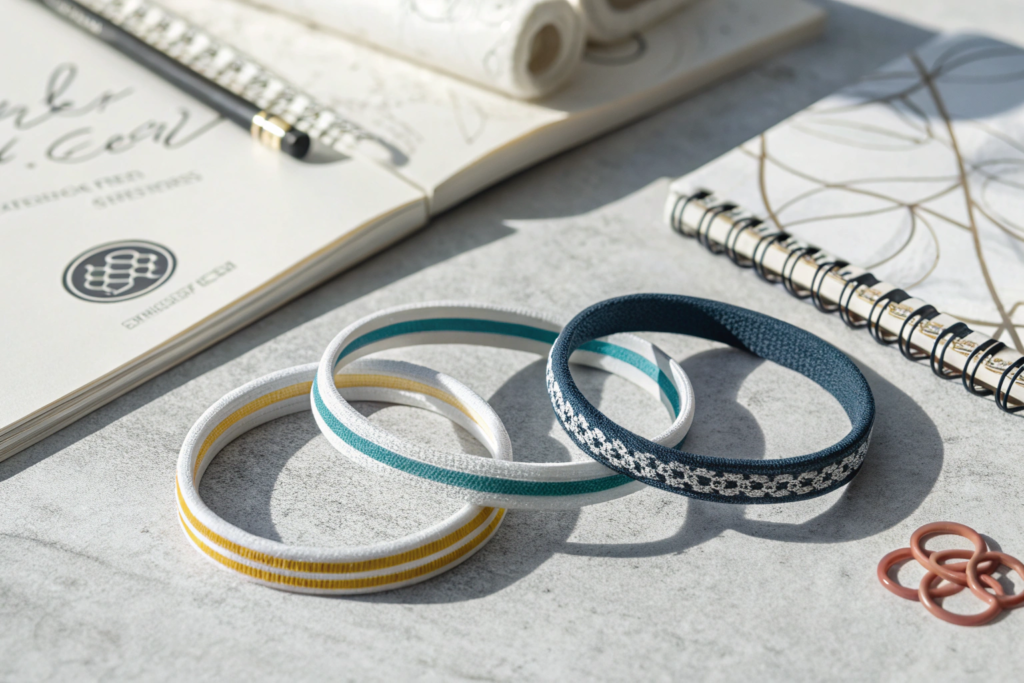
Logo and pattern application on silicone bands is achieved through three primary methods, each with distinct aesthetic results and different cost profiles. Debossing is the most common technique for sports brand silicone bands. The logo or pattern is engraved as a recessed cavity directly into the mold surface. When the silicone is injected or compressed into the mold, it fills the cavity in reverse, and the finished band emerges with the logo raised from the surface. Debossed logos are permanent, will never fade or peel, and add a tactile grip element to the band surface. The mold engraving is a one-time tooling cost, and the debossing adds no incremental cost per unit. For brands whose primary concern is durability and long-term brand visibility, debossing is the recommended choice.
Embossing is the inverse of debossing. The logo or pattern is raised in the mold, and the finished band has an indented logo. Embossed logos are less common for hair bands because they can collect dirt and sweat in the recessed areas, but they have a distinctive, subtle look that some minimalist sports brands prefer. The durability and cost profile is the same as debossing.
Printed logos are applied to the band surface after molding using a silicone-based ink that bonds chemically with the band material. Printing allows for multi-color logos, fine details, and photographic-quality imagery that molding cannot achieve. However, printed logos are a surface treatment and will eventually wear with heavy use, particularly on a hair band that is stretched repeatedly. The bond between the silicone ink and the band is strong, but the mechanical stress of stretching and the chemical exposure to sweat, shampoo, and sunscreen gradually degrade the print. For sports brands, printed logos are typically used for promotional or limited-edition releases where the visual impact of a full-color graphic outweighs the long-term durability consideration.
Can Bands Be Produced in Custom Brand Colors and Multi-Color Designs?
Custom color matching is a core capability for sports brands whose brand identity is tied to specific, identifiable colors. A fitness brand built around a signature coral pink or an electric lime green cannot accept an off-the-shelf color that is close but not exact. Silicone color matching works by mixing pigment masterbatch into the raw silicone material before molding. Our color technician formulates a pigment recipe to match your specified Pantone reference, produces a small batch of colored silicone, and molds a color swatch for your approval.
The color matching process must account for the fact that silicone color shifts subtly between the raw state and the cured state. The technician adjusts the pigment concentration based on experience and trial data to ensure the cured silicone matches your target. The sample color swatch is the approval gate. You review the swatch under standardized D65 lighting and either approve the match or request an adjustment.
Multi-color bands are achievable through two primary methods. Two-shot molding uses a mold with two injection gates and two separate barrels of differently colored silicone. The first color is shot into the mold to form the main body of the band. The second color is then shot to form a stripe, a tip, or an accent detail that is chemically bonded to the first color during the curing process. The bond is molecular, meaning the two colors cannot be separated. Two-shot molding requires a more complex and more expensive mold, but it produces a genuinely single-piece band with two permanently bonded colors.
Co-molding or overmolding is a simpler technique where a pre-molded band in one color is placed into a second mold, and a layer of a second color is molded over or around it. This technique is used to create two-color bands in lower volumes where the full two-shot injection tooling is not justified. The bond is strong but not quite the molecular-level fusion of two-shot molding. A band that is functionally a single piece will not delaminate under normal use, but the technique is better suited for thicker, multi-layer designs rather than the thin, flat loops typical of hair bands.
What Performance Standards Should Sports Hair Bands Meet?
Sports brands do not just sell aesthetics. They sell functional performance, and the customer expectation is that a product purchased for use during exercise will withstand the demands of an active lifestyle. A hair band that breaks mid-workout is not just an inconvenience. It is a brand failure in the customer’s eyes. Performance standards for sports silicone bands must be defined, tested, and documented so that the brand can confidently stand behind the product.
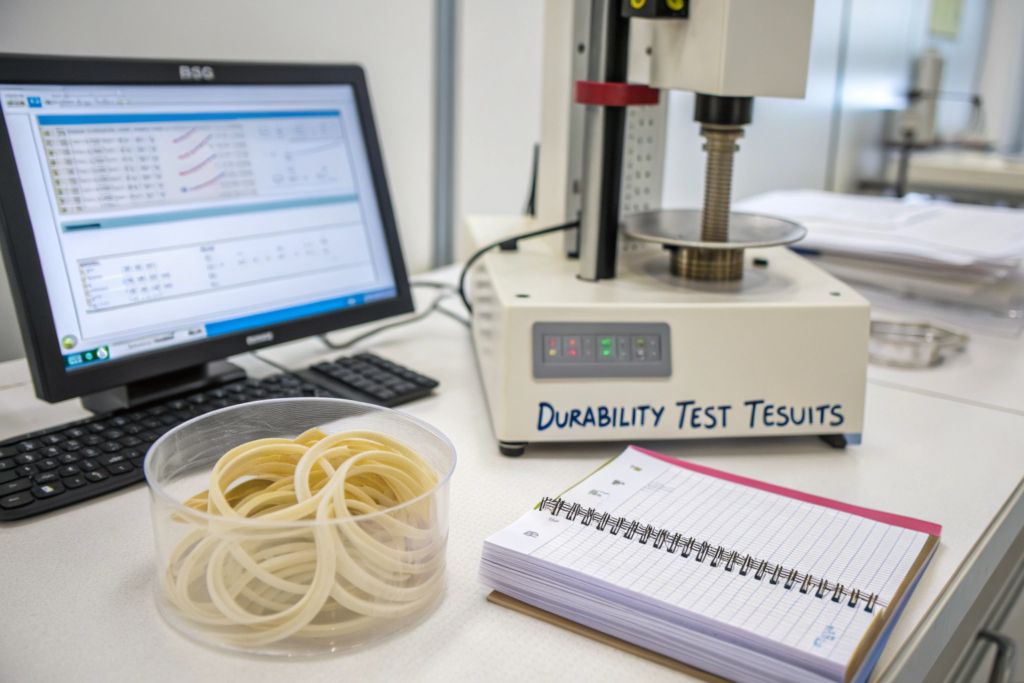
How Do You Test for Stretch Recovery, UV Resistance, and Chemical Durability?
Stretch recovery is the most functionally important performance characteristic of a sports hair band. The test protocol involves measuring the resting diameter of the band, then stretching it to a specified percentage of elongation, typically 100% or 200%, holding it in the stretched state for a defined period, releasing it, and measuring the diameter after a recovery period. A high-performance silicone band should recover to within 5% to 10% of its original diameter after a standard stretch-and-hold cycle. A band that permanently deforms, remaining noticeably larger after being stretched, fails the stretch recovery test and will generate customer complaints about bands that stretch out after a few uses.
The stretch recovery test is performed on a sample of bands from the production batch, not just on the pre-production prototype, because production process variations including slight changes in cure temperature or time can affect the polymer crosslink density and thus the elastic recovery. Ongoing production batch testing ensures that the bands you receive in month six of production perform identically to the bands you approved in the pre-production sample.
UV resistance testing is essential for a product that will be worn outdoors in sunlight during runs, hikes, beach workouts, and outdoor training sessions. Silicone is naturally UV resistant compared to many other elastomers, but specific formulations vary. The test protocol exposes sample bands to accelerated UV aging in a laboratory weathering chamber that simulates weeks or months of outdoor sun exposure in a compressed timeframe. After exposure, the bands are visually inspected for color fading or yellowing and mechanically tested for changes in elongation at break and tensile strength. A band that degrades significantly under UV exposure is not suitable for a sports brand whose customers exercise outdoors.
Chemical durability testing evaluates the band’s resistance to substances it will encounter during normal use. This includes synthetic sweat solution, chlorinated water for swim-active brands, salt water for beach and ocean sports brands, sunscreen lotion, shampoo and conditioner, and body lotion. The test protocol is simple and practical. Sample bands are immersed in or coated with the test substance, allowed to dwell for a defined period, rinsed, and then mechanically tested and visually inspected. A band that swells, discolors, or loses strength after exposure to common personal care products is not acceptable. Our development team can provide the test results for the specific silicone formulation proposed for your project, based on your expected use environment. The performance testing standards for elastomeric materials provide a standardized framework for tensile and elongation testing that you can reference in your quality specification to ensure the testing methodology is rigorous and repeatable.
What Is an Acceptable Defect Rate for High-Volume Silicone Production?
No manufacturing process produces a 100% defect-free output, and silicone molding has specific, well-understood defect modes that an experienced factory manages through process control and inspection. An acceptable defect rate for high-volume silicone hair band production is typically specified at an AQL of 2.5 for major defects and AQL 4.0 for minor defects, using standard AQL sampling tables. This translates to approximately no more than 2.5% of the inspected sample containing a major defect that would render the band unusable, and no more than 4.0% containing a minor cosmetic imperfection that does not affect function.
The specific defects tracked in silicone hair band production include short shots, where the mold cavity does not completely fill with silicone, resulting in an incomplete band shape. This is a major defect. Flash, where a thin layer of excess silicone squeezes out at the mold parting line and remains attached to the band edge, is a minor defect if it can be trimmed without damaging the band. Air traps, where a small bubble of air is caught in the silicone during molding, creating a surface pit or a void, constitute a major defect if the bubble compromises the band’s structural integrity or a minor defect if it is purely cosmetic. Contamination, where a foreign particle is embedded in the silicone surface, is typically considered a minor defect depending on size and visibility, but for a sports brand where product quality reflects directly on brand perception, any visible contamination should be treated as a reject.
The defect rate that your wholesale customers and end consumers see reflects not just the factory’s molding process control but also the effectiveness of the factory’s post-production sorting and inspection. 100% visual inspection of silicone bands adds labor cost, but for a premium sports brand, it is a necessary cost to ensure that no band with a visible imperfection reaches retail packaging.
How Should Sports Brands Package Silicone Hair Bands for Retail?
The packaging for a custom silicone hair band does more than hold the product on a shelf. It communicates the brand’s sports identity, explains the performance features, and justifies the retail price. A generic polybag with a barcode sticker might work for a discount multi-pack, but a sports brand selling individual premium bands at a higher price point needs packaging that reflects that positioning.
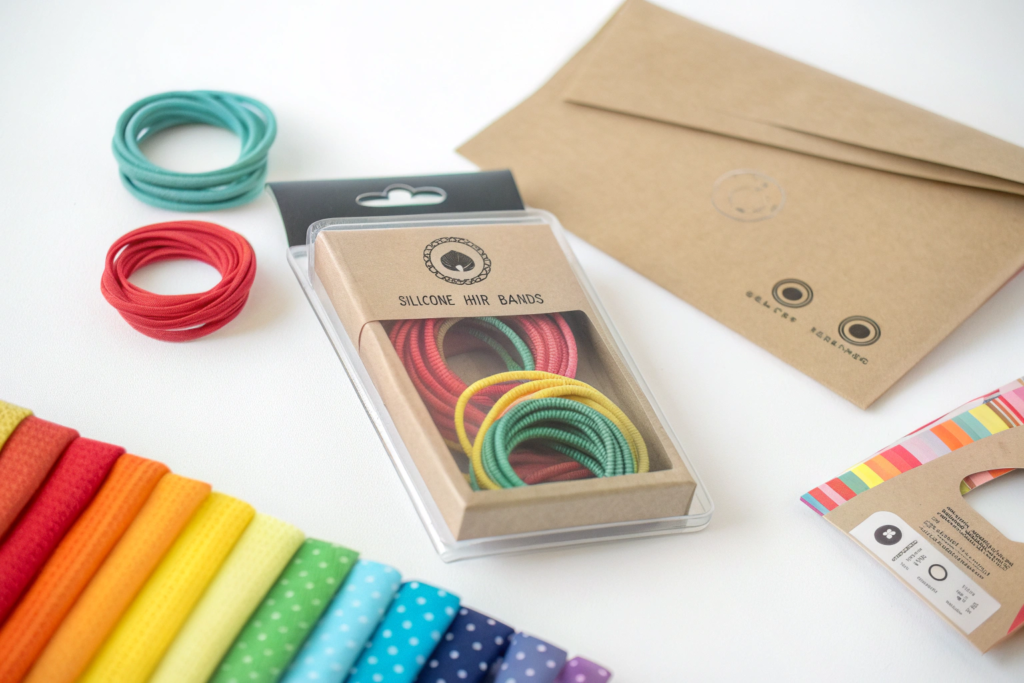
What Eco-Friendly Packaging Options Work for Silicone Accessories?
Eco-friendly packaging is increasingly non-negotiable for sports brands whose customers are environmentally conscious and who scrutinize packaging waste. Several sustainable packaging formats work well for silicone hair bands. Recycled cardstock header cards with a die-cut shape for band retention and a Euro slot for peg hook display are a clean, recyclable, and cost-effective option. The header card can be printed with soy-based inks, carry the FSC Recycled certification logo, and be fully curbside recyclable. The band is attached to the card with a small, easily removed tag or a simple loop-over design that requires no adhesive or plastic fastener.
Kraft paper belly bands made from unbleached recycled kraft paper that wrap around the band and seal with a small paper sticker or a tab-lock closure offer a minimal-waste option with a natural, organic aesthetic that aligns well with yoga, pilates, and outdoor brands. The band is inserted into the belly band, secured, and the belly band is printed with the brand logo and product details. No plastic is used in the packaging at all.
Reusable packaging adds brand value beyond the initial purchase. A small silicone zip pouch that holds a set of three or five bands is itself a useful product. The customer keeps the pouch in her gym bag, and the pouch continues to advertise the brand every time it is opened. The pouch can be made from the same or a complementary silicone material and printed with the brand logo. This packaging option costs more than paper alternatives but transforms the package from disposal-bound waste into a brand asset that the customer keeps and uses.
How Should Multi-Packs Be Configured for Wholesale and Retail Channels?
Multi-pack configuration is a strategic decision that affects both the wholesale price point and the retail display impact. The most common multi-pack configurations for sports silicone hair bands are the three-pack, often marketed as a set of bands in coordinating or contrasting colors, providing value and choice. The five-pack, usually positioned as a week’s worth of bands that covers a full workout week without needing to reuse or wash a band daily, offers a higher ring at the register. The single-band carded format is positioned as a premium individual purchase, often with a higher per-unit price justified by more elaborate packaging.
The configuration choice interacts with your wholesale pricing strategy. A three-pack retailed at a given price establishes a per-band retail value. A five-pack retailed at a higher price point offers a lower per-band cost to the customer, encouraging the larger purchase and providing the retailer with a higher total transaction value. The single-band carded format provides the highest per-band margin for the brand.
For wholesale distribution through sports retailers, gym boutiques, or department store activewear departments, the packaged unit must be shelf-ready. It must have a barcode for scanning, a hang hole for peg display if the retailer uses pegboard fixtures, compelling graphics that explain the product’s performance features even when no salesperson is present, and a price point that fits the retailer’s accessory category structure. At AceAccessory, our packaging development team works with sports brands to design multi-pack configurations specific to their channel strategy, ensuring the packaging format matches the shelf fixture and the price point expectations of each retail partner.
What Is the Development and Production Timeline for Custom Silicone Bands?
The development timeline for custom silicone hair bands is one of the shorter timelines in the accessories category because silicone molds are simpler than complex resin molds, and the color matching process is a fast, well-controlled chemical procedure. A sports brand that begins the development conversation with a clear design brief and target launch date can realistically move from concept approval to holding finished, packaged product in less than two months.

How Long Does Silicone Mold Fabrication and Sampling Take?
Silicone mold fabrication for hair bands is generally faster than mold fabrication for rigid resin or zinc alloy parts because the silicone molding process operates at lower pressures than injection molding for rigid plastics. A simple, single-cavity compression mold for a solid silicone hair band can be machined and polished in 10 to 14 business days. A more complex mold with debossed or embossed logo cavities, texture surfaces, and a multi-cavity layout for production efficiency takes 15 to 20 business days.
Once the mold is fabricated and the silicone material is color-matched to your approved Pantone reference, first-article samples are produced. These samples are molded on the intended production mold using the actual production material formulation, not a prototype material or a generic color. The samples are inspected dimensionally against the tech pack, visually for logo fidelity and surface quality, and mechanically for durometer and stretch recovery. The first-article samples are shipped to you with a sample tag documenting the material specification, the color code, and the test results.
The sampling timeline from mold completion to samples shipped is typically 5 to 7 business days, which includes the time to trial the mold, adjust the process parameters, and produce enough samples for your evaluation. If the first-article samples require a mold adjustment, such as a slight deepening of the logo engraving or a minor dimensional correction, the mold adjustment cycle is 5 to 8 business days, followed by a second set of samples. A well-specified initial design that aligns with the factory’s standard recommended dimensions and tolerances typically achieves sample approval in one round.
What Is the Mass Production Lead Time After Sample Approval?
Once you approve the pre-production sample and give the green light for mass production, the production lead time depends on the order quantity and the mold cavitation. A single-cavity mold produces one band per cycle, suitable for small runs. A multi-cavity mold producing 8, 16, or 32 bands per cycle is suitable for larger orders and correspondingly shortens the production calendar.
For a typical initial order of 3,000 to 5,000 custom silicone hair bands in a single color with a debossed logo, the mass production lead time is 15 to 20 business days from sample approval to goods packed and ready for final inspection. This includes the production molding time, the post-molding trimming and inspection, and the packaging into the approved retail format. Larger orders scale the molding time proportionally, plus additional days for packaging.
The total calendar from design approval to finished goods ready to ship is summarized in this timeline for a typical custom silicone hair band project:
| Stage | Duration | Key Activities |
|---|---|---|
| Mold Design and Fabrication | 10-20 days | CAD design, CNC machining, polishing |
| Color Matching | 3-5 days | Pigment formulation, swatch approval |
| First-Article Sampling | 5-7 days | Mold trials, sample production, testing |
| Sample Shipping and Approval | 3-5 days | Express courier transit, your review |
| Mold Adjustment (if needed) | 5-8 days | Revise mold, second sample round |
| Mass Production | 15-20 days | Full quantity molding, trimming, inspection |
| Packaging and Final QC | 3-5 days | Retail packaging, AQL inspection |
| Total Timeline | 45-60 days | From design approval to ready-to-ship |
This timeline assumes one round of mold adjustment. If the first-article samples are approved without adjustment, which happens when the design brief is detailed and complete, the total timeline compresses to approximately 35 to 45 days. The express shipping of samples during the approval phase is critical to maintaining this schedule, and it is a cost that I always recommend brands absorb because a sample delay of a week can cascade into a production delay of two weeks if production scheduling windows are missed.
Conclusion
Custom silicone hair bands are a strategically valuable accessory category for sports brands. They are low-cost to develop relative to apparel, they provide high brand visibility because the band is visible every time the customer wears her hair up, and they generate repeat purchases as bands are lost, shared, or worn through heavy use. The material performance of a well-formulated silicone band aligns directly with the functional expectations of an active customer who demands that her accessories perform as hard as she does.
At AceAccessory, we manufacture custom silicone hair bands in solid silicone and LSR formulations, matched to your brand colors, debossed or embossed with your logo, and packaged in your choice of eco-friendly retail-ready formats. The development timeline from design approval to finished goods is 45 to 60 days, including mold fabrication, color matching, sampling, and mass production. The minimum order quantity is structured to accommodate both emerging brands and established labels, and the quality standard is built around defined performance testing for stretch recovery, UV resistance, and chemical durability.
If your sports brand is ready to add custom silicone hair bands to your accessory collection, or if you are exploring the category for the first time and want expert guidance on material formulation, logo technique, and packaging strategy, contact our Business Director Elaine at elaine@fumaoclothing.com. Send her your brand color references, your logo artwork, and your target retail price point. She can provide molded color swatches, a sample timeline specific to your project, and a development proposal that maps the entire process from your first sketch to your first shipment. Your customer’s ponytail should be secured by your brand, and that starts with a silicone band that performs as beautifully as it looks.