I received an email three months ago from a boutique chain buyer who was furious. She had received a shipment of hair clips, and within two weeks of hitting the sales floor, a customer returned one with a broken spring mechanism. The store replaced it immediately, as good retailers do, but then they came to us for a credit. I reviewed her purchase order and the invoice. No warranty terms were stated on either document. The buyer had assumed we would cover manufacturing defects for a year. We ended up covering the claim because we value the relationship, and we clarified the warranty terms in writing for every order going forward. That conversation should have happened before the first purchase order was signed, not after the first return.
The standard warranty period for wholesale fashion accessories in the industry is generally 30 to 90 days from the date of receipt, covering manufacturing defects such as faulty mechanisms, weak adhesive bonds, or plating failures, but not covering damage from normal wear and tear, customer misuse, or improper storage. Some factories and established brands extend this to six months for specific product categories where durability expectations are higher, such as leather belts, metal jewelry, and umbrella mechanisms. The exact terms depend on what the factory and the buyer negotiate and document in the purchase agreement. In practice, many accessory defects reveal themselves very quickly in the retail environment, often within the first few days of customer handling, so most legitimate warranty claims arise early in the warranty window. I want to explain what a fair warranty looks like for different accessory categories, what should and should not be covered, and how to structure the agreement so it protects both your brand and your factory relationship.
Why Is a Written Warranty Agreement Critical for Wholesale Relationships?
A verbal understanding about quality is not worth the paper it is not written on. I have watched too many factory-buyer relationships sour over a warranty dispute that could have been avoided if a single page of clear language had been attached to the original purchase order. A written warranty agreement removes ambiguity, sets expectations on both sides, and provides a documented process for resolving issues when they arise. It turns a subjective argument about who is responsible into an objective review of what the document says.

What Happens When Warranty Terms Are Left Unspoken and Implied?
When no written warranty terms exist, both parties fill the gap with their own assumptions. The buyer assumes the factory will stand behind the product for a reasonable period, which in the buyer’s mind usually means at least one full selling season. The factory assumes that once the goods are accepted upon arrival, the buyer owns any problems that arise afterward, because the goods passed final inspection and the buyer had an opportunity to check them. These two assumptions are incompatible. When a claim arises, the buyer feels betrayed by an unresponsive factory. The factory feels as though it is being asked to subsidize the buyer’s customer service costs. The relationship degrades not because either party is acting in bad faith, but because they are operating from different unspoken rules.
The legal default in international trade, unless modified by a written agreement, provides relatively limited protections for the buyer. The United Nations Convention on Contracts for the International Sale of Goods, which applies to many cross-border transactions, requires the buyer to inspect the goods within as short a period as is practicable and to notify the seller of any lack of conformity within a reasonable time, generally interpreted as a matter of days or weeks, not months. If the buyer fails to give timely notice, they lose the right to rely on the lack of conformity. This means a brand owner who discovers a latent manufacturing defect three months after delivery, having not agreed to a warranty period in writing, may have no legal recourse under the default rules.
This is why I insist on a written warranty clause in every purchase agreement. It does not need to be a multi-page legal document drafted by a law firm. It needs to state the warranty period in days, the scope of what is covered, the process for filing a claim, and the remedies available, typically replacement, credit, or repair. The clarity protects the factory from open-ended liability that extends indefinitely, and it protects the buyer from the default legal rules that require nearly immediate inspection. Understanding the relevant international sales contract framework helps both parties appreciate why a simple written term is far better than relying on statutory gap-fillers.
How Does a Clear Warranty Protect Both the Brand and the Factory?
A clear warranty protects the brand by providing a defined mechanism for recovering the cost of defective products discovered at retail. When a customer returns a faulty item to a store, the store credits the customer and charges the cost back to the brand, either through a deduction on the next invoice or through a separate debit note. The brand is now out the wholesale price of that unit, plus the associated freight and handling costs. If the brand has a written warranty from the factory covering that specific defect within the warranty period, the brand can submit a claim and recover that cost. The brand’s cash flow and margin are protected. The customer is satisfied and the product has not cost the brand its entire wholesale margin.
A clear warranty protects the factory by defining the limits of its liability. The warranty period establishes an end date for claims. A defect reported within 60 days is covered under the agreed process. A defect reported 18 months after delivery, after the product has been through a full season of use, storage, and potentially another season of use, is outside the warranty period. The factory is not indefinitely on the hook for every product it ever shipped. The warranty also defines the remedy. The factory’s obligation is to replace the defective units, issue a credit against a future order, or cover the reasonable cost of local repair, not to refund the entire order value or to compensate the brand for lost sales, customer disappointment, or brand reputation damage. These indirect and consequential losses, as they are called in legal terms, are explicitly excluded from the warranty. Without this exclusion, a single defective hair clip that generated a negative online review could, in theory, become the basis for a claim for thousands of dollars in lost sales, a liability no factory can reasonably accept for a $2.00 product.
What Should a Wholesale Accessory Warranty Cover and Exclude?
The scope of coverage is the most important section of any warranty agreement because it defines the boundary between what the factory pays for and what the brand or the end consumer accepts as a cost of using the product. That boundary must be defined in terms of specific defect types and their root causes, not in subjective terms like poor quality or defective. A well-drafted scope of coverage lists the manufacturing faults that are covered and explicitly states the types of damage that are excluded.
Which Manufacturing Defects Are Universally Accepted as Warranty Claims?
Certain defect categories are so clearly rooted in the production process that they are universally accepted as warranty claims across responsible factories. The first category is mechanism failure. A hair clip spring that snaps on the first use, an umbrella auto-open button that sticks and does not deploy the canopy, or a bag zipper whose teeth separate from the tape after being zipped a handful of times, these are all examples of functional failures that occur because of a material defect in the spring steel, an assembly error, or a component that was not tested to the specified cycle count. A mechanism that fails under normal use within the warranty period is a covered claim.
The second category is adhesion failure. A sweatband that peels away from a straw hat crown, a decorative appliqué that detaches from a scarf, a logo plate that falls off a belt, or a sole that separates from a shoe upper, these failures occur because the adhesive was incorrectly applied, the wrong adhesive was specified for the materials, or the bonding surfaces were not properly prepared. Adhesion failures are almost always latent defects. They pass final QC inspection because the bond holds initially, but they fail after a short period of normal use when the adhesive is subjected to stress, flexing, or temperature changes. This is the classic warranty defect pattern.
The third category is material failure unrelated to wear. A metal chain that snaps at a link because of a poor weld, an acetate hair clip that cracks along a stress line that was not visible at the time of inspection, or a fabric that tears along a seam not because the seam was stressed but because the fabric itself had a weaving flaw that acted as a weak point, these material failures are covered because the root cause existed in the raw material before the manufacturing process began and could not have been detected by a reasonable final inspection.
What Types of Damage Are Typically Excluded from Coverage?
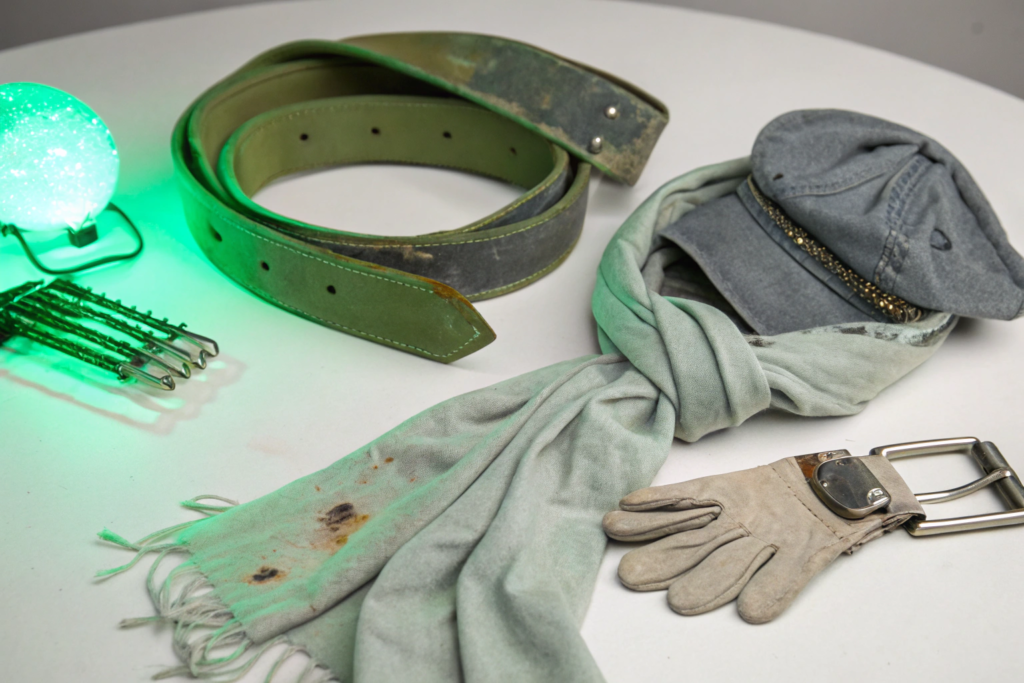
Wear and tear is the primary exclusion category, and it is the source of the most frequent warranty disputes. A leather belt that develops a crease at the most-used buckle hole after six months of regular wear is not defective. The crease is evidence that the belt was worn, as it was designed to be. A metal plating that gradually wears off a buckle due to friction against belt loops, desk edges, and door frames is not a plating failure. It is the expected behavior of plated metal surfaces subjected to abrasion over time. A scarf that pills slightly after a season of use because the fibers have been rubbed against coat collars and bag straps is not a material defect. Pilling is a characteristic of many natural and synthetic fiber yarns when subjected to friction. These are excluded from warranty coverage because they result from normal product use, not from a manufacturing error.
Customer misuse is also excluded. A hair clip that is sat on and snaps, an umbrella that is used in gale-force winds and inverts, a resin clip that is dropped onto a hard tile floor and chips, these are examples of damage caused by forces the product was not designed to withstand, not by a defect in the product’s manufacture. Distinguishing between a mechanism that failed under normal use and one that broke because of abnormal force requires some judgment, which is why the warranty claim process includes a physical inspection of the returned product.
Cosmetic variations inherent in natural materials are generally excluded. A straw hat whose natural fiber color varies slightly from the catalog photo, a leather belt with a minor grain variation, a shell button with a natural color swirl not present on the reference sample, these are characteristics of the material, not manufacturing defects, unless the variation is so extreme that the product is visibly different from the approved sample. The approval of a pre-production sample establishes the acceptable range of natural material variation. If the production goods fall within that range, the variation is not a defect. Adopting industry-standard product quality testing protocols helps define objective pass/fail criteria for these material-specific characteristics.
How Do Warranty Terms Differ Across Product Types and Materials?
A single warranty period applied uniformly across all product categories is a blunt instrument that fails to reflect the genuine differences in how different accessories perform in the real world. A silk scarf and a leather belt have fundamentally different expected lifespans, usage patterns, and failure modes. A fair warranty acknowledges these differences and establishes terms that are appropriate to the product type. Most factories, including ours at AceAccessory, structure warranty terms by product category rather than applying a one-size-fits-all policy.
What Warranty Length Is Appropriate for Metal and Mechanical Accessories?
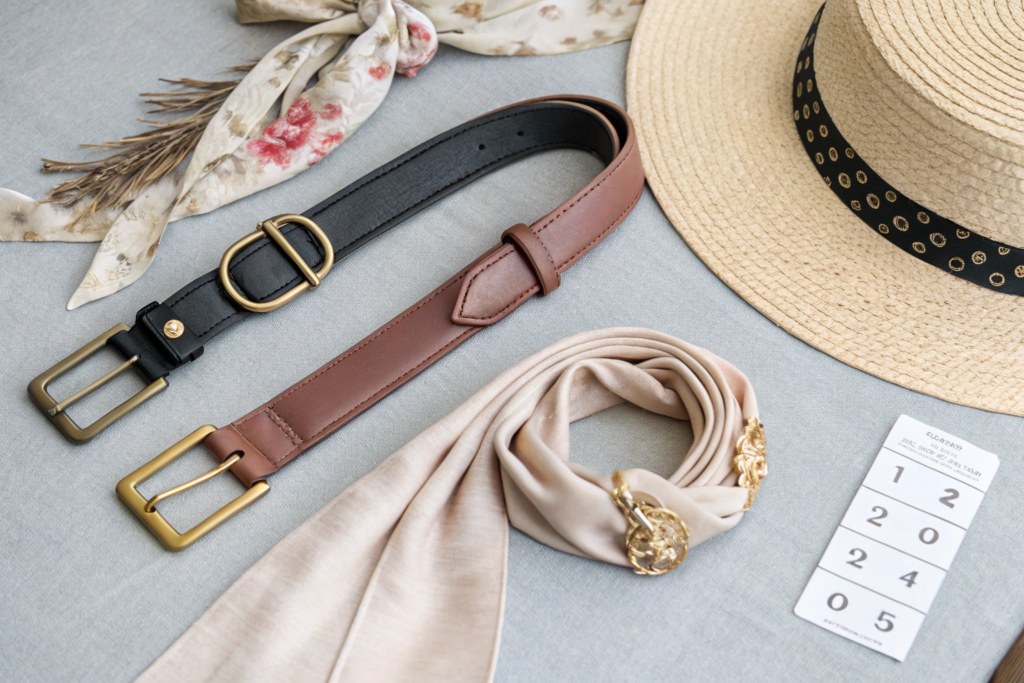
Metal and mechanical accessories, a category that includes belt buckles, hair clip springs, umbrella mechanisms, bag hardware, and keychains, are the products where a longer warranty period is both appropriate and expected by wholesale buyers. The justification is that these products are designed to withstand repeated mechanical stress, and a manufacturing defect in the metal or the mechanism will typically manifest relatively quickly, but a properly manufactured unit should last for years of normal use.
The industry-standard warranty for metal and mechanical accessories ranges from 90 days to six months from the date of receipt. A 90-day warranty is commonly offered by factories producing standard-grade products for mass-market retailers. It provides the brand with a full season of coverage. If a spring mechanism is going to fail because of a material defect, it will almost certainly fail within the first 90 days of customer use. A six-month warranty is typical for premium-grade products sold through department stores and specialty retailers, where the retail price point and the brand positioning justify the expectation of extended durability.
The specific defects covered under a metal accessories warranty include plating delamination, where the plated finish separates from the base metal, mechanical spring failure, solder joint breakage under normal tension, and casting porosity that leads to structural failure. The warranty explicitly excludes plating wear due to abrasion, surface scratching from normal use, and tarnishing of uncoated brass or copper components, as tarnishing is a natural oxidation process, not a manufacturing defect.
How Should Fabric and Textile Accessory Warranties Be Structured?
Fabric and textile accessories, including scarves, shawls, knit hats, cloth hats, and gloves, generally carry a shorter warranty period than metal accessories because the failure modes are different and the distinction between manufacturing defects and wear is more nuanced. The standard warranty period for fabric accessories is 30 to 60 days from the date of receipt.
The covered defects in fabric accessories include seam failure where the stitching unravels under normal tension because the stitch density was inadequate or the thread was defective, print or dye bleeding where color transfers onto skin or other garments under normal dry conditions, and hardware attachment failure where a zipper pull, a snap fastener, or a decorative button detaches from the fabric. The warranty excludes pilling, which is a surface characteristic of many yarns under friction and is managed through pre-production fabric testing rather than through post-sale warranty claims. The warranty excludes color fading due to extended sun exposure, shrinkage if the product was washed contrary to the care label instructions, and snags, pulls, or runs caused by contact with sharp objects, including jewelry, pet claws, or rough surfaces.
A practical consideration for fabric accessories, particularly scarves and hats, is that many end-consumer returns in these categories are not for manufacturing defects at all. They are for size, color perception, or personal preference reasons. These returns are part of the brand’s customer service policy and are not recoverable from the factory under warranty.
What Is a Fair Claim Process for Wholesale Warranty Returns?
A fair warranty claim process is one that a brand can actually use without dedicating a full-time employee to chasing paper. The process must be simple enough that a valid claim is resolved within days, not weeks, while containing enough documentation to prevent abuse. The process should be defined in the warranty agreement itself so that when a claim arises, the brand knows exactly what to do and what to expect, and the factory knows exactly what it needs to process the claim efficiently.

How Should Defective Products Be Documented for Warranty Claims?
The documentation required for a warranty claim must be comprehensive enough to prove the defect and its manufacturing origin, but practical enough that a busy brand owner or store manager can produce it without unreasonable effort. The standard documentation package includes photographs of the defective product showing the specific failure, with a ruler or a common object included in the frame to provide scale, and clearly showing the defect from multiple angles. The factory batch number or production date code, which can be found on the product label, the packaging, or the carton marking, is essential to trace the defect back to the specific production run and review the QC records from that batch. A brief description of the defect and the circumstances of its discovery, such as "Customer returned after first wear, spring mechanism snapped during normal opening," must accompany the claim. The number of units affected and the total claim value are also required.
Photographs are essential and non-negotiable. A warranty claim submitted as a one-line email saying "30 clips were defective, please credit" with no supporting images will be held until documentation is provided. The photographs serve two purposes. They prove that the defect exists, and they allow the factory’s QC team to analyze the failure mode and determine whether it is a manufacturing issue, a design issue, or a misuse issue. A photograph of a snapped plastic hair clip may reveal a stress whitening pattern around the break that indicates bending force was applied, suggesting misuse rather than material failure. A photograph of a plating failure may show whether the plating is peeling from the edges inward, indicative of poor plating adhesion, or worn away from the high points only, indicative of abrasive wear.
The claim is submitted by email to the designated factory contact, typically the project manager or the quality manager handling the account. The warranty agreement specifies the email address and the expected response time, which should be no more than two to three business days for an initial acknowledgment and assessment.
What Remedies Are Common: Replacement, Credit, or Refund?
The standard remedies available under a wholesale accessories warranty are replacement product shipped with the next order at no charge, a credit memo applied against a future order balance, or, less commonly, a refund of the wholesale cost of the defective units. The most common and operationally simplest remedy is the credit memo. You do not need to wait for a new production run to replace a small batch of defective units. The credit is applied against an existing open order or a planned repeat order, reducing the invoice amount. Your cash is effectively returned without money physically moving between bank accounts.
Replacement product is the appropriate remedy when the defect was isolated to a specific batch and the factory has corrected the root cause in subsequent production. You want the replacement units to fill your inventory gap, and the factory produces them as part of the next scheduled production run for that product to avoid paying separate shipping on a small parcel.
A cash refund is rare in wholesale warranty agreements for ongoing supplier relationships and is typically reserved for situations where the relationship is ending, or the defect rate was so high that the entire order is commercially unacceptable and the buyer is returning the full shipment. Even in that situation, a credit against the return of the goods is more common than a wire transfer refund.
The warranty agreement should state that the factory’s maximum liability for any claim is limited to the wholesale value of the defective units and does not extend to consequential damages including lost profits, shipping costs for customer returns, or brand reputation harm.
Conclusion
The standard warranty period for wholesale fashion accessories ranges from 30 to 90 days for most product categories, with metal and mechanical accessories extending to six months where the durability expectations and retail price points justify the longer coverage. The warranty covers manufacturing defects, mechanism failures, adhesion failures, and material flaws that exist at the time of manufacture. It does not cover normal wear and tear, customer misuse, accidental damage, or natural material variation that is consistent with the approved pre-production reference sample.
A written warranty agreement is the foundation of a professional wholesale relationship. It replaces unspoken, conflicting assumptions with a shared understanding that protects both parties. The scope of coverage, the warranty period by product category, the claim documentation requirements, and the available remedies should all be stated clearly in a document that is attached to the purchase order or referenced in the purchase terms. This document does not need to be lengthy or drafted by legal specialists. It needs to be specific, fair, and mutually understood.
The claim process must be practical. Photographs, the batch number, a brief description, and a quantity and value total constitute a complete claim. The factory should acknowledge the claim within two to three business days and provide a resolution, replacement, credit, or a documented reason for denial within a reasonable period thereafter. A credit memo applied against an open order is the preferred remedy for most standard claims.
If you are currently sourcing fashion accessories on wholesale terms and your supplier’s warranty policy is unclear, undefined, or communicated only verbally, contact our Business Director Elaine at elaine@fumaoclothing.com. Ask her for a copy of our standard warranty terms by product category. She can walk you through exactly what is covered, for how long, and how to file a claim if you need to. The time to understand the warranty is before a product fails, not after. A clear warranty is not an admission that defects will occur. It is a statement that if a genuine manufacturing defect does occur, there is a fair, efficient, and documented path to resolution.