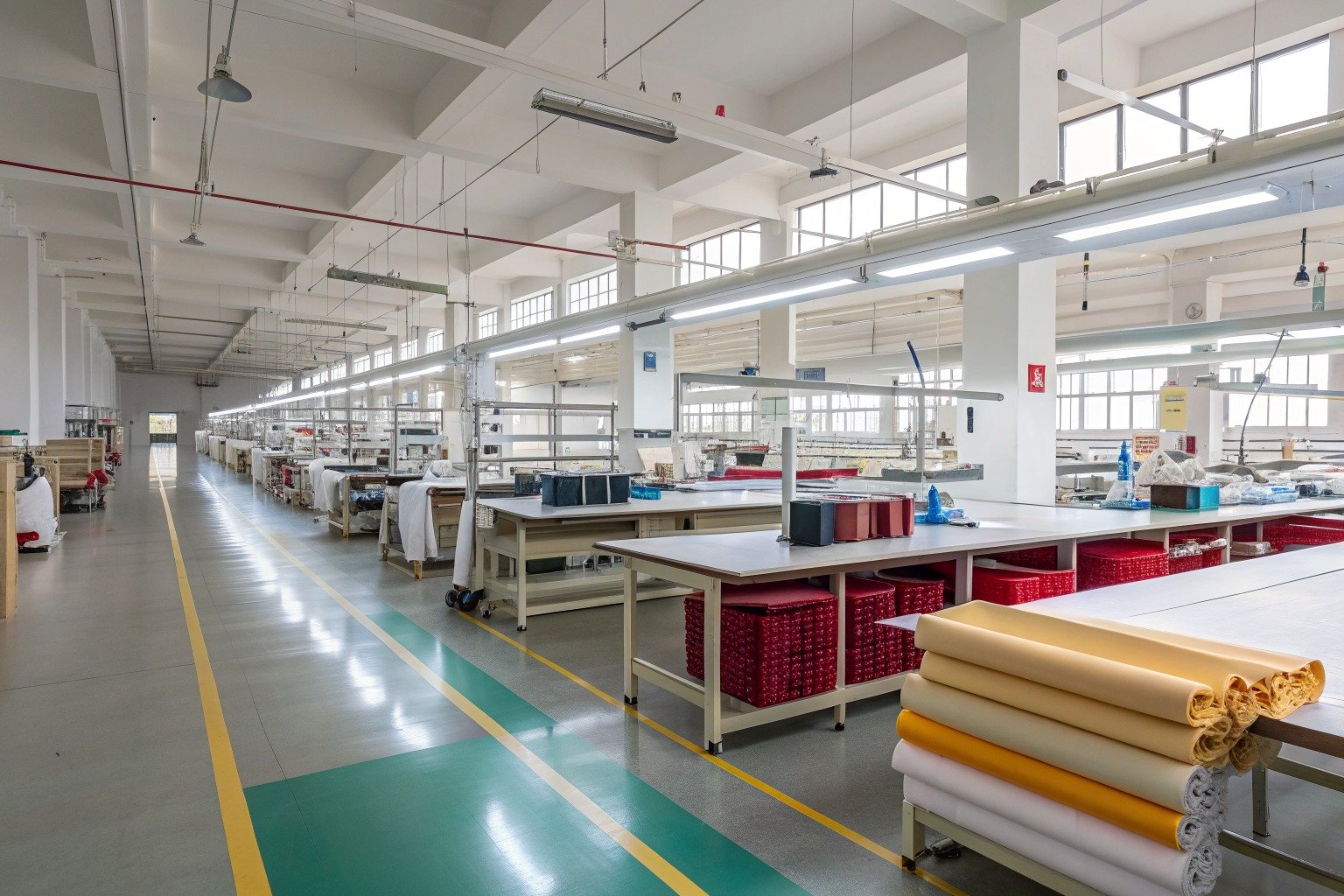
I remember a phone call late last year from a boutique owner who had just finalized her spring collection designs with her graphic designer. The tech packs were beautiful, the color palette was locked, and she was excited to hold her first samples. Then she asked me a question that had not even crossed her mind until that moment. "When will I actually receive these?" She had booked a photographer for a campaign shoot six weeks out and assumed that samples would magically appear in time. I had to walk her through the real timeline, not the optimistic one she had hoped for. She adjusted her shoot date by two weeks, the samples arrived with a week to spare, and the campaign launched beautifully. The only difference between a crisis and a smooth launch was knowing the real numbers upfront.
The time it takes to receive a physical sample after design approval at AceAccessory depends entirely on the product category, the complexity of the design, and whether new tooling like custom molds is required. For fabric-based accessories using stocked materials, such as a simple printed scarf or a basic knit hat, you can expect samples in 7 to 10 business days. For metal-based accessories or items requiring electroplating, like a logo-engraved belt buckle, the timeline extends to 15 to 20 business days. For custom-shaped resin or acetate pieces that require a new mold to be machined, the sample timeline runs 20 to 25 business days for a first-round prototype. These timelines are not estimates of what is possible under ideal conditions. They are based on the actual sequence of steps that must occur, some of which run in parallel and some of which must run in series, after your final design approval arrives in our system. I will break down exactly what happens during those days so you can plan your product development calendar with confidence.
What Happens Between Design Approval and Sample Production Start?
The clock on your sample does not start ticking the moment the factory receives your design files. There is a necessary internal preparation phase where your approved design, which exists in the language of creative vision, is translated into the language of sample room production. This translation step is where many of the most critical decisions about the sample’s quality and accuracy are made, and rushing this phase saves a day on the front end while potentially adding weeks of revision rounds on the back end.
How Are Tech Packs Reviewed for Sample Room Readiness?
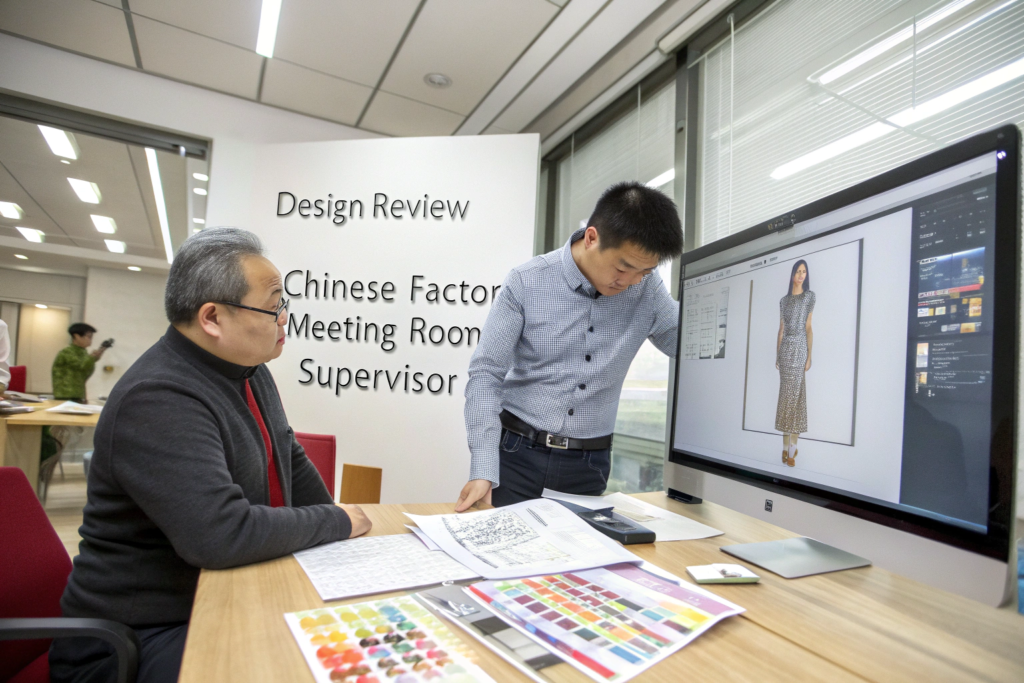
Your approved design package, whether it is a formal tech pack, a set of dimensioned sketches, or a reference sample with a marked-up specification sheet, undergoes a sample room review before any material is cut. The review is not a creative critique. The design is already approved. The review is a feasibility check that answers a series of practical questions. Are the specified materials in stock, or do they need to be ordered from a supplier? Do the dimensions work with the specified mechanism? For a hair clip, is the spring placement compatible with the material thickness at the attachment point? For a belt, is the leather thickness compatible with the buckle hardware’s internal clearance?
The review also catches specification gaps that the designer may not have realized were required. A tech pack that specifies a fabric color with a Pantone reference but does not specify the lining color, the thread color, or the hardware finish creates ambiguity that must be resolved before the sample room can proceed. Our sample coordinator documents every specification gap in a brief query document and sends it to you within one business day of the design package arriving. Your response to these queries, ideally within 24 hours, keeps the sample timeline moving. A delay of several days in responding to clarification questions adds those days directly to the sample delivery date.
Once all specifications are confirmed and materials are verified as available, the sample coordinator creates a sample work order. This digital document contains every instruction the sample room technician needs. Material codes, cutting dimensions, stitch types, hardware SKUs, finish specifications, and any special handling notes. The work order is the contract between the design approval and the physical sample. A well-written work order produces an accurate first sample. A vague work order produces a sample that misses the mark and triggers a revision round. This product development translation from creative brief to production-ready sampling instructions is the foundation of a fast, accurate development timeline.
What Material Sourcing Delays Can Extend the Pre-Production Phase?
The single most common cause of sample delays is a material that looked available during the design conversation but turns out to be out of stock when the sample work order is cut. Fabric mills run production lots, and a particular color of a particular base cloth may be between production cycles. A metal component supplier may have the buckle style you want but not in the specific plating finish your design calls for. An acetate sheet in a particular color blend may have been a custom run for a previous client and not currently in general inventory.
When a material is out of stock, the sample coordinator faces a decision tree. Can an alternative material that is in stock achieve an equivalent look and feel? If yes, the coordinator recommends the substitution and waits for your approval. Can the material be sourced on an expedited basis from the supplier, with a known lead time? If yes, the coordinator provides the lead time and the sample timeline extends accordingly. Is the material critical to the design identity and no substitute is acceptable? If yes, the entire sample timeline extends by the material lead time, which can be anywhere from one week for a domestic fabric restock to four weeks for a specialty acetate import.
Some materials can be pre-emptively stocked if you know they will be used across multiple designs in your collection. If your spring line uses a specific natural linen blend in four different hat and bag styles, communicating that material decision early allows the factory to reserve inventory or place a bulk order before the individual sample work orders are cut. Strategic material planning at the collection level, rather than design-by-design, is one of the most effective ways to compress sample timelines for multi-SKU programs.
How Do Sample Timelines Differ by Product Category and Complexity?
Your product category largely dictates your sample timeline, not because some products are more important than others, but because the physical processes required to make a sample are fundamentally different across categories. Understanding these differences helps you set realistic expectations and structure your collection development calendar so that longer-lead samples are approved first while faster-turn samples can wait without delaying the overall program.
What Are Realistic Sample Timelines for Fabric-Based Accessories?
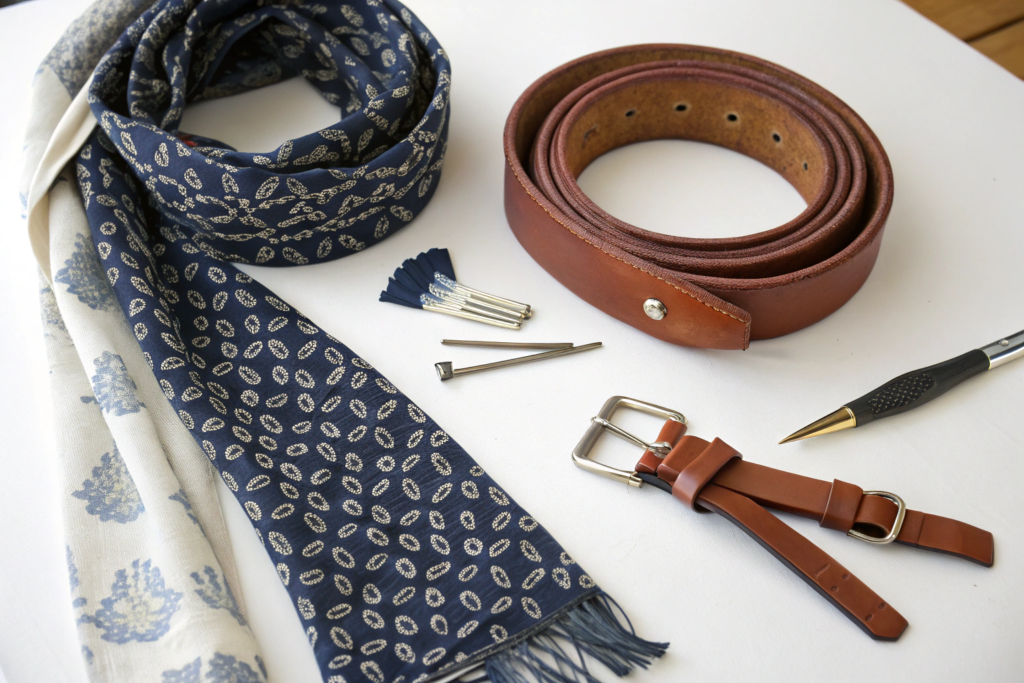
Fabric-based accessories, including scarves, shawls, knit hats, cloth hats, and gloves, are the fastest category to sample. The primary advantage is that there is no mold to machine and no electroplating tank to schedule. The raw materials are fabric, yarn, thread, and sometimes simple hardware, all of which are typically available from the factory’s stocked inventory or can be ordered from domestic textile suppliers with short lead times.
A printed scarf sample moves through the following sequence. The approved print artwork is digitally prepared and color-separated. A section of the specified base fabric is loaded onto a digital printer, and the print is produced. The printed fabric is cut to the scarf dimensions. The edges are finished, either with a hand-rolled hem for silk or a fine machine hem for modal or cotton blends. If the scarf includes a branded label, it is stitched onto the designated corner. The finished scarf is pressed and inspected. This entire process from work order to finished sample takes five to seven business days for digital printing and seven to ten business days if a screen-printed strike-off is required because the design uses specialty inks or a particular print technique that digital cannot replicate.
A knit hat sample follows a similarly fast timeline if the yarn is in stock. The approved design, with measurements, stitch pattern, and color references, goes to the sample knitting technician. The hat is knitted on a hand-operated or semi-automated knitting machine, shaped, finished with any needed steaming or blocking, and trimmed with labels, pom-poms, or other specified details. The timeline is five to eight business days for a basic beanie in a stocked yarn. If the yarn must be custom-dyed to match a specific Pantone, add one week for the yarn dyeing and drying process, then add the knitting time. The constraints of textile sampling are well understood in the industry, but they still need to be planned for explicitly when your collection relies on custom colors rather than stocked shades.
Why Do Metal and Electroplated Accessories Require Longer Lead Times?
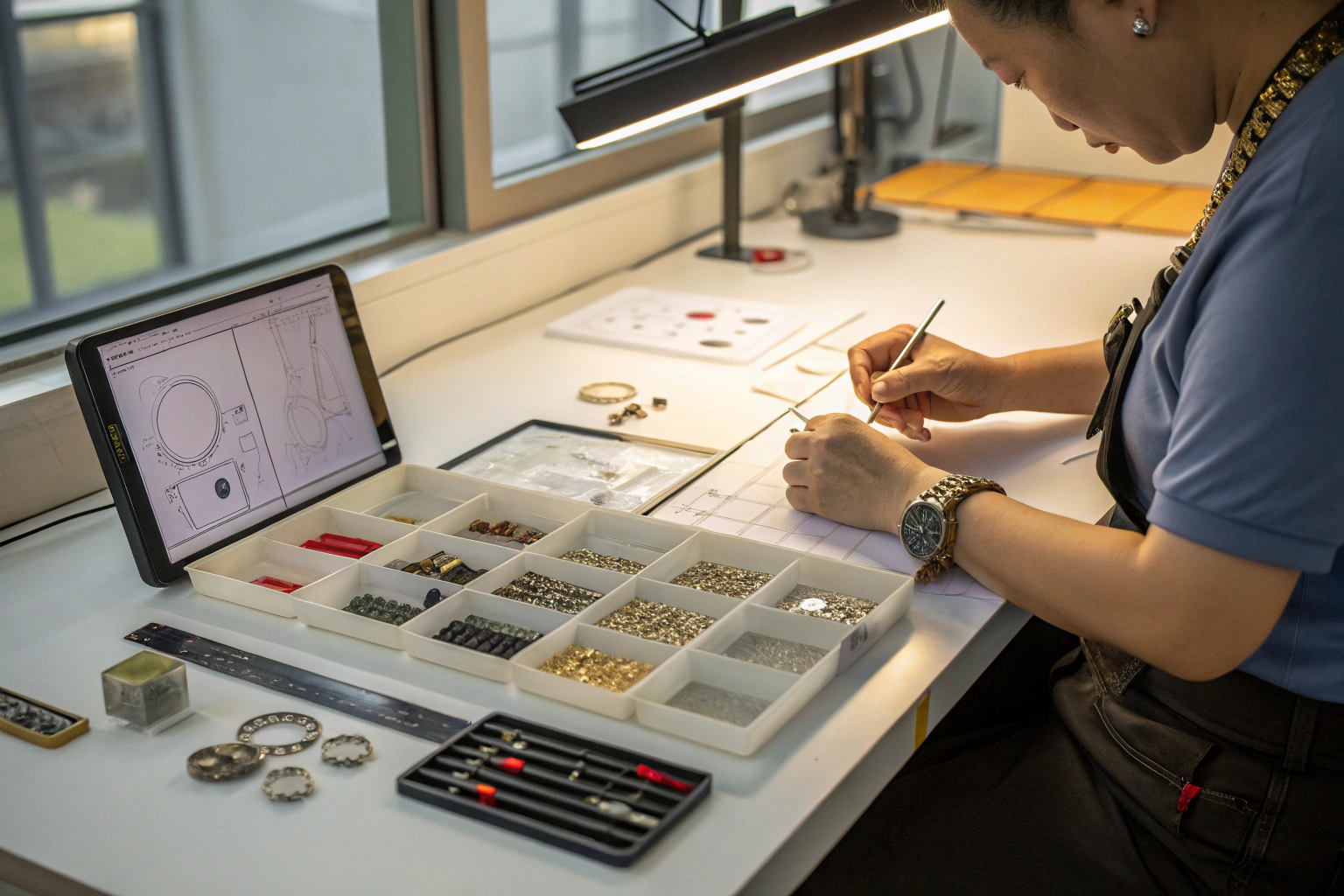
Metal accessories experience a fundamentally different sample journey because the material transformation process involves tooling, casting or stamping, and finishing steps that cannot be accelerated past a certain physical minimum time. A belt buckle, a metal hair clip, a logo plate, or a metal bag chain each requires a mold or a stamping die. Even a simple die for stamping a flat metal shape out of sheet brass requires several days of CNC machining. A more complex casting mold for a three-dimensional buckle shape requires pattern making, mold cavity machining, and polishing before the first metal part can be poured.
Once the metal part is produced, it is raw metal, not the finished color the design calls for. The part moves to the electroplating stage. Electroplating deposits a thin layer of metal, gold, nickel, silver, brass, copper, or a proprietary alloy, onto the surface of the part. The plating process is electrochemical and requires the parts to be racked on conductive fixtures, immersed in chemical baths in a specific sequence, rinsed, and dried. This process takes time, not because the plating shop is slow, but because each bath immersion has a minimum dwell time to achieve proper plating thickness and adhesion. A typical plating sequence for a fashion metal part involves a cleaning bath, a base coat of nickel for adhesion and corrosion resistance, the decorative top coat in the specified color, and a clear protective lacquer. Rushing the plating process produces thin, uneven plating that wears through to the base metal within weeks of use.
A first-round metal accessory sample typically requires 15 to 20 business days from work order to finished sample. If the first sample reveals a design adjustment, such as the buckle slot being too narrow for the intended belt strap, a revised mold or die is cut, which adds 10 to 15 days for the revision round. Metal sampling rewards precise, thorough specification in the initial tech pack because the cost of a specification error, measured in additional calendar days, is higher than for fabric accessories. You can reference the capabilities of our metal hardware development process to understand how different plating specifications affect both sample timelines and per-unit pricing.
What Should You Expect During the Sample Review and Revision Cycle?
Receiving the first sample is a milestone, not the finish line. The sample review and revision cycle is where the design intent meets physical reality, and nearly every first sample benefits from at least one round of refinement. The speed of this cycle depends equally on you, the brand owner, and the factory. A rapid, specific feedback loop produces a finalized sample quickly. A slow, vague feedback loop adds weeks to the timeline and tests the patience of everyone involved.
How Should You Provide Feedback to Keep Revisions on Schedule?
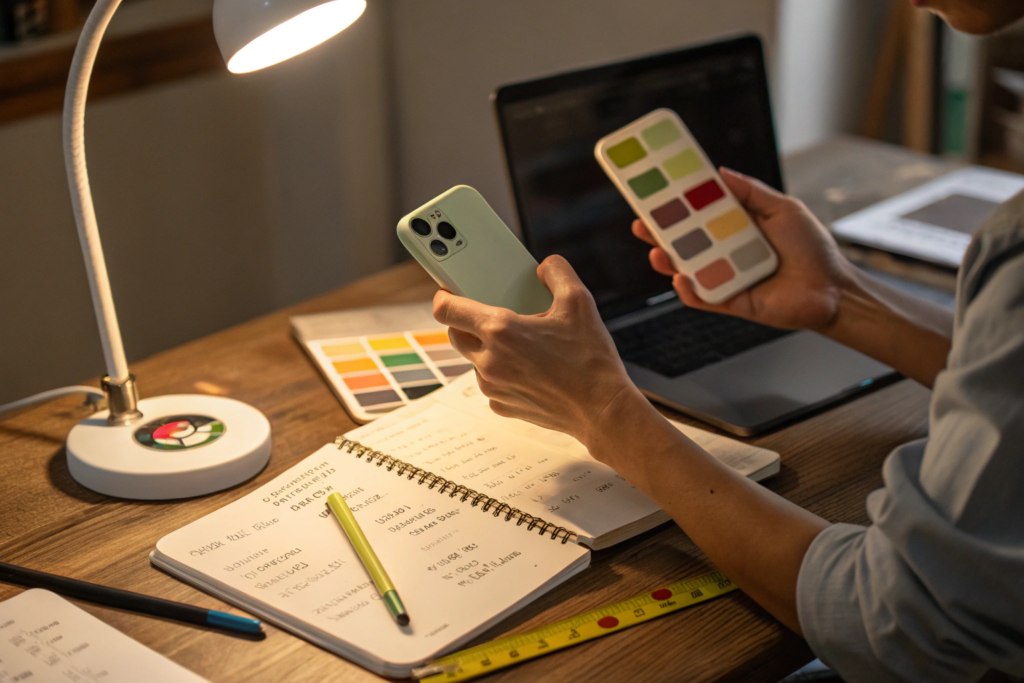
The single most effective way to keep the revision cycle moving is to provide your feedback within 48 hours of receiving the sample and to make that feedback specific, organized, and actionable. Feedback that arrives two weeks after sample receipt with vague commentary like "the color doesn’t feel right" or "the shape needs to be more elegant" triggers a second round of interpretation and likely a second revision because the sample room will guess at what you meant.
Effective feedback includes the sample reference number, the specific component or area of the sample that needs adjustment, a clear description of the desired change using measurable language, and a photograph or marked-up screenshot showing exactly where on the sample the change applies. An example of useful feedback is, "Sample HC-042, the acetate color is about 20% less saturated than our Pantone 15-2214 reference. Please increase pigment concentration to match the Pantone exactly. Also, the spring tension feels slightly weak. Please use the next higher tension spring from your standard range. All other dimensions and finish quality are approved." This feedback tells the sample room exactly what to change, what to keep, and what standard to match. The revision can begin immediately without a clarifying phone call.
An example of unhelpful feedback is, "The clip feels a bit cheap. Can you make it look more expensive?" This requires the sample coordinator to guess what "cheap" means to you. Is it the material thickness? The polish level on the edges? The weight? The packaging it arrived in? The entire revision cycle stalls while the coordinator composes a list of clarifying questions, sends it to you, and waits for your reply.
What Is a Typical Number of Revision Rounds by Product Type?
The number of revision rounds required is not a measure of factory competence. It is a measure of how well a complex, multi-material, multi-process product can be specified perfectly on the first attempt. Some products naturally require more iterations than others, and understanding this norm prevents you from interpreting a normal revision as a failure.
Fabric-based accessories like scarves and knit hats typically require zero to one revision round. The materials are well-understood, the processes are straightforward, and the main variable is print color accuracy, which is largely resolved through digital proofing before the physical sample is made. A second sample round is only needed if the fabric drape or the print scale needs adjustment, both of which are resolved quickly.
Metal accessories typically require one to two revision rounds. The first sample reveals how the metal casting or stamping behaves in three dimensions, which the tech pack and the 3D rendering approximated but could not perfectly predict. A slight adjustment to the buckle curvature, a minor resizing of a logo plate, or a change to the plating color after seeing it against the intended leather are all normal first-round findings and are corrected in a second sample.
Custom-shaped resin and acetate accessories typically require one to three revision rounds. The first sample may reveal a mold flow issue, a surface finish that needs adjustment, or a color that needs reformulation. The second sample corrects these technical issues. A third sample is occasionally needed for fine aesthetic adjustments, such as tweaking a marble swirl pattern or adjusting the translucency of a tinted resin. A factory that promises a perfect custom-resin sample in one round is likely inexperienced and will deliver something that does not actually match your design intent, or they are willing to ship a sample that is close but not right, both of which cost you more time in the long run than a factory that is honest about the iterative nature of custom mold development. At AceAccessory, our development protocol builds this iteration into the sample calendar upfront so the timeline you see is the timeline you get.
How Can International Shipping Time Be Minimized for Sample Delivery?
The sample does not reach you the moment it leaves the sample room technician’s bench. It must still travel from our factory in Zhejiang to your office or studio, wherever that may be in the world. International shipping adds days to the timeline, but there are choices you can make that minimize this transit time without incurring disproportionately high courier costs.
What Express Courier Options Deliver Samples in 3 to 5 Days?
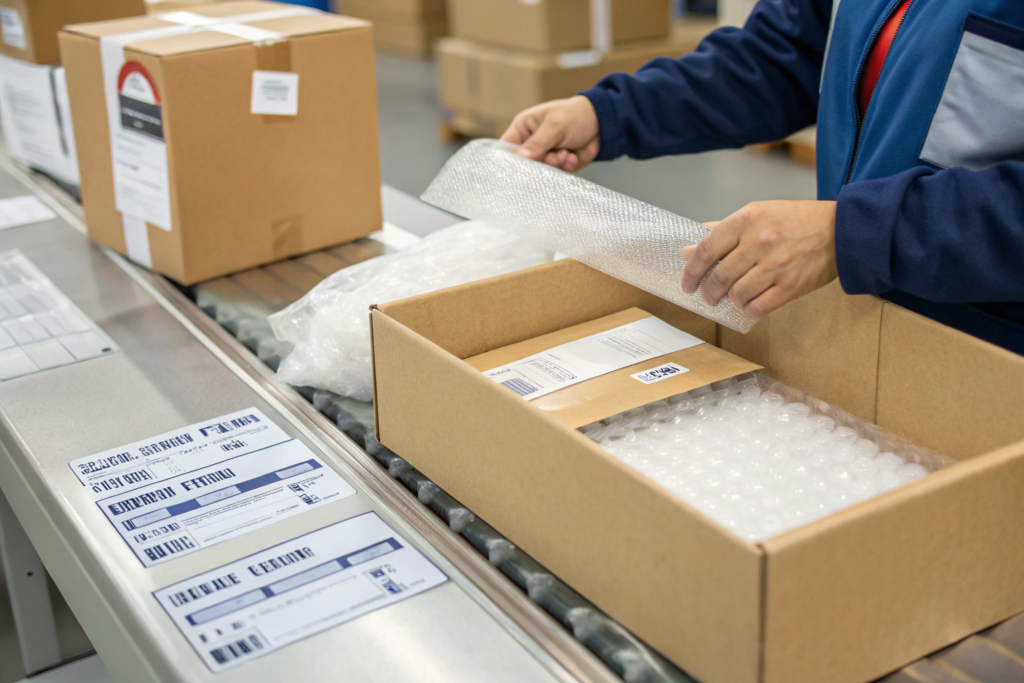
International express courier services are the standard for sample delivery to the US and Europe because they provide door-to-door tracking, reliable transit times, and integrated customs clearance that avoids the delays associated with postal or freight-forwarder handoffs. The major international express carriers provide service from our factory to most US and European business addresses in three to five business days.
The timeline can extend if the sample shipment is held in customs for inspection, which occurs for a small percentage of express shipments. A clear, accurate commercial invoice with a detailed product description, a realistic but modest declared value for customs purposes, and the correct harmonized tariff code minimizes the probability of a customs hold. Shipments described simply as "sample" or "gift" with a declared value of one dollar are more likely to be flagged for inspection than shipments described accurately as "Prototype hair clip sample, no commercial value, for design evaluation only" with a reasonable declared value.
Express courier pickup occurs daily from our factory. A sample completed and packed by 3:00 PM local time is collected the same day and enters the courier network that evening. Weekend completions ship on Monday. The three to five business day transit clock starts on the day of pickup, not the day of completion. If a sample is completed on Friday afternoon after the courier cutoff time, it ships Monday and arrives Thursday or Friday of the following week. This is a minor distinction, but it matters when you are counting business days against a campaign shoot or a buyer presentation deadline.
Should You Review a Digital Proof Before Physical Sample Shipment?
A digital proof review before shipping the physical sample can save both time and courier cost when it is used appropriately. This step involves the sample coordinator photographing or videoing the completed sample under standardized lighting and sending you the images before shipping. You can review the images, identify any obvious issues that require a revision before the sample leaves the factory, and decide whether to ship the sample or to hold it for revision.
This digital gate is most useful for the first round of a custom resin or metal sample, where you expect there may be adjustments. You view the images within 24 hours. If the sample looks correct in the photos, the physical sample ships for your hands-on evaluation. If the sample clearly has an issue, you communicate the needed revision immediately, the sample room begins the revision without losing the four to five days the international shipment would have taken, and the revised sample is what ultimately ships. This workflow is not a substitute for the physical sample review. It is a filter that prevents the shipment of a sample that is obviously not yet ready for your detailed evaluation. The physical sample review remains essential because weight, mechanism feel, fabric hand, and subtle finishing details cannot be evaluated through photographs.
Conclusion
The timeline from design approval to sample in your hand is not a single number that applies across all product categories. It is a range that starts at 7 to 10 business days for fabric-based accessories using stocked materials and extends to 20 to 25 business days for custom-shaped resin or acetate accessories requiring new mold fabrication. Metal and electroplated samples sit in the middle at 15 to 20 business days. International express shipping adds 3 to 5 business days to these figures, which you should incorporate into your personal calendar as you plan around key dates like photography sessions and buyer presentations.
The preparation phase between design approval and sample room start is not dead time. It is where specification gaps are identified and closed, material availability is confirmed, and the sam ple work order is written. Your responsiveness to clarification queries during this phase directly impacts how quickly the sample moves into physical production. Once the sample is produced, the revision cycle’s speed is determined by your feedback specificity and timeliness. Clear, measurable, organized feedback sent within 48 hours keeps the process moving. Vague, delayed feedback adds days and weeks.
A realistic sample timeline is the foundation of a credible product development calendar. When you know the real numbers for each product category in your collection, you can sequence your development work so that long-lead samples are approved first and fast-turn samples follow without creating a bottleneck. You can also set your photography, wholesale, and launch dates with a buffer that reflects actual sample and revision cycles rather than optimistic estimates.
If you have designs ready for sampling and want a factory partner who can provide a specific, category-accurate sample timeline for your collection, contact our Business Director Elaine at elaine@fumaoclothing.com. Send her your tech packs or design briefs and let her know your target dates. She can return a sample calendar that maps the development, revision, and shipping timeline for each product in your collection, so you know exactly when to expect each sample and when to schedule your creative production work around their arrival.