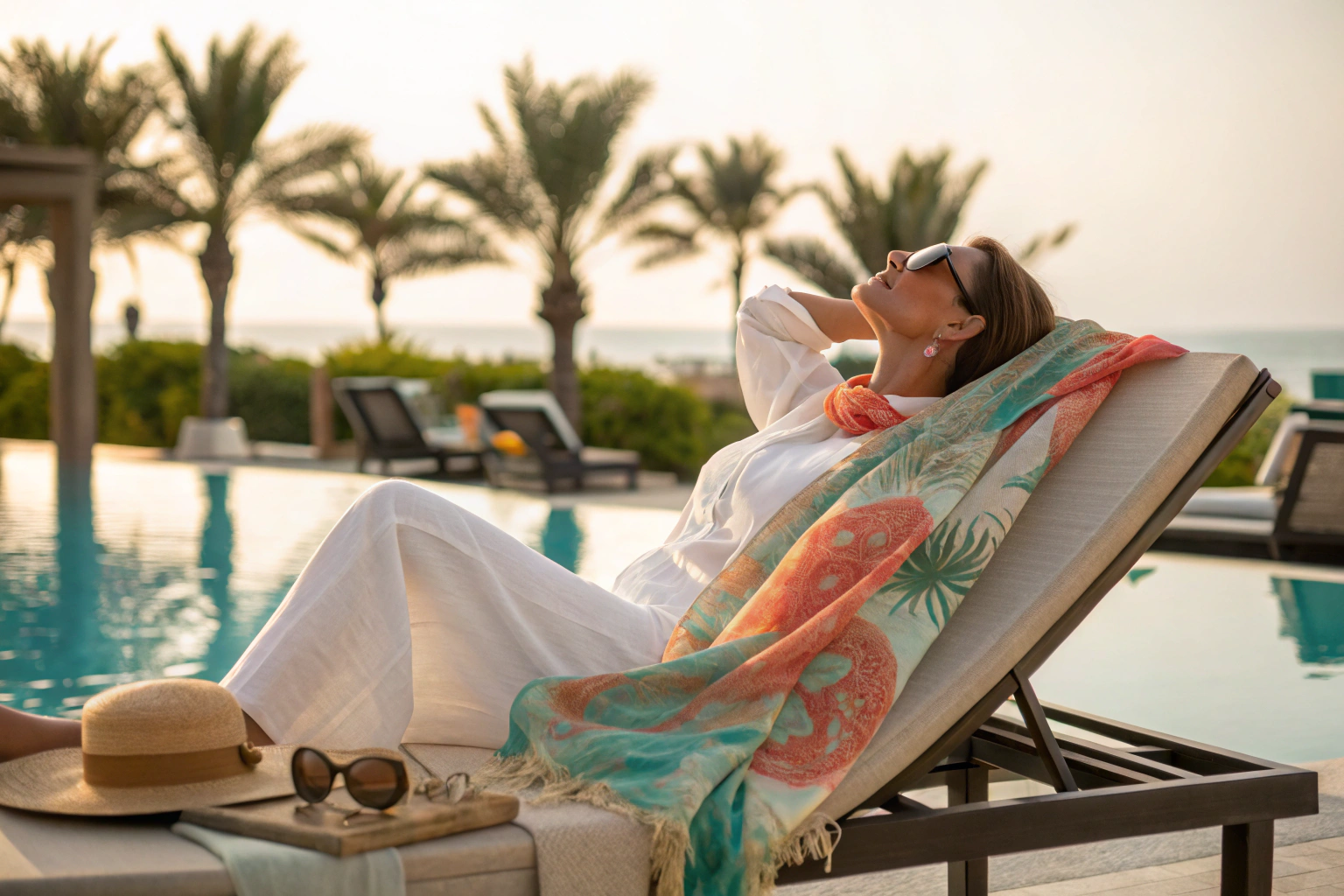
I remember a conversation I had last August with a resort wear brand owner from Miami. She was planning her 2026 summer collection and felt stuck. Every supplier she spoke to was offering the same predictable floral prints and striped cotton voile scarves she had seen for the past three summers. She told me her boutique customers were asking for something that felt new, something that looked like it belonged on a yacht in Sardinia or a beach club in Tulum, not something that could be found at an airport souvenir kiosk. That conversation sent our design team on a research sprint through trend forecasts, runway archives, and fabric innovation trade shows. What we found shaped the direction of our scarf development for the entire year.
The 2026 summer scarf trends for resort wear brands break into four clear directions. First, translucent organza and silk-blend sheer scarves in soft watercolor gradients. Second, oversized statement pieces with abstract Mediterranean tile and mosaic-inspired digital prints. Third, multi-functional convertible scarves designed for styling versatility, worn as head coverings, top wraps, or bag accents. Fourth, handcrafted artisanal textures including raw silk slubs, hand-rolled hems, and subtle metallic thread accents that catch sunlight. I will walk you through each trend with specifics about fabrics, color palettes, silhouette shifts, and how your brand can adapt these directions to your price point and customer base.
Why Are Transparent Sheer Scarves Dominating the 2026 Resort Season?
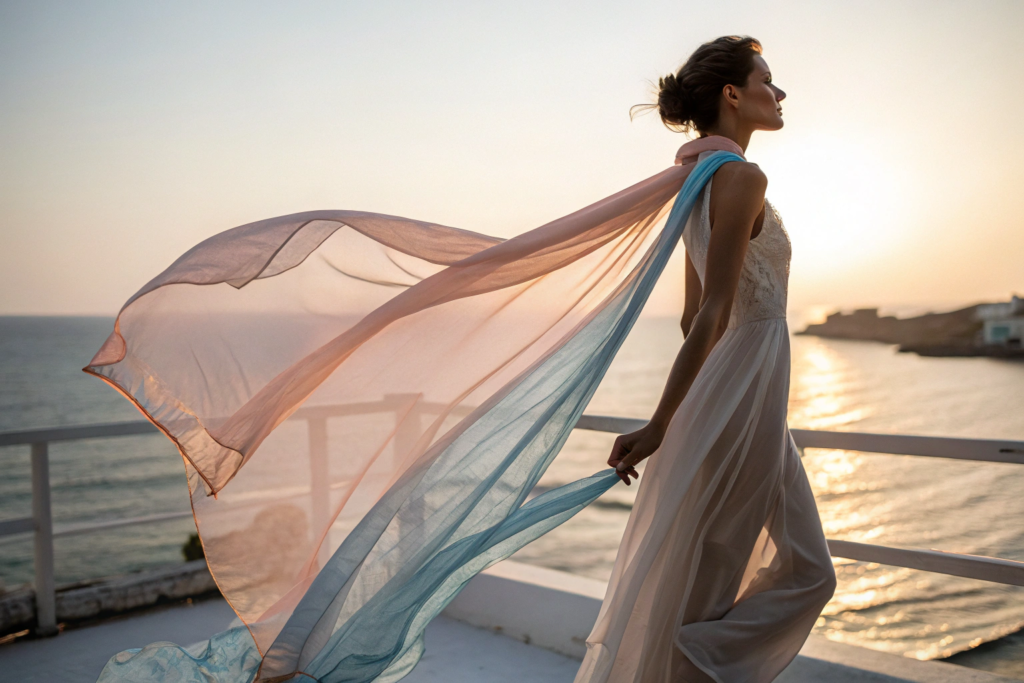
Sheer fabrics are not new to fashion, but their application to resort accessory scarves in 2026 is distinctly fresh. The trend is moving away from dense, opaque printed silks and toward weightless layers that add color and movement without visual weight. A sheer scarf thrown over the shoulders does not cover the outfit underneath. It transforms it. The garment beneath shows through, and the scarf acts as a tinted filter that shifts the overall color impression depending on how the light passes through the layers. This interplay of transparency and color is what makes the trend so appealing to resort wear brands whose customers value both elegance and ease.
What Fabrics and Weaves Are Driving the Sheer Scarf Trend?
Several specific fabric constructions are defining the sheer scarf direction for 2026. The leader is silk organza, a plain-weave fabric made from tightly twisted silk yarns that create a crisp, transparent hand with a subtle stiffness that holds shape beautifully in a breeze. Organza has a natural sheen that catches light and produces a luminous framing effect around the face and shoulders, which photographs exceptionally well for social media, a non-negotiable quality for today’s resort customer.
The second important material is a lightweight silk and modal blend chiffon. Pure silk chiffon has been a scarf staple for decades, but the modal addition in 2026 formulations improves the drape and reduces the tendency of the fabric to slip off bare shoulders. Modal adds a subtle weight and a cooler touch sensation against sun-warmed skin, a practical benefit that customers notice immediately when they try the scarf on. The third emerging material is recycled polyester georgette with a crinkled finish. This fabric targets the sustainability-conscious resort brand at a more accessible price point than silk organza. The crinkled texture creates micro-shadows across the surface that add visual depth to a simple solid color or a soft gradient, compensating for the slightly lower natural luster of polyester compared to silk.
One caution from our production experience: sheer fabrics reveal every seam, every hem, and every flaw. A poorly executed hand-rolled edge on an organza scarf looks ragged because you can see the hem through the sheer body of the fabric itself. Our finishing team has adjusted their techniques specifically for these transparent materials, using finer needles, tighter stitch counts, and color-matched threads that disappear into the fabric. If you are sourcing sheers, ask your factory specifically how they finish the edges and request close-up photos of hems on production samples before confirming your order. Understanding the sourcing and quality distinctions among silk fabrics helps you specify exactly the right base material for your brand tier, whether you need the prestige of pure silk or the practical benefits of a blend.
Which Gradient Color Palettes Are Replacing Solid Beach Neutrals?
The 2026 sheer scarf trend does not favor the bold, high-contrast geometric prints of previous seasons. The color story is soft, atmospheric, and emotionally evocative. Gradients are the dominant application, moving from one hue into another across the length of the scarf. The most commercially promising palettes we have developed for our brand clients this season fall into three families.
The Sunset Over Water family moves from warm coral at one end through peach into soft turquoise at the other. This palette is designed to complement every skin tone range common among resort destination guests and to mirror the actual colors of a tropical sunset, creating an emotional connection between the accessory and the vacation experience. The Seafoam Glass family is cooler, transitioning from pale sage green through seafoam into a barely-there icy blue. This palette appeals to the minimalist resort aesthetic favored by high-end European beach clubs and wellness retreats. The Dune and Sand family is the warm neutral option, shifting from ivory cream through warm sand into a soft terracotta, designed for the customer who wants an elevated, elegant neutral that is clearly not a basic beige solid.
The gradient technique itself varies by fabric. On silk organza, digital printing delivers precise, seamless transitions. On crinkle georgette, a dip-dye technique creates a more organic, handcrafted gradient with natural variations between individual scarves, which some brands market as a feature of artisanal production rather than a quality inconsistency. Your designer should specify which gradient aesthetic, precise and technical or organic and artisanal, aligns with your brand story before the sampling phase begins.
What Size and Shape Shifts Are Defining 2026 Resort Scarves?
Silhouette is just as important as color and fabric in defining a trend, and the 2026 season is seeing a notable polarization in scarf shapes. The very large and the very long are both gaining ground, while the standard medium square that dominated previous seasons is quietly losing shelf space to more visually interesting proportions. Resort dressing is about drama and ease in equal measure, and the scarf shape must deliver both.
How Are Oversized Silhouettes Styled for Beach Club and Poolside Wear?
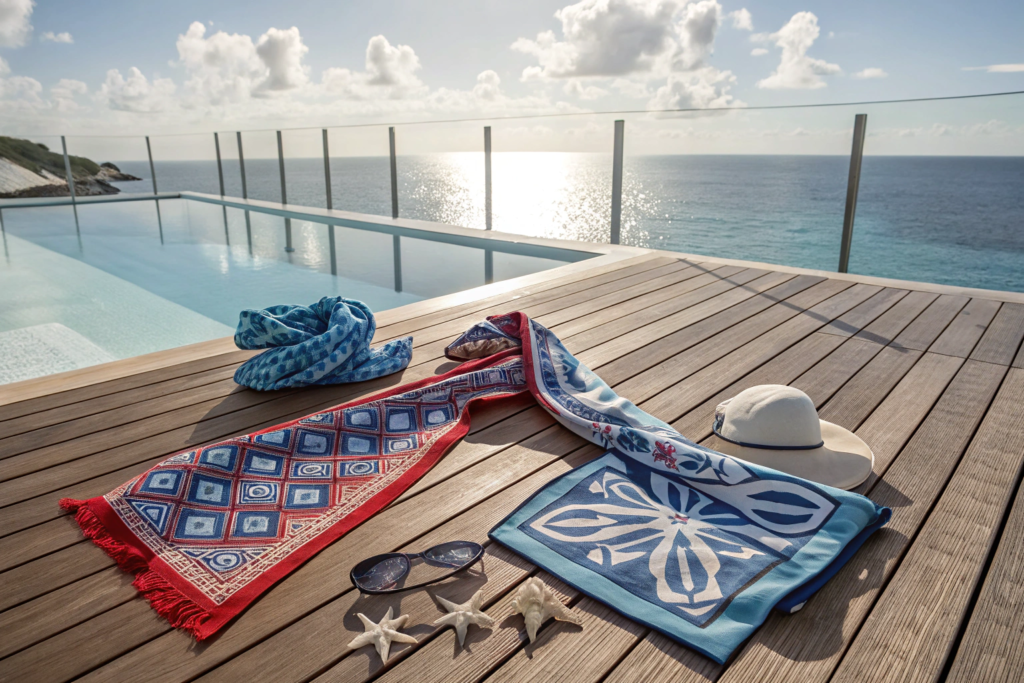
The 140-centimeter silk square, once considered a specialty size, has become a core shape for 2026 resort collections. Its appeal lies in its versatility of drape. Folded diagonally and tied behind the neck, it covers the shoulders like a capelet, providing sun protection without the weight of a cover-up. Knotted at the hip over a swimsuit, it becomes a sarong-style wrap. Tied onto a large straw tote, it adds a color accent and protects items inside the bag from sand and sea spray.
What makes the oversized square work specifically for the 2026 customer is its presence in photographs. Resort fashion lives on Instagram and in vacation albums. A 140-centimeter scarf in a semi-sheer organza, caught by the breeze on a clifftop terrace, creates a sense of motion and scale that a smaller scarf simply cannot achieve. Brands that market through influencer partnerships and user-generated content should pay attention to the visual scale of their accessories in real-world settings, not just in flat lay product shots.
The second oversized direction is the stole, a rectangular shape approximately 80 by 200 centimeters, often with a subtle fringe on the short ends. The stole is practical for air-conditioned resort lobbies and cool evening terraces. Linen blends, silk and cotton voile, and lightweight cashmere in fine-gauge weaves are the preferred materials. Our design team has received consistent feedback from boutique buyers that their customers want a single scarf that can transition from a beach towel companion at noon to an elegant shoulder wrap at dinner, and the oversized stole fulfills that brief better than any other shape.
What Is the Convertible Scarf Trend and Why Are Brands Requesting It?
Convertible scarves respond to a specific consumer behavior we are seeing across multiple markets. The resort customer is traveling with a carry-on limit, or packing light for a weekend trip, and they want accessories that perform multiple functions so they can pack fewer items. A scarf that only goes around the neck is a single-use item taking up valuable luggage space. A scarf that can be styled five different ways earns its place in the suitcase.
The construction details that enable convertibility are strategic but simple. A long rectangular scarf with a narrow slit opening near the center allows the fabric to be threaded through itself, creating a quick wrap top or a hooded head covering. A scarf with a discreet hidden elastic loop stitched into one hem can be gathered and secured as a turban-style headband. A scarf with a series of small, fabric-covered buttons and corresponding buttonholes spaced along the long edge can be folded and fastened into a lightweight shrug or bolero.
Our sampling team has developed several convertible prototypes for client brands this season. The key learning is that the hardware or closure mechanism must be nearly invisible when the scarf is worn in its simplest drape, otherwise the piece looks overly technical and loses the effortless resort feel. Matte-finished natural shell buttons, self-fabric loops, and tone-on-tone stitching are the details that make convertibility feel luxurious rather than gimmicky. If your brand is interested in exploring this direction, ask your factory’s design team to propose a convertible construction based on your chosen fabric and print, reviewing the function of each styling option to ensure it works before mass production begins, much like the integrated product design development we offer to clients refining new accessory concepts.
Which Artisanal Textures and Handcrafted Details Are Resonating?
As the digital world becomes more saturated with machine-perfect products, the pendulum swings back toward evidence of the human hand. In 2026 resort accessories, the premium products are not the ones that look flawless, but the ones that look made by someone, somewhere, with skill and time. This trend favors artisanal textures, hand-finished edges, and subtle surface irregularities that communicate authenticity rather than mass production.
What Raw Silk and Slub Textures Are Hot for Summer?
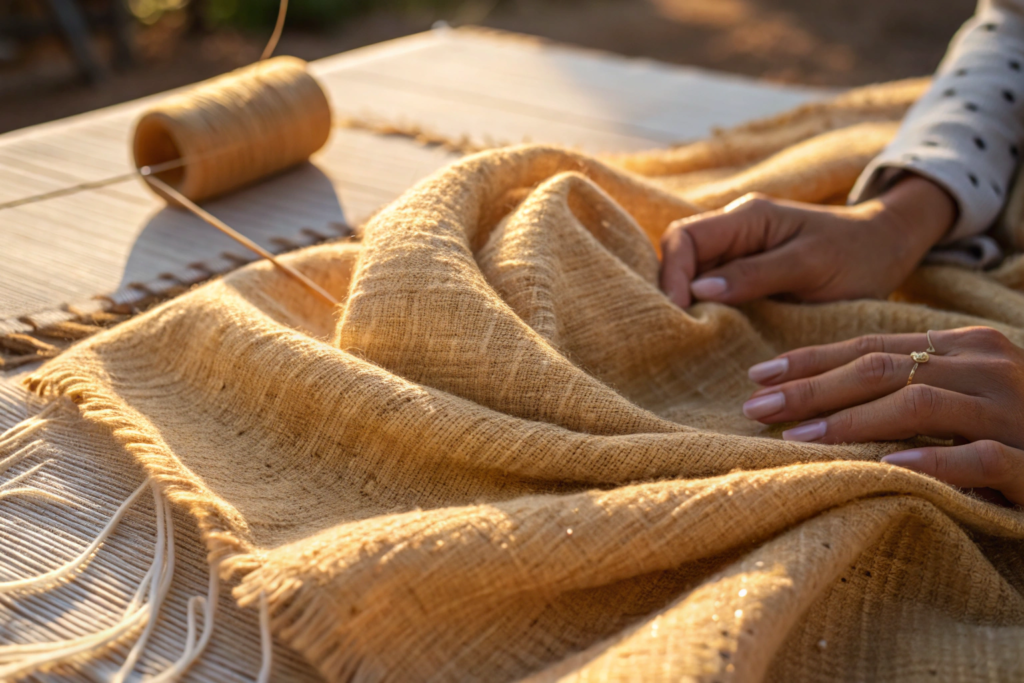
Raw silk, also called silk noil or burlap silk, is experiencing a significant resurgence. Unlike the smooth, reflective surface of conventional reeled silk, raw silk has a matte, nubby texture with small slubs and irregularities distributed throughout the weave. It feels substantial and slightly cool to the touch, and it takes dye with a beautiful depth that looks different from angle to angle because the uneven surface scatters light in multiple directions. The fabric breathes well in hot weather and does not cling to damp skin, a practical advantage for resort environments.
The aesthetic that makes raw silk compelling for 2026 is its association with slow fashion and heritage craftsmanship. This is not a fabric that looks like it came off a high-speed industrial loom. It looks like it could have been woven on a handloom in a small workshop, even if the actual production used modern equipment. For resort brands positioning themselves at the premium or luxury tier, raw silk scarves in natural, earthy dye shades create a powerful storytelling opportunity around craftsmanship, sustainability, and connection to textile traditions.
Another texture gaining momentum is a fine cotton and linen blend with a seersucker stripe or a subtle checkerboard dobby weave. These fabrics are lighter than raw silk and far more affordable, making them accessible for mid-tier resort brands. The texture provides visual interest on a solid-colored scarf without requiring a complex print, which also simplifies the minimum order quantity and reduces development cost. A solid seersucker scarf with a hand-rolled contrast hem and a small embroidered logo at the corner is a clean, commercially viable product for brands that want to participate in the texture trend without the price tag of silk. Discussions around textile sustainability increasingly influence which natural fibers and traditional weaving techniques resonate most with the resort consumer who values both luxury aesthetics and responsible material sourcing.
How Are Hand-Rolled Hems and Fringe Details Elevating Perceived Value?
Finishing techniques are the silent signals of quality in the scarf market. A machine-stitched hem on a silk scarf is functional. A hand-rolled hem is a mark of craft. The two look different up close. A machine hem sits flat and even but lacks dimension. A hand-rolled hem has a soft, rounded edge with a slight irregularity that catches light along its length, creating a subtle shimmering border around the scarf’s perimeter.
For 2026, we are seeing increased demand for hand-rolled hems in contrasting thread colors. A pale blue organza scarf with a coral pink hand-rolled hem, for instance, turns what would have been an invisible finishing detail into a deliberate design element. The contrast edge frames the face when the scarf is worn around the shoulders and creates a branded signature that is recognizable even when the scarf is folded or draped in a way that hides the main print. This detail performs double duty as both quality signal and brand identifier.
Fringe is moving in two directions simultaneously. One direction is the micro-fringe, barely 2 to 3 millimeters long, cut with a laser to create a clean, modern finish on sheer silk or modal stoles. The laser cutting seals the edge and prevents fraying. The other direction is the chunky hand-knotted fringe on raw silk squares, using the same yarn as the body fabric and tied individually to create a substantial, tactile border that invites touch. Both fringed and non-fringed designs have their place, but the key for 2026 is intentionality. A fringe that appears on a scarf because the mill always adds fringe is forgettable. A fringe specified as a deliberate design feature that complements the texture and drape of the chosen fabric adds perceived value that justifies a higher retail price.
How Should Resort Brands Position These Scarf Trends for Maximum Sell-Through?
Identifying the trends is the first step. Turning those trends into a curated buy that your customers actually purchase is the second step, and it benefits from a deliberate positioning strategy grounded in your brand identity. Not every trend fits every brand, and trying to chase all four trends simultaneously often results in a collection that feels unfocused to buyers who value clear curation over endless choice.
How Can Brands Curate a Small but Impactful Scarf Collection?
A well-edited resort scarf collection for 2026 needs only three to five styles to feel complete, provided each style serves a distinct role in the assortment. I advise clients to think in terms of the Good, Better, Best pricing architecture that many department stores use, because this framework translates well to direct-to-consumer boutique merchandising as well.
The Good entry is an accessible price point piece that delivers on a trend without the premium fabric cost. This might be a recycled polyester crinkle georgette scarf in a Seafoam Glass gradient, priced to be an impulse add-on purchase at the checkout counter or a low-risk introduction for a new customer who has not bought your accessories before. The Better mid-tier piece is the core collection driver. An oversized silk and modal blend square in a soft botanical print or a raw silk stole with hand-knotted fringe in a warm Dune colorway sits in this position. This is the scarf your customer plans to buy for her upcoming vacation, the one she emails your customer service team about to ask when it will be back in stock.
The Best piece is the hero product, the scarf you photograph for the campaign and send to influencers. It might be a pure silk organza oversized square with a bespoke hand-painted effect gradient and a contrast hand-rolled hem, produced in a strictly limited quantity to maintain exclusivity. This piece is not expected to be your highest unit volume seller, but it serves to elevate the perceived value of the entire assortment. It makes the Good and Better pieces look more attractive by association.
When you review your wholesale buying strategy with your factory, share the retail price points you need to hit for each tier. A capable factory’s project manager can then propose fabric, print technique, and finishing combinations that meet your target margins at each tier without compromising the visual coherence of the collection as a whole.
What Timing Should Brands Follow for Summer 2026 Scarf Production?
Getting the timing right determines whether your scarves arrive in stores and warehouses before your customers start packing for their summer holidays, or whether they arrive just as everyone returns to work and school. Resort wear operates on an earlier calendar than general summer fashion, because the consumer buys the product before they travel, not during the trip.
For Summer 2026 delivery, the ideal development calendar begins in September 2025 with trend research and concept development. October through November 2025 is for fabric sourcing, print design, and initial sampling. The sampling window is critical because new techniques like custom gradients or convertible constructions often need two or even three rounds of samples to perfect before the design is production-ready. December 2025 through January 2026 is the period to present the collection to wholesale buyers, whether at trade shows, showroom appointments, or through digital line sheets.
Confirmed orders should enter production by February 2026 at the latest. This timeline allows for a 30- to 45-day production window and a 4-week ocean freight transit, delivering goods to US and European warehouses by late April or early May 2026. Resort retail floors set their summer displays in May, and the online shopping for vacation wardrobes peaks in May and early June. A delivery that arrives in July has missed the highest-margin selling window and will likely need to be marked down or held over to the following year, by which time the trend direction may have shifted.
Conclusion
The 2026 summer scarf trends for resort wear brands represent a shift toward lightness, versatility, texture, and authentic craftsmanship. Sheer organza and silk-blend translucent scarves in watercolor gradients are replacing the opaque, heavy printed squares of previous seasons. Oversized 140-centimeter squares and convertible multi-style shapes are giving the customer more ways to wear a single piece, justifying a higher retail price through functional versatility. Raw silk slubs, hand-rolled contrast hems, and hand-knotted fringes are communicating quality and human touch in a market hungry for products that feel made, not just manufactured.
Positioning these trends successfully requires editing your assortment into a clear Good, Better, Best architecture, where each price tier has a defined role in attracting, converting, or elevating. The production calendar demands early action. The brands that start their 2026 development conversations now will have the samples, the photography, and the wholesale line sheets ready when buyers begin placing their resort orders at the end of this year. The brands that wait until spring 2026 to begin sourcing will find themselves competing with every other late mover for limited production capacity and paying air freight to rush goods that should have sailed weeks earlier.
If your resort wear brand is planning its Summer 2026 scarf collection and you want a manufacturing partner who can translate these trends into production-ready designs at your specific price tier, I welcome you to reach out. Contact our Business Director Elaine at elaine@fumaoclothing.com with an introduction to your brand, your target retail price range, and the aesthetic direction you are interested in exploring. She can connect you with our design team for an initial concept review, and we can prepare trend-aligned samples for your collection presentation timeline. Your customer’s vacation starts the moment she packs her suitcase. Let us make sure your scarves are folded right on top.