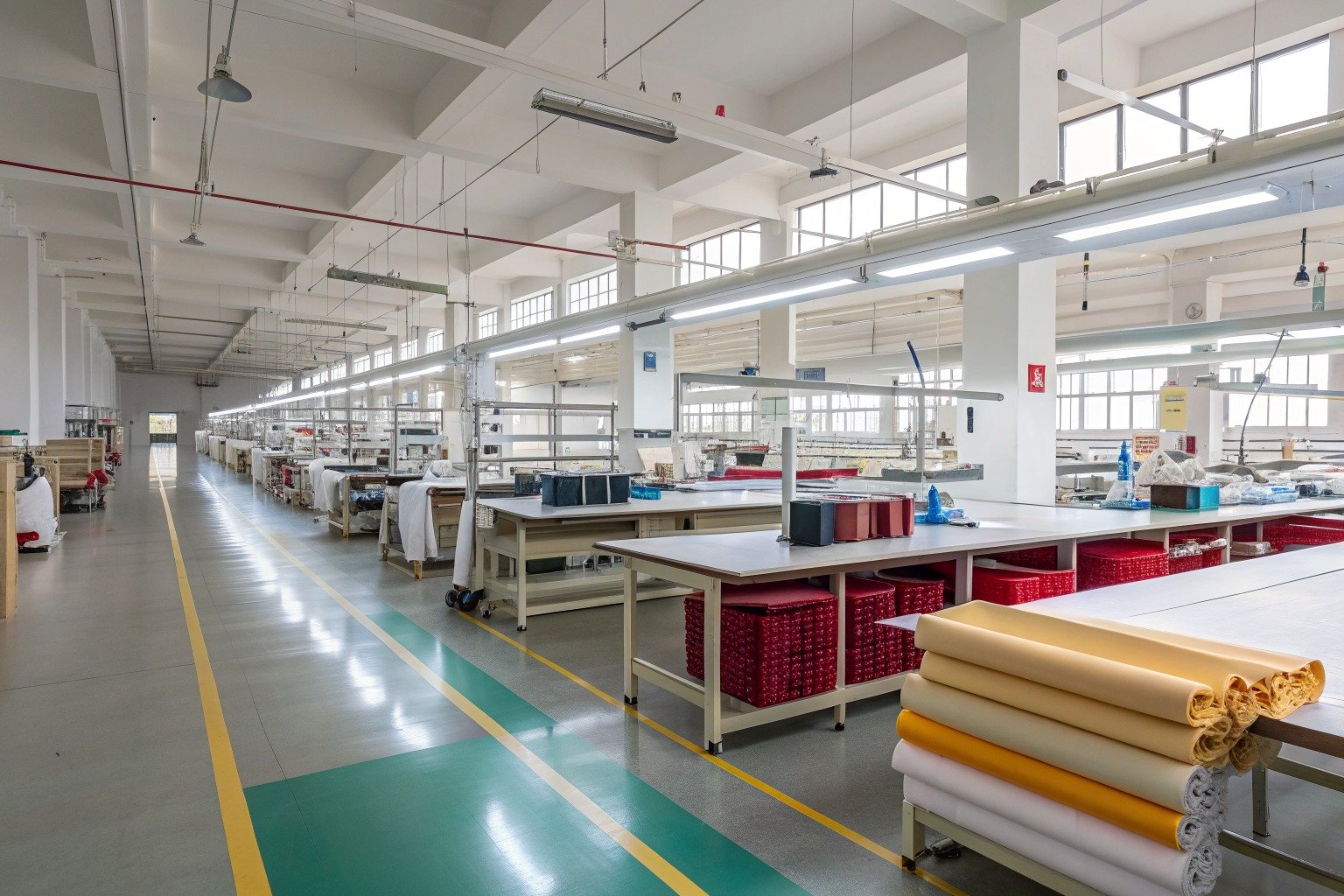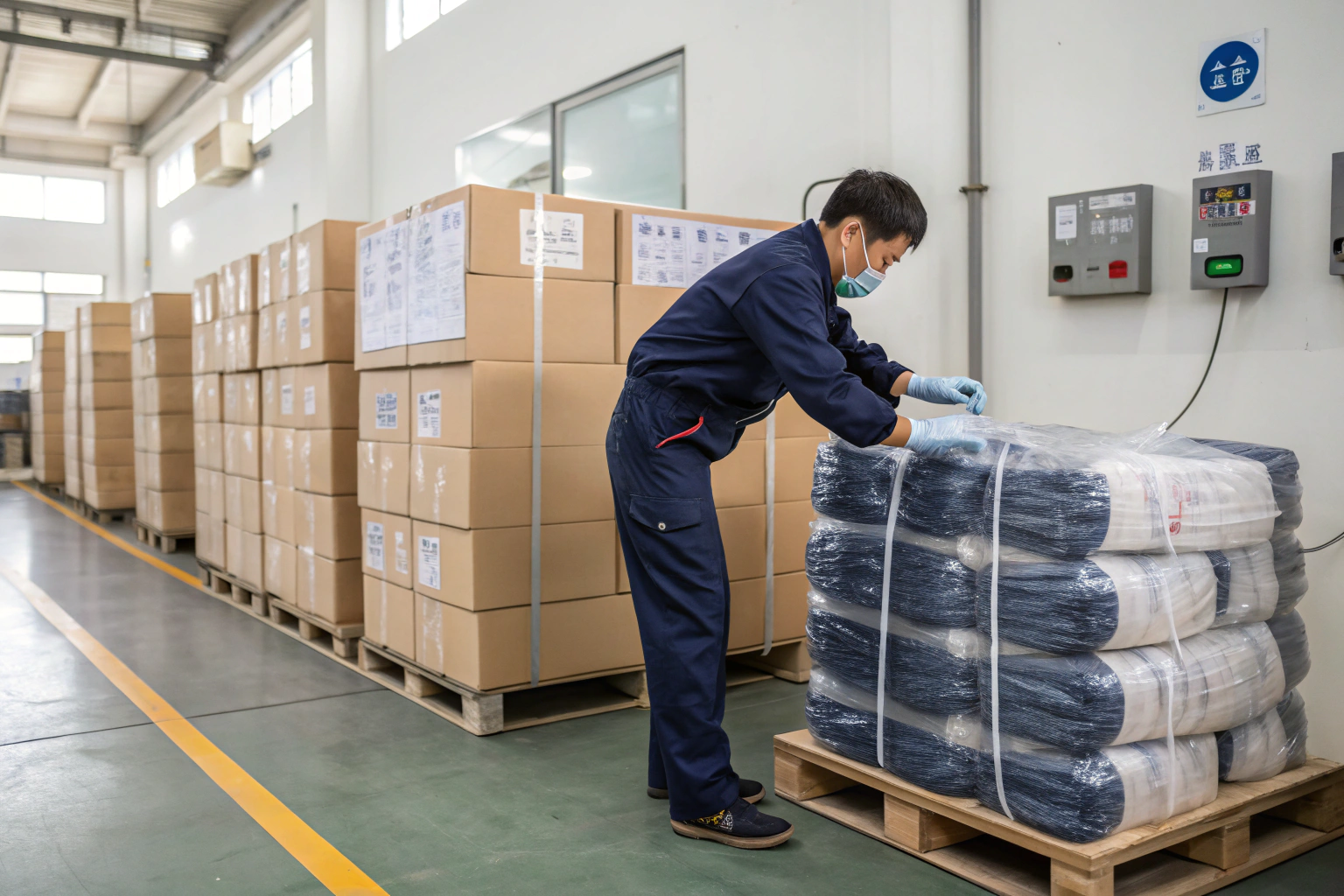
I used to think of knit hats as tough products. Wool, acrylic, cotton blends, these are materials designed to handle cold weather, wind, and snow. How delicate could they be? Then I received a frantic call from a buyer in Chicago. His entire shipment of chunky cable-knit beanies had arrived at his warehouse smelling like a damp basement. The cartons looked fine on the outside. When his team opened them, the hats in the bottom layer of each carton were speckled with mold, and the sulfur dyes in the dark-colored wool had bled into the lighter trims. The insurance claim was a nightmare. His buyer rejected the entire delivery. All because of moisture that built up quietly over four weeks in a container crossing the Pacific.
You can avoid moisture damage on knit hats during sea freight by controlling three things: the moisture content of the hats before they enter the carton, the barrier between the hats and the humid outside air, and the internal environment inside the sealed carton during transit. None of these steps are complicated, but they require a factory that treats moisture prevention as a production discipline and a packing protocol, not as an afterthought when the container is already being loaded. I will walk you through exactly what we do at AceAccessory to ensure our knit hats reach your warehouse in the same dry, fresh condition they had when they left our finishing tables.
Why Are Knit Hats So Vulnerable to Moisture in Shipping Containers?
Knit hats are deceptively vulnerable. Unlike a polyester scarf or a coated belt, a knit hat is essentially a thick, three-dimensional sponge made of fibers that love to hold onto water. The yarn structure creates thousands of tiny air pockets that trap moisture and then hold it against the fiber surface for weeks. A wool beanie that leaves our factory feeling bone-dry can still contain 8% to 12% moisture by weight just from absorbing ambient humidity in the air. That internal moisture might not be detectable by touch, but it is enough to feed mold growth when the container environment tips in the wrong direction.
What Happens Inside a Shipping Container When Temperatures Fluctuate?
This is the physics lesson that every importer of textile goods learns eventually, sometimes the hard way. A sealed shipping container is not a stable environment. As the vessel travels from a cooler climate zone into tropical latitudes and back out, the container’s internal temperature can swing by 20 to 30 degrees Celsius within a single day.
Warm air holds more moisture than cold air. When the container heats up during the day, the air inside absorbs moisture from every available source: the wood of the pallets, the cardboard of the cartons, and the natural fibers of your knit hats. When the container cools down at night, the air can no longer hold all that moisture, so the water condenses onto the coldest surfaces, typically the container walls and ceiling. This condensed water then drips down onto the top layer of cartons, or worse, seeps into the corrugated cardboard itself and travels by capillary action into the hats packed inside. The term for this cycle is container rain, and it can happen even if the container never sees a single drop of actual rain from the sky.
A factory that understands this cycle does not simply pack your hats in a standard carton and hope for the best. They pack with the assumption that the container environment will become hostile at some point. Prevention means controlling the moisture that enters the carton from day one and blocking the moisture that tries to enter from the outside during the journey. Using corrugated packaging that has a moisture-resistant liner or coating on the inner surface can add an extra physical barrier against this migration of dampness through the carton walls.
Which Yarn Types Are Most Prone to Mold and Mildew?
Not all knit hats carry the same risk. Natural animal fibers like wool, alpaca, and cashmere are protein-based, and mold loves protein. A wool beanie that is packed with slightly elevated moisture content becomes a petri dish when the container temperature climbs into the 30-degree Celsius range for multiple days. The mold feeds on the keratin in the wool fiber itself, causing irreversible structural damage and the characteristic musty smell that no amount of airing out can fully remove.
Cotton is cellulose-based, and different species of mold feed on cellulose. A cotton knit hat absorbs moisture even more aggressively than wool, acting like a wick that pulls water deep into its structure. Synthetic fibers like acrylic and polyester are naturally resistant to mold because they do not provide a food source, but they are not immune to moisture damage. Wet acrylic can develop odor from bacterial growth on dirt or finishing residues left on the fiber, and the water itself can cause dye bleeding or color migration between different colored yarns in a striped or patterned hat.
Blended yarns complicate the picture. A popular blend is 50% wool and 50% acrylic. The wool component provides the mold food, and the acrylic component does nothing to stop it. The factory’s quality control team must know the fiber composition of every hat in your order and adjust the drying protocol and desiccant quantity accordingly. Pure synthetic hats get a lighter moisture prevention treatment. High-wool-content hats get an aggressive protocol with extended post-production drying and extra desiccant. Knowledge of textile fiber properties is essential in making these judgment calls correctly.
How Should Knit Hats Be Prepared and Packed Before Loading?
The window for preventing moisture damage mostly closes the moment your cartons leave the factory loading dock. Everything that needs to happen must happen before that container door seals shut. The packing process at our facility is built around three principles: dry the product thoroughly, pack it with a moisture barrier, and dose the carton with desiccant calculated to absorb the expected humidity load over the transit time.
What Is the Correct Drying and Cooling Protocol After Steaming?
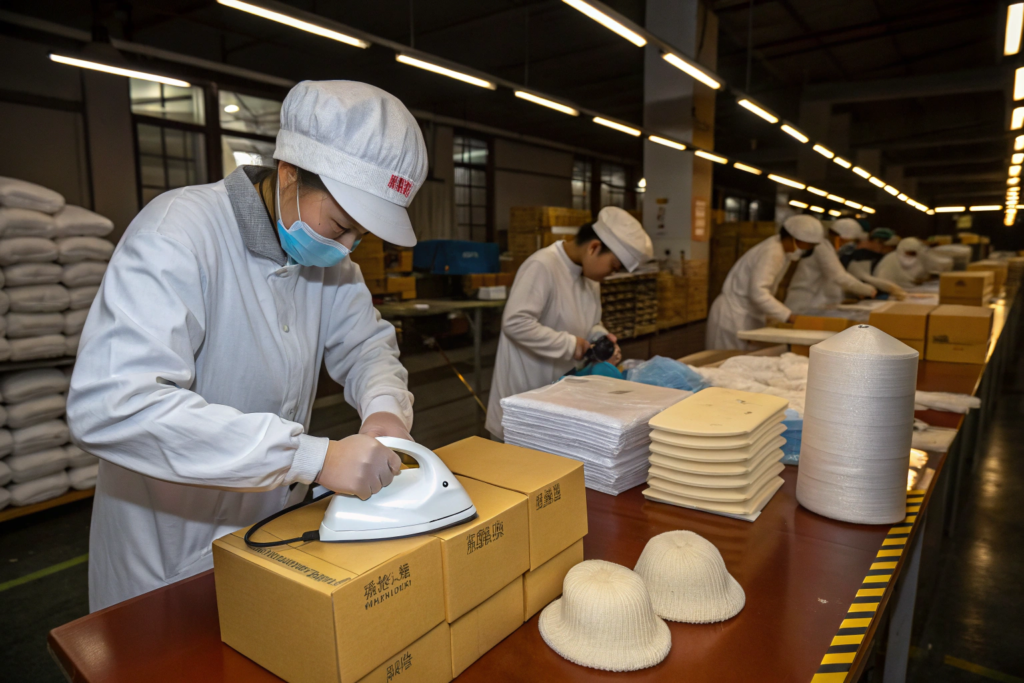
Steam finishing is standard in knitwear production. It relaxes the yarn, sets the stitch structure, and gives the hat its final shape on a blocking form. But steam finishing injects moisture deeply into the fiber, and if the hat is packed while still warm and slightly damp from this process, mold growth is almost guaranteed.
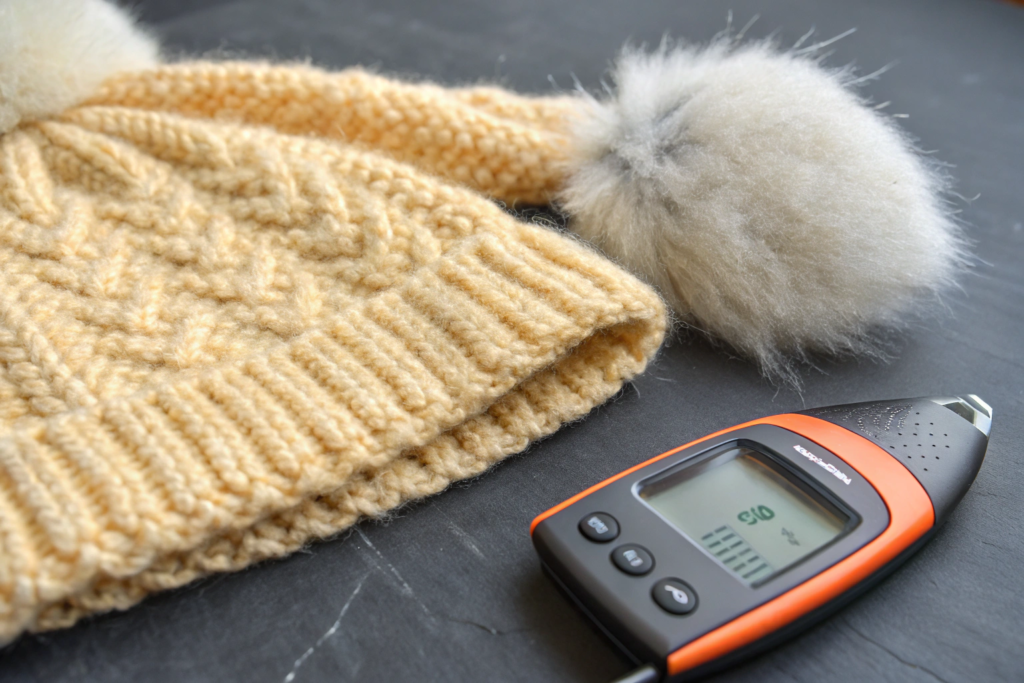
Our protocol requires that every knit hat passes through an active drying stage after steaming. Hats are moved to a climate-controlled drying room where dehumidifiers maintain relative humidity below 45% and fans circulate air continuously. The hats sit on open mesh racks, not stacked, so air can flow around each individual piece. Depending on fiber content and hat thickness, this drying stage lasts between 8 and 24 hours. The finishing supervisor then spot-checks random hats with a calibrated moisture meter that probes the yarn core. Only when readings fall below the acceptable threshold, typically under 8% moisture content for wool blends, does the batch get released for packing.
Equally important is the cooling step. A hat just out of a warm drying room that is packed immediately into a polybag will trap residual heat and create a micro-condensation event right inside the bag as it cools. We let hats normalize to ambient factory temperature for at least two hours before they enter the packing line. Your factory should be able to explain their drying and cooling protocol in this level of detail, and they should be willing to share moisture meter readings for your specific order before packing begins.
How Many Desiccant Packets Does a Carton of Knit Hats Need?
Desiccant is the last line of defense, not the first. It cannot rescue hats that were packed wet. What it does is absorb the small amount of ambient moisture that enters the carton during normal air exchange over the transit time, plus the residual moisture that slowly releases from the fibers and the cardboard packaging itself.
Calculating the correct desiccant quantity is a formula, not a guess. The calculation accounts for the volume of the sealed package, the expected transit time, the climatic zones the container will pass through, and the moisture sensitivity of the product. For a standard export carton holding 48 to 72 knit hats, packed inside individual polybags with the carton lined with a poly liner, we typically place a 500-gram to 1000-gram silica gel desiccant sachet inside the liner before sealing it. The exact gram weight depends on the fiber content and the destination. A shipment bound for humid Singapore in July gets more desiccant than a shipment to dry Los Angeles in November.
The desiccant type matters too. Silica gel is the standard for textile packaging because it remains dry and granular even when saturated, so there is no risk of liquid leakage inside the carton. Calcium chloride desiccants absorb more moisture by weight but can turn into a brine that leaks if the absorbent pad ruptures, so we avoid these for direct textile contact applications. Your project manager should specify the exact desiccant type and weight on the packing specification sheet. Proper desiccant calculation ensures you are not paying for guesswork but for science-backed protection.
What Packaging Materials Act as Effective Moisture Barriers?
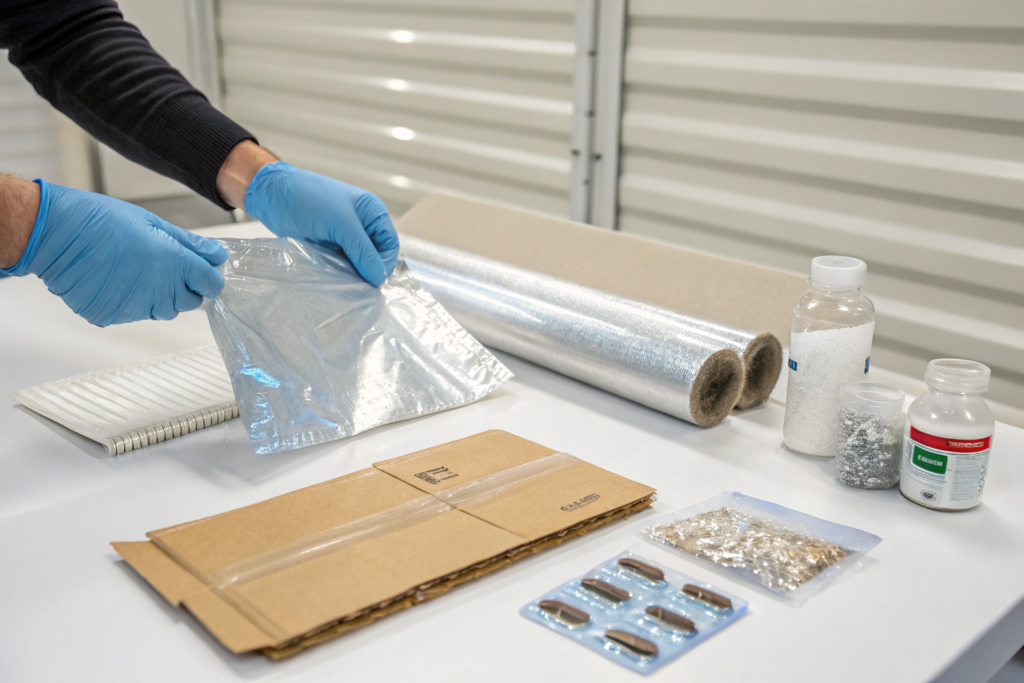
The materials you choose to wrap, bag, and box your knit hats are as important as the drying process that precedes packing. A perfectly dry hat sealed inside a vapor-permeable package will still absorb moisture from the container air over four weeks at sea. The goal is to create a physical barrier system that blocks moisture migration from outside the carton to inside, and from inside the carton to inside the individual product bag.
Are Poly-Lined Cartons Worth the Extra Cost for Knitwear?
Yes, and I tell this to every client shipping wool or cotton knitwear through ocean freight. A standard corrugated carton is designed for stacking strength, not moisture resistance. The kraft paper layers are vapor-permeable, meaning water vapor in the container air passes right through the carton wall as if it were not even there.
A poly-lined carton adds a layer of polyethylene film laminated to the inner surface of the carton, or alternatively, a separate poly bag liner that is placed inside the carton and sealed around the packed goods. This liner creates a vapor barrier that blocks moisture coming through the cardboard and also contains the desiccant’s drying effect inside a defined volume, making the desiccant far more effective than it would be in an unlined carton fighting against an infinite supply of humid container air.
The cost premium for poly-lined cartons or poly liner bags is modest relative to the value of the goods inside. For a carton containing 60 knit hats with a wholesale value of $300 to $600, the carton liner costs around $1 to $2 extra. Compare that to the average claim cost of a mold-damaged shipment, which is the entire wholesale value of the affected cartons plus disposal fees and customer relationship damage, and the ROI on a $1 carton liner is one of the easiest calculations in the sourcing business. Most major retail compliance programs now include packaging moisture barrier requirements in their vendor guides, so this is often not even optional if your hats are destined for a large department store.
Should Each Hat Be Individually Polybagged?
Individual polybagging serves three functions for moisture protection, beyond its obvious role in keeping the product clean and organized at retail. First, it creates a micro-environment around each hat, isolating it from its neighbors. If one hat in a carton develops a small mold spot because of a localized issue, the polybag contains the spread and protects the rest of the carton. Second, it allows you to use a small desiccant packet inside each individual bag, which provides a third layer of moisture defense after the carton liner and the carton-level desiccant. Third, it prevents direct fiber-to-fiber contact between hats, which is how dye bleeding spreads from a dark-colored hat to a light-colored hat when moisture is present.
The polybag must be sealed, not just folded over. A folded bag still allows vapor exchange with the air inside the carton liner. A heat-sealed or adhesive-sealed polybag creates an actual barrier. The bag material should be at least 40 microns thick for adequate puncture resistance during handling. If your brand requires eco-friendly packaging, the same moisture protection principles apply. Use biodegradable or compostable polybags with the same seal integrity, and verify that their vapor transmission rate is comparable to standard LDPE bags at the gauge you are using.
How Can You Verify Moisture Control Measures Before Shipment?
A factory can tell you they follow a moisture prevention protocol, but you need a way to verify that claim before the container sails. Once the goods are in transit, you have zero control, so the verification must happen at two specific moments: during the final quality control inspection at the factory, and optionally through a pre-shipment inspection by a third party you hire. Both mechanisms give you documentary evidence that your goods were dry when they left the factory, which is essential if a damage claim arises on arrival.
What Should a Pre-Shipment Moisture Inspection Report Include?
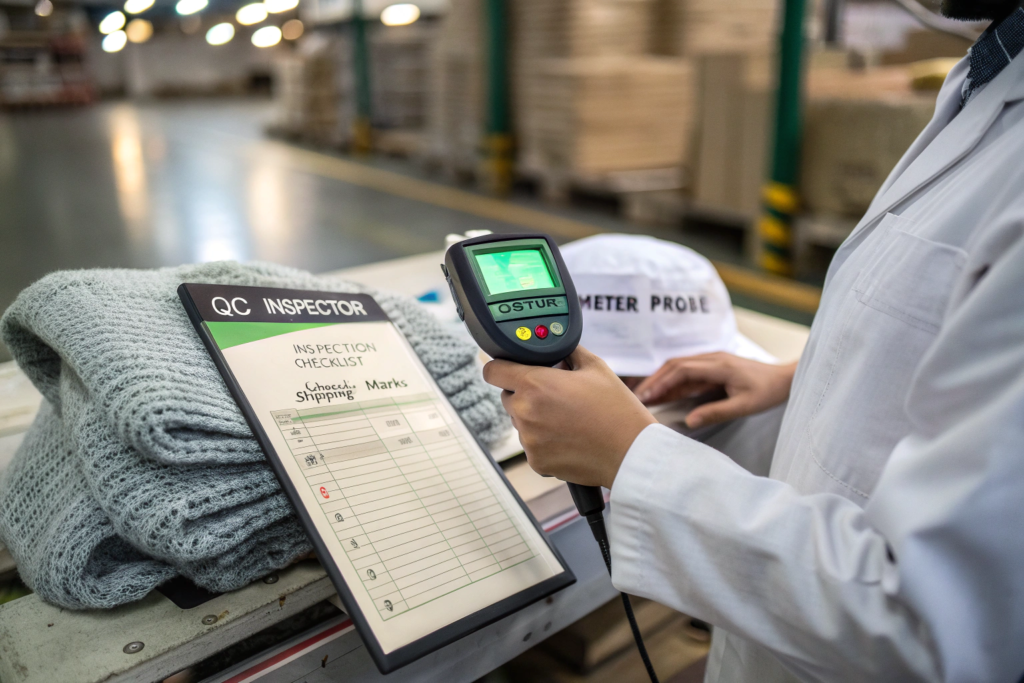
A proper moisture inspection report is a dated, signed document with quantitative measurements, not a vague note saying "goods checked, all OK." The report should list the product, the order number, the inspection date, the ambient temperature and relative humidity in the packing area at the time of inspection, and the moisture meter used with its calibration status.
The inspector randomly selects cartons from the finished pallet based on an AQL sampling table. From each selected carton, they pull hats from the top, middle, and bottom layers. Each hat gets a moisture meter reading taken from the thickest part of the knit, usually the folded brim or the cable pattern area. Each reading is recorded individually. The report also confirms the presence and condition of the carton liner, the carton-level desiccant sachet, and the individual polybag seals. Photographs are embedded showing the meter probe in contact with the hat fabric with the reading visible on the meter screen. This report is worth its weight in gold during an insurance claim dispute, because it shifts the burden of proof away from you and establishes that the goods left the factory in dry condition.
If you are shipping a high-value order of premium wool or cashmere hats, consider hiring a third-party inspection company to perform a separate moisture-focused inspection. The cost is a few hundred dollars, and the independent report carries more weight with insurers and with your retail buyer than a factory self-inspection. Your factory should welcome this request. A factory that resists third-party inspection on moisture grounds has something to hide. More information about standard inspection protocols can help you understand exactly what to request from an independent inspector.
How Should the Container Itself Be Inspected Before Loading?
Moisture protection does not end with the cartons. The container itself can be the source of the problem. A shipping container that has a damaged door seal, a hole in the roof, or a dirty floor can introduce moisture no amount of carton-level protection can overcome.
Our logistics team performs a container inspection before loading any textile cargo. The checklist includes a visual check for daylight shining through holes or gaps in the walls and roof, a check that the door rubber seals are intact and compress properly, a smell test for dampness or previous chemical cargo residue, and a check that the floor is dry and clean. The container vents, small openings that allow pressure equalization, must be clear but protected against water ingress. Some importers choose to use container desiccants, which are large absorbent poles or blankets that attach to the container walls and absorb moisture from the container air volume itself. These are most useful on routes through extreme tropical climates where container rain risk is highest.
Our project manager photographs the clean, dry interior of the container, the cartons loaded inside, and the closed container doors with the seal number visible. These photos join the moisture inspection report in your shipping documentation package, completing the chain of evidence that demonstrates moisture was managed at every step from packing to container loading.
Conclusion
Moisture damage on knit hats during sea freight is a preventable problem, not an unavoidable risk of international sourcing. The path to prevention runs through four control points. First, understand why knit hats are vulnerable. Natural fibers like wool and cotton readily absorb ambient moisture, and the temperature swings inside a shipping container create condensation that feeds mold growth and causes dye bleeding. Second, ensure the hats are thoroughly dried after steam finishing, cooled to ambient temperature, moisture-meter tested, and only then packed. Third, use packaging materials that create layered moisture barriers. A poly-lined carton blocks external vapor ingress. Individual sealed polybags prevent cross-contamination between hats. Correctly calculated silica gel desiccants absorb residual moisture within the sealed package. Fourth, verify every step with a documented pre-shipment moisture inspection and a container condition check before loading.
These measures cost very little per unit, typically a few cents to a dollar or two per carton, depending on the desiccant and liner specifications. But they require a factory team that knows why each step matters and follows the protocol on every order, not just when a buyer explicitly asks. The difference between a factory that does this as a standard practice and one that does it only when reminded is the difference between a warehouse full of fresh, sellable knit hats and a pallet of moldy returns that nobody wants to pay for.
If you have been burned by moisture-damaged knitwear in the past, or if you are shipping a new line of premium wool and blended hats and want to get the prevention right the first time, contact our Business Director Elaine at elaine@fumaoclothing.com. Tell her about your product line, your typical shipping lanes, and any moisture issues you have experienced with previous suppliers. She can connect you with our project management team, who will walk you through our packing protocol and prepare a moisture prevention specification tailored to your specific hat designs and destination route. Your hats should arrive at your customer’s door looking and smelling exactly as they did when they left our finishing room.