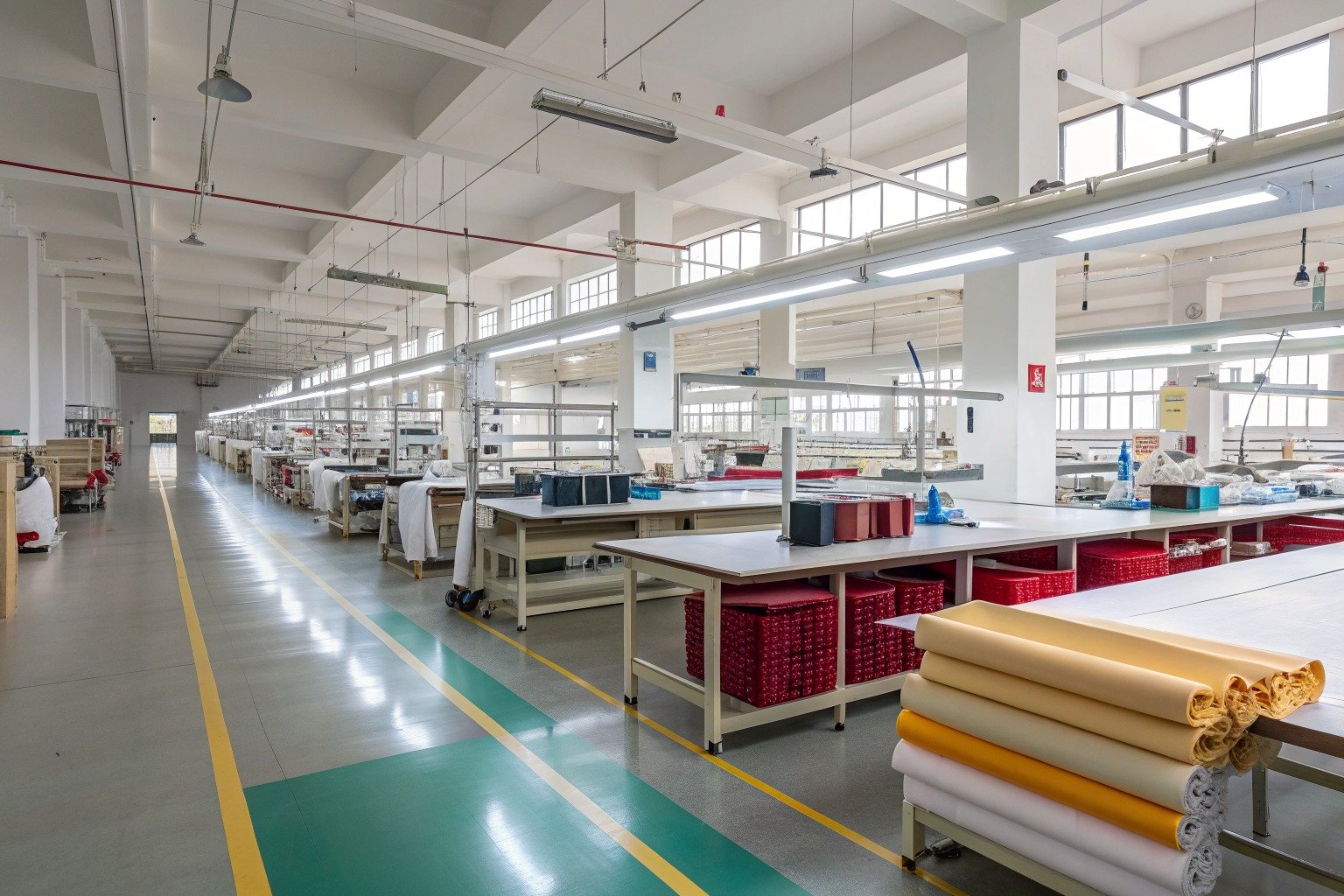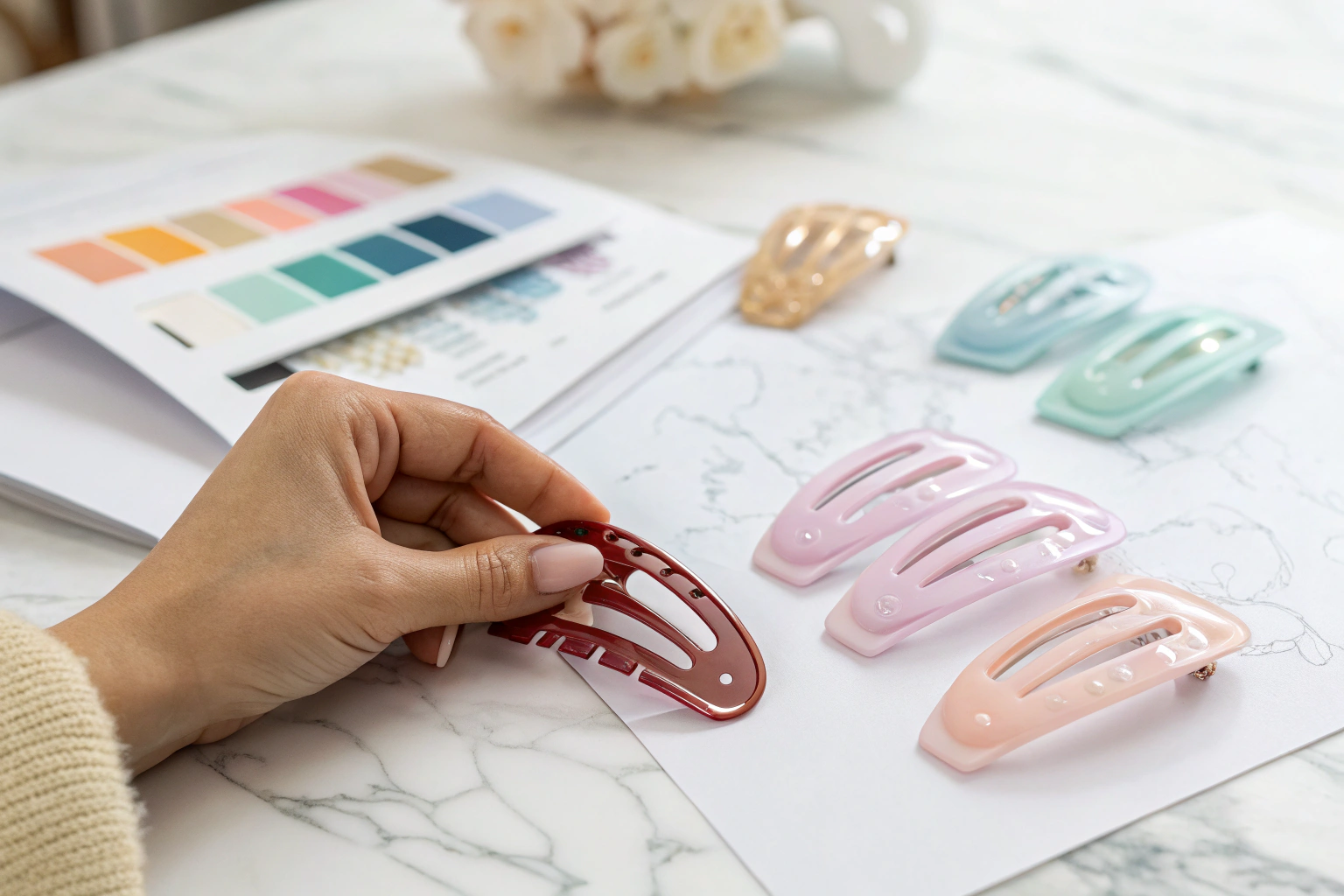
I know the situation. You have a unique hair clip shape in mind. It is not a standard rectangle or a simple bow. It is a custom silhouette that represents your brand, and you need a factory to produce it. You open a supplier’s catalog or inquiry form and see a scary big number under the "minimum order quantity" column. Suddenly, you worry that your idea is dead before it even reaches a sample room because you cannot commit to a container-load of one untested design. I have spoken to hundreds of small brand owners who hit this exact wall. They decide not to launch their accessory line simply because the MOQ conversation shuts them down before it starts.
The minimum order quantity for a custom shape resin hair clip at AceAccessory is flexible, but typically starts around 500 to 1,000 pieces per design, depending on the complexity of the custom mold, the number of color variants, and the finishing details you require. This number is not a rigid rule set to push away smaller clients. It reflects the practical realities of resin molding, material minimums, and the labor involved in moving from a sketch to a finished, packaged product. I want to explain exactly why this number exists and how you can work within it to launch your design without overcommitting your budget.
I have walked many new brand owners through their first custom resin project. The process can be smooth and exciting when you understand the mold economics upfront. I will break down exactly how the MOQ is calculated, what drives the cost, and how you can start small while planning for growth.
What Determines the MOQ for Custom Resin Hair Clips?
Custom resin accessories operate on different economics than fabric-based accessories like scarves or knitted hats. With a scarf, you can order 100 pieces of a custom print and the main cost is the fabric and the screen setup. With resin, you are creating a steel mold that is specific to your design, and that mold has a fixed cost that must be amortized across your production quantity. The smaller your order, the higher the mold cost is as a percentage of each individual unit’s cost. This is the fundamental math that shapes the MOQ.
Why Does a Custom Mold Make Small Orders More Expensive?
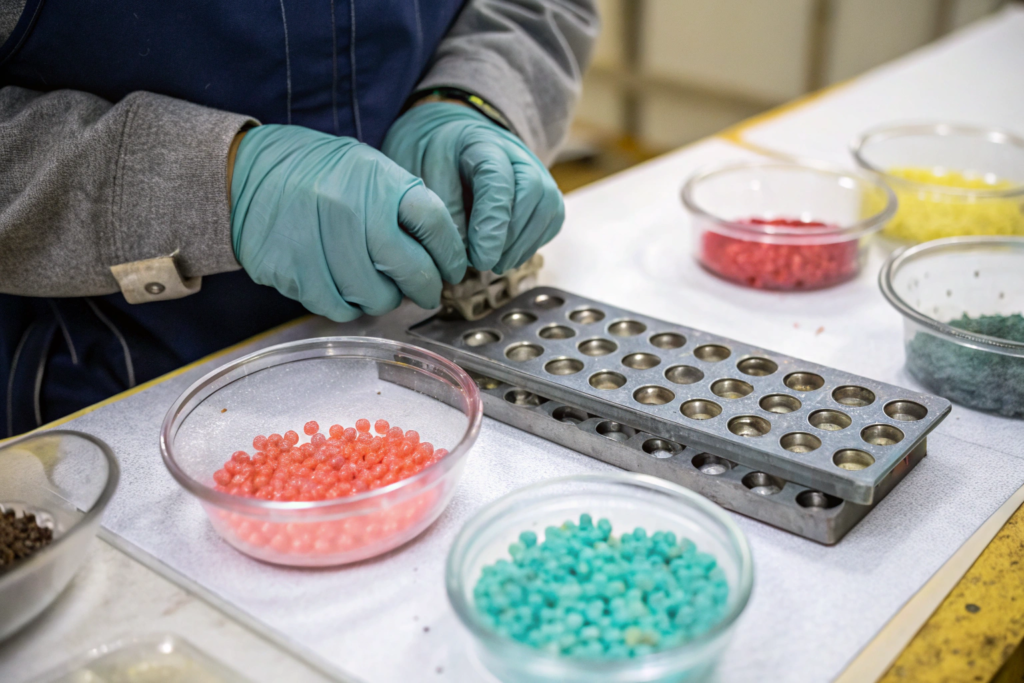
The mold is the heart of your custom resin hair clip. A factory cannot pour liquid resin into the air and hope it forms your shape. The resin must be poured or injected into a precision-machined steel cavity that matches your design’s exact outline, curvature, and thickness profile. That cavity is built into a mold that can cost anywhere from a few hundred dollars for a simple single-cavity open mold to over three thousand dollars for a complex multi-cavity production mold with automatic ejection pins and cooling channels.
When you order 10,000 units, that mold cost spreads thin across every piece. When you order 300 units, the mold cost per piece becomes so high that each hair clip costs several times more than a standard catalog shape, and the retail price becomes difficult to justify. The MOQ of 500 to 1,000 pieces per design exists because that is the crossover point where the amortized mold cost begins to make economic sense for both you and the factory. A professional factory can guide you on how to optimize your custom mold design for cost-efficiency, perhaps by designing a family mold that holds multiple small components of your set in one shot, reducing the number of molds you need.
Another factor is material preparation. Most resin suppliers sell their raw materials in standard bag or drum sizes. A specific colorant might need to be custom-matched to your Pantone reference, and the color lab requires a minimum batch size to achieve a consistent dispersion of pigment throughout the resin. A run of fewer than 500 pieces might not consume the full batch of prepared colored resin, and the leftover material might not be reusable for another client’s order. This material waste drives up the cost on very small runs.
How Do Color Variants and Finishes Affect the Final Quantity?
Each color variant you want for your custom shape hair clip multiplies the production complexity. If your design is a unique cloud-shaped clip and you want it in three different pastel shades with a glossy finish plus a matte version, the factory does not simply swap a color and continue. The injection or casting machine must be purged of the previous color, the mold must be cleaned, and a new batch of tinted resin must be mixed and brought to the correct temperature and viscosity.
A production run of 500 pieces split across four color variants means each variant is only 125 pieces, which is below a practical minimum for efficient machine setup. When you discuss the MOQ with your factory project manager, treat the quantity as per design per color. A reliable project manager will advise you to start your first order with fewer color variants, perhaps one or two best-selling colors, to keep the per-color quantity above a practical minimum and reduce your upfront investment. You can always expand your palette on a reorder once you have proven which color sells fastest in your market. If you are targeting fashion accessories retailers who test new colors every season, this phased approach protects your cash flow while still letting you offer something exclusive.
How Can I Start Small with My First Custom Resin Order?
I never want a brand owner to feel like the only path to custom resin clips is to order thousands of units blindly and hope they resell. There are practical, low-risk ways to start smaller, and I have helped clients use these strategies to launch with confidence. The key is treating your first order as a market validation run rather than a final inventory purchase. When you frame it that way, the numbers become less intimidating.
Is a Sample-Only Development Order Possible Before Committing?
Yes, and this is the step I always recommend before discussing any production MOQ. A sample development order is completely separate from a production order. You pay a one-time sampling fee that covers the cost of creating your custom mold and producing a small number of samples, typically five to twenty pieces in your chosen color. These samples are not for resale. They are physical proofs that let you hold your design, test its comfort and durability, photograph it for your website pre-launch, and show it to a few trusted wholesale buyers or loyal customers for feedback.
The sampling fee for a custom shape resin clip depends on the mold complexity, but for most designs it is a manageable three-figure investment. The critical thing to confirm with your factory is that you retain ownership of the custom mold, even if it was paid for as part of a sampling fee arrangement. At AceAccessory, the sample mold belongs to the client. If you later proceed with a production order, the sampling fee is often credited against the total production invoice. This approach means your initial risk is limited to the sample development cost, and you only commit to production MOQ after you have a finished sample in your hand that you are genuinely excited to sell. When you review samples, test for both aesthetics and function. A clip that looks beautiful but snaps on first use, or that grips too tightly and pulls hair, will generate returns regardless of how low your production cost was. Working with a factory that has a strong product development process ensures these functional issues are caught during sampling, not after mass production starts.
Can I Combine Multiple Small Designs into One Order?
One of the most effective ways small brands reach the MOQ is by combining several related clip designs into a single production order. If you want to launch a "summer collection" featuring three custom shapes in two colors each, the total quantity across all six variants counts toward the overall production volume. This approach lets you offer variety to your customers while still meeting the factory’s minimum batch requirements.
I worked with a boutique owner from California last year who designed four different seashell-shaped resin clips. Each individual design was not a huge seller on its own, but together the set created a compelling collection that her stockists loved because they could display them as a group. Here is how a combined order might break down:
| Design Variant | Shape | Color | Quantity |
|---|---|---|---|
| Variant A | Star | Clear Pink | 200 pcs |
| Variant B | Star | Milky Blue | 200 pcs |
| Variant C | Heart | Clear Pink | 200 pcs |
| Variant D | Heart | Milky Blue | 200 pcs |
| Variant E | Cloud | Clear Pink | 100 pcs |
| Variant F | Cloud | Milky Blue | 100 pcs |
| Total Order | 3 Shapes | 2 Colors | 1,000 pcs |
This structure meets the MOQ because the factory is still producing a total of 1,000 units using shared color batches and similar mold setups. You avoid ordering 1,000 of a single untested design and instead spread the risk across multiple SKUs, giving your collection depth while respecting production practicalities.
What Should I Prepare Before Requesting a Custom Resin Quote?
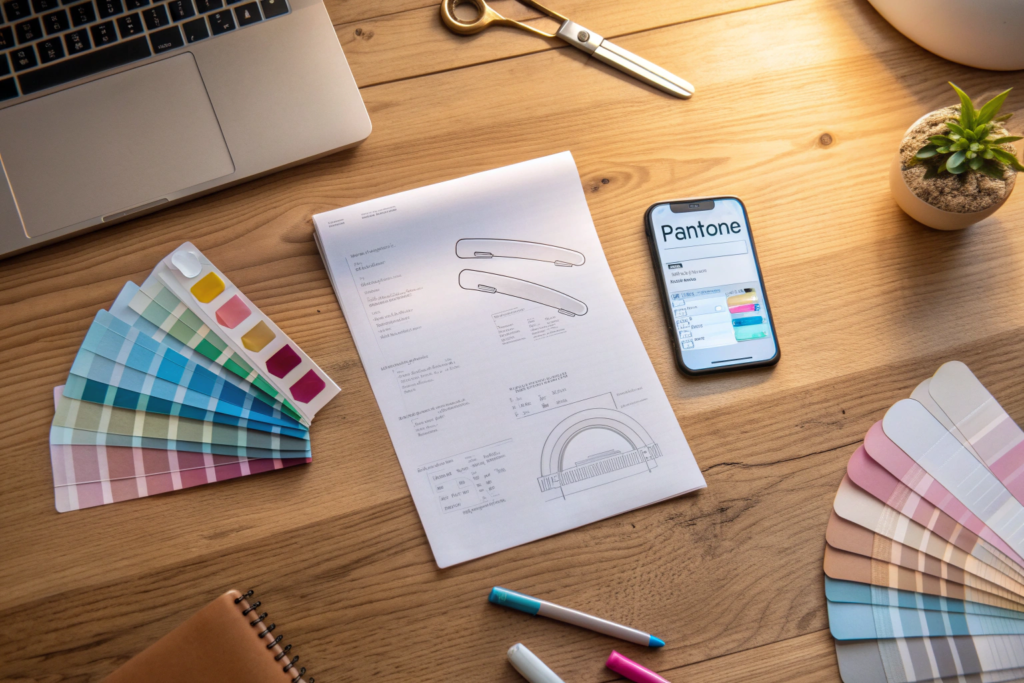
Walking into a quote conversation prepared with the right information sets you up for a fast, accurate response. When a buyer sends me a message that says, "How much for custom resin clips?" with no further detail, I have to reply with ten questions before I can give any useful number. When a buyer sends dimension references, a color target, and a finish preference in the first message, I can often return a pricing estimate within a few hours. Preparation does not mean you need a professional CAD file. It means you have thought through the basics.
What Technical Details Does the Factory Need for a Quote?
The factory needs to know the physical specifications of your design to estimate mold difficulty, material consumption, and production time. The most critical information includes the approximate length and width of the clip in millimeters, the maximum thickness of the resin body, and whether the design has any undercuts, which are indentations or overhangs that make the part difficult to eject from a simple two-part mold. A design with deep undercuts might require a more expensive slide-action mold or a handmade casting process rather than injection molding.
You should also specify the hair clip mechanism. Will it be a snap clip with a metal spring, an alligator clip with teeth, or a slide barrette? The mechanism type affects the mold design because the resin body must have mounting points, recesses, or grooves to securely hold the metal hardware. If you have a physical sample of a clip whose shape you want to modify, ship that reference sample to the factory along with a marked-up photo showing what you want changed. Physical references often communicate curvature and thickness more clearly than dimension numbers alone. For understanding how material choice interacts with design freedom, many of our clients find it helpful to review general resin manufacturing resources before finalizing their concept.
Why Is a Reference Image or Sketch Enough to Start?
You do not need to be a technical illustrator to start the conversation. A clear, well-lit sketch on paper, photographed with your phone, is often enough to begin the quoting process if it includes basic scale references. I have worked with clients who sent nothing more than a pencil drawing of a cloud shape next to a ruler, and from that, our design team created a digital rendering and a mold feasibility assessment within a few days.
What matters is that the sketch shows the outline clearly from a top-down view and that you include notes about the desired size and the location of the clip hardware on the back of the piece. If you have a similar existing clip, even a mass-produced one, take a photo of it next to your sketch and say, "I want a shape like my drawing, but the overall size and spring mechanism like this reference clip." This instantly answers a dozen dimensional questions and accelerates the quoting process significantly. A good factory’s design team should be able to convert your concept sketch into a technical drawing for your approval before any steel is cut.
How Long Does Custom Resin Clip Production Take from Start to Finish?
I know that when you are planning a product launch or a seasonal restock, timing is as important as pricing. A beautiful custom hair clip that arrives two weeks after your key selling window is a costly mistake. Understanding the realistic timeline helps you plan your marketing, your photography, and your wholesale outreach so everything aligns with the moment the inventory lands in your warehouse. Custom resin clip production is not an overnight process, but it is also not a months-long mystery when managed by an experienced project team.
What Are the Key Milestones in the Production Timeline?
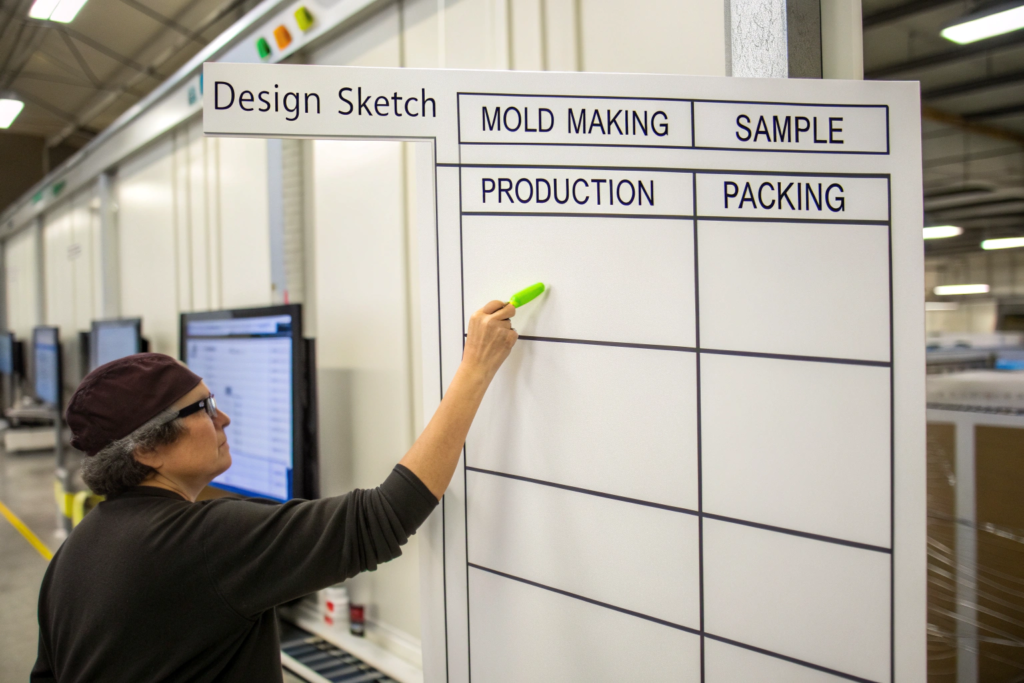
The production journey has distinct phases, and each phase has a predictable duration when the factory has in-house mold-making and sample-stitching capabilities. Outsourced steps, like sending the mold to an external tooling shop, add days to the schedule. An integrated factory controls the entire process under one roof.
Here is a typical timeline for a custom resin hair clip order of 1,000 pieces with a new mold:
| Milestone | Typical Duration | What Happens |
|---|---|---|
| Design Confirmation | 1-2 days | Tech pack reviewed, mold feasibility confirmed |
| Mold Fabrication | 10-15 days | Steel mold CNC machined, polished, tested |
| Pre-Production Sampling | 3-5 days | First samples molded in your color, shipped for approval |
| Sample Approval & Adjustments | 2-5 days | You review samples, feedback implemented if needed |
| Mass Production | 12-18 days | Full quantity molded, trimmed, hardware attached, QC inspected |
| Final Inspection & Packing | 2-3 days | AQL audit, packaging, carton labeling |
| Total Estimated Lead Time | 30-48 days | From confirmed design to ready-to-ship |
This timeline assumes one round of sampling with minor adjustments. If the first sample requires a significant mold modification, the mold fabrication phase might extend by another week. It is always wise to build a two-week buffer into your launch calendar for first-time custom designs. Clients who plan for this buffer are much calmer when a small tweak is needed than clients who scheduled everything back-to-back with no room to breathe.
Can the Timeline Be Expedited for an Urgent Launch?
Yes, but expediting a custom resin order comes with specific trade-offs that you need to understand clearly. The mold fabrication phase is the biggest time driver. A typical 15-day mold fabrication can sometimes be compressed to 8 or 10 days if the factory schedules your mold as a priority job, which usually means paying an overtime surcharge to the tooling department and potentially running CNC machines on a weekend shift.
Expediting also limits your ability to make revisions. If a normal timeline allows you to review a sample, request a color tweak, and still proceed, an expedited timeline might leave you with a single sample review and a "proceed or pause" decision with no room for refinement. I tell clients that expediting is most appropriate for a reorder of an existing custom design where the mold is already proven. For a first-time custom shape, protecting the development timeline is almost always the right call. Once the mold is confirmed and production is running, your project manager can advise on shipping method acceleration. For an urgent small order, switching from ocean freight to an air freight consolidation service can recover two to three weeks on the logistics side without touching the factory schedule.
Conclusion
A custom shape resin hair clip is one of the most rewarding accessories a brand can develop. It is a signature piece that no competitor can simply order from a generic catalog and slap their logo on. The minimum order quantity, typically 500 to 1,000 pieces per design at a quality-focused factory, exists because of the real economics of mold fabrication, resin material batch sizes, and color changeover efficiency. This number is not a barrier designed to exclude small brands. It is the crossover point where custom production becomes economically rational for both the buyer and the manufacturer.
You can start small by separating sample development from production commitment, combining multiple designs into a first collection to reach the MOQ with variety rather than volume on a single SKU, and coming to the quoting conversation prepared with sketches, dimensions, and color references that let the factory give you a fast and accurate estimate. The typical production timeline of 30 to 48 days gives you a clear planning window, and the ability to expedite, when truly necessary, provides a safety valve for time-sensitive launches, though I always recommend protecting the full timeline for a brand-new custom shape.
I have watched many small accessory brands launch with a single custom resin clip design that became their best-selling signature item. The process works when you have a factory partner who explains the MOQ logic honestly, helps you structure your first order to manage risk, and treats your custom mold as your asset, not theirs.
If you have a sketch of a custom resin hair clip sitting in your notebook and you want to see it become a real sample in your hand, I invite you to start that conversation with us. Contact our Business Director Elaine at elaine@fumaoclothing.com and send her your concept sketch, your desired color palette, and your target launch timeline. She will walk you through the development process, provide a transparent sampling and production quote, and connect you with the project manager who will oversee your custom design from sketch to finished product. That first sample in your hand is closer than you think, and it is the moment that turns a brand idea into a physical reality.