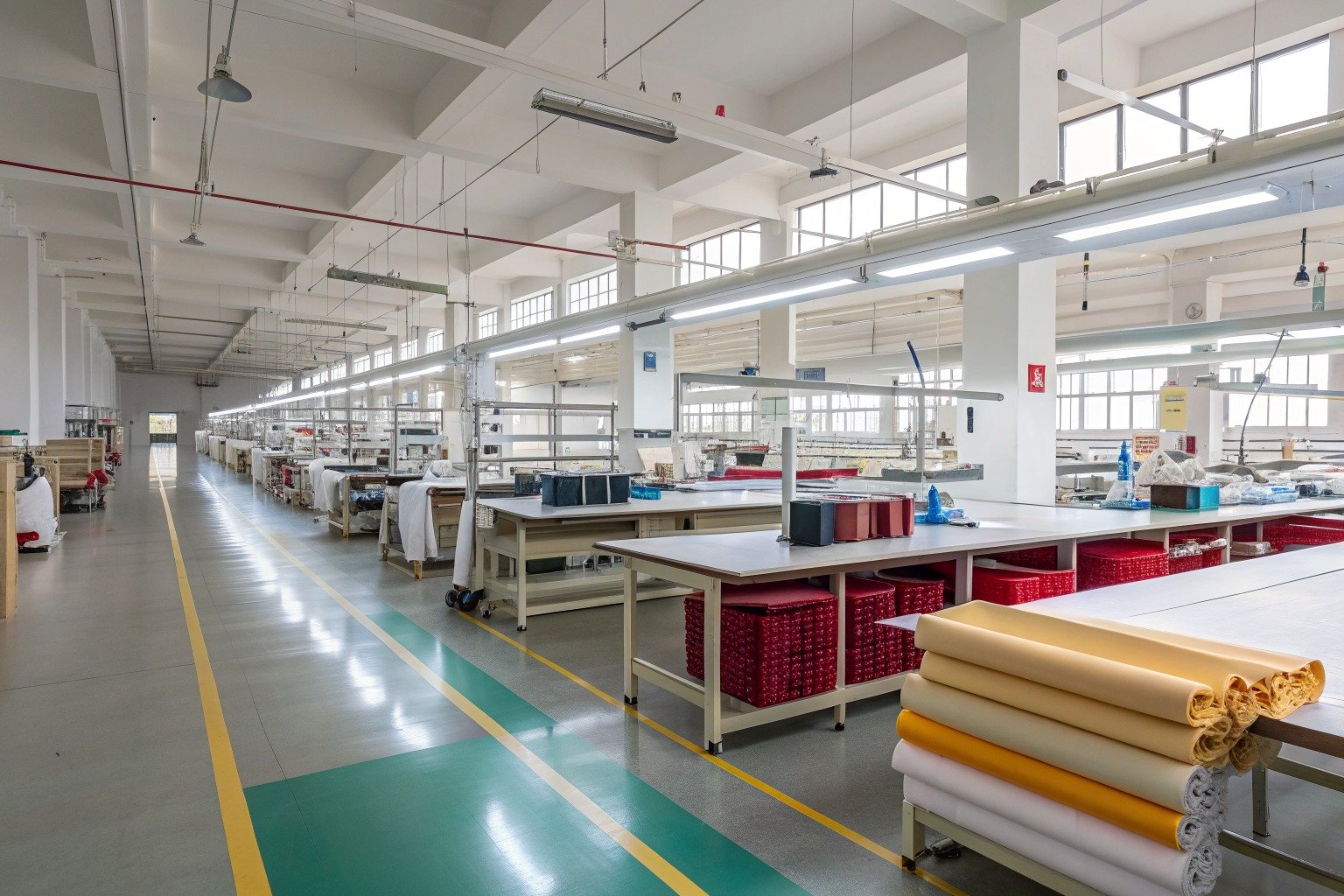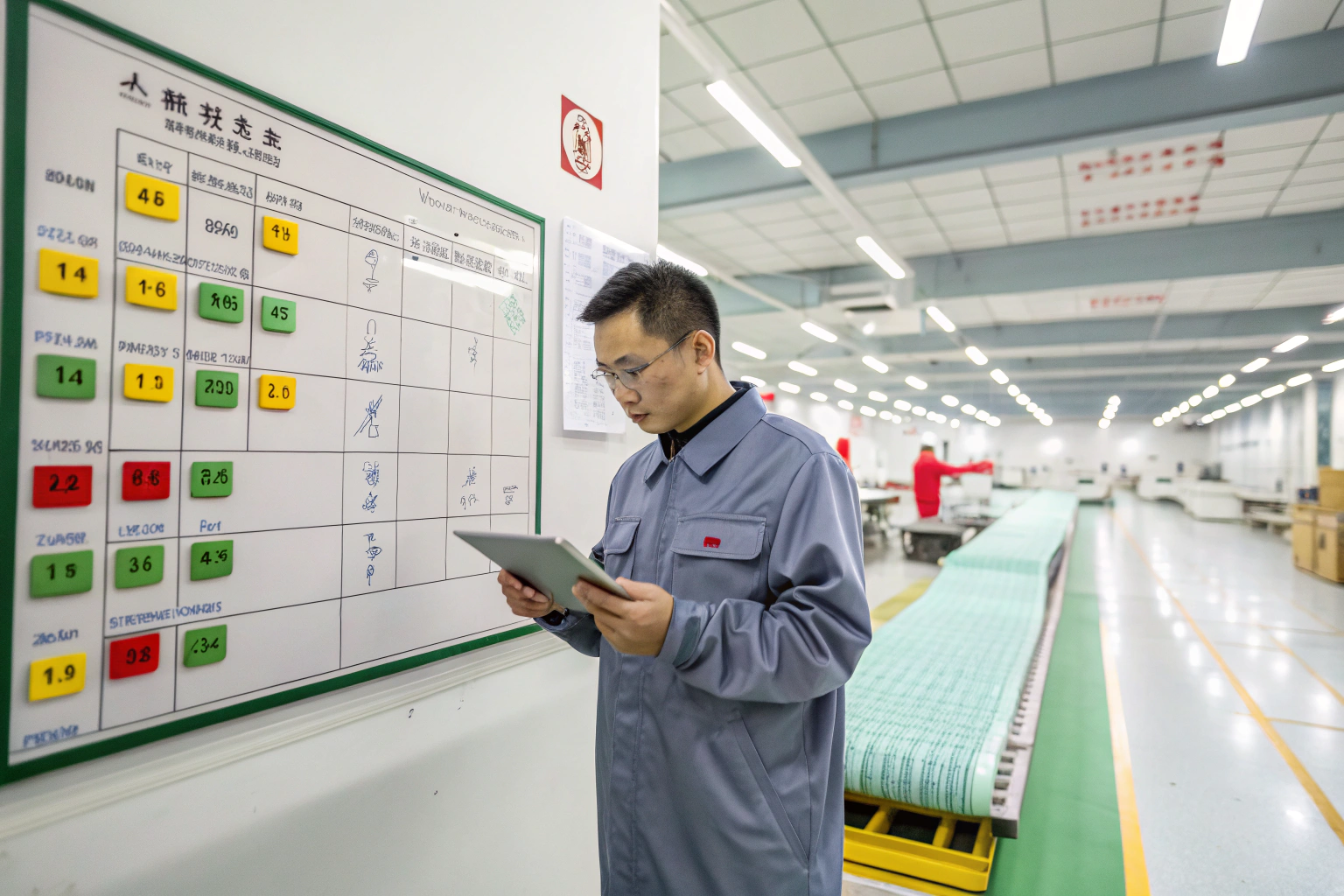
I want you to imagine two different factories. In the first one, you place an order, you wait six weeks, and you get an email saying the goods are ready. You have no idea what happened in between. In the second one, you receive a series of specific, visual updates at each stage of production, and by the time the goods reach the packing line, you have already seen them cut, assembled, inspected, and counted. The difference between these two experiences is not luck. It is a defined tracking system executed by a project manager who treats your order like a live project with checkpoints, not a black box with a delivery date.
At AceAccessory, every order assigned to a project manager follows a stage-gate tracking workflow from raw material release all the way to final pallet scanning. I built this system after hearing too many buyers complain that their previous factories were "good at samples but bad at updates." A tracking system only matters if the updates reach you before decisions become irreversible. That means the project manager does not just walk the floor casually. They follow a documented schedule of checks, document each gate with photos and measurements, and communicate those checkpoints to you on a predictable calendar rhythm. I will now show you exactly how this works inside our Zhejiang factory.
What Does a Stage-Gate Tracking Process Look Like for Accessories?
A stage-gate process means your order cannot move from one production phase to the next until a project manager has signed off on that gate. This sounds obvious, but many factories skip the sign-off because the production manager is under pressure to keep lines running. Our project managers have the authority to pause a handoff if the previous stage did not meet the specification standard. This authority is what protects your order from the cascade effect, where a small cutting error gets buried under layers of assembly and finishing until it is too expensive to fix.
How Does the Cutting Stage Gate Prevent Material Waste?
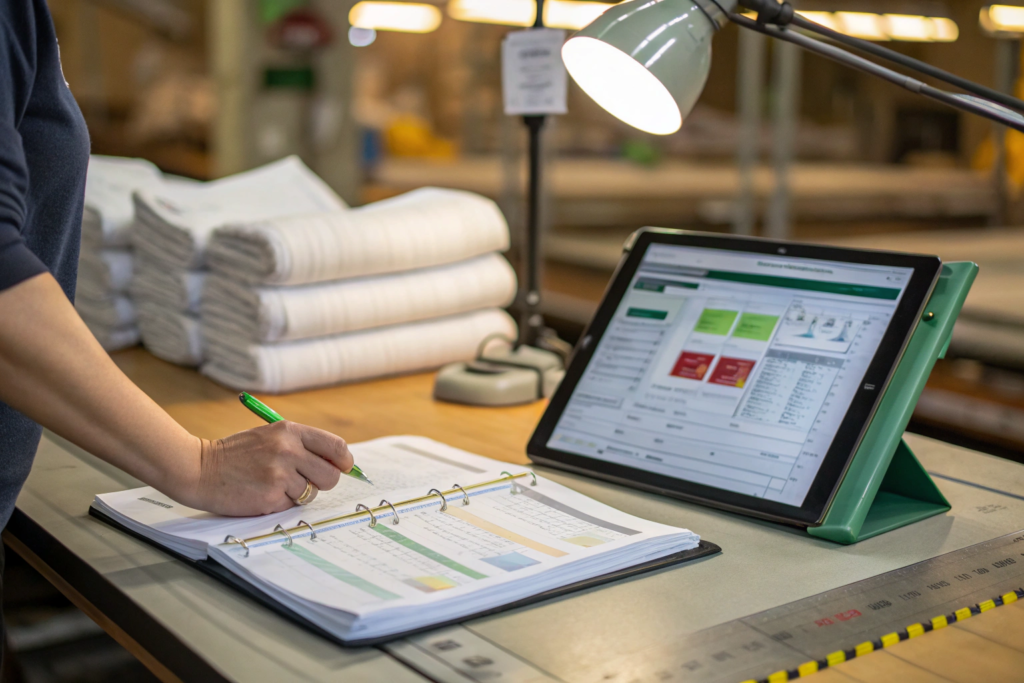
Cutting is the first moment where fabric or material becomes your product, and it is the most unforgiving stage for mistakes. If a cutting table operator sets the die cutter two millimeters too wide on a run of wool felt for winter hats, every single hat in that batch will be oversized, and the error will not be visible until the hat is sewn and measured against the spec. By then, the material cost is sunk and the labor hours are spent.
Our project manager visits the cutting table within the first hour of a new production batch. They take a photo of the first cut pieces laid out on the inspection table, often with a measuring tape or caliper placed directly on the material for scale reference. They send that photo to you via email or WhatsApp with a short note reading something like, "Cutting started on your order of felt fedora brims. Width measured at 9.5cm per tech pack spec. Material yield tracking on target. Will send a full update after cut completion." You now know the factory started with reference dimensions correct. A factory without this gate might run the entire cut before anyone checks, and if the die was set wrong, your material is wasted and your timeline is blown.
Beyond the first piece check, the project manager tracks material yield during cutting. Fabric and synthetic leather have grain directions, pattern repeats, and natural flaws that a skilled cutting team navigates daily. A good project manager knows the expected material utilization rate for each accessory type. If your fabric sourcing supplier delivered a roll with an unexpected flaw running down the center, the project manager calculates how many additional meters will be consumed and informs you of any cost adjustment before the cutting finishes, not after the invoice is prepared.
How Are First-Piece Approvals Managed Before Mass Production?
The first finished piece off the sewing or assembly line is the single most important unit in your entire order. If this piece is wrong, every subsequent piece will replicate that error. We treat the first-piece approval as a formal gate that requires documented sign-off before the line can proceed.
Here is the exact sequence the project manager follows. When the first complete unit comes off the assembly line, the project manager takes it to the QC inspection table under standardized D65 lighting. They lay the piece next to the approved golden sample and the original tech pack. They photograph it from multiple angles with a measurement tool in frame for scale. They check the following items: stitching tension, seam alignment, hardware attachment strength, color matching against the Pantone reference, and any logo or branding placement. The photos and a brief checklist are compiled into a PDF and sent to you within two hours of the first piece being ready. The mass production line does not proceed until you reply with written approval, or if you have given us pre-authorization based on a qualified sample match, the project manager documents that internal authorization and proceeds. This gate prevents what I call "runaway production," where a factory builds thousands of units based on a hopeful interpretation of your spec rather than a verified match.
How Do Inline Inspections Catch Defects During Your Order?
Inline inspection is what happens during production, not before it and not after it is too late to adjust. This is the phase where a good project manager earns their value, because defects caught during inline inspection can be corrected with minimal rework cost. Defects caught during final inspection, when cartons are already taped and the container booking is confirmed, force you into a painful trade-off between quality and delivery. Our tracking system places the project manager physically at the production line at the 30% completion mark and again at the 70% mark for high-value orders. They are not just observing. They are pulling random units, measuring them, and comparing them against the approved first piece.
What Does a Project Manager Check During the 30% Production Mark?
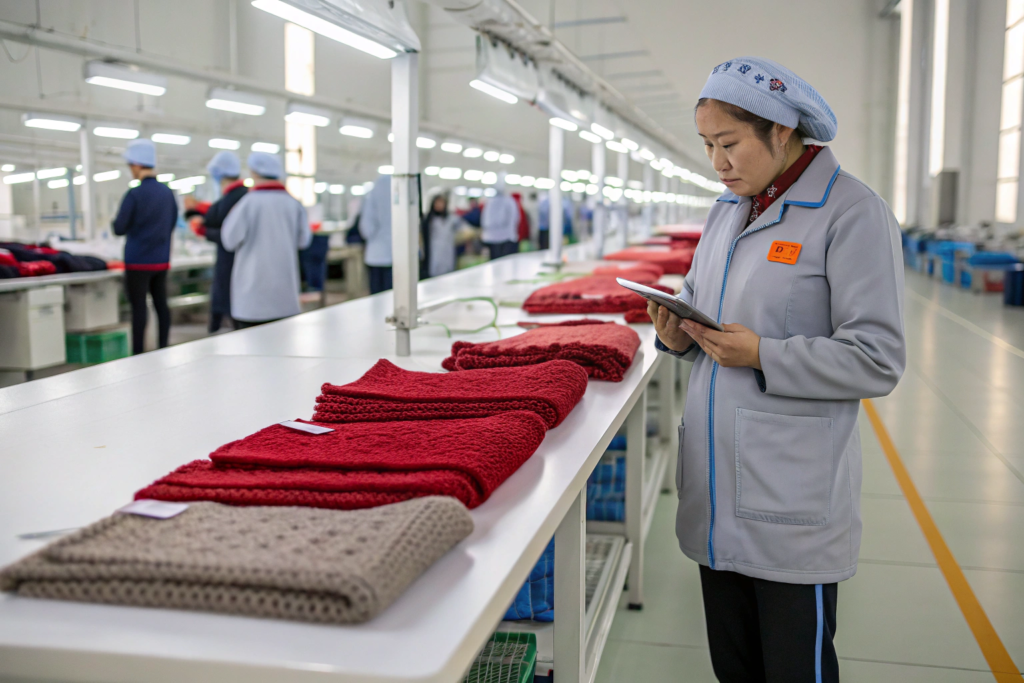
At the 30% completion point, enough units exist to reveal patterns but not so many that correction is expensive. The project manager takes a random sample of 50 to 80 pieces directly from the production line, not from a pre-selected batch the line supervisor has prepared. They check for consistency across operators. One sewing operator on station three might be setting belt loops slightly lower than the operator on station five. The difference is only two millimeters, so the final inspector might not flag it, but a retail customer comparing two belts on a store rack might notice and return one.
The project manager records their findings on a tablet-based inline inspection checklist. Any operator whose work shows a deviation gets immediate feedback and the station is recalibrated. A photo of the corrected unit is added to the inspection report. This eliminates operator drift, which is one of the most common and least detected sources of returns in accessory manufacturing. You receive a summarized report after the inspection is complete, including sample measurements and any corrective actions taken. If you source custom accessories with tight retailer compliance requirements, this inline report becomes documentation you can use to demonstrate process control to your own buying office.
How About the 70% Production Mark for Final Inline Verification?
By 70% completion, the order is too far along for major design changes, but still early enough to catch a systemic finishing issue. This inspection gate focuses on finishing quality: plating adhesion on metal hardware, end finishing on woven belts, consistency of embroidery thread tension on branded caps, and proper setting of any adhesives used in hair clip assembly.
The project manager also cross-checks the actual produced quantity against the production schedule at this point. If output is running slower than planned, this is the moment to alert the logistics coordinator about a potential vessel rebooking need. Catching a schedule slip at 70% production gives us ten to fourteen days of adjustment room. Catching it at final packing gives us zero days and a stressful conversation. After the 70% inspection, you receive a brief update that might say, "Verification completed at 70%. All finishing parameters are within tolerance. Output is tracking 1.5 days ahead of schedule. Final inspection estimated for the 28th." You can now plan your warehouse receiving schedule with real information, not a guess.
How Is the Final Audit and Packing Process Documented for Your Review?
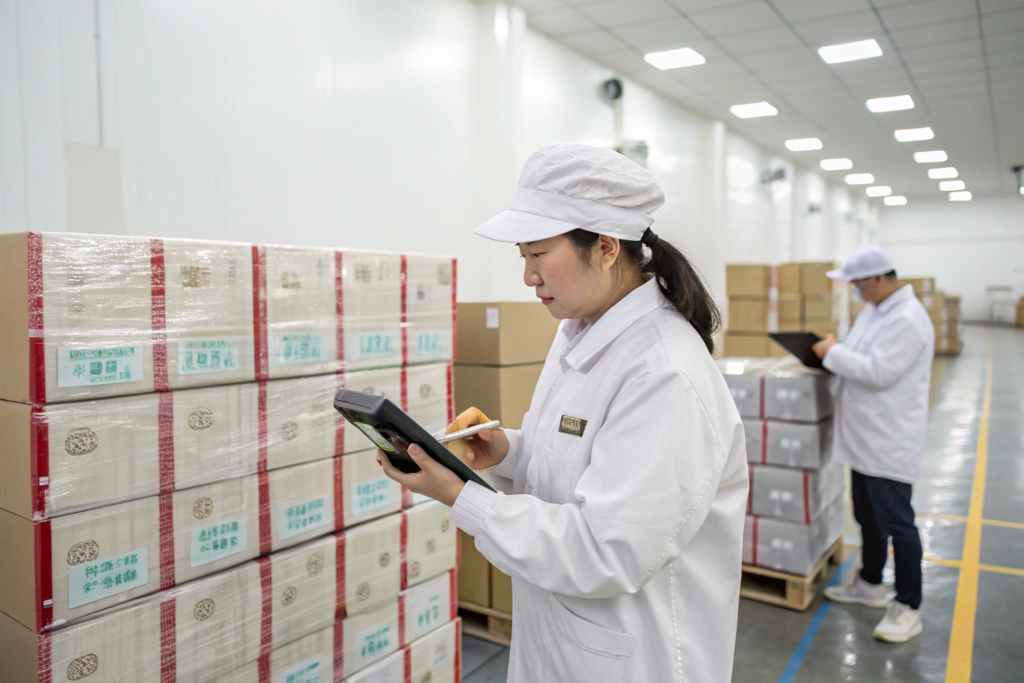
Final audit is the last checkpoint before your goods enter the sealed container, and it must be the most rigorous because it is the last point at which we control the outcome. The project manager does not perform the final audit alone. A separate QC team member runs the inspection to ensure an independent set of eyes reviews the order. The QC inspector uses the Acceptable Quality Limit sampling standard that you and the project manager agreed upon at the contract stage, typically AQL 2.5 Level II for major defects and AQL 4.0 Level I for minor defects in fashion accessories.
What Standards Are Applied to the Packing Quality Check?
Packing quality is not just about whether the product is inside a box. It is about whether the packaging will survive the journey and whether the barcode scans correctly at the destination warehouse. One of the most expensive and avoidable problems in ecommerce fulfillment is a barcode that will not scan because of poor print contrast or placement on a curved package surface.
The QC inspector pulls random cartons from the packed pallet based on the AQL sample size table. Each selected carton is opened. The inspector checks that the inner packaging matches the approved packaging sample, that hang tags are correctly attached and facing the right direction, that barcode labels scan on the first attempt using a test scanner, and that the polybag thickness meets any regulatory requirements for the destination market. The inspector also performs a drop test on one packaged unit per carton selected, dropping it from one meter onto a concrete floor and then inspecting for product damage or package failure. A packing standard this detailed prevents chargebacks from retailers who have strict receiving dock compliance programs and will reject entire pallets for scannable barcode failures or crushed gift boxes inside otherwise intact shipping cartons.
How Do You Receive the Final Inspection Report and Shipping Confirmation?
The final inspection report is delivered to you as a single PDF document containing the following sections: a cover page with your order number, product description, and inspection date; a summary table showing the AQL sample size, number of defects found by category, and pass or fail result; photos of the inspected samples with defects circled and annotated where applicable; photos of the packed cartons with shipping marks clearly visible; and a scan verification confirmation from the barcode test. This report is sent to you within twenty-four hours of inspection completion, and you must provide written approval before the container is sealed.
Once you approve, the project manager photographs the container loading process. The photo shows the container number, the cartons inside, and the seal being applied to the closed doors. You receive a final shipping confirmation document that includes the vessel name, estimated departure date, container number, seal number, and a link to the carrier’s tracking portal. Our project manager then schedules a follow-up message timed to the estimated arrival date, checking whether your customs clearance proceeded smoothly and whether the goods have reached your warehouse. This post-delivery check is a small gesture that signals we care about the full journey, not just the ex-factory moment.
How Does the Project Manager Handle Urgent Changes or Delays?
I need to be honest with you about something. In manufacturing, things occasionally go off plan. A subcontractor delivers plated buckles three days late. A fabric dye lot comes out slightly lighter than the lab dip. A key machine requires unexpected maintenance. What separates a professional project manager from an order taker is how they handle these moments. They do not hide. They do not hope you will not notice. They surface the problem early, present options with clear trade-offs, and let you make the decision with full information.

What Communication Protocol Is Followed When a Delay Occurs?
The protocol we follow is simple. Within six hours of confirming a delay that affects your delivery date, the project manager sends you a direct message, not a generic company email. The message contains three specific elements: what happened, what impact it has on your timeline, and what options are available to you.
For example, if a plating bath issue at the subcontractor causes a three-day delay on your belt buckle delivery, the project manager will write something like this: "The matte gold plating on your 35mm buckles showed inconsistent finish on the latest batch. The plating supervisor has rejected the batch and started re-plating. This will push buckle delivery to our assembly line by three days. Here are your options. Option A: we accept the three-day delay and rebook the vessel to the next sailing, which departs five days later and arrives two days after your original ETA. Option B: we air-freight 30% of your order via express to cover your immediate stock need, and ocean-freight the remaining 70% on the original vessel. Air freight cost is estimated at $480. Please advise which option you prefer." You receive this message with enough time to make a calm decision, not a panicked one. This approach is what leads buyers to trust that even when things go wrong, they will not go off a cliff without warning.
How Are Specification Corrections Logged and Tracked Across Reorders?
When a specification adjustment is made during a live order, whether it is a packaging barcode position shift or a material substitution, that change must live beyond the current production run. A project manager who only fixes problems in the moment creates future problems for you on the next reorder, because the old spec still sits in the master file and the new team member processing your next order will not know about the verbal agreement made six months ago.
We maintain a change log for every client’s product line. Every specification correction, whether initiated by you or by our QC team, is recorded with a date, a description of the change, and the reason for the change. This log is attached to your master tech pack file. Before any reorder goes into production, the project manager reviews the change log with you on a five-minute call to confirm that all previous adjustments still apply. Nothing is assumed, nothing is forgotten, and your product specification stays accurate across multiple production cycles without you needing to re-explain your history each time.
Conclusion
Tracking an order from cutting to packing is not a passive monitoring activity. It is an active, stage-gated workflow where the project manager physically verifies each production phase, documents findings, and communicates those findings to you on a schedule you can plan around. The cutting stage gate confirms material dimensions before waste accumulates. First-piece approval stops runaway production on a flawed reference unit. Inline inspections at 30% and 70% completion catch operator drift and finishing issues while correction is still affordable. Final AQL audit and packing verification protect you from receiving a container of goods that look right on the outside but fail under scrutiny.
The communication protocol for delays and changes ensures that when something goes off plan, you learn about it early and receive clear options rather than excuses. The change log system preserves every specification decision across reorders so your product quality stays consistent year after year, even as your order volume grows and your team changes.
This is the tracking discipline our clients rely on. It is what allows them to step away from daily factory supervision and focus on selling their products, confident that a capable project manager is watching their order with the same care they would apply if they were standing on the factory floor themselves.
If you want to experience this level of order transparency on your next production run, I encourage you to reach out. Contact our Business Director Elaine at elaine@fumaoclothing.com and tell her about your current product line and what you wish your current factory did better on communication. She can set up a call with one of our senior project managers who will walk you through a sample tracking schedule and show you exactly what your first order would look like from cutting to packing. One well-tracked order is usually all it takes to see the difference.