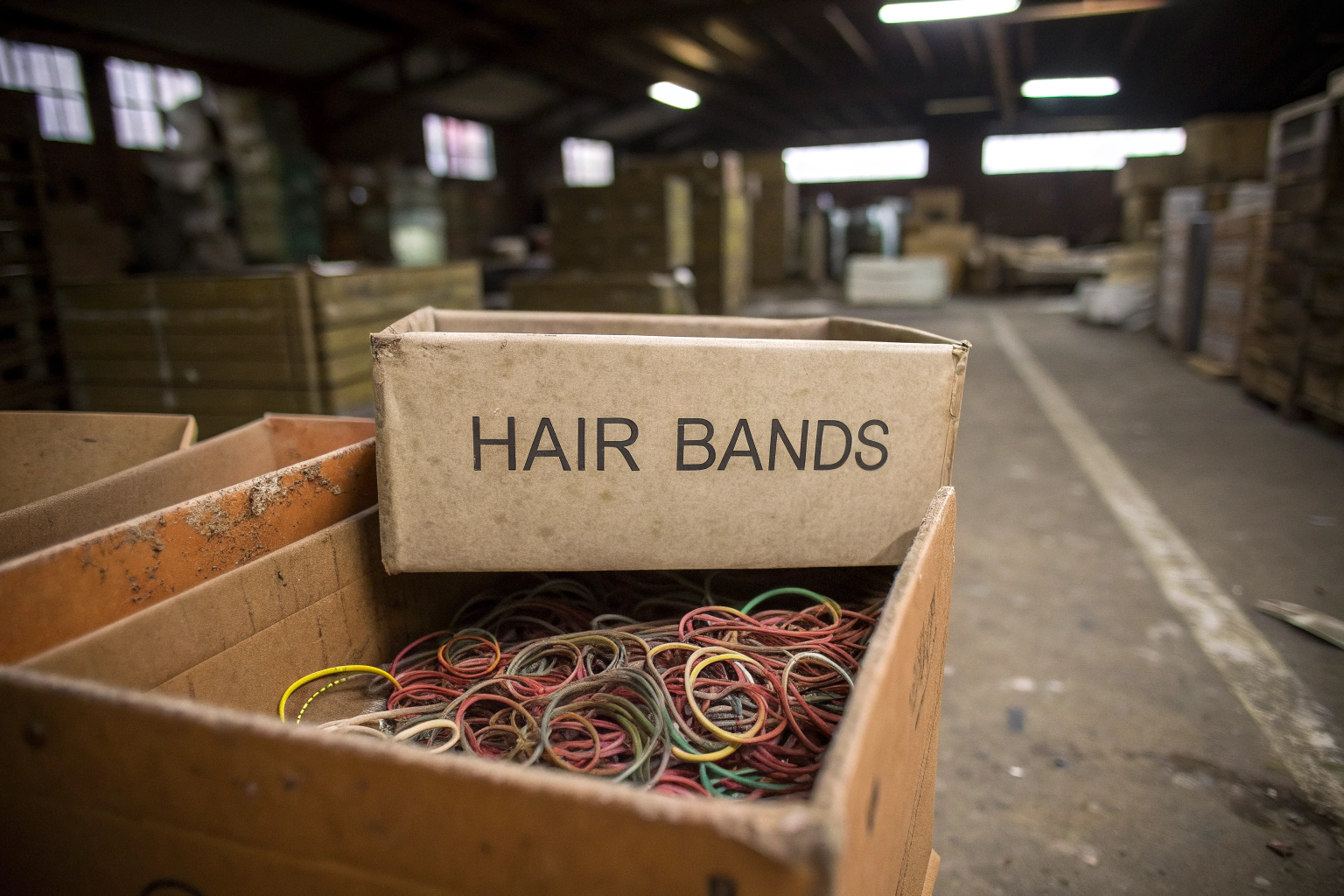
I once had a client who found a dusty carton of hair bands in her warehouse. They were from an order she placed two years prior. They looked fine in the bag. She sent them to her Amazon FBA center. A week later, the returns started flooding in. Customers complained the bands snapped on the first stretch or felt "gummy" and sticky. She called me, confused. "They were just sitting in a box. How did they go bad?" The answer is simple: elastic is not immortal. It degrades over time, even when it is just sitting on a shelf. If you are like Ron, you buy in bulk to get the best unit price. But if you don’t understand the shelf life of the material, you risk selling a defective product that will destroy your brand’s reputation for quality.
The average shelf life of a properly stored elastic hair band is 2 to 3 years from the date of manufacture. After this period, the polymer chains in the elastic begin to break down due to oxidation and hydrolysis, leading to a loss of stretch, brittleness, and surface tackiness. Environmental factors like heat, humidity, and UV light exposure dramatically accelerate this degradation. Therefore, inventory rotation and proper storage conditions are critical for maintaining product integrity.
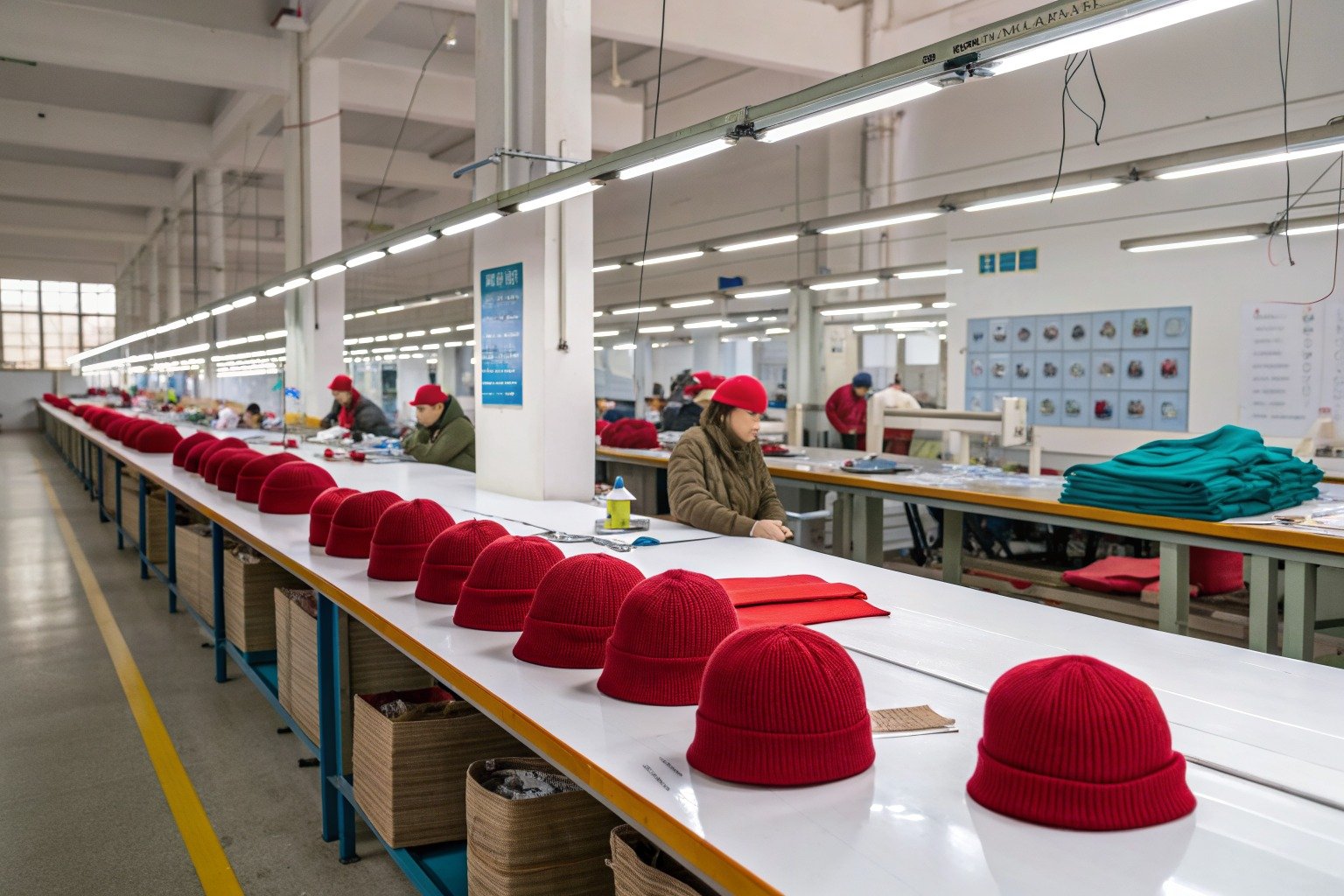
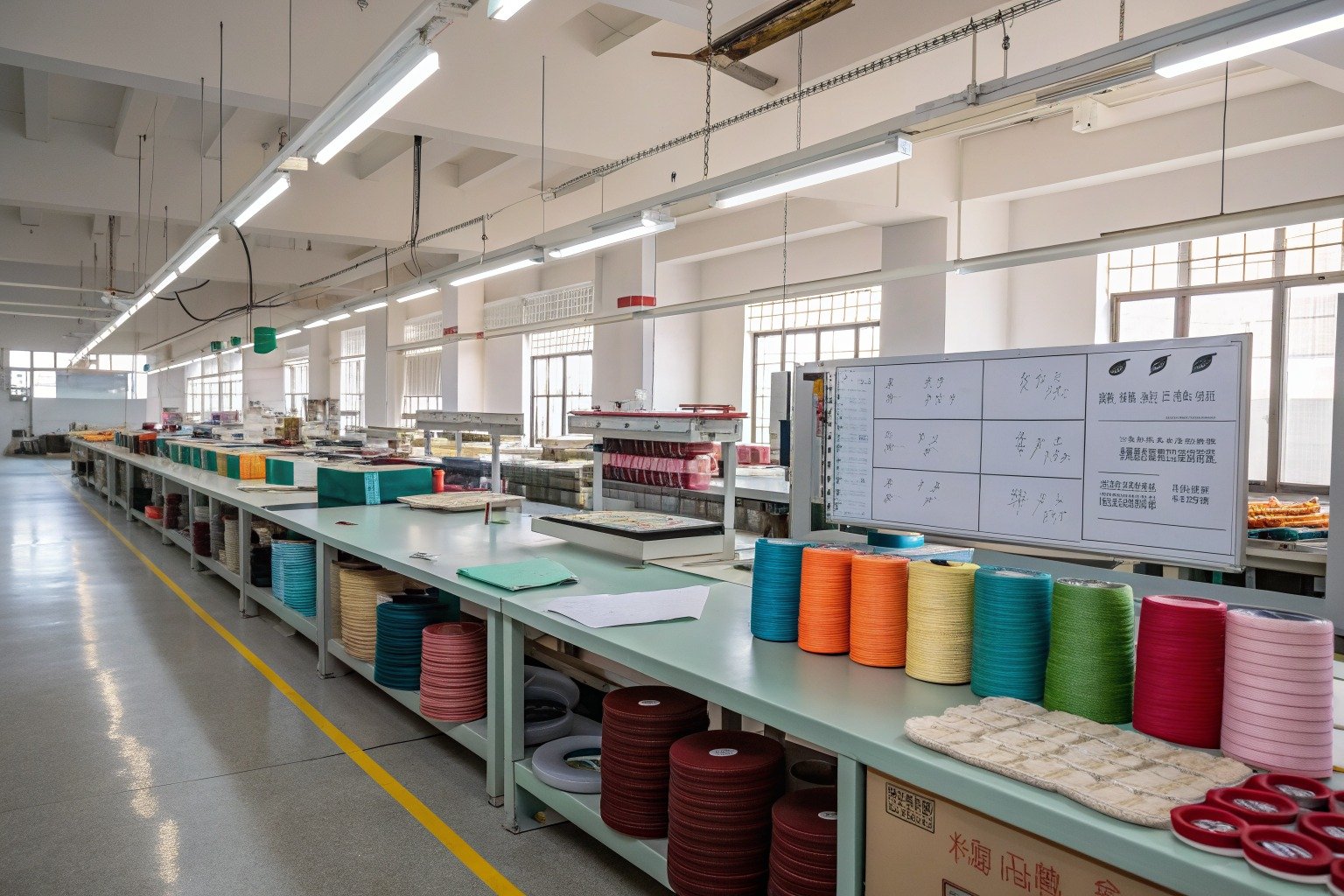
I run AceAccessory in Zhejiang Province. We manufacture millions of hair bands and hair ties every year. We use fresh elastic from the mill. We date-code our inventory. I have seen firsthand how a hot warehouse in summer can age elastic by six months in just a few weeks. The shelf life of your hair bands starts ticking the moment the rubber or spandex is extruded, not the moment you sell it to a customer. Let me walk you through the science of why elastic dies, how to spot aging before you ship, and how to store your inventory to maximize its lifespan.
Why Do Elastic Hair Bands Degrade Even in Storage?
The enemy of elastic is not just use. It is time and oxygen. The core component of most hair bands is a polymer—either natural rubber, synthetic polyurethane (spandex/elastane), or a blend. These polymers are long chains of molecules that give the band its stretch. Over time, these chains react with oxygen in the air. This is called oxidation. The chains break. They become shorter and less flexible. The band loses its "snap."
The second enemy is moisture. Humidity in the air causes hydrolysis, especially in polyurethane-based elastics. This is a chemical reaction where water molecules actually cut the polymer chains. This is why a band stored in a damp basement will degrade much faster than one stored in a climate-controlled room.
Even in perfect storage, the plasticizers and oils used to keep the elastic soft and pliable will slowly migrate to the surface. This is what causes that "sticky" or "gummy" feel on old bands. The oils are leaving the elastic, leaving behind a dry, brittle skeleton. You cannot reverse this process. Once an elastic band feels sticky or has white powdery bloom on it, it is end of life. Do not sell it. At AceAccessory, we educate our clients on this material science so they can plan their inventory purchases accordingly.
How Does Oxidation Affect the Tensile Strength of Hair Ties?
Tensile strength is the measure of how much force a band can take before it snaps. A fresh, high-quality hair band can stretch to 3 to 5 times its original length without breaking. An oxidized band might snap at 1.5 times its length.
Let me give you a real-world comparison from our QC lab testing:
- Fresh Band (0-6 months): Stretches smoothly to 20cm. Snaps back instantly with no deformation.
- Aged Band (18-24 months): Stretches to 15cm with resistance. Feels "stiff." May snap during the stretch. If it doesn’t snap, it recovers slowly and remains slightly elongated.
- Dead Band (3+ years): Crumbles or snaps immediately upon stretching.
The oxidation process is accelerated by heat. For every 10°C (18°F) increase in storage temperature, the rate of oxidation roughly doubles. A container sitting on a dock in Los Angeles in August (100°F inside the container) is aging the elastic 4 times faster than if it were in an air-conditioned warehouse (70°F). This is a critical point for buyers who import from China. The journey itself is a stress test. We use desiccant packs in every carton of hair bands to combat humidity during ocean transit, but we cannot stop the heat entirely. That is why we always recommend shipping elastic goods via sea freight during cooler months or using expedited services if the inventory is time-sensitive.
What Is "Bloom" and Why Does It Indicate End of Shelf Life?
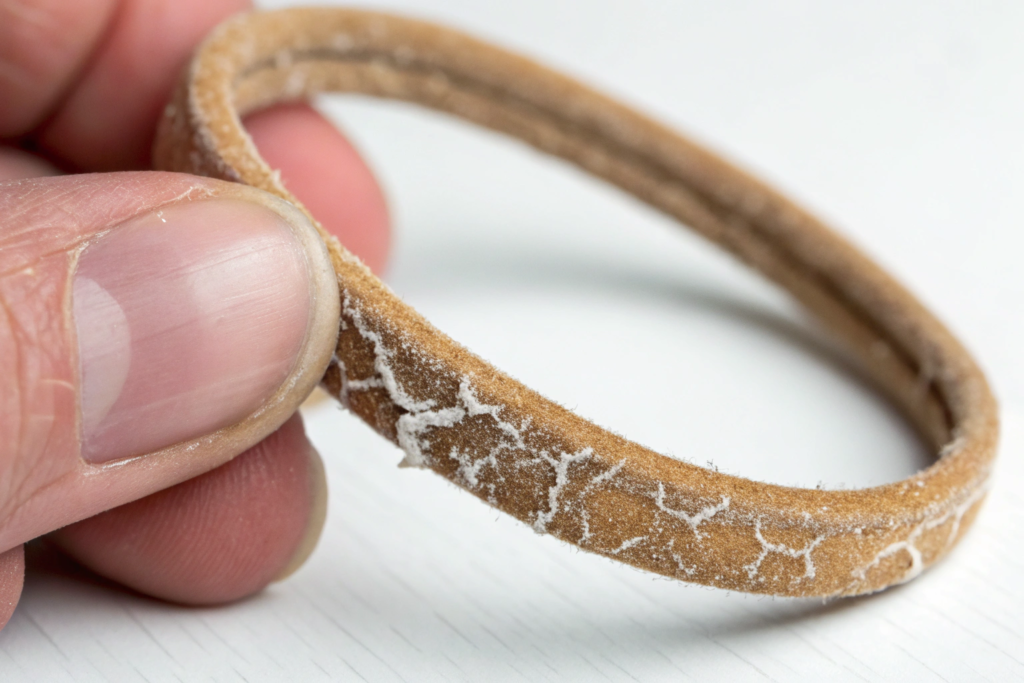
If you open an old bag of hair bands and see a white, powdery film on the surface, you are looking at "bloom." This is a common misconception. Many people think it is mold. It is not mold. It is the solidification of the plasticizer or antiozonant that has migrated out of the rubber compound.
Here is the technical explanation: Rubber formulas contain waxes and oils to keep them flexible and to protect against ozone cracking. Over time, these additives are incompatible with the rubber matrix and they "bloom" to the surface. This is the same phenomenon you see on an old chocolate bar (fat bloom) or an old tire.
Can you just wipe it off? Yes, you can wipe the powder off. But the damage is done. The ingredient that was protecting the elastic is now gone. The band underneath is dry and compromised. If you ship these bands, they will feel okay for the first use or two, but they will break within a week of regular wear. The customer will blame your brand, not the chemistry of rubber.
Our QC team at AceAccessory checks for bloom on 100% of outgoing shipments of aged stock. If we see even a hint of surface powder, the lot is quarantined and not shipped. We would rather take the loss on the material than have our client take the loss on their brand reputation .
How Should You Store Bulk Elastic Hair Accessories for Longevity?
If you buy 50,000 hair bands to get a good price, you need to store them like a museum stores artifacts. Proper storage can extend the usable shelf life of elastic by 12 to 18 months beyond the standard 2-year window. Poor storage can destroy a batch in a single summer.
The ideal storage environment for elastic goods is Cool, Dark, and Dry.
- Temperature: Below 25°C (77°F). Ideally 15-20°C (60-68°F).
- Humidity: Below 50% Relative Humidity.
- Light: Zero exposure to direct sunlight or fluorescent UV light.
At AceAccessory, our finished goods warehouse is climate-controlled. We keep the elastic and finished hair accessories away from exterior walls that heat up in the sun. We also store them away from ozone-generating equipment like electric motors or laser printers. Ozone is a gas that causes severe cracking in stretched rubber. It is the reason rubber bands in an office drawer near a printer turn to goo so fast.
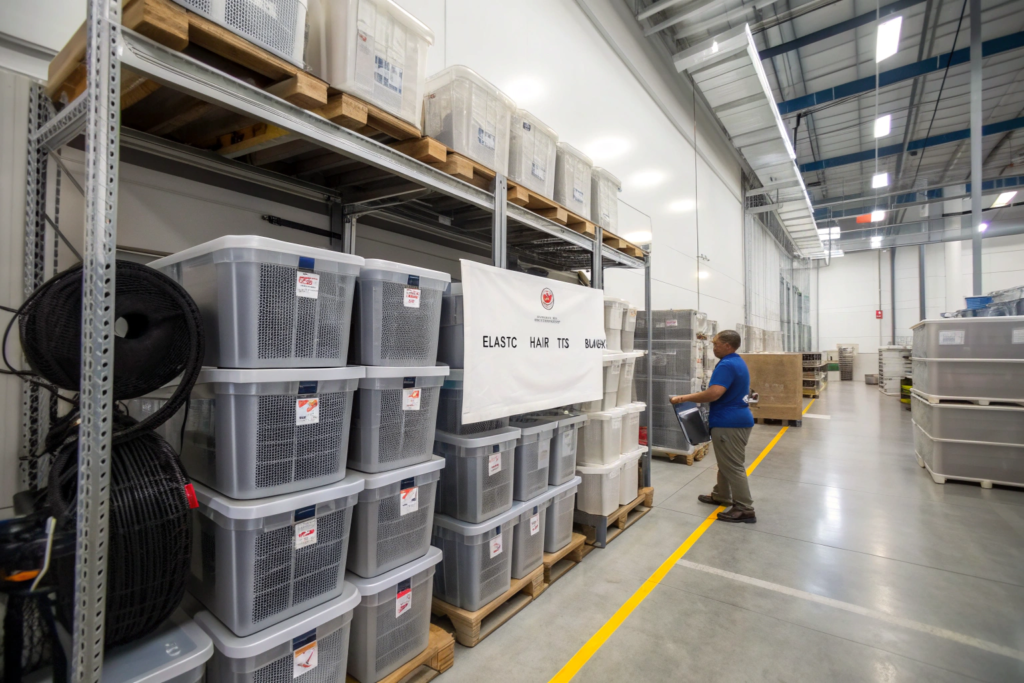
For our clients, I recommend using opaque plastic bins with tight-fitting lids. Do not store hair bands in clear polybags on open shelving. Light is a catalyst for degradation. If you must use clear bags, keep them inside a closed cardboard carton.
What Is the Ideal Temperature and Humidity for Storing Elastic?
This is a non-negotiable spec for large distributors. If you are using a third-party logistics (3PL) warehouse, ask them about their climate control. A standard, non-climate-controlled warehouse in Florida or Texas will ruin your elastic inventory in 6-9 months.
| Condition | Impact on Shelf Life | Recommended Action |
|---|---|---|
| Cold (10°C / 50°F) | Elastic stiffens temporarily. No permanent damage. | Allow to warm to room temp before stretching. |
| Ideal (15-25°C / 60-77°F) | Maximizes shelf life (3+ years). | Target this range. |
| Hot (>35°C / 95°F) | Accelerates oxidation. Shelf life drops to <1 year. | Avoid at all costs. |
| High Humidity (>70% RH) | Causes hydrolysis and sticky surface. | Use Silica Gel Desiccants in cartons. |
We include a Humidity Indicator Card inside every bulk carton of elastic bands we ship. This card changes color if moisture levels spike during transit. When you receive the goods, check the card. If it shows high humidity, open the cartons and let the product air out in a dry room immediately. This simple step can save an entire batch from turning sticky. We also recommend our clients rotate their stock using the FIFO (First In, First Out) method to ensure older inventory gets used first.
Does Vacuum Sealing Extend the Life of Hair Bands?
This is a question I get often from online sellers who want to create a "freshness" experience. Vacuum sealing removes oxygen. Since oxygen is a key driver of oxidation, vacuum sealing does slow down the degradation process.
However, there is a catch. Vacuum sealing compresses the elastic. If the bands are compressed for too long (over 6 months), they can develop compression set. This means they lose their round profile and become flat and deformed. They might not return to their original shape when unpacked.
For long-term storage of bulk materials, Nitrogen Flushing is better than vacuum sealing. We replace the oxygen in the polybag with inert nitrogen gas. This prevents oxidation without crushing the product. This is a service we offer at AceAccessory for clients placing very large annual blanket orders.
For smaller online sellers, the best practice is simply air-tight opaque jars or bags with a desiccant pack. Do not store them in the bathroom (humidity) or on a windowsill (UV light). Treat your hair ties like you treat fine chocolate—cool, dark, and dry.
How Can You Tell If Old Stock Is Still Safe to Sell?
If you have a carton of hair bands that has been sitting for 18 months, you cannot just assume they are fine. You need to perform a Quality Audit on that batch before you list it for sale or send it to a retailer. The visual check is not enough. Elastic can look perfect in the relaxed state but fail immediately under tension.
At AceAccessory, we teach our clients a simple Three-Step Field Test for aged inventory. You do not need a lab. You just need your hands and a ruler.
Step 1: The Touch Test.
Rub the band between your thumb and forefinger. Does it feel slick, dry, and smooth? Or does it feel tacky, gummy, or powdery? Tackiness means the plasticizers are migrating. This is a Fail. Do not sell. The band will stick to hair and cause breakage.
Step 2: The Stretch Test.
Take 5 random bands from the batch. Stretch them slowly to three times their original length. Hold for 10 seconds. Release.
- Pass: Snaps back immediately to original size.
- Fail: Snaps during stretch. Fails to return to original size (stays stretched out). Shows visible stress marks (white lines) on the stretched surface.
Step 3: The Snap Test (Destructive).
Take one band and stretch it until it breaks. A fresh band will stretch very far and snap with a loud "pop" and clean ends. An aged band will break suddenly with little stretch and the break point will look crumbly or fibrous.
If a batch fails any of these tests, the safest financial decision is to write off the inventory. The cost of customer returns, negative reviews, and lost brand trust far exceeds the cost of the goods.
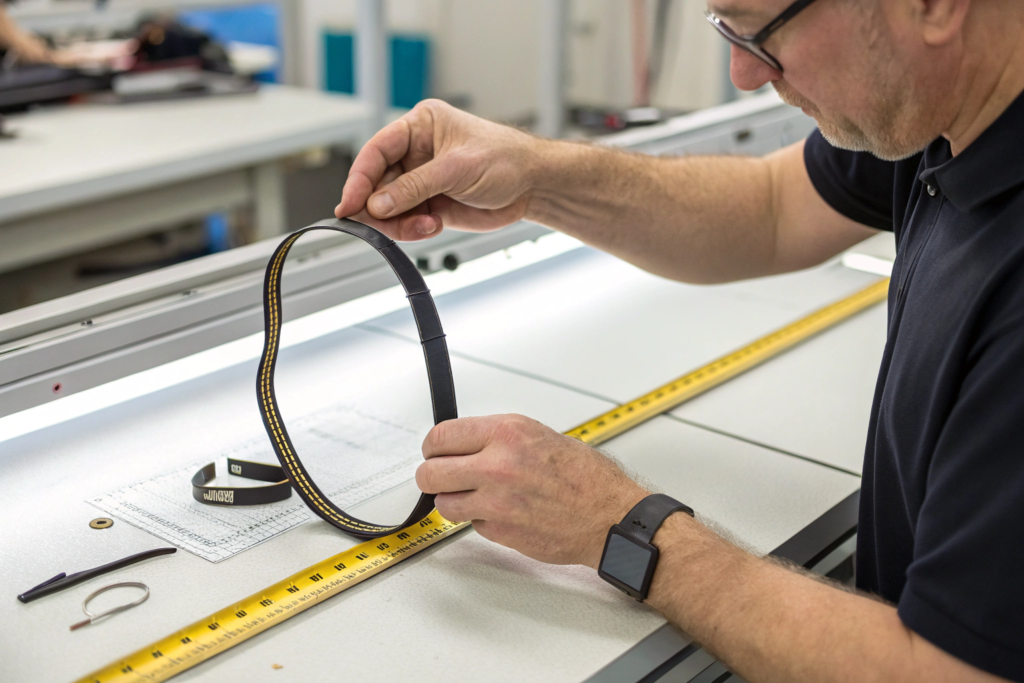
What Are the Visual Cues of Elastic Fatigue and Impending Failure?
Before elastic breaks, it whispers. You just have to know what to listen for with your eyes. Here are the specific visual cues I train my QC team to spot:
- Crazing: Tiny, hairline cracks on the surface, especially around the glue joint (the seam where the band is bonded together). This is the number one predictor of imminent snapping.
- Color Shift: White or light-colored bands that have yellowed. This is oxidation of the polymer itself. It is a clear sign of age.
- Surface Sheen Change: A matte band that has become shiny, or a shiny band that has become matte. This indicates chemical changes in the surface layer.
- Glue Joint Gapping: On seamless bands, the joint is welded with heat or glue. If you see a small gap or a lip at the joint, the weld is failing. This band will separate at the seam within a few uses.
We reject lots at AceAccessory for any of these defects. We also recommend that our clients do a spot check of their stored inventory every 6 months. Open a carton, pull 10 bands from the middle of the stack, and run the tests. This proactive approach prevents you from shipping a "bad batch" that has quietly aged in the corner of your warehouse. This is part of professional inventory management .
How Does Material Composition (TPE vs Rubber) Affect Shelf Life?
Not all hair bands are created equal. The material choice directly impacts how long the band will last on the shelf and in use.
| Material | Typical Shelf Life | Characteristics |
|---|---|---|
| Natural Rubber | 2-3 Years | Best stretch, but highly susceptible to oxidation and UV. Turns gummy quickly if exposed to oils. |
| Spandex/Polyester Blend | 3-5 Years | The industry standard. Good stretch, better chemical resistance than rubber. Still prone to hydrolysis. |
| TPE (Thermoplastic Elastomer) | 3-4 Years | Soft, grippy texture. Does not absorb water. Very stable shelf life. More expensive. |
| Silicone | 5+ Years | Chemically inert. Does not oxidize or degrade in heat. Virtually unlimited shelf life but less stretchy. |
For the longest shelf life, Silicone is the winner, which is why it is used for high-end phone cases and hair accessories . However, most fashion hair bands are made of Spandex/Polyester because it offers the best balance of cost, color vibrancy, and stretch.
At AceAccessory, we source our spandex from certified mills and we require Mill Test Certificates showing the date of extrusion. We do not use "dead stock" elastic that has been sitting in a fabric warehouse for a year. Using fresh raw materials is the first step in ensuring our clients receive a product with a full 2-3 year usable life ahead of it.
What Is the Best Practice for Rotating Stock of Elastic Goods?
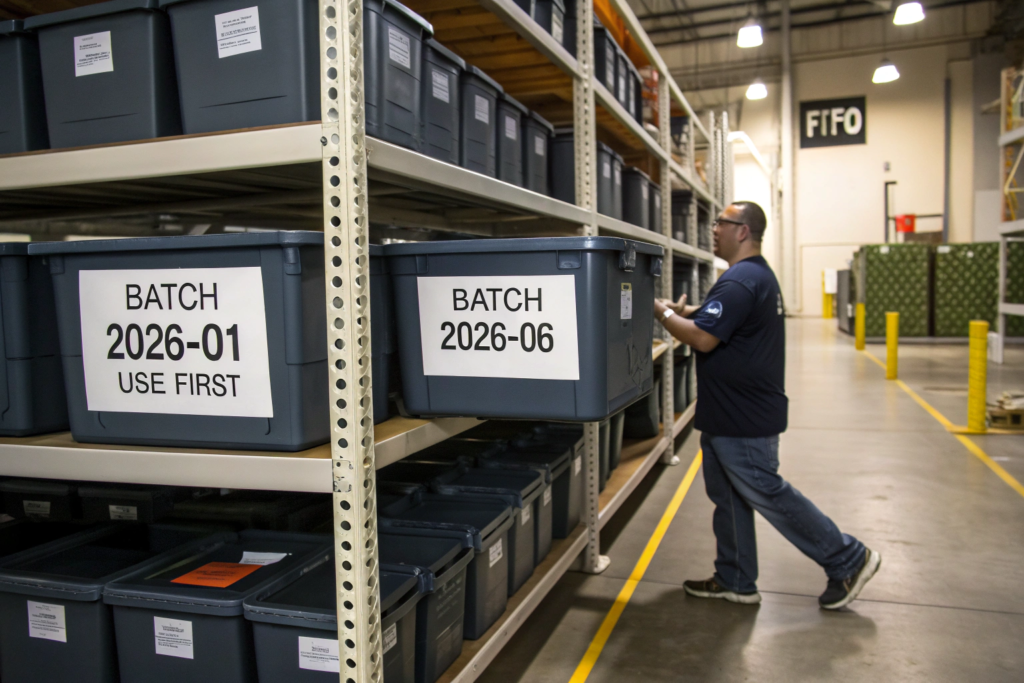
The most common cause of shelf-life failure is not a hot warehouse. It is bad organization. A buyer receives a new shipment of hair bands and stacks the new cartons in front of the old cartons. The old stock gets buried. A year later, they ship the newly accessible cartons (which are actually the old stock) and the problem begins.
The golden rule of inventory is FIFO: First In, First Out. This means the oldest product leaves the warehouse first. This is not just accounting theory; it is a survival tactic for elastic goods.
At AceAccessory, we print a Date of Manufacture (DOM) code on every inner polybag and master carton. It is a simple code: YYMMDD-X. For example, "260315-01" means manufactured on March 15, 2026, production line 01. This code is traceable back to the specific batch of elastic we used.
I advise all my clients to adopt a similar system or to at least write the date of receipt on the carton with a permanent marker. When you go to pick stock for an order, always pick from the oldest date code. This discipline ensures that no carton sits in the back of the warehouse for three years.
How Should Amazon FBA Sellers Manage Long-Term Storage Fees vs Shelf Life?
Amazon FBA sellers have a unique problem. Amazon charges Long-Term Storage Fees for inventory that sits for over 180 days (6 months) or 365 days. But the shelf life of elastic is 2-3 years. This creates a financial conflict. You are paying fees for "old" inventory that is still perfectly good product.
Here is my advice for FBA sellers of fashion accessories :
- Create Removal Orders Before 365 Days. Even if the product is still good, the storage fees can erase your profit margin. Create a removal order and have the inventory sent back to you or to a 3PL.
- Inspect Upon Return. Once you get the inventory back, perform the Three-Step Field Test described earlier. If it passes, you can re-label it and send it back to FBA as "New" inventory (Amazon allows this for products that have not been sold).
- Staggered Shipping. Do not send 12 months of inventory to Amazon at once. Send a 3-month supply. The rest stays in a cheaper climate-controlled 3PL warehouse. This minimizes the time your elastic sits in Amazon’s hot, non-climate-controlled fulfillment centers.
This strategy protects you from both Amazon fees and the risk of elastic degradation. We have clients who use our factory as a staging point. We hold the bulk order in our climate-controlled China warehouse and ship smaller batches to Amazon every 90 days. This is the ultimate supply chain hack for inventory health.
What Is the Financial Impact of Writing Off Expired Hair Accessories?
Let’s be realistic about the numbers. You have 5,000 units of a hair band style that costs $0.25 landed. That is $1,250 of inventory cost. You test the batch and find early signs of bloom or fatigue. You have two choices:
Choice A: Sell It Anyway.
- Immediate Gain: You recover your $1,250 (maybe).
- Long-Term Cost: Let’s say the defect rate is 15%. That is 750 angry customers. If just 50 of them leave a 1-star review on Amazon, your Best Seller Rank tanks. Your PPC advertising cost per click goes up because your conversion rate drops. You could easily lose $5,000 to $10,000 in future sales and ad spend inefficiency.
Choice B: Write It Off.
- Immediate Loss: $1,250 tax write-off.
- Long-Term Gain: Zero negative reviews. Brand integrity maintained. Future sales unaffected.
The math is brutally clear. Choice B is always cheaper. Professional buyers like Ron understand this. The cost of a lost customer is far greater than the cost of a lost carton of hair ties . At AceAccessory, we stand by our quality. If a batch ages out faster than expected due to a raw material variance we didn’t catch, we work with the client on a credit or replacement. We want our clients to make the smart, long-term decision for their brand.
Conclusion
The average shelf life of an elastic hair band is a window of opportunity, not a guarantee. Under ideal conditions—cool, dark, and dry—you can expect 2 to 3 years of reliable performance from a quality spandex or TPE band. However, that window can slam shut in as little as 6 months if the product is stored in a hot garage or a humid basement. Understanding the science of oxidation and hydrolysis empowers you to manage your inventory like a professional, not a gambler.
By implementing simple storage protocols like using opaque bins, checking humidity indicators, and strictly following FIFO rotation, you can maximize the value of your bulk purchases. More importantly, by performing regular spot checks and being willing to write off aged inventory, you protect the most valuable asset you have: your brand’s reputation for quality. A single batch of "sticky" or "snappy" hair bands can undo years of customer goodwill.
You don’t have to navigate the chemistry of elastic alone. The foundation of a long-lasting product starts at the factory with fresh raw materials and date-coded production. From the moment the elastic is extruded to the moment it is packed into the carton, every step matters.
If you are concerned about the shelf life of your current inventory or want to establish a fresh supply chain with traceable manufacturing dates, reach out to us. We can help you plan your order quantities and storage strategy. Contact our Business Director, Elaine. She can explain our raw material sourcing and how we ensure you receive product with maximum usable life remaining. Email Elaine at: elaine@fumaoclothing.com