I received an inquiry two months ago that stood out from the usual fashion requests. A buyer named James from Texas emailed me. He was not looking for a trendy skinny belt for a boutique. He was looking for something that could hold up a tool pouch on a job site. He wanted "military-style webbing belts." He sent over a picture of a thick, olive drab belt with a heavy metal buckle. He said, "I need this to be strong. It can’t fray. The buckle can’t snap. My customers work in construction and outdoors. They will destroy a cheap belt in a week." I looked at the spec. This was not a standard fashion accessory. This was a piece of utility gear. The production process, the materials, and the quality standards were different.
Getting a Chinese belt factory to produce military-style webbing correctly requires a specific approach to material sourcing, hardware selection, and quality testing. Unlike fashion belts where aesthetics are the primary concern, military-style webbing is defined by its tensile strength, abrasion resistance, and functional durability. A buyer must clearly communicate the required breaking strength (measured in pounds or kilograms), the specific weave pattern of the webbing (such as herringbone or basket weave), and the finish of the metal hardware (such as black oxide or parkerized). A professional factory with experience in heavy-duty textiles will understand these specifications and guide the buyer through the appropriate material choices.
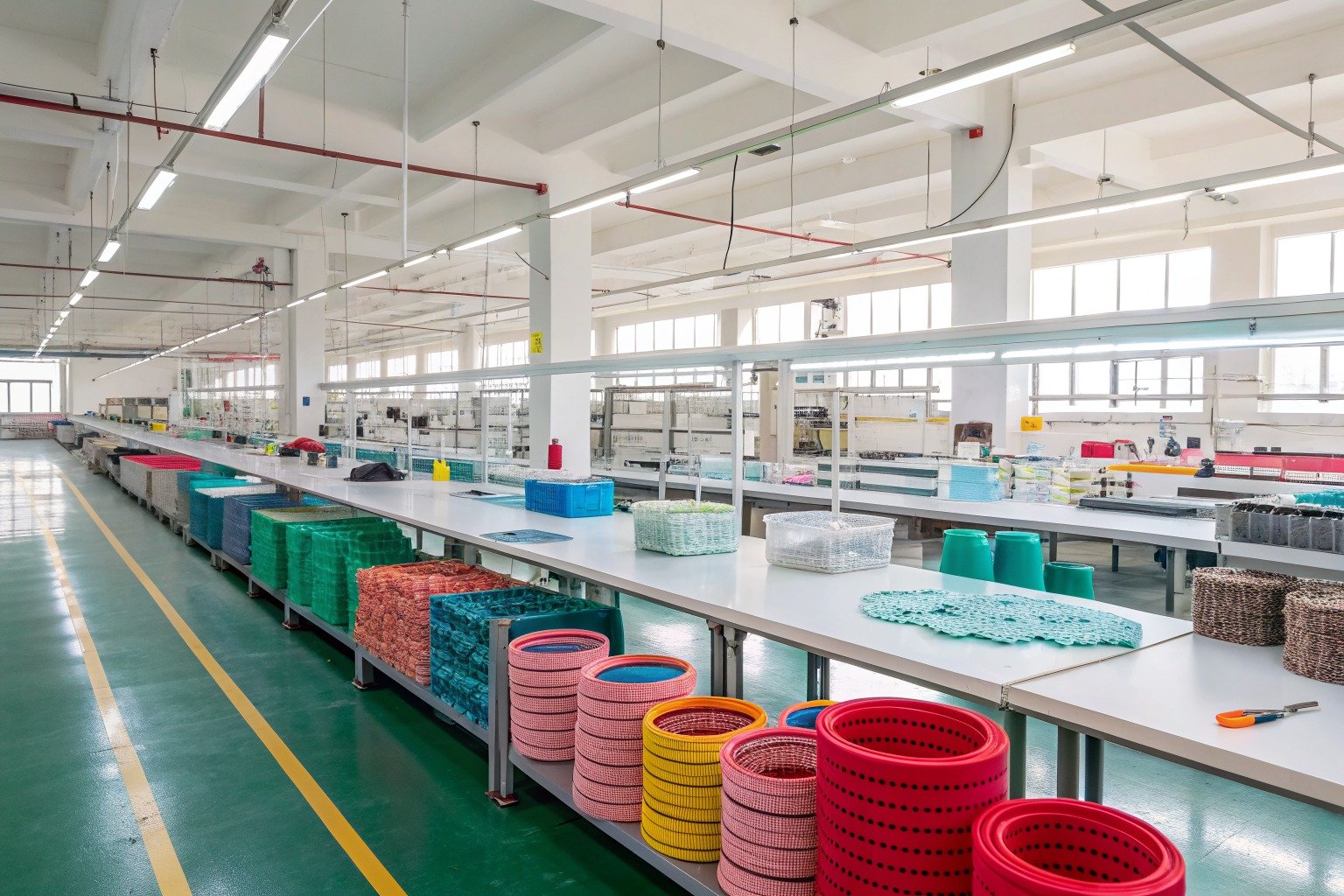
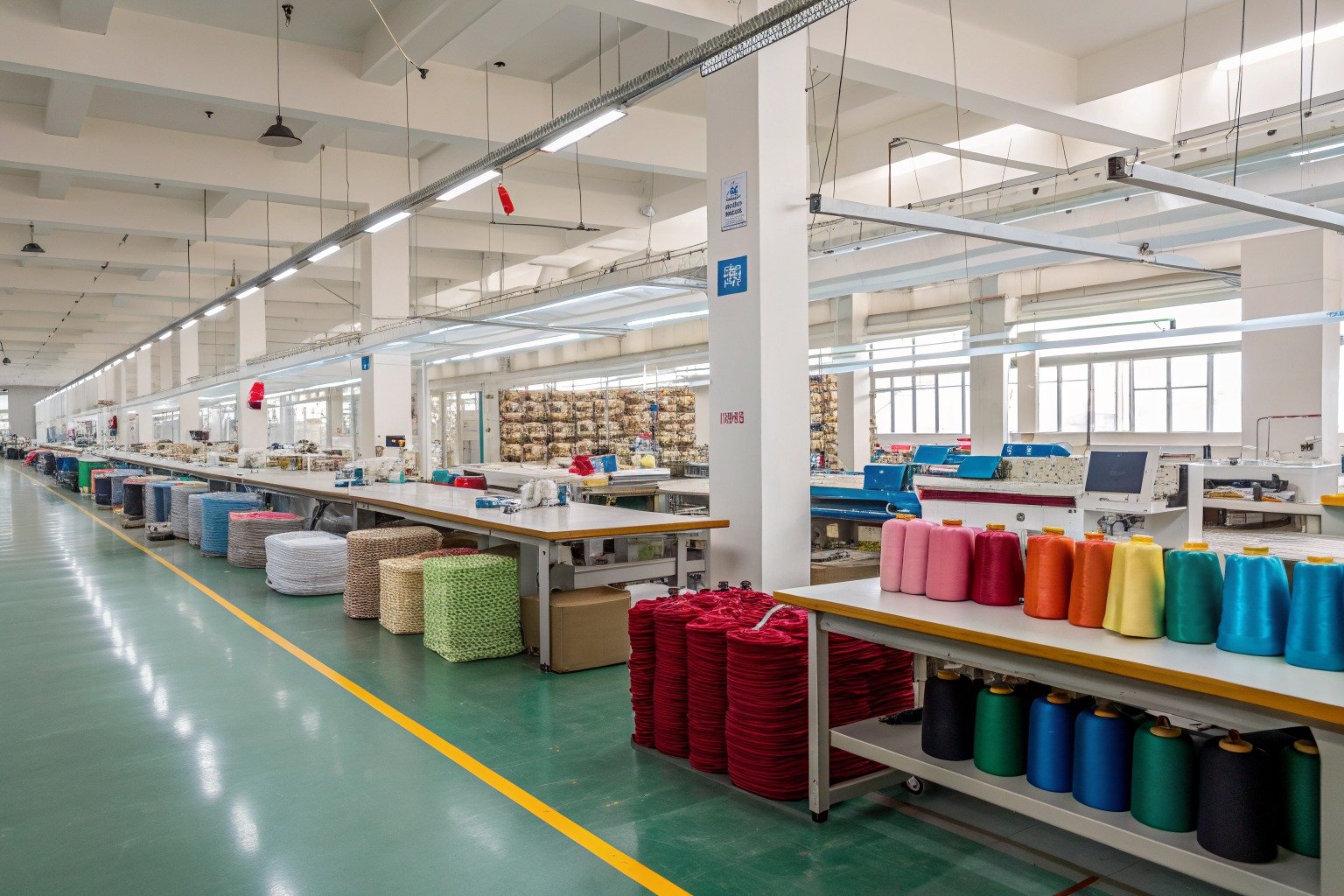
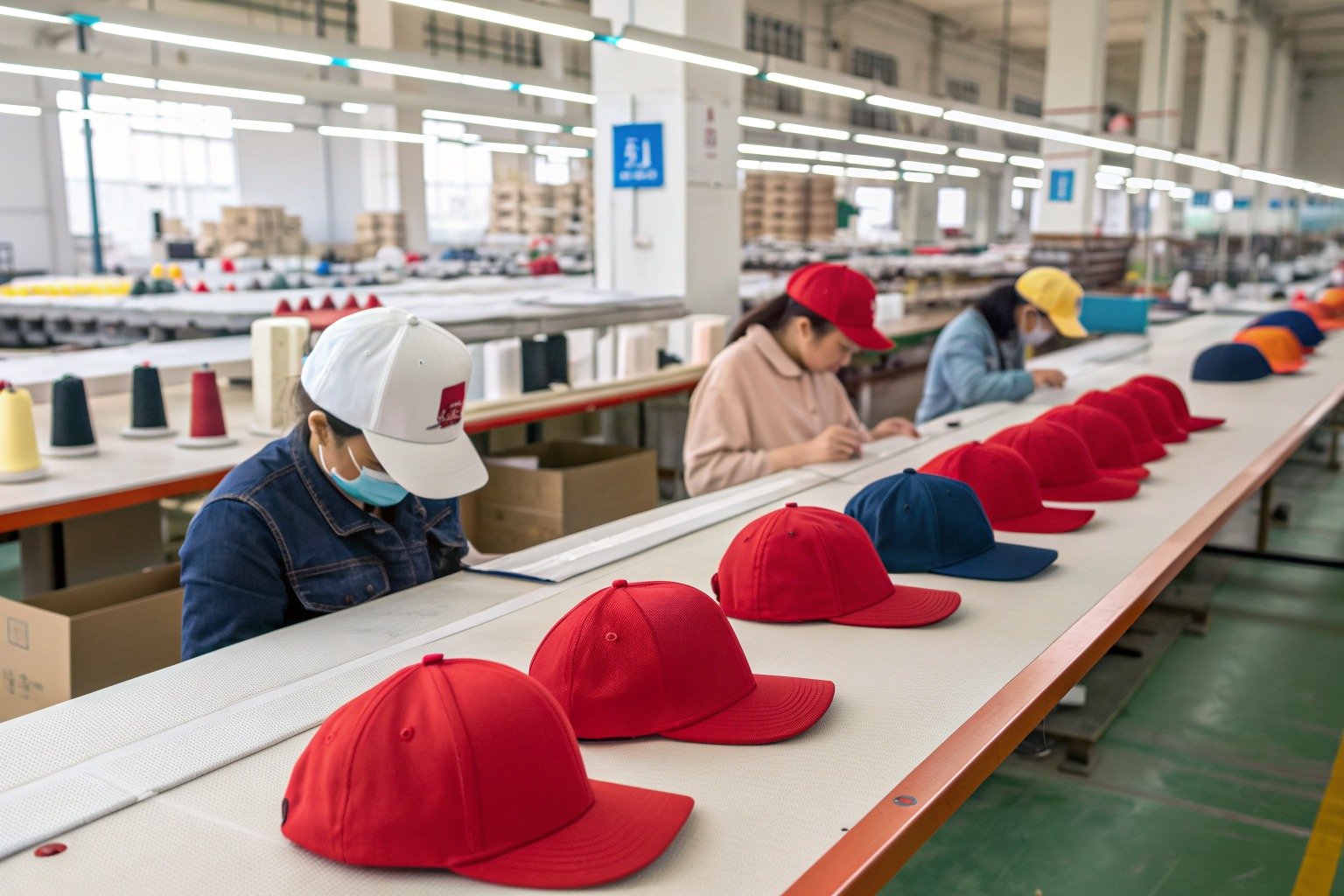
At Shanghai Fumao, we produce a wide range of belts. While our core business is fashion, we have a dedicated line for heavy-duty webbing and utility straps. We have the industrial sewing machines and the sourcing network to handle these technical requirements. I want to share the exact process we use when a client like James comes to us with a request for military-style webbing.
What Material Specifications Define Military-Grade Webbing?
The first and most critical step is defining the material. In the fashion world, a belt is often made of polypropylene or a polyester/cotton blend. These materials are chosen for cost and printability. They are not chosen for strength. Military-style webbing is a different category entirely. It is an engineered textile.
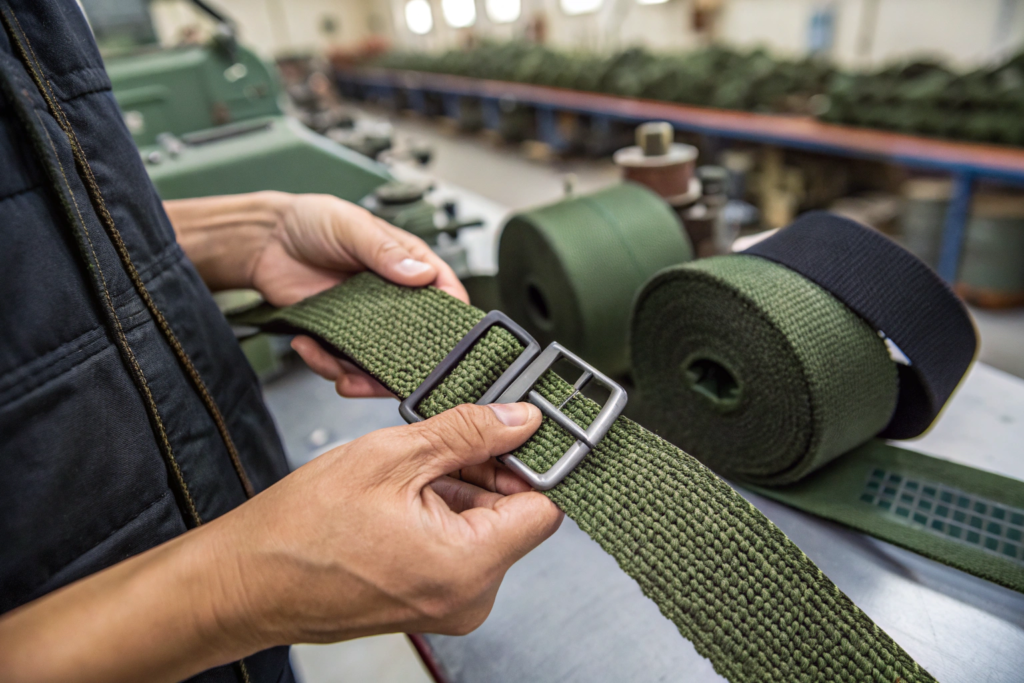
Military-grade webbing is almost exclusively made from high-tenacity nylon (Type 6,6) or heavy-duty polyester. The defining characteristics are the denier of the yarn, the weave structure, and the post-production coating. A buyer must specify the required tensile strength, typically ranging from 1,000 lbs for light utility straps to over 5,000 lbs for heavy cargo belts. The most common specification cited is MIL-W-17337 for nylon webbing or MIL-W-4088 for polyester. While commercial orders may not need full mil-spec certification, referencing these standards ensures the factory understands the performance expectation.
What Is The Difference Between Nylon And Polyester Webbing?
This is the fundamental choice. Both are strong. But they behave differently in real-world use. A factory that understands these nuances will ask the right questions.
| Feature | Nylon Webbing (Type 6,6) | Polyester Webbing |
|---|---|---|
| Strength | Higher tensile strength per weight. More resistant to abrasion. | Slightly lower strength but excellent durability. |
| Stretch | Stretches under load (about 15-20% at break). Good for shock absorption. | Very low stretch (about 10-12% at break). Holds shape better. |
| Water Resistance | Absorbs water. Can mildew if not dried properly. | Naturally hydrophobic. Resists water and mildew. |
| UV Resistance | Degrades in prolonged sunlight. Needs UV treatment. | Excellent UV resistance. Better for outdoor use. |
| Feel | Softer, smoother hand feel. | Slightly stiffer, rougher texture. |
For a belt that will be used outdoors in the sun and rain, Polyester is often the better choice because of its UV and water resistance. For a strap used indoors for heavy lifting where shock absorption matters, Nylon is superior.
When James came to me for a construction worker’s belt, I recommended a High-Tenacity Polyester Webbing. It would not stretch out over time from holding heavy tools. It would not rot if it got wet. And it would not fade to a weird color in the Texas sun. This is the kind of guidance a buyer needs. A factory that just says "Yes, we have black webbing" is not providing this level of service.
How To Specify Webbing Thickness And Weave Pattern?
The thickness of webbing is not a guessing game. It is measured by break strength (lbs) and width (inches or millimeters). A typical military trouser belt is 1.25 inches or 1.5 inches wide. A heavy-duty duty belt is 1.75 inches or 2 inches wide.
The weave pattern affects both strength and how the hardware interacts with the strap.
- Herringbone Twill: This is the classic military look. It is a tight, diagonal weave that is extremely abrasion-resistant. It holds its shape well and looks premium.
- Basket Weave: A flat, square weave. It is very strong but can be stiffer.
- Plain Weave: A simple over-under pattern. Common in lighter-weight straps.
When communicating with the factory, you should specify the denier. Denier is the weight of the yarn. 1000D (1000 Denier) is a standard for heavy-duty bags and belts. 1680D is even thicker and more rugged.
At AceAccessory, we request a Material Data Sheet from our webbing suppliers. This sheet lists the exact break strength tested by the mill. We share this data with the client. This removes the guesswork. You are not just buying "thick black strap." You are buying "1.5-inch 1680D Polyester Herringbone Webbing with 2,500 lb Tensile Strength." That is a specification. That is how you get a reliable product.
How To Source And Specify Heavy-Duty Hardware And Buckles?
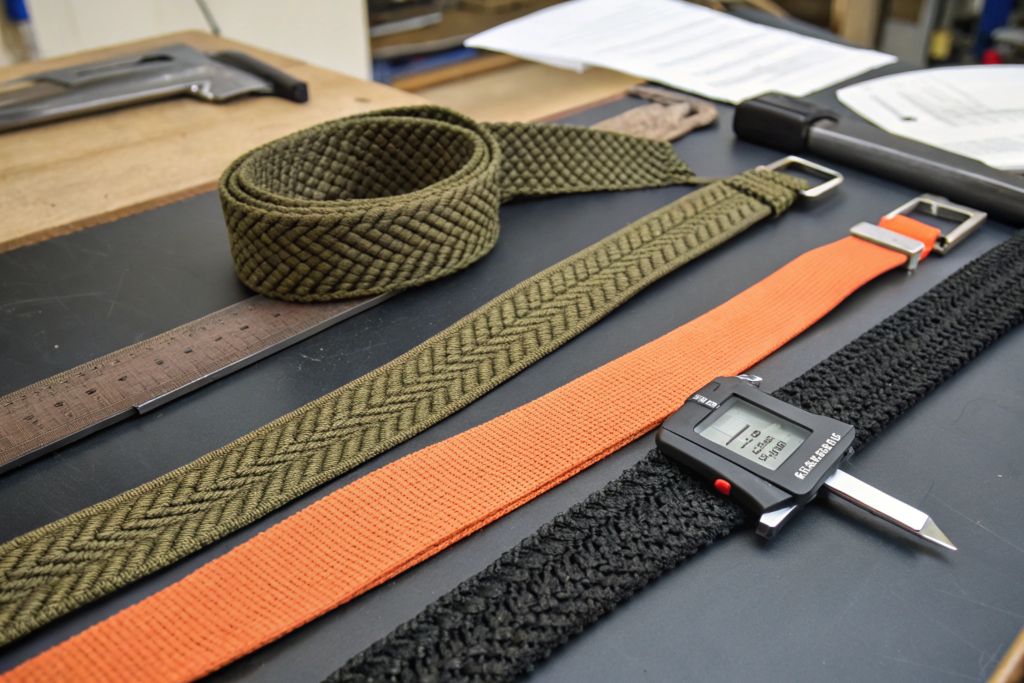
The webbing is only half the equation. The hardware is the other half. A cheap, brittle buckle will snap long before the webbing breaks. This is the most common point of failure in a poorly made utility belt. A fashion belt might use a thin, hollow metal buckle or a lightweight plastic clip. A military-style belt requires solid, heavy-duty hardware.
Heavy-duty hardware for military-style webbing must be specified by material, coating, and construction method. The most reliable buckles are made from solid brass or zinc alloy with a heavy plating, or from stamped stainless steel. The finish must be durable and non-reflective, with options like matte black powder coat, black oxide, or parkerized grey-green. The buckle should have a welded center bar, not a folded or crimped bar, to withstand the high tension of the webbing without deforming or breaking.
What Are The Best Metal Finishes For Tactical And Work Belts?
The finish on the metal serves two purposes: corrosion resistance and camouflage. A shiny, polished nickel buckle looks great on a dress belt. It looks terrible and acts as a reflective target on a utility belt.
Here are the standard finishes for this category:
- Matte Black Powder Coat: This is a thick, durable paint baked onto the metal. It is highly scratch and chip resistant. It provides a non-reflective surface. This is the most common choice for modern tactical gear.
- Black Oxide: This is a chemical conversion coating that turns the surface of the metal black. It offers mild corrosion resistance but is thinner than powder coat. It has a sleek, "oiled" look.
- Parkerizing (Phosphate Coating): This is the classic military finish. It is a matte grey or green-grey coating that is porous and holds oil well, providing excellent rust prevention. It has a distinct vintage military look.
- Electrophoresis (E-coat): A paint process that provides excellent, uniform coverage and corrosion resistance, often used as a base for powder coat.
When sourcing, you must ask the factory: "Is this buckle solid brass or die-cast zinc?" Die-cast zinc is heavy and cost-effective but can be brittle if dropped on concrete. Solid brass is softer but extremely durable and will not crack. Stamped stainless steel is the strongest but is more expensive and has fewer design options.
We work with hardware suppliers who provide salt spray test reports. This test measures how many hours the finish can withstand a corrosive salt fog before rusting. For a work belt that will be covered in sweat, a 48-hour or 72-hour salt spray rating is a good benchmark. This is the level of detail that separates a professional factory from a generic one.
How To Ensure The Buckle Attachment Method Is Secure?
The way the buckle is attached to the webbing is a critical stress point. There are three common methods, and only two are acceptable for heavy-duty use.
- Chicago Screws: Two interlocking metal screws that clamp through a hole in the webbing. This is the gold standard for utility belts. It is removable, repairable, and extremely strong. You must specify that the screws have thread locker (like Loctite) applied, or they will vibrate loose over time.
- Heavy-Duty Bartack Stitching: The webbing is folded over the buckle bar and stitched with a dense, reinforced zig-zag stitch. For a permanent attachment, this is very strong. We use a bartack machine with heavy nylon thread (size 92 or 138).
- Rivets: A hollow metal tube is crushed to hold the webbing. Avoid this for heavy loads. Rivets can pull through the webbing fibers under tension. They are not secure enough for military-style applications.
When you discuss the order with the factory, ask: "How will you attach the buckle? Can you use Chicago screws with thread locker?" If they seem confused by the term "thread locker," they may not have experience with utility gear. A factory that works with heavy webbing will have bins of Chicago screws and bottles of anaerobic adhesive on hand.
What Stitching And Assembly Techniques Ensure Durability?
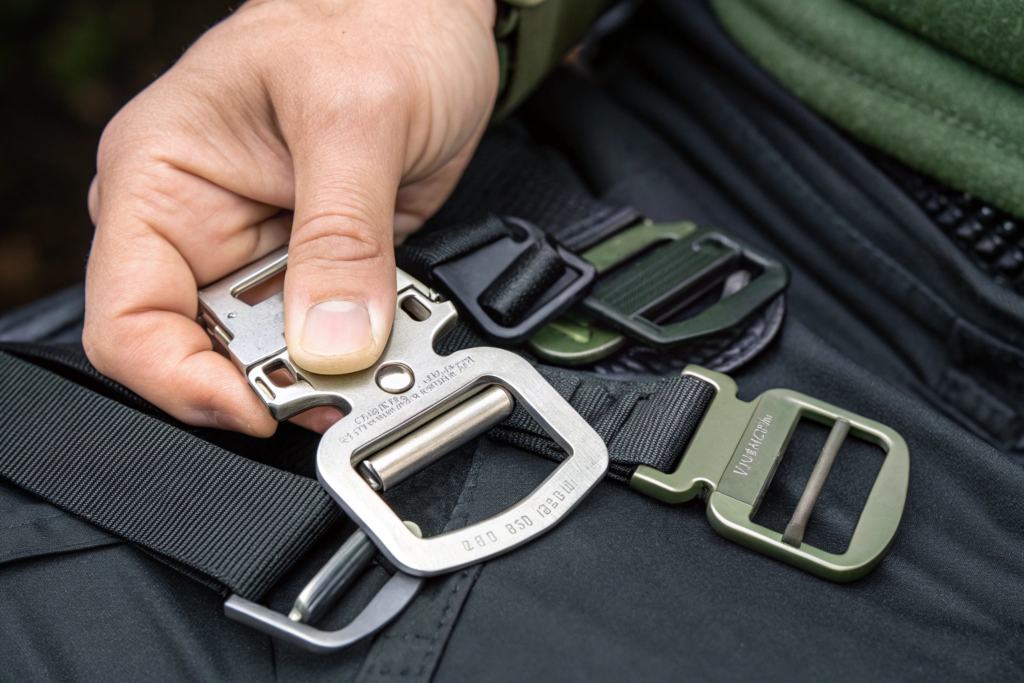
The material can be perfect and the buckle can be indestructible, but if the stitching fails, the belt is useless. Stitching for heavy webbing is completely different from stitching a fashion belt. It requires specific machines, specific thread, and specific stitch patterns.
Durability in military-style webbing assembly is achieved through the use of bonded nylon thread, reinforced stitch patterns, and sealed raw edges. The thread must be a heavy weight, typically Tex 90 or Tex 135 bonded nylon, which resists UV damage and abrasion. The stitch pattern at stress points must be a "Box X" or "Bar Tack" to distribute the load across a wide area of the webbing. Finally, the cut ends of the webbing must be sealed with a hot knife to prevent the weave from unraveling over time.
Why Is Bonded Nylon Thread And A Box X Stitch Essential?
Standard spun polyester thread will not hold up. It will fray and snap. Bonded Nylon Thread is treated with a special coating that makes the filaments stick together. It is like a tiny cable. It is incredibly strong and resistant to abrasion.
The Box X Stitch is a rectangular box with an "X" inside it. This pattern is not for decoration. It is an engineering solution. The box confines the webbing fibers so they cannot spread out. The "X" distributes the tension across the diagonal of the weave. This combination of confinement and distribution is what allows a stitched joint to hold hundreds of pounds of force.
We use a compound feed walking foot industrial sewing machine for this work. This type of machine has a presser foot that walks along with the thick material, ensuring all layers feed evenly. A standard home sewing machine or a light industrial machine would jam or break needles immediately.
When you are vetting a factory, ask for a close-up photo of a finished belt end. Look at the stitch pattern. Is it a single straight line? That is a fashion belt. Is it a dense, multi-pass Box X or a thick Bartack? That is a utility belt. The stitch tells you everything you need to know about the factory’s capability.
How Are The Cut Ends Of The Webbing Finished?
Webbing is a woven fabric. If you cut it with scissors, the edge frays. Threads pull out. The belt looks cheap and loses integrity.
There are two professional ways to finish a webbing end for a military-style belt:
- Hot Knife Cutting: The webbing is cut with an electrically heated blade. The heat melts the nylon or polyester fibers, fusing them into a solid, sealed edge. This is the most common and efficient method.
- Folded and Stitched: The end of the webbing is folded over once and stitched down with a Bartack. This creates a clean, thick edge that will never fray. This is a premium detail often seen on high-end tactical gear.
At AceAccessory, we use an ultrasonic cutting machine for critical webbing. This machine uses high-frequency vibration to cut and seal the edge instantly. The result is a perfectly smooth, sealed edge that is even cleaner than a hot knife.
If a factory sends you a sample and the end of the strap is raw and fuzzy, they do not have the right equipment. You should look elsewhere.
How To Quality Check A Military-Style Belt Order Before Shipment?
You cannot rely on a visual check alone for this type of product. It might look perfect but fail on the first use. You need objective, measurable quality control. This requires a different inspection checklist than what you would use for a fashion accessory.
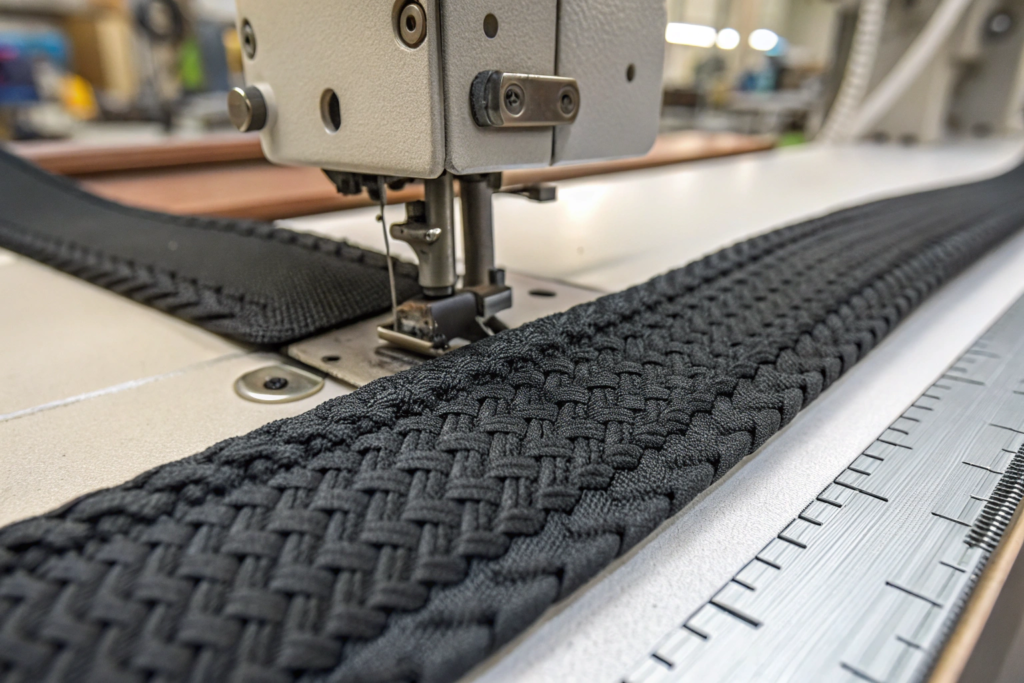
Quality checking a military-style belt order requires a focus on functional testing in addition to visual inspection. The QC process must include a pull test on a sample of webbing to verify breaking strength, a dimensional check of the width and thickness against the spec, and a hardware assembly check to ensure buckles are free of sharp burrs and screws are secured with thread locker. The AQL sampling standard should be strict, with a lower tolerance for major defects such as seam slippage or hardware cracks.
What Is A Pull Test And How Is It Performed?
A Pull Test (or Tensile Test) measures how much force the belt can withstand before breaking. This is the ultimate proof of quality.
In a lab, a sample of the belt is placed in a machine called a Universal Testing Machine. The machine slowly pulls the two ends of the belt apart. It measures the force in pounds or kilograms. It records the point at which the webbing breaks or the stitching fails.
For a 1.5-inch polyester webbing belt, you should expect a breaking strength of at least 1,500 to 2,000 lbs. The specification from the webbing mill will tell you the expected value.
While most importers do not have a lab, a professional factory will have access to one. We can provide mill test reports for the webbing batch. For an extra fee, we can send a finished belt sample to a local testing lab like SGS or Intertek for a certified break test. This provides a third-party verified report.
For a simpler in-factory check, we do a Manual Stress Test. Our QC team takes a belt and pulls it hard against a fixed anchor using a come-along or a heavy weight. This is not a precise measurement, but it reveals obvious weaknesses in the stitching or hardware. If the belt slips or the buckle deforms under heavy manual load, it fails.
What Are The Common Visual Defects In Heavy Webbing?
Even if it is strong, the belt needs to look professional. Military and workwear customers are particular about details.
Key visual QC points for webbing belts:
- Weave Consistency: Are there any thick or thin spots in the weave? Is the herringbone pattern consistent across the length?
- Edge Sealing: Is the cut end sealed smoothly? Any stray melted "blobs" of nylon from a bad hot cut?
- Color Fastness: Rub the webbing with a white cloth. Does the dye transfer? Olive drab and black dyes can sometimes rub off if not properly heat-set.
- Hardware Burrs: Run a finger over the inside of the metal buckle. Are there any sharp edges or burrs that could cut the webbing or the user’s hand?
- Stitch Tension: Look at the Box X stitch. Is the thread lying flat? Or is it loose and "bubbling"? Loose thread will snag and break.
Our QC checklist for this category is longer than for a standard fashion belt. We inspect every single belt in a small batch (100% inspection). For larger batches, we use a tighter AQL Level II standard.
Conclusion
Producing a military-style webbing belt is a different discipline than producing a fashion accessory. It requires a shift in mindset from aesthetics to engineering. The materials are specified by tensile strength and denier, not just color and pattern. The hardware is chosen for its coating durability and attachment security. The stitching is a structural element, not just a seam.
To get a Chinese belt factory to produce this type of product successfully, you need to speak the language of specifications. You need a partner who has the right heavy-duty machines, the right sourcing network for mil-spec materials, and the right QC protocols for functional testing.
At Shanghai Fumao, we have the capability and the experience to bridge this gap. We understand that a belt for a construction worker or an outdoor enthusiast is a tool, not just an outfit finisher. We apply the same rigorous project management to these technical orders as we do to our fashion lines.
If you are developing a line of utility belts, tactical gear, or heavy-duty workwear accessories, we are equipped to handle your production. We can guide you through the material selection and ensure the final product meets the demands of your hard-working customers. For a detailed consultation on heavy-duty webbing and hardware specifications, please contact our Business Director Elaine directly at elaine@fumaoclothing.com. Let us build something that can take the strain.