A few months ago, a new client approached me with what seemed like a simple request. She wanted to order hats for her boutique. "Just some nice hats," she said. I asked her a simple question: "Are you looking for millinery or casual hats?" She paused. She thought they were the same thing. She just wanted hats. This is a common misunderstanding. The word "hat" covers a vast territory. On one end, you have the delicate, hand-shaped fascinator worn to the Kentucky Derby. On the other end, you have the durable, machine-structured baseball cap worn to a weekend barbecue. The manufacturing process, the cost structure, the lead time, and the required skill set for these two categories are worlds apart. If you source a millinery hat from a casual hat factory, you will get a disaster. If you source a casual hat from a milliner, you will go bankrupt waiting for delivery.
The primary difference between millinery and casual hat manufacturing lies in the production methodology and labor input. Millinery is a craft-based, high-touch process involving hand-blocking, hand-stitching, and individual shaping of materials like sinamay, felt, and straw on wooden forms. Casual hat manufacturing is an industrial, high-volume process involving die-cutting, automated sewing lines, and standardized assembly of materials like cotton twill, polyester, and foam. Understanding this distinction is critical for US buyers because it determines everything from minimum order quantities and pricing to quality expectations and production timelines.
At Shanghai Fumao, we specialize in casual hat manufacturing. We make baseball caps, knit beanies, cloth bucket hats, and straw visors. We do this at scale with consistent quality. But I have deep respect for the millinery trade. I have visited the small workshops of milliners. I understand where our industrial process overlaps with their artisanal craft and where it diverges completely. Let me walk you through the key differences. If you are sourcing hats for your brand, you need to know which category you are buying. Your budget and your customer depend on it.
How Do Production Methods Differ Between Millinery And Casual Hats?
The most fundamental difference between these two worlds is how the hat takes its shape. In casual manufacturing, the shape is cut from flat fabric and sewn together like a garment. In millinery, the shape is molded from a malleable material using heat, steam, and pressure. This single distinction dictates the entire factory layout, the machinery required, and the labor force needed.
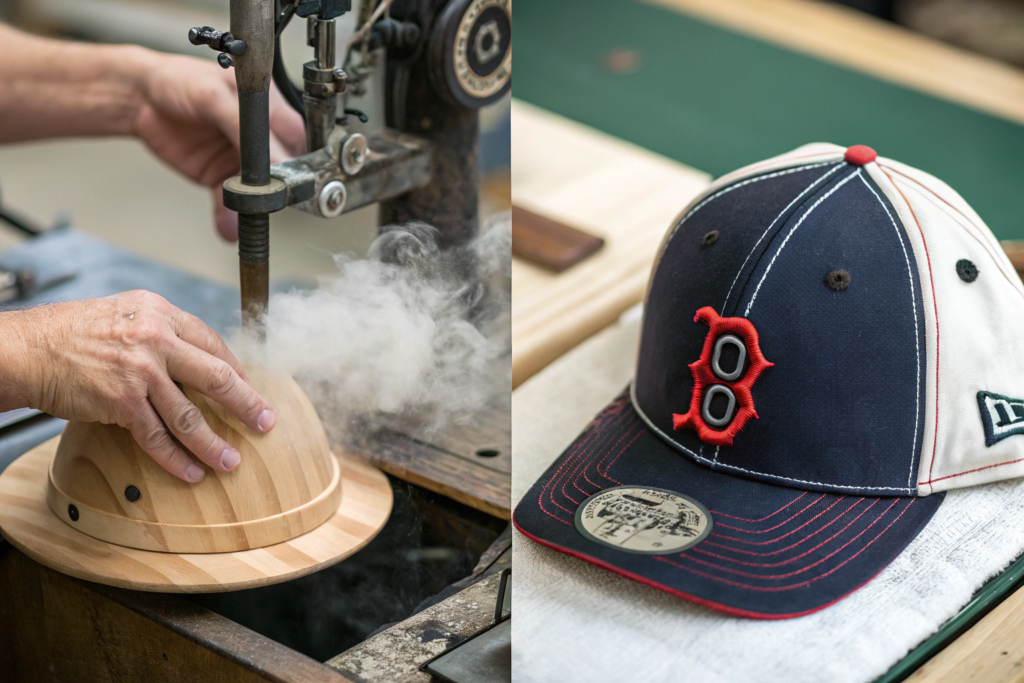
Millinery production relies on blocking, a process where material is stretched and shaped over a wooden or metal form. This is a slow, manual process performed by a skilled craftsperson. Casual hat production relies on cut-and-sew assembly, where pre-cut fabric panels are joined by industrial sewing machines operated by production line workers. The former is ideal for unique, sculptural shapes and small quantities. The latter is optimized for uniform shapes and mass production volumes.
What Is Hat Blocking And Why Does It Define Millinery?
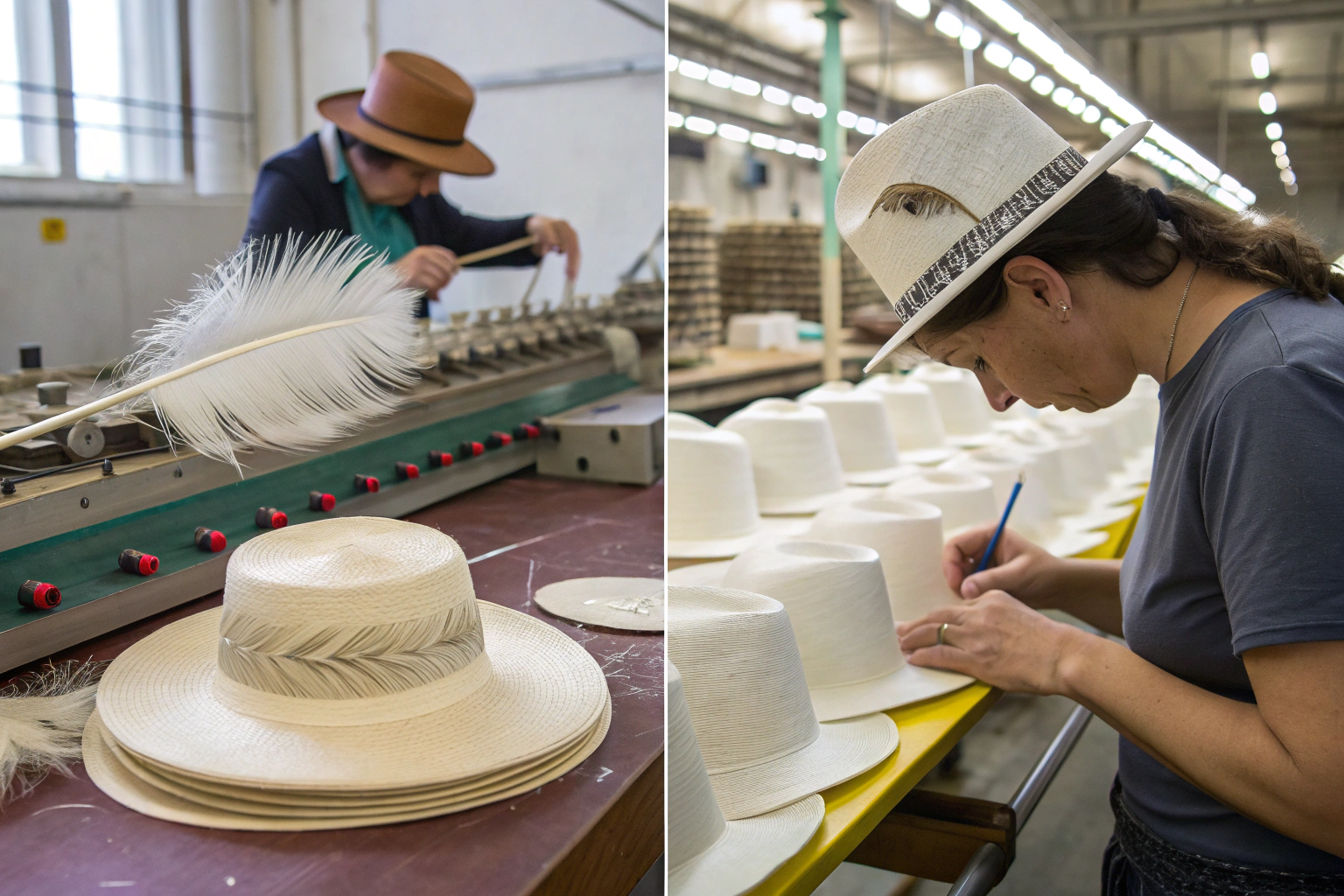
Walk into a millinery workshop and you will see shelves lined with hat blocks. These are wooden forms carved into specific crown shapes and brim curves. They are the soul of the business. A master milliner might have hundreds of blocks, some of them antique, each producing a slightly different silhouette.
The blocking process works like this for a felt hat:
- The felt hood (a loose, cone-shaped piece of felt) is steamed until it becomes soft and pliable.
- The milliner centers the hood over the wooden crown block.
- Using strong hands and a wooden tool called a pull-down, the milliner stretches the felt tightly over the block, removing all wrinkles.
- The felt is tied down and left to dry and cool. The fibers lock into the shape of the block.
- Once dry, the shape is permanent. The brim is then cut, wired, and finished by hand.
This process creates a hat with a smooth, seamless crown. There are no stitched seams on the top of a blocked felt fedora. The shape is organic and fluid. Because each hat is blocked individually, there is slight variation from piece to piece. This is part of the charm of millinery. It is a signature of the hand.
The cost of blocking is high. A single felt hat may take an hour or more of skilled labor just to shape the crown. The blocks themselves are expensive investments. This is why Minimum Order Quantities (MOQs) for millinery are often very low—sometimes as low as a dozen pieces per style. You are paying for the artisan’s time, not the speed of the machine.
How Does Cut-And-Sew Assembly Enable Mass Production Of Casual Hats?
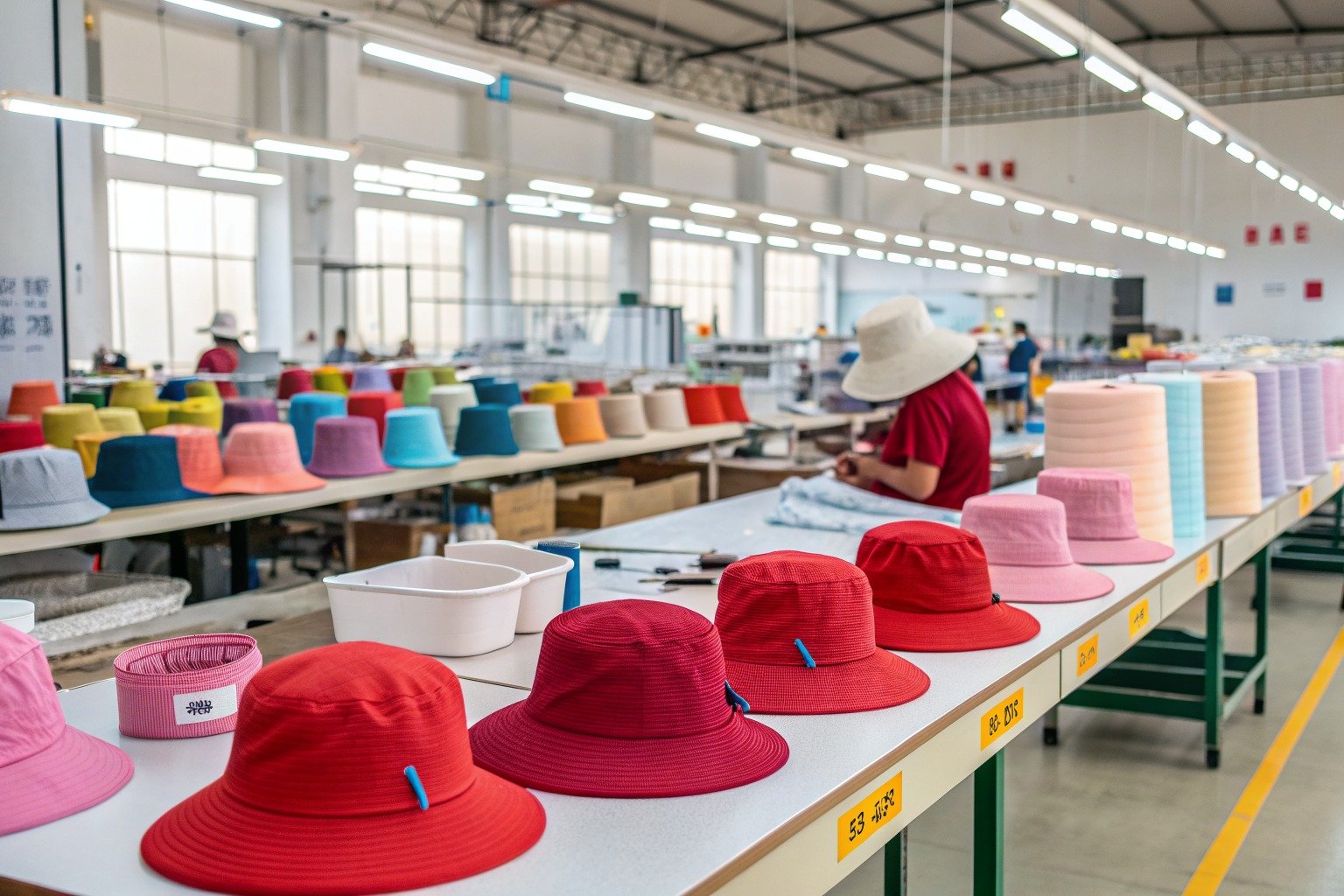
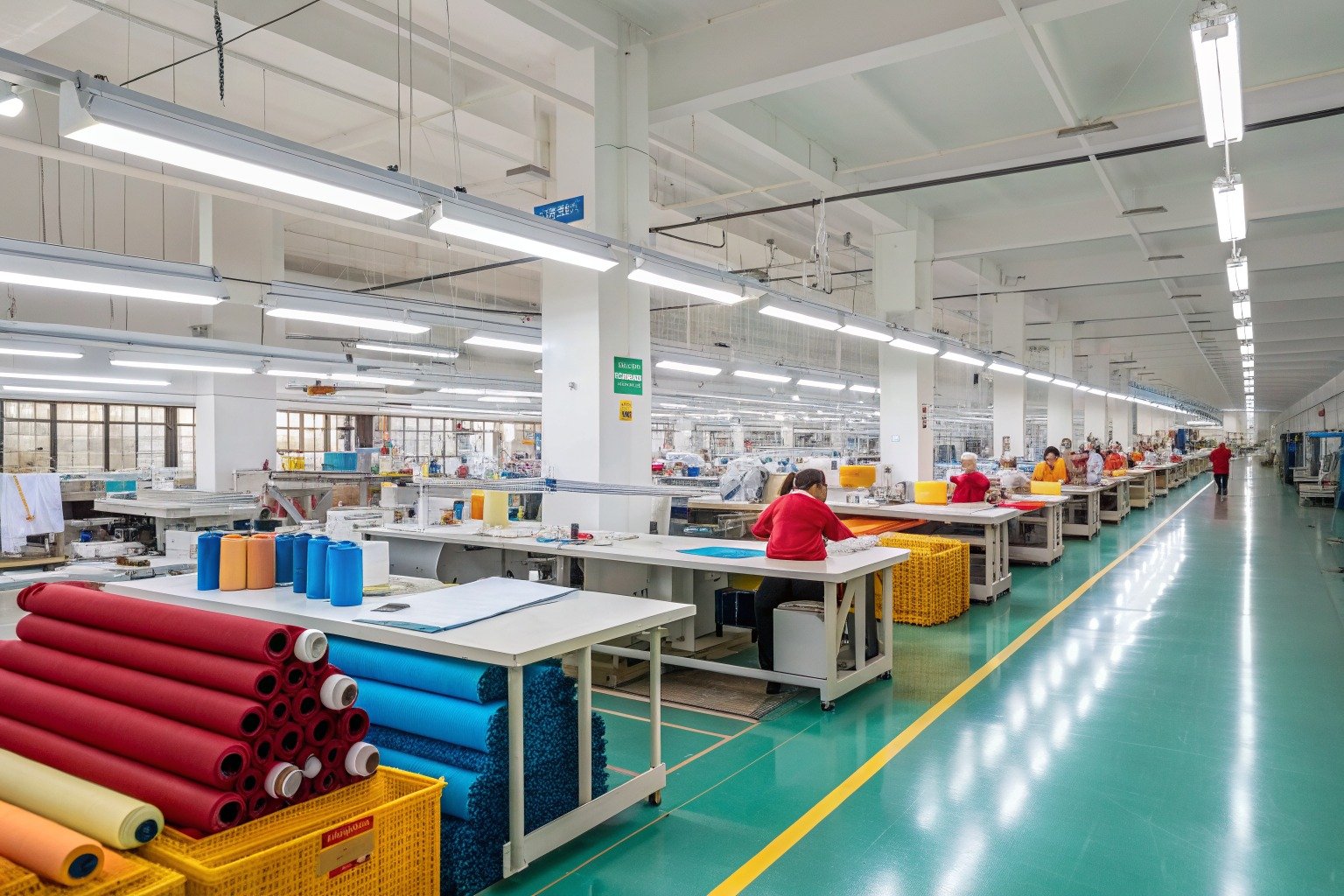
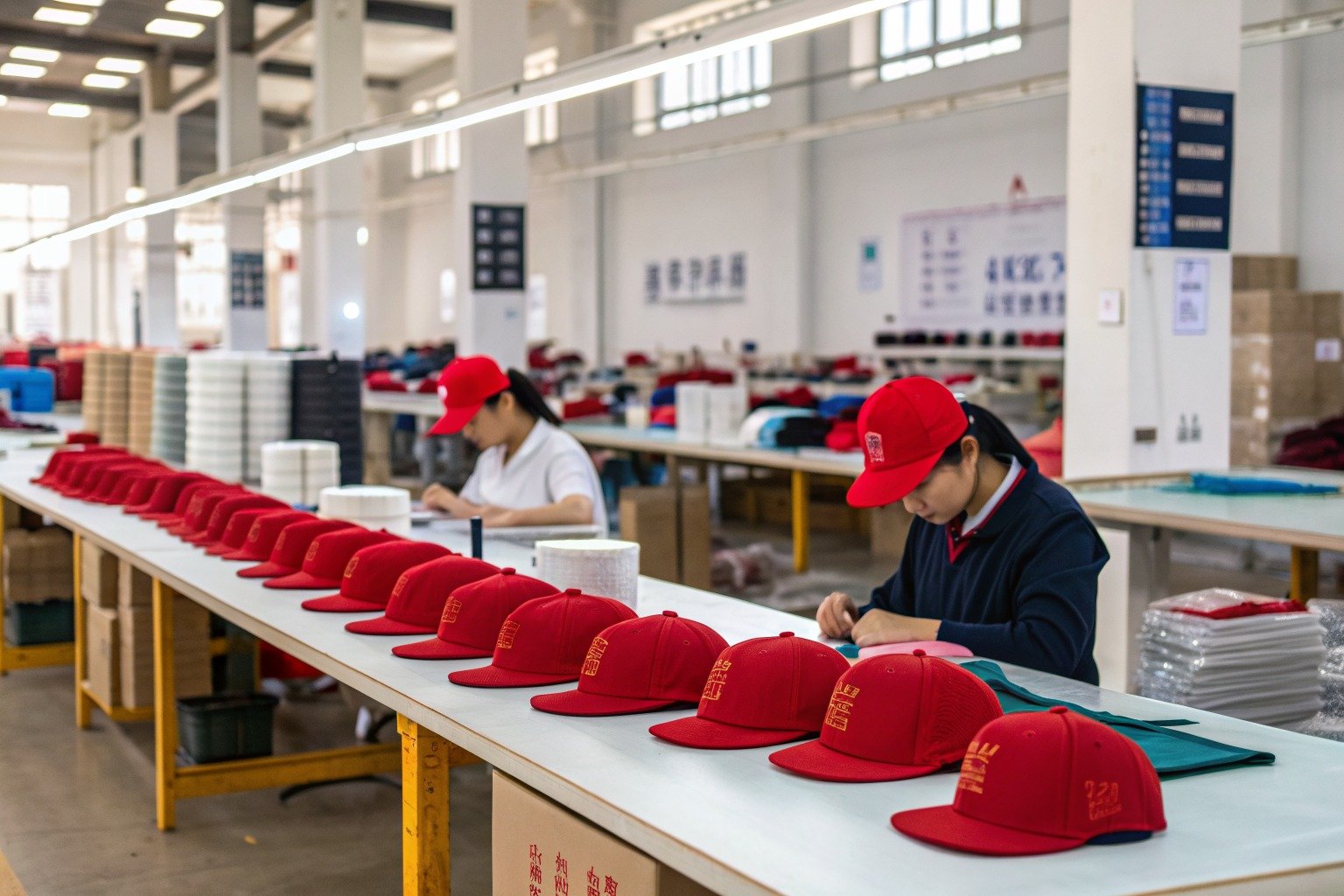
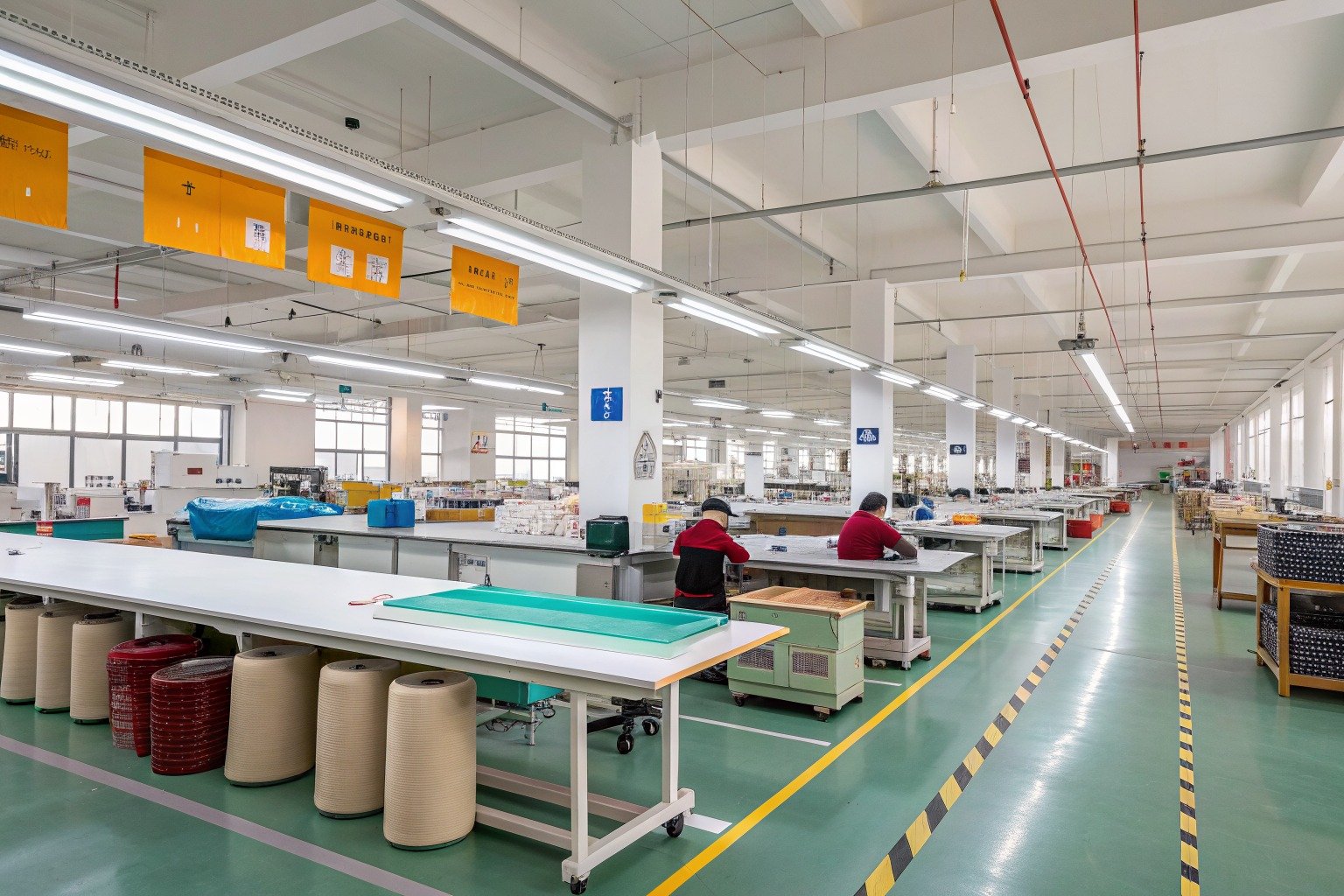
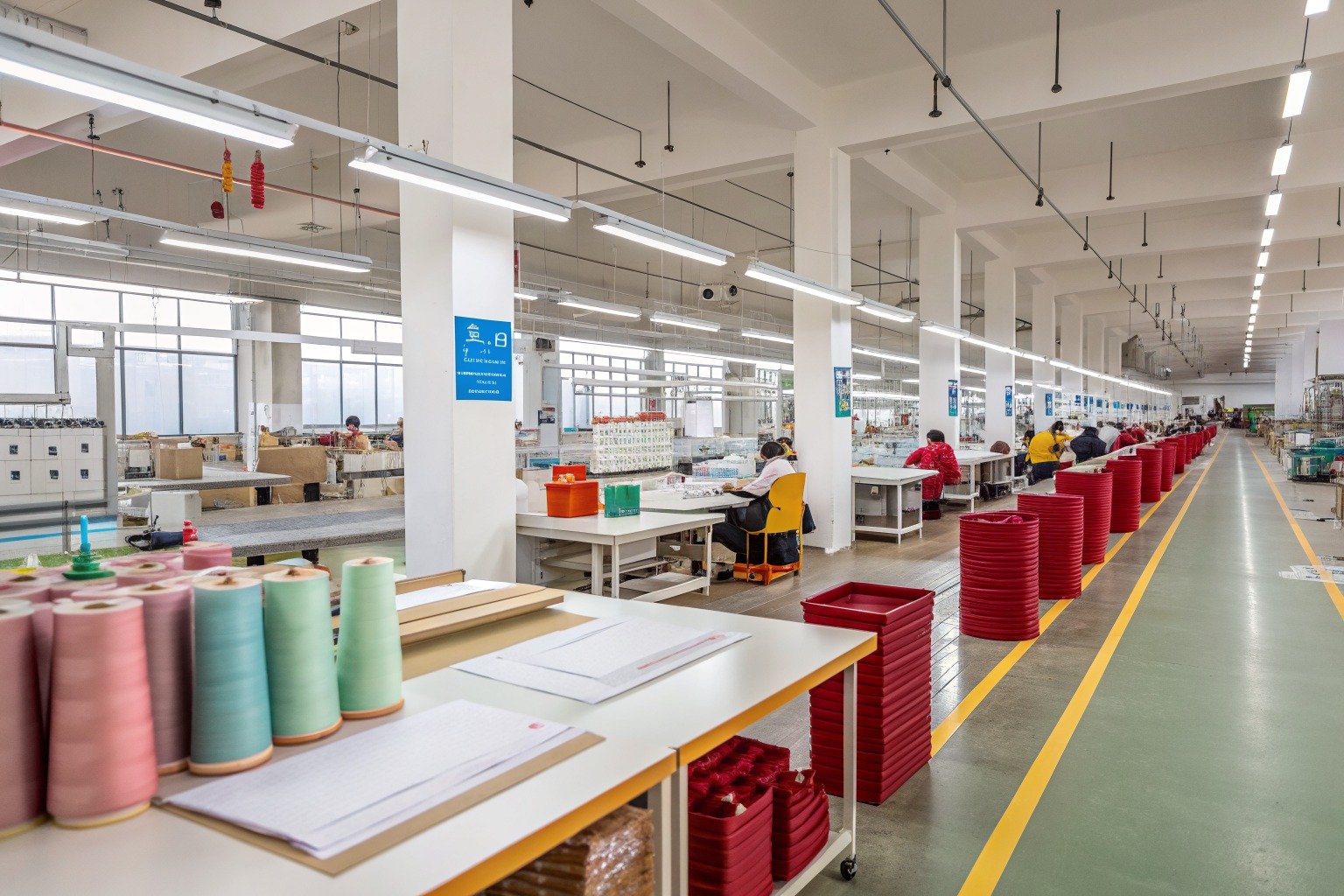
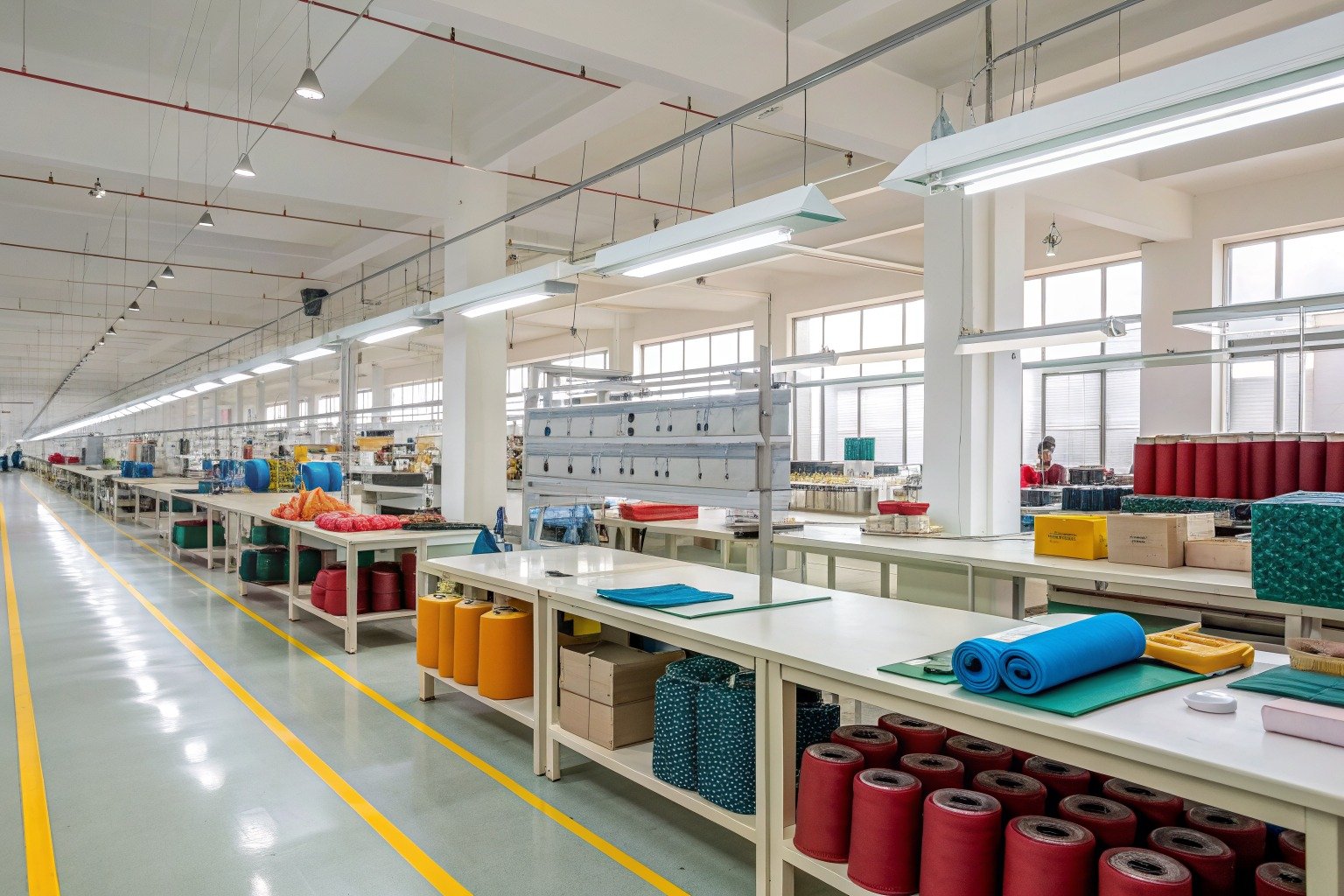
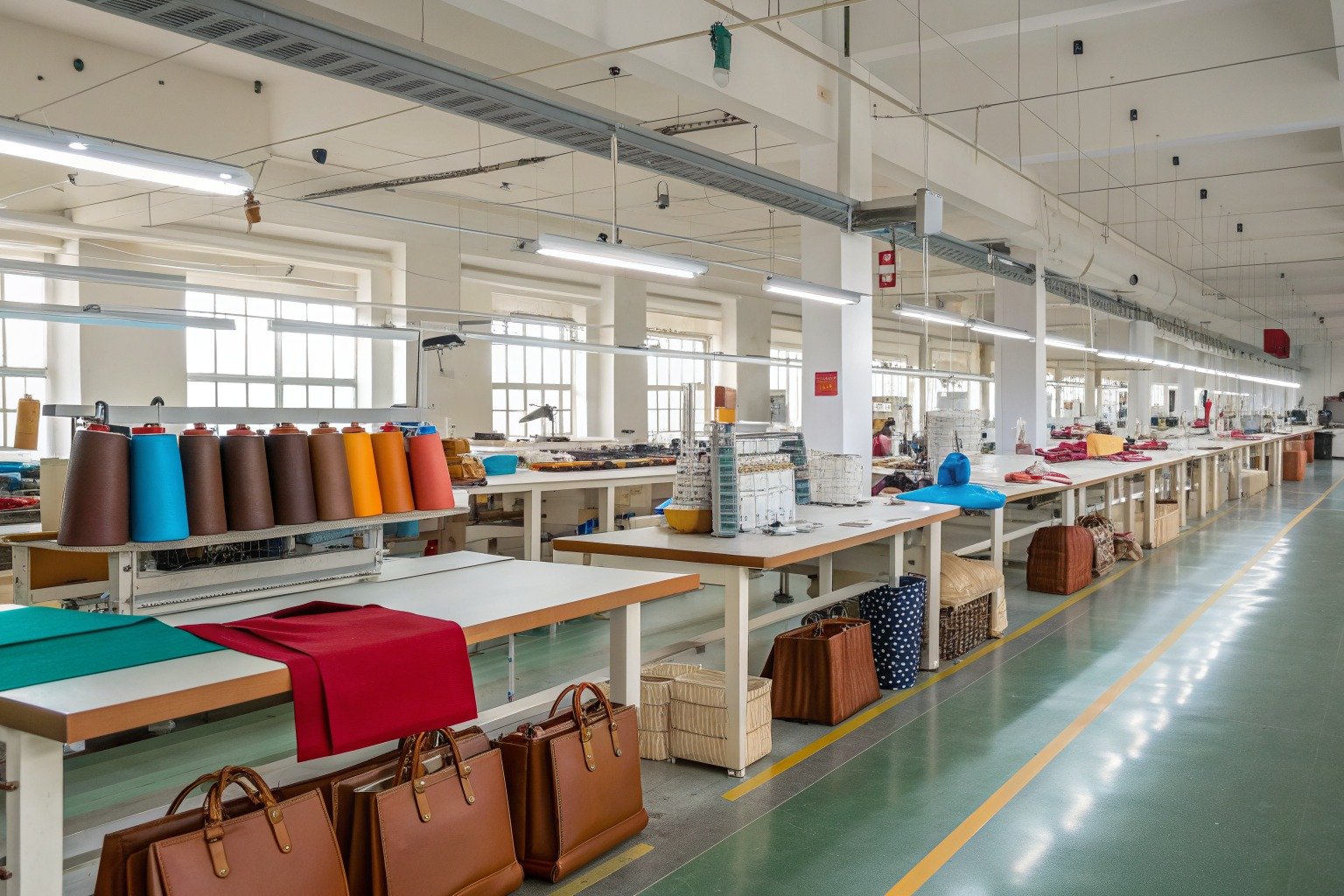
Now walk onto our factory floor in Zhejiang. You will not see wooden blocks. You will see rows of industrial cutting tables and high-speed lockstitch machines. We make hats the way a garment factory makes shirts. We take flat fabric and construct a three-dimensional shape through precise pattern making and sewing.
The process for a standard baseball cap looks like this:
- Fabric Spreading: Large rolls of cotton twill or polyester are laid out on a cutting table in multiple layers.
- Die Cutting: A large hydraulic press with a metal die (shaped like the cap panels) stamps out the pieces. This takes seconds for dozens of panels.
- Panel Sewing: Operators at sewing machines join the six panels of the crown together. This requires consistent seam allowance, usually a quarter-inch.
- Brim Attachment: The pre-formed brim (made with plastic buckram inside) is inserted and sewn to the crown.
- Finishing: The sweatband, top button, and closure are attached.
This process is fast. A skilled sewing line can produce hundreds of caps per day. The quality control is focused on consistency. We want every cap to be identical. Variation is a defect in this world, not a feature.
Because we rely on metal cutting dies for each size and shape, there is a tooling cost involved. Creating a new die for a unique cap panel might cost $50 to $100. This cost is amortized over the production run. This is why casual hat manufacturing typically requires higher MOQs. Setting up the cutting die and the sewing line for a small run of 50 caps is not cost-effective. But for 500 or 5,000 caps, the efficiency is unbeatable.
What Materials Separate Millinery Craft From Casual Hat Production?
The materials used in hat making are not interchangeable. You cannot make a structured baseball cap out of delicate sinamay straw. It would tear at the seams. You cannot make a soft, drapey felt fedora out of stiff cotton twill. It would look like a costume. The material choice is dictated by the end use and the manufacturing method.
Millinery materials are chosen for their sculptural properties and ability to be blocked. Fur felt, wool felt, and sinamay straw are malleable when steamed and hold a rigid shape when dry. Casual hat materials are chosen for their durability, sewability, and washability. Cotton twill, polyester canvas, and acrylic knit are stable fabrics that withstand the tension of industrial sewing machines and the rigors of daily wear and cleaning.
What Are The Traditional Materials Used In High-End Millinery?
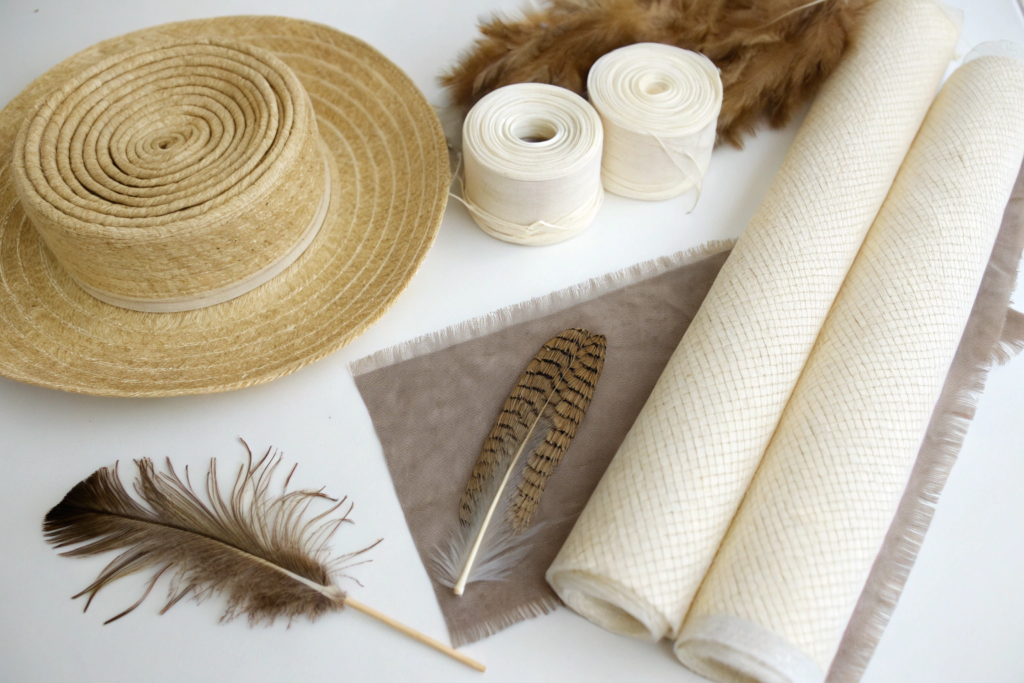
Millinery materials have a specific vocabulary and a specific set of properties. They are often more expensive per yard than casual hat fabrics because they are manufactured in smaller batches for a niche market.
The primary materials you will encounter in millinery sourcing include:
| Material | Characteristics | Common Use |
|---|---|---|
| Fur Felt | Made from beaver, rabbit, or hare fur. Dense, water-resistant, smooth finish. | Premium fedoras, cowboy hats, dress hats. |
| Wool Felt | Made from sheep’s wool. Softer, less dense, more affordable than fur felt. | Everyday fedoras, floppy brim hats. |
| Sinamay | A stiff, open-weave straw from the abaca plant. | Fascinators, wide-brimmed summer hats, structured bases. |
| Parasisal Straw | Fine, smooth straw from the sisal plant. Very lightweight. | High-end summer dress hats. |
| Buckram | Stiff cotton fabric impregnated with glue. | The internal framework hidden inside fabric-covered hats. |
These materials require specialized handling. Fur felt is expensive and can be ruined by a single drop of oil from a sewing machine. Sinamay frays easily and must be handled with care. The trims used in millinery—veiling, feathers, beaded appliqués—are often applied by hand using small, hidden stitches.
When you source a millinery hat, you are paying for the intrinsic value of these materials. A beaver fur felt hat body alone can cost $30 to $50 before any labor is applied. This is why a quality blocked fedora retails for $150 to $500. The raw material cost is a significant portion of the final price.
What Fabrics And Components Dominate Casual Hat Manufacturing?
In casual hat production, we prioritize materials that are consistent, widely available, and machine-friendly. The cost is lower, and the supply chain is robust.
Our primary materials at AceAccessory include:
- Cotton Twill: The workhorse of baseball caps. It is durable, takes dye well, and breathes. We use weights from 8-ounce to 11-ounce.
- Brushed Polyester: Used for "trucker" caps and performance headwear. It is lightweight, moisture-wicking, and holds vibrant colors.
- Acrylic Yarn: Used for knit beanies. It is soft, washable, and cost-effective. We also use wool blends for premium beanies.
- Plastic Buckram: This is the stiffener inside the brim of a baseball cap. It is cut by a die and sewn in. It is what gives the cap its curved shape.
- Plastic Snapbacks and Metal Buckles: These are mass-produced closures that are sewn or riveted onto the back of the cap.
The cost of these materials is measured in cents per yard or cents per piece. A plastic snapback closure costs about $0.05. A yard of cotton twill costs $2.50. This low material cost allows us to keep the final price of a custom baseball cap in the $2.50 to $4.50 range for bulk orders.
The durability of these materials is key. A cotton cap can be thrown in the washing machine. An acrylic beanie can be stretched and pulled. They are designed for active, everyday life. This is the opposite of a fine straw hat, which must be stored carefully in a box and kept dry.
How Do Quality Standards And Defect Tolerance Compare?
Quality means different things in different contexts. In millinery, quality is often about the artistic intent and the hand of the maker. A slight irregularity in the brim curve might be seen as evidence of hand-work and character. In casual hat manufacturing, that same irregularity is a defect that signals a machine malfunction or operator error.
Quality standards in millinery are subjective and centered on the integrity of the shape and the finesse of the hand-finishing. Minor variations are acceptable and even valued. Quality standards in casual hat manufacturing are objective and data-driven, based on AQL sampling plans and precise measurement tolerances. Symmetry, seam strength, and color consistency are measured against a strict, approved specification sheet. Any deviation from the spec is considered a defect.

How Is Quality Evaluated In A Blocked And Hand-Finished Hat?
Evaluating a millinery hat requires a different lens. You are not looking for machine-like uniformity. You are looking for evidence of skilled craftsmanship.
Key quality indicators for a blocked felt hat include:
- Smoothness of the Crown: The felt should be pulled tight with no puckers, bubbles, or wrinkles. The surface should be smooth to the touch.
- Symmetry of the Brim: While not machine-cut, the brim should appear balanced to the naked eye. There should be no obvious lopsidedness.
- Invisible Stitching: The sweatband should be sewn in with small, hidden stitches that do not pierce through to the outside of the crown. The ribbon trim should be attached with discreet tacking stitches.
- Clean Trim Application: Feathers should be securely mounted. Beading should be tight and even. There should be no visible glue residue.
Because the hats are made one by one, the final inspection is often done by the milliner who made the hat or the studio owner. It is a 100% inspection process. Every hat is looked at individually. There is no sampling plan. This is feasible because the volume is low. Making 50 hats is a busy month for a milliner. Making 5,000 hats is a slow Tuesday for our factory.
The buyer of a millinery hat expects this level of individual attention. They are buying a piece of wearable art. They are willing to accept slight variations in color or shape because they understand the process. A style called "Natural Straw" might vary slightly in shade from one batch of straw to the next. This is communicated to the buyer and accepted as part of the material’s character.
What Is The AQL Approach To Casual Hat Inspection?
In our world, consistency is the highest virtue. A customer who buys a "Navy Blue Classic Cap" from your website in January should receive the exact same product as a customer who buys it in July. Color, fit, and stitching must be identical.
We use the AQL (Acceptable Quality Limit) system to manage this. This is a statistical sampling method defined by international standards like ISO 2859.
Here is how it works for an order of 5,000 baseball caps:
- We do not inspect all 5,000 caps. That would take too long and be too expensive.
- Based on the AQL table, we inspect a random sample of 200 caps.
- We classify defects as Critical (safety hazard, sharp needle inside), Major (crooked logo, wrong color sweatband), or Minor (loose thread, slight fabric slub).
- We tally the number of defects found in the 200-piece sample.
- We compare the tally to the acceptable limit. For Major defects, the typical limit is 2.5% or 4.0%. If we find more than the allowed number of defects, the entire order of 5,000 caps fails inspection and must be reworked.
This system is objective. We have a Measurement Specification Sheet for every style. The brim width must be 7.0 cm with a tolerance of +/- 0.3 cm. The QC inspector uses a ruler. If the brim is 6.5 cm, it is a defect. There is no artistic interpretation. It is math.
This is the level of reliability that US retail buyers demand. When they place a purchase order with a delivery window, they need to know that the goods in the carton match the approved sample exactly. Our internal QC team and our use of AQL sampling provide that guarantee. It is a different service model than the milliner’s personal guarantee of craftsmanship. Both are valid. They just serve different markets.
What Are The Lead Time And MOQ Expectations For Each Category?
Time and quantity are where the rubber meets the road for a business decision. You can love the idea of millinery, but if you need 2,000 hats for a corporate event in six weeks, millinery is not a viable option. Conversely, if you want 20 unique, high-end fascinators for a boutique window display, a mass-production factory will not be interested in your business.
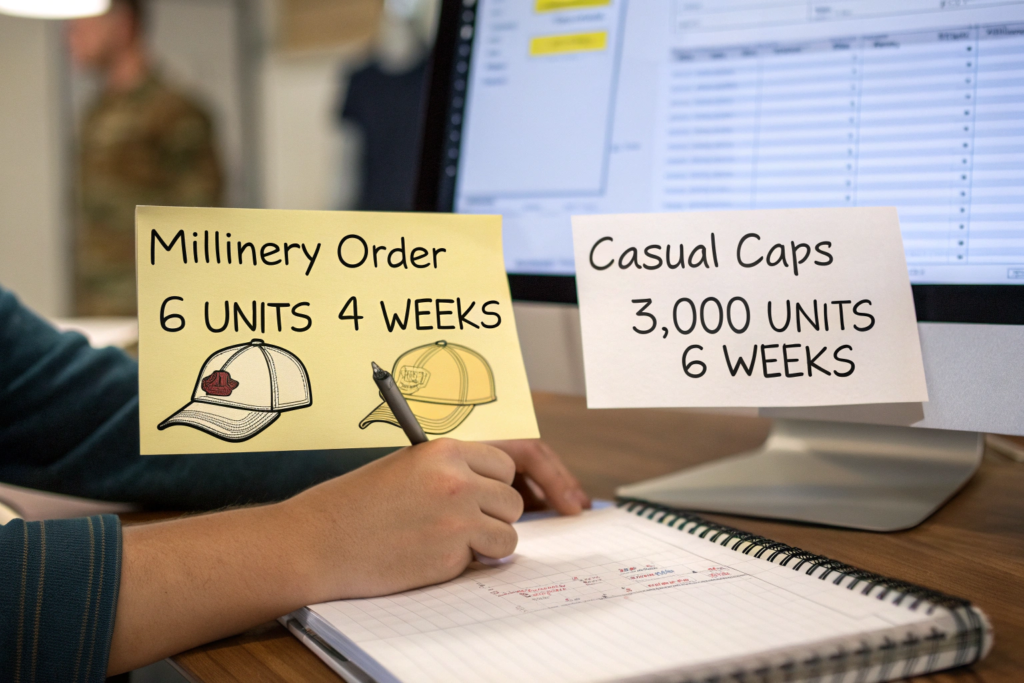
Millinery operates on low MOQs and longer per-unit lead times due to the handcrafted nature of the work. A single milliner can only produce a few hats per day. Casual hat manufacturing operates on high MOQs and shorter per-unit lead times due to assembly-line efficiency. A factory can produce thousands of units per day once the line is set up. The trade-off for the buyer is between exclusivity and small-batch flexibility versus volume and cost-efficiency.
Why Are Millinery MOQs Low But Lead Times Long Per Unit?
If you approach a milliner with an order for 500 hats, they will likely decline or quote you a delivery date two years from now. They do not have the infrastructure for that volume. They have one pair of hands.
A typical millinery studio might produce 10 to 20 hats per week. If you order 20 hats, your lead time might be 2 to 3 weeks. That seems reasonable. But if you order 100 hats, your lead time is not 2 weeks. It is 5 to 10 weeks, depending on their other commitments. The lead time scales almost linearly with quantity because there is no assembly line to accelerate production.
However, the MOQ is often just 6 or 12 pieces per style. This is the huge advantage of millinery. You can test a new shape or color with very little financial risk. You can offer a "Limited Edition" hat to your customers without committing to a container load.
This low MOQ comes with a higher per-unit price. You are paying for the artisan’s full hourly rate. There is no economy of scale. The cost to make 12 hats is roughly 12 times the cost of making 1 hat. This is the opposite of mass production, where the 1,000th hat costs a fraction of the first hat.
What Are The Volume Requirements For Casual Hat Manufacturing?
Our factory is set up for efficiency. That efficiency requires a certain volume to justify the setup time. Setting up a sewing line for a new style of baseball cap involves:
- Creating or retrieving the cutting die.
- Threading 20 sewing machines with the correct color thread.
- Training the line leader on the new assembly sequence.
- Calibrating the embroidery machine with the logo file.
This setup takes time. Whether we make 100 caps or 1,000 caps, the setup time is roughly the same. Therefore, the cost per cap is very high for a small order and very low for a large order.
Our typical MOQ for custom baseball caps is 300 to 500 pieces per style per color. For stock designs with no custom logo, we can be more flexible. For knit beanies, the MOQ might be higher (500 to 1,000) due to the yarn dyeing process.
However, the per-unit lead time is extremely fast once production starts. Our line can produce 1,500 caps per day. For an order of 5,000 caps, the actual sewing time is less than a week. The total lead time of 6 to 8 weeks is mostly consumed by material sourcing, sample approval, and ocean freight shipping. The manufacturing itself is the quickest part of the process.
This is the model you need if you are selling wholesale to retailers or running a high-volume e-commerce store. You need inventory. You need consistent quality. And you need a price point that allows for a healthy margin. Casual hat manufacturing delivers that.
Conclusion
The hat world is divided into two distinct universes: the artisanal craft of millinery and the industrial precision of casual hat manufacturing. They use different hands, different machines, and different materials. They serve different customers and different business models.
If you are a boutique owner looking for a small collection of unique, hand-shaped fascinators or felt fedoras to set your store apart, you need a milliner. You value the story of the craft, the low minimums, and the sculptural shapes. You accept a higher price point and a longer per-unit lead time as part of that value proposition.
If you are a brand looking to put your logo on thousands of consistent, durable baseball caps or beanies for a promotional event, a corporate uniform, or a retail line, you need a casual hat manufacturer like AceAccessory. You value speed, consistency, compliance with US labeling laws, and a landed cost that fits within a strict budget. You need a partner with industrial capacity and a data-driven quality system.
Understanding this difference is the first step to sourcing hats successfully. It prevents you from asking a baseball cap factory to make a sinamay fascinator. It prevents you from asking a milliner to make 10,000 trucker hats. Knowing which world you are operating in saves you time, money, and frustration.
At Shanghai Fumao, we are experts in the world of casual and promotional headwear. We have the production lines, the QC teams, and the project managers to deliver high-quality caps, beanies, and hats at scale.
If you are ready to discuss a custom cap project or need guidance on which category of hat is right for your brand, please reach out. We are happy to share our expertise and help you navigate the process. For more information or to start a conversation about your next order, please contact our Business Director Elaine directly at elaine@fumaoclothing.com. We look forward to helping you top off your brand with the perfect hat.