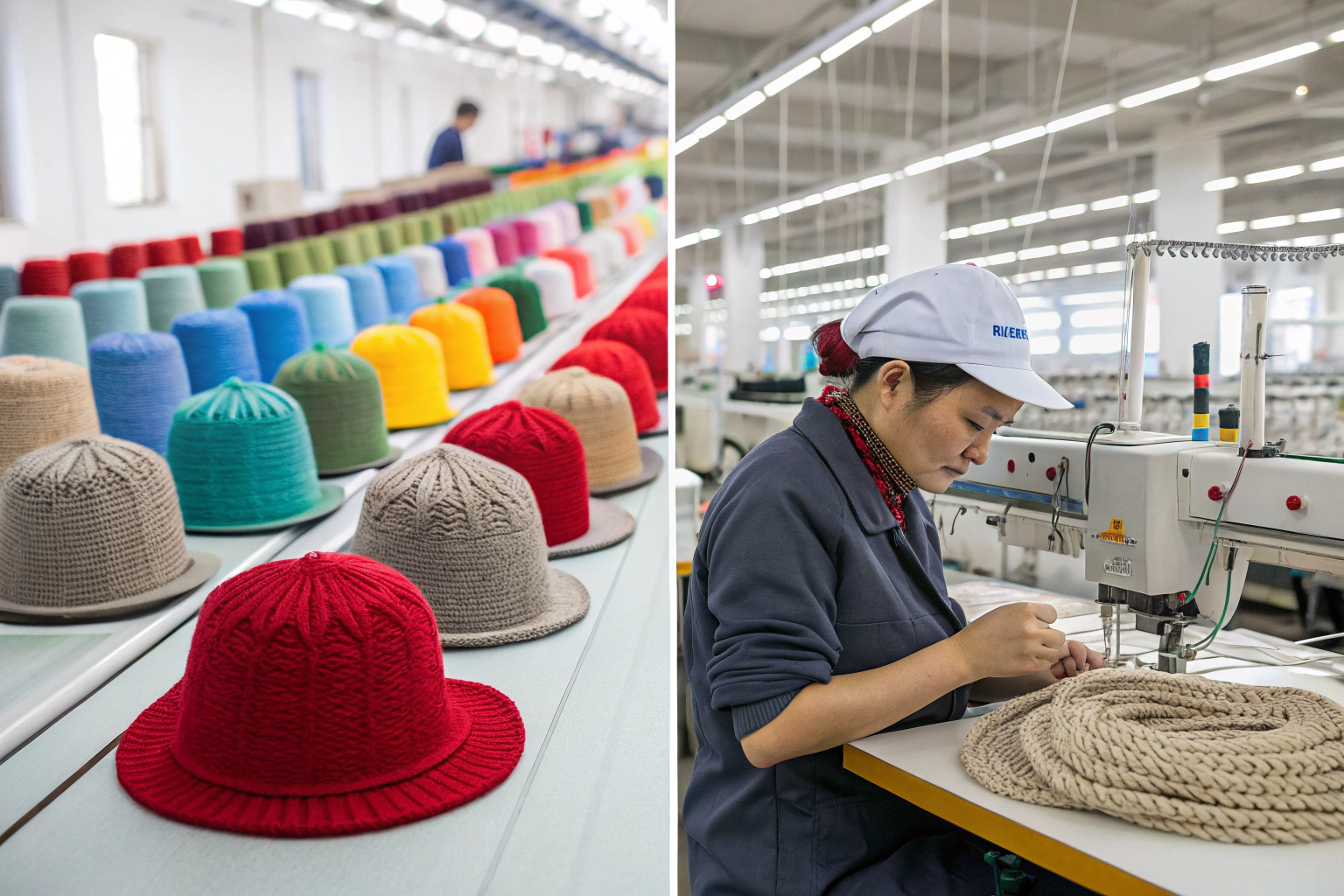
If you are sourcing accessories for a full lifestyle brand, you know this headache well. You find a fantastic factory for knit beanies and scarves. Their yarn selection is incredible. Their knitting machines are top-notch. You are thrilled. Then you ask about adding a woven belt or a structured canvas hat to the order. Suddenly, the conversation stops. They say, "Sorry, we only do knitwear." Now you are stuck managing two separate factories, two separate quality control processes, two separate shipping schedules, and two separate sets of problems. This fragmentation eats away at your time and your profit margins faster than anything else in this business.
A factory that excels at both knit and woven accessories is not just a convenience. It is a strategic advantage that streamlines your entire supply chain. When you find a manufacturer with dedicated departments for yarn-based products like scarves and beanies as well as cut-and-sew woven items like belts and caps, you unlock the ability to consolidate shipping, unify quality standards, and negotiate better overall pricing based on total volume rather than fragmented small orders.
This is the reality I live every day at Shanghai Fumao here in Zhejiang. We built our factory to be different. We did not want to be just a "hat factory" or just a "scarf factory." We wanted to be a true partner for brands like yours that sell across categories. I want to walk you through what this hybrid capability actually looks like on the production floor and why it matters so much for your bottom line. You do not need two vendors. You need one vendor who does both things correctly.
What Are The Key Differences Between Knit And Woven Production?
Let me start with something that surprises a lot of my American clients. They assume a "hat" is a "hat" and a "scarf" is a "scarf." They think the factory just pushes a button and the machine spits out the product. That is not how it works. The machinery, the skill set of the workers, and even the raw material storage are completely different for knit goods versus woven goods. Understanding this difference is the first step in vetting whether a factory is truly capable of handling both categories or just pretending they can.
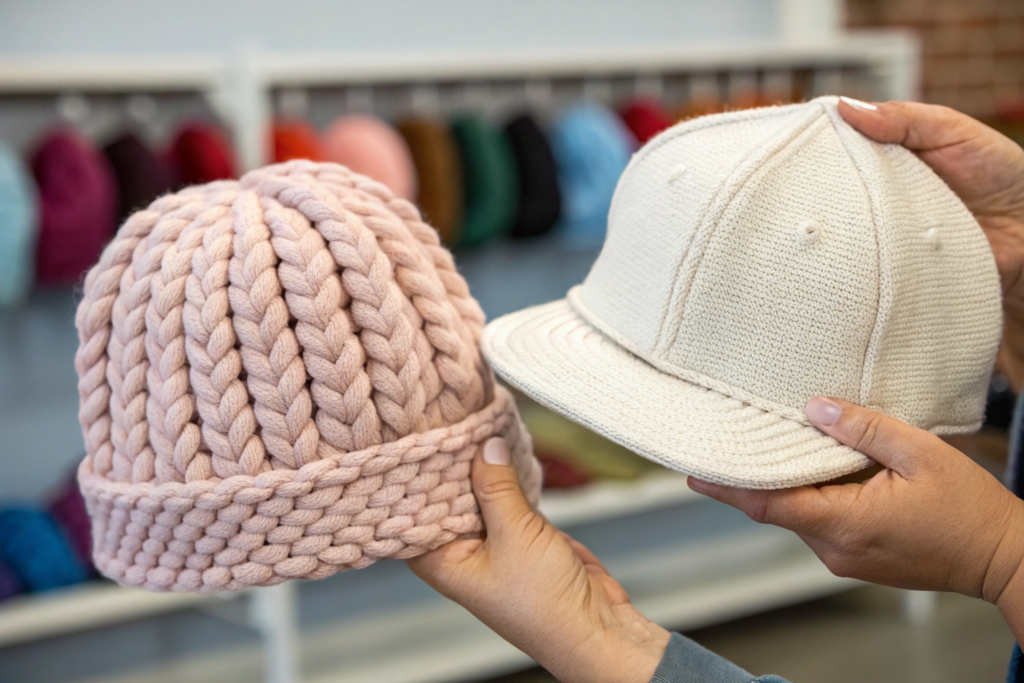
Knit production relies on yarns and looped construction using circular knitting machines or flatbed knitting machines, creating stretchy and soft textures. Woven production relies on cut fabric pieces sewn together with seams, creating structured and durable shapes. A factory that claims to do both must have separate production lines, separate raw material warehouses for yarn versus fabric rolls, and separate teams of technicians who specialize in each method.
How Does Knitwear Manufacturing Actually Work In A Modern Factory?
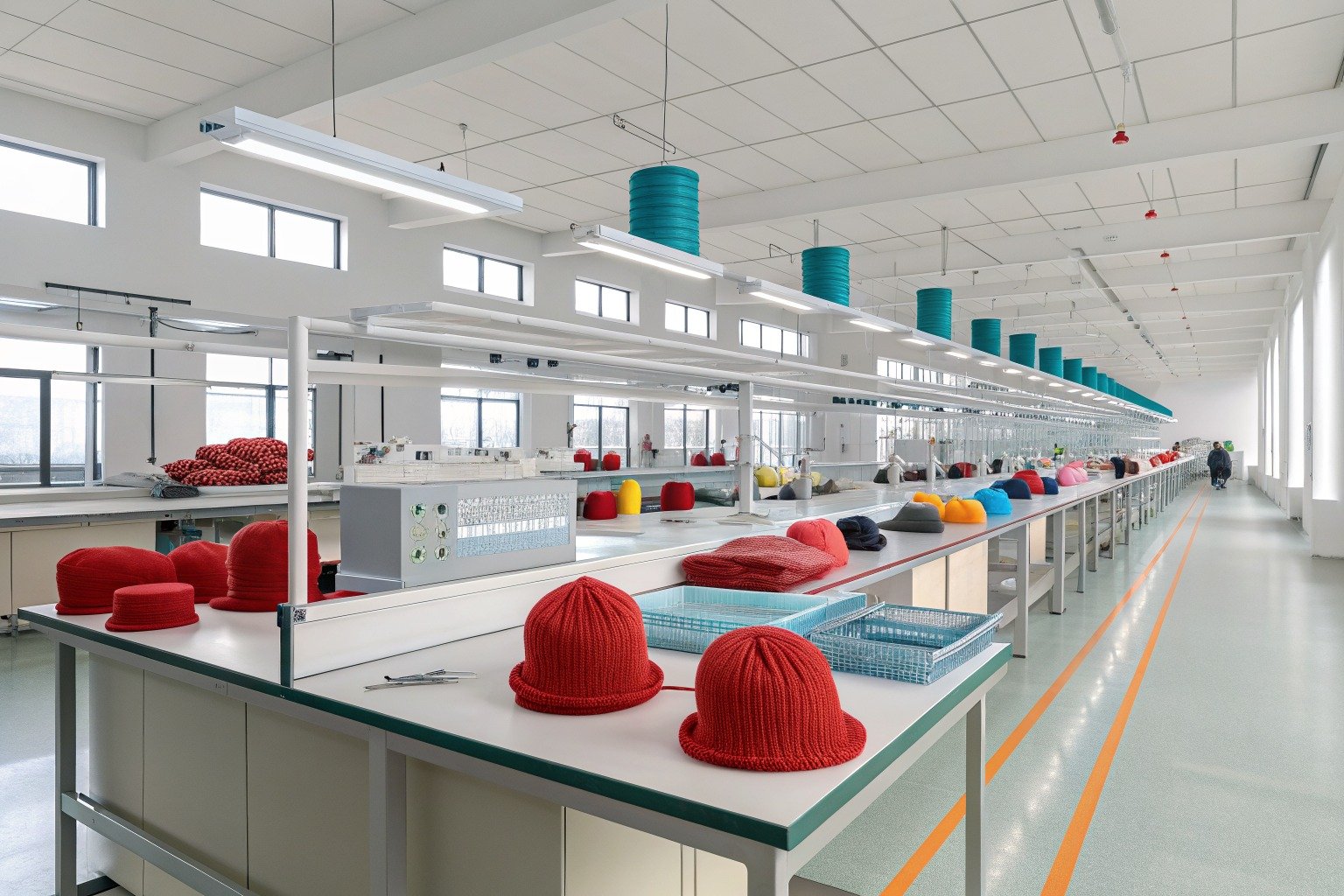
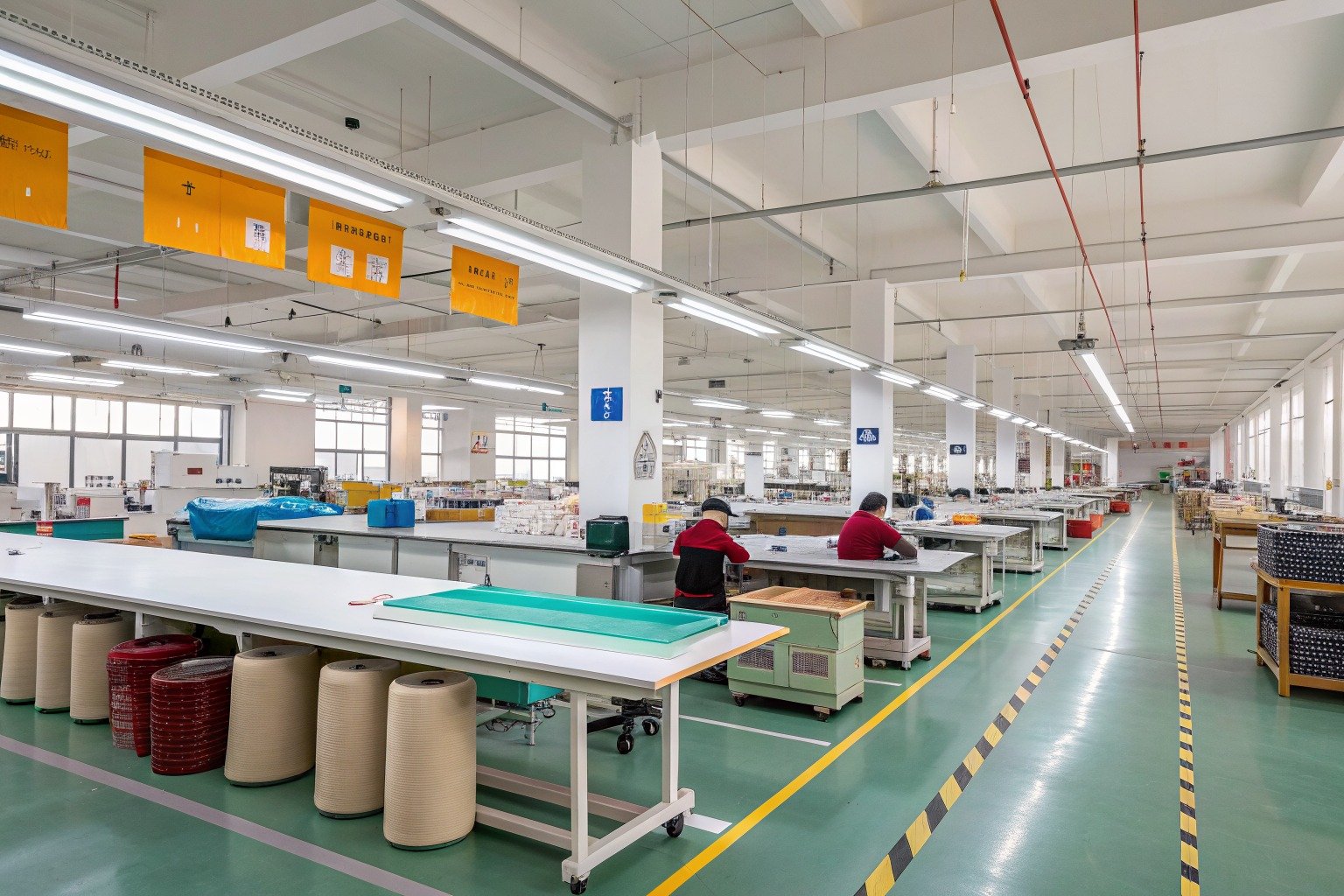
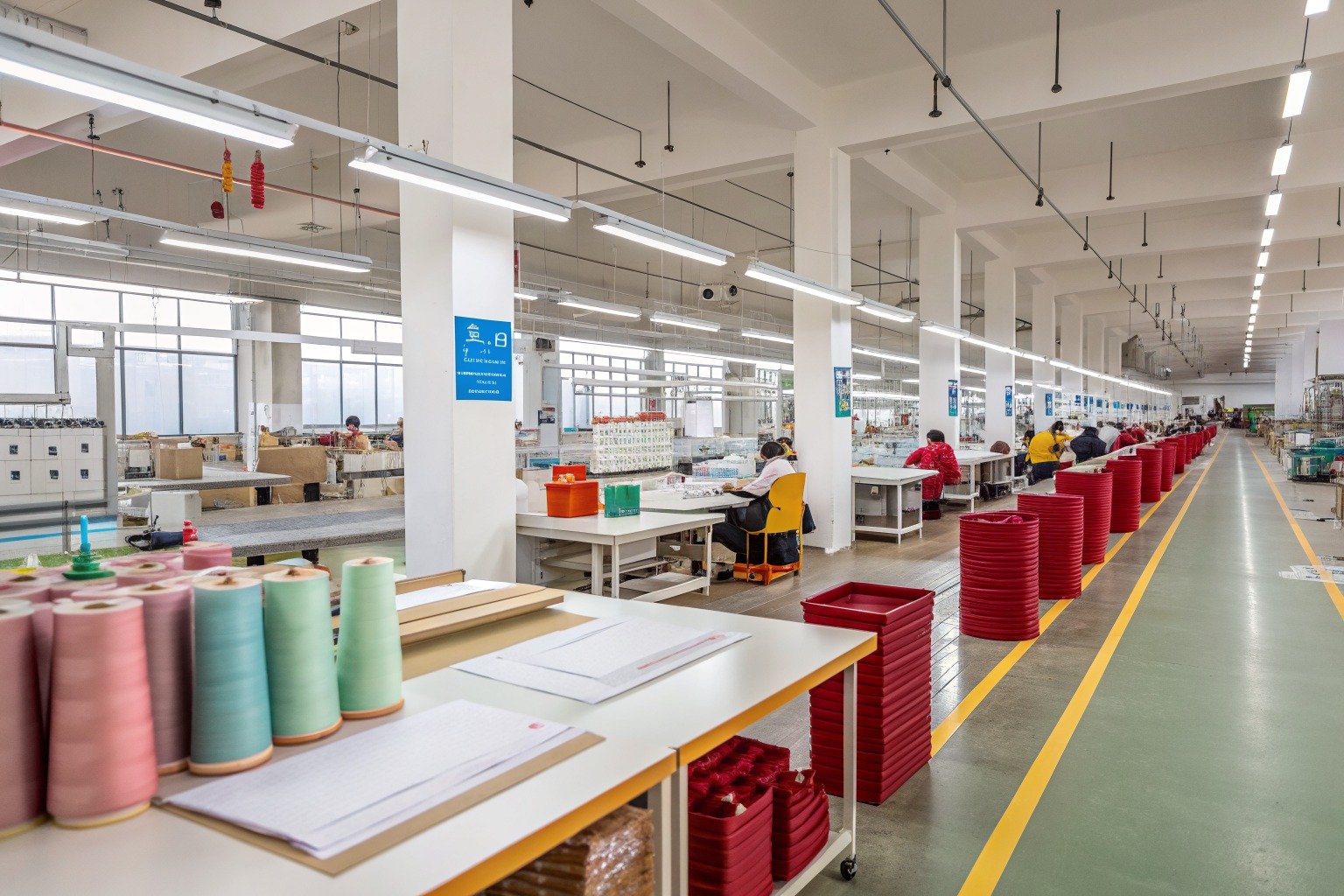
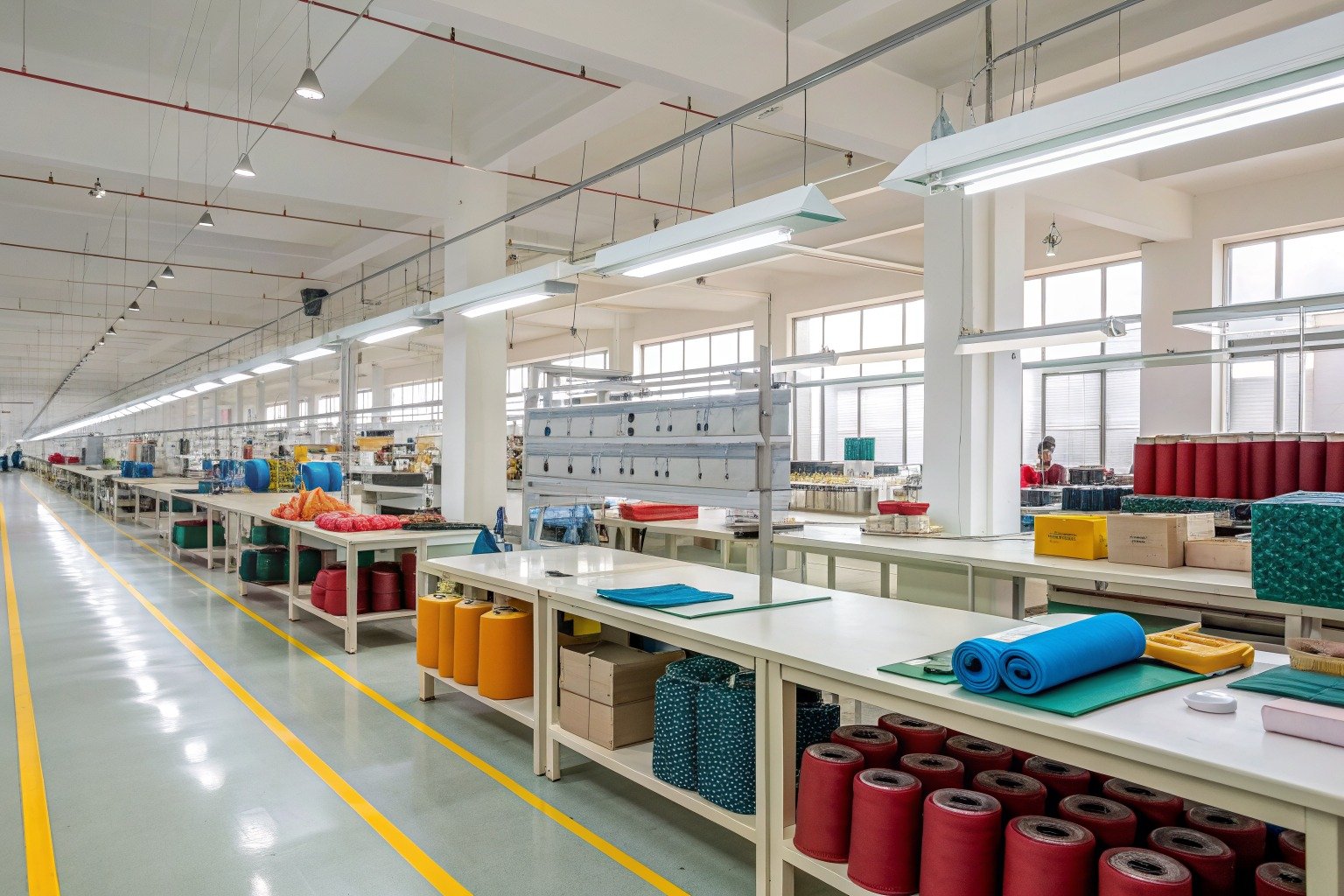
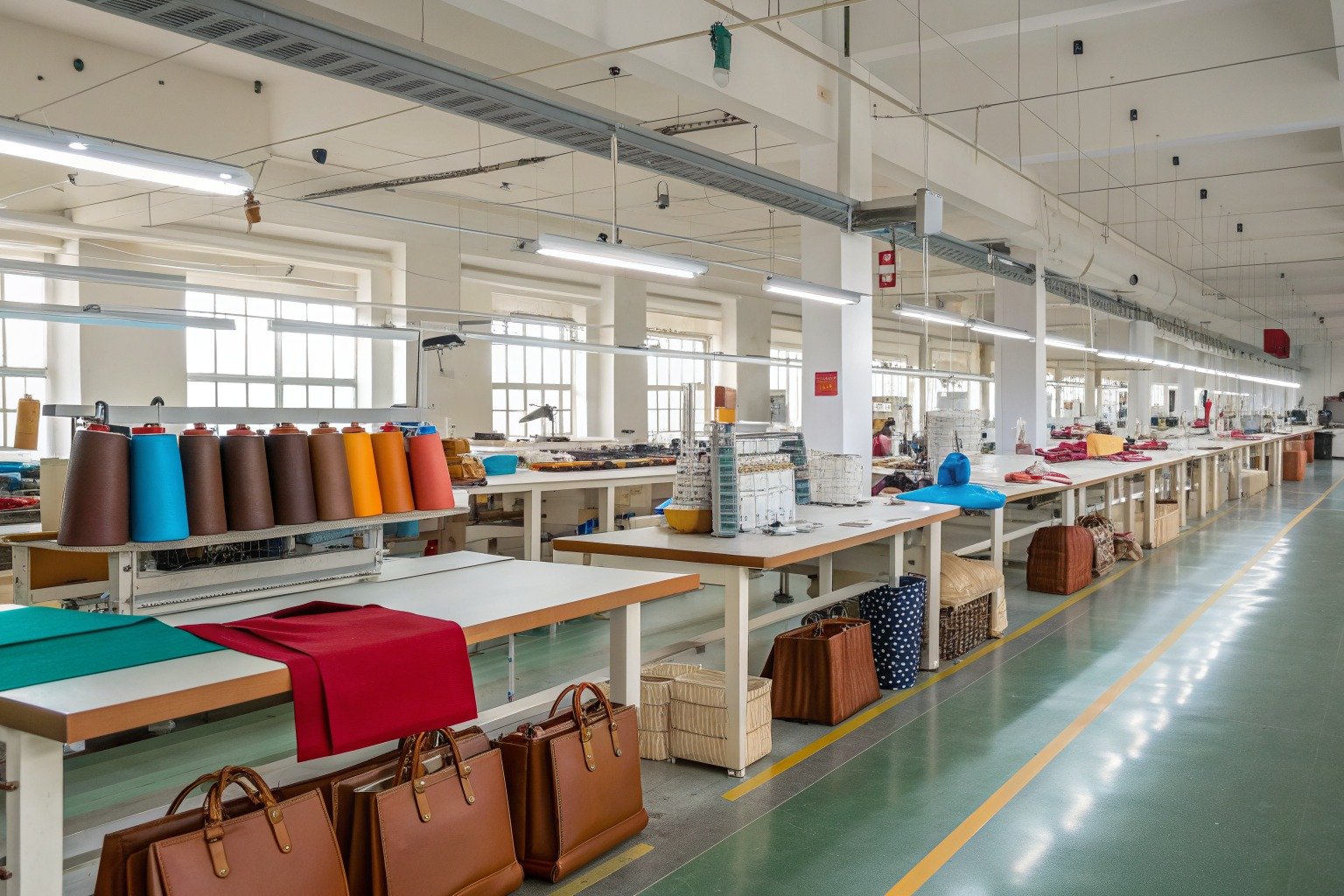
When you walk into the knitwear section of our Zhejiang facility, it looks completely different from the woven section. The air is warmer. There is a soft hum from the circular knitting machines. You see giant cones of yarn in every color imaginable lined up against the wall. This is the heart of knit production.
For products like winter scarves, knit beanies, and gloves, we start with the yarn. The quality of the yarn determines everything. Is it 100% acrylic for a budget-friendly price point? Is it a wool blend for a premium department store? Is it a special chenille yarn for that trending "fluffy" texture on social media? We source yarn from trusted mills in China who provide certification on fiber content and dye fastness.
The knitting machine then creates the fabric in a tubular or flat shape. For a beanie, the machine knits a long tube with the crown already closed. Then a worker uses a linking machine to close the top seam invisibly. For a scarf, the machine knits a flat panel with finished edges. Then we add fringes if the design calls for it. The process is fast and highly automated once the machine is programmed correctly.
Here is a detail that matters for your brand: Gauge. This refers to how many needles per inch the machine uses. A 3-gauge machine makes chunky, heavy knit beanies. A 12-gauge machine makes fine, lightweight knit gloves or dress scarves. A professional factory owns multiple gauges of machines. If a factory only has 7-gauge machines, they cannot make you a sleek fine-gauge scarf. You need to ask about machine gauge capability if you want to expand your knit collection.
What Makes Woven Accessory Production A Different Skillset?
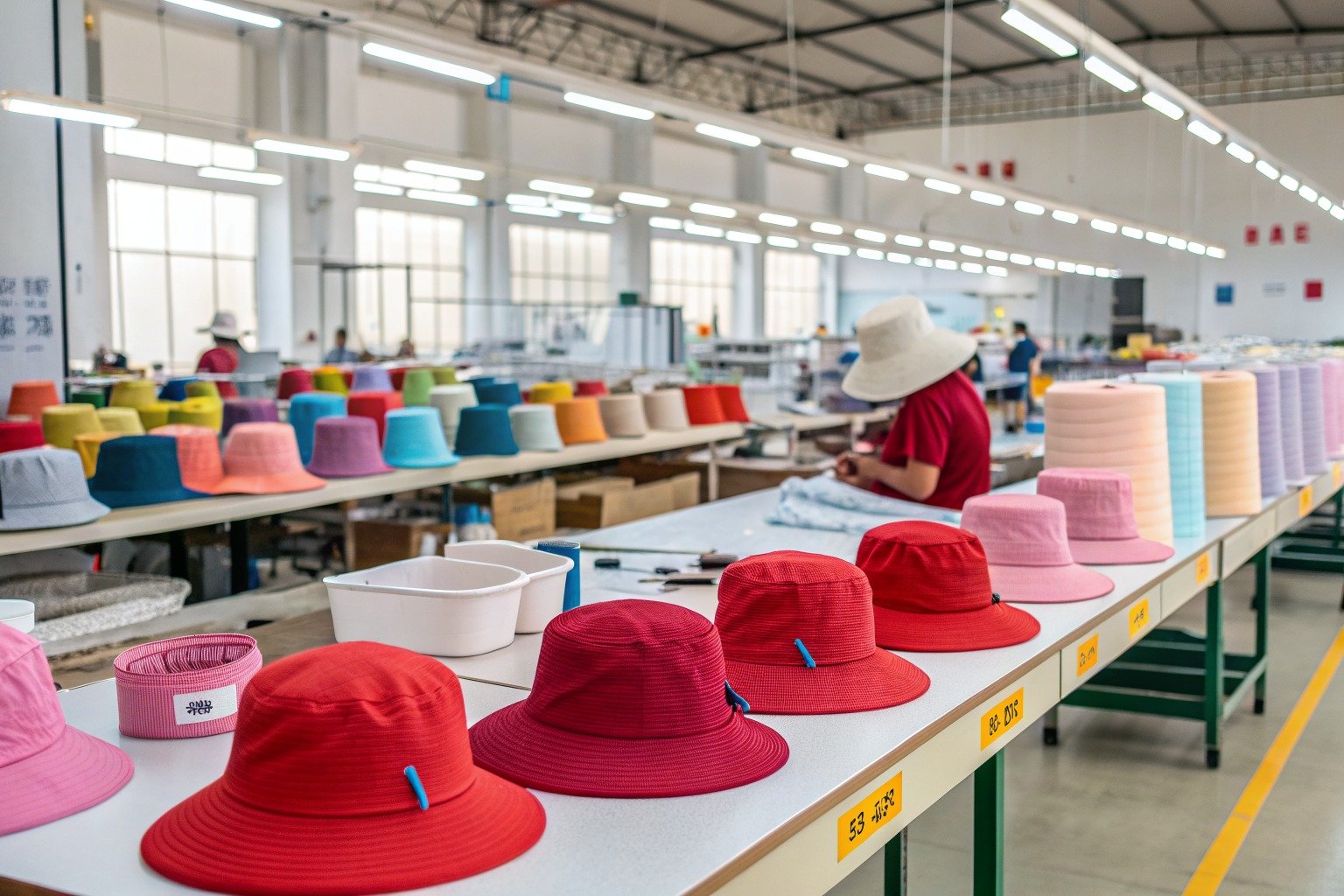
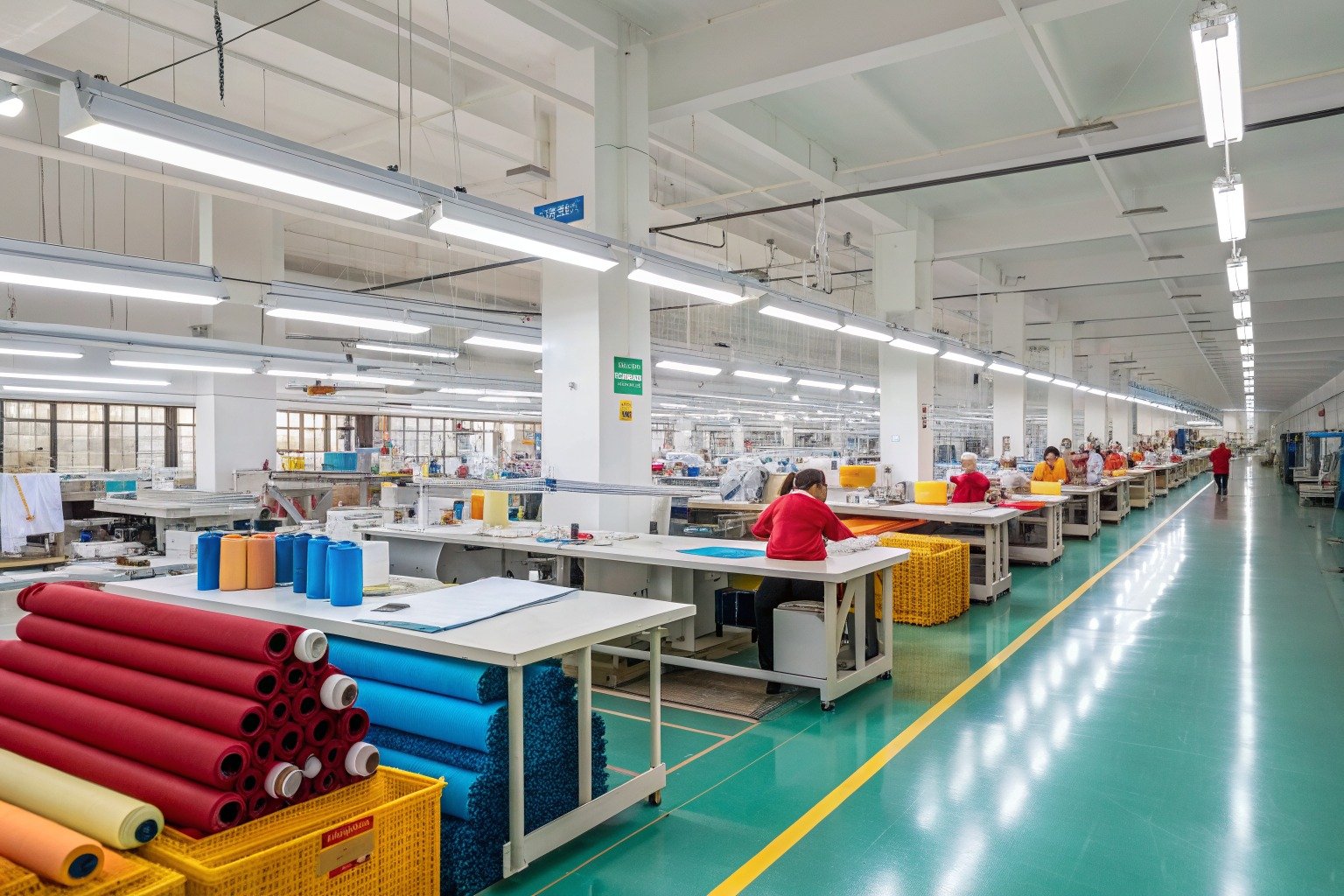
Now walk across the factory floor to the woven section. The sound changes. You hear the sharp click of industrial sewing machines and the heavy thud of fabric cutting presses. The air smells like cotton and starch. Instead of yarn cones, you see massive rolls of fabric stacked vertically.
For products like baseball caps, woven belts, cloth hats, and shawls, we start with piece goods. These are rolls of woven fabric like cotton twill, polyester canvas, denim, or linen. The first step is spreading and cutting. We lay out multiple layers of fabric on a long cutting table. Then we use either a die cutting machine for precise small parts like belt tips or cap brims, or we use a computerized cutting knife for larger panels.
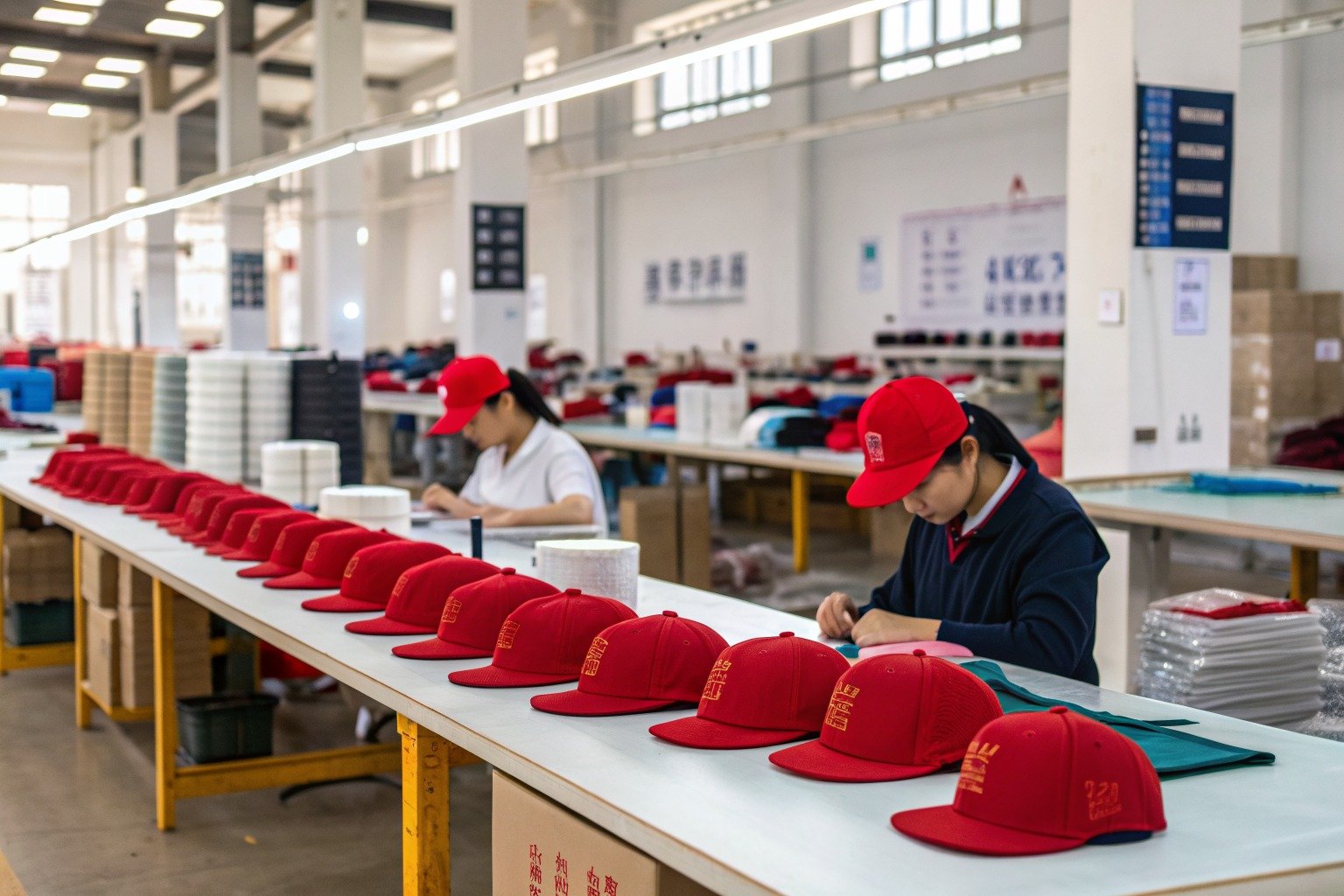
Once the pieces are cut, they move to the sewing line. Unlike knit goods where the shape is mostly created by the machine, woven items are assembled piece by piece. A simple baseball cap requires six separate fabric panels to be sewn together with precision. The seam allowance must be exact. If the sewing operator is off by even two millimeters, the cap will look crooked or the logo placement will be off-center.
This is where the skill of the worker matters most. You cannot just take a knitting machine operator and put them on a Juki industrial sewing machine. It is a completely different craft. They need to know how to handle different fabric tensions, how to sew a curved brim without puckering, and how to attach hardware like D-rings or buckles on belts. This is why a factory that excels at both must have two distinct teams of workers with different training backgrounds.
Why Choose A Factory That Handles Both Knit And Woven Items?
You are a busy buyer like Ron. You value efficiency. You do not want to spend your Tuesday morning on a Zoom call with a beanie factory and your Wednesday afternoon on a WhatsApp chat with a belt factory. You want one conversation. You want one shipping invoice. You want one set of quality standards applied across your entire order.
Consolidating knit and woven production under one roof dramatically reduces your logistical complexity and strengthens your negotiating position. Instead of meeting minimum order quantities separately for 500 beanies and 500 belts at two different factories, you can combine them into a single 1,000-piece order that qualifies for better pricing and lower per-unit freight costs. This is a game-changer for small to mid-sized brands looking to scale efficiently.
How Does Consolidated Production Lower My Shipping And Logistics Costs?
This is the part where my clients really start to smile. Shipping has been a nightmare for US importers over the last few years. Freight rates fluctuate wildly. Port congestion happens. You know this pain intimately.
When you use separate factories, you have two Bill of Lading documents. Two sets of Customs Brokerage fees. Two separate trucking appointments from the port to your warehouse. These fixed costs eat into your margin regardless of how many units are in the box. It costs roughly the same to clear customs for one carton as it does for one pallet in terms of administrative fees.
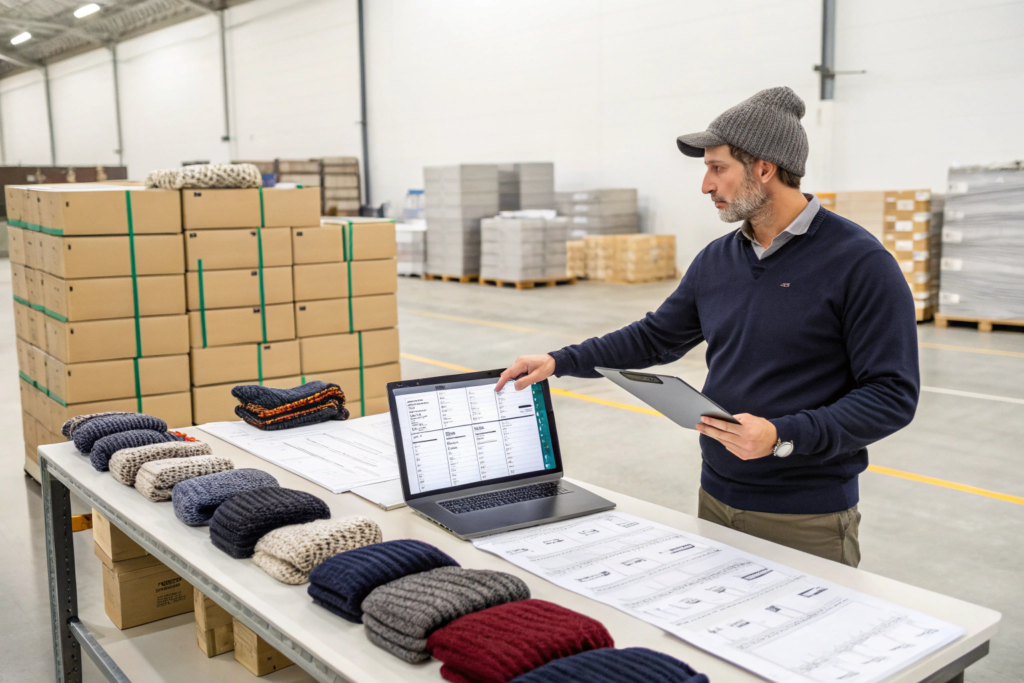
But when you work with a factory like ours that produces both your knit scarves and your woven caps, we pack everything together into one consolidated shipment. We build master cartons that contain a mix of your SKU’s.
Look at this comparison of shipping a small order:
| Scenario | Knit Beanies (300 pcs) | Woven Belts (200 pcs) | Estimated Fixed Costs |
|---|---|---|---|
| Separate Factories | Factory A Shipment | Factory B Shipment | 2 x Customs Entry Fee, 2 x ISF Filing Fee, 2 x Trucking Minimum |
| AceAccessory Single Shipment | Packed Together | Packed Together | 1 x Customs Entry Fee, 1 x ISF Filing Fee, 1 x Trucking Minimum |
The savings on those fixed fees can be hundreds of dollars per order. That is pure profit you keep. Plus, you only have to track one vessel. You only have to send one wire transfer payment. The reduction in mental overhead is just as valuable as the cash savings. You free up your time to focus on marketing and selling, not chasing two different tracking numbers.
Can A Multi-Category Factory Offer Better Quality Consistency?
This is a question I love to answer because it goes against what many people assume. People think a specialist is always better. But in the accessories world, the principles of Quality Control (QC) are universal. Whether it is a knit glove or a woven hat, the process of inspection is the same.
Because we operate both departments, we have a centralized Quality Assurance team. This team does not care if the item came from the knitting machine or the sewing line. They care about the same checklist:
- Is the stitching secure?
- Is the color matching the approved Pantone swatch?
- Are the dimensions within tolerance?
- Is the hang tag attached correctly?
- Is the polybag sealed properly?
When you work with two different factories, you often get two completely different interpretations of "good quality." Factory A might think a loose thread is acceptable. Factory B might think it is a major defect. You end up with inconsistent brand presentation on the retail shelf.
At AceAccessory, the same QC supervisor inspects both the beanies and the belts. They use the same AQL sampling standard. They use the same lighting booth for color assessment. This guarantees that when your customer opens a box from your brand, the knit scarf and the woven tote bag feel like they came from the same family. They share a standard of excellence. This builds brand trust and reduces your return rate. Consistency is the hallmark of a professional brand.
What Should I Look For When Vetting A Hybrid Accessories Factory?
You are convinced that a hybrid factory is the way to go. Great. But how do you separate the real deal from the factories that are just "yes men" who will say anything to get your deposit? You cannot fly to China every month to check. You need a vetting checklist that you can use from your office in America.
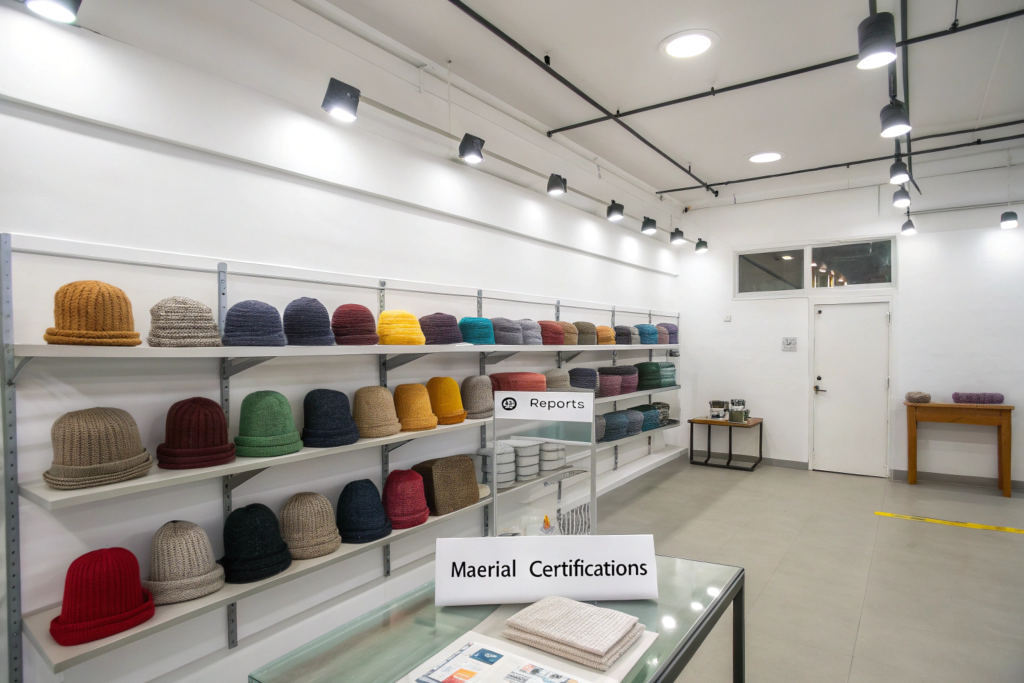
The most reliable indicator of a factory’s dual capability is not their website claims but their physical sample room inventory and their material sourcing documentation. A factory that truly excels at both knit and woven items will have a diverse archive of past production samples and will be able to provide immediate answers about yarn fiber content and woven fabric weight without hesitation or delay.
How Can I Verify Knit Expertise Through Material And Gauge Questions?
When you are on a video call with a potential supplier, do not just look at the pretty showroom. Ask to walk over to the yarn storage area. A legitimate knit factory has a yarn library. It should be a room or a large shelving unit with hundreds of cones of yarn in different colors and compositions.
Here are three questions you can ask that will immediately reveal if they know knitwear or if they are just buying finished goods from a market:
- "What is the percentage of acrylic versus wool in this specific beanie sample?" A real factory knows the exact blend because they ordered the yarn. A trader will say "Let me check with the factory."
- "Can you show me a 3-gauge chunky knit versus a 12-gauge fine knit side by side?" Look at the thickness difference. A real factory can show you this instantly because they have both machines on the floor.
- "Do you have a linking machine for seamless toe closure on socks or crown closure on beanies?" This is a specialized machine. If they do not know what a linking machine is, they are not a real knit factory. It is that simple.
You also want to see evidence of yarn testing. Ask for a SGS report or Intertek report on the yarn composition. This is important for US labeling laws. You must label the fiber content accurately on your product or website. A professional factory provides this documentation as standard procedure.
What Questions Reveal Woven Accessories Manufacturing Strength?
Now pivot the conversation to woven goods. Pick up a baseball cap or a woven belt. The clues are in the construction. Ask to see the cutting room. A real woven factory has a dedicated cutting area with large tables and heavy machinery. It is not just a corner with a pair of scissors.
Here are the diagnostic questions for woven capability:
- "What is the weight of this cotton twill fabric in ounces per square yard?" Fabric weight is critical for caps and bags. A good factory knows the weight of every fabric in their inventory. A bad factory will guess.
- "Can I see the die for cutting this belt tip shape?" A real factory has metal dies for precise cutting. They can show you the physical metal template. This proves they control the tooling.
- "How do you ensure the brim of the baseball cap does not warp after washing?" The answer should include mention of buckram or interfacing. Buckram is the stiff material inside the brim. A professional factory uses high-quality buckram that resists moisture and maintains shape.
Also, pay attention to the seam allowance on the inside of a woven hat. A clean, finished edge with overlock stitching or bound seams shows a high level of care. Raw, frayed edges on the inside show a factory that cuts corners. You want to partner with a factory that takes pride in what the customer does not see, because that is where the long-term durability comes from.
How Does A Unified Development Process Speed Up My Brand Launches?
Time is money. You know this. Every day you wait for a sample is a day you are not selling. When you work with separate factories, the development process becomes a slow, painful relay race. You wait for the knit sample. Then you wait for the woven sample. Then you realize the color of the yarn does not match the color of the woven fabric. Then you start the whole process over again. It is maddening.
A unified development team working on both knit and woven items allows for true collection-level design coordination. The same project manager oversees the Pantone color matching for the acrylic beanie yarn and the cotton cap fabric simultaneously. This parallel processing cuts sample lead times significantly and ensures that your seasonal collection launches with cohesive color stories and consistent brand identity.
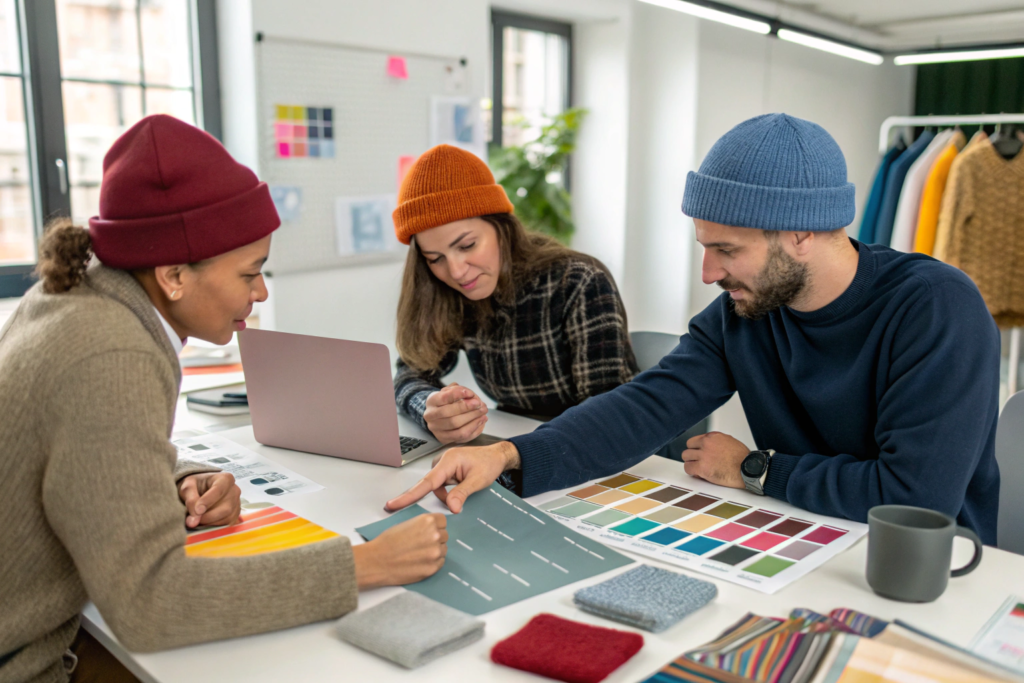
How Does Parallel Sampling Reduce My Overall Lead Time?
In a traditional multi-vendor setup, the lead time is sequential.
Week 1: Send brief to Knit Factory A.
Week 3: Receive Knit Sample.
Week 4: Send brief to Woven Factory B (now you have the knit sample in hand to reference color).
Week 6: Receive Woven Sample.
Week 7: Discover the woven color is off. Request revision.
Week 9: Receive revised Woven Sample.
Total time: 9 weeks minimum.
Now let me show you how it works at a unified factory like AceAccessory.
Week 1: Send complete brief to your dedicated Project Manager.
Week 1 (Day 2): Project Manager hands knit spec to Knitting Department Lead. Project Manager hands woven spec to Cut-and-Sew Department Lead.
Week 2 (Day 5): Both departments have sourced materials. The yarn dyer and the fabric dyer are given the exact same Pantone 19-4052 Classic Blue reference.
Week 3: Knit sample is ready. Woven sample is ready.
Week 3 (Day 4): Project Manager places both samples on the conference table under the color-corrected light booth. They verify the match internally before shipping to you.
Week 4: You receive a consolidated sample package with coordinated items.
You just saved five weeks of development time. That is an entire season in the fast fashion world. That is the difference between being first to market with a new Ribbed Beanie and Canvas Tote Set and being a late follower. This speed comes from internal communication and shared resources. We are not emailing a separate company. We are walking down the hall to the other department.
Can A Single Factory Ensure My Seasonal Color Palette Is Consistent?
This is one of the biggest unspoken pain points in the accessories industry. You design a beautiful Fall collection. You want a Rust Orange knit scarf and a Rust Orange woven belt. You send the same Pantone number to two different factories.
The scarf arrives. It is a beautiful, rich burnt orange. Perfect.
The belt arrives. It is bright neon orange. Like a traffic cone.
What happened? Dyeing yarn and dyeing woven fabric are two different chemical processes. Even with the same Pantone number, the results vary based on the substrate. A yarn dyer might use reactive dyes while a fabric dyer uses pigment dyes. The finish looks different.
At our factory, because we have in-house design oversight over both processes, we create a Master Color Standard for the collection. Our design team physically approves a "dip" of the yarn color and a "swatch" of the fabric color together. We check them under daylight, department store light, and home light. We adjust the formulas until the visual match is seamless.
We then keep these approved standards locked in a file for your brand. When you reorder next year, we pull that exact standard. No drifting. No surprises. This level of color management is nearly impossible to achieve with two separate vendors who never speak to each other. It is a value-added service that protects the visual integrity of your brand.
Conclusion
The search for a factory that can handle both knit and woven accessories is not just about checking a box on a sourcing spreadsheet. It is about finding a partner who understands the rhythm of your business. It is about eliminating the friction that comes from managing multiple suppliers who do not talk to each other. By consolidating your beanie, scarf, belt, and cap production under one roof, you are not just buying products. You are buying back your time, reducing your shipping headaches, and ensuring that every item that arrives at your US warehouse looks like it belongs in the same family.
From the hum of the knitting machines to the sharp precision of the cutting tables, a true hybrid factory offers a seamless bridge between soft, cozy textures and structured, durable shapes. You get a single point of contact. You get a unified quality standard. And you get a development partner who can help you build a cohesive collection that tells a complete story to your customers.
If you are tired of juggling multiple vendor relationships and you are ready to streamline your supply chain with a professional manufacturer who excels in both knit and woven categories, I encourage you to reach out to us at Shanghai Fumao. Let us show you how our integrated approach can make your sourcing process smoother and more profitable. For a personalized consultation on your next collection of beanies, scarves, caps, and belts, please contact our Business Director directly. You can reach Elaine by email at elaine@fumaoclothing.com. We look forward to helping you build a stronger, more consistent brand.