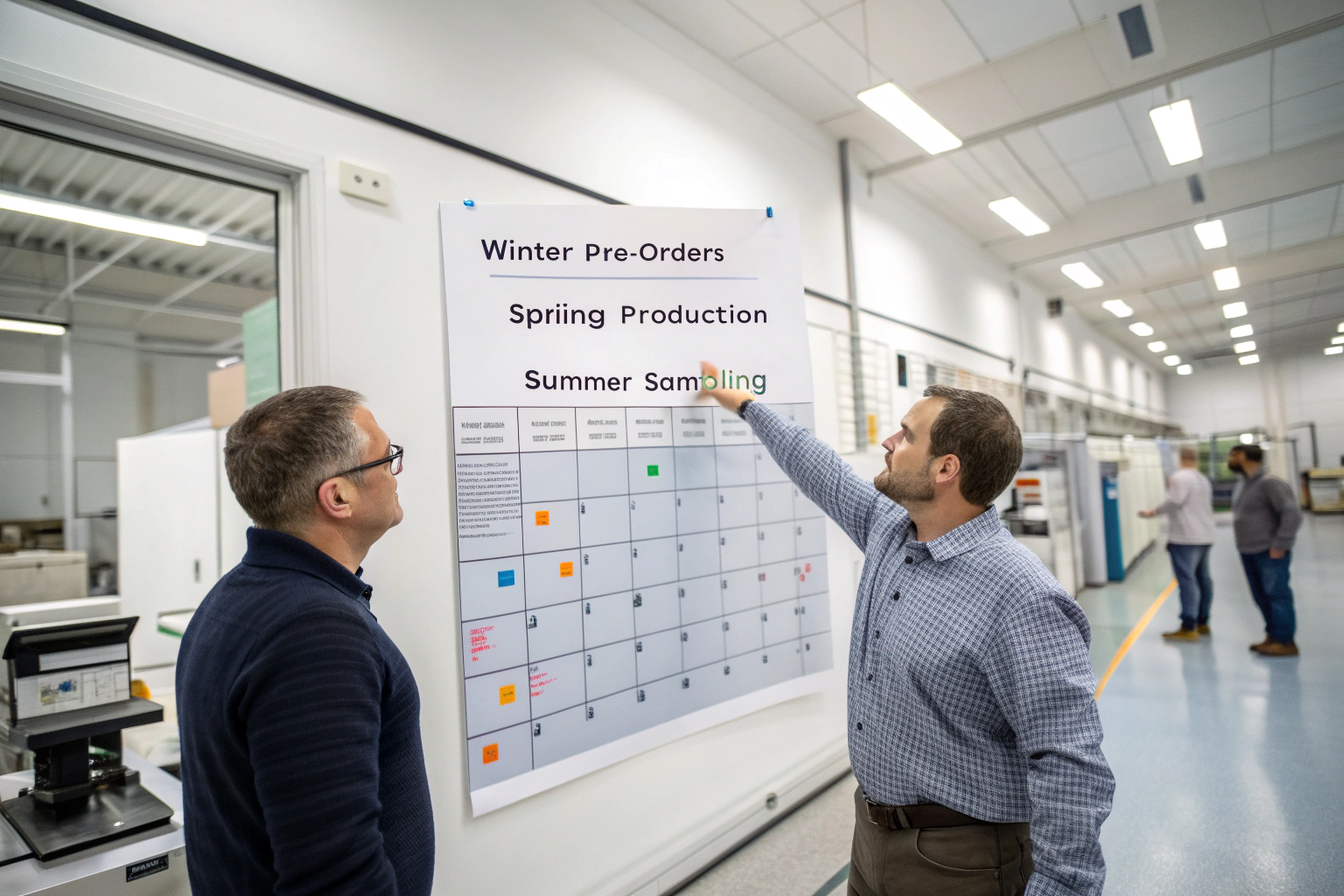
I have been manufacturing hats and gloves for over 15 years. In that time, I have learned that seasonality is not just about what you make. It is about when you make it. A winter hat ordered in October is too late. A summer glove ordered in April may be too early. I remember a client who ordered winter hats in September. She wanted them for November. We had to rush production. The quality suffered. The shipping was expensive. She was stressed. I told her, "Next year, order in June." She did. The hats arrived on time. The quality was better. The cost was lower. That experience taught me that timing is everything. Today, I want to share how seasonality affects the production schedule for hats and gloves.
Seasonality dictates the entire production schedule for hats and gloves. Winter products require raw material sourcing in spring, sampling in early summer, production in mid-summer, and shipping in late summer to early fall. Summer products follow a similar pattern but shifted by six months. The key is to work backward from the desired delivery date. Lead times for materials, sampling, production, and shipping must be factored in. Missing a seasonal window can mean lost sales. Planning ahead allows for better quality, lower costs, and reliable delivery. At Shanghai Fumao, we help our clients plan their seasonal production schedules to ensure they are ready when their customers are ready to buy.
You might be thinking, "I know that winter hats are for winter. I order them in the fall." But the fall is too late. The supply chain takes time. Materials must be ordered. Samples must be approved. Production takes weeks. Shipping takes weeks. By the time you order, the season may be half over. At AceAccessory, we have developed a seasonal production calendar. It guides our clients on when to start each step. Let me walk you through the cycle.
How Does the Seasonal Cycle Work for Winter Hats and Gloves?
Winter hats and gloves are for the cold months. But the production starts much earlier. I have learned to plan six to nine months ahead. The cycle begins in the spring. By summer, production is in full swing. By fall, the goods are ready to ship.
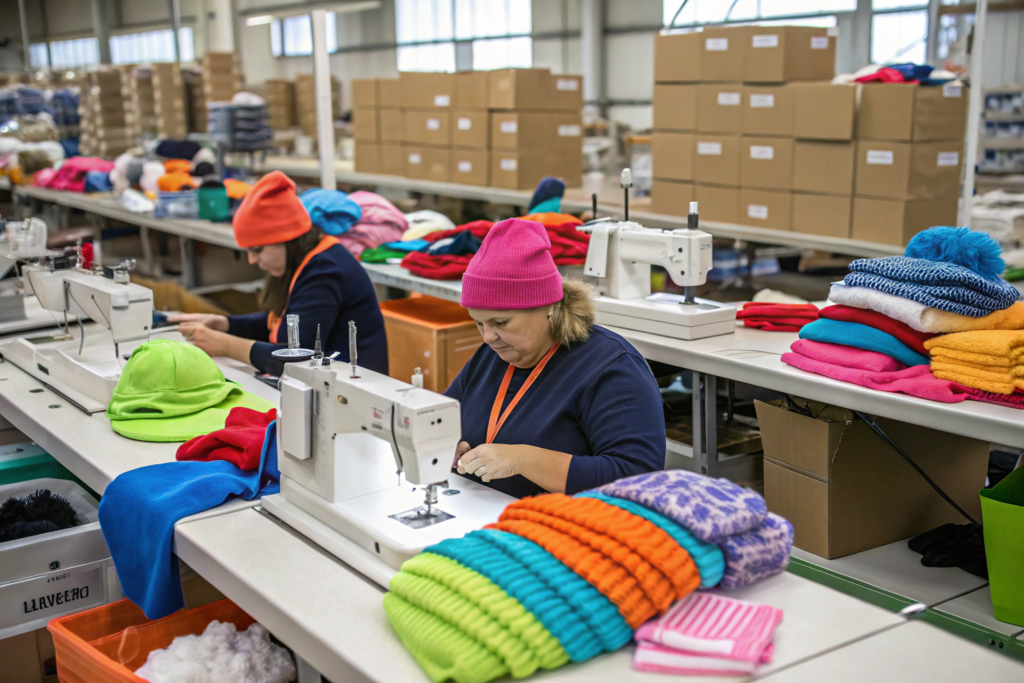
The seasonal cycle for winter hats and gloves begins in January with material sourcing. Yarn, fabric, and trim must be ordered. Lead times for custom materials can be 60 to 90 days. Sampling occurs in February to April. Samples are sent to clients for approval. Production runs from May to July. This allows for quality control and any adjustments. Shipping occurs from August to September. This ensures that products arrive in stores or warehouses by October, ready for the winter season. The entire cycle takes 9 to 12 months from concept to delivery. Planning ahead is essential.
I want to share a story about a client who planned well. She started her winter hat line in January. She ordered samples in February. She approved in March. We produced in May and June. The hats shipped in August. They were in stores in October. She sold out by December. She was ready for the season. Her competitors who ordered in August were scrambling.
What Is the Ideal Timeline for Winter Hats and Gloves?
The ideal timeline starts 12 months before the season. January: Material sourcing. February-March: Sampling. April: Sample approval. May-July: Production. August-September: Shipping. October-November: In stores. December: Sales. This timeline allows for buffer time. If there is a delay, you are still on track. If everything goes smoothly, you are early. Early is good. Late is bad. We provide a seasonal planning calendar for our clients.
What Happens If You Order Late?
If you order late, you face rushed production. Rushed production can lead to quality issues. You may have to pay for expedited shipping. Air freight is expensive. You may miss the season entirely. If your hats arrive in December, you miss the peak sales months. You are left with inventory. You may have to discount. Planning ahead is cheaper and less stressful.
How Does the Seasonal Cycle Work for Summer Hats and Gloves?
Summer products follow a similar cycle, but shifted by six months. Summer hats and gloves are for warm weather. They need to be in stores in spring. The production cycle starts in the previous summer. I have learned to plan for summer as soon as winter is done.
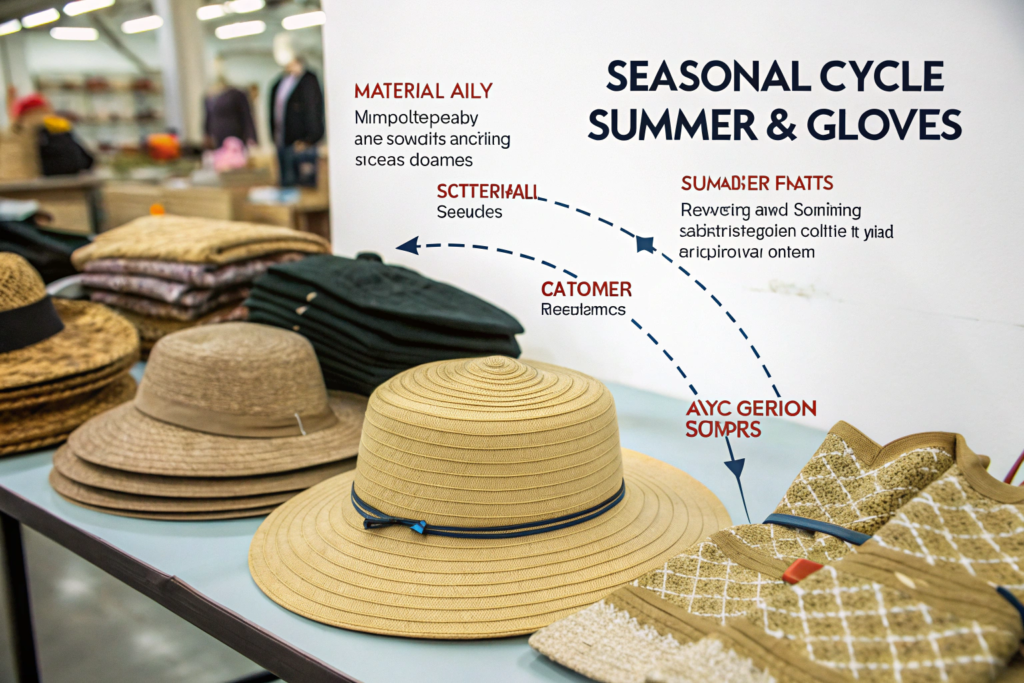
The seasonal cycle for summer hats and gloves begins in July with material sourcing. Lightweight fabrics, straw, and breathable materials are ordered. Sampling occurs in August to September. Production runs from October to December. This allows for winter production of summer goods. Shipping occurs in January to February. This ensures that products arrive in stores by March or April, ready for the spring and summer season. The cycle is shifted by six months from winter. Again, planning ahead is essential.
I want to share a story about a client who planned for summer. She started her summer hat line in July. She ordered samples in August. She approved in September. We produced in October and November. The hats shipped in January. They were in stores in March. She sold out by July. She was ready for the season.
What Is the Ideal Timeline for Summer Hats and Gloves?
The ideal timeline starts 12 months before the season. July: Material sourcing. August-September: Sampling. October: Sample approval. November-December: Production. January-February: Shipping. March-April: In stores. May-June: Sales. This timeline ensures that products are ready when the weather warms. Customers buy summer accessories in spring. They want them before they travel. Being late means missed sales.
How Do You Balance Winter and Summer Production?
Balancing winter and summer production requires planning. Winter production is in summer. Summer production is in winter. The factory is busy year-round. You need to schedule your orders accordingly. If you order winter hats in July, you are competing with other winter orders. If you order summer hats in January, you are competing with other summer orders. The key is to order early. Early orders get priority. We help our clients schedule their production to avoid conflicts.
How Does Material Sourcing Affect the Seasonal Schedule?
Materials are the foundation. Without materials, you cannot produce. But materials have their own seasons. Wool is harvested from sheep. It is processed into yarn. That takes time. Straw is harvested. It is woven into hat bodies. That takes time. I have learned to order materials months before production.
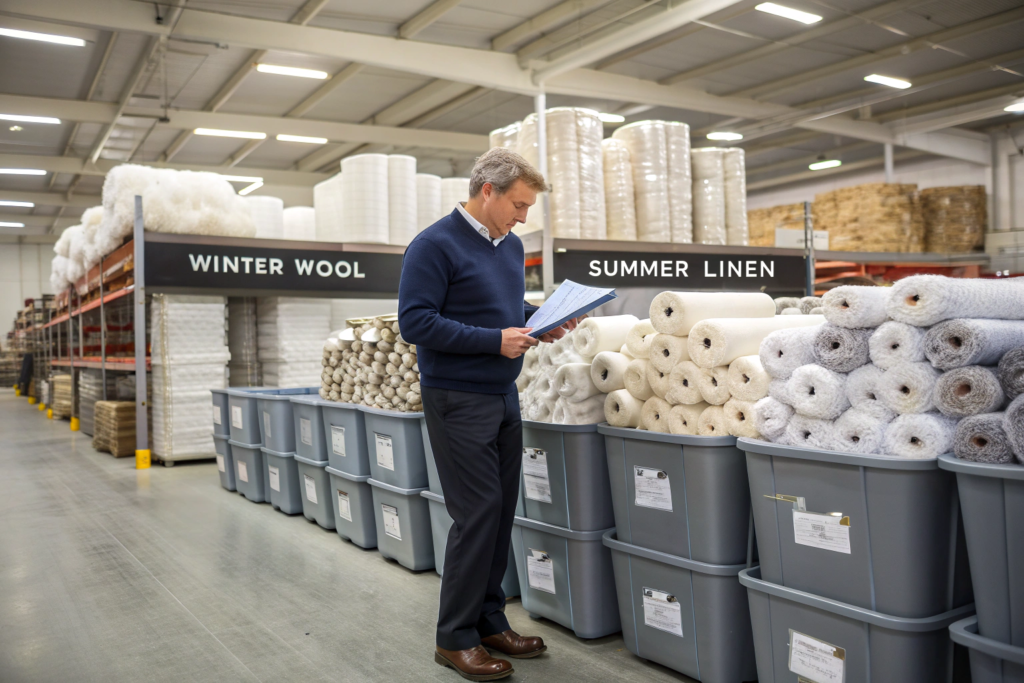
Material sourcing is a critical factor in the seasonal schedule. Winter materials like wool, cashmere, and fleece have lead times. Wool may need to be ordered 60 to 90 days in advance. Custom colors add time. Summer materials like straw, linen, and cotton also have lead times. Straw hat bodies may need to be ordered months ahead. If you wait until you need the material, it is too late. You must forecast your needs. Order materials early. Hold safety stock. This ensures that production can start on time.
I want to share a story about straw. A client ordered summer hats in March. She wanted them for May. The straw bodies were not available. They had to be woven. The lead time was 60 days. The hats arrived in July. The season was half over. She learned to order straw in January.
What Are the Lead Times for Common Hat and Glove Materials?
Wool yarn: 30 to 60 days. Custom colors: add 30 days. Cashmere: 60 to 90 days. Straw hat bodies: 30 to 60 days. Custom straw: 60 to 90 days. Linen: 30 to 60 days. Cotton: 30 days. Leather: 30 to 60 days. Acrylic: 30 days. These lead times must be factored into your schedule. We provide a material lead time guide for our clients.
How Do You Manage Material Inventory for Seasonal Products?
Managing material inventory is a balance. You do not want to hold too much. You do not want to run out. For seasonal products, you need to forecast. Use historical data. If you sold 10,000 hats last year, order materials for 12,000. Build in a buffer. Hold safety stock for your best-selling styles. This allows you to reorder quickly if demand is high. We help clients with inventory planning.
How Does Sampling Fit into the Seasonal Schedule?
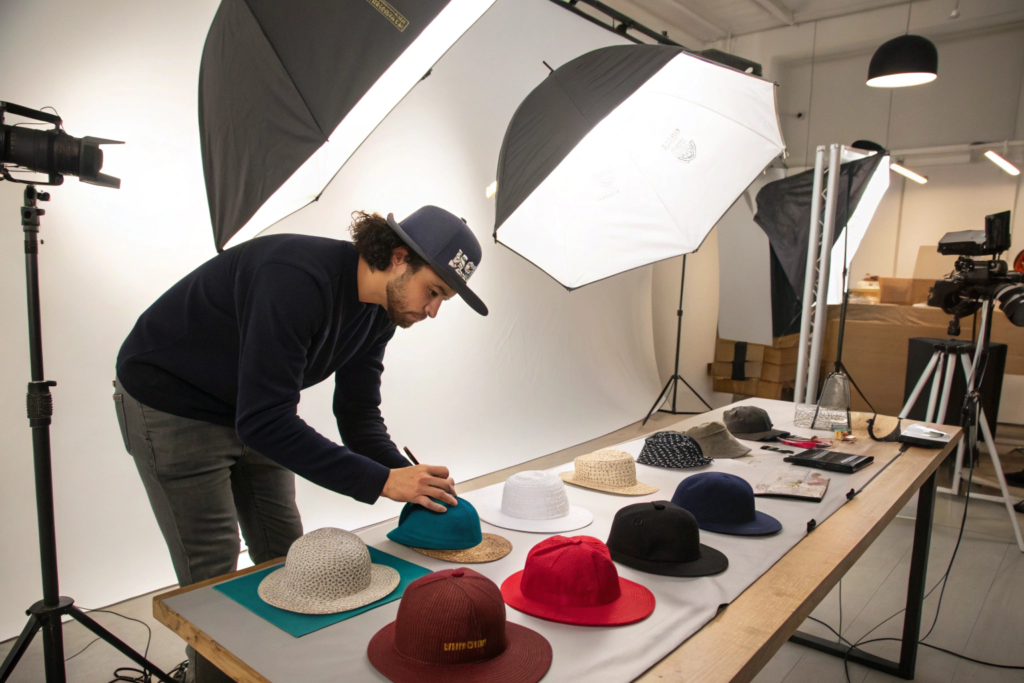
Sampling is the step that many overlook. They think they can go from design to production quickly. But sampling takes time. The sample must be made. It must be reviewed. It may need changes. Another sample is made. This cycle takes weeks. I have learned to build sampling time into the schedule.
Sampling is a critical step that must be factored into the seasonal schedule. A typical sampling cycle takes 4 to 8 weeks. The first sample takes 2 to 3 weeks. Client review takes 1 week. Revisions take 1 to 2 weeks. A second sample may be needed. This cycle can repeat. For complex products, sampling can take 12 weeks. You must start sampling early. For winter hats, start sampling in January. For summer hats, start sampling in July. This gives you time to refine the design without rushing.
I want to share a story about sampling. A client wanted a custom hat. She sent the design in August. She wanted the hats for winter. We made a sample. She wanted changes. We made another sample. She approved in October. Production started in November. The hats shipped in December. They arrived in January. The season was half over. She should have started in June.
How Many Sampling Rounds Are Typical?
For a simple product, 1 to 2 rounds. For a complex product, 2 to 3 rounds. For a custom design, 3 to 4 rounds. Each round takes 2 to 3 weeks. Plan accordingly. We help clients streamline sampling to reduce cycles.
How Can You Speed Up Sampling?
Use 3D sampling for initial designs. This reduces physical samples. Use a clear approval process. Respond quickly. Have one decision-maker. Avoid back-and-forth. Use standard materials when possible. Custom materials take longer. We offer rapid sampling for clients with tight timelines.
Conclusion
Seasonality dictates the production schedule for hats and gloves. Winter products require planning that starts in January. Summer products require planning that starts in July. The cycle includes material sourcing, sampling, production, and shipping. Each step has lead times. Missing a step can delay the entire season.
The key is to plan ahead. Order materials early. Start sampling early. Place your production order before the peak. Build in buffer time. Communicate with your supplier. A good supplier will help you navigate the seasonal cycle.
At Shanghai Fumao, we are that supplier. We provide calendars. We offer guidance. We have capacity. We help you plan. We want your hats and gloves to arrive when you need them. Your business deserves to be ready for the season. Let us help you get there. Please contact our Business Director, Elaine, at elaine@fumaoclothing.com to discuss your seasonal production plan. We can help you create a timeline that ensures your hats and gloves arrive on time, every season.