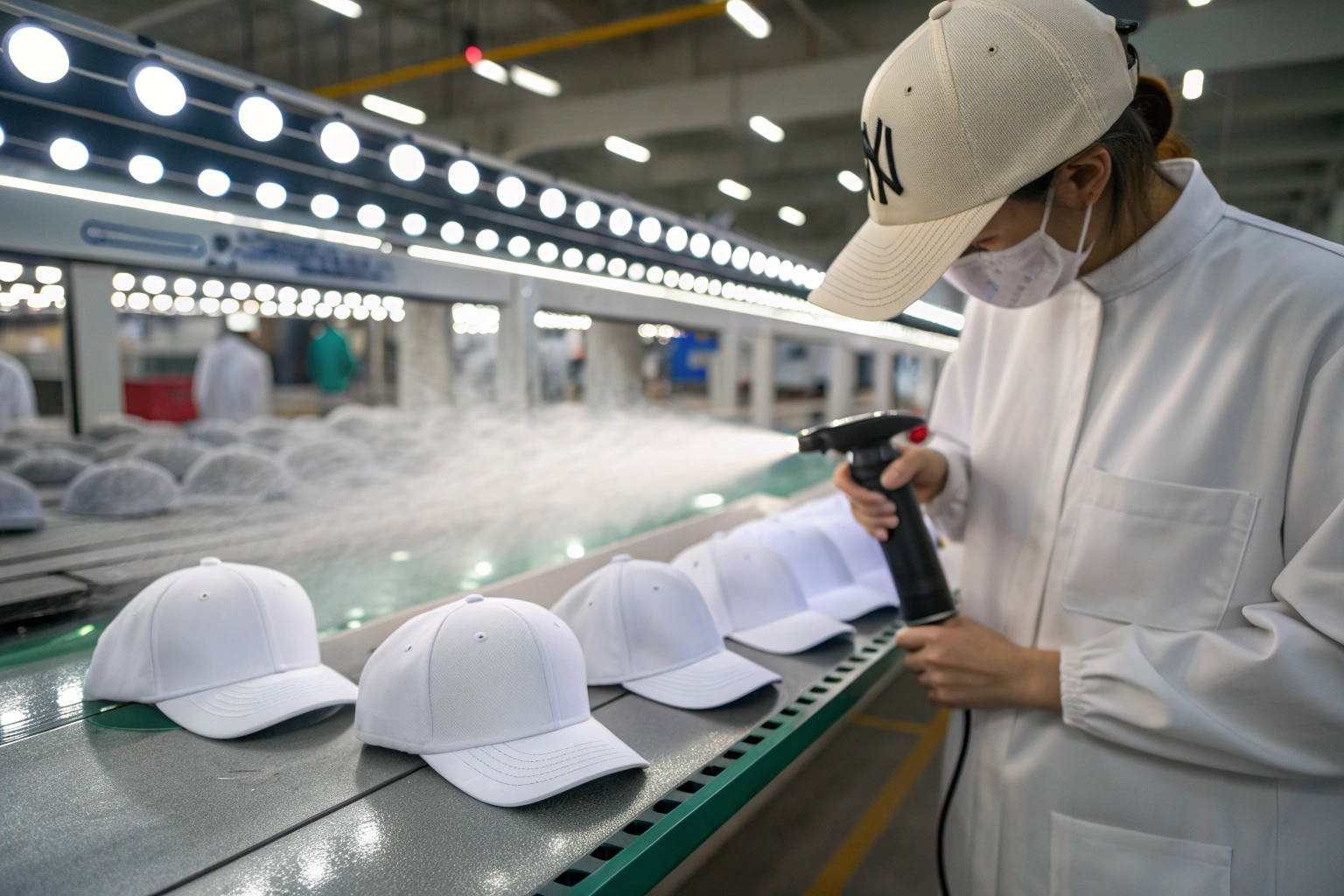
I have been in this industry long enough to remember when "water-resistant" simply meant your hat would survive a light drizzle. Today, the expectations are completely different. My clients across North America and Europe—buyers for major outdoor brands and fashion retailers—are demanding serious performance. They want hats that can handle a downpour, resist stains, and still look great after a season of use. This is especially true for canvas, a material we use extensively for baseball caps and bucket hats. It is classic, durable, and breathable, but untreated, it absorbs water like a sponge.
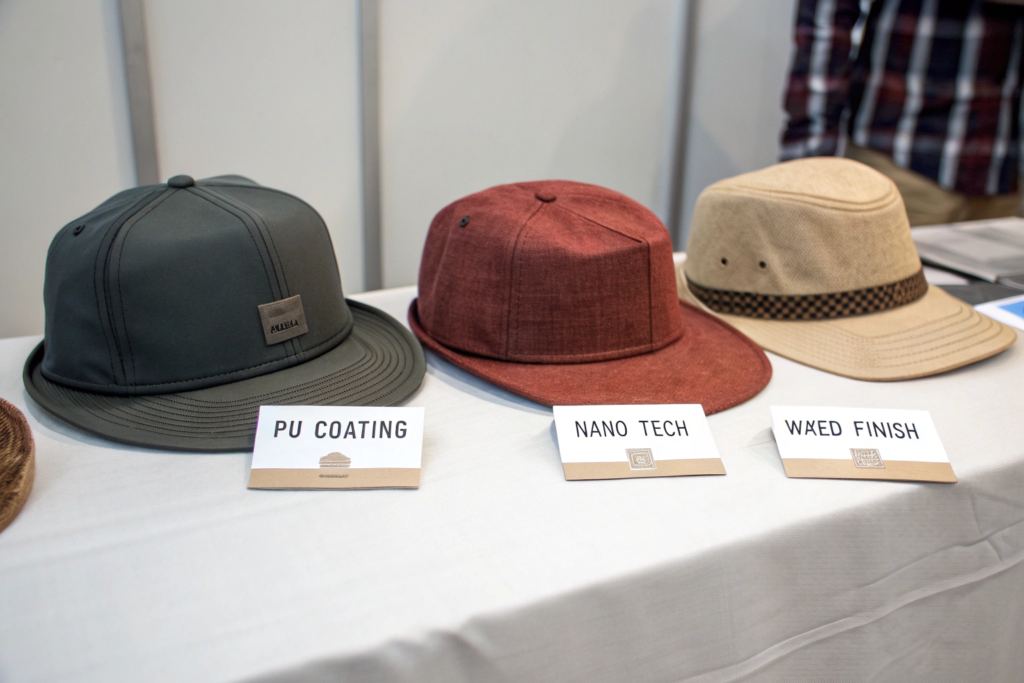
The best coating technologies for water-repellent canvas hats today are PFC-free Durable Water Repellent (DWR) finishes, advanced PU (Polyurethane) coatings, and nano-technology treatments that create superhydrophobic surfaces while maintaining breathability.** Each technology offers a different balance of performance, durability, and environmental profile.
The choice of coating is not just about the chemistry. It is about how the technology interacts with the specific canvas weight, the hat’s construction, and the end user’s expectations. I have spent over two decades in our Zhejiang factory perfecting these applications. We have learned that a great coating on a cheap hat is a waste, and a great hat with a poor coating is a disappointment. For a professional buyer like Ron, who values both quality and cost, understanding these technologies is the key to making the right choice for his customers. At Shanghai Fumao Clothing, we work with our clients to select the perfect finish for their specific product line, balancing performance with budget and sustainability goals. Let me walk you through the options that are defining the market right now.
What is the difference between DWR, PU coating, and nano treatments for hats?
When a buyer asks me about waterproofing, I always start by explaining the basic categories. They are fundamentally different in how they work and how long they last. Understanding these differences is the first step to making an intelligent sourcing decision. It saves you from paying for features you do not need or getting a product that fails in the field.
How does Durable Water Repellent (DWR) work on hats?
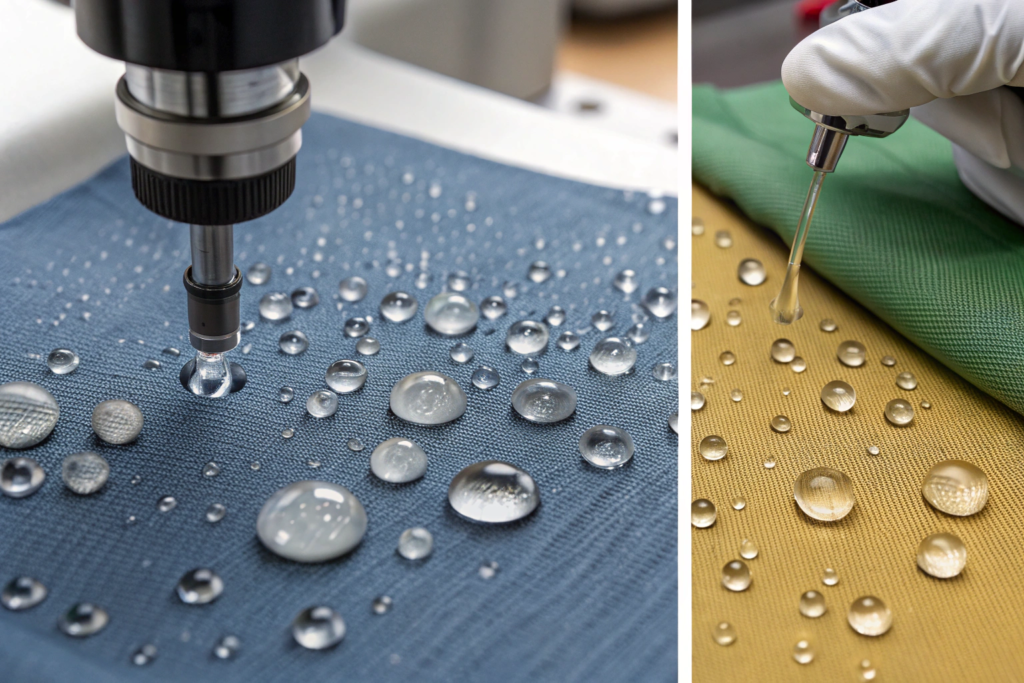
DWR is a finish applied to the fabric’s surface. It is not a coating that sits on top like a layer of plastic. Instead, it changes the surface tension of the individual fibers. When water hits a DWR-treated fabric, it cannot wet out the fibers. It beads up and rolls off. This is why you see water forming perfect spheres on a good rain jacket or a quality hat. The key word here is "durable," but it is not permanent. DWR can wear off with abrasion and washing, and it needs to be reapplied over time. The industry is rapidly moving toward "non-PFC DWR," which uses fluorine-free chemistry . Major brands like The North Face now specify "Non-PFC DWR finish" on their product specs because PFCs (perfluorinated chemicals) are persistent in the environment . This is a crucial consideration if your market is Europe, where regulations on these chemicals are strict.
What makes PU coating different for canvas hats?
PU coating is a true coating. It is a thin, flexible layer of polyurethane applied directly to the fabric. Unlike DWR, which works at the fiber level, PU creates a physical barrier. This makes it highly effective at blocking water entirely. It is the technology you see on many outdoor covers and heavy-duty gear . For hats, a PU coating can make the fabric 100% waterproof, not just resistant. However, there is a trade-off. A PU coating can reduce the breathability of the canvas. If a hat is not breathable, sweat builds up inside, which leads to discomfort. For active wear or summer hats, this is a problem. Some manufacturers get around this by using a "breathable PU" or by applying the coating only to the outer face of the fabric, leaving the inner face uncoated. The fabric also becomes slightly stiffer, which can affect the "hand feel" of a high-end hat.
Can nano coatings really make a hat superhydrophobic?
This is the cutting edge. Nano coatings use extremely small particles—often silica-based—to create a microscopic "lotus leaf" effect on the fabric . These particles bond to the fibers and create a rough, low-energy surface that water simply cannot stick to. The results are dramatic. Some treatments achieve a water contact angle of over 160°, which is truly superhydrophobic . Water doesn’t just bead up; it bounces and rolls off, carrying dirt with it. This is called the "self-cleaning effect" . Products like "Nanoman Fabric Protection" use silicon dioxide nanocolloids to achieve this, and they are water-based and environmentally friendly . The main challenge with nano coatings is application consistency and cost. They require precise application to be effective. But for a premium hat line where performance is a key selling point, this technology is unmatched.
Why are PFC-free and eco-friendly coatings becoming the industry standard?
I have watched the conversation around chemicals change completely over the last ten years. It used to be a niche concern. Now it is a mainstream requirement, especially from our clients in Europe and parts of North America. If you are selling to major supermarkets or outdoor brands, you will be asked about your environmental compliance. This is not just marketing. It is about regulation and long-term brand safety.

What are PFCs and why are they being banned?
PFCs, or perfluorinated chemicals, were the gold standard for water repellency for decades. They are incredibly effective at lowering surface tension and repelling both water and oil. The problem is that they are "forever chemicals." They do not break down in the environment. They accumulate in living organisms, including humans. This has led to strict regulations and phase-outs in the EU and parts of the US. Using a PFC-based DWR today is a risky move. It opens your brand up to criticism and potential future liability. The market has already shifted. The North Face, for example, clearly markets its "non-PFC DWR finish" as a feature [citation:6]. Consumers are educated. They look for this. Choosing a PFC-free option is a statement that your brand cares about the planet and the health of its customers.
How do eco-friendly coatings compare in performance?
This is the question I get most often. "If I switch to green, do I lose performance?" The short answer is no, not anymore. Early PFC-free alternatives were weaker. They did not last as long. But the technology has caught up. Modern PFC-free DWR formulations, often based on hydrocarbons or silicones, provide excellent water repellency. They may not be quite as oil-repellent as the old chemistries, but for hats, that is rarely a requirement. The real key to performance is not just the chemistry but the application process. At our factory, we have invested in precise application equipment that ensures the coating is evenly distributed and properly cured. This makes a massive difference in durability. We also test every batch. A well-applied eco-friendly coating can easily outlast a poorly applied conventional one. This is where the experience of a supplier like Shanghai Fumao Clothing becomes invaluable. We know how to make green perform like gold.
How long do water-repellent coatings last on everyday hats?
Durability is the number one concern for buyers like Ron. It is one thing to have a coating work on day one. It is another for it to still work after three months of daily wear, sweat, and maybe a few rain showers. The longevity of a water-repellent finish depends on several factors, and being honest with your customers about this builds trust.
What factors cause water repellency to wear off?
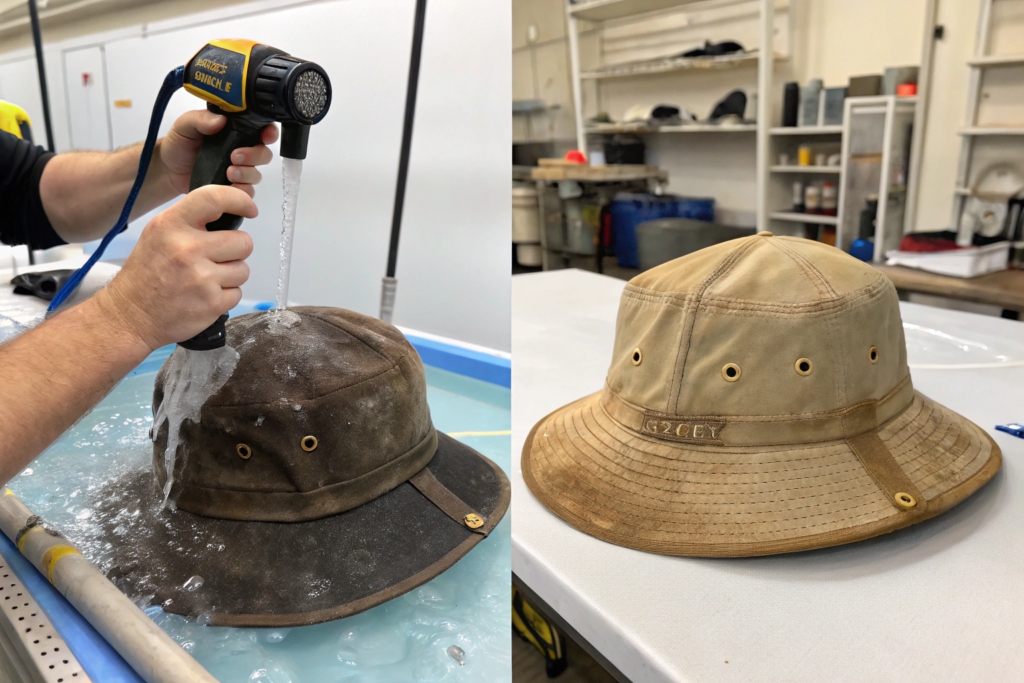
The biggest enemy of any coating is abrasion and contamination. Every time a hat is worn, the fabric rubs against hair, foreheads, and sometimes car seats or backpack straps. This physical wear slowly breaks down the microscopic structure of the DWR or nano coating. Oils from skin and hair are also a problem. These oils can mask the hydrophobic surface, allowing water to wet out the fabric even if the coating is still technically there. This is why a hat’s sweatband is often the first area to lose its water repellency. Washing can also strip coatings. While some treatments, like the one on Tilley’s All Weather Hat, are robust enough to survive machine washing on delicate cycles , many DWR finishes will degrade with harsh detergents . The recommendation from most manufacturers is to wash only when necessary and use mild soap .
Can a hat’s water repellency be restored after it fades?
Yes, and this is an important feature to communicate to your customers. DWR is a "renewable" finish. For hats treated with a standard DWR, the protection can be restored by applying a spray-on DWR re-proofer, available from outdoor gear companies. For waxed canvas, the traditional method is to simply re-wax the fabric, which renews both the water protection and the classic patina. Some high-end hats even use technologies that are designed to be more durable. The Ventile® cotton used in the LTT Hat Pro, for example, has inherent water resistance because the cotton fibers swell when wet, closing the gaps in the weave . This is a physical property, not just a coating, so it does not wash out. When you work with us, we can advise on which technologies offer the best longevity for your specific price point and target market. We want your customers to be happy with their hats for years, not just weeks.
Which coating technology is best for different types of canvas hats?
Not all hats are the same, and neither are the best coatings for them. A structured baseball cap worn for daily casual use has different requirements than a bucket hat designed for fishing in the sun and rain. Matching the technology to the application is a core part of our job as manufacturers. Here is a simple guide based on what we have learned from producing millions of hats.
What works best for everyday baseball caps and trucker hats?
For this category, comfort and feel are just as important as water resistance. A stiff, plasticky coating will ruin a good cap. The best choice here is typically a high-quality, PFC-free DWR finish. It provides excellent water beading without changing the soft hand of the cotton canvas or the breathability of the fabric. For a cap worn in warm weather, you do not want a non-breathable barrier trapping heat. DWR maintains the fabric’s natural feel. For the foam front panels of a trucker hat, a light DWR application protects against rain spots without adding weight or stiffness. Many of our clients for everyday fashion hats prefer this approach because it adds functional value without compromising the aesthetic. The performance is sufficient for light rain and spills, which covers 90% of what an urban user encounters.
Which coating is right for outdoor performance and adventure hats?
If your customer is going to be on a boat, hiking in variable weather, or working outdoors, you need a higher level of protection. For these "all-weather" hats, we often recommend either a PU-coated canvas or a nano-technology treatment. PU provides a robust waterproof barrier that can handle sustained rain . However, we must ensure we use a breathable PU membrane or a design that allows for moisture management, like the Schoeller c_change membrane used in Tilley hats, which adapts to body temperature . Nano coatings are also excellent here. They provide superhydrophobic properties while maintaining breathability . They also add stain resistance, which is a huge plus for an active user. For the ultimate in classic outdoor performance, waxed cotton canvas remains a favorite. It is fully waterproof and develops a beautiful patina over time . It is heavier and requires more care, but for a certain customer, that is exactly what they want.
How can I test if a hat’s water-repellent coating really works?
Trust is good, but verification is better. In our business, we do not rely on promises from chemical suppliers alone. We test. We have a quality control team dedicated to making sure every batch meets the standards our clients expect. If you are sourcing hats, you need to know what questions to ask and what tests to trust.
What is the simple water spray test for hats?
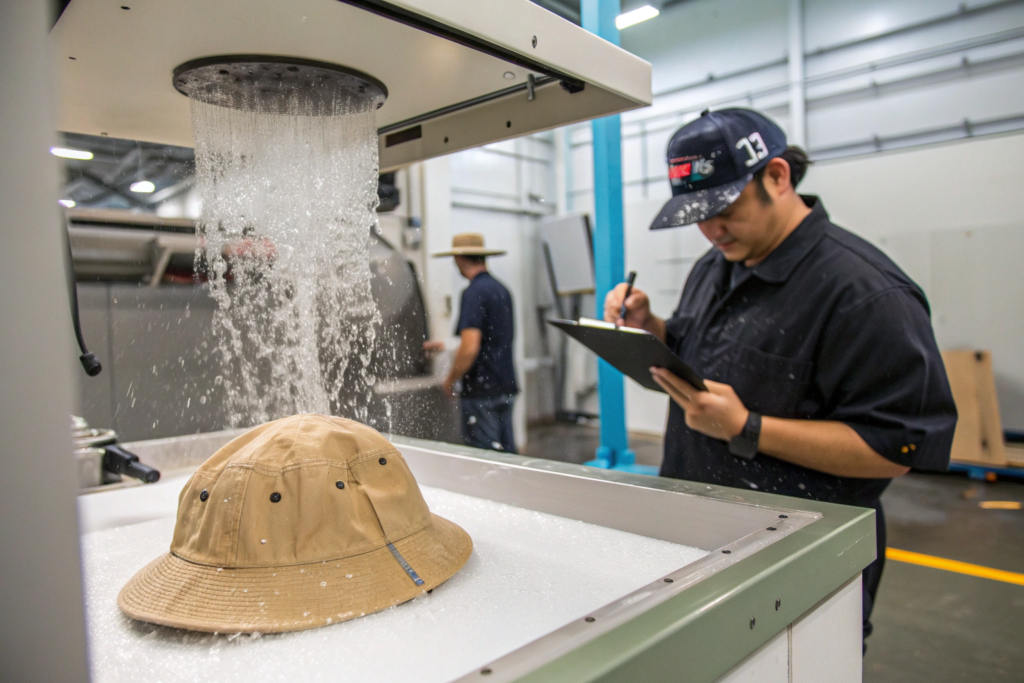
The most straightforward test is the AATCC Spray Test. In this test, a measured amount of water is sprayed onto the fabric surface from a standardized nozzle. The fabric is then compared to photographic standards to rate its water repellency from 0 to 100. A score of 90 or above means excellent resistance. In our factory, we do this regularly. We also do a more practical test: we actually simulate rain. We take a finished hat, put it on a head form, and spray it with water. We check the inside after a few minutes to see if any moisture has penetrated the seams or the fabric itself. Seams are often the weak point, even with a good coating. A great coating on the fabric is useless if the stitching holes let water in. We use specialized needles and thread to minimize this, and we test it.
How do I check for coating quality and breathability?
Feel and look are important. A good DWR or nano coating should not drastically change the fabric’s hand feel. If the canvas feels sticky, plasticky, or stiff in a way that is not intended, the coating is too heavy or poorly applied. You can also check the "beading effect." Put a few drops of water on the fabric. They should form tight, perfect spheres that roll off easily if you tilt the fabric. If the drops spread out or soak in slowly, the repellency is weak. For breathability, you can perform a simple "air flow" test. Hold the fabric up to your mouth and try to blow air through it. For a breathable DWR or nano coating, air should pass through easily. For a heavy PU coating, it will be blocked. For authoritative guidance on testing standards, the AATCC (American Association of Textile Chemists and Colorists) website is an excellent resource. They define the industry standards we all follow.
Conclusion
Selecting the right water-repellent technology for canvas hats is a decision that affects everything from customer satisfaction to brand reputation. We have explored the key options: the industry-standard PFC-free DWR for everyday wear, the robust waterproof barrier of PU coatings for outdoor gear, and the cutting-edge performance of superhydrophobic nano treatments. We have also discussed the critical shift toward eco-friendly chemistries and the practical realities of coating durability and testing.
As a manufacturer, I see these technologies not as abstract concepts but as tools we use every day to solve problems for our clients. Whether you are supplying a fast-fashion brand that needs a basic water-resistant finish or an outdoor label that demands extreme performance, the right technology exists. The challenge is applying it correctly, consistently, and cost-effectively. This is where our team in Zhejiang excels. Our clean, modern factory and experienced project managers ensure that your specifications are met with precision.If you are planning your next collection of canvas hats and want to get the coating right, let’s talk.
To discuss your specific requirements and see how we can help you create the perfect hat, please contact our Business Director, Elaine, at elaine@fumaoclothing.com. We are ready to put our expertise to work for you.