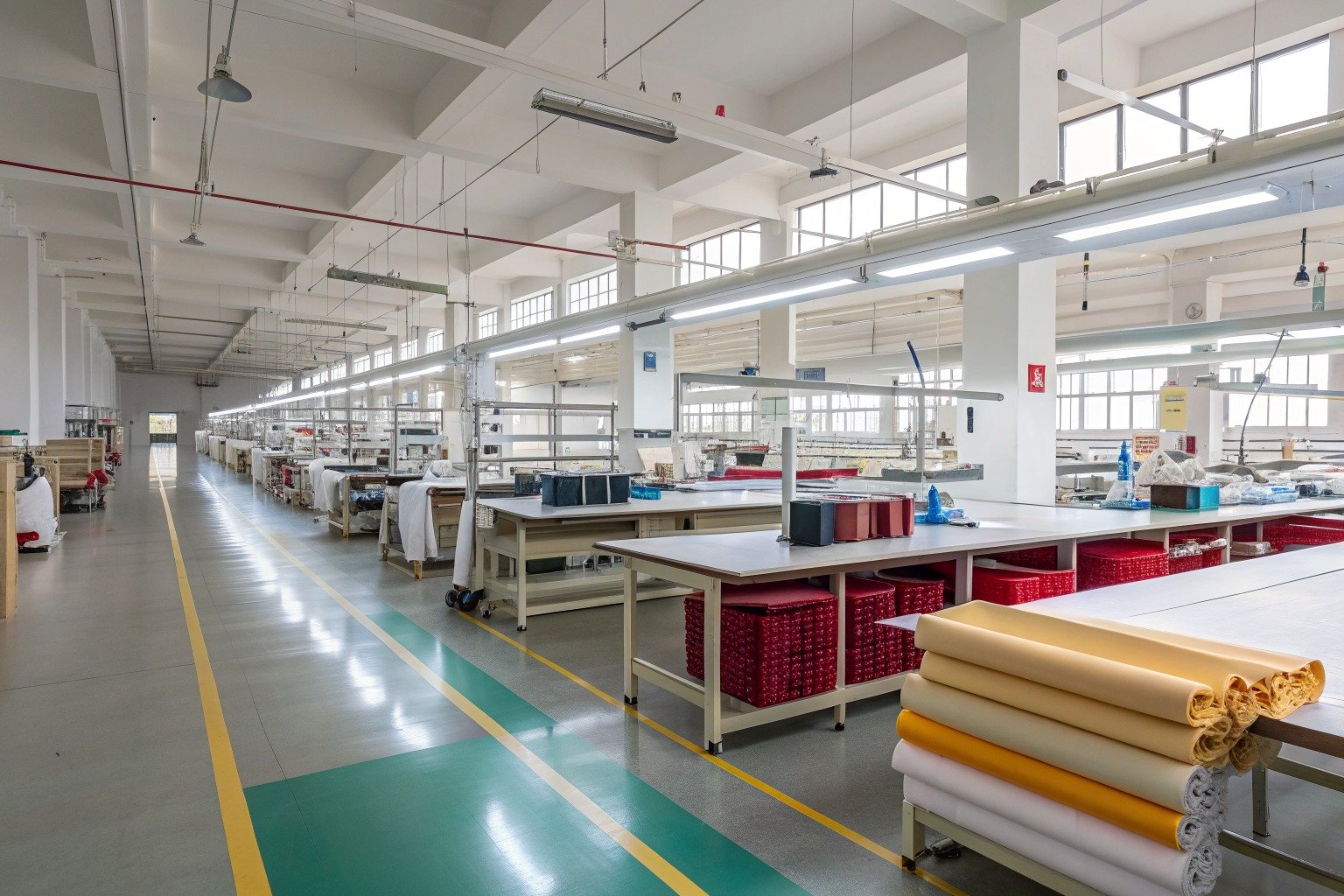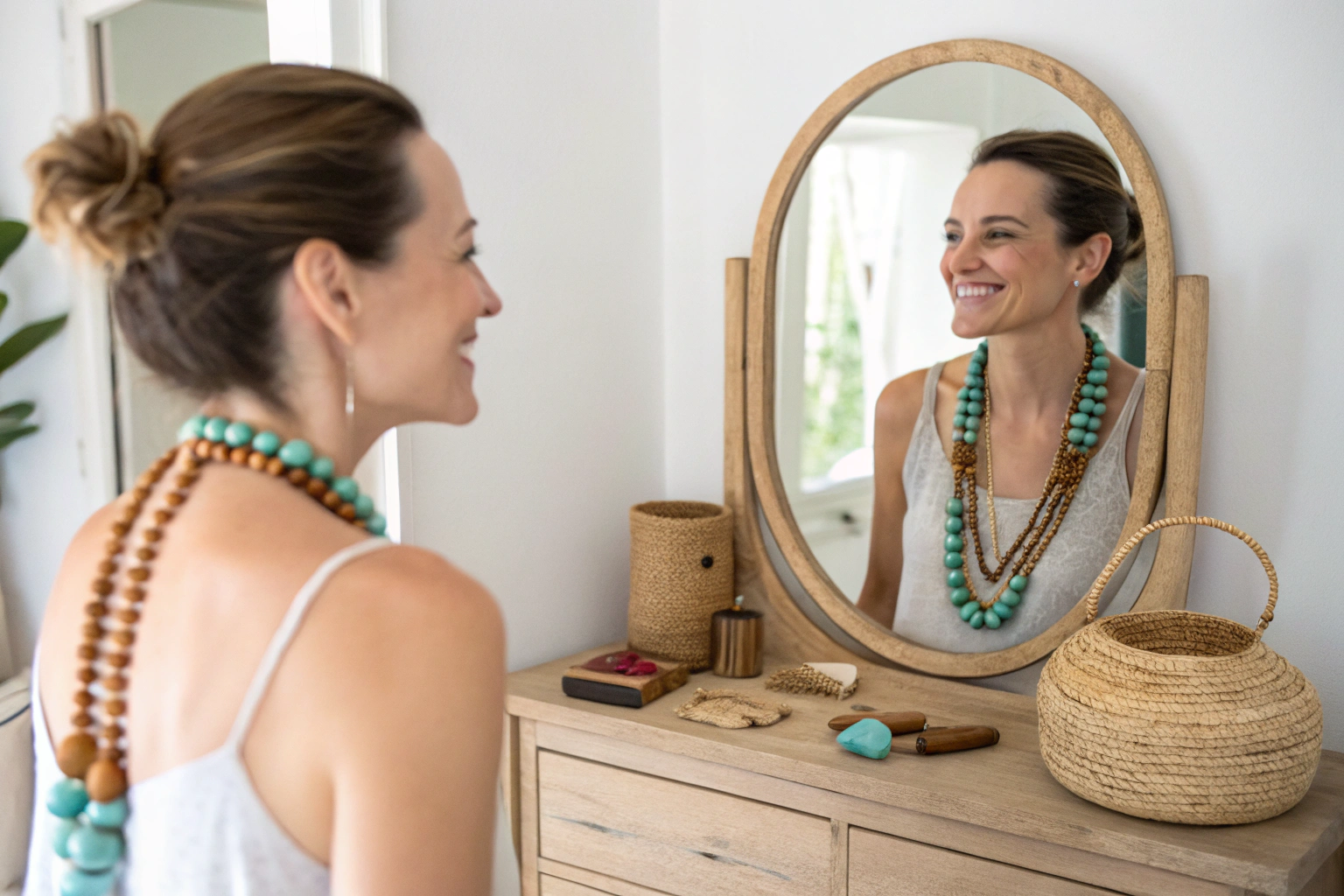
As someone who has spent over two decades walking through the factories and design rooms of Zhejiang province, I have seen trends come and go. But the shift I am witnessing right now toward natural materials like wood and stone feels different. It feels more like a return to something essential rather than a fleeting fashion. My clients across America and Europe—buyers for major supermarkets and apparel brands—are increasingly asking for accessories that feel authentic, grounded, and connected to the earth. They want products that tell a story.
The latest trends in natural material accessories focus on raw, unpolished finishes, mixed-material combinations, and bold, oversized statements that celebrate the unique imperfections of wood and stone. We are moving away from mass-produced uniformity. Consumers today, just like our client Ron, want quality and character. They want a wooden hair clip that shows its grain or a stone pendant with natural variations in color. This desire for authenticity is driving everything we do in our design studio right now.
The shift is not just about how a product looks. It is about how it makes you feel. In a world of digital overload, holding a piece of polished stone or a smoothly carved wooden hairband provides a sensory connection that plastic simply cannot replicate. At our factory, we have responded by expanding our sourcing of sustainable woods and ethically sourced stones. We work with our experienced project managers to ensure that every natural piece we develop meets the highest quality standards while retaining its organic soul. Let me share what we are seeing on the runways, in the stores, and in the orders coming through our doors.
Why are raw and unpolished finishes dominating 2026 accessory design?
The era of perfectly smooth, machine-polished accessories is giving way to something much more primal. Today, the beauty is in the imperfection. When we talk to our design team, they emphasize that consumers want to see the hand of nature in their accessories. A stone should look like a stone. Wood should look like wood. This trend is about celebrating the material for what it is, not trying to make it look like something else. It connects directly to the broader cultural move toward mindfulness and authenticity .
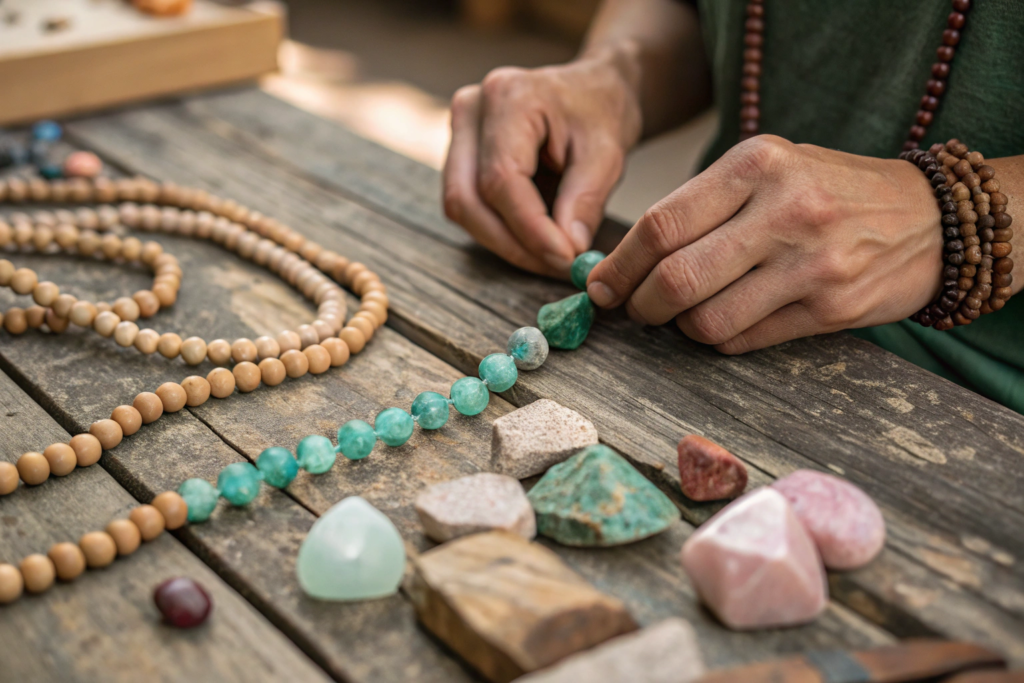
How does leaving a stone "raw" affect its appeal in fashion?
Raw, or unpolished, stones retain their natural crust and irregular texture. This creates a striking contrast with polished metals or smooth fabrics. I have seen this firsthand with a recent order for a European boutique. They requested a line of pendants using agate slices with the rough edges left completely untouched. The appeal lies in the uniqueness. As one expert noted, "These gemstones—often retaining their natural imperfections, rough textures, and uneven cuts—celebrate nature in its rawest form, and can feel like carrying a piece of the earth, sky, or even the cosmos with you" . No two pieces are identical, which gives your customers a story to tell. For suppliers, this is a gift. It reduces the need for excessive processing and highlights the one-of-a-kind nature of each item. When sourcing these materials, it is vital to work with partners who practice ethical sourcing to ensure the beauty of the stone is not tainted by poor practices.
Why are crafts like wood carving becoming popular again?
There is a growing appreciation for the human touch. Machine-made items are uniform, but hand-carved wood shows the skill of the artisan. This ties into what trend forecasters call the "craftsmanship movement." We are seeing a huge demand for wooden hair forks, carved bead bracelets, and belt buckles made from exotic woods with visible chisel marks or unique grain patterns. This aligns with the "vintage vibes" trend, where decorative metalwork and antique-style cuts are prized . It is about owning a piece of art, not just a commodity. For a buyer like Ron, this means his customers are willing to pay more for a belt that features a hand-carved wooden toggle because it feels special. Our design team often suggests specific wood types—like olive wood or burlwood—that have naturally striking grains that enhance this handcrafted look. You can explore the different types of wood grains and their characteristics to better understand what will appeal to your market.
What is driving the trend of mixing wood with other natural materials?
One of the most exciting developments we are seeing is the combination of different natural elements in a single piece. It is no longer enough to have a wooden necklace or a stone ring. The magic happens when wood meets stone, or when stone meets metal. This creates a textural and visual complexity that feels rich and intentional. It is a form of "maximalism" that is taking over from the minimalist styles of the past few years .
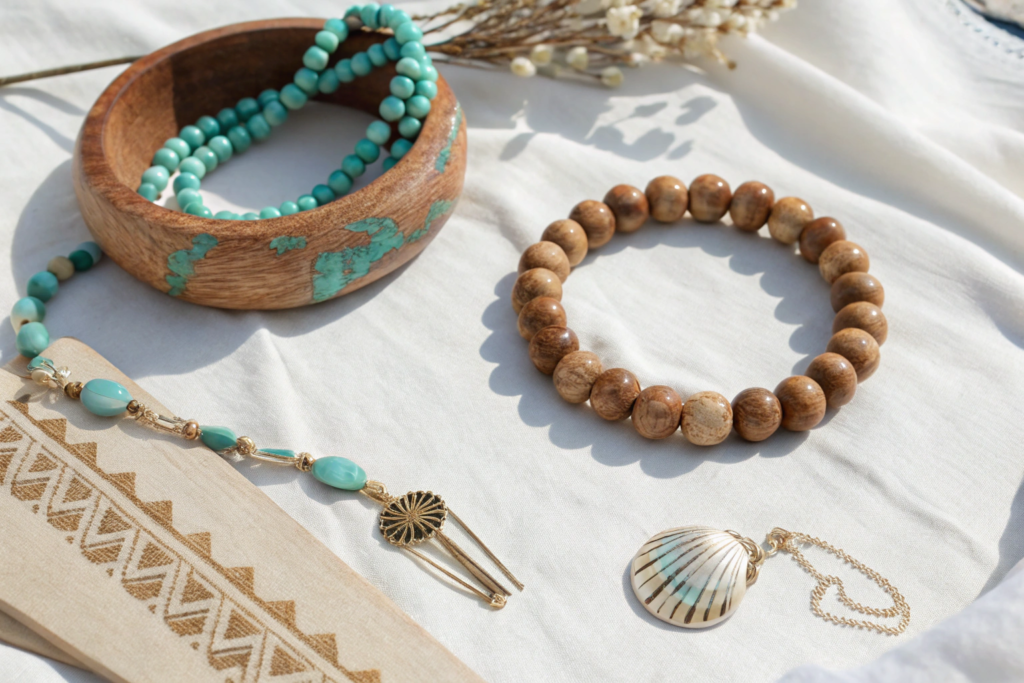
How are designers combining wood with stones like turquoise and agate?
The contrast is stunning. Imagine a chunky bangle made from polished walnut inlaid with chips of turquoise. Or a pendant where a slice of raw agate is framed by carved ebony. This trend is about creating a dialogue between materials. The warm, organic feel of the wood offsets the cool, timeless elegance of the stone. We are also seeing this with "mixed metals" in the hardware that holds these pieces together, using gold or brass to add a touch of luxury . This approach allows for incredible "personalization" and creates jewelry filled with "meaning, symbolism, and individuality" . Our production lines are currently fulfilling orders for such mixed-material hair clips and scarf rings, combining locally sourced stones with sustainable woods. For a deep dive into which gemstones pair best with specific woods, resources like the International Gem Society offer valuable insights.
Why are textures like fluted wood and hammered stone so trendy?
Visual interest is no longer just about color. It is about touch. We are moving into an era of "haptic design," the way a surface feels is as important as how it looks. "Fluted and textured surfaces" are appearing everywhere, from furniture to fashion accessories . For wood, this means carving vertical grooves or ripples into the surface of a hairband or a pair of earrings. For stone, it means a "hammered" finish rather than a smooth, polished one. This texture catches the light differently and invites the wearer to touch it. It elevates a simple accessory into a "tactile experience which rewards the senses" . This is a key detail we focus on in our quality control. A poorly executed texture feels rough in the wrong way; a well-executed one feels intentional and luxurious.
How are bold, oversized natural accessories making a statement?
The days of tiny, delicate natural accessories are waning. In their place, we are seeing a return to "max appeal" and bold statements . If you are going to wear wood or stone, you should not hide it. You should celebrate it. This shift is being driven by a desire for self-expression and a move away from the "quiet luxury" that dominated recent years .
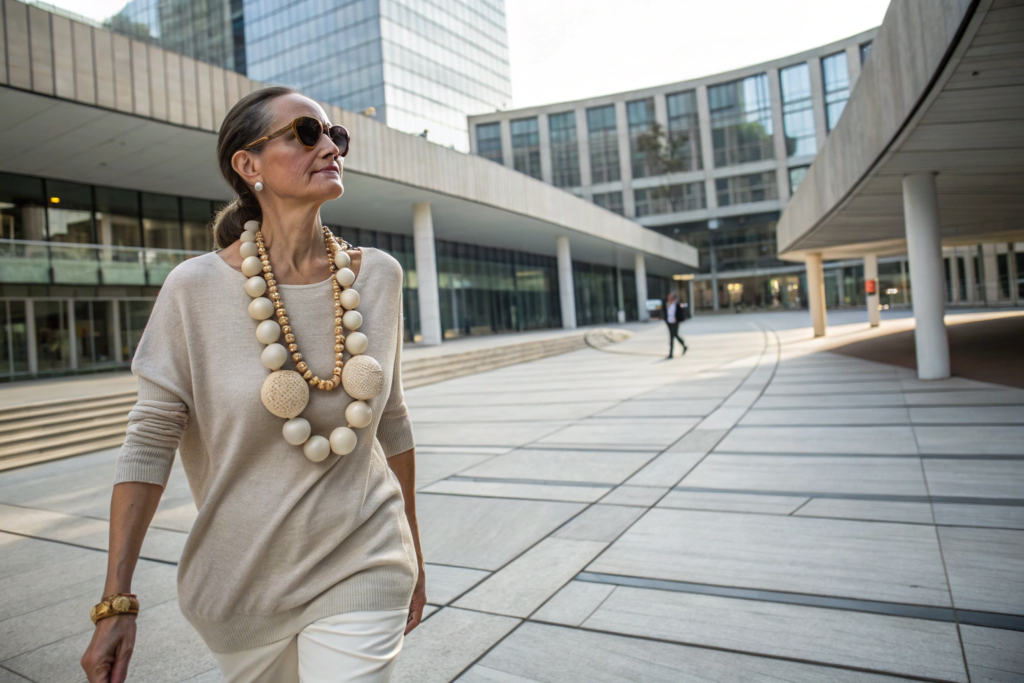
What defines a "statement" piece in wooden and stone jewelry today?
Size and scale are the first things you notice. Think chunky wooden cuffs that cover half the forearm, necklaces with oversized stone pendants the size of a small egg, and earrings made from large, lightweight wood discs. But it is not just about being big. It is about being "sculptural." These pieces often have "soft, fluid lines, abstract shapes, and sculptural silhouettes" . They are designed to be the focal point of any outfit. We are producing wooden hair forks that are long and dramatic, and stone pendant necklaces on thick, woven cords. This trend also embraces "bombé rings" and thick bands in accessories, a concept borrowed from the jewelry world where substantial, bold bands are becoming the go-to choice for those wanting "max-comfort and security" along with style .
How does this trend connect to sustainability and slow fashion?
Here is the beautiful connection: buying a big, bold, well-made natural accessory is the opposite of "fast fashion." These are not disposable items. A large wooden bangle or a quality stone pendant is meant to last. This aligns perfectly with the "sustainability and making conscious choices" movement . Consumers are investing in fewer, better things. They want items made from "recycled timber" or "sustainably sourced hardwoods" that will not end up in a landfill next season . When we develop these larger pieces for our clients, we focus on durability. A heavy stone pendant needs a strong cord or chain. A wide wooden cuff needs to be constructed to resist cracking. This commitment to quality is what builds trust with buyers like Ron and his customers. It is a key part of the service we provide at Shanghai Fumao Clothing, ensuring that your investment in trend-right products pays off for years to come.
What colors and cultural influences are shaping natural accessories in 2026?
Color is making a powerful comeback, and it is deeply connected to the natural world. We are moving away from sterile neutrals and into a palette that feels warm, lived-in, and culturally rich. The influences are global, blending traditional crafts with modern aesthetics.
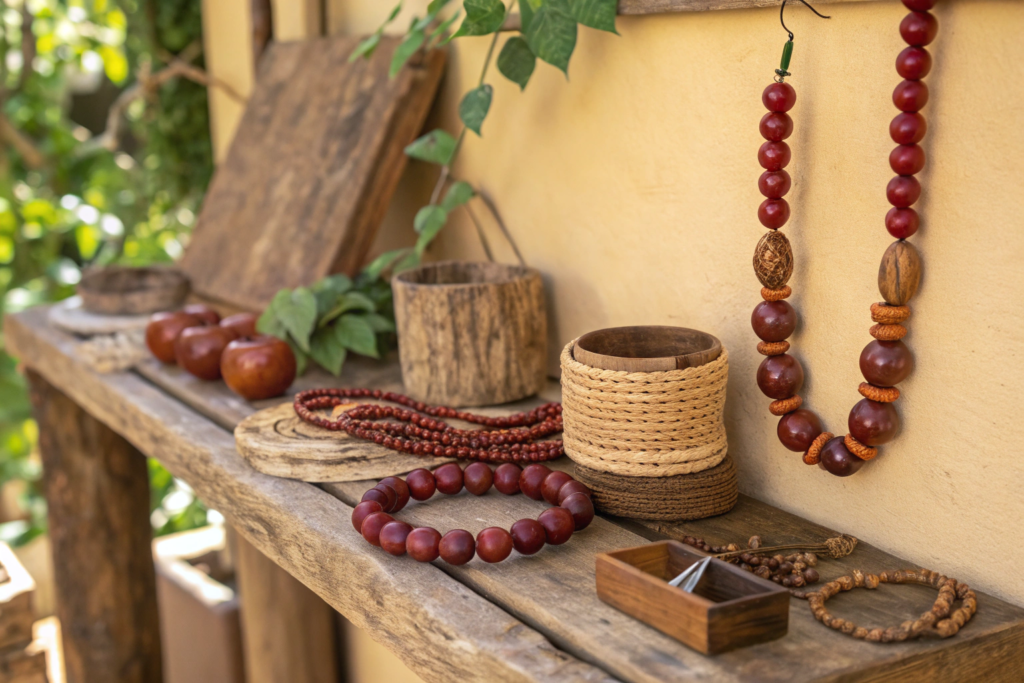
Which gemstone colors are trending for 2026?
Red is having a major moment. Industry experts have named "Signature Red" a key color, noting that "in the world of precious stones, red represents one of the rarest colors found in nature" . This makes red stones like carnelian, jasper, and even ruby incredibly desirable. Alongside red, we are seeing a surge in "rich jewel tones" including deep emerald greens, sapphire blues, and oxblood tones . For a more grounded feel, "warm earth tones" like terracotta, ochre, and soft clay are also extremely popular, especially when combined with textured surfaces . When selecting stones for your product lines, consider how these colors will work with your target market. A deep green malachite bead might appeal to a different customer than a bright red carnelian.
How are "grandma chic" and vintage styles influencing modern designs?
There is a beautiful resurgence of "vintage" and what some call "grandma chic" . This is not about looking old; it is about honoring timeless craftsmanship. It means incorporating "antique cuts" in stone beads or cameos set in wooden frames. It means looking at "campaign furniture" styles for inspiration on hardware and shapes . We are seeing requests for accessories that feel like they could have been passed down through generations. This includes using "old mine cut" style stones or creating settings that have a handcrafted, "time-worn" feel . It is a reaction against the perfectly new and artificial. Our team excels at taking these vintage inspirations and translating them into fresh, modern products that meet all safety and quality standards for today’s global market. For instance, we can develop a wooden bangle with an engraved pattern inspired by Art Deco, giving it that vintage soul with a contemporary fit.
How do sustainability and ethical sourcing affect material choices?
This is not just a trend; it is a fundamental shift in how business is done. Today’s buyers, and their customers, are demanding to know where materials come from. "Transparency, traceability, and responsible sourcing are becoming non-negotiables" . As a factory owner, I can tell you that this has changed how we operate.
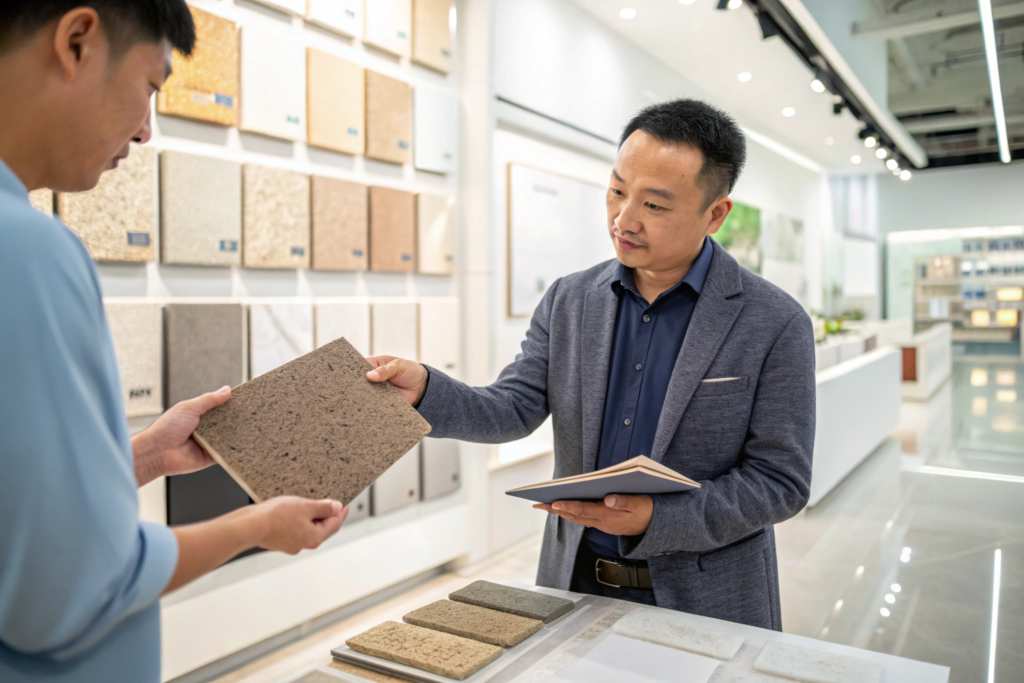
Why is ethical sourcing important for wood and stone accessories?
Consumers are educated. They read labels and they ask questions. They want to know if the wood in their hairband came from a sustainable forest and if the stone in their pendant was mined ethically. This concern stems from a growing "awareness of ethical sourcing, the environmental impact of traditional mining practices, and labor practices" . For your business, ignoring this is a risk. If your supply chain is not clean, it can damage your brand’s reputation. That is why we have invested heavily in building relationships with suppliers who can provide certifications for their materials. We focus on "recycled timber" and suppliers who adhere to fair labor standards . By choosing a partner like Shanghai Fumao Clothing, you are choosing a factory that takes these responsibilities seriously, ensuring the products you sell are not only beautiful but also honorable.
What role does upcycling play in modern accessory production?
Upcycling is moving from a niche idea to a mainstream manufacturing practice. Instead of discarding waste, we are seeing a focus on "metamorphosis," where materials are transformed into something new and useful . In our industry, this means using wood offcuts from furniture making to create smaller accessories like beads or hair clips. It means using stone dust and chips to create composite materials for pendants. This "circular creation" approach reduces waste and appeals to environmentally conscious consumers . It is a win-win. It lowers material costs and creates a powerful marketing story. When you can tell your customer that their beautiful belt is made from reclaimed wood, you are adding value that goes far beyond the physical product.
Conclusion
The world of natural material accessories is vibrant, diverse, and full of opportunity. We have explored how raw finishes celebrate imperfection, how mixing wood with stones like turquoise creates stunning contrasts, and how bold, oversized pieces are making a powerful statement. We have seen that deep, earthy colors and vintage inspirations are guiding design, and that sustainability is no longer optional—it is essential. These trends are not just about aesthetics; they are about a deeper human need for connection, authenticity, and responsibility.
For a professional buyer like Ron, navigating these trends successfully means finding a manufacturing partner who understands them from the inside out. You need a team that can source the right materials, execute complex textures, and ensure every piece meets rigorous quality standards—all while managing the logistics and costs we discussed before. This is where our experience becomes your greatest asset. Our design team is constantly studying these shifts, and our project managers are ready to guide your next collection from concept to container.
We invite you to bring these trends to life for your customers. Let’s work together to create accessories that are not only fashionable but meaningful.
To start developing your next line of natural material accessories, please contact our Business Director, Elaine, at elaine@fumaoclothing.com. We are ready to help you make your mark in 2026.