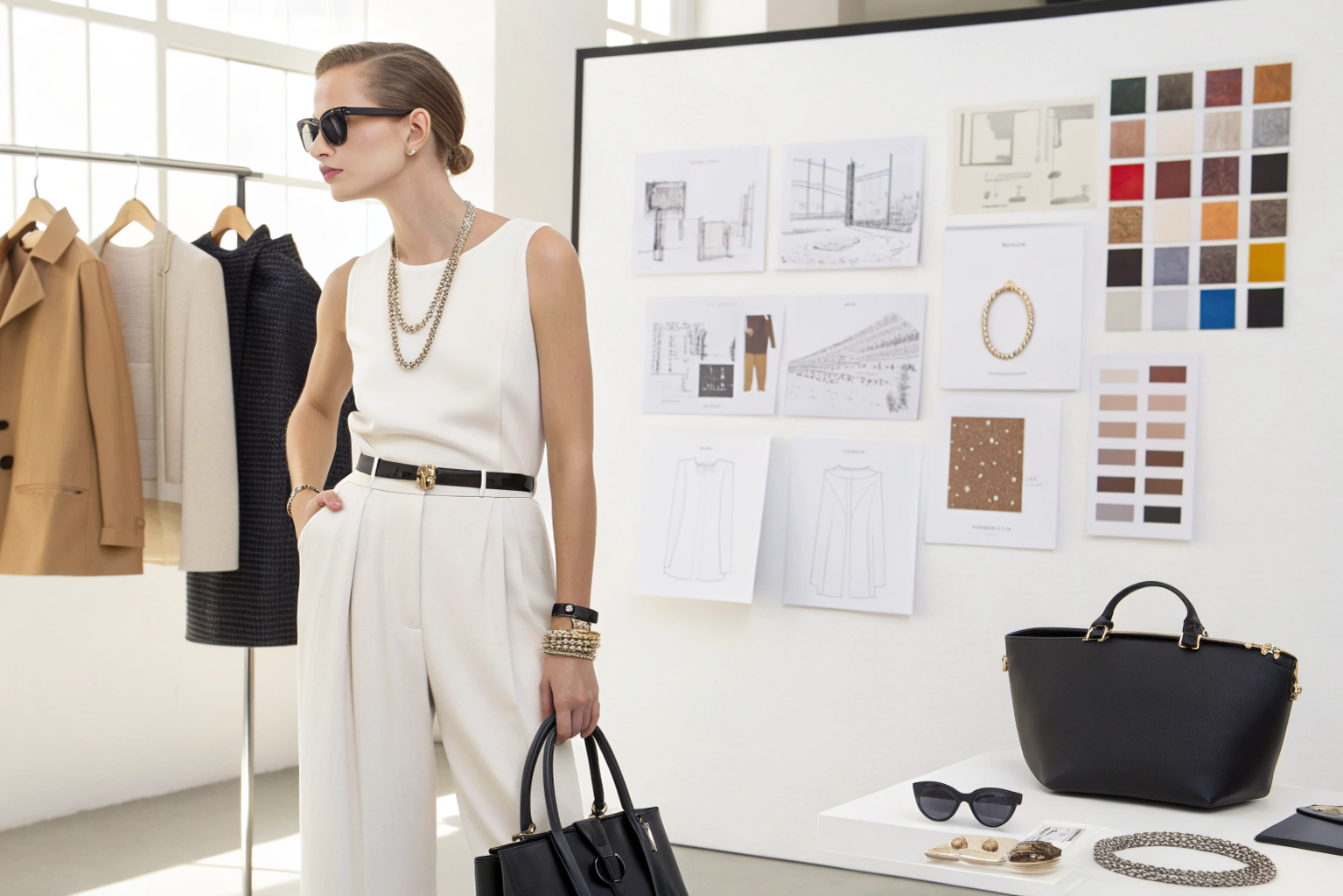
I remember a conversation with a talented clothing designer who had a very clear and beautiful aesthetic. Her clothes were romantic, flowing, and inspired by the English countryside. They were a dream. But her accessories were a different story. She had a few simple bags and belts that she bought from a generic supplier. They were fine, but they didn’t sing. They didn’t tell the same story as her clothes. A customer could buy a gorgeous, ethereal dress from her, but then they’d have to go elsewhere to find a bag that matched its mood. She was losing sales and, more importantly, she was losing the chance to offer her customers a complete, immersive vision. Her problem is a common one, and solving it is the key to building a powerful, cohesive brand.
Creating an accessory line that complements a specific clothing style is about deepening and extending the brand’s visual language. It’s not about creating a separate product line; it’s about creating a world. The process involves: immersing yourself in the core aesthetic of the clothing line; identifying the key design elements (silhouettes, colors, textures, details) that define the style; translating those elements into accessory designs (bags, belts, jewelry, scarves, hats); and curating a cohesive collection that feels like a natural, inevitable extension of the clothing. At Shanghai Fumao Clothing, we specialize in this process, helping our clients create accessories that complete their brand’s story.
That designer was missing a huge opportunity. Her customers were already in love with her world. They wanted to live in it fully. By not offering accessories that fit that world, she was forcing them to leave it. Creating a complementary accessory line is not just about increasing sales (though it certainly does that); it’s about building a deeper connection with your customer and offering them a more complete and satisfying brand experience. Let me walk you through the four essential steps to creating an accessory line that truly complements a specific clothing style.
How Do You Deconstruct the Core Aesthetic of the Clothing Line?
Before you can design a single accessory, you must first become an expert in the clothing line it is meant to complement. This means moving beyond a superficial understanding and diving deep into its core aesthetic. What are the defining characteristics? What makes it unique? What feeling does it evoke? This deconstruction is the foundation upon which everything else is built. You cannot create a complementary product if you don’t fully understand what you are complementing.
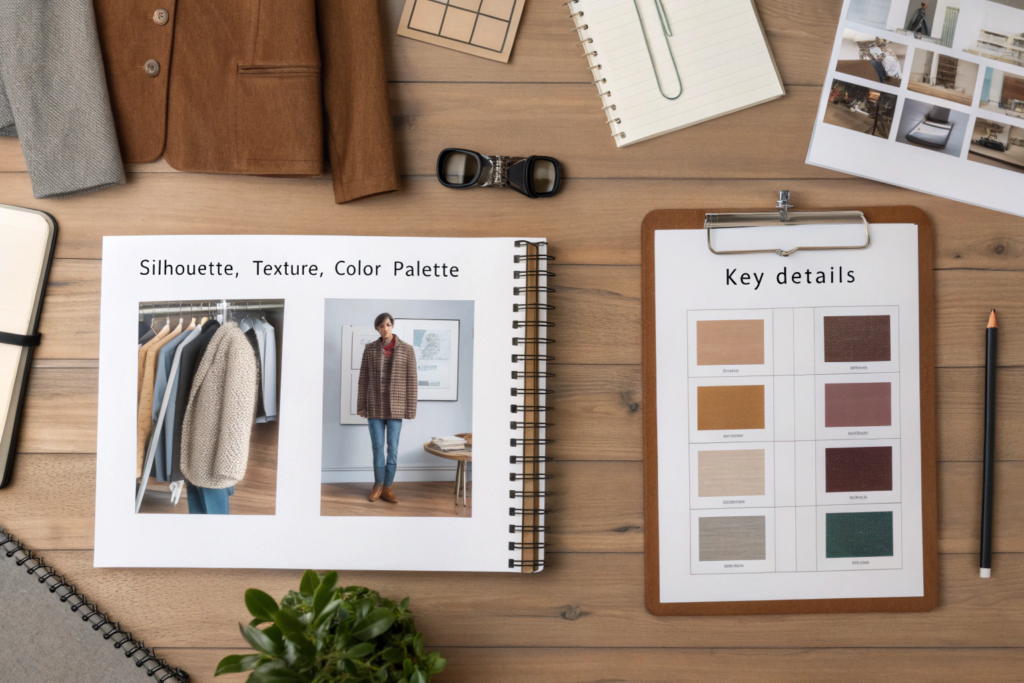
Start by creating a deep-dive mood board specifically for the clothing line. Include not just full outfits, but also close-ups of fabric textures, color palettes, silhouette sketches, and key design details like the shape of a collar, the type of stitching, or the finish of a button. Ask yourself and the designer key questions: What is the overall mood (e.g., romantic, edgy, minimalist, bohemian)? What are the dominant shapes (e.g., soft and flowing, sharp and structured)? What is the color story (e.g., earthy neutrals, bold jewel tones, soft pastels)? What materials are used most (e.g., linen, silk, leather, denim)? What are the recurring details? The answers to these questions are the raw materials for your accessory designs.
This deconstruction is a collaborative process. Talk to the clothing designer. Understand their inspirations, their process, their vision. Look at the collection as a whole, not just as individual pieces. What threads connect them? What story are they telling together? This deep understanding will allow you to create accessories that feel like they were born from the same creative impulse, not just tacked on at the end. It’s about finding the "DNA" of the clothing line and then using that same genetic code to create accessories. This is a core principle of brand identity and collection development. At Shanghai Fumao Clothing, we often start our client projects with this kind of deep-dive workshop, ensuring we have a complete understanding of their aesthetic before we begin designing.
What if the clothing line has multiple, distinct "vibes" within it?
That’s common. A collection can have a few different moods—each whispering of distinct atmospheres, from the soft glow of dawn to the vibrant pulse of an evening gala. In that case, you can create a few distinct accessory groups that each speak to one of those moods, like a symphony of styles where each movement carries its own unique emotion.
The cohesion across the entire accessory line will come from shared colors, materials, or design details—subtle threads that weave through each piece, binding them together in a harmonious tapestry.
How important is it to understand the target customer?
It’s essential. The clothing line’s aesthetic is designed to appeal to a specific type of person—a woman who moves through life with quiet confidence, her days woven with moments of both purpose and pause. Your accessories must appeal to that same person, mirroring her essence, her rhythm, her unspoken stories.
Understanding her lifestyle—the way she navigates bustling city streets at dawn, the soft glow of her home office at dusk, the laughter shared over weekend brunches—her needs, the practical yet elegant solutions she craves for her busy hands, and her desires, the quiet luxuries that make her heart flutter, will inform every design decision.
How Do You Translate Key Design Elements into Accessory Concepts?
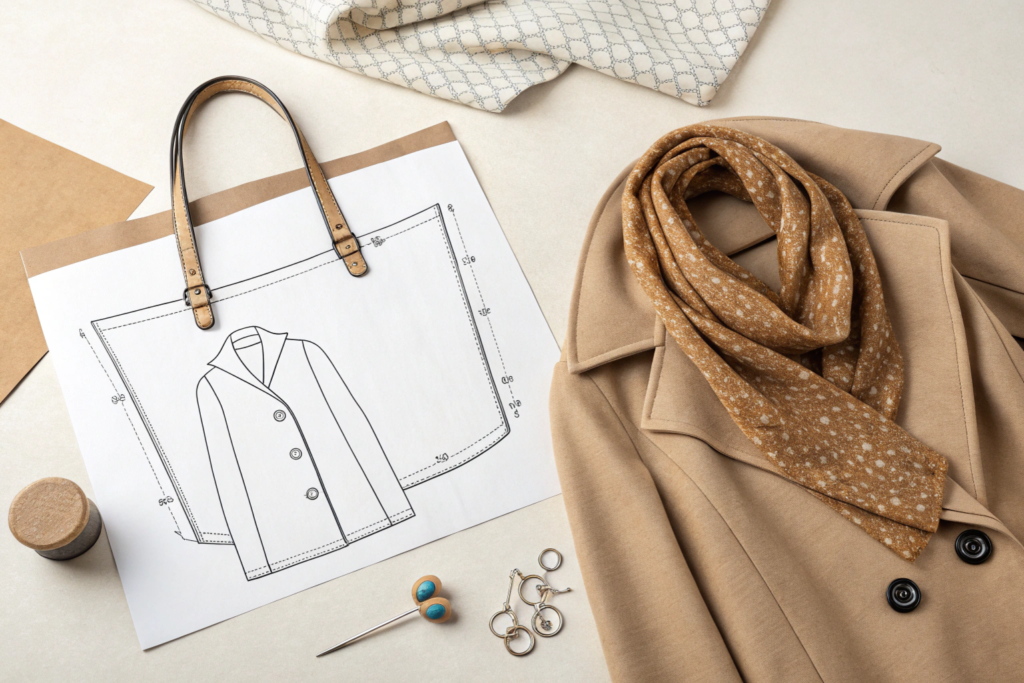
Once you have deconstructed the clothing line’s aesthetic, the next step is the most creative: translation. You must take the key design elements you’ve identified and reimagine them as accessories. This is not about copying; it’s about interpreting. It’s about finding the essence of a sleeve shape and turning it into the silhouette of a bag. It’s about taking a signature fabric and using it for a scarf. It’s a process of creative adaptation.
Look for opportunities to translate every aspect of the clothing. A signature silhouette (like a puff sleeve or a sharp shoulder) can inspire the shape of a bag or the design of a piece of jewelry. A recurring texture (like a cable knit or a smooth satin) can be echoed in a scarf, a hat, or the surface of a bag. A key color from the palette can become the main color for a line of accessories. A signature detail (like a specific type of embroidery, a particular button, or a unique stitch) can be reinterpreted as a decorative element on a belt, a clasp on a bag, or a charm on a necklace. The goal is to create a family of products that share a clear visual language.
This translation process is where the magic happens. It’s about creating a visual dialogue between the clothes and the accessories. A customer who loves a particular dress should be able to see a bag in the collection and immediately recognize that it’s from the same world. The connection can be obvious (the same fabric) or more subtle (the same curve, the same texture). The most successful accessory lines are those that feel like a natural, inevitable extension of the clothing, not a separate afterthought. This is a wonderful example of design thinking and creative problem-solving. At Shanghai Fumao Clothing, our design team excels at this kind of creative translation, working with clients to develop accessories that perfectly capture the spirit of their clothing.
Can I use the exact same fabric from the clothing line for accessories?
Yes, absolutely! This is a fantastic way to create a powerful visual connection that lingers in the minds of onlookers. If you have a signature print—perhaps one with bold, swirling patterns that dance like a storm or delicate florals that whisper of spring—or a beautiful textured fabric, rich with the soft fuzz of a cashmere knit or the smooth, cool sheen of silk, using it for scarves, bags, or even hair accessories is a brilliant strategy.
Imagine a scarf, its vibrant print fluttering gently as you walk, turning heads and sparking conversations; a tote bag, its unique texture inviting fingers to trace its surface, becoming a statement piece that says, ‘This is me.’
What if the clothing line doesn’t have a lot of strong, unique details?
Focus on the overall mood and the color palette. Even a minimalist, simple clothing line has a distinct aesthetic—think soft, diffused light filtering through sheer curtains, casting gentle shadows that dance with the quiet confidence of understated design.
Your accessories can complement that by being equally minimalist and simple, using the same clean lines and neutral colors: the smooth, cool touch of a matte silver bracelet, its surface catching just enough light to glint subtly; a leather belt with a low-profile buckle, its rich, unadorned texture adding a whisper of warmth to crisp white linen.
How Do You Select the Right Accessory Categories for the Collection?
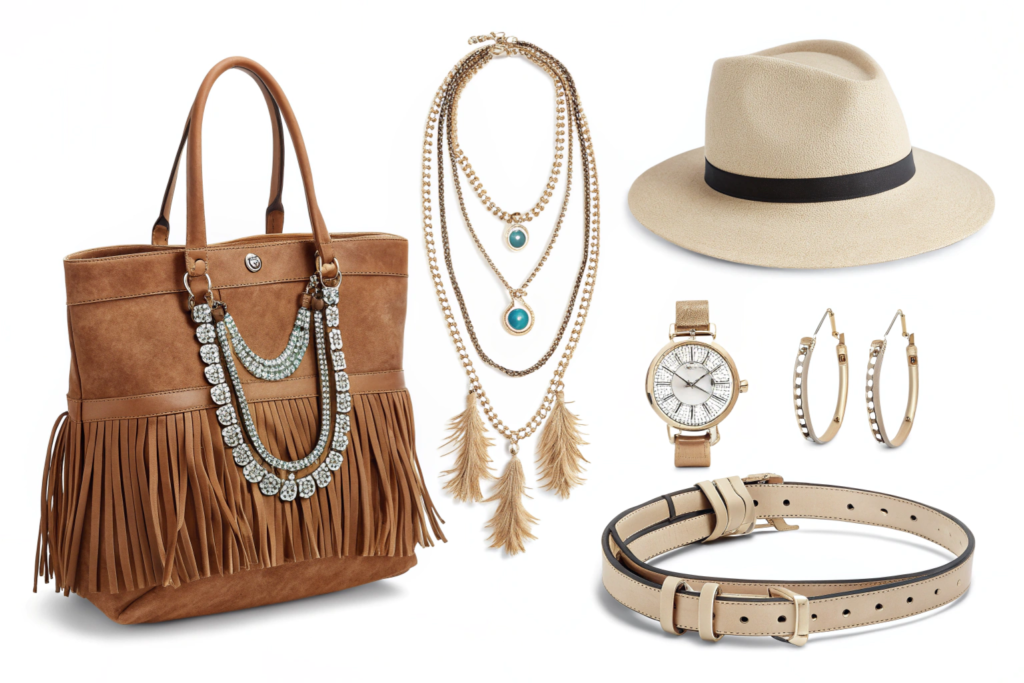
Not every accessory category is right for every clothing style. A line of delicate, minimalist jewelry would be completely lost on a collection of bold, bohemian maxi dresses. A chunky, industrial belt would look out of place with a soft, romantic blouse. Choosing the right accessory categories is a strategic decision that must be guided by the clothing’s aesthetic. You need to select the items that will feel most at home in the world you’ve created.
Consider the lifestyle of your customer. If the clothing is designed for everyday, on-the-go women, practical categories like bags, belts, and scarves might be essential. If it’s for special occasions, jewelry and clutches might be more important. Consider the scale of the clothing. Voluminous, oversized silhouettes can handle larger, bolder accessories. Delicate, fitted styles call for more refined pieces. Consider the visual weight of the clothing. A collection with lots of texture and pattern might be best complemented by simpler, more neutral accessories. A minimalist collection can be elevated by a single, statement piece. The goal is to choose categories that will enhance, not compete with, the clothing.
This is also a practical consideration. You don’t need to create every type of accessory. It’s better to do a few categories exceptionally well than to do many poorly. Start with the most essential categories for your customer. For many brands, this might be bags and belts, as they are highly functional and have a high perceived value. For others, it might be jewelry and scarves, as they are a more accessible entry point. As your accessory line grows, you can expand into new categories. The key is to be strategic and intentional, choosing the categories that will have the biggest impact and best serve your customer. This is a core principle of merchandising and assortment planning. At Shanghai Fumao Clothing, we advise our clients on which accessory categories are the best fit for their brand and their target market.
Should I start with a few accessory categories or try to offer a full range?
It’s almost always better to start with a focused selection of a few key categories, each one a gem waiting to shine in the spotlight of your attention. This allows you to dive deep into each, mastering the nuances, perfecting the details, and doing them really well—so well that every item feels like a labor of love, crafted with care and precision.
Managing your inventory becomes a symphony of efficiency, not a chaotic jumble; you know exactly where everything is, how it complements the others, and how to keep the flow smooth and satisfying. In these chosen areas, you build a reputation for quality that hums with authenticity, a quiet promise that when you choose this, you choose excellence.
How do I know which categories are most important to my customer?
Dive deep into your customer data, if you possess it—let those numbers and stories paint a vivid portrait of your clientele. What specific items are they reaching for, their fingers brushing against tags and fabric? What questions linger on their lips as they peruse your offerings, what unspoken needs do their inquiries reveal? You can also cast a gentle net through customer surveys, inviting them to share the whispers of their desires, or simply stand back and observe the bustling landscape of similar brands, noting the products that draw crowds, spark conversations, and leave customers with satisfied smiles.
How Do You Ensure Cohesion Across the Entire Accessory Line?
You have deconstructed the clothing, translated its elements into accessory concepts, and chosen the right categories. Now comes the final, crucial step: ensuring that the accessories themselves feel like a cohesive family. They must not only complement the clothing but also complement each other. A customer who buys a bag and a pair of earrings from your collection should feel like she is buying pieces from a unified line, not two random items that happen to share a brand name.
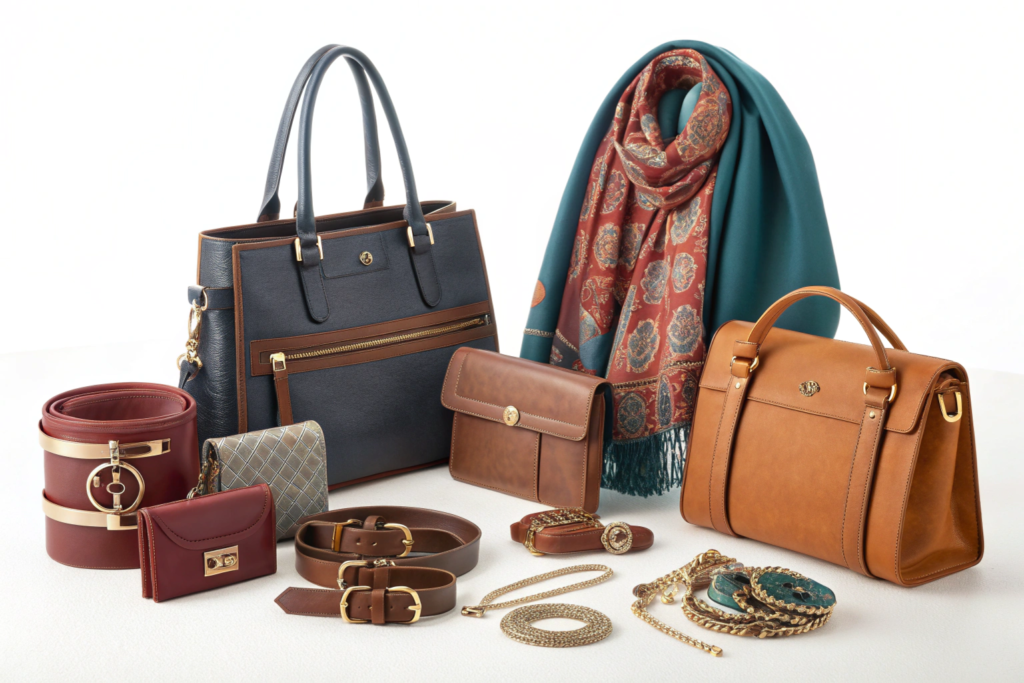
Creating cohesion across the accessory line means establishing a clear set of design principles that apply to every piece. This might include a limited, shared color palette. It might include a signature material (like a particular leather or a specific metal finish). It might include a recurring design detail (like a specific shape of clasp, a particular type of stitching, or a signature motif). When every accessory shares some of these elements, they will naturally look like they belong together. A customer can mix and match them freely, knowing they will always work in harmony. This is the hallmark of a truly well-designed accessory collection.
This cohesion also makes your line more powerful visually. In a lookbook, on a website, or on a retail shelf, a cohesive collection makes a much stronger impression than a random assortment. It tells a clear story and projects an image of a brand that is intentional and thoughtful. It also makes it easier for your customer to build a complete look. She can trust that any bag she buys will go with any scarf, and that they will all work with the clothing. This builds confidence and loyalty. This is a key principle of brand building and visual merchandising. At Shanghai Fumao Clothing, we work with our clients to establish these cohesive design principles from the very beginning, ensuring every accessory we produce is a perfect part of the family.
How many colors should I have in my accessory line?
A focused color palette is the cornerstone of visual harmony, weaving a seamless narrative that binds every piece of your clothing line into a cohesive tapestry. Begin by selecting a handful of core colors—those that resonate deeply with your brand’s essence, like the warm amber of autumn sun or the crisp cerulean of a summer sky. These foundational hues should feel like old friends, familiar and comforting, forming the backbone of your collection.
Then, infuse life into this base with a couple of accent colors, chosen to evoke the spirit of the season: perhaps a vibrant tangerine to brighten winter wardrobes or a soft lavender to whisper spring’s arrival. A limited palette transforms the act of mixing and matching into a delightful game, where customers can effortlessly pair a deep indigo sweater with a cream blouse, or a burnt sienna skirt with a charcoal coat, creating endless combinations that feel both intentional and effortless.
What if I want to use different materials, like both leather and canvas?
That’s fine! Cohesion doesn’t mean everything has to be identical. It means they should share a common design language, a silent conversation between pieces that feels intentional and harmonious. You might use the same color palette across both materials—say, a warm terracotta base with soft sage accents—that weaves through every surface, creating a visual thread that draws the eye from one element to the next. Or you could opt for the same hardware finish, like brushed nickel, its cool, smooth texture catching the light just so, adding a subtle, consistent gleam that ties door handles, drawer pulls, and light fixtures into a unified story.
Conclusion
Creating an accessory line that complements a specific clothing style is one of the most powerful and rewarding things a fashion brand can do. It transforms a collection of garments into a complete world, a lifestyle that customers can fully inhabit. It requires deep understanding, creative translation, strategic curation, and a relentless focus on cohesion. The result is a brand experience that is infinitely more powerful, memorable, and profitable.
At Shanghai Fumao Clothing, we are your partners in this creative journey. We have the expertise to help you deconstruct your aesthetic, translate it into beautiful accessory designs, select the right categories, and produce a cohesive, high-quality collection that will make your brand’s story complete.
Are you ready to create the accessories that will complete your brand’s world? Let’s build it together. Contact our Business Director, Elaine, at elaine@fumaoclothing.com to start the conversation.