

I remember a conversation with a designer who wanted to create a collection of classic, heritage-inspired hats. She had a clear vision: rich tartans, timeless plaids, styles that evoked a sense of history and craftsmanship. But when she started looking for fabric suppliers, she was overwhelmed. "There are so many patterns," she told me. "How do I know which ones are authentic? Which ones are free to use? How do I even describe what I’m looking for? I don’t want to accidentally use a pattern that’s sacred or trademarked." Her questions were exactly the right ones. Sourcing tartan and plaid is not like sourcing a solid color. It’s a journey into a world of history, tradition, and intellectual property.
Sourcing classic tartan and plaid patterns for hats requires a respectful and knowledgeable approach that navigates history, authenticity, and intellectual property. Key steps include: understanding the difference between a clan tartan (often protected) and a fashion plaid (a generic pattern); researching authentic sources from mills in Scotland and other heritage textile regions; securing the necessary licenses or permissions for using protected clan tartans; and specifying your desired colors, scale, and fabric weight to the mill. At Shanghai Fumao Clothing, we have experience working with heritage mills and navigating these complexities, helping our clients bring authentic, beautiful tartan hats to life.
That designer’s confusion was understandable. The world of tartan is rich and complex. A simple red and green pattern might be a generic fashion plaid, or it might be the registered trademark of a famous brand, or it might be the ancient tartan of a Scottish clan with centuries of history. Using it without understanding its origins could be a legal and cultural misstep. Let me walk you through the four essential steps to sourcing classic tartan and plaid patterns for hats, the right way.
What’s the Difference Between a Clan Tartan, a District Tartan, and a Fashion Plaid?
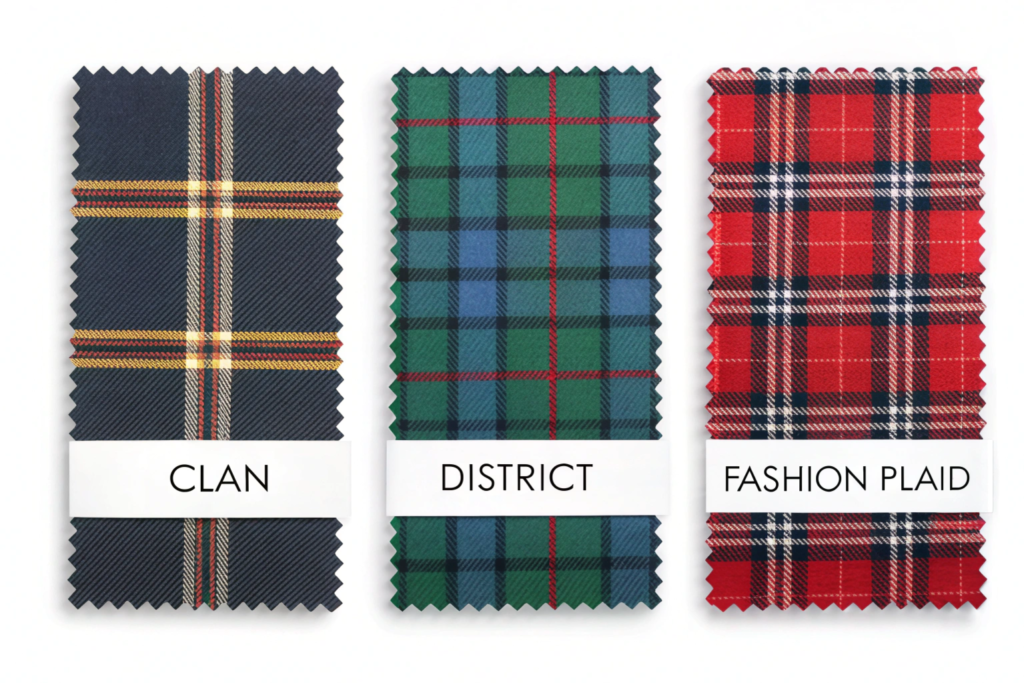
Before you can source a tartan, you need to understand what you’re looking at. Not all checked patterns are created equal. They fall into different categories, each with its own history, cultural significance, and legal status. Using a clan tartan without permission is very different from using a generic fashion plaid. Understanding this is the first and most crucial step.
Clan tartans are patterns associated with a specific Scottish family or clan (e.g., Royal Stewart, Black Watch, MacLeod). Many of these are ancient and have deep cultural significance. While the patterns themselves are often in the public domain, their use can be a sensitive cultural issue, and some may be trademarked or protected by clan societies. District tartans are associated with a specific geographic region. Corporate/Brand tartans are patterns created by and trademarked for a specific company (the Burberry check is the most famous example). Using these requires explicit permission and usually a license. Finally, fashion plaids are generic checked patterns that are not associated with any clan, district, or brand. They are free for anyone to use and are the safest choice for a brand without a specific heritage connection.
The cultural significance of clan tartans should not be underestimated. For many people of Scottish descent, their clan tartan is a symbol of their heritage and family identity. Using it respectfully, and ideally with some acknowledgment of its origins, is important. For a brand, using a clan tartan can add a layer of authentic heritage, but it also requires sensitivity. It’s always a good idea to research the history of the pattern and, if possible, to reach out to the relevant clan society or a heritage expert. This is not just a legal consideration; it’s a matter of cultural respect. This is a key aspect of sourcing heritage textiles with integrity. At Shanghai Fumao Clothing, we guide our clients through this landscape, helping them choose patterns that are appropriate for their brand and their market.
Can I use any clan tartan I want?
Not necessarily. While many ancient clan tartans, with their rich, earthy threads of deep green, moorish brown, and weathered gray, have long been woven into the public domain like stories passed down through generations, some may be fiercely guarded as trademarks or cherished as the intellectual property of a clan society, their patterns holding sacred significance only for those who trace their lineage to the highlands. More importantly, there is a cultural dimension that hums beneath the fabric—a quiet reverence for tradition and identity.
Using a clan tartan, with its intricate weave that tells tales of battles, lands, and ancestors, without any acknowledgment of its heritage could be seen as insensitive, a casual appropriation of a living history that carries the weight of centuries.
What is the most famous corporate tartan?
The Burberry check (in its classic camel, black, red, and white pattern) is the most famous example of a corporate tartan. It is a registered trademark and cannot be used by anyone without a license from the Burberry brand. This is a crucial point: not all checked patterns are free to use.
How Do You Find Authentic Heritage Mills and Suppliers?
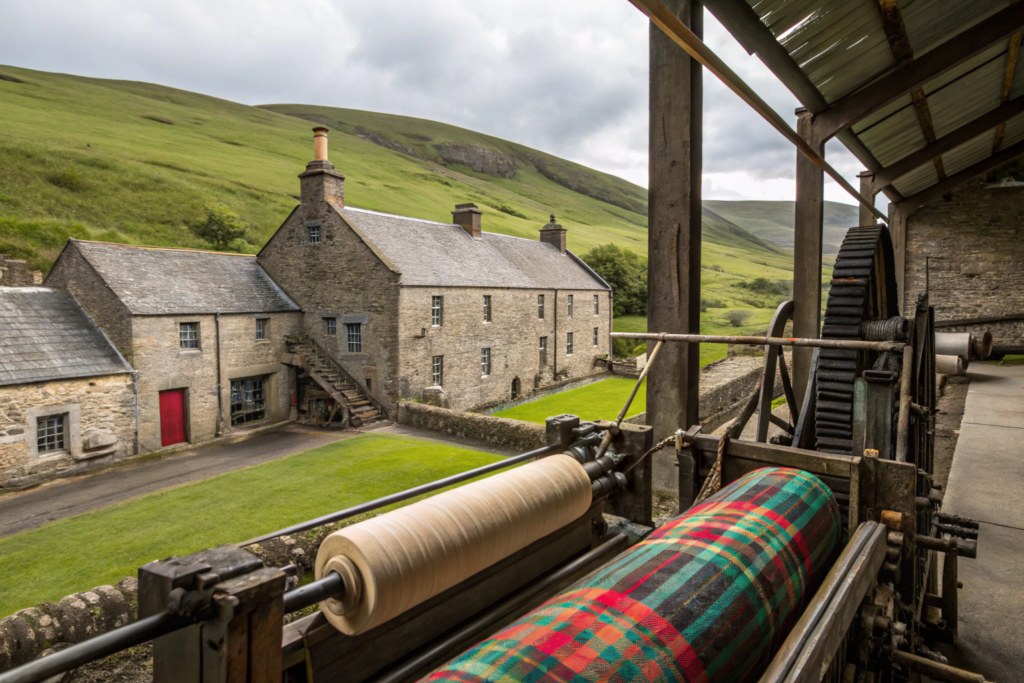
Once you know what kind of pattern you want, the next step is finding a supplier who can provide it with authenticity and quality. For true heritage tartans, this means looking to the source: the historic mills of Scotland. These mills have been weaving tartan for generations and have access to the original patterns, the correct colors, and the highest quality yarns. Sourcing from them is a guarantee of authenticity.
The most respected heritage tartan mills are located in Scotland, in regions like the Scottish Borders. Companies like Lochcarron of Scotland, House of Edgar, and Marton Mills are world-renowned for their extensive archives of authentic clan and district tartans. They can supply fabric in a range of weights suitable for different hat styles, from lightweight for lined caps to heavier weights for structured hats. They also offer custom weaving services, allowing you to create a unique tartan or to reproduce a historical pattern. Sourcing directly from these mills ensures you are getting an authentic product, and it also supports the communities that have kept this craft alive for centuries. It’s a story you can share with your customers.
Working with a heritage mill is a partnership. They have deep knowledge and can advise you on everything from color matching to fabric weight. They can also help you navigate the complexities of pattern registration and licensing. For a brand, this relationship is invaluable. It adds a layer of authenticity and storytelling to your product that you simply cannot get from a generic fabric importer. You can tell your customers, "This tartan was woven by a mill in the Scottish Borders that has been operating for over a century." That is a powerful marketing message. This is a key principle of heritage sourcing and brand storytelling. At Shanghai Fumao Clothing, we have established relationships with these heritage mills and can help our clients navigate the process of sourcing authentic tartan fabric from them.
What are the typical minimum order quantities (MOQs) from heritage mills?
MOQs can vary, but for a standard tartan pattern from a mill’s existing archive, they might be in the range of 50 to 100 meters per colorway. For custom-woven tartans, the MOQs are significantly higher, often in the hundreds of meters, to justify the cost of setting up the loom. This is why it’s important to plan your collection carefully.
Is it more expensive to source from a Scottish mill?
Generally, yes. The fabric is of very high quality, and the labor and heritage involved command a premium. However, for a brand seeking authentic heritage, the cost is often justified by the added value and the compelling story it provides. For a more budget-friendly option, you can also find high-quality tartan fabrics from mills in other countries, but you must be certain they are using authentic patterns and not infringing on any trademarks.
How Do You Specify the Right Fabric Weight and Composition for Hats?
Once you have selected your pattern and your supplier, the next critical decision is the fabric itself. Tartan fabric comes in different weights and compositions, and the right choice depends entirely on the hat style you are making. A heavy, stiff wool is perfect for a structured cap. A lighter, softer fabric is better for a draped beret or a lined bucket hat. Getting this specification right is essential for the final product’s look and feel.
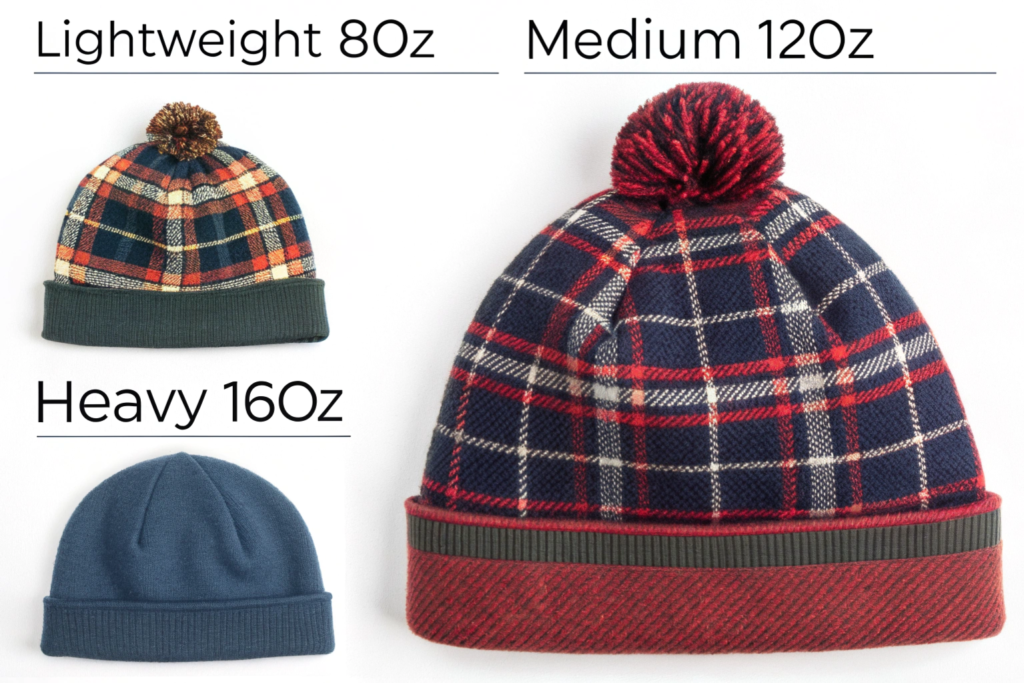
Tartan fabric for hats is most commonly made from 100% wool or a wool-blend. Wool is warm, durable, and has a beautiful, natural texture. For hats, a medium-weight wool (around 11-13 oz per linear yard) is a versatile choice, providing enough structure for a cap while still being comfortable. A heavier-weight wool (14-16 oz) is excellent for more structured, winter-ready styles. A lighter-weight wool (8-10 oz) can be used for lined hats or for styles where a softer drape is desired. Some tartans are also available in cotton or cotton-blends, which are great for casual, warmer-weather hats. Always discuss the intended use with your mill or supplier; they can advise on the best weight for your specific design.
The composition of the fabric also affects its durability and care. 100% wool hats may require dry cleaning or gentle hand-washing. Wool-blends that include synthetic fibers can be easier to care for and may be more durable. The finish of the fabric also matters. Some tartans have a soft, brushed finish, while others are crisper and more defined. This will affect the final look of the hat. It’s always a good idea to order sample swatches in different weights and compositions so you can see and feel the difference before committing to a full production run. This is a key part of textile selection for headwear. At Shanghai Fumao Clothing, we work closely with our clients and their chosen mills to ensure the fabric specification is perfect for their hat design.
What is the best fabric weight for a classic flat cap?
A classic flat cap, whether a newsboy cap with its signature creased crown and rounded brim or a driver cap with its slightly more structured, slightly deeper profile, typically works well with a medium-weight wool tartan (around 11-13 oz). This weight of tartan, rich and textured with a subtle heathered depth, provides enough structure for the cap to hold its shape with quiet confidence, especially when combined with a soft, breathable lining that adds a layer of warmth without sacrificing comfort.
The wool, warm against the skin on crisp autumn mornings or cool spring afternoons, ensures the cap remains comfortable even during long wear, while its moderate bulk keeps it from feeling cumbersome or overwhelming.
Can I use the same tartan fabric for a beanie and a cap?
Yes, you can, but you might need to adjust the design. A medium-weight tartan, with its rich interplay of bold and subtle threads, can work beautifully for both a structured cap and a beanie. For a beanie, you might want to line it with a soft, warm fabric—think buttery-soft fleece or a plush wool blend—for extra comfort that nestles gently against the skin on chilly mornings.
How Do You Navigate Licensing and Intellectual Property for Tartan Patterns?
This is the step that many brands overlook, and it can be a costly mistake. As we discussed, not all tartans are free to use. Some are protected by trademarks, and using them without permission can lead to legal action. Even for ancient clan tartans, while the pattern itself may be old, a specific color variation or a modern rendition might be protected. Navigating this landscape requires due diligence and, often, a formal licensing agreement.
If you wish to use a corporate tartan (like Burberry), you must obtain a license from the brand. This is a formal legal agreement that will involve fees and strict guidelines on how the pattern can be used. For clan tartans, the situation is more nuanced. While many are not trademarked, using them respectfully is important. Some clan societies have registered their tartan and may require permission or a small fee for commercial use. The safest approach is to work directly with a heritage mill. They have deep knowledge of the patterns in their archives and can advise you on which are free to use and which may require additional steps. They can also often handle the licensing on your behalf. For fashion plaids, there are no such restrictions, but you must still ensure the pattern itself is not a direct copy of a trademarked design.
The consequences of using a protected tartan without permission can be severe. At best, you may receive a cease-and-desist letter and be forced to destroy your inventory. At worst, you could face a costly lawsuit. This is not a risk worth taking. The cost and effort of doing the research and, if necessary, obtaining a license, are minimal compared to the potential fallout. Furthermore, working within the system is the right thing to do. It respects the heritage and the intellectual property of the clans, districts, and brands that have created and protected these patterns. This is a key aspect of ethical and legal sourcing in the fashion industry. At Shanghai Fumao Clothing, we work with our clients and their chosen mills to ensure all necessary permissions and licenses are in place before production begins, giving them complete peace of mind.

How much does a tartan license cost?
The cost varies widely. For a corporate tartan, it can be a significant licensing fee. For a clan tartan, it might be a nominal fee or simply a gesture of acknowledgment. It’s best to inquire directly with the trademark holder or work with a mill that can facilitate this for you.
What if I want to create my own custom tartan for my brand?
This is a fantastic option! You can work with a heritage mill to design and register your own unique tartan. This creates an exclusive pattern that is yours alone, adding immense value and distinctiveness to your brand. The mill will guide you through the design process and can help you register your new tartan with the Scottish Register of Tartans. This is a significant investment but a powerful way to build a unique brand identity.
Conclusion
Sourcing classic tartan and plaid patterns for hats is a journey into a world of rich history, cultural significance, and intricate craftsmanship. It requires more than just picking a pretty pattern. It demands an understanding of the different types of tartans, a connection to authentic heritage mills, a careful consideration of fabric properties, and a respectful approach to intellectual property. The reward, however, is a product with a story, a hat that carries with it a sense of tradition and authenticity that is impossible to replicate with a generic fabric.
At Shanghai Fumao Clothing, we are your partners in this journey. We have the experience and the relationships to help you source authentic tartan fabrics from respected mills, navigate the complexities of licensing, and produce beautiful, high-quality hats that honor the tradition while appealing to the modern customer.
Are you ready to create a collection of hats that tells a story of heritage and style? Let’s find the perfect tartan for you. Contact our Business Director, Elaine, at elaine@fumaoclothing.com to start the conversation.




