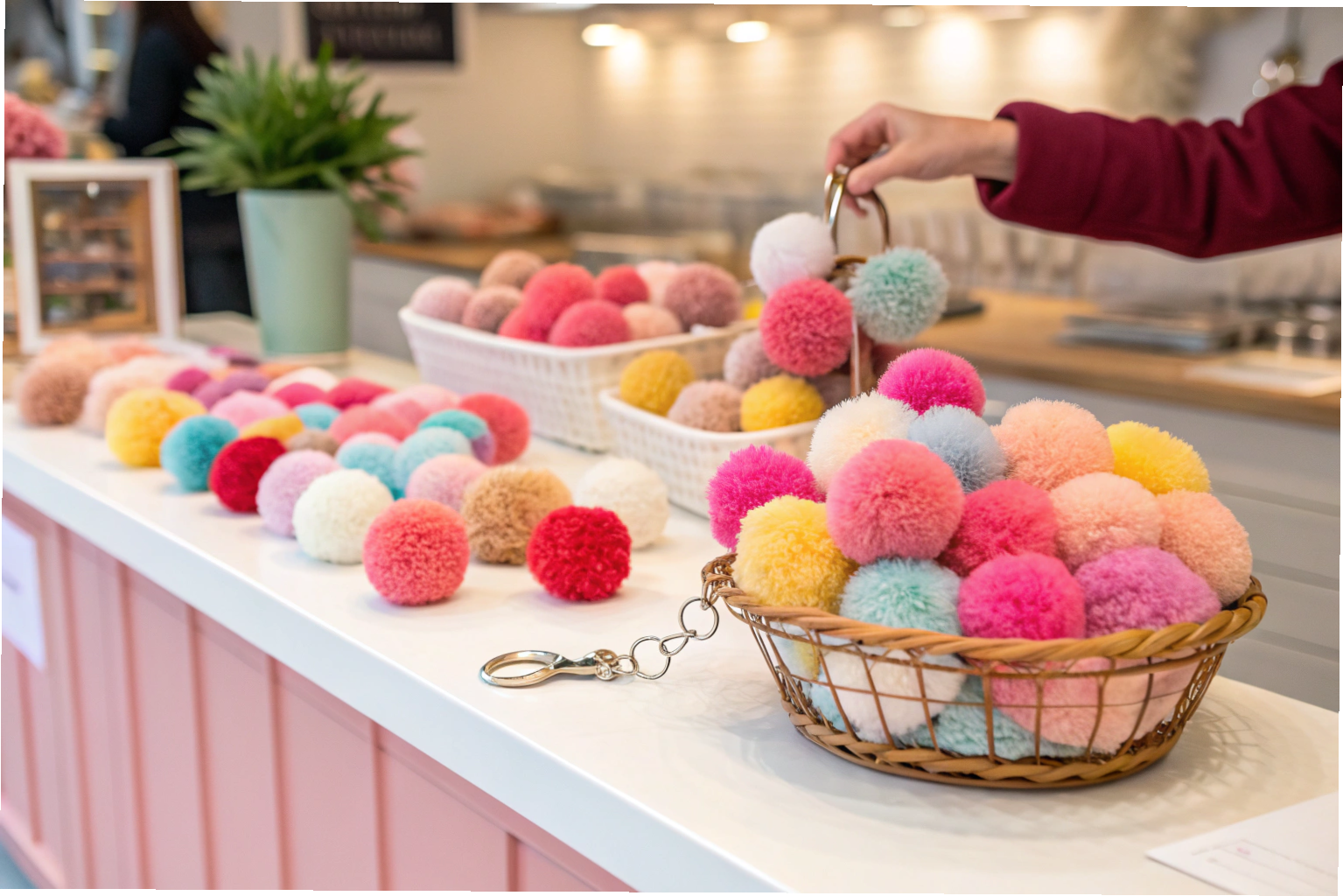
You’re waiting in line at a boutique, a museum gift shop, or scrolling through a social media feed. Your eyes land on a small, fuzzy, brightly colored ball attached to a keyring. It’s cheerful, it’s soft, and it costs just a few dollars. Before you’ve even fully processed the thought, it’s in your cart or added to your online order. This scenario plays out millions of times a day, making pom pom keychains a powerhouse of impulse purchasing. But what is it about these tiny, fluffy accessories that bypasses our rational decision-making so effectively? As a manufacturer, we see the data and trends behind these bestsellers, and the psychology is as fascinating as the product itself.
Pom pom keychains are a popular impulse buy because they perfectly combine low cost, high tactile and visual appeal, and instant emotional gratification, creating a nearly frictionless decision for the consumer. They tap into fundamental psychological triggers: the need for a small treat or reward, the desire for personal expression, and the irresistible pull of sensory engagement. They are not a considered purchase; they are a moment of joy captured in a transaction that feels risk-free.
This phenomenon isn’t accidental. It’s the result of a confluence of product design, marketing placement, and innate human behavior. For retailers and brands, understanding this dynamic is key to merchandising and product development. Let’s unravel the specific elements that make these fuzzy accessories almost impossible to resist at the point of sale.
What Psychological Triggers Drive Impulse Purchases?
Impulse buying is a well-studied consumer behavior. It’s a sudden, often powerful urge to buy something immediately, with little deliberation about the need or consequences. Pom pom keychains are engineered to exploit several key triggers simultaneously. They don’t solve a complex problem; they solve a momentary emotional one—boredom, the desire for novelty, or the need for a small pick-me-up.
The core psychological triggers are low perceived risk (due to minimal cost), the "reward center" activation from acquiring something new and cute, and the powerful influence of sensory marketing (touch and sight). The brain’s assessment is swift: "This is cheap, this makes me happy, and it feels nice. Why not?" The transaction cost—both financial and mental—is so low that the inhibitory part of the brain doesn’t have time to engage. This is the essence of a perfect impulse product.
How Does Low Cost and Perceived Value Overcome Hesitation?
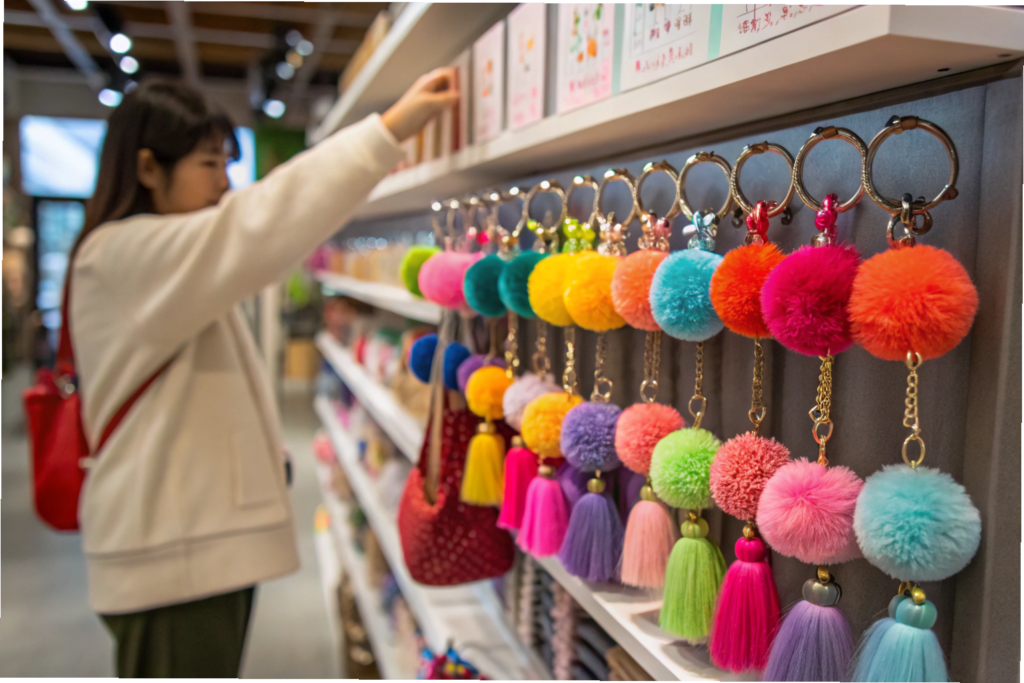
The price point is the most critical factor. Pom pom keychains typically fall well within the "spare change" or "small treat" category for most consumers. This low financial risk removes the major barrier to purchase. There’s no need to check a bank account or deliberate over a budget. Simultaneously, the perceived value is high. The product offers a burst of color, texture, and personality that feels greater than its $3-$8 price tag. For the buyer, it feels like a clever, rewarding little splurge. This is a key principle in retail merchandising: placing high-margin, low-cost items at the checkout where purchase decisions are emotional and rapid. Studies on consumer behavior, like those explored by the Journal of Consumer Research, often highlight this price-emotion nexus in impulse contexts.
Why Are Sensory Cues So Powerful?
Pom poms are a sensory marketer’s dream. Visually, they are a splash of saturated color in a often neutral environment (like a checkout line). They stand out. But the real magic is touch, or haptic feedback. Their soft, fuzzy texture invites interaction. Once a customer picks one up to feel it, the likelihood of purchase skyrockets. This physical engagement creates a sense of ownership and connection before the sale is even made. The product is no longer just an object; it’s an experience. Retailers and brands that understand this, like Shanghai Fumao Clothing when designing product displays, create opportunities for this interaction. Placing them within easy reach, not behind glass, is a deliberate strategy to convert touch into sales.
How Do Design and Trends Fuel Their Popularity?
The basic pom pom form is a blank canvas, and its evolution in design is what keeps it perpetually fresh and relevant. They are no longer just simple wool balls; they are mini fashion statements and collectibles. Their design adaptability allows them to ride every wave of pop culture, seasonal color trends, and social media aesthetics, making them constantly "new" and worthy of another glance—and another purchase.
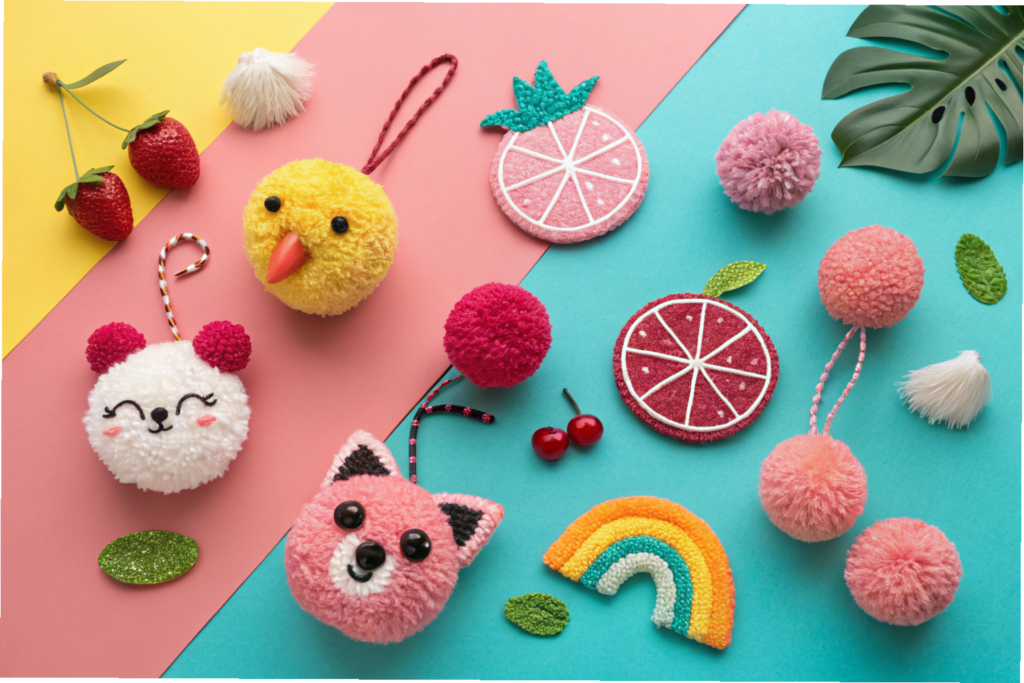
Their popularity is sustained by endless customization, trend-driven designs, and their role as affordable luxury or collectibles. A pom pom can be made from chenille yarn, faux fur, metallic thread, or even glitter-infused materials. It can be shaped like an animal, a fruit, or emblazoned with a popular meme. This constant innovation gives consumers a reason to buy more than one, transforming a single impulse into the start of a collection.
What Role Does Customization and Personalization Play?
The ability to personalize drives immense appeal. For a few dollars, you can choose a pom pom in your favorite color, your school colors, or to match a specific bag or key fob. This micro-personalization makes the item feel uniquely "yours," even if it’s mass-produced. For brands and retailers, offering a wide color palette and material selection is crucial. It turns a generic display into an interactive choice. Furthermore, they are a popular corporate gift or event souvenir because they can be cheaply customized with logos, creating a tactile and memorable takeaway. Our design team works with clients on exactly this, turning a simple accessory into a branded emotional token.
How Do Social Media and "Cute Culture" Amplify Demand?
Platforms like Instagram, TikTok, and Pinterest are visual fuel for impulse buys. A short video showing a collection of pastel pom poms jingling on a backpack, or a "what’s on my keys" post, serves as potent peer-to-peer marketing. They are a key component of "kawaii" (Japanese cute) culture and the broader trend of adorning everyday items with personality. This social proof and trend visibility normalize owning multiple keychains, not for function, but for fun and self-expression. When a consumer sees them online and then spots them in a store, the recognition creates a powerful pull—a phenomenon explained by the mere-exposure effect in psychology. The Influence of Social Media on Impulse Buying is a well-documented area of study that underpins this effect.
Where Are the Strategic Points of Purchase?
You don’t typically go out specifically to buy a pom pom keychain. You encounter it. Strategic product placement is what converts the psychological and design appeal into a completed sale. Their natural habitat is in the path of a captive or browsing consumer, where the decision-making context is already primed for a small, discretionary addition.
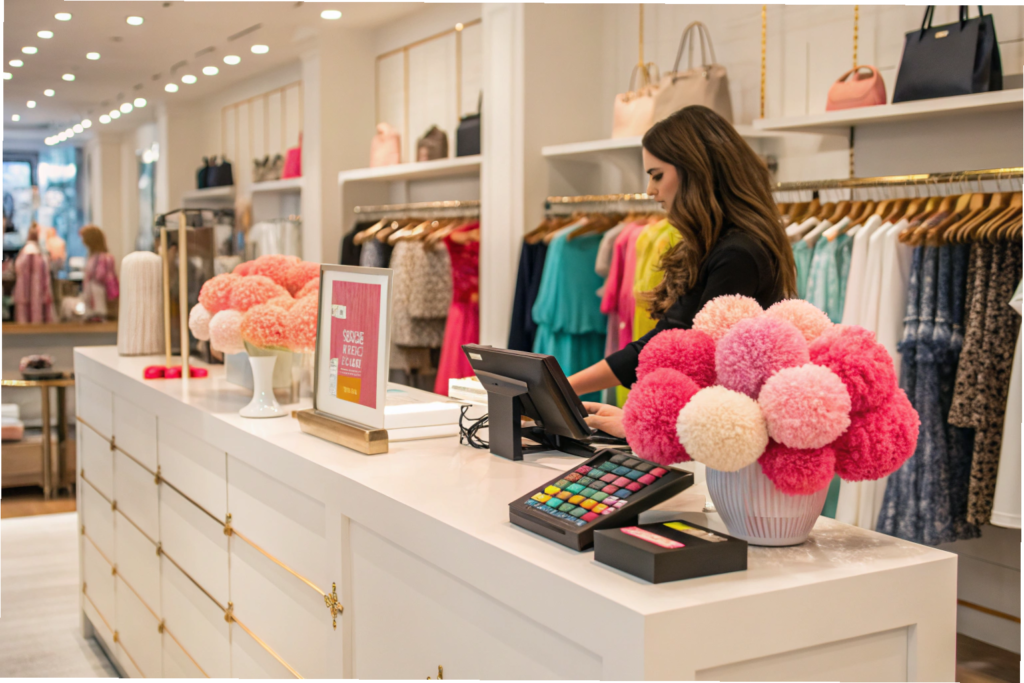
The most effective points of purchase are checkout counters (both physical and online), gift shops, museum stores, and trendy boutiques where they complement the main product offerings. In these environments, the consumer is already in a "shopping" mindset, their wallet is open, and their guard is down. The pom pom acts as a final, irresistible flourish to the shopping experience.
Why is the Physical Checkout Counter So Effective?
The point-of-sale (POS) display is the classic impulse buy battleground. While waiting to pay, consumers are bored, may feel they’ve "earned" a reward, or are susceptible to last-minute additions. The pom pom’s small size and low price make it the perfect candidate for this space. It requires no further thought—no sizing, no compatibility check. This strategy leverages what behavioral economists call "decision fatigue"; after making bigger choices in the store, the consumer is more likely to say "yes" to a simple, appealing option. Effective merchandising here involves creating a dense, colorful, and touchable display.
How Do Online Stores Create Impulse Moments?
Online, the impulse moment is recreated through "Frequently Bought Together" suggestions, "Add-on Items" before checkout, and dedicated "Under $10" or "New & Cute" sections on the homepage. E-commerce giants and small stores alike use algorithms to place these items in the shopping journey. A key tactic is offering low or free shipping thresholds; a customer at $48 needing $50 for free shipping is highly likely to add a $2-3 pom pom keychain to their cart. This turns an impulse buy into a rationalized "money-saving" decision. For online brands, high-quality, zoomable photos and videos that showcase the texture and movement of the pom pom are essential to compensate for the lack of physical touch.
What Does This Mean for Retailers and Brands?
Understanding the pom pom phenomenon isn’t just academic; it provides a blueprint for success with similar low-cost, high-appeal accessories. For retailers, it’s a lesson in margin optimization and customer experience. For brands like ours at Shanghai Fumao Clothing, it informs product development, packaging, and client guidance on how to merchandise effectively.
The key takeaway is to design for emotion, price for impulse, and place for convenience. A successful impulse product must have an immediate emotional hook, a price that feels inconsequential, and be located where the consumer is already in a transactional mindset. It should also have a high perceived value relative to its cost, often achieved through excellent craftsmanship and material quality that surprises and delights.
How Can You Apply These Principles to Other Products?
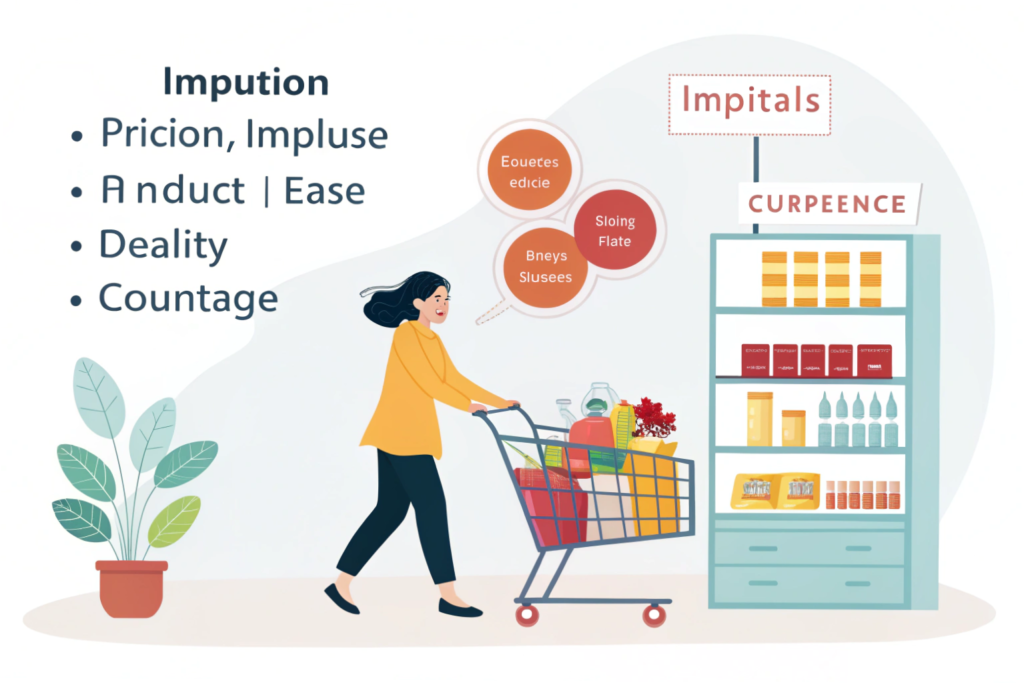
The pom pom keychain is a case study. The same principles can be applied to hair clips, funky socks, decorative pins, or mini notebooks. Ask: Is it visually and tactilely engaging? Is the cost below the "think-about-it" threshold? Can it be easily displayed at the point of decision? For manufacturers, this means investing in attractive, sample-ready packaging that works for counter displays and developing a wide range of designs to encourage multiple purchases. Our project managers help clients identify these opportunity areas within their product lines.
Why is Quality Still Important for a Low-Cost Item?
Even for an impulse buy, quality matters. A pom pom that sheds everywhere or loses its shape after a week creates a negative memory, damaging brand reputation and preventing repeat purchases. Using good materials and ensuring secure construction (like a firmly attached key ring and well-secured fibers) turns a one-time impulse into a satisfying purchase that the customer may later seek out again. This builds brand loyalty even in a small, fun category. Ensuring this requires a diligent factory quality control process, even for the simplest items.
Conclusion
Pom pom keychains are a masterclass in impulse purchase design. They succeed by being psychologically irresistible, endlessly adaptable to trends, and strategically placed in our path. They prove that a product doesn’t need to solve a major problem to be hugely successful; it just needs to spark a moment of joy at the right time and place.
For consumers, they are a harmless and delightful treat. For businesses, they represent a high-margin, repeat-purchase opportunity that enhances the shopping experience and builds brand affinity through small moments of happiness. In a world of complex decisions, the simple appeal of a fuzzy, colorful ball on a ring remains powerfully effective.
If you are a retailer looking to boost average order value or a brand seeking to develop a winning line of impulse-driven accessories, understanding this dynamic is the first step. We specialize in creating such high-appeal, quality-crafted items that captivate customers at first sight. Contact our Business Director, Elaine, at elaine@fumaoclothing.com to discuss how we can help you develop the perfect impulse products for your store or brand.