
You’ve designed a beautiful collection of hair clips, scarves, or belts. The samples from your factory look perfect. But when the bulk order arrives at your warehouse, you face a nightmare: tangled products, missing tags, inconsistent sizing, and packaging that looks cheap. Your products are now stuck, requiring costly and time-consuming rework before they can hit the store shelves. How do you bridge the gap between a great manufactured product and a truly "retail ready" one that sells itself?
Ensuring your fashion accessories are retail ready requires a comprehensive, pre-defined set of standards that covers not just the product itself, but its presentation, labeling, and packaging. It means shifting your mindset from "production complete" to "consumer ready." This involves implementing rigorous final quality control, adhering to strict packaging and tagging protocols, and ensuring full compliance with the destination market’s retail and safety regulations. The goal is for your products to move seamlessly from the shipping carton directly to the sales floor.
At Shanghai Fumao Clothing, we manage this process daily for major retailers and brands. The "retail ready" finish is a specialized discipline. Here is a detailed guide on how to achieve it.
What Does "Retail Ready" Actually Mean for Accessories?
"Retail ready" is a specific status. It means the product has been processed, packaged, and labeled exactly to the retailer’s specifications, requiring no additional work from their distribution center or store staff. For accessories, this typically involves several non-negotiable elements: each item must be individually packaged for protection and display, have the correct price and SKU tags attached, and be packed in master cartons in a predefined quantity and orientation for easy shelf replenishment. Missing any one element means your shipment is not retail ready, which can result in chargebacks, refused shipments, or a damaged brand relationship.
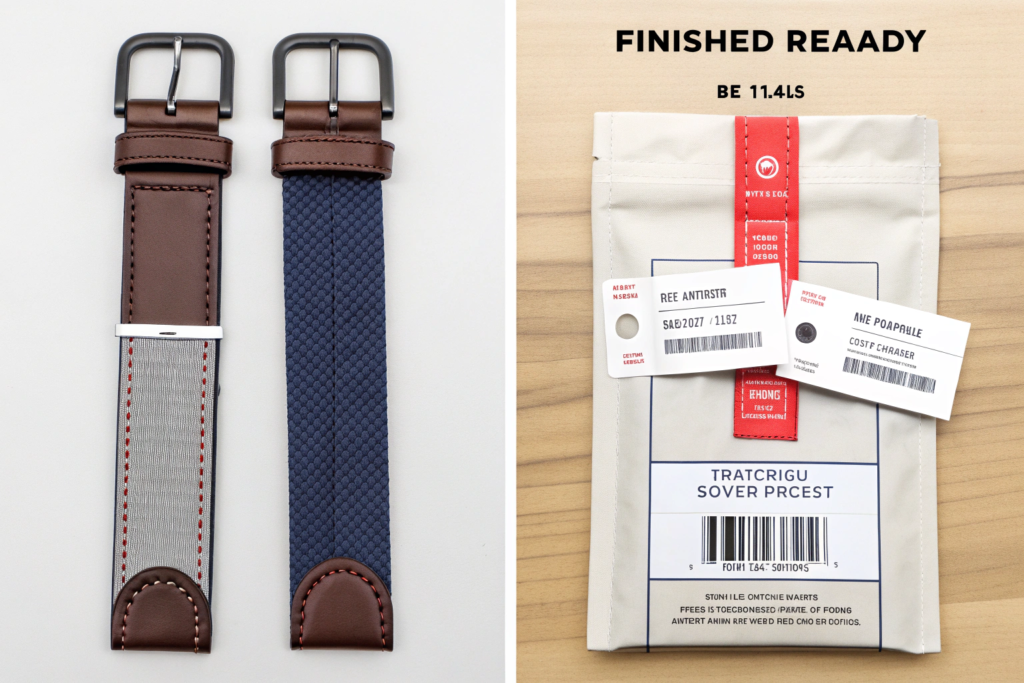
What are the core components of a retail-ready accessory?
Every retail-ready accessory must have these components securely attached or included:
- The Product: Flawless and clean.
- Protective Packaging: Usually a clear polybag for dust protection, or a blister card for hanging.
- Swing Tag/Hang Tag: The "face" of the product at point of sale, with barcode, SKU, price, logo, and marketing copy.
- Security Tag: If required by the retailer (e.g., RFID tags or EAS security tags).
- Care and Content Label: Permanently attached (sewn-in for scarves, glued for hard goods), listing material composition and washing instructions.
- Proper Barcode: A GS1-compliant UPC or EAN barcode that scans correctly.
A failure in any component, like an unscannable barcode, renders the entire unit not ready for sale. Resources like the GS1 US website provide the universal standards for barcoding that all major retailers require.
How do retailer specifications differ, and why is this critical?
Every major retailer (e.g., Walmart, Target, Macy’s, Nordstrom) has its own detailed vendor compliance manual. These manuals, often hundreds of pages, specify everything: polybag thickness (with safety vents for children’s items), tag placement (exact inch from the top), carton labeling (SSCC-18 labels), and packing slips. Non-compliance leads to hefty fines. Before production even begins, you must obtain and follow the specific manual for your retailer. As a manufacturer for global brands, Shanghai Fumao Clothing treats these manuals as the binding blueprint for the final 20% of our work.
How to Implement a Final QC Process for Retail Readiness?
Your standard quality control checks for defects—those meticulous scans for flaws, blemishes, or imperfections that might mar a product’s integrity—are just the first layer of scrutiny. But then comes Retail Readiness QC checks, a distinct and critical phase focused not on fixing flaws, but on ensuring preparedness for the shelves. This is a separate, final inspection stage that happens after the product has been lovingly packaged in crisp, brand-aligned materials and tagged with barcodes that hum with potential, their labels glinting softly under the warehouse lights.
It’s a systematic audit, a thorough walkthrough of every single item in the shipment, where each piece is held to the exact retail specifications: the right color vibrancy, the precise weight, the correct dimensions, the flawless finish, the perfect alignment of logos, and the seamless integration of all components. Here, the air feels charged with anticipation, as if each product is being given one last chance to shine before it meets the eyes of eager consumers. The inspectors move with purpose, their trained eyes scanning for even the subtlest deviation, their hands gently feeling the texture of fabrics, the sturdiness of seams, the smoothness of surfaces. This stage isn’t just about compliance; it’s about ensuring that when the shipment arrives at the store, every item is ready to captivate, to perform, and to embody the brand’s promise of excellence.
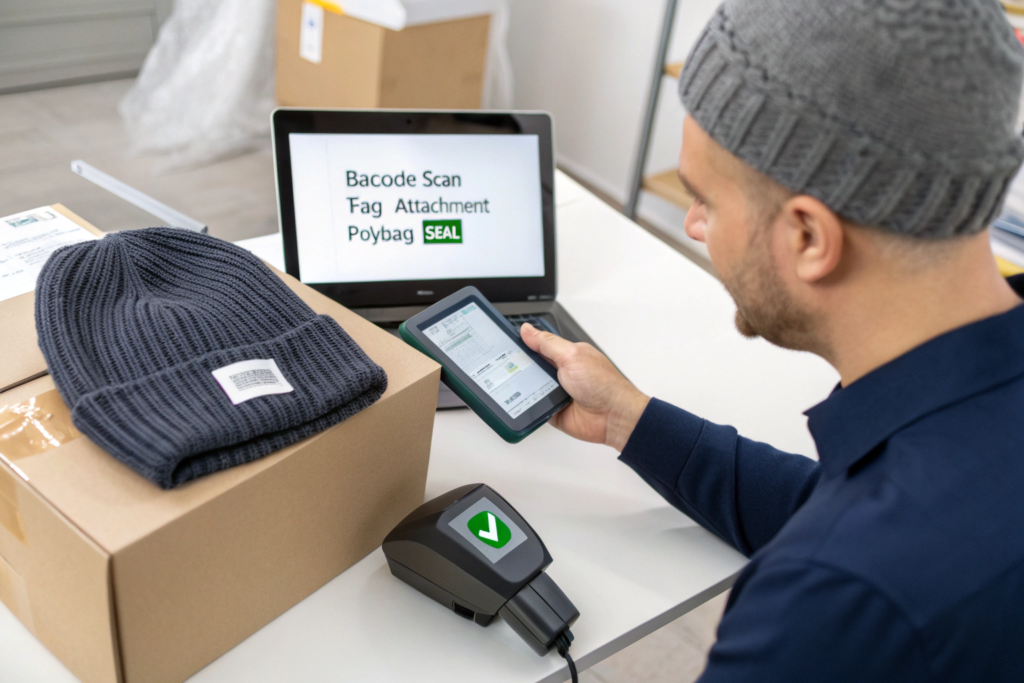
What should a final retail readiness checklist include?
The checklist must be customized for the order but generally covers:
- Product Accuracy: Correct style, color, and size.
- Packaging Integrity: Polybag sealed properly, no tears, correct size.
- Tagging: All required tags present, correctly positioned, with accurate and legible information (price, SKU, fiber content).
- Barcode Function: Every barcode is scanned to verify it links to the correct SKU in the retailer’s system.
- Carton Compliance: Master carton has correct quantity, is labeled with the right ship-to address and carton ID, and includes a packing list.
This process often uses AQL sampling, but for critical elements like barcodes, 100% inspection is common. Industry standards from the American Society for Quality (ASQ) can be adapted to structure this final audit process.
Why is barcode verification a non-negotiable step?
An unscannable barcode halts the entire checkout process, causing frustration, lost sales, and inventory chaos for the retailer. Verification involves more than just printing a code; it requires testing the physical scan-ability with standard retail laser and LED scanners. You must also validate that the encoded GTIN number matches the product data uploaded to the retailer’s Global Data Synchronization Network (GDSN). This step is so critical that many brands use specialized barcode verification services to pre-approve artwork before mass tag production.
What Are the Essential Packaging and Labeling Standards?
Packaging and labeling are the silent salespeople for your accessory, their unassuming presence holding the power to captivate or repel before a single touch. They must protect the product—like a gentle guardian shielding fragile treasures from the rough tumble of transit, ensuring that every curve, texture, and finish arrives unscathed, as if cradled in a soft embrace of durable materials. They must convey information, each label a storyteller whispering details: materials sourced with care, craftsmanship honed over generations, care instructions that promise longevity, and usage tips that spark imagination.
And they must enhance brand perception, wrapping the accessory in an aura that mirrors the essence of the brand—whether it’s the sleek minimalism of a luxury line, the vibrant energy of a youthful trendsetter, or the timeless elegance of a heritage label. All while adhering to strict retail and legal guidelines, those invisible rules that demand clarity, accuracy, and compliance, turning potential hurdles into opportunities to build trust and credibility. In the quiet moments between browsing and purchase, these silent salespeople work tirelessly, their design and messaging weaving a narrative that lingers in the mind, turning a mere object into a cherished possession, and a brand into a story worth believing in.
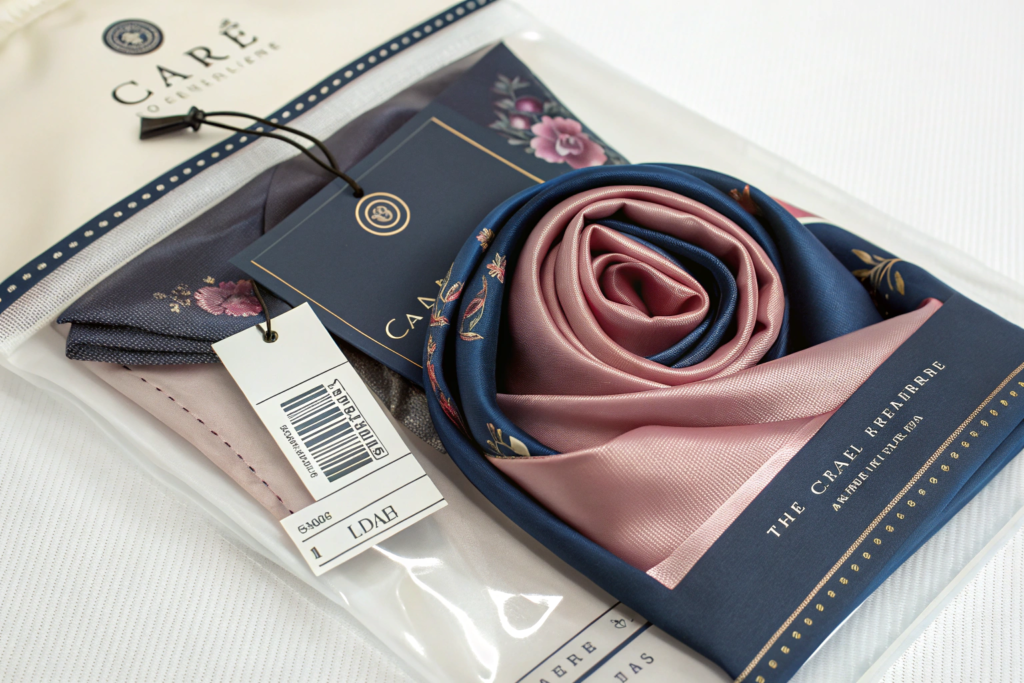
What are the key rules for accessory packaging?
- Polybag Safety: For any plastic packaging that could pose a suffocation risk, warning labels ("Plastic film can be dangerous. To avoid danger of suffocation, keep this bag away from babies and children.") are legally required in the US and EU. The bags themselves often must have perforations for breathability.
- Hang Tag Durability: Tags must be attached with a secure method (plastic fastener, elastic loop) that won’t detach during shipping but can be easily removed at checkout. The paper stock must be durable.
- Carton Labeling: Master cartons require specific shipment labels (like the SSCC-18 barcode label) that allow the retailer’s automated warehouse systems to identify and route them without being opened.
The Consumer Product Safety Commission (CPSC) in the US provides clear guidelines on warning labels for plastic film, which are essential for compliance.
What must be included on the permanent care/content label?
This label is a legal document. It must state:
- Country of Origin: e.g., "Made in China."
- Fiber Content: Percentage breakdown by weight (e.g., "100% Polyester" or "65% Cotton, 35% Polyester").
- Care Instructions: Symbols or words following international care labeling standards (e.g., "Machine Wash Cold, Tumble Dry Low").
Inaccurate fiber content is a serious legal violation that can lead to fines and recalls. The Federal Trade Commission (FTC) enforces the Textile and Wool Acts in the US, which mandate this labeling.
How to Prepare for Logistics and Retailer Receiving?
The final step is ensuring your perfectly prepared cartons are structured for the retailer’s receiving process. This involves how the cartons are packed, palletized, and documented. A failure here can undo all your careful preparation. Imagine the crisp, clean cartons stacked with precision, each one a testament to the hours spent arranging products, sealing edges with reinforced tape that shimmers faintly in the warehouse light, and labeling with barcodes that hum softly under a scanner’s gaze. When it comes to packing, every item must nestle snugly within its cardboard home, protected by layers of bubble wrap that crinkle like whispered promises of safety, or tissue paper that adds a soft, luxurious touch to high-end goods.
The air in the warehouse smells of fresh cardboard and the faint scent of citrus from protective liners, a sensory reminder of care taken at every turn. Then comes palletization—a dance of forklifts and human hands, where each carton is placed with deliberate care, forming neat, stable pyramids that gleam under overhead fluorescent lights. The pallets, sturdy and unyielding, become floating islands of product, ready to be transported.

What are ASN and EDI requirements?
Most large retailers require an Advanced Shipment Notice (ASN) sent via Electronic Data Interchange (EDI). The ASN is a digital packing list sent before the shipment arrives. It tells the retailer exactly what is in each carton (by carton ID/SKU/quantity). Without a correctly transmitted ASN, the retailer’s warehouse cannot efficiently receive your goods, leading to delays and penalties. Your factory or logistics partner must have EDI capability. This is a fundamental part of modern supply chain integration.
How should master cartons be packed for retail efficiency?
Follow the retailer’s pack out instructions precisely. If they request 12 units per carton, packed 6 pieces of Style A and 6 pieces of Style B, you must replicate this exactly. Cartons should be packed to a weight that is safe for store employees to handle (often under 50 lbs). They should be palletized in a way that prevents crushing and allows for easy scanning of labels. The goal is to enable "touchless" or "scan-one-receive-all" processes at the retailer’s distribution center. A partner like Shanghai Fumao Clothing manages this entire process, from carton configuration to ASN transmission, as part of our service.
Conclusion
Ensuring your fashion accessories are retail ready is a detailed, systematic process that extends far beyond manufacturing a quality product. It encompasses rigorous final auditing, strict adherence to packaging and labeling standards, meticulous attention to retailer-specific compliance manuals, and seamless logistics integration. By building these protocols into your production timeline and partnering with a manufacturer who understands them, you transform your supply chain from a source of stress into a competitive advantage.
Retail readiness is the final, critical quality check that protects your brand reputation, ensures swift payment, and builds strong, lasting relationships with retailers.
If you are looking for a manufacturing partner who can guarantee true retail-ready execution for your accessory line, from product to pallet, we have the systems and expertise. Contact our Business Director, Elaine, at elaine@fumaoclothing.com to discuss how we can prepare your products for retail success.