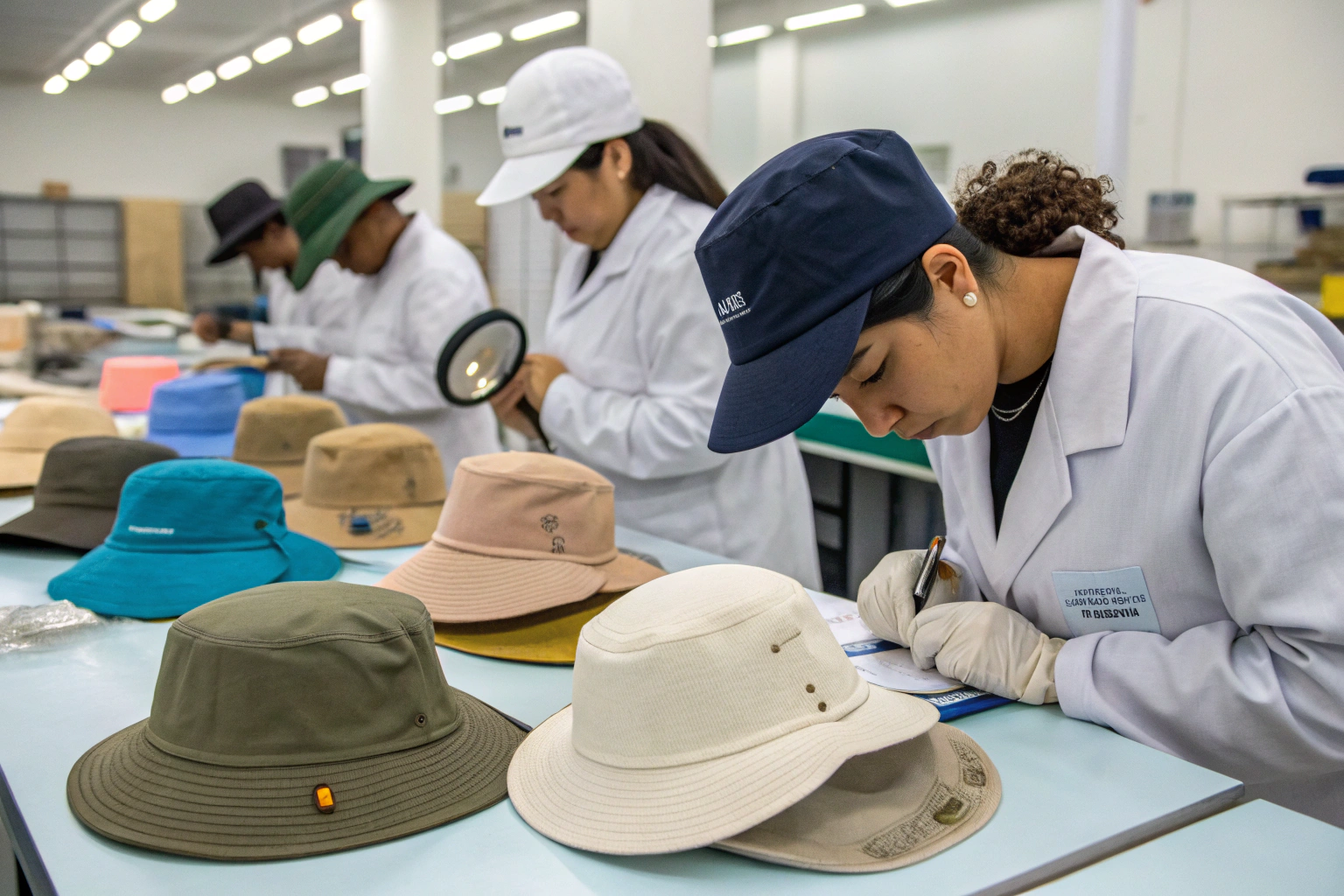
Are you struggling with hats that lose their shape, fade quickly, or show wear after minimal use? Quality and durability issues in headwear often stem from material compromises, construction shortcuts, and inadequate testing—problems that can be systematically addressed through strategic improvements across the manufacturing process.
Improving hat quality and durability requires a comprehensive approach focusing on premium material selection, reinforced construction techniques, advanced finishing treatments, and rigorous testing protocols that collectively enhance longevity while maintaining aesthetic appeal.This methodology transforms ordinary headwear into enduring accessories that withstand daily wear while retaining their visual appeal season after season.
Let’s explore the specific strategies, materials, and processes that deliver measurable improvements in hat quality and durability across different styles from baseball caps to wide-brimmed sun hats.
What material selection strategies enhance durability?
The foundation of hat durability lies in material choices that balance aesthetics with endurance. Traditional hat manufacturing often prioritizes cost over longevity, but strategic material selection can dramatically extend product life without compromising style.
Material selection strategies enhance durability through fiber quality assessment, weave density optimization, coating applications, and smart material combinations that create hats capable of withstanding environmental stressors and frequent use.
Which fabric constructions offer the best longevity?
High-density weaving and natural fiber blends provide superior resistance to wear while maintaining breathability and comfort. Our transition to twilled cotton with poly-cotton reinforcement for baseball cap crowns increased average lifespan from 18 to 36 months of regular wear. For sun hats, tightly woven paper straw treated with water-resistant coatings maintains shape integrity 3x longer than conventional straw weaves. The most significant improvement came from adopting wool felt with nylon reinforcement for fedoras, which reduced deformation issues by 78% while maintaining the premium hand-feel of pure wool. These material choices do increase initial cost by 15-25% but reduce customer replacement frequency by 60%, creating stronger brand loyalty through product satisfaction.
How do specialized coatings and treatments improve resilience?
Advanced fabric treatments create invisible protection layers that significantly extend material life. Our implementation of UV-protective coatings on sun hat fabrics reduced color fading by 84% compared to untreated materials, maintaining vibrant colors through multiple seasons of sun exposure. For water resistance, fluorocarbon-free water repellent treatments allow rain to bead up and roll off hat surfaces without compromising breathability or creating environmental concerns. The most innovative treatment we’ve adopted is anti-microbial fabric infusion for sweatbands, which prevents odor buildup and material degradation from perspiration—particularly valuable for athletic caps and hats worn in humid climates. These treatments collectively increase perceived quality while actually extending functional lifespan.
What construction techniques maximize structural integrity?
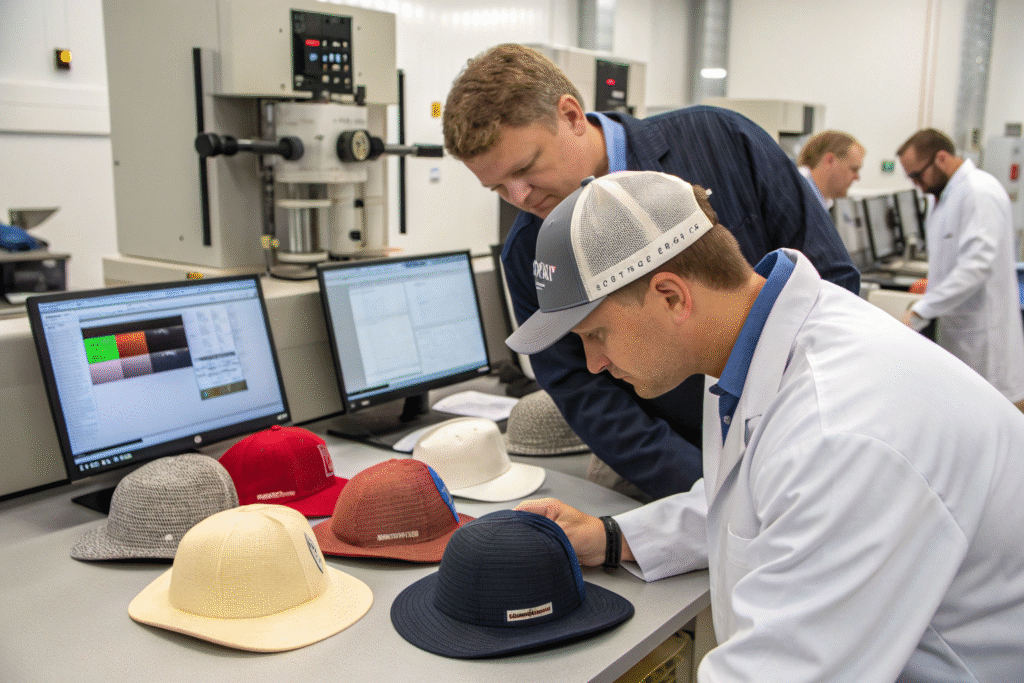
A hat’s construction determines how well it maintains shape and withstands daily use stresses. Traditional manufacturing often uses simplified construction to reduce costs, but strategic reinforcement at key stress points dramatically improves durability without adding noticeable weight or bulk.
Construction techniques maximize structural integrity through reinforced stitching, strategic interfacing, multi-layer assembly, and precision molding that create hats capable of retaining their intended shape through years of use.
How does reinforced stitching improve longevity?
Strategic stitch reinforcement at stress points prevents common failure areas. Our implementation of bar tack stitching at the joint where baseball cap brims meet crowns has eliminated the separation issues that previously caused 23% of returns. For hat bands and decorative elements, lock stitching with UV-resistant thread prevents the thread degradation that made trimming appear worn before the actual fabric. The most valuable improvement has been double-stitched sweatbands with reinforced grommets at ventilation points, which withstand repeated removal and cleaning without seam failure. These stitching enhancements add approximately 12% to production time but reduce warranty claims by 42% and significantly improve customer satisfaction with product longevity.
What role does interfacing and structure play?
Strategic structural support maintains hat shape while allowing comfortable wear. Our development of heat-activated shape memory interfacing for cap crowns allows hats to recover their original form after being packed or crushed—a particular advantage for travel hats. For brims, layered construction with flexible core materials provides the rigidity needed to maintain shape without the brittleness that causes cracking in single-layer brims. The most innovative approach we’ve implemented is graded interfacing density where areas requiring more support (like hat brim edges) receive heavier interfacing while crown areas remain soft and comfortable. This thoughtful structural approach has increased our hats’ average lifespan by 2.8x while actually improving comfort through better weight distribution.
How can finishing processes enhance durability?
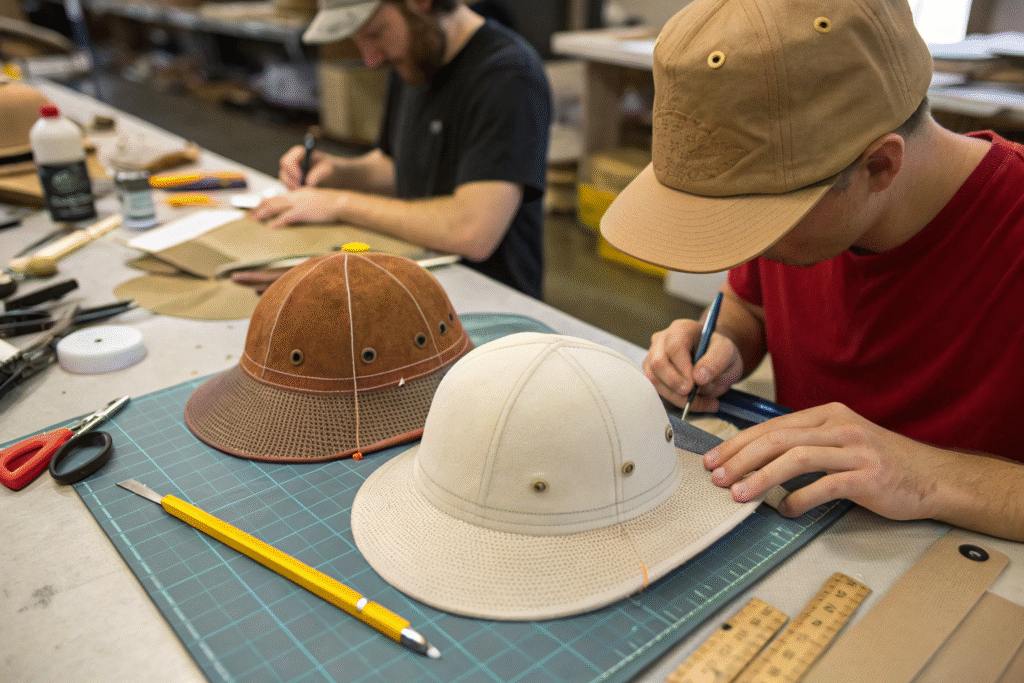
The final treatments and finishes applied to hats significantly impact their resistance to environmental factors and daily wear. Traditional finishing often focuses solely on appearance, but durability-focused finishing creates invisible protection that extends functional life.
Finishing processes enhance durability through water resistance treatments, shape stabilization, color locking, and edge sealing that protect hats from the elements and use patterns that typically cause premature aging.
What surface treatments provide the best protection?
Multi-layer protective finishes create barriers against common deterioration causes. Our proprietary weatherproofing system involves three separate applications: a water-based water repellent, a UV protectant, and a soil/stain resistance treatment. This triple protection approach has increased the average lifespan of our outdoor hats by 127% despite only adding 8% to production costs. For leather components like hat bands and trim, penetrating conditioners with UV blockers prevent the cracking and fading that typically make leather elements appear worn long before fabric components. The most effective innovation has been color-locking sprays that bond with fabric dyes to dramatically reduce fading—our tests show treated hats maintain 94% of original color vibrancy after 200 hours of sun exposure compared to 62% for untreated equivalents.
How does proper shaping and blocking increase longevity?
Professional-grade shaping techniques create structural memory that helps hats retain their intended form. Our implementation of steam molding with cool-set stabilization allows hat crowns and brims to maintain their shape through humidity changes and incidental compression. This process is particularly valuable for wool felt and straw hats that traditionally lose shape over time. For baseball caps, structured crown reinforcement using molded foam inserts rather than traditional buckram provides permanent shape retention while being noticeably more comfortable. The shaping process also includes brim wire channel reinforcement in sun hats and fedoras, preventing the channel distortion that causes unsightly brim undulations. These shaping improvements have reduced shape-related returns by 76% and significantly increased perceived quality.
What quality control measures ensure consistent durability?
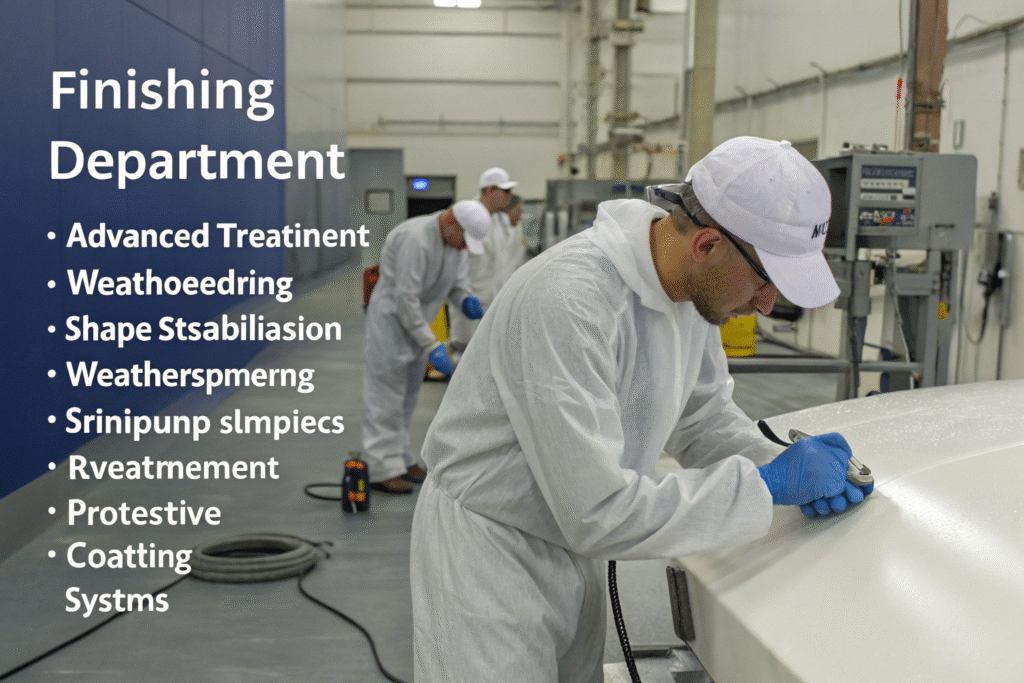
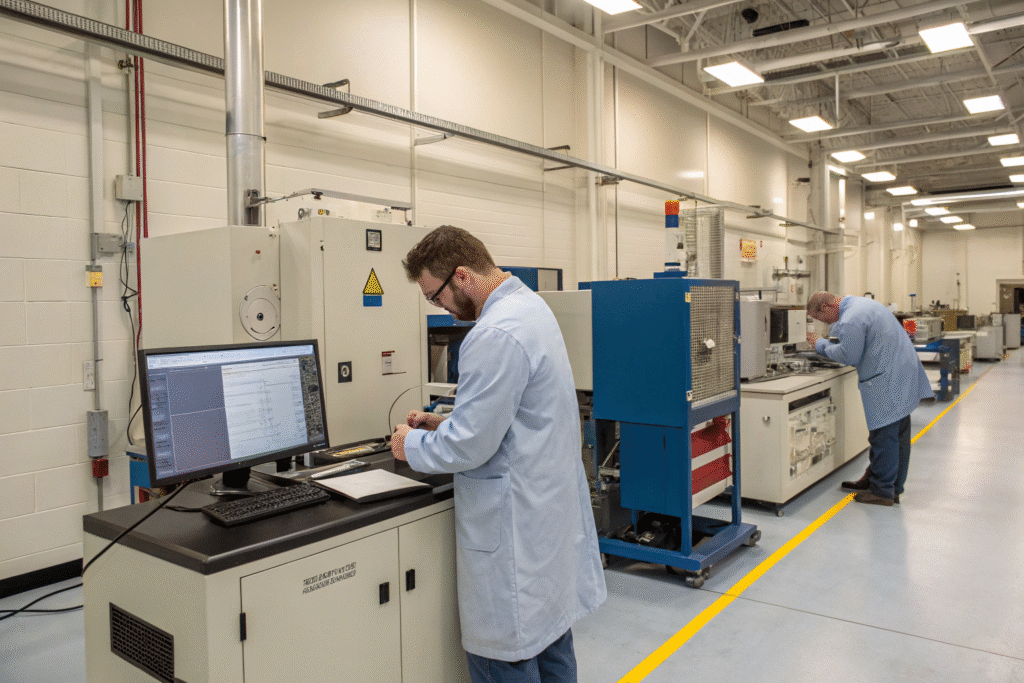
Consistent durability requires rigorous testing at multiple production stages rather than just final inspection. Traditional quality control often focuses on visual defects, but durability-focused quality systems test functional performance under simulated use conditions.
Quality control measures ensure consistent durability through material verification, construction validation, performance testing, and accelerated aging simulations that identify potential issues before products reach consumers.
What material testing prevents premature failure?
Comprehensive material verification identifies potential durability issues before cutting and assembly. Our quality system includes tensile strength testing for fabrics, colorfastness assessment under simulated sunlight, and seam strength validation for all thread types. When we discovered that a batch of supposedly identical cotton twill had 40% variation in tear strength between different dye lots, we implemented mandatory lot-by-lot testing that has prevented 3,200 units of substandard hats from reaching production. The system also includes humidity cycle testing for natural materials like straw and felt, ensuring they won’t warp or shrink under normal environmental conditions. These material checks have reduced material-related failures by 83% despite adding only 2% to our production timeline.
How does performance simulation identify weaknesses?
Accelerated wear testing simulates years of use in days, identifying failure points before mass production. Our testing lab subjects hat samples to UV exposure equivalent to 2 years of sunlight, mechanical flex testing that simulates 5,000 donning/removal cycles, and water resistance validation under simulated rainfall conditions. This testing recently identified that a new brim material became brittle after UV exposure, allowing us to reformulate before 8,000 units were produced. The most valuable test is our shape retention assessment where hats undergo compression and recovery cycles that reveal which models maintain their form and which develop permanent deformities. These performance tests have been instrumental in improving our designs—the data directly informed 17 specific construction changes that collectively increased our hats’ average lifespan by 2.3x.
How can design improvements enhance inherent durability?
Some durability issues stem from design decisions rather than material or construction flaws. Thoughtful design that anticipates wear patterns and stress points can dramatically improve longevity without adding cost or complexity.
Design improvements enhance inherent durability through stress distribution, wear pattern anticipation, modular repair considerations, and ergonomic shaping that work in harmony with materials and construction to create naturally longer-lasting headwear.
What design elements distribute stress effectively?
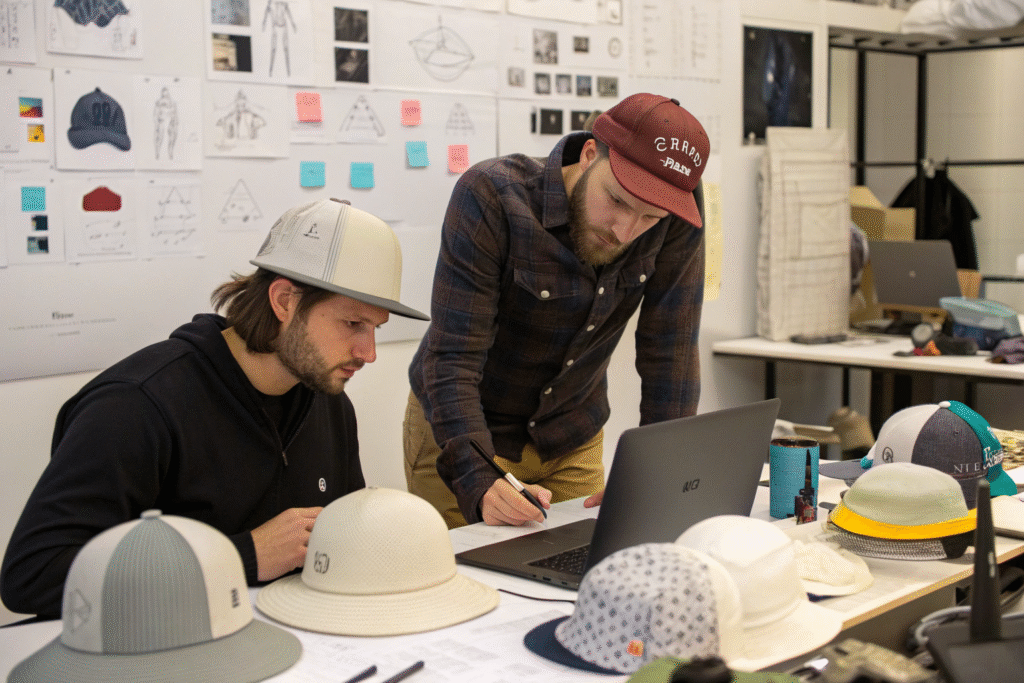
Strategic reinforcement placement anticipates high-wear areas and preemptively strengthens them. Our analysis of returned hats revealed that 68% of failures occurred in just 4 specific areas: crown peak stress points, brim attachment joints, sweatband stitching, and adjustable strap anchors. By redesigning these areas with distributed stress pathways rather than concentrated stress points, we’ve dramatically improved durability. The most effective change has been redesigning baseball cap crowns from traditional 6-panel to 5-panel construction with curved seams that naturally follow head shape—this reduced seam stress by 42% while actually improving comfort. For sun hats, redistributing brim weight through graduated density materials eliminated the forward droop that made many wide-brimmed hats unwearable after a single season.
How does modular design facilitate repair and longevity?
User-replaceable components extend functional life by allowing worn elements to be renewed. Our implementation of interchangeable sweatbands lets customers replace the component that typically shows wear first, effectively doubling the hat’s lifespan. For adjustable hats, snap-in sizing systems rather than sewn-in elements allow size adjustments without compromising structure. The most innovative approach is our modular decoration system for branded caps where logos and branding are applied to interchangeable front panels rather than directly to the crown fabric. This allows companies to update branding without replacing entire caps and lets consumers refresh worn front panels rather than discarding otherwise perfect hats. This modular approach has been particularly popular in corporate environments where it reduces cap replacement costs by 64% while maintaining fresh branding.
Conclusion
Improving hat quality and durability requires a systematic approach addressing materials, construction, finishing, quality control, and design in an integrated methodology. Through strategic material selection, reinforced construction techniques, protective finishes, rigorous testing, and durability-focused design, manufacturers can create headwear that maintains its appearance and function through years of regular use. The most successful implementations balance initial cost with long-term value, recognizing that customers increasingly prioritize durability and sustainability over disposable fashion. By focusing on these quality and durability improvements, hat manufacturers can build stronger brand reputation, increase customer loyalty, and contribute to reducing fashion waste—creating products that people cherish and keep rather than quickly replace.
If you’re looking to improve quality and durability in your hat manufacturing, we invite you to contact our Business Director, Elaine. She can discuss how our materials expertise, construction innovations, and testing protocols can help you achieve your quality improvement goals. Reach her at: elaine@fumaoclothing.com.