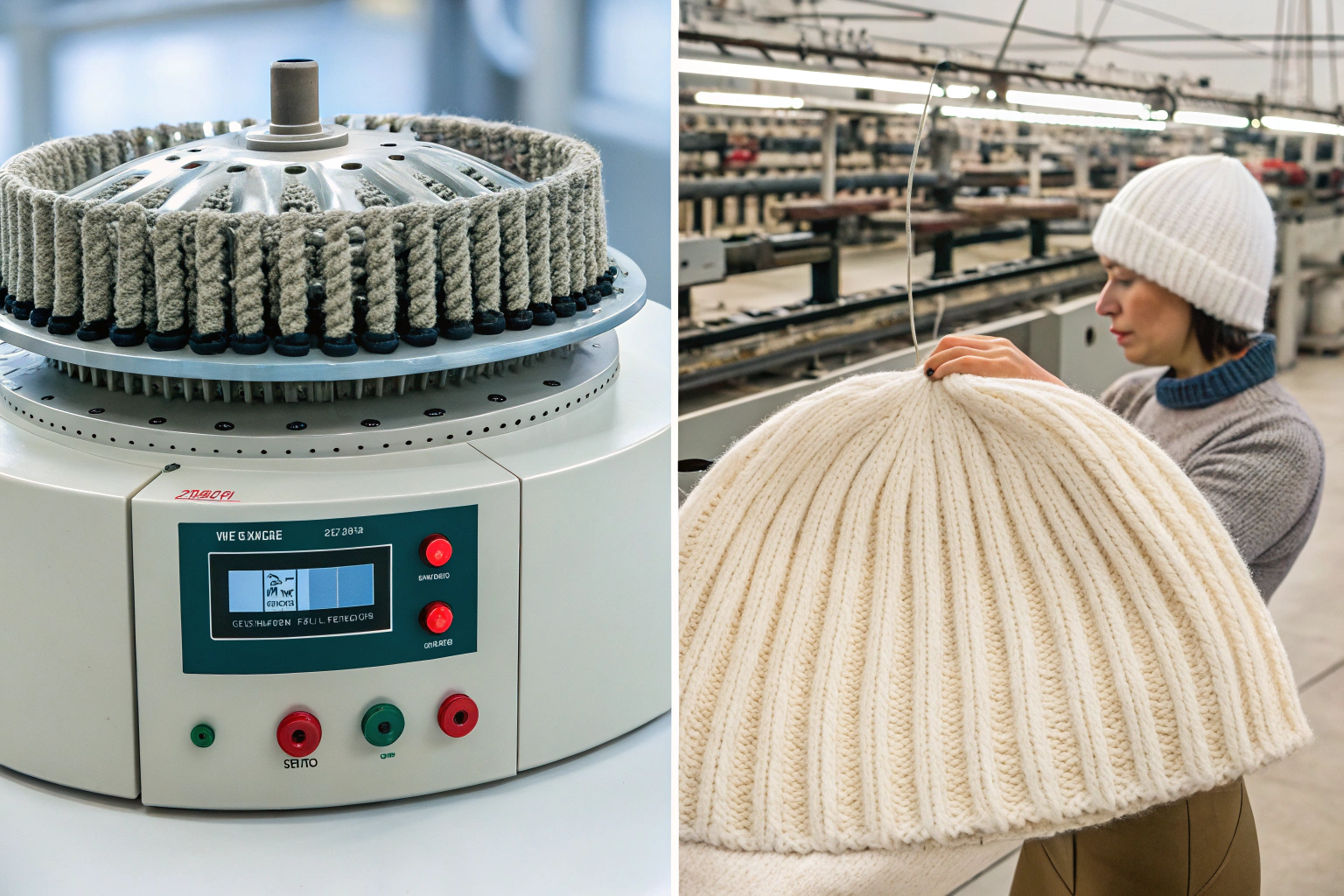
A buyer from a Canadian winter apparel brand once sat in our sample room, comparing two beanies that looked almost identical at first glance. One was a classic rib knit with deep, vertical ridges. The other was a smooth plain knit with a clean, flat surface. She wanted 8,000 pieces of each for a holiday promotion, and she expected them to ship on the same day. When I explained that the rib knit order would take nearly twice as long to produce, she was genuinely confused. The beanies were the same size, the same yarn, and the same color. Why would the production speed be so different? That question sits at the heart of understanding how knitted accessories are actually manufactured.
Chinese knit hat factories have different production speeds for rib versus plain knit because these two fabric structures require fundamentally different machine settings, yarn feeding speeds, and stitch formation mechanics. A plain knit stitch is formed with a single set of needles on one cylinder, creating a simple loop structure that can be produced at high speed with low tension. A rib knit stitch requires two sets of needles operating in an alternating sequence on both the cylinder and the dial, creating a more complex interlocking structure that demands slower machine rotation, higher yarn tension, and more frequent quality checks.
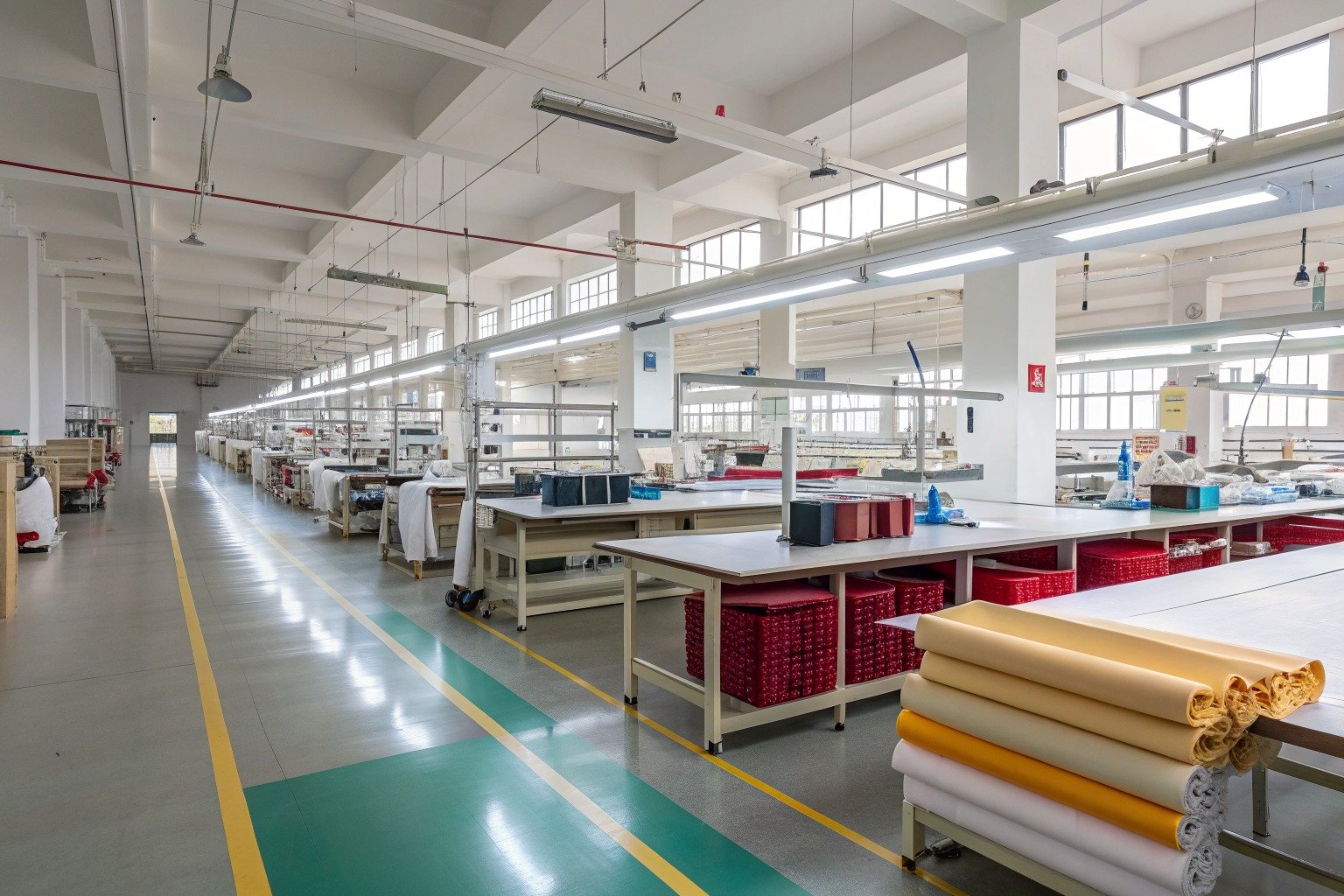
In our Zhejiang factory, we operate a fleet of computerized flat knitting machines and circular knitting machines that produce both rib and plain knit hats for brands across North America and Europe. The production scheduling differences between these two knit structures are not a matter of factory preference. They are a matter of physics, machine mechanics, and quality control realities. I want to walk you through the specific technical reasons for the speed difference, the quality implications, and how this knowledge helps you plan realistic production timelines for your knit accessory orders.
What Are the Mechanical Differences Between Rib and Plain Knit Production?
The speed difference between rib and plain knit production begins with the knitting machine itself. A plain knit fabric, technically called single jersey, is produced on a single-cylinder circular knitting machine. The cylinder contains one set of latch needles arranged around its circumference. As the cylinder rotates, each needle rises to receive the yarn, descends to form a loop, and the process repeats continuously. The yarn path is simple, the needle movement is consistent, and the machine can rotate at high revolutions per minute without mechanical stress.
A rib knit fabric requires a fundamentally different machine configuration. The knitting machine has both a cylinder, holding one set of needles, and a dial, holding a second set of needles arranged at a right angle to the cylinder needles. The two sets of needles operate in an alternating sequence, with the cylinder needle forming a loop while the dial needle simultaneously forms a loop in the opposite direction. This interlocking action creates the characteristic vertical ribs of alternating knit and purl stitches. The mechanical complexity of coordinating two needle beds slows the machine’s rotation speed, and the yarn must travel a more complex path, which requires higher and more precisely controlled tension.
Why does the dial-and-cylinder needle arrangement slow down rib knitting?
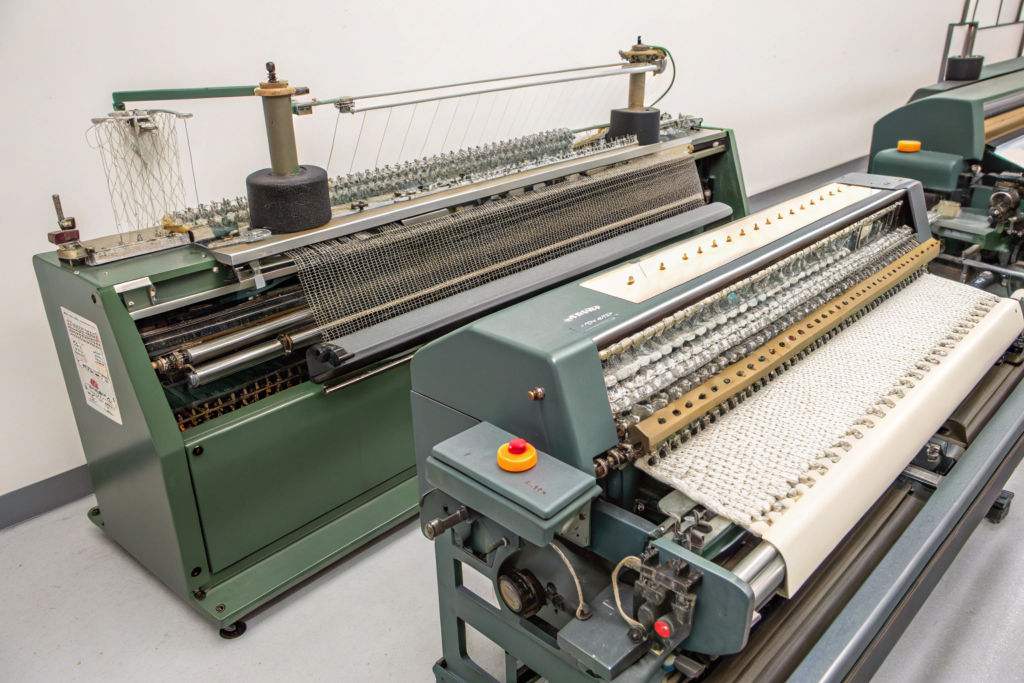
The dial-and-cylinder arrangement is the defining mechanical feature of a rib knitting machine, and it is the primary reason for the slower production speed. In a single-cylinder plain knit machine, the needles move in one plane, up and down along the cylinder wall. The cam system that controls needle movement is straightforward, and the machine can operate at high speeds. In a rib machine, the dial needles move horizontally while the cylinder needles move vertically. The timing between these two movements must be perfectly synchronized. If the cylinder needle descends before the dial needle has completed its loop formation, the stitch is dropped, creating a hole in the fabric. This synchronization requirement imposes a physical speed limit on the machine. The cam tracks that control the dial needles are more complex, and the mechanical forces involved in accelerating and decelerating the dial needles limit how fast the machine can rotate without causing needle damage or stitch defects. This rib knitting machine mechanics resource explains the technical specifications.
How does the yarn feed rate differ between plain and rib constructions?
Yarn feed rate, the speed at which yarn is drawn from the cone into the knitting zone, is directly correlated with machine speed and stitch complexity. A plain knit machine feeds yarn at a high, continuous rate because the stitch formation is uniform and the yarn path is a simple downward trajectory. A rib knit machine feeds yarn at a slower rate because the yarn must be precisely positioned to be caught by both the cylinder needle and the dial needle in sequence. If the yarn feed is too fast, the yarn tension fluctuates, and the dial needle may fail to catch the yarn, creating a missed stitch. The yarn tension on a rib machine is also set higher than on a plain machine because the yarn must be pulled firmly into the interlocking structure to create a clean, defined rib. This higher tension requires a slower, more controlled feed rate to prevent yarn breakage. The yarn tension in knitting is a critical variable that directly affects both speed and quality.
How Does Stitch Complexity Affect Production Speed and Quality Control?
Stitch complexity is the multiplier that converts machine speed into real-world production output. A plain knit stitch is a single loop repeated continuously. The fabric structure is simple, uniform, and predictable. When a plain knit hat comes off the machine, the quality inspector checks for basic parameters: stitch density, yarn breakage, and overall visual uniformity. These checks are quick because the fabric is consistent and defects are easy to spot.
A rib knit stitch is a repeating pattern of knit and purl columns, typically expressed as a ratio like 1×1 or 2×2. This alternating structure creates the elasticity and texture that consumers value in a rib beanie, but it also creates multiple potential failure points. The transition between a knit column and a purl column is a stress point where yarn tension must change precisely. If the tension change is too abrupt, the fabric develops a hole. If it is too gradual, the rib definition is weak, and the hat looks flat and cheap. Quality control for rib knit is inherently more time-consuming because each transition must be verified.
What common rib defects require slower machine speeds to prevent?
Rib knit fabric is susceptible to specific defects that do not occur in plain knit, and preventing these defects requires slower, more deliberate machine operation. The most common rib defect is a dropped stitch at the dial needle. When the dial needle fails to catch the yarn, a small hole appears in the fabric, often in a repeating pattern that ruins the entire hat panel. Barre, a horizontal stripe defect, occurs when yarn tension varies between adjacent ribs, creating a visible line of uneven texture across the hat. Needle lines, vertical stripes of distorted stitches, happen when a single needle is slightly bent or misaligned, and the defect repeats with every revolution of the machine. Each of these defects is more likely at higher speeds because the mechanical tolerances are tighter and the yarn has less time to settle into the correct position. Slowing the machine down is not a sign of poor capability. It is a deliberate quality decision. This common knitting defects guide explains each defect type and its prevention.
Why does rib knit require more frequent in-line quality inspections?
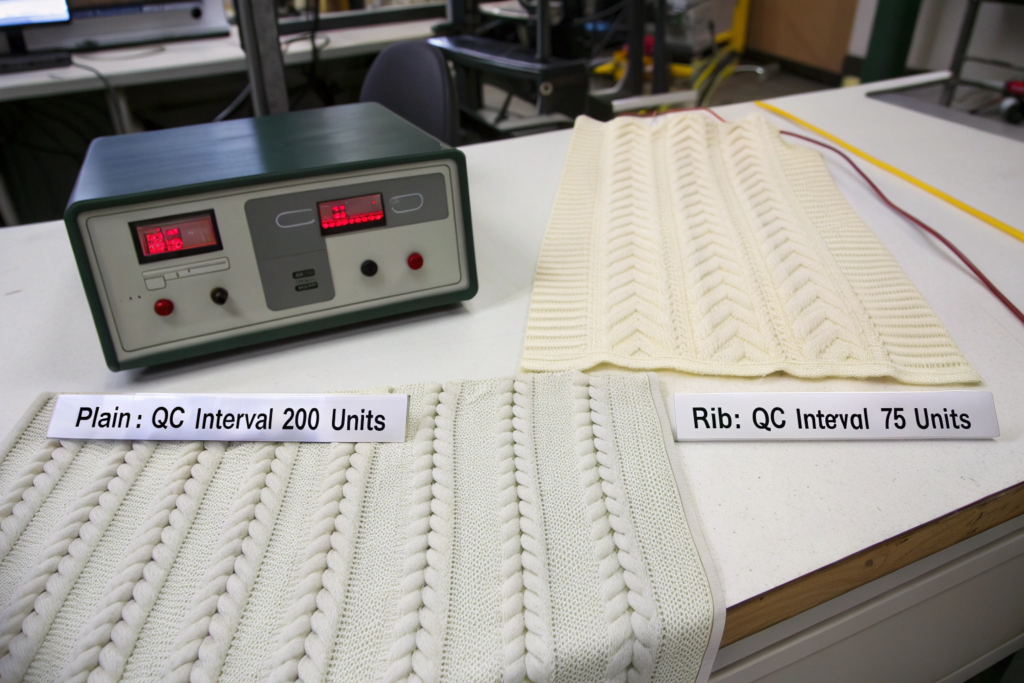
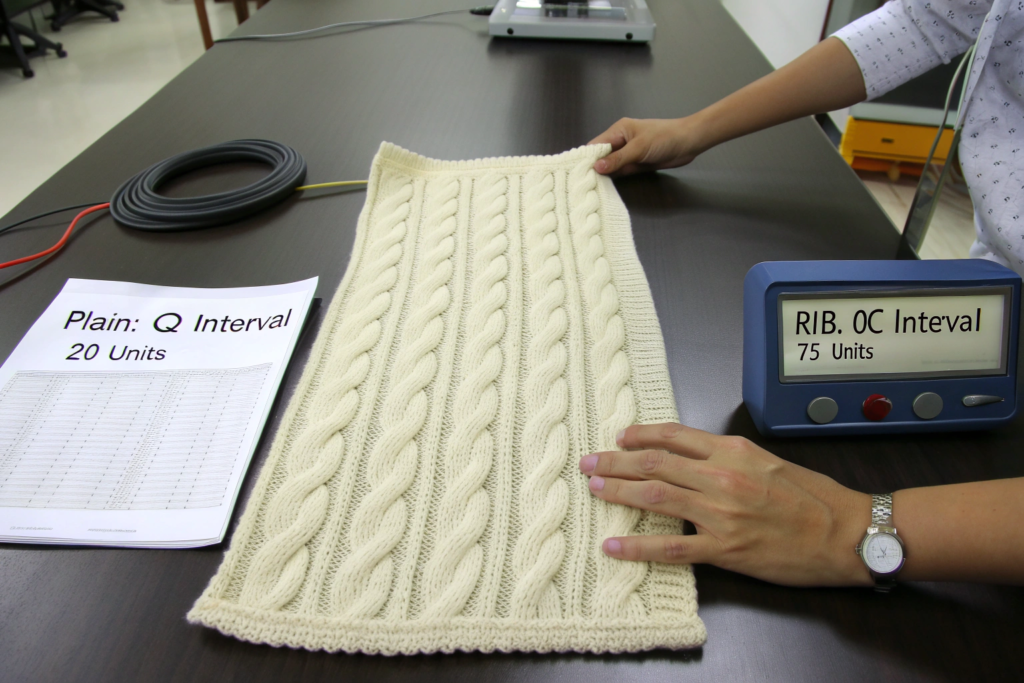
The higher defect susceptibility of rib knit necessitates a tighter inspection interval. On a plain knit production run, our quality control team samples hats at a standard interval, perhaps one hat every thirty minutes or every 200 units, because the defect rate is low and consistent. On a rib knit run, the inspection interval is shortened to perhaps one hat every 75 units. The inspector checks the rib definition with a stitch magnifier, verifies the tension consistency by stretching the fabric, and examines the transition points between ribs for any sign of dropped stitches. This more frequent inspection consumes inspector time that could otherwise be spent monitoring additional machines, and it means that any defect discovered triggers a shorter backtrack to identify the affected units. The inspection overhead is a direct addition to the effective production time per unit. This in-line quality control for knitting practice is standard in factories that prioritize low defect rates.
How Do Yarn Selection and Tension Settings Differ Between the Two Knit Types?
Yarn is not a neutral input. The choice of yarn, its thickness, twist, ply count, and fiber content, interacts directly with the knitting speed and the stitch quality. A yarn that runs beautifully at high speed on a plain knit machine may snap repeatedly on a rib machine if the tension settings are not precisely calibrated. The relationship between yarn, tension, and machine speed is a triangle where adjusting one corner affects the other two.
Rib knit generally demands a higher-quality yarn with a more consistent diameter and a higher twist count than plain knit. The yarn must withstand higher tension without breaking, and it must maintain its structural integrity through the more complex yarn path of the rib machine. The tension settings on the yarn feeders must be calibrated individually for each yarn type and each rib pattern, a setup process that consumes time before production begins and may require readjustment during the run if ambient temperature or humidity changes.
Why does rib construction often require a different yarn ply specification?
Ply count, the number of individual yarn strands twisted together to form the knitting yarn, affects both strength and elasticity. A plain knit hat can often be produced with a single-ply or two-ply yarn because the stitch structure is simple, and the forces on the yarn during knitting are moderate. A rib knit hat, particularly a 2×2 rib with deep, defined ridges, benefits from a three-ply or four-ply yarn. The multiple plies provide the strength to withstand the higher knitting tension and the alternating stress of the dial-and-cylinder needle sequence. The plied structure also contributes to the yarn’s elasticity, which is essential for the rib fabric’s signature stretch and recovery. A buyer who specifies the same single-ply yarn for both a plain and a rib beanie may experience production delays and quality issues on the rib order because the yarn is simply not robust enough for the rib knitting process. This yarn ply and twist fundamentals resource provides the technical background.
How do ambient factory conditions affect rib knitting more than plain knitting?
Rib knitting is more sensitive to ambient temperature and humidity than plain knitting. The yarn in a rib machine travels a more complex path with more contact points, creating more friction and generating more heat. If the factory air is too dry, static electricity builds up on the yarn, causing it to cling to machine surfaces and resist smooth feeding. If the air is too humid, the yarn absorbs moisture, swells slightly, and changes its friction characteristics against the machine guides. Both conditions cause tension fluctuations that produce visible defects in rib fabric. Plain knit, with its simpler yarn path, is more forgiving of these environmental variations. Our factory maintains climate control in the knitting department specifically to stabilize the environment for rib production. The temperature and humidity are monitored continuously, and the knitting schedule may be adjusted if conditions drift outside the optimal range. This textile manufacturing environment control is a hidden factor that affects production speed and quality.
How Should a Buyer Plan a Realistic Timeline for a Mixed Rib and Plain Knit Order?
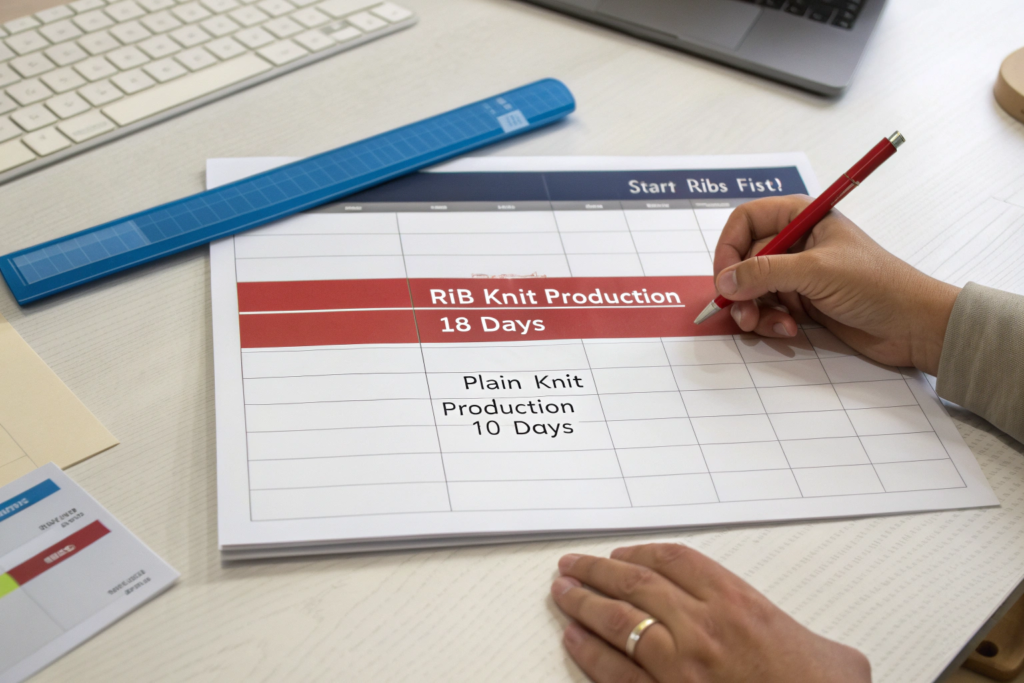
The production speed difference between rib and plain knit has a direct, practical consequence for your order timeline. A mixed order of 5,000 rib beanies and 5,000 plain beanies cannot be treated as a single 10,000-unit production run with a single completion date. The rib portion will take longer, and the production schedule must reflect this reality. If the timeline is not built with this difference in mind, the plain hats will be finished and sitting in cartons while the rib hats are still running on the machines, and the shipment will be delayed waiting for the slower production to complete.
A realistic timeline for a mixed knit order starts the rib production earlier, sometimes significantly earlier, and may allocate additional machines to the rib portion to compress the schedule. The buyer who understands this dynamic can communicate accurate delivery expectations to their retail partners and avoid the last-minute scramble that occurs when the rib hats are not ready in time.
Why should rib production be started days earlier than plain in a mixed order?
The simple math of production speed dictates the scheduling. If a plain knit machine produces a beanie every few minutes, and a rib knit machine produces a beanie at a slower rate, the total production time for the rib portion will be longer for the same quantity. To have both portions finish at approximately the same time, the rib production must begin earlier. In practice, we recommend starting rib production several days, and for very large orders, a week or more, before the plain knit production. This staggered start allows both knit types to complete within the same shipping window. If the buyer does not communicate this scheduling reality to their own planning team, the expectation may be set that all hats will be ready simultaneously, leading to frustration when the plain hats are packed and waiting. This production scheduling for mixed orders is a standard practice in professional knitwear manufacturing.
What machine allocation strategies can balance a mixed order timeline?
When a mixed order has a tight delivery deadline, machine allocation becomes the primary tool for compressing the rib production schedule. A factory with a fleet of machines can allocate multiple rib machines to the order simultaneously, splitting the rib quantity across several machines to reduce the total calendar time. However, this strategy has limits and costs. Each additional machine assigned to the rib order is a machine not available for other client orders. The setup time for each machine, calibrating the tension, loading the specific yarn, and running a quality sample, must be repeated for each machine. The cost of this parallel production is higher in terms of machine utilization and setup labor. A buyer who requests a compressed timeline should expect to discuss an expediting surcharge that reflects the factory’s cost of dedicating multiple machines to a single order. This machine allocation in knitting production decision is a collaborative discussion between the buyer and the factory.
Conclusion
The production speed difference between rib and plain knit is not a factory choice. It is a consequence of machine mechanics, stitch physics, and quality realities. The dial-and-cylinder needle arrangement of a rib machine physically limits the rotation speed. The alternating knit-purl stitch structure is inherently more prone to defects and requires slower operation and more frequent inspection. The yarn must be stronger, the tension must be higher, and the environment must be more tightly controlled. These factors combine to make rib knitting a slower, more deliberate process than plain knitting.
A buyer who understands these differences can plan realistic production timelines, communicate accurate delivery expectations, and make informed decisions about yarn specifications and order quantities. The knowledge also enables a more productive conversation with the factory about scheduling, machine allocation, and the cost implications of compressed timelines.
If you are planning a knit hat order that includes both rib and plain styles, we can provide a detailed production schedule that reflects the actual machine speeds and setup times for each knit type. We will explain exactly when each portion of the order will be produced and what factors could affect the timeline. Our Business Director Elaine manages our knitwear accessory programs and can answer your technical and scheduling questions. Contact her directly at elaine@fumaoclothing.com. Understanding your product’s manufacturing reality is the first step to reliable delivery.