A few years ago, I walked into a client’s back stockroom in humid Singapore and found a disaster. A thousand premium leather belts, worth a significant wholesale value, had been rolled tightly and stuffed into a plastic bin. The bin was sitting against an exterior wall. When we unrolled the belts, the surface was covered in a fine white bloom of mold, and the leather at the tightest folds had cracked like dry earth. The entire inventory was a write-off. The client had stored them like they were rubber bands. I realized then that most brand owners know how to design a belt, but few know how to protect their investment while it sits in a warehouse.
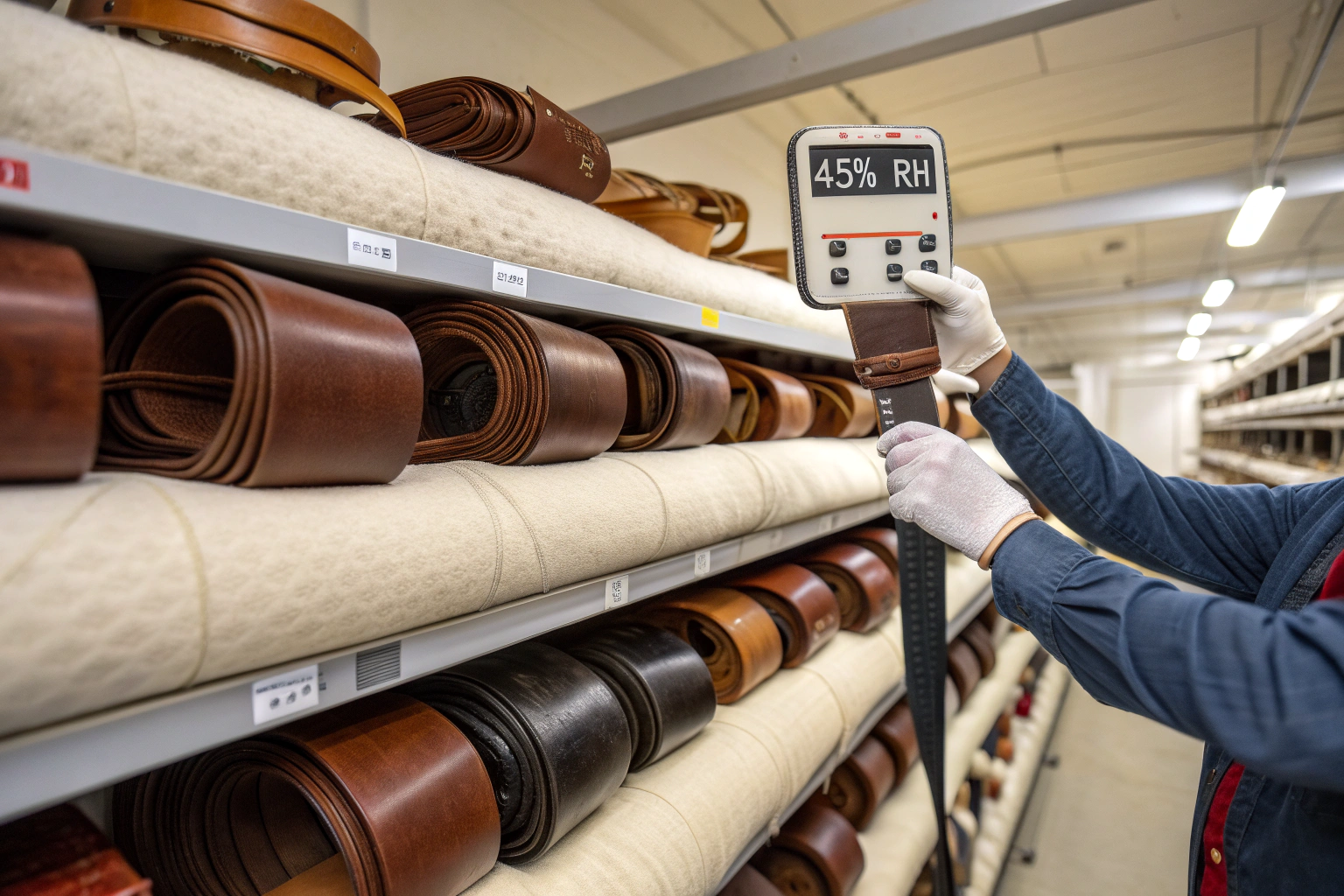
The best way to store bulk belts to avoid leather cracking is to control three environmental factors—temperature, humidity, and light—and one mechanical factor: the storage geometry. Leather is a preserved natural skin. It requires a stable, cool, and moderately humid environment to maintain its structural integrity. Specifically, the temperature should be kept between 15 and 22 degrees Celsius, the relative humidity between 40% and 55%, and the belts should be stored flat or loosely coiled with the buckle wrapped in acid-free tissue to prevent the metal from indenting the leather under pressure.
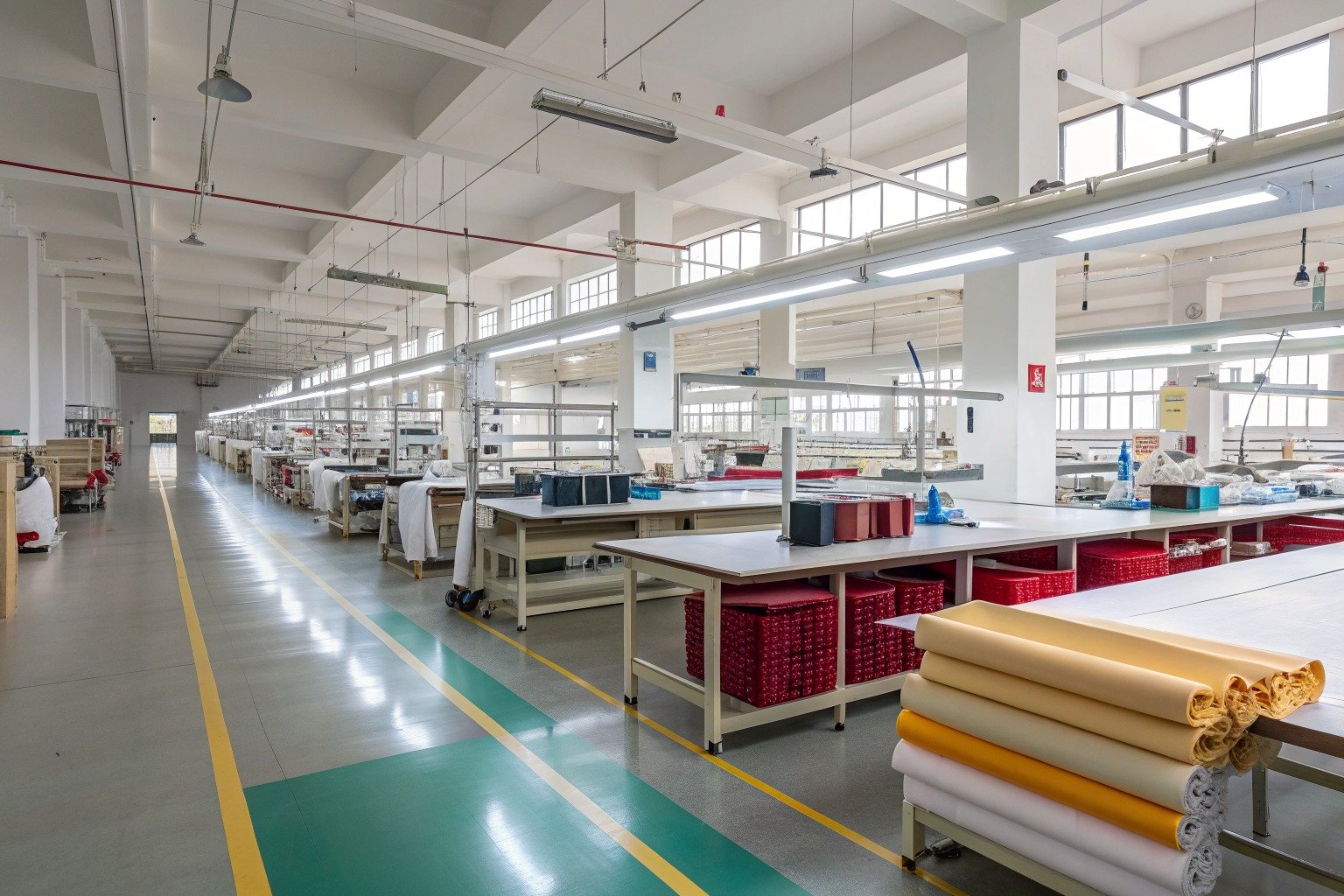
At our factory in Zhejiang, we are a professional manufacturer and exporter of accessories. We maintain a climate-controlled finished goods warehouse specifically for leather products. I want to explain the exact conditions leather requires, the physical storage methods that prevent cracking at the fold, and the simple pre-storage preparation steps that protect the belts for months or even years.
What Environmental Conditions Cause Leather to Crack in Storage?
Leather is a hygroscopic material. It contains water, oils, and collagen fibers that must maintain a specific balance to remain flexible and strong. When the environment around the leather pulls that moisture out, the fibers shrink, become brittle, and eventually crack. The three environmental enemies of stored leather are low humidity, high temperature, and ultraviolet light.
Low relative humidity, below 40%, is the primary cause of leather cracking in storage. The collagen fibers in leather are lubricated by natural oils and bound water molecules. When the surrounding air is dry, the water evaporates from the leather. The fibers lose their lubrication, shrink, and become stiff. If the belt is flexed or unrolled while in this brittle state, the fibers snap, creating a surface crack. High temperature accelerates this drying process by increasing the rate of water evaporation. Ultraviolet light from direct sunlight or fluorescent lighting breaks down the chemical bonds in the collagen and the dye, causing fading, weakening, and a characteristic "sunburn" brittleness on the exposed surface.
Why is a relative humidity of 40% to 55% the safe zone for leather storage?
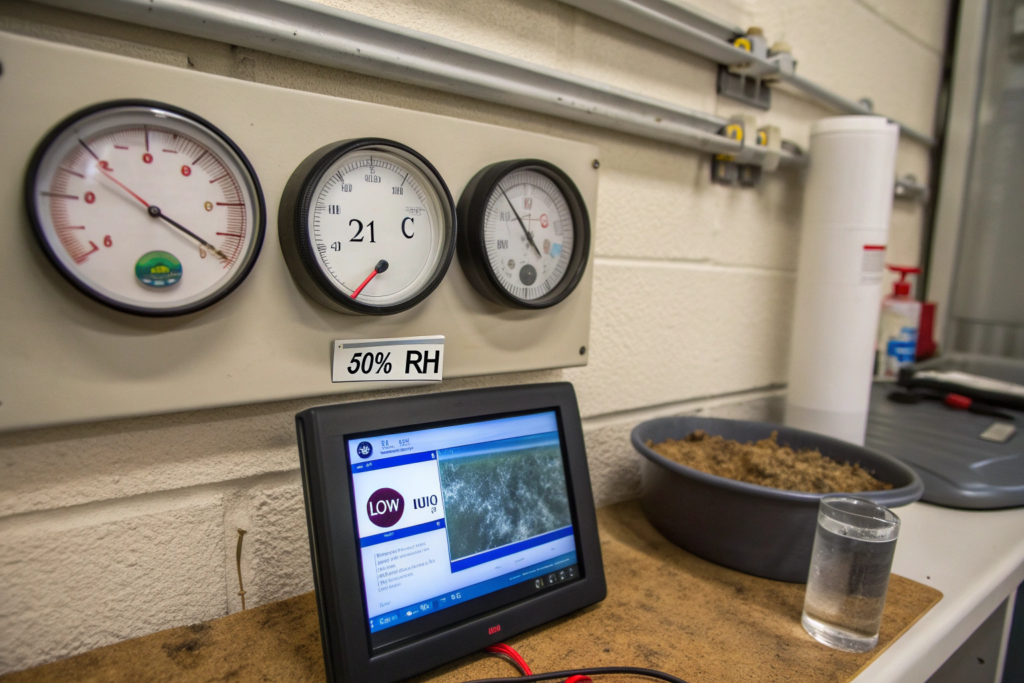
Below 40% relative humidity, the bound water in the collagen fibers begins to evaporate. The leather dries out, shrinks, and embrittles. Above 55% relative humidity, the environment becomes favorable for mold and mildew growth, especially on vegetable-tanned leathers that lack the anti-fungal chromium content of chrome-tanned leathers. The 40% to 55% range is the leather conservation "safe zone": moist enough to keep the fibers supple, dry enough to prevent mold. A simple digital hygrometer monitors this. If the humidity drops below 40%, a room humidifier should be used. If it rises above 55%, a dehumidifier or increased air conditioning is required. This museum conservation standards for leather resource provides the scientific basis.
How does direct sunlight or fluorescent light damage stored belts?
Ultraviolet radiation is photochemically destructive to leather. It breaks the peptide bonds in the collagen protein, causing the leather to weaken and become brittle. It also fades the dyes and accelerates the oxidation of the surface oils. A leather belt stored on a shelf near a window that receives direct afternoon sun will show noticeable fading and dryness on the exposed side within months. Even strong fluorescent lighting can cause cumulative damage over long storage periods. Belts should be stored in a dark or dimly lit environment, or covered with a breathable, light-blocking fabric such as unbleached cotton canvas.
What Is the Correct Physical Storage Geometry for Bulk Belts?
How a belt is physically positioned during storage is as important as the environment it is stored in. Leather has a "memory." If it is stored in a tight coil for months, the leather fibers will set in that coiled shape. When the belt is unrolled, it will resist lying flat. More critically, the tightest part of the coil is under constant tension. The outer surface of the leather is stretched, and the inner surface is compressed. Over time, this constant stress causes the leather to crack at the outer edge of the coil, even without any movement.
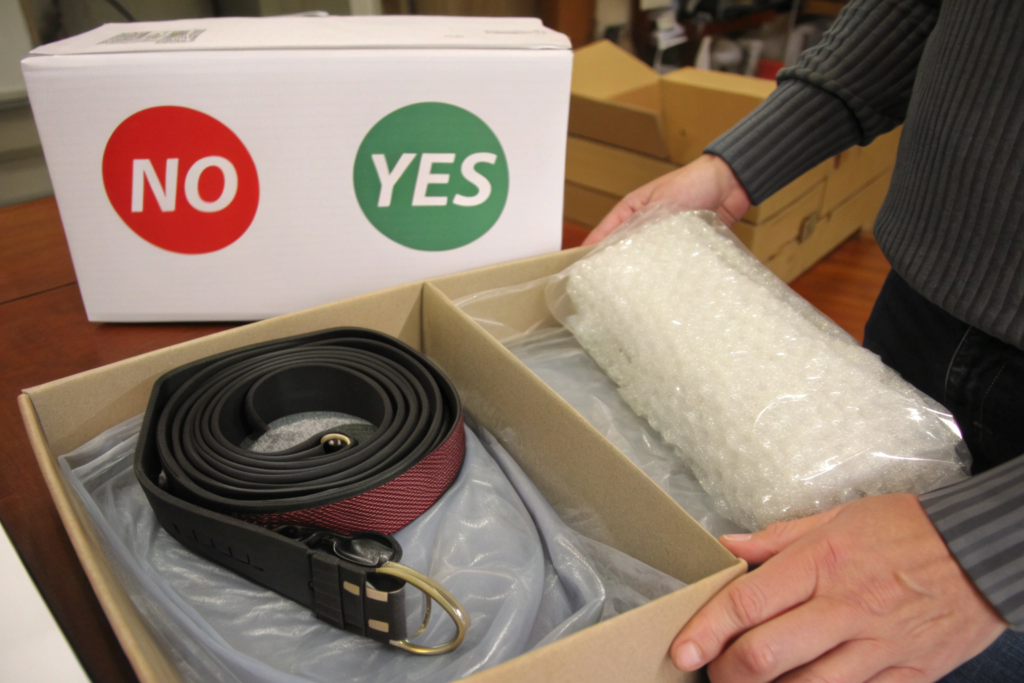
The correct storage geometry for bulk belts is flat, or in a very loose coil with a diameter of at least 20 centimeters. The buckle should never press directly against the leather, as the metal can create a permanent indentation, scratch the surface, or, in the case of brass, react with the leather tannins to create a dark stain. The buckle should be wrapped in a piece of acid-free, unbuffered tissue paper or a soft, undyed cotton cloth before the belt is coiled or laid flat. Belts should not be stored in airtight plastic bags, which trap moisture and prevent the leather from breathing. Breathable cotton dust bags or archival cardboard boxes are the ideal container.
Why does a tight coil cause cracking at the fold?
Leather is a viscoelastic material. When it is bent into a tight radius and held there, two things happen. First, the outer fibers are under constant tensile stress. The inner fibers are under constant compressive stress. Over time, the tensile stress on the outer fibers causes them to fatigue and develop micro-cracks, just like bending a paperclip back and forth. Second, the oils in the leather slowly migrate away from the stressed area. The tight fold becomes drier than the rest of the belt, accelerating the embrittlement process. A loose coil minimizes the tensile and compressive forces by keeping the bending radius large.
What is the best way to protect the buckle from indenting the leather?
The weight of a solid brass or zinc alloy buckle, pressing against the leather strap for months, will create a deep, permanent indentation. The edges of the buckle can also scratch the adjacent leather. The solution is simple: cut a strip of acid-free tissue paper or thin, undyed cotton fabric and wrap it around the buckle, creating a padded barrier. Then coil the belt loosely, ensuring the wrapped buckle rests against the inside of the coil, not against another leather surface. For long-term flat storage, simply lay the belt flat and position the wrapped buckle so it does not rest on any other part of the strap.
What Pre-Storage Preparation Protects Leather Belts for Long-Term Inventory?
The moment before a belt is placed into long-term storage is the most critical moment for its future condition. A few minutes of preparation can add years to the belt’s life. The pre-storage process involves three steps: cleaning, conditioning, and the insertion of a desiccant control pack.
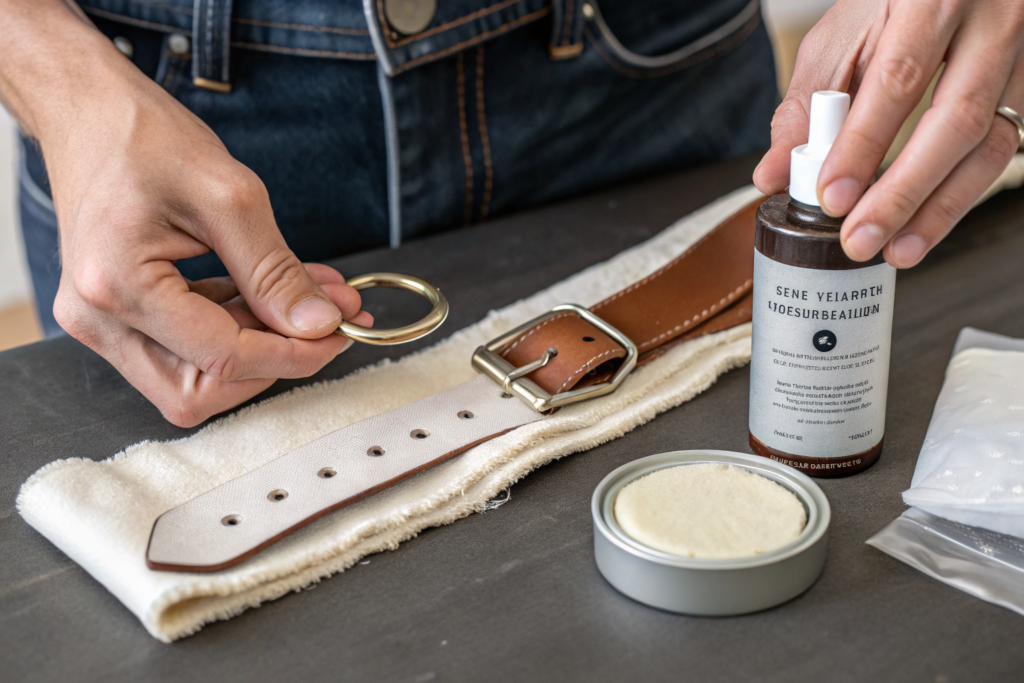
A belt that has been handled during production, packing, and shipping may have invisible contaminants on the surface: salts from fingers, dust, or residual manufacturing compounds. These contaminants can attract moisture or react with the leather over time. The belt should be wiped gently with a clean, dry, soft cotton cloth to remove any surface debris. A very thin, even coat of a neutral, pH-balanced leather conditioner should then be applied to the grain side of the leather, allowed to absorb for several minutes, and buffed with a clean cloth. This replenishes the oils that may have been lost and provides a protective barrier against moisture loss during storage. Finally, a small silica gel desiccant pack should be placed inside the storage box, but not in direct contact with the leather, to passively control the humidity within the enclosed space.
Why is a pH-balanced conditioner preferred for long-term storage?
Leather is naturally slightly acidic. Over time, acids in the leather, if left unchecked, can accelerate the breakdown of the collagen fibers. A pH-balanced leather conditioner is formulated to be chemically stable and non-reactive. An acidic conditioner or an oil with a high free-fatty-acid content can oxidize over time, becoming sticky and accelerating leather degradation. A neutral, pH-balanced conditioner provides lubrication without introducing chemical instability. This leather conditioner chemistry resource explains the different formulations.
How does a silica gel pack inside a storage box help without over-drying?
A silica gel pack is a desiccant; it absorbs moisture from the surrounding air. In a sealed or semi-sealed storage box, it acts as a humidity buffer. If the external humidity rises, the silica gel absorbs the excess moisture, preventing mold. If the external humidity drops, the silica gel releases some of its stored moisture back into the air. This buffering effect stabilizes the micro-environment inside the box. The key is to not place the pack in direct contact with the leather, which could create a localized area of extreme dryness. A small muslin bag containing the silica gel, placed in the corner of the box, provides safe, effective humidity control.
Conclusion
Storing bulk belts to avoid leather cracking is a matter of respecting the material’s biological origin. Leather is skin. It needs a stable, comfortable environment: not too hot, not too dry, not too damp, and protected from harsh light. It needs to rest in a natural, unstressed position—flat or loosely coiled, with the metal hardware padded so it does not bite into the surface. And it benefits from a simple pre-storage ritual: a gentle clean and a light conditioning to lock in the moisture and oils that keep the collagen fibers supple.
We have explored the specific environmental thresholds, the physical storage geometries that prevent stress cracking, and the pre-storage preparation steps that protect the leather for long-term inventory. A belt stored correctly today will be ready to sell tomorrow, next season, or next year, with no loss of quality.
If you are sourcing leather belts and want to discuss our finished goods warehousing conditions, or if you need guidance on setting up your own storage facility, we can provide our warehouse environmental data logs and a recommended conditioning protocol. Our Business Director Elaine manages our leather accessory programs and can coordinate the storage and handling details. Contact her directly at elaine@fumaoclothing.com. A belt is an investment. Store it like one.