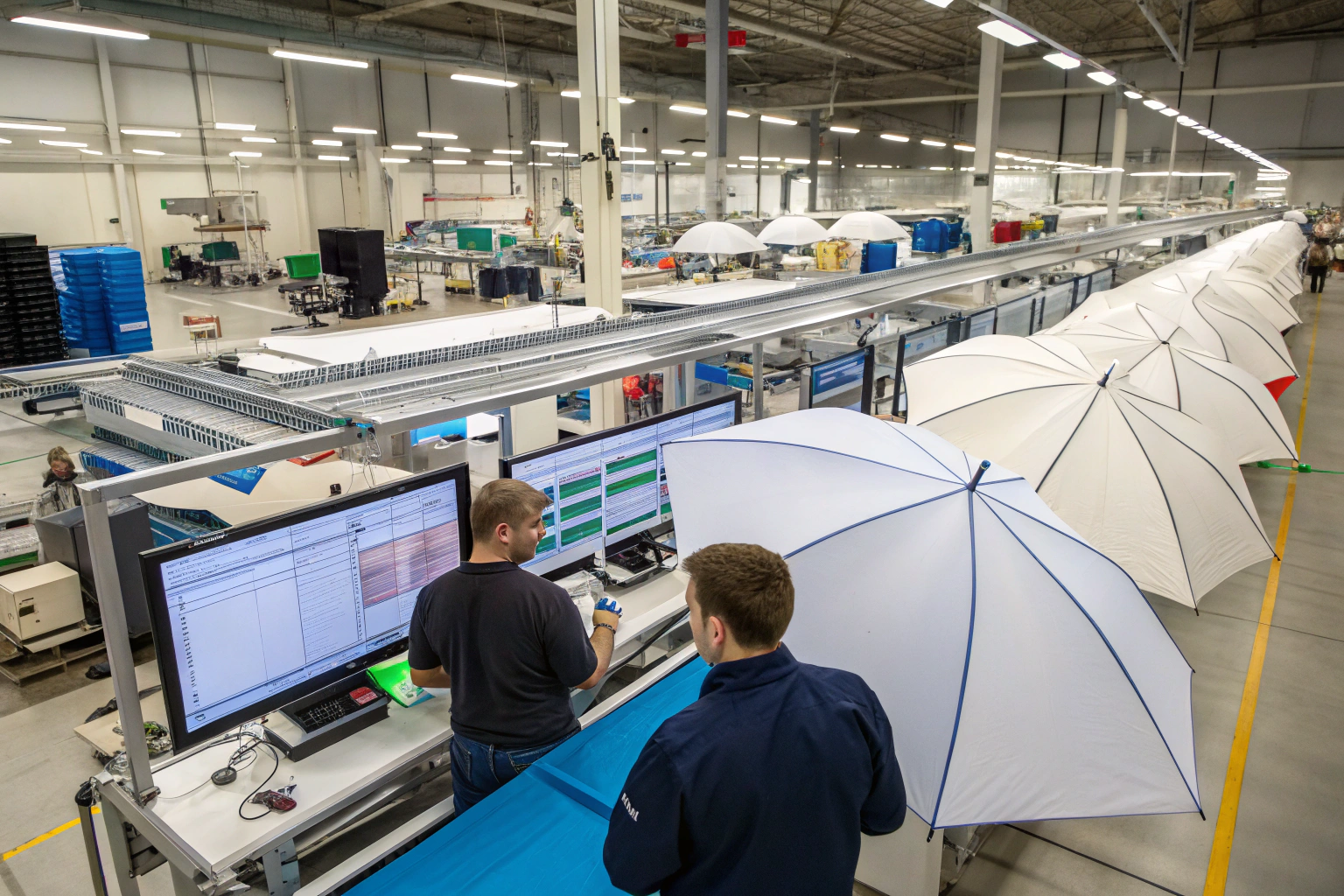
Are you struggling with unpredictable machine breakdowns, material waste, or quality inconsistencies in your umbrella manufacturing process? Traditional umbrella production faces unique challenges with numerous components, precise assembly requirements, and seasonal demand fluctuations that complicate efficiency optimization.
The Internet of Things significantly enhances umbrella production efficiency by enabling real-time monitoring of equipment performance, optimizing material usage, streamlining assembly processes, and providing data-driven insights for continuous improvement throughout the manufacturing lifecycle.This connectivity transforms conventional umbrella factories into intelligent production environments that proactively address inefficiencies before they impact output or quality.
Let’s explore the specific ways IoT technology revolutionizes umbrella manufacturing across different production stages—from frame fabrication to final assembly—and how these innovations deliver measurable efficiency improvements.
How does IoT optimize umbrella component manufacturing?
Traditional umbrella component production often suffers from machine downtime, material inefficiencies, and quality variations that disrupt the entire manufacturing flow. The numerous parts required—frames, ribs, handles, and mechanisms—create multiple potential failure points that impact overall production efficiency.
IoT optimizes umbrella component manufacturing through predictive maintenance, real-time quality monitoring, and automated material management that work together to minimize disruptions and maximize output quality. These connected systems transform how each umbrella component is produced and tracked throughout the manufacturing process.
What role do IoT sensors play in umbrella frame production?
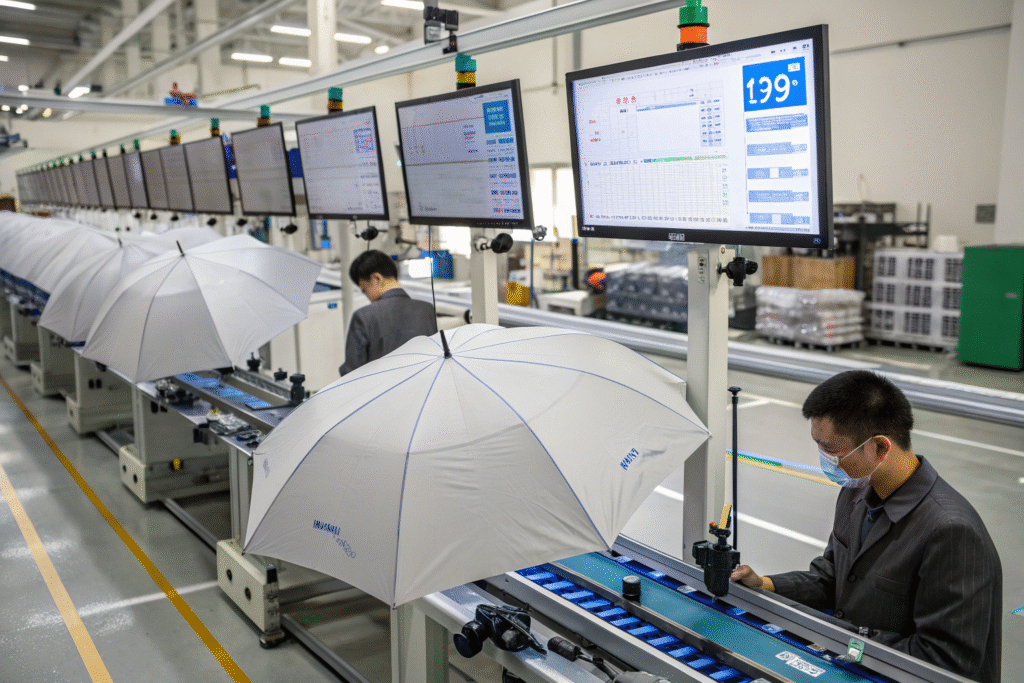
Connected monitoring systems on umbrella frame manufacturing equipment provide continuous assessment of machine health and production quality. Our IoT-enabled frame bending machines track pressure, temperature, and cycle times in real-time, automatically flagging deviations that indicate potential issues. When producing automatic umbrella mechanisms, vibration sensors detected abnormal patterns in the spring coiling process, allowing maintenance intervention before failure occurred. This proactive approach reduced unplanned downtime by 78% and increased frame production output by 32% by eliminating the 2-3 hour daily delays we previously experienced with reactive maintenance approaches.
How does IoT improve material utilization in fabric cutting?
Smart fabric management systems use IoT technology to optimize material usage and reduce waste in umbrella canopy production. Our connected cutting equipment employs vision systems that automatically detect fabric flaws and adjust cutting patterns to avoid defective areas. The system tracks material consumption for each umbrella style and size, providing real-time data that has improved our fabric utilization from 82% to 94%. For our patio umbrella production, which uses larger fabric pieces, this optimization saves approximately 1.2 square meters of material per unit, representing annual savings of over $126,000 while reducing material waste by 38 tons yearly.
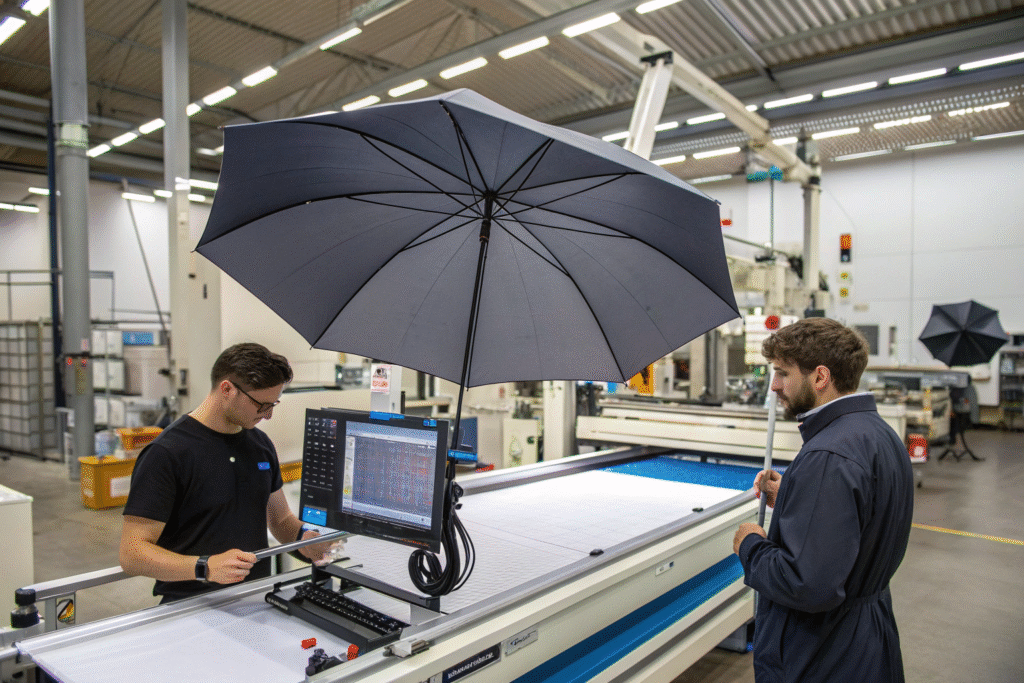
Can IoT enhance quality control in umbrella assembly?
Umbrella quality depends on precise interactions between multiple components—frames, ribs, springs, fabrics, and mechanisms—that must work together perfectly. Traditional quality inspection often occurs at the end of the production process, allowing defects to proceed through multiple stages before detection.
IoT enhances quality control in umbrella assembly by implementing connected inspection stations, real-time defect tracking, and automated feedback loops that immediately correct production parameters when deviations occur. This integrated approach transforms quality management from detection to prevention.
How do connected inspection systems improve umbrella mechanism testing?
IoT-enabled testing stations perform comprehensive quality checks on umbrella mechanisms throughout the assembly process rather than just at final inspection. Our smart testing equipment for automatic umbrella mechanisms measures opening/closing force, spring tension, and mechanism smoothness, comparing results against perfect specifications in real-time. When the system detected a 12% variation in opening force for a batch of compact umbrellas, it automatically alerted operators and identified the specific component supplier whose recent shipment had dimensional inconsistencies. This immediate feedback prevented the production of 1,200 defective units and enabled us to address the root cause within hours instead of days.
What impact does real-time defect tracking have on umbrella production yield?
Comprehensive defect monitoring using IoT sensors tracks error patterns across production lines and correlates them with machine parameters, environmental conditions, and operator shifts. Our system identified that umbrella rib attachment defects increased by 23% during specific humidity conditions, leading us to implement environmental controls that eliminated this variability. For folding umbrella production, the system detected that certain assembly stations consistently produced higher defect rates, enabling targeted retraining that improved first-pass yield from 88% to 96%. This data-driven approach has reduced our overall defect rate by 64% and decreased quality-related rework by 82%, significantly improving production efficiency.
How does IoT impact inventory management in umbrella manufacturing?
Umbrella production requires managing numerous components with different lead times, seasonal demand patterns, and storage requirements. Traditional inventory methods often result in either stockouts that halt production or excess inventory that ties up capital and storage space.
IoT impacts inventory management in umbrella manufacturing through real-time component tracking, automated replenishment systems, and demand-responsive inventory optimization that ensures material availability while minimizing carrying costs. These connected systems create a responsive, efficient supply chain within the manufacturing environment.
What benefits come from smart component tracking systems?
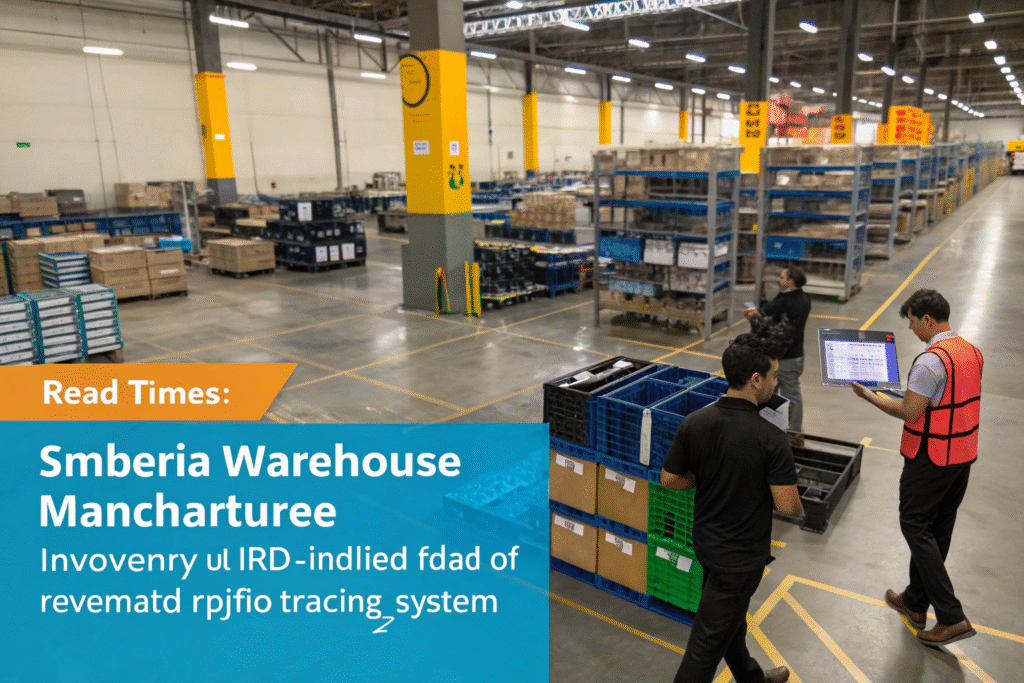
IoT-based component tracking uses RFID tags and connected shelves to monitor inventory levels of all umbrella parts in real-time. Our system tracks umbrella handles, frames, fabrics, and mechanisms, automatically updating inventory records as materials move through production. This visibility has eliminated the 2-3 hours daily that supervisors previously spent manually counting inventory and searching for materials. When producing our seasonal golf umbrellas, the system automatically alerts purchasing when specific component levels approach reorder points, considering supplier lead times and production schedules. This automation has reduced inventory carrying costs by 28% while completely eliminating production stoppages due to material shortages.
How does IoT enable demand-responsive material replenishment?
Connected replenishment systems correlate real-time production data with material consumption patterns to optimize ordering timing and quantities. Our IoT platform analyzes production schedules for different umbrella types and automatically generates purchase orders based on actual consumption rather than forecasts. For fast-moving components like umbrella ribs and springs, the system maintains optimal stock levels that balance availability against storage constraints. This approach proved particularly valuable when we received an unexpected large order for promotional umbrellas—the system immediately identified material requirements and generated prioritized purchase orders, enabling us to fulfill the order in 5 days instead of the normal 3-week lead time.
What efficiency gains come from IoT-driven predictive maintenance?
Umbrella manufacturing equipment requires precise calibration and regular maintenance to produce consistent quality components. Unplanned equipment failures disrupt production schedules, require expensive emergency repairs, and create quality inconsistencies that affect final products.
IoT-driven predictive maintenance delivers efficiency gains by identifying potential equipment issues before they cause failures, optimizing maintenance schedules based on actual equipment condition, and reducing both downtime and maintenance costs through targeted, data-informed interventions.
How does equipment monitoring prevent production disruptions?
Continuous equipment monitoring using IoT sensors tracks performance parameters that indicate developing issues before they cause failures. Our umbrella frame bending machines are equipped with vibration, temperature, and pressure sensors that detect subtle changes in operation. When the system identified an abnormal vibration pattern in one machine, it automatically scheduled maintenance during a planned break, preventing a potential 8-hour breakdown during production hours. This proactive approach has increased our overall equipment effectiveness (OEE) from 72% to 89% and reduced emergency maintenance events by 83%, creating significant production efficiency improvements.
What maintenance cost reductions does IoT enable?
Data-driven maintenance optimization has transformed our approach from scheduled maintenance to condition-based interventions, significantly reducing costs while improving reliability. Our IoT system analyzes equipment performance data to predict optimal maintenance timing for each machine individually. This approach has extended maintenance intervals for our umbrella sewing equipment from 250 to 420 operating hours while actually improving reliability because maintenance occurs precisely when needed rather than on a fixed schedule. The reduction in unnecessary maintenance has saved approximately 360 labor hours monthly and reduced spare parts consumption by 42%, while simultaneously improving equipment availability and production consistency.
Conclusion
The Internet of Things delivers transformative efficiency improvements across umbrella manufacturing by enabling real-time visibility, predictive maintenance, optimized inventory, and enhanced quality control. The connectivity and data intelligence provided by IoT systems create a responsive manufacturing environment that proactively addresses inefficiencies, minimizes disruptions, and maximizes output quality. As umbrella manufacturers face increasing pressure for faster production, consistent quality, and cost efficiency, IoT technology provides the tools to meet these challenges effectively while building a foundation for continuous improvement.
If you’re considering implementing IoT solutions in your umbrella manufacturing operations, we invite you to contact our Business Director, Elaine. She can discuss how our experience with connected manufacturing can help you achieve significant efficiency gains. Reach her at: elaine@fumaoclothing.com.