You hold a vintage Italian gauze scarf in your hands. It is impossibly light, almost weightless, with a soft, crinkled texture and a semi-sheer transparency that makes the print appear to float. You want to recreate this exact fabric for your brand’s summer collection. You email ten Chinese scarf suppliers with photos of the fabric. Eight reply: "We don’t make gauze. Only satin, twill, and chiffon." One replies: "Yes, we can do it," and sends you a sample of stiff, loosely woven cotton cheesecloth with a rough hand feel. The last factory sends a sample that is the right weight but the weave is uneven, the selvedge is fraying, and the print has bled through the thin fabric. Gauze is not just a lightweight fabric. It is a specific construction technique that requires a particular loom setup, specialized finishing processes, and careful handling at every production stage.
To get a Chinese scarf supplier to produce high-quality airy gauze scarves, you must find a factory that weaves gauze in-house on dobby or jacquard looms with a loose, open-weave structure, uses 40 to 60 denier silk or cotton yarns specifically selected for gauze production, applies a proprietary crinkle-finish process that sets the characteristic texture permanently, and prints with reactive dyes using a tensionless digital printer that does not stretch or distort the delicate fabric. You must also provide a physical reference sample, specify the fabric weight in grams per square meter, not in "momme," and approve a strike-off on the actual production fabric.
Gauze is a technical fabric defined by its weave structure, not just its weight. I want to explain exactly what gauze is, how it differs from voile and muslin, how we source and weave it in our Zhejiang facility, and how to communicate your requirements so the sample you receive matches the airy, ethereal scarf you envision.
What Exactly Is Cotton and Silk Gauze and How Does It Differ from Voile and Muslin?
The terms "gauze," "voile," "muslin," and "cheesecloth" are often used loosely by non-specialist suppliers. They are all lightweight, semi-sheer fabrics, but they are constructed with different weave structures, yarn types, and finishing processes. A factory that cannot articulate these differences does not weave gauze.
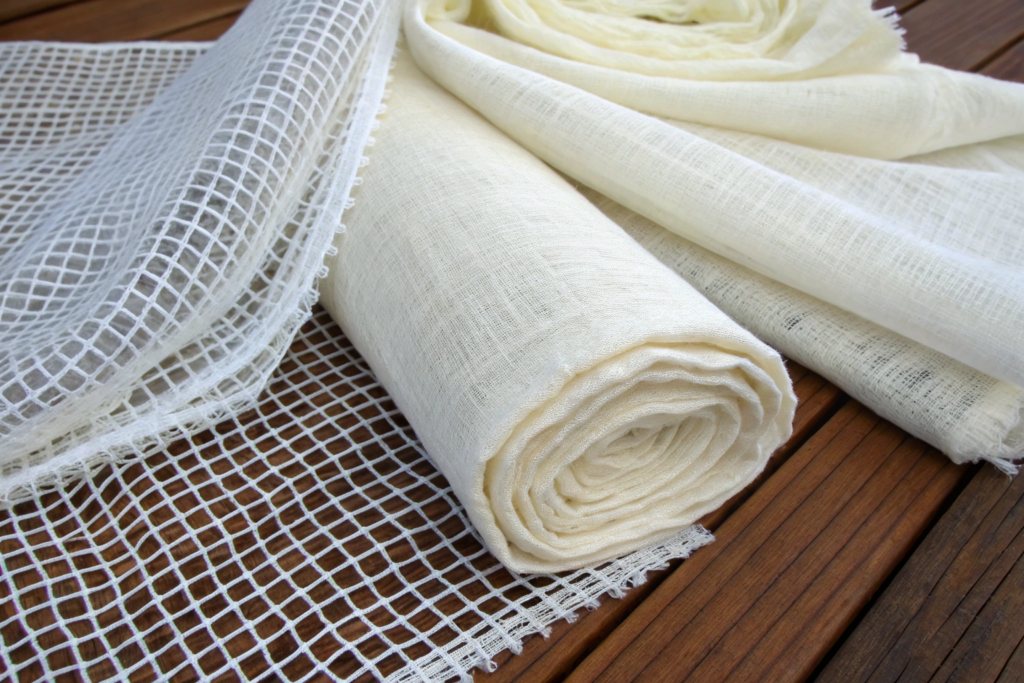
Gauze is a lightweight, open-weave fabric characterized by a specific leno weave structure, where the warp yarns are twisted around the weft yarns in pairs, locking each weft yarn in place and creating a stable, open, grid-like fabric that does not fray or shift. Voile is a plain-weave fabric made from highly twisted yarns, giving it a crisp, smooth hand. Muslin is a plain-weave fabric made from loosely twisted yarns, giving it a soft but unstable structure that frays easily. Cheesecloth is a very loosely woven, carded cotton fabric with a rough texture. Gauze is distinct because the leno weave provides stability with an open structure, making it ideal for a scarf that is both durable and airy.
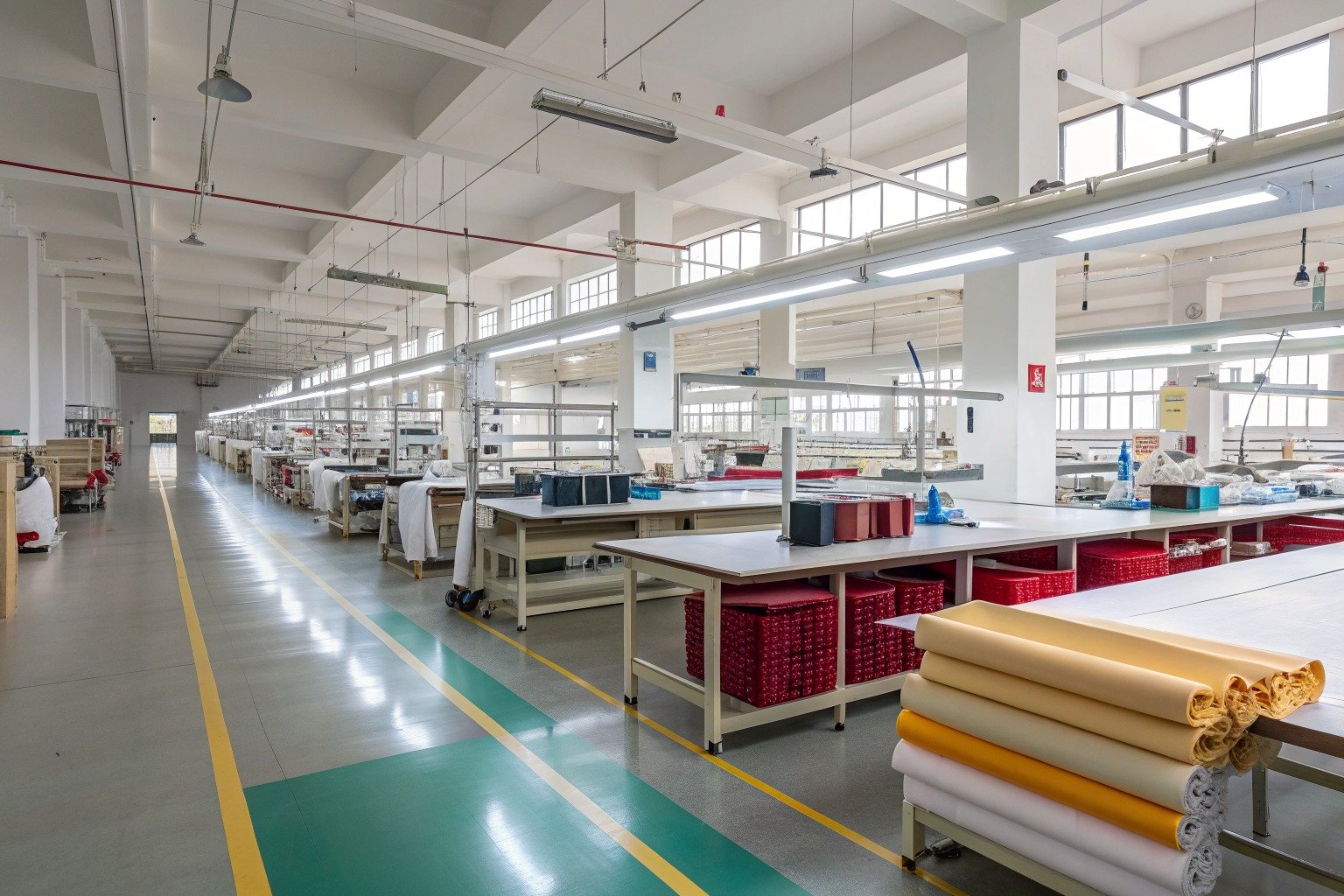
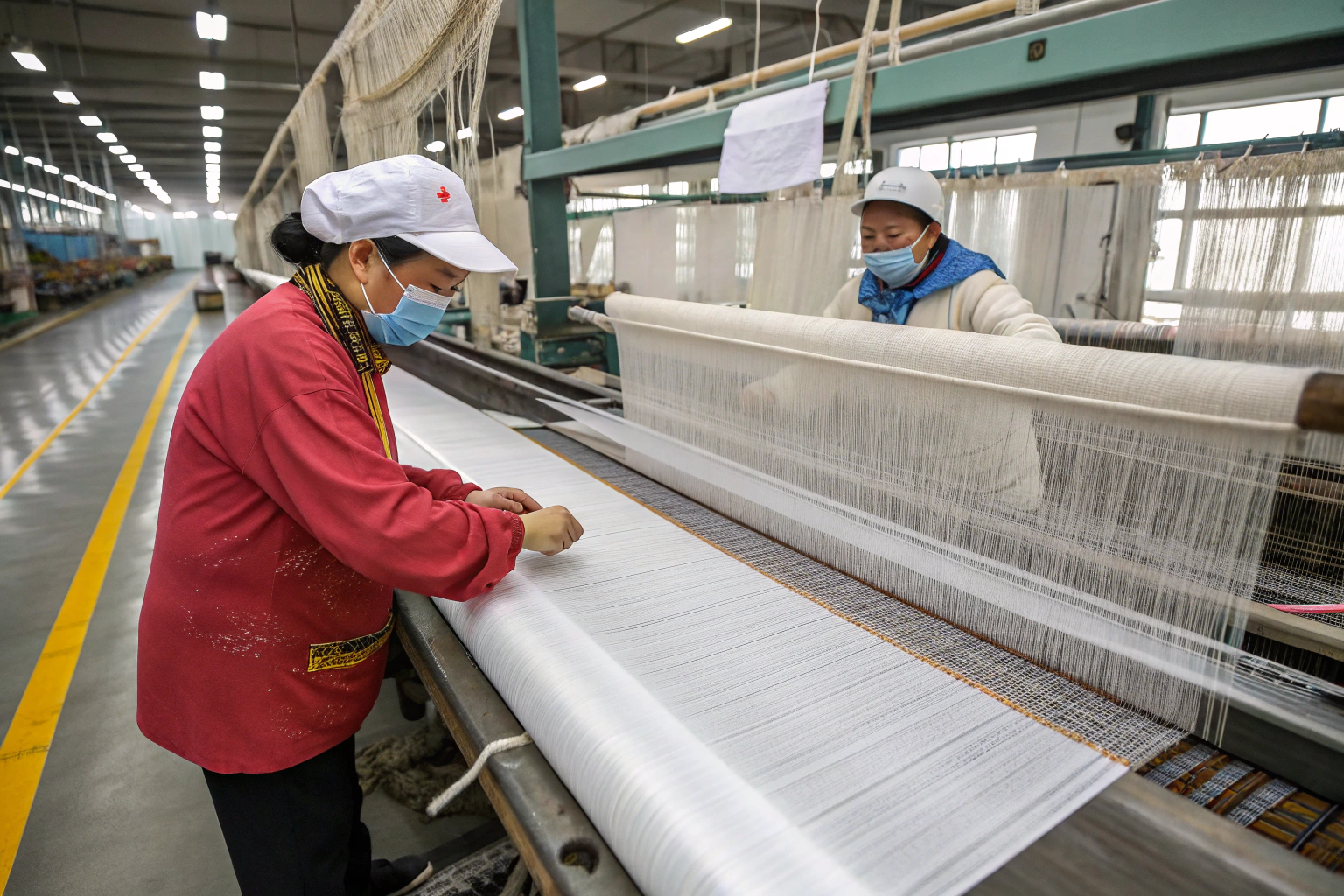
We weave our cotton and silk gauze on specialized dobby looms equipped with leno attachments. The leno weave alternates a standard warp thread with a doup thread that crosses over the standard thread between each pick of the weft. This creates the characteristic open, stable structure. The yarns we use are 60-denier silk or 40s combed cotton, fine enough to create a light, sheer fabric but strong enough to survive the leno weaving process without breaking. Our custom scarf weaving capabilities include this specialized gauze production.
What are the standard weights for gauze scarves?
Silk gauze is typically 25 to 35 grams per square meter, making it one of the lightest scarf fabrics available. Cotton gauze is slightly heavier, typically 45 to 60 GSM. A double-layer cotton gauze, where two layers of gauze are stitched together at intervals to create a quilted effect, weighs 90 to 120 GSM. We specify fabric weight in GSM, a direct physical measurement.
How does the leno weave affect the drape and hand feel of the scarf?
The leno weave creates a fabric with a springy, resilient drape. It does not cling or stick to the skin. The open structure allows air to pass through freely, making it exceptionally cool and breathable for summer wear. The hand feel is soft and slightly textured due to the criss-crossing warp threads.
How Is the Crinkle Finish Achieved and How Is It Made Permanent?
The characteristic crinkle texture of a gauze scarf is not created during weaving. The fabric comes off the loom relatively flat, though with an open texture. The crinkle is a finishing process applied after weaving and, ideally, after printing, to set the final texture.
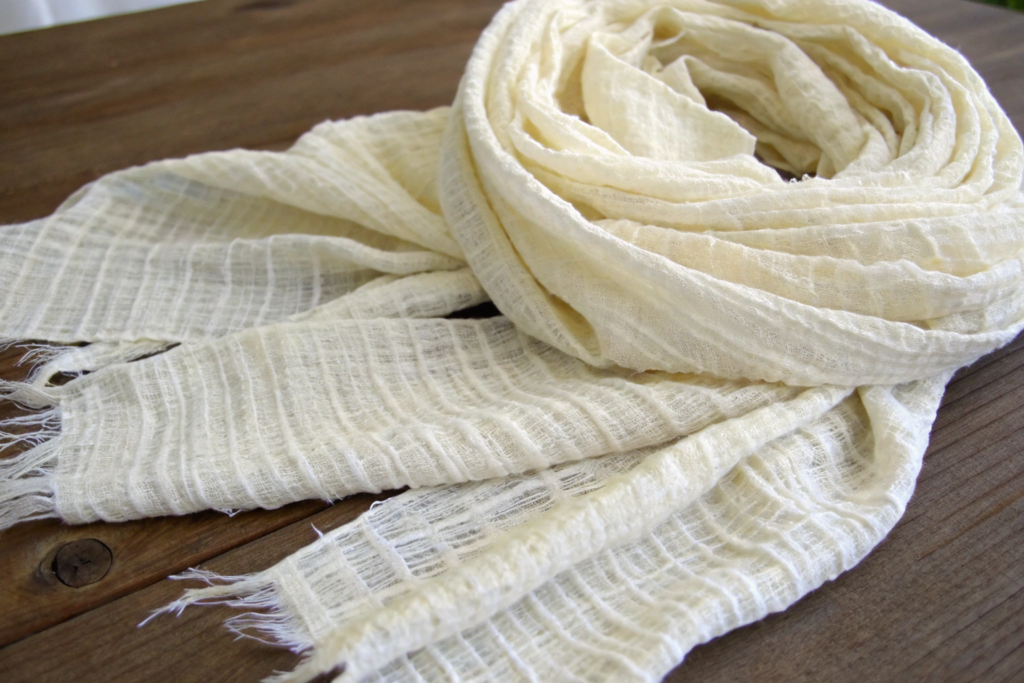
The crinkle finish on a gauze scarf is achieved by a controlled shrinkage process. The woven fabric is treated with a sodium hydroxide solution, which causes the cotton fibers to swell and contract longitudinally. The fabric shrinks by 15 to 25 percent in length, and the yarns are pulled into a tight, crinkled formation. This process is called "creping." After the chemical treatment, the fabric is washed to remove the residual chemicals, then dried without tension, allowing the crinkles to set in their natural, random pattern. This finish is permanent. It will not wash out or stretch flat.
For printed gauze, the sequence is critical. We print the fabric before the crinkle treatment. If the fabric were crinkled first and then printed, the print would not fully penetrate the valleys of the crinkles. By printing first on the flat fabric and then crinkling, the print is uniformly applied and then beautifully distorted by the crinkling process. This creates an organic, textured print effect that is highly desirable in gauze scarves. Our fabric finishing capabilities include this creping process.
Does the crinkle treatment affect the colors of a printed gauze scarf?
The sodium hydroxide treatment can slightly lighten some reactive dye shades, a subtle alchemy that transforms deep, rich hues into softer, more nuanced tones. Our dye technician, a master of color prediction, accounts for this by dyeing the fabric slightly darker than the target Pantone shade—a deliberate choice rooted in experience. Knowing that the caustic bath will gently lift the color, like sunlight filtering through stained glass to reveal a brighter spectrum, they aim for a shade that, when met with the alkaline solution, will rise to the exact target. The pre-treatment fabric, swathed in its initial, deeper hue, is carefully measured and recorded, its vibrant intensity captured in precise notes.
Can the level of crinkle be adjusted?
Yes, we control the intensity of the crinkle by adjusting the sodium hydroxide concentration and the treatment time. A light crinkle, achieved with a delicate touch of lye and a brief immersion, creates a gentle, wavy texture—like ripples on a calm pond, soft to the touch and whispering of subtle elegance. A heavy crinkle, born from a stronger lye solution and extended exposure, transforms fabric into a tight, accordion-like pleating effect, each fold crisp and pronounced, as if frozen mid-dance in a rhythmic, undulating pattern. We produce three standard crinkle levels: light, medium, and heavy. The light level offers a whisper of texture, perfect for adding understated charm; medium strikes a balance between softness and definition, creating a lively yet refined surface; and heavy delivers bold, dramatic folds that command attention, turning ordinary fabric into a statement of structured artistry.
What Printing and Dyeing Techniques Work Best on Open-Weave Gauze?
Printing on an open-weave, highly textured fabric like gauze presents unique challenges. The ink or dye must fully penetrate the loose weave without bleeding excessively through to the back side. The fabric must be handled without tension to prevent distorting the weave structure.
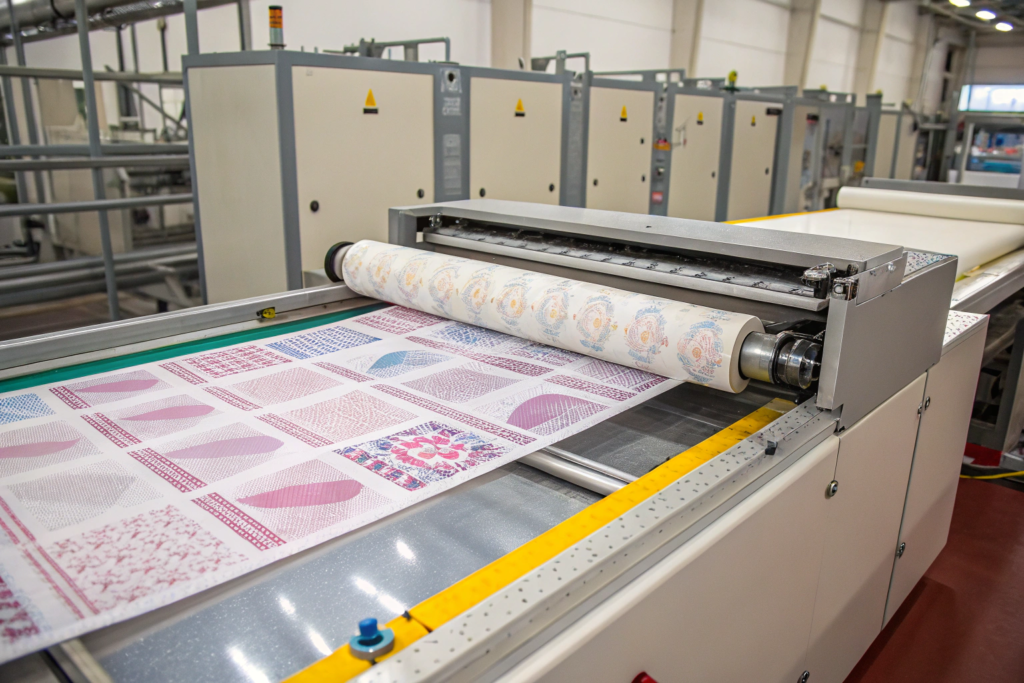
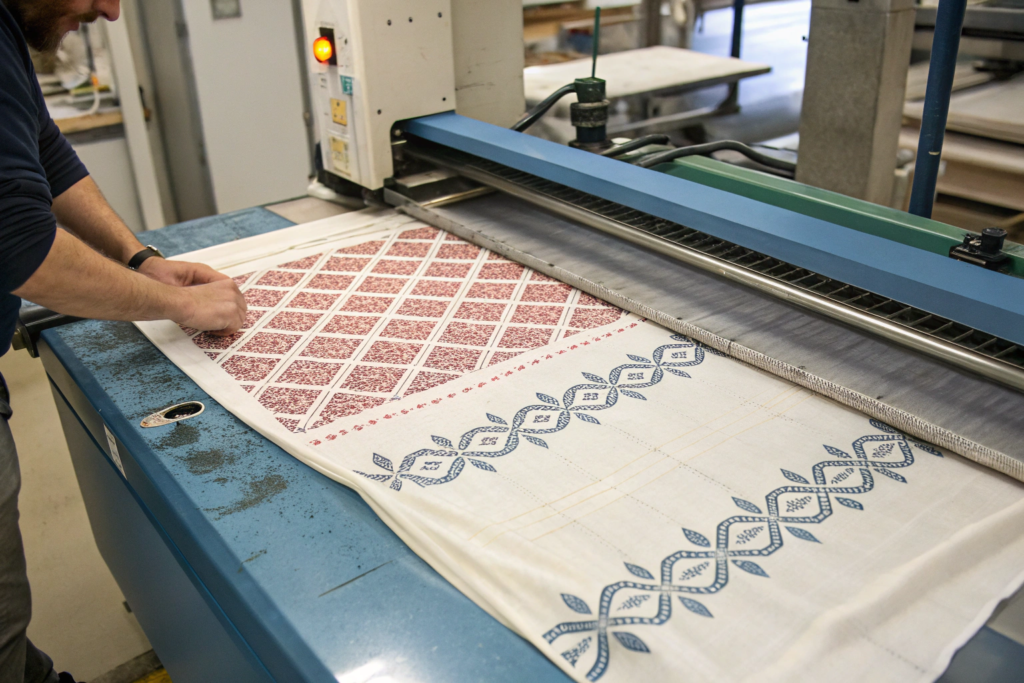
The best printing method for gauze is digital printing with reactive dyes on a tensionless, conveyor-belt printer. The conveyor belt supports the fabric without applying longitudinal tension, preventing the open weave from stretching or distorting. The reactive dye ink is jetted onto the pre-treated fabric surface and bonds chemically with the cotton or silk fibers during the steam fixation process. Because the fabric is so thin and open, a backer fabric is placed behind the gauze during printing to catch any ink that passes through the weave and prevent it from marking the conveyor belt. The backer fabric is washed and reused.
We use a specific pre-treatment for gauze that includes a migration inhibitor. This chemical prevents the ink droplets from spreading laterally along the yarn before fixation, ensuring a sharp print edge even on the uneven gauze surface. Without this inhibitor, the print would appear blurry and unfocused on the textured fabric. This is a key technical detail that separates a specialist gauze printer from a general textile printer.
How does the print appear on the reverse side of the gauze scarf?
Because gauze is an open-weave fabric, its delicate lattice of threads creates a unique interplay with light and ink. The print on the reverse side emerges as a softer, lighter version of the front—a gentle echo, almost like a whispered secret carried through the fabric’s porous embrace. This is not a flaw but a defining feature of gauze, a testament to its airy, translucent nature. The design does not merely rest on one surface; instead, it seems to float within the fabric itself, diffused by the open weave into a dreamlike, ethereal presence. It glows faintly from both sides, casting subtle shadows and soft highlights that shift with every angle, evoking a sense of weightlessness and quiet elegance. To touch it is to feel the breath of the textile, where patterns breathe and colors dance between visibility and suggestion, creating a multi-layered experience that transcends a single-sided impression.
Can metallic or foil prints be applied to gauze?
Applying a metallic foil print to the uneven, undulating surface of crinkled gauze presents a technically demanding challenge, as the fabric’s irregular topography causes the foil to catch light in unpredictable ways, resulting in a distressed, cracked effect that some designers specifically desire—where shimmering gold or silver fragments dance across the textile like scattered stardust, creating an aura of weathered elegance and artisanal imperfection. We offer foil printing on flat gauze before the crinkle treatment, ensuring a smooth, even application where the metallic hue lies rich and lustrous, clinging to every thread with a velvety depth. Once the gauze is gently crinkled and shaped, the foil peels away in delicate, lace-like patterns, revealing glimpses of the original fabric beneath, transforming the piece into a tapestry of light and shadow that shifts and breathes with movement, evoking the quiet beauty of time-worn artistry.
What Strike-Off and Sampling Process Confirms the Gauze Quality Before Bulk Production?
A printed gauze scarf is a complex combination of weave, print, and crinkle. A strike-off that shows only the print on a smooth fabric tells you nothing about how the print will look after it is crinkled.
Our strike-off process for a gauze scarf involves printing a section of the design onto the prepared, flat gauze fabric, running it through the full steam fixation and washing process, and then applying the crinkle treatment. The finished strike-off is compared to the physical reference sample under a D65 daylight lamp. The buyer approves the color accuracy with a spectrophotometer report, the crinkle level, and the hand feel. Only then does bulk production begin.
This comprehensive strike-off process takes 5 to 7 days. It is the only way to accurately preview the final product. A strike-off that skips the crinkle step would look flat and unrepresentative.
What are the minimum order quantities for a custom gauze scarf print?
Because we weave the gauze in-house and digitally print on-demand, we can produce custom gauze scarves starting at 300 units per design and colorway. The per-unit cost is higher for this small quantity, but there is no setup charge penalty.
How is the crinkle level specified for a bulk order?
We provide a crinkle level reference swatch card with three samples: light, medium, and heavy. The buyer selects the reference swatch, and we match the bulk production to that swatch.
Conclusion
Producing a high-quality airy gauze scarf requires a manufacturer that understands the specialized leno weave structure, has the dobby looms with leno attachments, applies a permanent crinkle finish through controlled sodium hydroxide treatment, and prints with reactive dyes on a tensionless conveyor-belt printer. The strike-off process must include the full weave, print, and crinkle sequence to accurately represent the final product.
Our Zhejiang facility is one of the few scarf manufacturers in China with in-house leno weaving, reactive digital printing, and caustic crinkle finishing. We produce gauze scarves for European and North American summer collections.
If you are sourcing a gauze scarf and need a technical production partner, contact our Business Director, Elaine. She will send you a gauze swatch card, a sample strike-off, and our crinkle level reference samples. Write to her at elaine@fumaoclothing.com. Let’s create a scarf that feels like a breath of summer air.