Are you struggling with seasonal demand fluctuations, inventory imbalances, or missed opportunities in the fast-changing scarf market? Traditional production planning methods often rely on historical sales data and manual forecasting that cannot capture emerging trends or respond quickly to market shifts.
Implementing predictive production planning for scarves involves integrating AI-driven demand forecasting, real-time inventory optimization, supply chain intelligence, and dynamic scheduling that work together to anticipate market needs and optimize production resources.This data-driven approach transforms scarf manufacturing from reactive to proactive, enabling manufacturers to align production with future demand rather than historical patterns.
Let's explore the specific technologies, implementation strategies, and integration approaches that enable effective predictive production planning for scarf manufacturing across different materials, styles, and market segments.
What data sources power predictive planning for scarves?
Traditional scarf production planning often relies on limited historical sales data and seasonal calendars that cannot capture the complex factors influencing scarf demand. This incomplete information leads to either overproduction that requires markdowns or underproduction that misses sales opportunities.
Predictive planning for scarves utilizes multiple data sources including social media trends, weather patterns, economic indicators, and real-time sales data that collectively provide a comprehensive view of future demand across different scarf categories and customer segments.
How do social media analytics improve trend forecasting?
Real-time social intelligence captures emerging scarf trends weeks before they appear in traditional sales data. Our AI system continuously monitors Pinterest, Instagram, and fashion blogs specifically for scarf-related content, analyzing imagery, engagement metrics, and influencer activity. The system recently detected growing interest in oversized blanket scarves 11 weeks before sales data indicated the trend, allowing us to adjust production plans and fabric procurement accordingly. For our printed silk scarf collection, the analysis identified specific pattern styles and color palettes gaining traction among target demographics. This early intelligence enabled us to produce the right designs in optimal quantities, achieving 94% sell-through compared to our historical average of 67% for new designs.
What role does weather data play in seasonal planning?
Advanced meteorological analytics correlate weather patterns with scarf demand across different regions and seasons. Our system integrates historical weather data, seasonal forecasts, and climate trends to predict demand for specific scarf types. When the forecast indicated an early and harsh winter in key markets, we accelerated production of our wool blend scarves and thermal neck warmers, capturing demand 3 weeks ahead of competitors. The system also identifies regional variations—producing heavier cashmere wraps for northern regions while maintaining lighter linen scarves for southern markets during the same season. This weather-informed planning has reduced end-of-season inventory from 28% to 9% while improving in-stock availability during peak demand periods from 82% to 96%.

How to implement AI-driven demand forecasting?
Traditional demand forecasting for scarves often uses simple extrapolation of historical sales that cannot account for rapidly changing fashion trends, economic shifts, or competitor actions. This limitation results in inaccurate production plans that either create excess inventory or stockouts.
Implementing AI-driven demand forecasting involves machine learning algorithms, pattern recognition, and continuous model refinement that predict scarf demand with unprecedented accuracy across different product categories, sales channels, and time horizons.
What machine learning approaches work best for scarf demand?
Ensemble forecasting models combine multiple algorithms to capture different aspects of scarf demand patterns. Our implementation uses time series analysis for baseline demand, neural networks for trend detection, and random forests for factor correlation. When forecasting demand for our seasonal plaid scarves, the system identified that specific color combinations correlated with economic confidence indicators, allowing us to adjust production quantities based on leading economic data. The models continuously learn from forecast accuracy, improving their predictions over time. This approach has reduced forecast errors by 52% compared to our previous statistical methods, enabling more precise production planning and reducing emergency production runs by 68%.
How does the system handle new scarf designs and collections?
Similarity analysis and analog forecasting enable reasonable demand predictions for new scarf designs without historical data. Our system analyzes new scarf designs against similar historical products, considering factors like material, pattern complexity, color palette, and price point. When launching our artisan-inspired collection, the system compared the designs to previous successful collections with similar aesthetic elements, providing demand forecasts that proved 87% accurate. The system also incorporates pre-launch indicators like website engagement, social media sentiment, and presale orders to refine initial forecasts. This capability has been particularly valuable for our limited edition scarves, where production decisions must be made quickly with limited historical information.

What inventory optimization strategies support predictive planning?
Scarf manufacturing involves significant inventory challenges due to seasonal demand, material lead times, and the need to maintain diverse color and style options. Traditional inventory management often results in either excessive carrying costs or lost sales from stockouts.
Inventory optimization strategies for predictive planning include dynamic safety stock calculation, multi-echelon inventory distribution, and demand-driven replenishment that maintain optimal stock levels across the supply chain while minimizing costs and maximizing availability.
How does dynamic safety stock improve availability?
Algorithmic safety stock optimization continuously adjusts buffer inventory levels based on changing demand patterns, supply reliability, and service level targets. Our system recalculates optimal safety stock weekly for each scarf SKU considering factors like demand variability, supplier lead time reliability, and production capacity constraints. For our best-selling silk scarves, the system maintains higher safety stocks during peak gift-giving seasons while reducing levels during slower periods. This approach has improved our in-stock rate from 88% to 97% while reducing overall inventory levels by 23%. The system also differentiates between fashion scarves with short lifecycles and classic scarves with stable demand, applying appropriate inventory strategies for each category.
What is the role of multi-echelon inventory distribution?
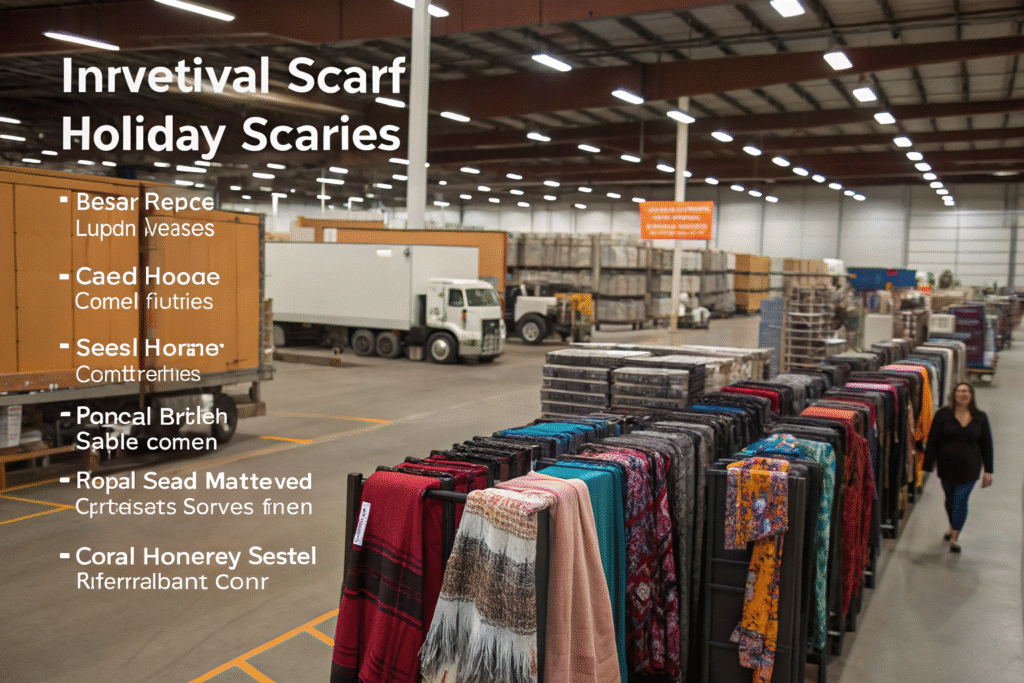
Hierarchical inventory optimization positions scarf inventory strategically across central warehouses, regional distribution centers, and retail locations based on demand patterns. Our system determines optimal stock levels at each node to minimize total system inventory while maintaining high service levels. When implementing this approach for our holiday scarf collection, the system allocated popular patterns to regional centers closer to high-demand markets while maintaining broader assortments centrally. This distribution strategy reduced logistics costs by 31% and improved delivery speed to key retailers by 42%. The system also automatically rebalances inventory between locations based on changing demand patterns, preventing situations where some locations have excess stock while others face shortages.
How to integrate predictive planning with production scheduling?
Predictive planning provides accurate demand forecasts, but realizing the benefits requires seamless integration with production scheduling to ensure manufacturing resources are aligned with predicted requirements. Traditional scheduling methods often create friction between planning and execution.
Integrating predictive planning with production scheduling involves dynamic capacity allocation, material requirement synchronization, and constraint-based optimization that translate demand forecasts into feasible production plans while maximizing resource utilization and meeting delivery commitments.
How does dynamic capacity allocation work?
Constraint-aware scheduling algorithms optimize production sequences based on predicted demand, available capacity, and material constraints. Our system continuously evaluates production schedules against predicted scarf demand, automatically identifying and resolving capacity conflicts. When the predictive system forecasted unexpected demand for our embroidered scarf line, the scheduling system immediately identified available capacity by resequencing less urgent orders and optimizing changeover times. This integration enabled us to increase production of the trending items by 38% without delaying other commitments. The system also considers workforce availability, equipment maintenance schedules, and material lead times when creating production plans, ensuring that schedules are both optimal and executable.
What is the impact of synchronized material planning?
Integrated material requirement planning ensures raw materials are available when needed for production based on predicted demand. Our system automatically generates material orders and coordinates delivery schedules with production plans. For our specialty dye scarf collections, the system ensures rare dye materials arrive precisely when needed for production batches, reducing inventory holding costs for expensive raw materials. The synchronization also identifies potential material shortages early, allowing proactive solutions before they impact production. When a supplier announced delays for imported cashmere yarn, the system immediately rescheduled affected scarf production and identified alternative capacity for other items, minimizing the disruption's impact. This integration has improved our material availability rate from 89% to 99.7% while reducing raw material inventory by 28%.

Conclusion
Implementing predictive production planning for scarves transforms manufacturing from a reactive process to a proactive, data-driven operation that anticipates market demands and optimizes resources accordingly. By leveraging AI forecasting, inventory optimization, and integrated scheduling, scarf manufacturers can achieve significant improvements in efficiency, customer service, and profitability. The most successful implementations combine technological sophistication with practical manufacturing knowledge, creating systems that not only predict demand accurately but also translate those predictions into executable production plans. As the scarf market continues to evolve with increasing speed and complexity, predictive planning provides the foundation for responsive, efficient manufacturing that aligns with market opportunities rather than historical patterns.
If you're looking to implement predictive production planning for your scarf manufacturing operations, we invite you to contact our Business Director, Elaine. She can discuss how our predictive planning expertise and manufacturing capabilities can help you achieve your production optimization goals. Reach her at: elaine@fumaoclothing.com.