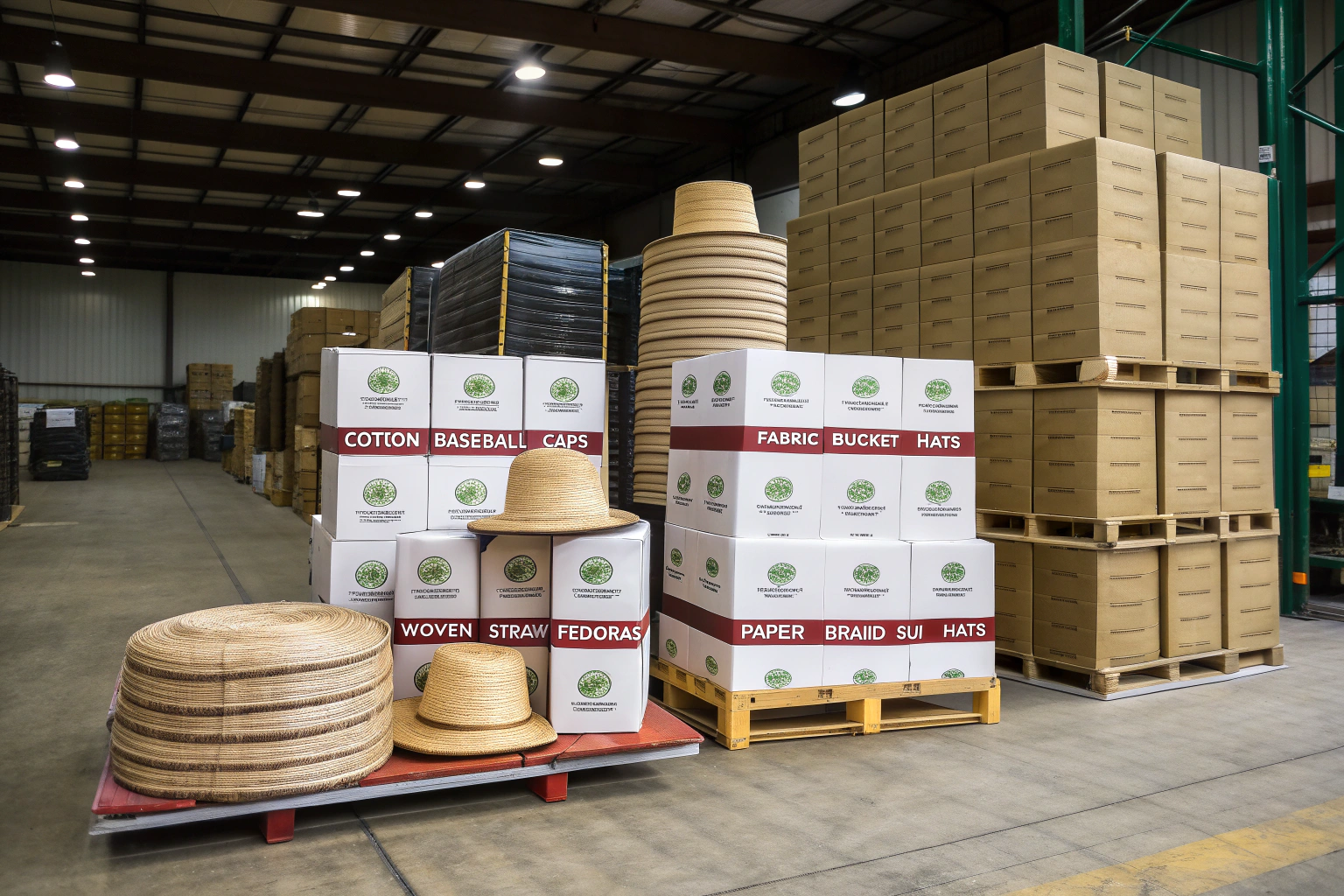
You are finalizing your spring and summer hat assortment. You need 1,000 cotton twill baseball caps for your casual line. You need 800 woven paper straw fedoras for your resort line. You need 500 canvas bucket hats for your streetwear collection. You email three different factories. The baseball cap factory says they only do structured caps. The straw hat factory says they do not touch fabric. The third factory is a trading company that says "Yes" to everything but you suspect they are just subcontracting to the same two factories and marking up the price. You are facing the complexity of managing two or three separate vendor relationships, separate shipments, and separate quality standards. You wonder if there is a single factory that can handle this diverse range.
Yes, AceAccessory can produce both fabric hats and straw hats in a single consolidated order. Our Zhejiang facility operates distinct, specialized production cells for cut-and-sew fabric headwear and woven straw headwear, each staffed by experienced artisans using category-specific equipment, but managed under one unified quality control and project management system.
I manage AceAccessory, and this exact scenario is why we structured our factory the way we did. We know that apparel brands and accessory brands do not think in single material categories. They think in seasonal collections. A summer collection naturally includes both cotton caps and straw fedoras. We built our production capabilities to match how our clients actually buy. Let me explain how we make this work seamlessly under one roof.
How Does a Single Factory Manage Both Fabric and Straw Hat Production?
The key to producing both fabric hats and straw hats in one factory is not to mix the production lines. Fabric and straw are fundamentally different materials requiring completely different machinery, skills, and finishing processes. Trying to make a straw hat on a sewing machine designed for cotton twill would be a disaster.
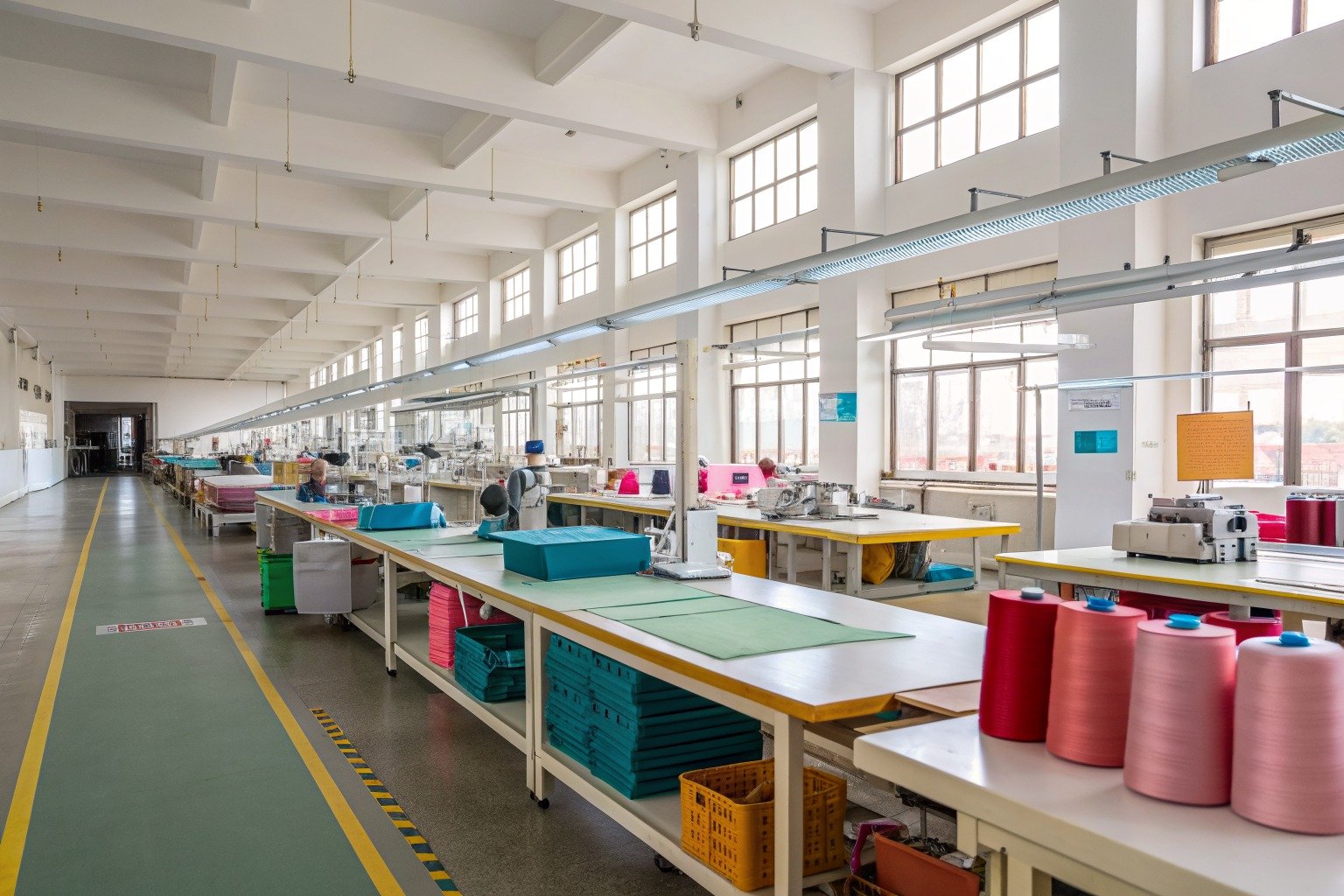
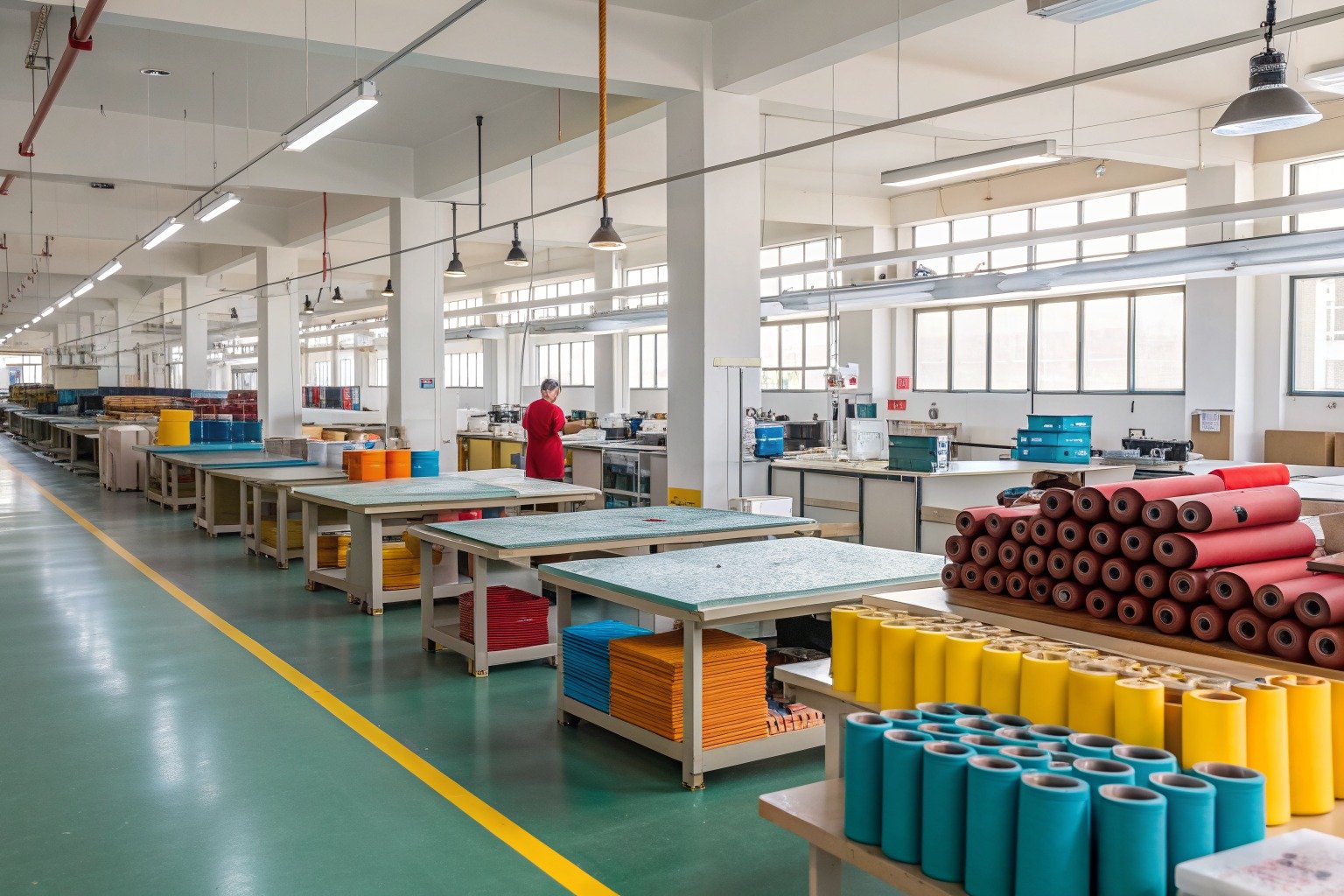
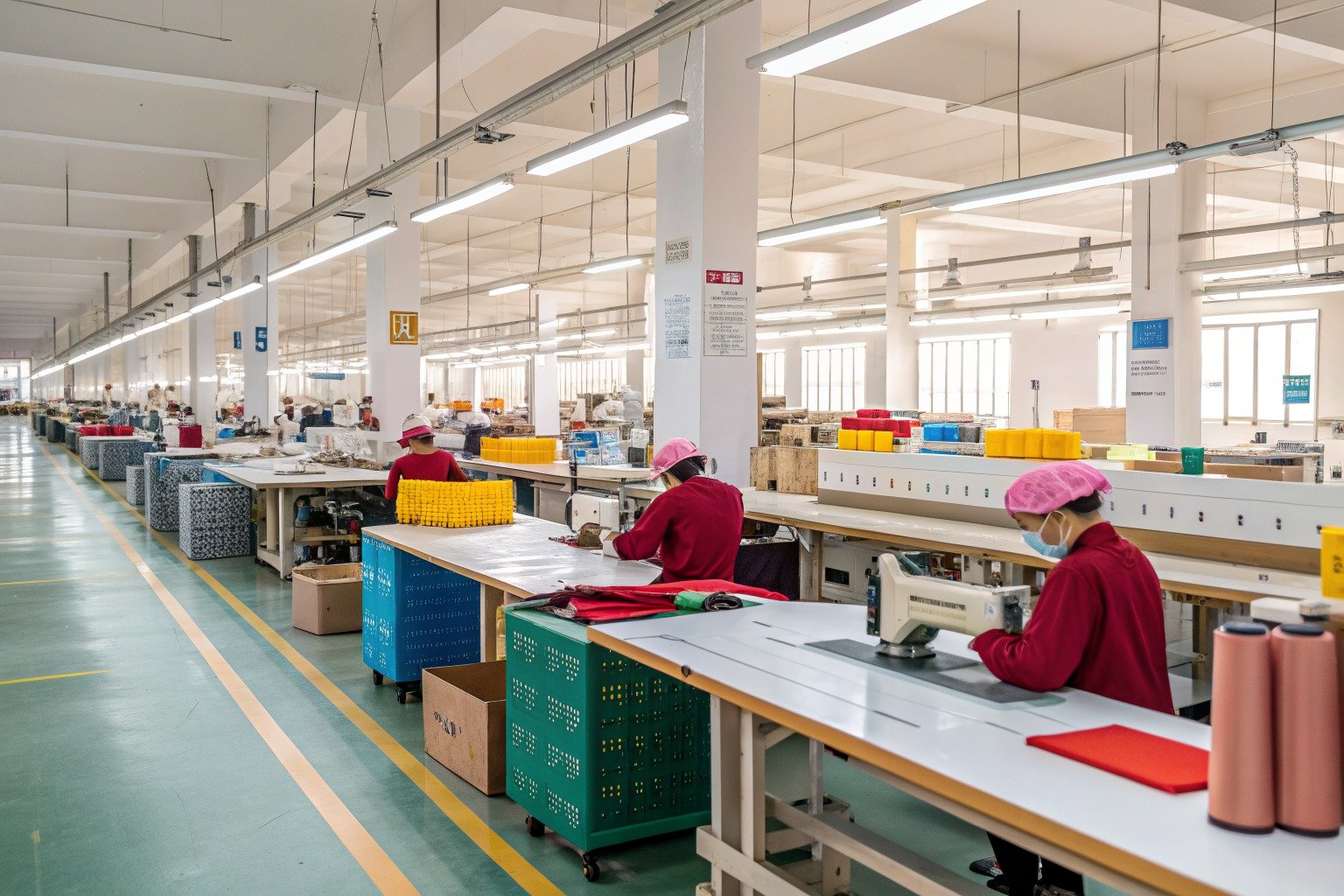
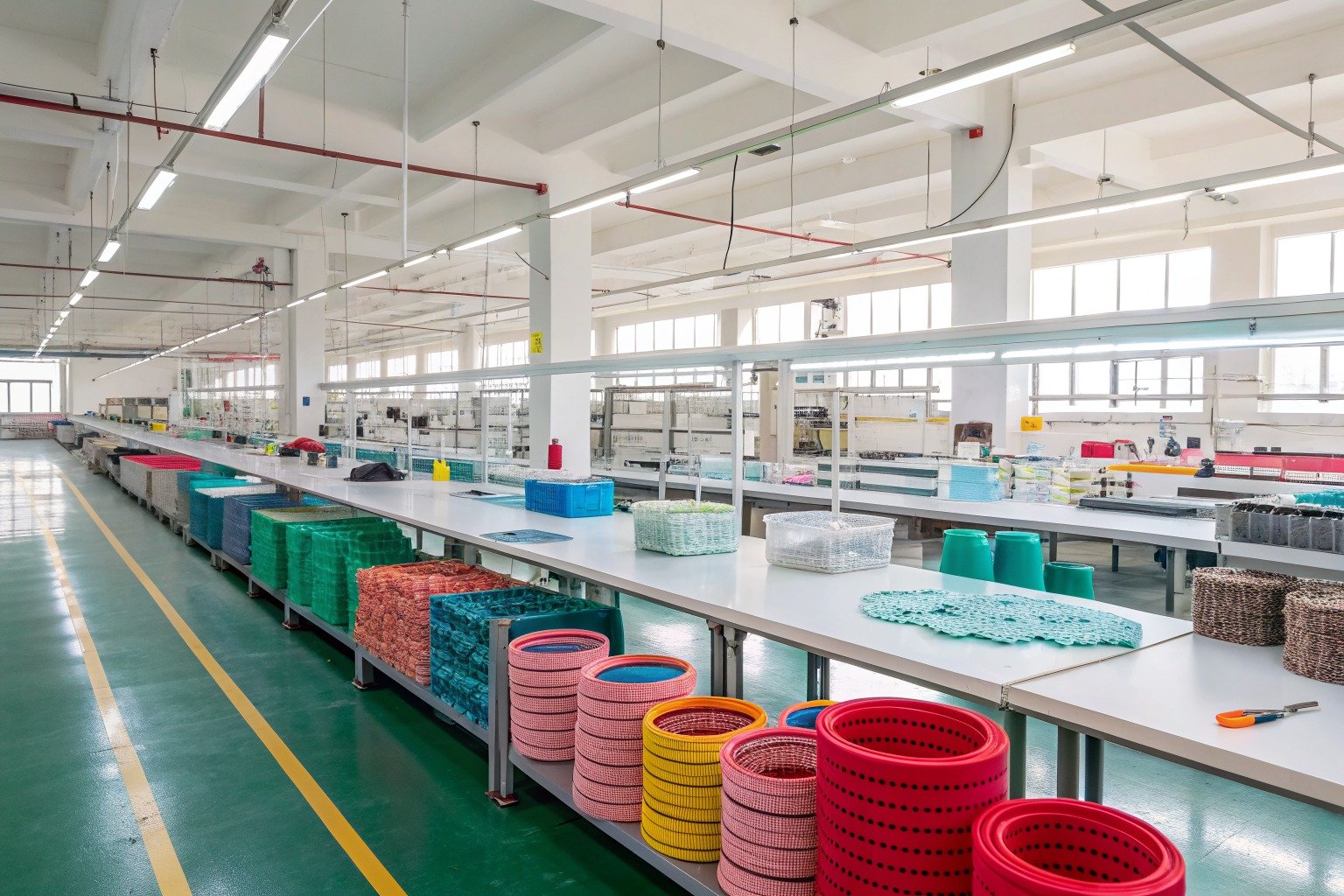
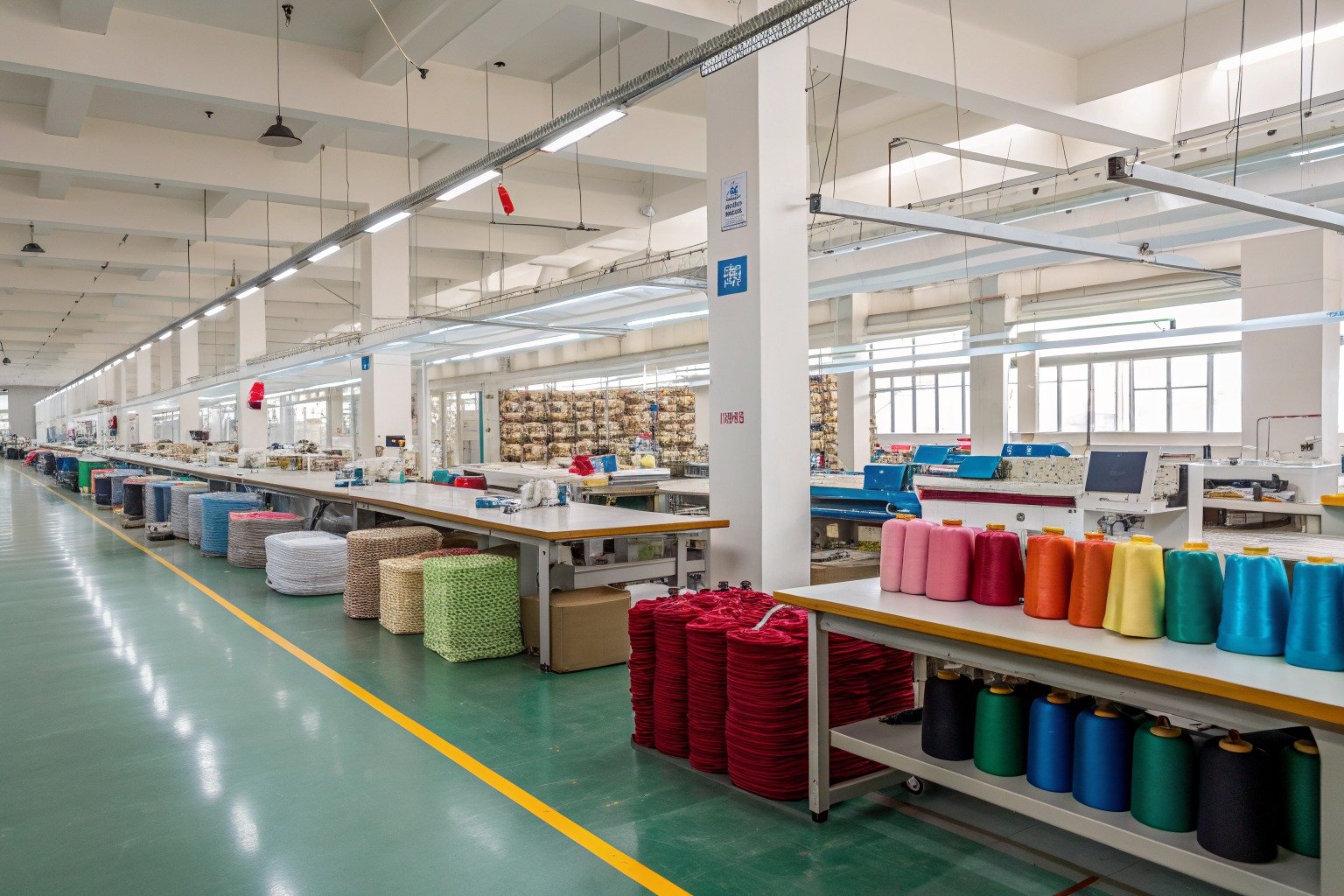
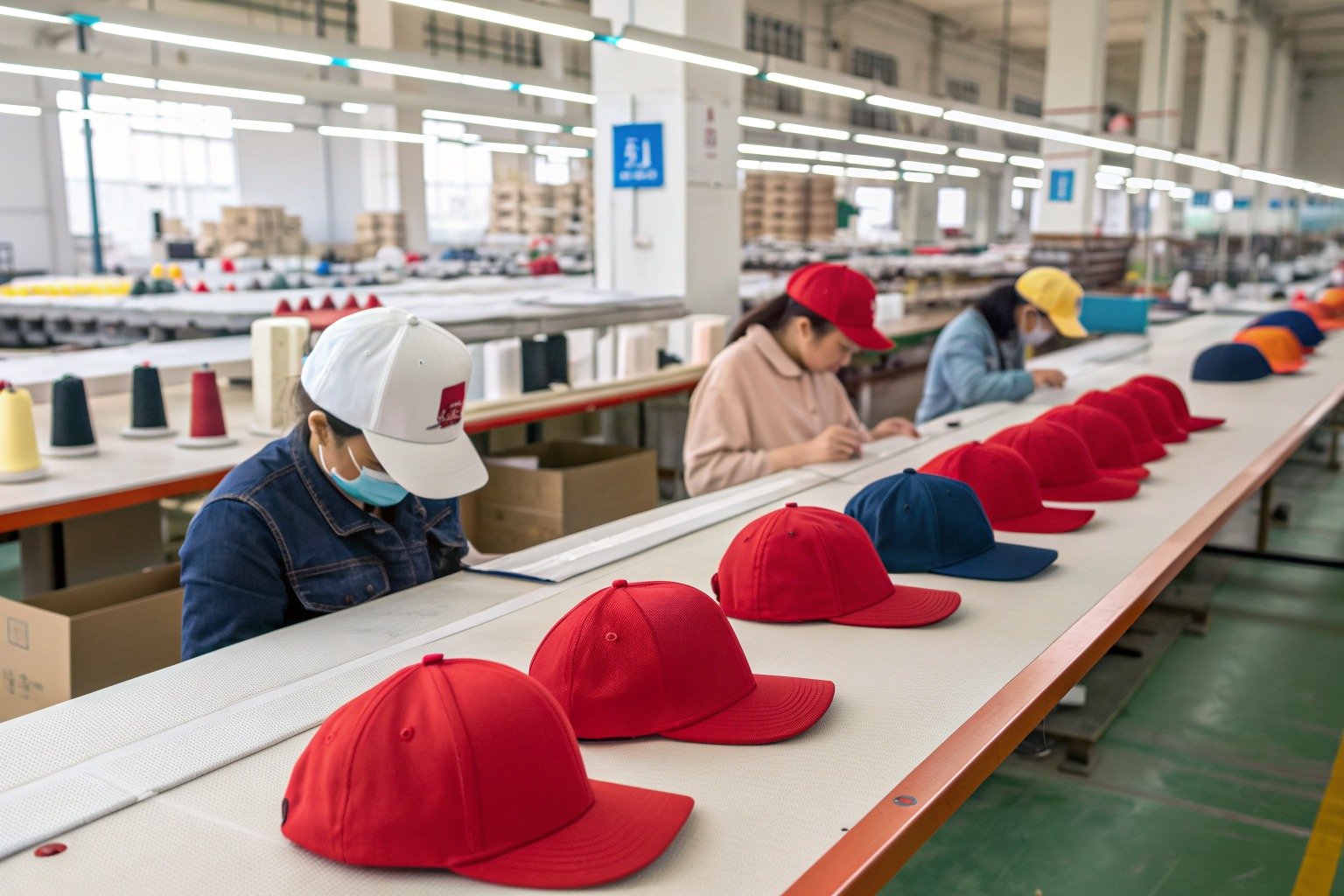
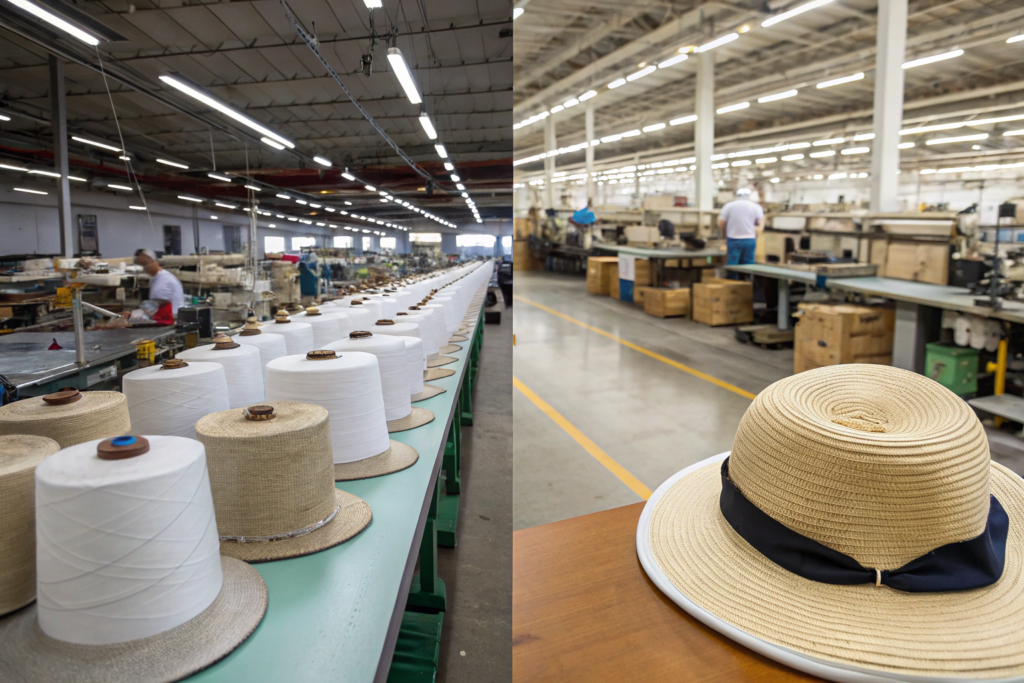
Our factory is organized into distinct production cells. The cut-and-sew cell is dedicated to fabric hats. This area houses our industrial sewing machines, our cutting tables, our embroidery machines, and our steam presses. The workforce in this cell are skilled sewers and machine operators. The straw hat cell is a completely separate area. It houses our wooden hat blocks, our hydraulic blocking and pressing machines, our industrial steam boilers, and our sewing stations for attaching sweatbands and trims. The workforce in this cell are skilled straw hat blockers and finishers.
These two production teams operate independently, but they report to the same production manager and are served by the same project management, quality control, and shipping departments. This cellular manufacturing structure allows us to maintain deep specialization in each category while offering the client the convenience of a single point of contact. This cellular manufacturing for diverse hat categories fabric and straw is how we achieve both specialization and consolidation.
What Are the Key Equipment Differences Between the Two Cells?
The equipment tells the story of the different manufacturing processes. The fabric hat cell relies on high-speed industrial sewing machines. We use lockstitch machines for seams, overlock machines for edge finishing, and specialized machines for attaching brims and sweatbands. The primary tools are needles, thread, and scissors.
The straw hat cell relies on heat, steam, and pressure. The central piece of equipment is the hydraulic blocking machine. This machine uses tremendous pressure to press a straw hood or capeline over a heated aluminum or wooden block, shaping it into the desired crown shape. We also use industrial steam boilers to soften the straw before blocking. Sewing machines are used in the straw cell, but primarily for attaching trims and sweatbands to an already formed hat body. The primary tools are blocks, steam, and presses.
A client touring our facility can instantly see the difference. The fabric cell sounds like a busy tailor shop. The straw cell sounds like a steamy laundry with the rhythmic thump of the blocking presses. This specialized equipment for cut and sew fabric hats versus blocked straw hats demonstrates our genuine in-house capability for both categories.
How Are the Workforces Skilled Differently?
The skills are not transferable. A skilled sewer who can stitch a perfect curved brim on a baseball cap is not qualified to block a straw fedora. Straw hat blocking is a distinct trade, often passed down through generations.
Our straw hat blockers understand the properties of different straw materials. They know how much steam and pressure a particular paper braid can withstand before it cracks. They know the precise angle to pull the straw over the block to avoid wrinkles. This is tacit, experiential knowledge. Our fabric hat sewers understand seam allowances, thread tension, and the behavior of different woven and knit fabrics.
We respect this specialization. We do not ask a sewer to block a straw hat. We maintain two separate, skilled workforces. This commitment to craft specialization is why the quality of our fabric hats and our straw hats is consistently high. This specialized skilled labor for straw hat blocking versus fabric hat sewing is a core part of our manufacturing identity.
How Does Order Consolidation Work for Mixed Hat Categories?
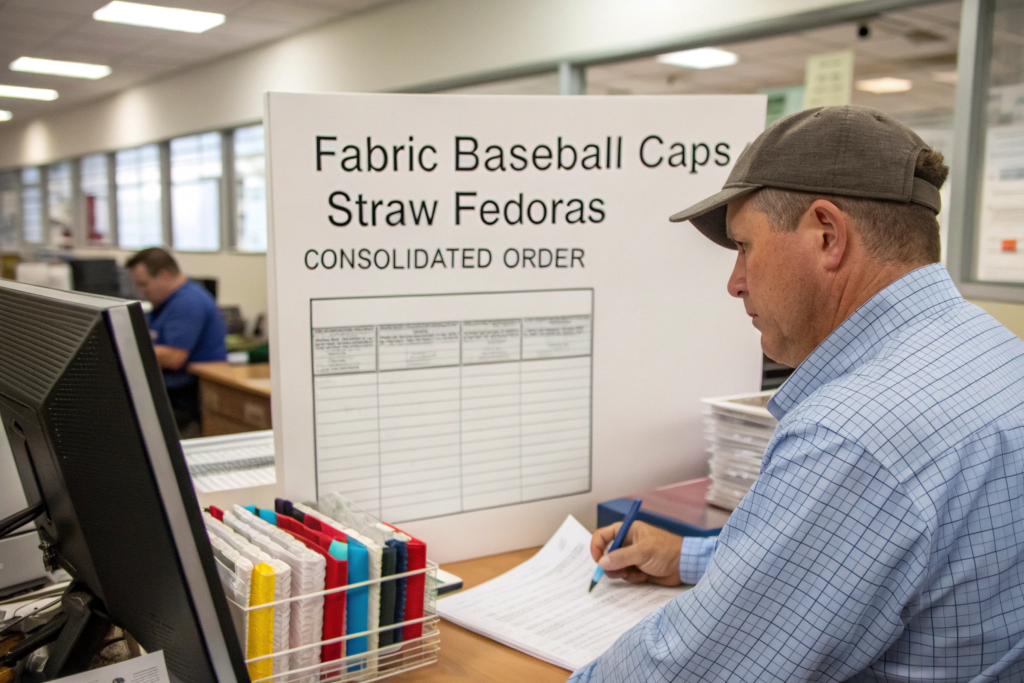
The client experience of ordering both fabric and straw hats from AceAccessory is designed to be simple and unified. You are not placing two separate orders. You are placing one consolidated order with multiple line items.
You work with a single project manager. You provide the specifications for the baseball caps and the specifications for the straw fedoras to the same person. The project manager creates a single job ticket in our system, but the ticket is routed to the appropriate production cell. The cut-and-sew details go to the fabric cell supervisor. The straw hat details go to the straw cell supervisor. Both supervisors report progress back to the central project manager.
The project manager provides you with a single weekly status update that covers both categories. You have one point of contact for all questions. You receive one consolidated invoice. This is the simplicity of consolidation without the compromise of category expertise. This consolidated order management process for mixed fabric and straw hat production saves our clients significant administrative time.
Can the Fabric Hats and Straw Hats Ship in the Same Container?
Yes, absolutely. This is one of the primary benefits of consolidating the order with a single factory. Once both the fabric hats and the straw hats are finished and have passed final QC inspection, they are packed and palletized together in our warehouse.
We create a single packing list that details the cartons for the fabric hats and the cartons for the straw hats. We load all the pallets into one container. You receive one container at your warehouse, not two. You pay one set of freight and handling charges, not two. This logistical efficiency is a direct cost savings. We are careful to pack the more delicate straw hats on the top layer of the pallet and ensure they are not crushed by heavier cartons. This combined container shipping for fabric and straw hat orders reduces your total landed cost.
How Are Minimum Order Quantities Handled for Mixed Orders?
MOQs are typically set per style and per category, but a consolidated order provides some flexibility. The MOQ for a custom fabric baseball cap might be 300 units per color. The MOQ for a custom blocked straw fedora might be 200 units per color because of the setup time on the blocking machine.
However, when you are placing a larger consolidated order, we can often be more flexible with the per-style minimums. If your total order volume across all categories is substantial, we are more willing to accommodate a smaller run of a specific straw hat style to complete your assortment. This is a relationship benefit of consolidation. We view the account holistically, not as a series of disconnected small orders. This MOQ flexibility for consolidated multi category hat orders is a practical advantage of working with a single, diversified factory.
What Are the Quality Control Differences for Fabric Versus Straw?
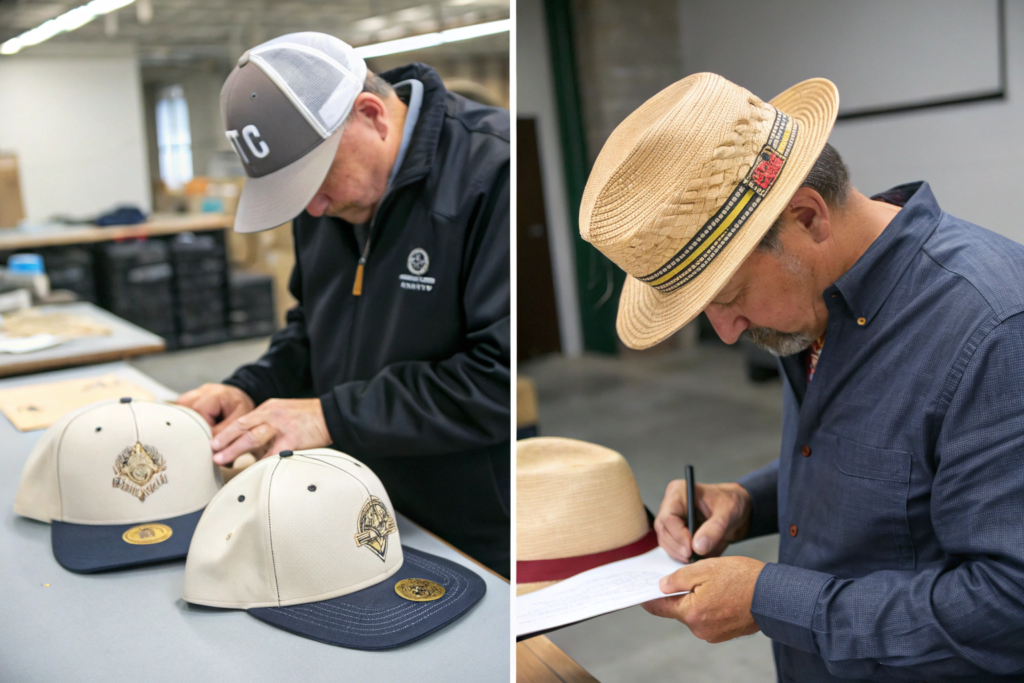
The quality standards for a fabric hat and a straw hat are different because the materials and failure modes are different. A single QC checklist applied to both would be meaningless. We use category-specific inspection criteria.
For fabric hats, the QC inspection focuses on seam integrity, stitch density, embroidery registration, colorfastness, and the correct attachment of the sweatband and closure. The inspector looks for loose threads, skipped stitches, and puckering. For straw hats, the QC inspection focuses on the consistency of the weave, the symmetry of the brim, the smoothness of the crown blocking, the absence of cracks or splits in the straw, and the secure attachment of the sweatband and trim. The inspector looks for weaving flaws, uneven brims, and glue marks.
Our QC team includes inspectors who are cross-trained to understand the specific standards for each category. They use separate checklists. They know what a "major defect" looks like in a baseball cap and what it looks like in a straw fedora. This category specific quality control checklists for fabric hats and straw hats ensures that the right standards are applied to the right products.
How Do You Prevent Damage to Straw Hats During Packing and Transit?
Straw hats are inherently more fragile than fabric hats. A straw brim can be cracked or warped if improperly packed. The packing process for straw hats requires specific techniques and materials.
Each straw hat is typically packed in its own individual polybag or tissue paper to protect the surface from abrasion. The hats are then placed in a carton with internal supports, such as cardboard dividers or molded pulp inserts, that prevent the hats from shifting and the brims from being crushed. We use a specific carton size and stacking pattern for straw hats to distribute weight evenly.
We do not mix straw hats and fabric hats loosely in the same carton. They are packed in separate cartons, clearly labeled. The cartons containing straw hats are marked "FRAGILE" and "DO NOT CRUSH." We load these cartons on the top layer of the pallet. This specialized packing methods for shipping delicate straw hats internationally is a critical part of our service for this category.
What Are the Common Defects to Inspect for in Straw Hats?
When you receive your sample or bulk shipment of straw hats, you should know what to look for. The most common defects in straw hats are related to the blocking and finishing process.
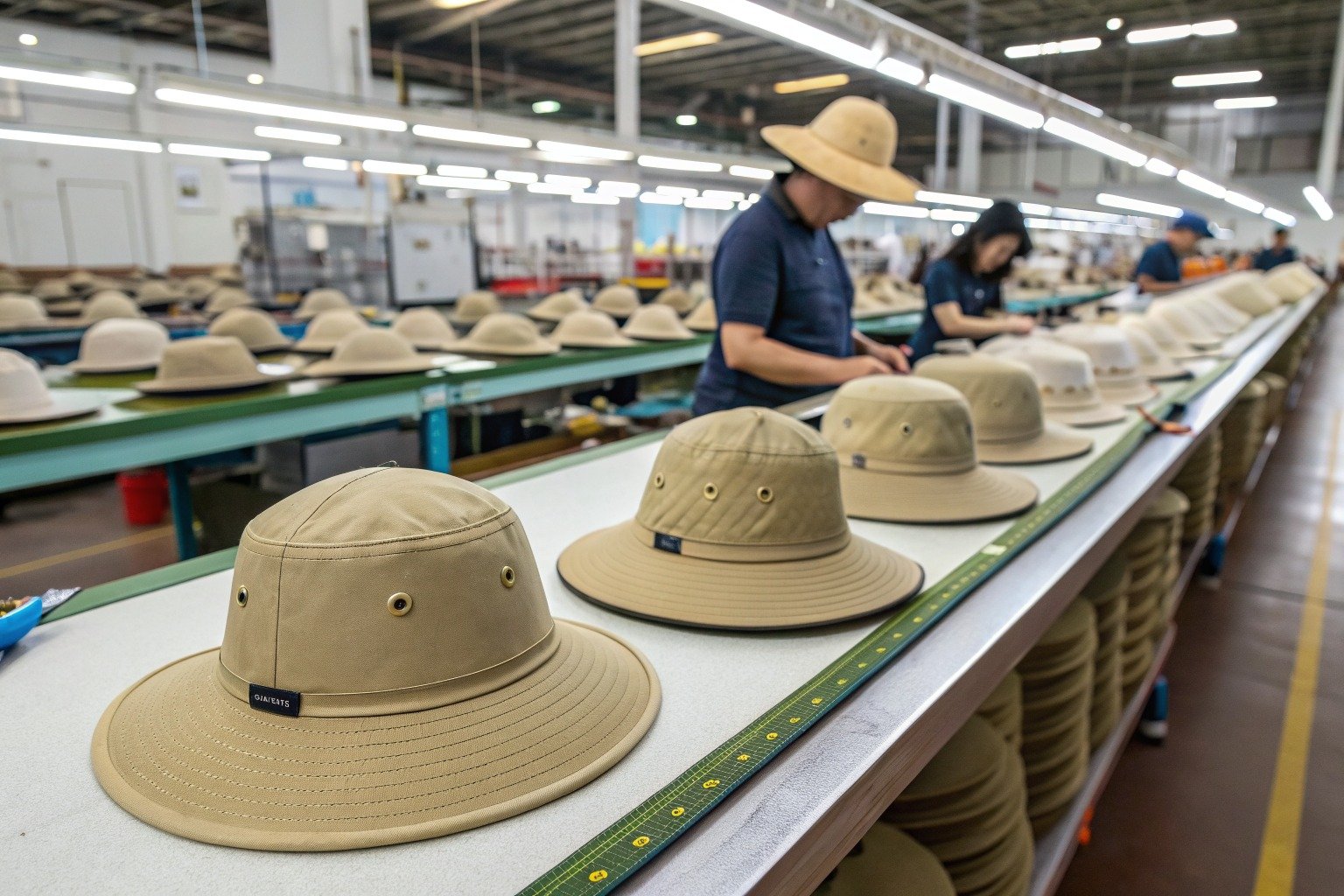
Inspect the brim for symmetry. Place the hat on a flat surface. The brim should lie flat and the distance from the crown to the brim edge should be consistent all the way around. An uneven brim is a blocking defect. Inspect the crown for wrinkles or cracks. The straw should be smooth and taut over the crown. Wrinkles indicate insufficient tension during blocking. Cracks indicate the straw was too dry or too much pressure was applied. Inspect the sweatband attachment. The sweatband should be sewn in smoothly without puckering the straw. Inspect the trim. Any ribbon or band should be attached cleanly with no visible glue. This common quality defects in woven straw and paper braid hats is a practical guide for your incoming inspection.
How Do You Coordinate Sampling Timelines for Two Different Categories?
The sampling timeline for a straw hat is often longer than for a fabric hat. The straw material may need to be ordered, and the blocking and drying process takes time. It is important to set realistic, category-specific expectations upfront.
A custom fabric baseball cap sample with an existing mold can often be produced in 7 to 10 business days. A custom blocked straw hat sample, especially if a new block shape is required, can take 14 to 21 business days. The creation of a new wooden hat block is a skilled craft in itself.
Our project manager provides a coordinated sampling timeline that accounts for these different lead times. We may initiate the straw hat sample process earlier so that both samples are ready for your review at approximately the same time. This allows you to evaluate the complete collection together. This coordinating sampling lead times for fabric and straw hat categories is part of our project management service.
Can a Single Tech Pack Cover Both a Fabric Hat and a Straw Hat?
No, a tech pack is a detailed specification for a single product. A fabric baseball cap and a straw fedora require separate tech packs because the construction details are entirely different.
The fabric cap tech pack will specify the number of panels, the seam types, the closure type, and the embroidery placement. The straw hat tech pack will specify the crown height, the brim width, the block shape number, and the sweatband material. The format and the critical dimensions are different.
We provide our clients with category-specific tech pack templates. This ensures that all the necessary information is captured for each product type. Our project manager assists clients in completing these templates correctly. This separate tech pack requirements for cut and sew hats versus blocked straw hats is a necessary part of professional product development.
How Do You Ensure Brand Consistency Across Fabric and Straw Hats?
Even though the products are made in different cells with different processes, they belong to the same brand. Achieving a cohesive look requires centralized oversight of trims and branding elements.
The sweatband, the interior taping, the hang tag, and any metal hardware like a side rivet are opportunities to create brand consistency. We ensure that the same custom woven label is sewn into the sweatband of both the fabric cap and the straw hat. We use the same custom printed hang tag on both products. If a metal logo pin is used, we ensure the finish matches across categories.
Our design team reviews the entire collection to ensure these branding touchpoints are consistent. This creates a unified brand experience for the consumer, even though the core materials and construction methods are different. This maintaining brand consistency across diverse hat categories through trim and label management is a value-added service of a consolidated factory partner.
Conclusion
Producing both fabric hats and straw hats in one order is not only possible, it is a strategic advantage when working with a factory like AceAccessory that is purpose-built for multi-category manufacturing. Our cellular production structure allows us to maintain deep specialization in each distinct craft, cut-and-sew for fabric, and blocking for straw, while providing our clients with the simplicity and efficiency of a single point of contact.
You gain the convenience of consolidated order management, a single weekly status report, and a single, cost-effective container shipment. You gain the confidence of knowing that each product category is being made by skilled artisans using the appropriate specialized equipment. And you gain the brand cohesion that comes from centralized oversight of trims, labels, and quality standards.
You do not have to choose between a cap factory and a straw hat factory. You can choose a partner who does both, and does both well. This allows you to build a complete, seasonally relevant headwear collection without multiplying the complexity of your supply chain.
If you are planning a mixed order of fabric and straw hats and want to explore the benefits of consolidation with a single, multi-capable manufacturer, I encourage you to contact our Business Director, Elaine. She can arrange a video tour showing our distinct cut-and-sew and straw hat production areas and discuss your specific assortment needs. You can email Elaine at: elaine@fumaoclothing.com. Let us show you how we make the complex simple.