A streetwear brand owner from Amsterdam once asked me a question that stopped me in my tracks. He had spent six months building a collection that mixed machine-knitted ribbed beanies with hand-crocheted bucket hats. He had found a great knitting factory and a separate crochet workshop, and he was trying to manage both of them. The knitter would deliver on time, but the crochet workshop would disappear for two weeks and then send samples that did not match the knitted colors. His collection, designed to be a coordinated set, was falling apart because two suppliers could not align their production schedules or their dye lots. He asked me if we could do both under one roof. I said yes, and I showed him our crochet station right next to our knitting machine floor.
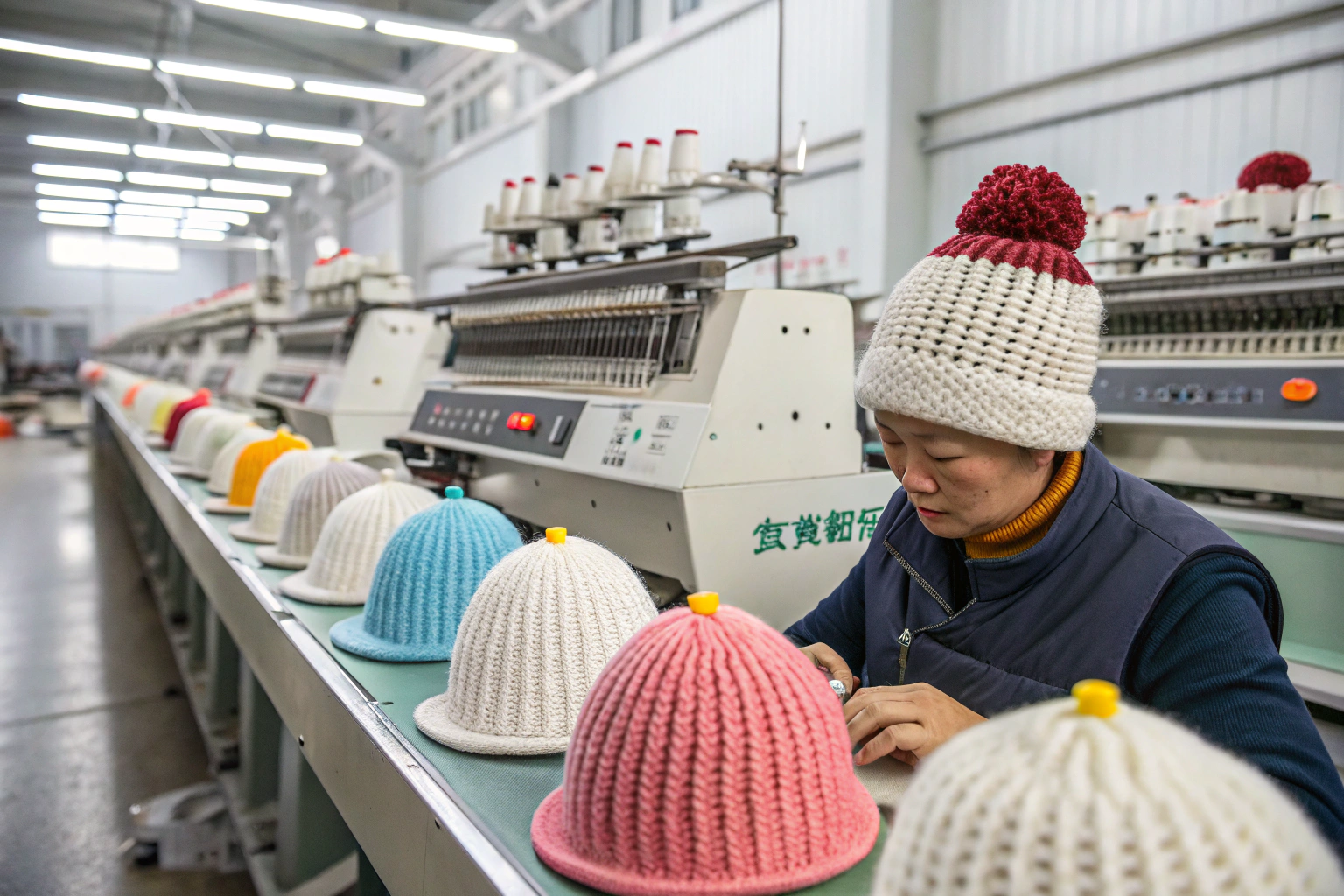
Yes, our factory can produce both knitted and crochet beanies in a single, integrated facility. We operate a dedicated machine knitting department with computerized flat knitting machines for consistent, high-volume production, and a separate hand-crochet workshop staffed by skilled artisans for authentic, textured, handcrafted pieces. By housing both production methods under one roof, we can ensure exact color matching across knitted and crochet styles, coordinate production schedules for combined orders, and maintain consistent quality standards across both product types.
At our Zhejiang facility, the dual capability is not an afterthought. It is a strategic investment we made specifically because we saw so many brands struggling to coordinate separate suppliers for their mixed-method collections. Let me explain how the two production methods coexist, what each method is best suited for, and how our integrated approach solves the coordination problems that drive brand owners crazy.
What Are the Key Differences Between Machine Knitting and Hand Crochet Production?
Knitting and crochet are fundamentally different fabric construction methods. They use different tools, different yarn handling techniques, and produce fabrics with different structural properties. A knitted beanie and a crochet beanie may look similar in a product photo, but they feel different on the head, they stretch differently, and they require completely different production equipment and skills. Understanding these differences helps you decide which method to use for which design.
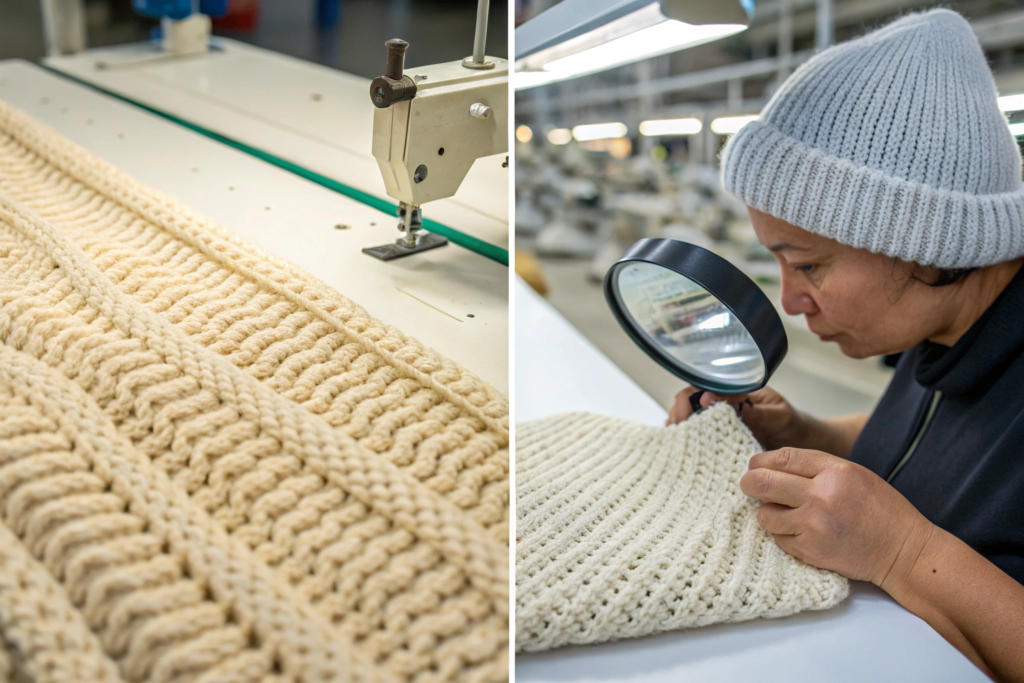
How Does Machine Knitting Create Consistent, Stretchy Beanie Fabric?
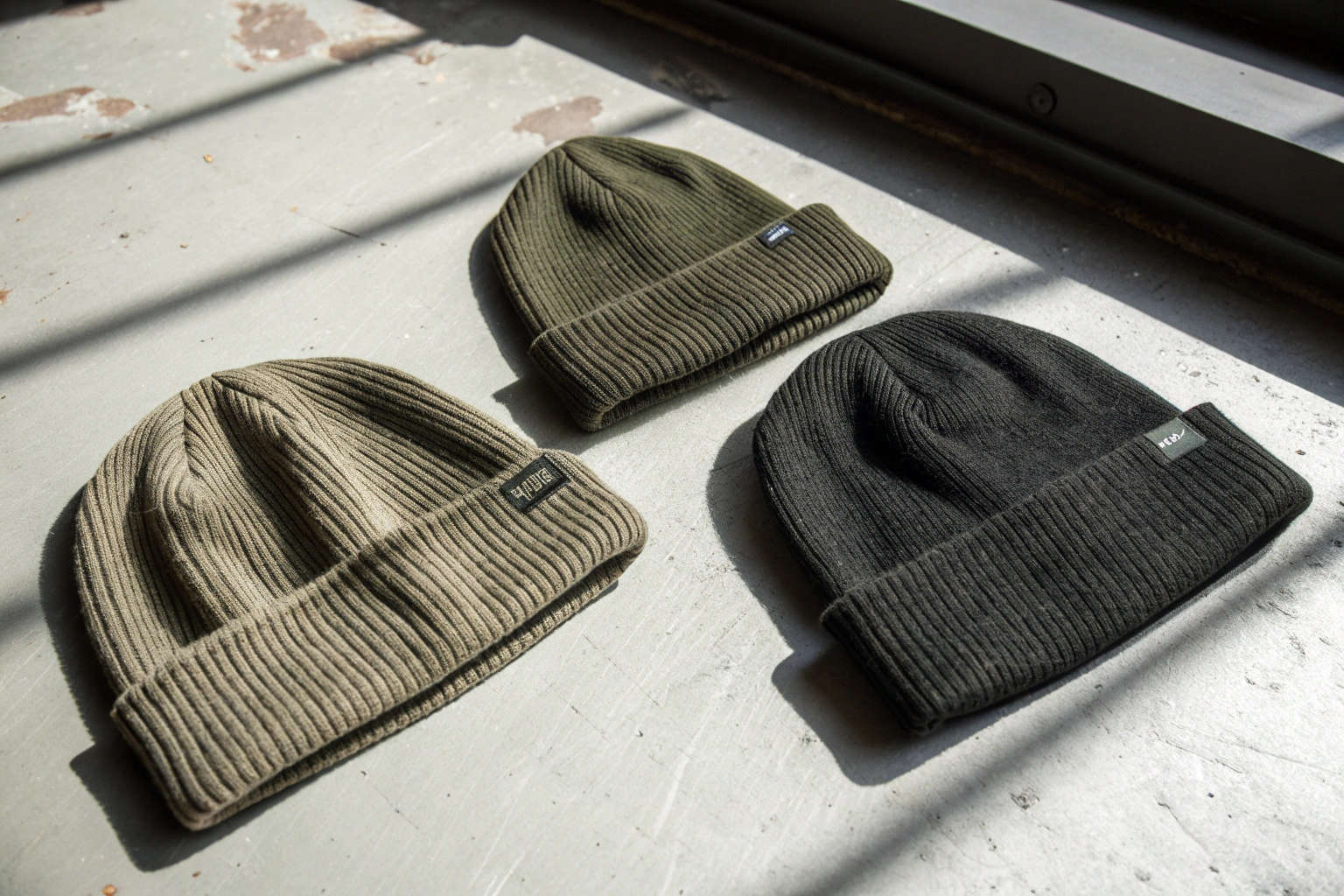
Machine knitting uses a series of hooked needles arranged in a bed. The machine moves the needles up and down in a programmed sequence, pulling loops of yarn through previous loops to create interlocking rows of stitches. Our computerized flat knitting machines can produce a complete beanie body in a single, seamless tube. The stitch formation is perfectly uniform because the machine controls the yarn tension and needle movement with precision that no human hand can match. The resulting fabric has a natural elasticity because each knitted stitch is essentially a loop that can stretch and recover. A 1x1 rib knit, where knit and purl stitches alternate, creates vertical columns that act like tiny springs. This is why a machine-knitted ribbed beanie can stretch to fit a wide range of head sizes while still feeling snug and secure. Machine knitting is ideal for beanies that need consistent sizing, fine gauge textures, and high production volumes. One knitting machine can produce dozens of beanie bodies per day, making it the cost-effective choice for larger orders.
What Makes Hand Crochet Beanies Unique in Texture and Construction?
Crochet uses a single hooked needle manipulated by hand. The crochet hook pulls loops of yarn through other loops, but unlike knitting, only one loop is active on the hook at any time. This fundamental difference means that crochet fabric is structurally distinct from knitted fabric. Crochet stitches are thicker, more textured, and less elastic than knitted stitches. Common crochet stitches like the single crochet, double crochet, and popcorn stitch create a fabric with a pronounced three-dimensional texture that knitting machines cannot replicate. A hand-crocheted beanie has visible stitch character. You can see the individual clusters, shells, or waves created by the crochet hook. This texture is exactly what makes crochet beanies desirable for fashion brands. The fabric has a handmade, artisanal quality that reads as authentic and craft-oriented. The trade-off is that crochet is slower. A skilled crochet artisan can produce perhaps three to five simple beanies per day. A complex stitch pattern or a chunky yarn may reduce that to one or two. Hand crochet also introduces natural variation. Each artisan has a slightly different tension, which means two crochet beanies from the same pattern will not be as identical as two machine-knitted beanies. This variation is part of the charm of a handmade product, but it requires a QC process that distinguishes between acceptable handmade variation and unacceptable quality deviation.
How Does a Single Factory Manage Both Production Methods Simultaneously?
Managing both machine knitting and hand crochet in one factory is a scheduling and quality control challenge. The two production methods operate on completely different timelines, require different workforce management, and produce output at different rates. The reason most factories only do one or the other is that blending them requires a project management system that can handle both fast, automated output and slow, manual craftsmanship without one disrupting the other.
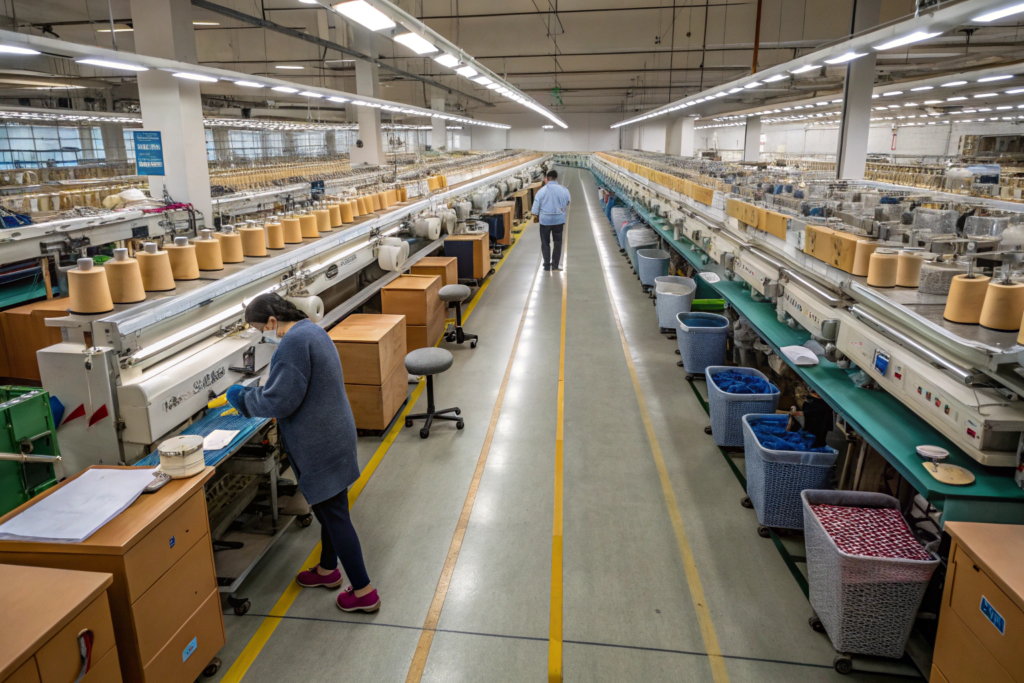
How Are Production Schedules Coordinated for Mixed-Method Orders?
When a brand orders both knitted and crochet beanies in the same collection, the timelines must be synchronized. The knitted beanies might be finished in three days on the machines, while the crochet beanies take three weeks to hand-produce by the artisan team. If we start both at the same time, the knitted beanies sit in a box for weeks waiting for the crochet pieces to catch up. This is poor practice because it ties up finished goods and risks them getting dusty or damaged in storage. Instead, we reverse-schedule from the shipment date. We calculate the crochet lead time first because it is the longer, less flexible path. We start the crochet team on their production weeks before the knitting machines are even programmed. When the crochet beanies are approximately seventy percent complete, we start the machine knitting run. This way, both production streams finish within a few days of each other, and the entire order can be QC-checked and packed as a single shipment. This synchronized scheduling is only possible because both teams report to the same project manager, who has visibility into both production statuses on a single dashboard.
How Do You Ensure Color Consistency Between Knitted and Crochet Pieces?
This is the single most difficult technical challenge of mixed-method production, and it is where most separate-supplier arrangements fail. A knitted beanie and a crochet beanie made from yarn dyed in the same dye lot can still look slightly different. The reason is that the stitch structure affects how light reflects off the yarn surface. A tight, flat knitted stitch reflects light differently than a textured, three-dimensional crochet stitch. The same yarn can appear darker in a crochet beanie and lighter in a knitted beanie, or vice versa. Our solution is to produce a paired pre-production sample for every color in a mixed-method order. We knit a swatch and crochet a swatch from the same yarn batch, then we place them side by side under D65 standard daylight and photograph them for the buyer's approval. If there is a perceptible color difference caused by the stitch structure, we can adjust by selecting a slightly lighter or darker yarn dye lot for one of the production methods. This level of color coordination is only possible when both the knitting and the crochet are happening in the same facility, using yarn from the same inventory, under the same quality control team.
What Materials Work Best for Knitted Versus Crochet Beanies?
Not all yarns work equally well for both production methods. A yarn that runs beautifully through a knitting machine may be a nightmare to crochet by hand, and a yarn that creates a gorgeous crochet texture may snap or jam in a machine. Material selection must be matched to the production method from the start of the design process.
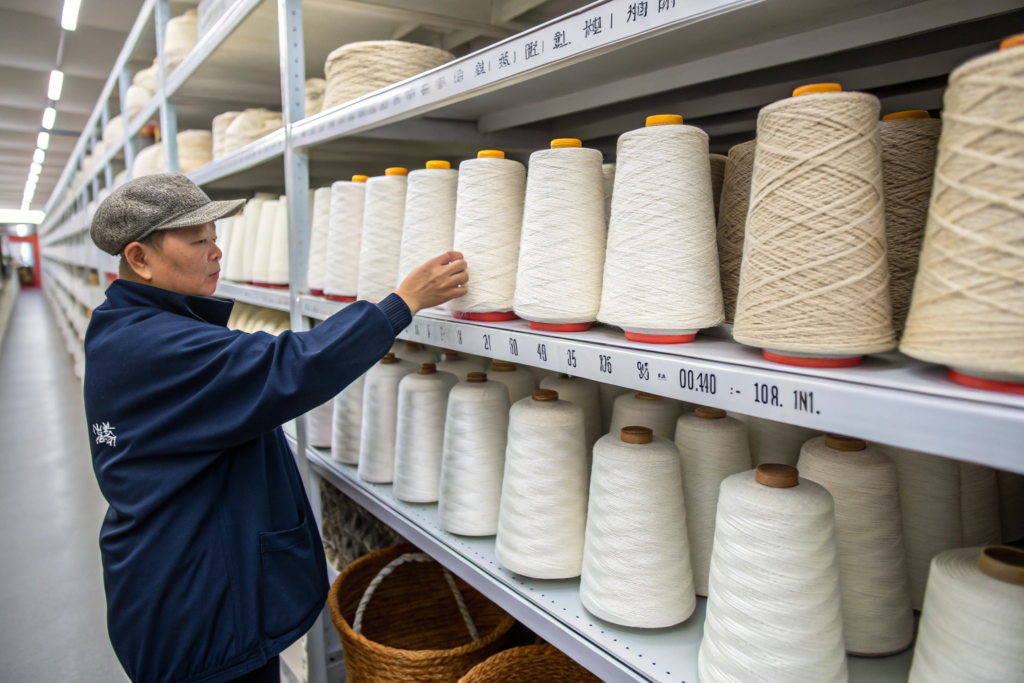
Which Yarns Are Optimized for Machine Knitting Efficiency?
Machine knitting requires yarn with a consistent diameter, a smooth surface, and sufficient tensile strength to withstand the speed and tension of the machine needles. Fine-gauge yarns, typically ranging from 2/28nm to 2/48nm for merino wool, cotton, and acrylic blends, are the standard for machine knitting. These yarns are spun onto large cones with precise winding tension. A yarn with thick-and-thin slubs or an inconsistent twist will cause the machine to drop stitches or break the yarn, creating defects. We source our machine knitting yarns from mills that specialize in coned yarns for industrial knitting, and we run a waxing process on the yarn surface to reduce friction as it passes through the machine guides. For beanies, a mercerized cotton yarn gives a smooth, lustrous finish. A lambswool blend gives warmth and a soft halo. Acrylic is the most economical and can be engineered to mimic the feel of natural fibers.
What Yarn Characteristics Are Preferred for Hand Crochet?
Hand crochet is more forgiving of yarn irregularity and actually benefits from it. A slub yarn, a boucle yarn, or a thick-and-thin artisanal yarn creates visual texture in a crochet beanie that looks intentional and beautiful. Crochet artisans prefer yarns that are plied with a firm twist because the single-hook action of crochet can untwist a loosely spun yarn, causing it to split and fray. Chunky yarns, typically in the 200-gram to 500-gram per skein range, are popular for fashion crochet beanies because the large stitch scale makes the handmade texture highly visible. We often use a wool-acrylic blend for crochet beanies because the wool gives warmth and stitch definition while the acrylic provides durability and washability. Chenille yarn, with its velvet-like texture, is also a popular choice for crochet and is completely unsuitable for machine knitting because the pile would clog the machine needles. When we develop a mixed-method collection, we select a base yarn that works for machine knitting and then source a complementary, crochet-optimized yarn in a matching color for the hand-crochet pieces. This gives each production method the best possible material while maintaining color harmony.
How Does Quality Control Differ Between Machine-Knitted and Hand-Crocheted Beanies?
Quality control for knitted and crochet beanies requires two different mindsets. Machine-knitted QC is about precision, measurement, and defect detection. Crochet QC is about aesthetic judgment, consistency within natural variation, and artisan skill assessment. The same QC inspector cannot simply apply the same checklist to both products. We train our inspectors in both standards, and we maintain separate, method-specific QC criteria.
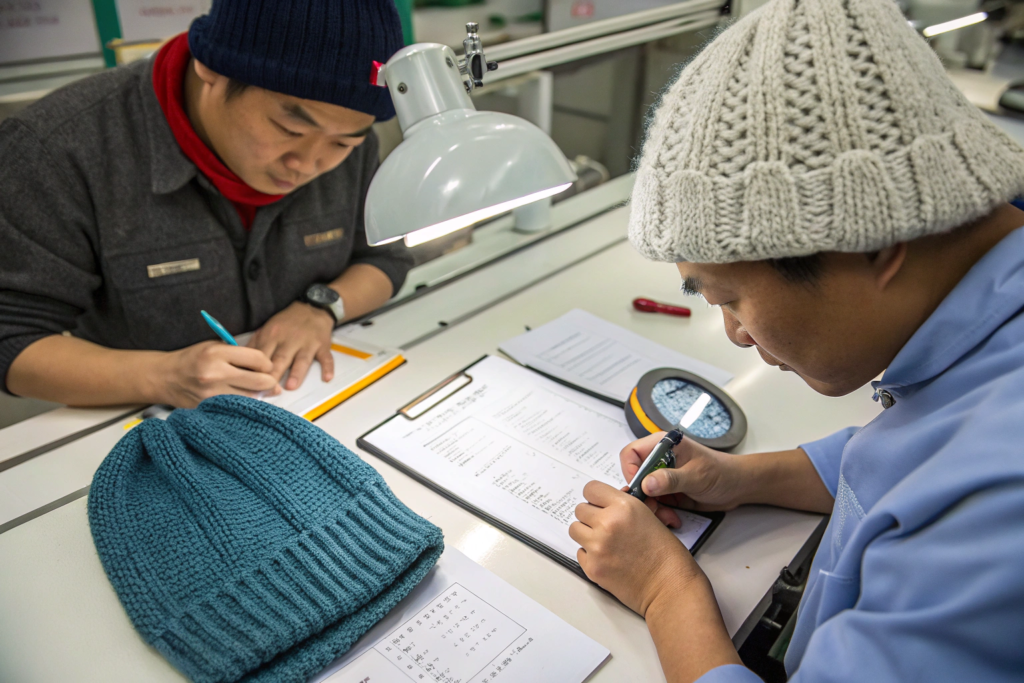
What Are the Specific QC Checks for Machine-Knitted Beanies?
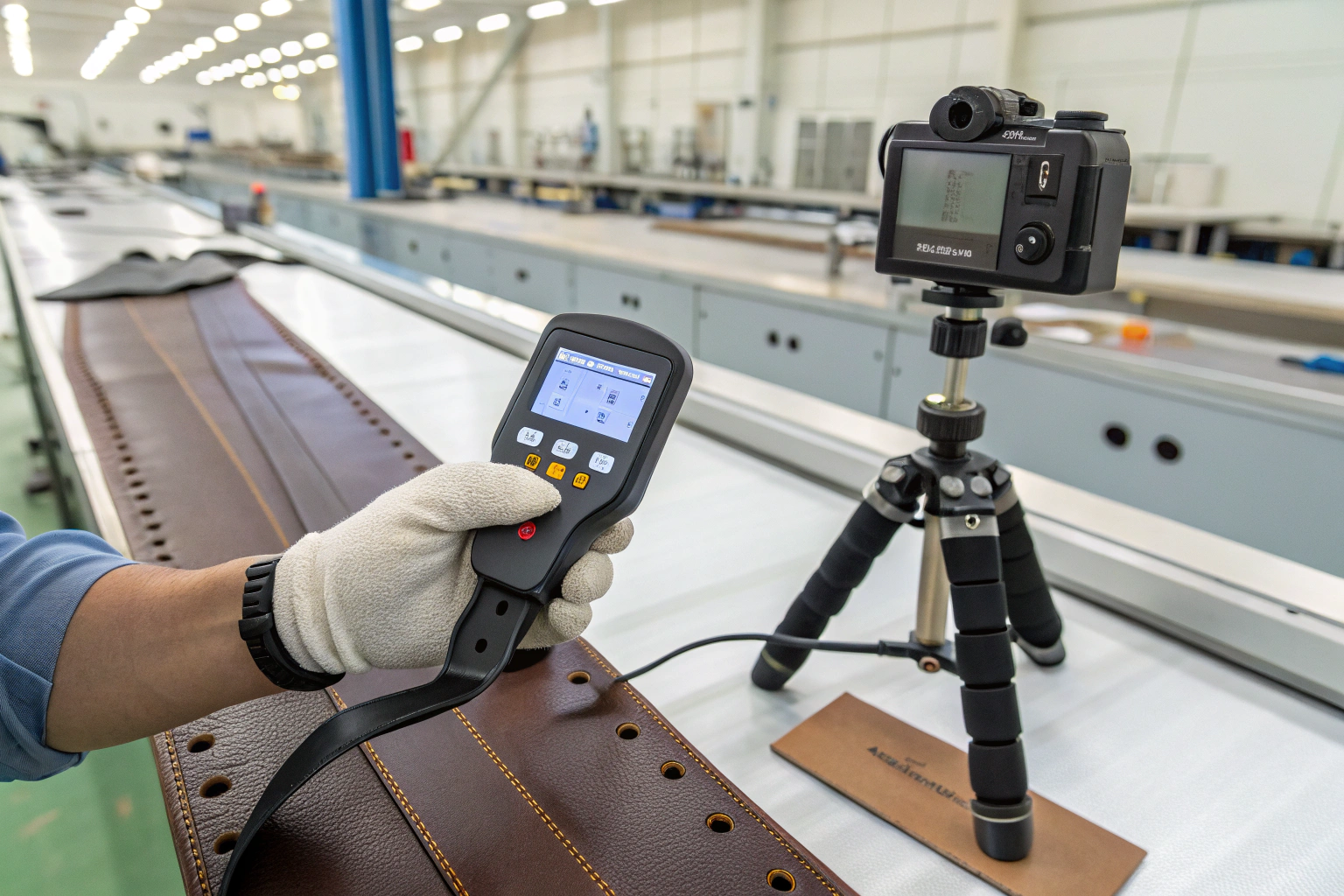
Machine-knitted beanies are inspected for dimensional accuracy, stitch uniformity, and mechanical defects. The inspector measures the beanie's width, length, and cuff depth against the approved size specification, with a tolerance of plus or minus 5 percent. The stitch density is checked by counting the number of stitches per inch and comparing it to the approved sample. A dropped stitch, a tuck stitch, or a yarn break that has been repaired is flagged as a defect. The seam, if the beanie is not fully seamless, is inspected for puckering, skipped stitches, or loose threads. Color consistency is checked under D65 lighting against the approved Pantone reference. Each beanie is turned inside out to inspect for loose yarn ends that could unravel. This is a systematic, measurement-driven process that can be completed in under a minute per beanie for a trained inspector.
How Do You Evaluate the Quality of a Hand-Crocheted Piece?
Hand-crochet QC is more nuanced. The inspector first checks the overall dimensions against the size guide, but with a wider tolerance of plus or minus 10 percent to account for natural artisan variation. The stitch pattern is visually compared to the approved reference sample. The inspector is looking for consistency in stitch size and tension. A beanie where half the stitches are noticeably tighter than the other half indicates an artisan who lost concentration or changed their grip, and it is rejected. The yarn ends, where new yarn was joined, must be securely woven in and invisible from the outside. The brim or cuff, if present, must lie flat and not curl excessively. The inspector also performs a gentle stretch test to ensure the crochet fabric has the expected degree of flexibility. Because crochet is handmade, minor variations in stitch placement are acceptable and even desirable as proof of handcraft. The inspector's judgment call is whether the variation enhances the artisanal character or crosses into sloppy work. This requires experience and a trained eye.
Conclusion
Producing both knitted and crochet beanies in one factory is not only possible but strategically advantageous for brands that want to offer mixed-method collections. The machine knitting department delivers consistent, high-volume, cost-effective production with the precision of computerized flat knitting machines. The hand-crochet workshop delivers textured, artisanal, one-of-a-kind pieces that carry the unmistakable character of human handwork. By housing both under one roof, we solve the color matching, scheduling, and quality consistency problems that plague brands trying to coordinate separate suppliers.
The integrated approach also simplifies the buyer's life. One purchase order, one project manager, one shipment, one set of compliance documentation. The complexity of managing two production methods is absorbed by the factory, not passed on to the brand owner.
At AceAccessory, we built our dual-capability facility because we listened to buyers who were exhausted by the logistical gymnastics of managing separate knitting and crochet suppliers. Our knitting machines and our crochet artisans share the same yarn inventory, the same QC standards, and the same project management team.
If you are planning a beanie collection that includes both machine-knitted and hand-crocheted styles, I invite you to reach out to us. We can provide paired samples so you can see and feel the difference between the two methods, and we can build a synchronized production schedule that delivers your complete collection in one shipment.
To discuss your mixed-method beanie project, please contact our Business Director, Elaine. You can reach her directly at elaine@fumaoclothing.com. Let us bring both the precision of the machine and the soul of the handmade to your next collection.