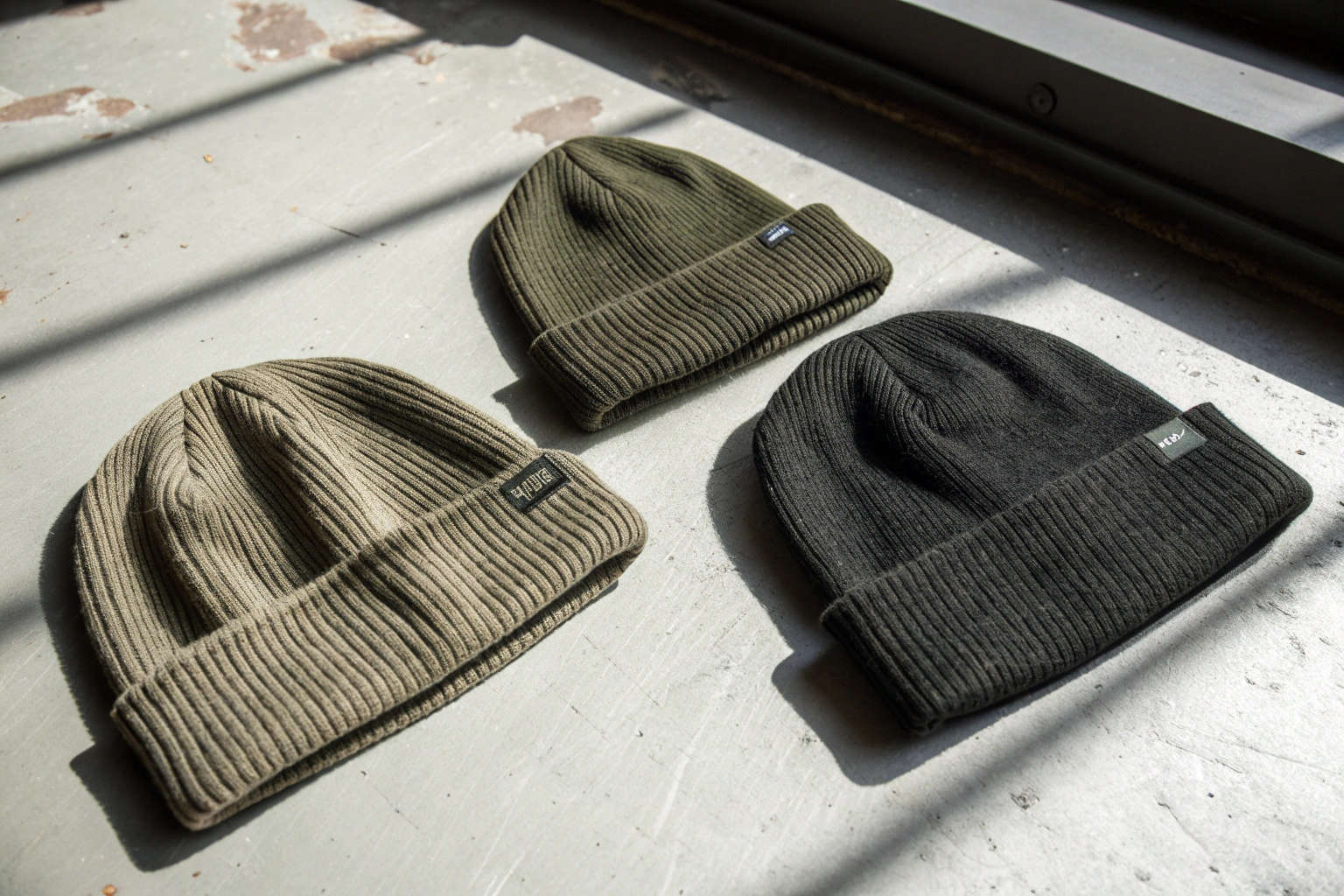
Last winter, a streetwear brand owner from Los Angeles sat in my office and told me a painful story. He had ordered five thousand beanies based on a trend forecast from two years earlier. Standard folded cuff, solid colors, nothing risky. They landed in stores and sat there. Meanwhile, a competitor brand dropped a slouchy, oversized cuff beanie in a gritty editorial campaign, and it sold out in three days. He had bet on safety and lost. Streetwear does not reward playing it safe. It rewards being early on the right silhouette.
The top three beanie cuff styles for streetwear brands in 2026 are the oversized slouchy elongated cuff, the tight ribbed fisherman fold-over cuff, and the raw unfinished laser-cut edge. These three silhouettes are dominating streetwear lookbooks, influencer styling, and wholesale buying patterns because they each offer a distinct attitude and a clear visual departure from the standard single-fold beanie that saturated the market in previous years.
As the owner of AceAccessory, I work directly with streetwear labels from North America, Europe, and Japan. I see their design briefs months before the products hit the market. Let me walk you through each of these three cuff styles, explain why they are winning, and give you the technical details you need to spec them correctly for your own production.
Why Is the Oversized Slouchy Elongated Cuff the Leading Streetwear Silhouette?
The defining streetwear beanie of 2026 is not just worn. It is sculpted. The oversized slouchy elongated cuff has taken over because it breaks the proportions of a traditional hat. Instead of sitting neatly on the crown of the head, this beanie extends the cuff upward and backward, creating a draped silhouette that adds height and a sense of effortless attitude. It references the slouchy skate and hip-hop beanies of the 1990s but updates the proportion with modern, heavier-gauge yarns that give it architectural structure rather than limp fabric collapse.

How Does the Elongated Cuff Change the Beanie's Visual Proportion?
A standard beanie cuff is about 6 to 8 centimeters long, folded once. The 2026 elongated cuff is 15 to 20 centimeters long, and it is not always folded in the traditional sense. Some styles feature a single deep fold that creates a thick, padded band around the forehead while the excess length stands upright or drapes backward. Other styles have no fold at all, and the entire extra length is worn as a dramatic slouch that pools at the back of the head. This vertical extension changes the wearer's silhouette. It elongates the face, adds perceived height, and creates a recognizable shape even in a grainy Instagram photo. The visual language is anti-conformity. It says the wearer is not following a dress code. This aligns perfectly with the streetwear ethos of individual expression. The construction requires a knit with enough body to hold the shape. A lightweight acrylic will collapse into a sad puddle. We use a heavyweight 7-gauge or 5-gauge knit with a high percentage of combed cotton or a cotton-acrylic blend that provides both structure and softness.
What Yarn Weights and Knit Gauges Support the Slouchy Silhouette?
The technical specification makes or breaks this style. A 5-gauge knit with a 3-ply yarn creates a chunky, substantial fabric that can stand up on its own. A 7-gauge with a 2-ply yarn offers a slightly finer texture while still holding the drape. The yarn composition is critical. One hundred percent acrylic is light and cheap, but it lacks the weight to drape correctly. A blend of 60 percent cotton and 40 percent acrylic gives the fabric enough mass to hang with gravity while maintaining the soft hand feel that customers expect. We also run a small percentage of spandex in the body of the beanie, not in the cuff, to provide gentle recovery so the hat does not stretch out permanently after a few wears. The elongated cuff itself is knit as a continuation of the body tube, not as a separate piece sewn on. This seamless construction eliminates any uncomfortable seam at the forehead and allows the cuff to drape naturally without a stiff joint. This is the kind of detail that a streetwear customer, who is highly visually literate, will notice and appreciate.
How Is the Tight Ribbed Fisherman Fold-Over Cuff Making a Comeback?
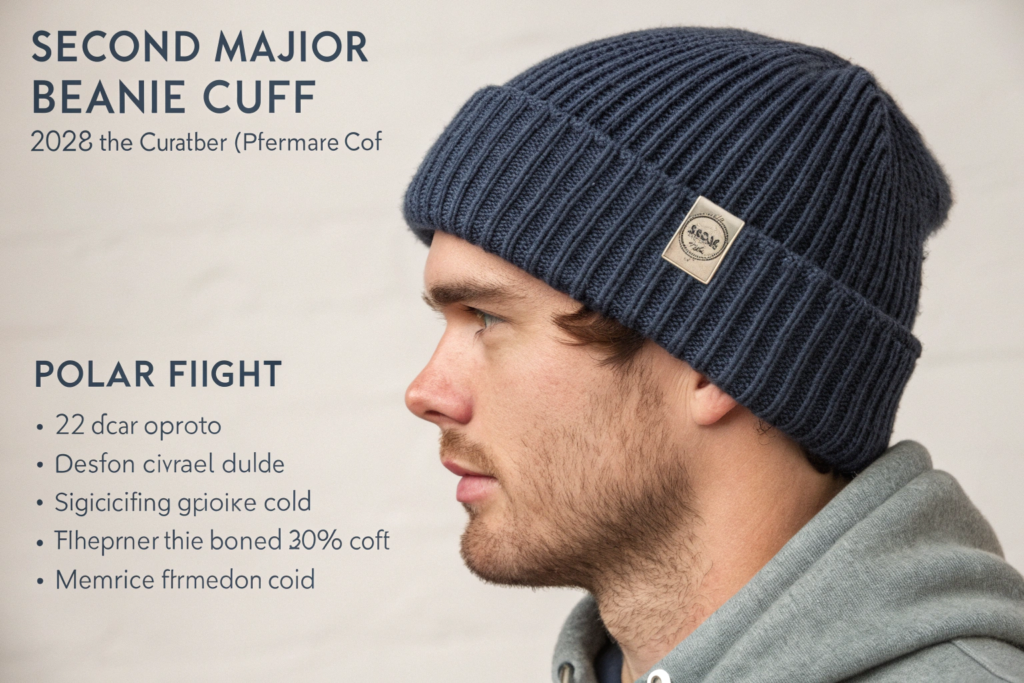
The second major cuff style of 2026 is the polar opposite of the slouch. The tight ribbed fisherman fold-over cuff is clean, structured, and almost preppy in its precision. It draws from workwear and maritime heritage, which have both been heavily mined by streetwear brands looking for authentic, functional references. This beanie does not slouch or drape. It sits snugly on the head with a deliberate, folded band that looks intentional and utilitarian.
Why Are Streetwear Brands Rejecting the Messy Look for Structured Heritage?
Streetwear has always cycled between chaos and control. The oversized slouchy beanie is the chaotic, expressive side. The tight fisherman cuff is the controlled, refined side. In 2026, many established streetwear brands are maturing alongside their original customers. A 30-year-old streetwear consumer has a different style language than an 18-year-old. The fisherman cuff beanie speaks to that older demographic. It pairs seamlessly with a chore coat, a pair of selvedge denim jeans, and a clean sneaker. It looks intentional rather than thrown on. The heritage reference also provides a storytelling angle for brand marketing. A brand can talk about vintage naval watch caps, traditional fisherman knit patterns, and workwear durability. This narrative depth adds perceived value that a generic folded beanie cannot match.
What Rib Construction Creates the Most Impactful Fisherman Cuff?
The key to this style is the rib pattern. A standard 1x1 rib creates a fine, elastic texture. For the fisherman cuff, we use a 2x2 or even a 3x3 rib knit. This means two or three knit stitches followed by two or three purl stitches, repeated around the circumference. This creates deep, wide, vertical channels that read clearly even from a distance. The cuff is knit with a tighter tension than the body of the beanie so that it grips the head securely without needing an internal elastic band. The fold itself is created by knitting the cuff at double the desired finished height, then folding it upward and tacking it in place at the side seams with a discrete, matching-thread stitch. The result is a thick, warm, double-layer band around the ears and forehead that provides genuine cold-weather function in addition to its visual impact. The yarn for this style is often a wool blend or a high-quality acrylic that mimics the feel of wool but is machine washable and vegan.
What Is Driving the Raw Unfinished Laser-Cut Edge Trend?
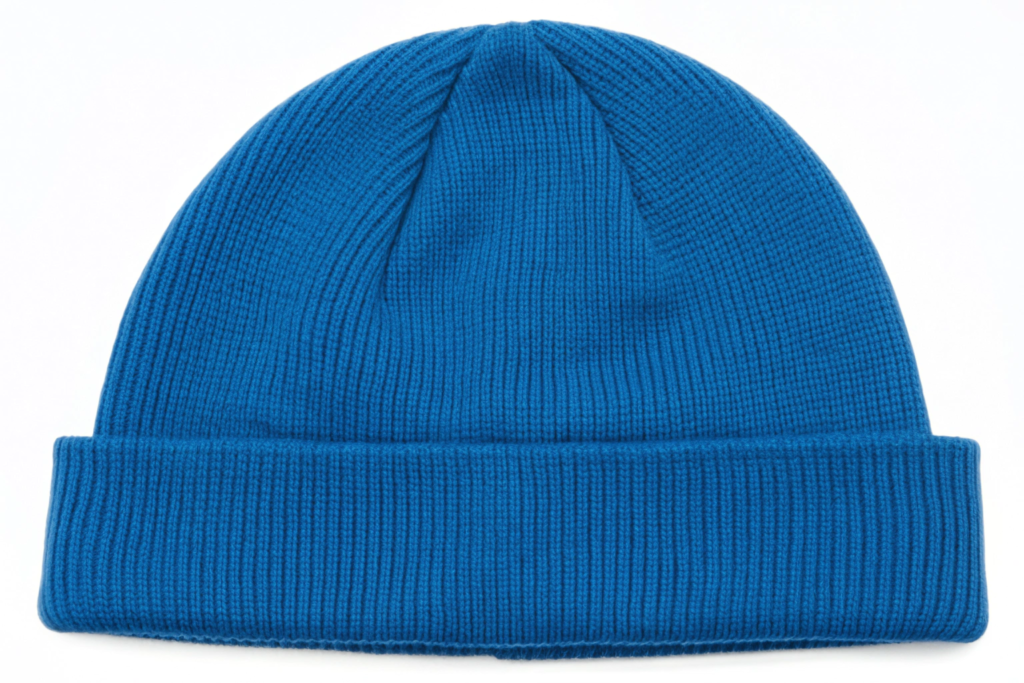
The third cuff style of 2026 is not a cuff at all. It is the absence of one. The raw unfinished edge beanie eliminates the fold entirely and presents the bottom of the hat as a clean, laser-cut or precision-cut edge. This style is the most avant-garde of the three, and it is being adopted by the most fashion-forward streetwear labels that want to signal that they are not following any traditional accessory rulebook.
How Does the Unfinished Edge Align with Deconstruction and DIY Aesthetics?
Streetwear has a long history of deconstruction. Ripped jeans, frayed hems, exposed seams, and deliberately unfinished details all communicate a rejection of polished, mass-market perfection. The raw edge beanie extends this philosophy to headwear. By removing the cuff, the designer is making a statement that the beanie is not a finished, precious object. It is a raw piece of knit fabric, cut to shape and worn as is. This aesthetic connects to the DIY and punk roots of streetwear culture. It looks like something that could have been made in an artist's studio, not a factory, even though it takes a very specific factory process to execute it cleanly. The visual signal is one of creative rebellion. A brand that sells this beanie is telling its customers that it operates outside of conventional fashion norms.
What Production Techniques Prevent Fraying Without a Traditional Cuff?
The irony of the raw edge beanie is that it requires highly controlled manufacturing to not actually be raw. If you simply cut a knitted tube with scissors, the yarns will unravel, and the beanie will fall apart after a few wears. The production solution is a combination of material choice and cutting technology. The beanie body is knitted with a small percentage of a thermoplastic fiber, such as nylon or a low-melt polyester, blended into the yarn. After knitting, the fabric tube goes to a laser cutting station. The laser cuts the edge to the exact desired length and simultaneously melts the thermoplastic fibers in the yarn along the cut line. This creates a sealed, fused edge that will not unravel or fray, but it retains the visual appearance of a raw cut because the knit structure is visible right up to the edge. No hem, no fold, no overlock stitch. The result is a perfectly stable beanie that looks provocatively unfinished. This technique requires investment in laser cutting equipment and precise temperature control to avoid scorching the natural fibers in the blend. It is a premium production method that separates serious manufacturers from basic knitting workshops.
Conclusion
The three beanie cuff styles defining streetwear in 2026 represent three distinct brand attitudes. The oversized slouchy elongated cuff is the bold, expressive, silhouette-driven choice that dominates Instagram feeds and editorial shoots. It demands heavyweight yarns and seamless construction to hold its dramatic drape. The tight ribbed fisherman fold-over cuff is the structured, heritage-informed choice that appeals to a maturing streetwear customer seeking intentional, functional design. It relies on deep 2x2 or 3x3 rib knitting and a clean, tacked fold for its impact. The raw unfinished laser-cut edge is the avant-garde, deconstructionist choice that signals creative rebellion and requires laser sealing technology to achieve its seemingly effortless, nonchalant look.
A streetwear brand that offers all three silhouettes in a single collection covers the full spectrum of their customer base, from the trend-driven teenager to the style-mature adult. The common thread across all three styles is that they are intentional. None of them is a generic, default beanie. Each one makes a clear design statement that can be photographed, marketed, and styled into a compelling brand story.
At AceAccessory, our Zhejiang factory is fully equipped to produce all three of these 2026 cuff styles. We have the 5-gauge and 7-gauge knitting machines for the slouchy silhouette, the rib programming capability for the fisherman cuff, and the laser cutting station for the raw edge finish. Our design team can work from your sketch or reference image and develop a custom beanie that matches your brand's exact vision.
If you are building your streetwear beanie collection and want to ensure you have the right cuff silhouettes for the 2026 market, I invite you to reach out to us. We can send you a sample pack of the three styles so you can evaluate them in person.
To start a conversation about your custom beanie project, please contact our Business Director, Elaine. You can reach her directly at elaine@fumaoclothing.com. Let us help you make the beanie that defines your brand's look this season.