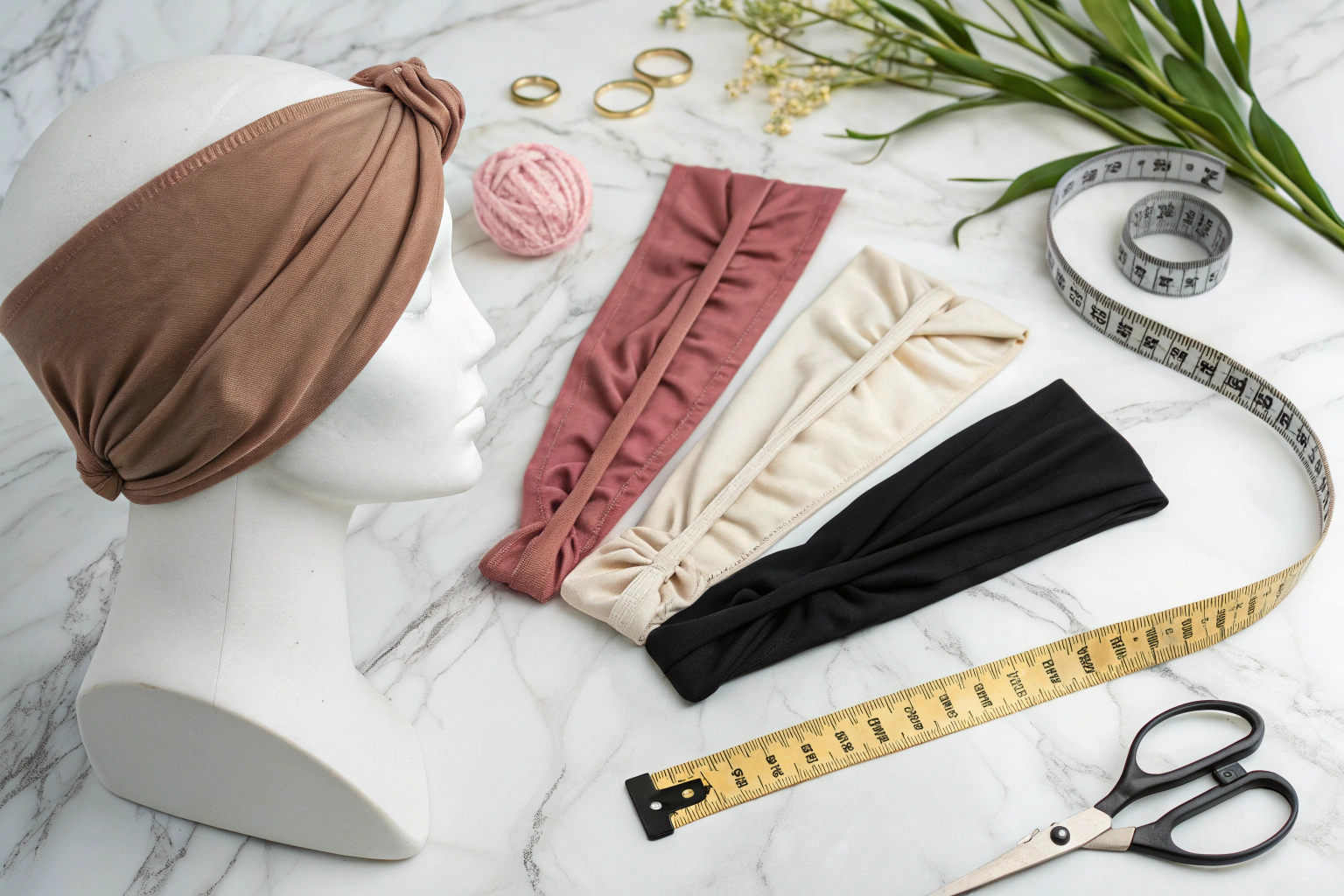
A woman with a glorious cascade of thick, curly hair once stood in my showroom, looking defeated. She had a bag full of hair bands she had bought online, all of which had failed her. The narrow, delicate bands snapped as soon as she tried to stretch them over her volume. The thin elastic bands disappeared into her curls, providing no hold. She thought headbands simply were not made for her hair type. I handed her a wide, 4-inch yoga-style band with internal silicone grip and watched her expression change from skepticism to surprise, then to delight. The band held her hair back without slipping, without snapping, and without giving her a headache. It was not that headbands did not work for her. It was that she had been buying the wrong width.
The most common 2026 hair band widths for different hair types are 1 to 1.5 inches for fine and short hair, 2 to 3 inches for medium to normal hair, and 4 to 6 inches for thick, curly, and coily hair. These widths are not arbitrary fashion choices. They are functional responses to the volume, weight, and texture of the hair they must manage. A band that is too narrow for thick hair will twist, slip, or snap. A band that is too wide for fine hair will overwhelm the head, look disproportionate, and slide backward because there is not enough hair bulk to anchor it.
At our factory in Zhejiang, we are a professional manufacturer and exporter of accessories. We produce hair bands across this full width spectrum, and we have learned that width specification is the single most important functional design decision for a hair band program. I want to break down the specific widths, the hair types they serve, and the internal construction features that make each width perform correctly for its intended user.
What Width Range Is Best for Fine, Thin, or Short Hair?
Fine hair presents a specific engineering challenge. It has low volume and low weight. A wide, heavy headband will look and feel oversized on a person with a small frame or delicate features. More critically, a wide band lacks the hair bulk to anchor it securely. The band will slide backward, riding up the back of the head, because there is simply not enough hair to create friction against the inner surface of the band.
The optimal width range for fine, thin, or short hair is 1 to 1.5 inches. This narrow profile is proportional to the head and face, and it provides enough surface area to hold back the hair without overwhelming it. Within this width range, two styles are dominant: the flat, seamless elastic band, and the slim knotted fabric band with a soft, wire-free construction. These bands are lightweight, low-profile, and gentle on the scalp. The closure mechanism is a critical design detail for this width. A thick, bulky knot or a heavy metal connector creates a pressure point that can cause headaches. The best designs use a continuous, seamless elastic loop or a small, flat fabric knot that sits comfortably behind the ear or under the hair.
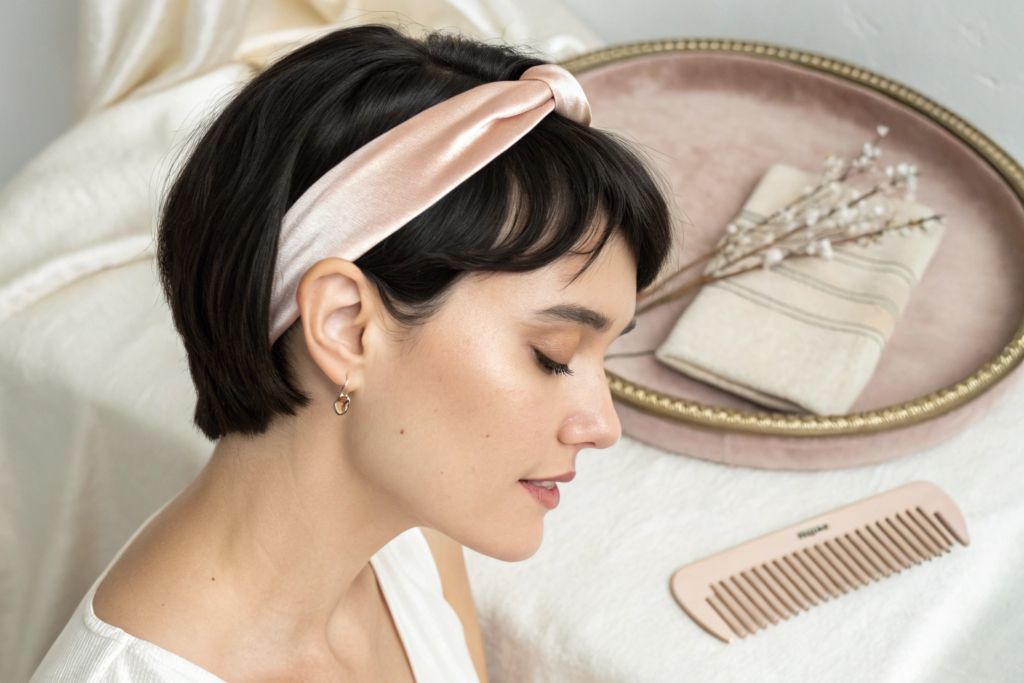
Why does a narrow band require less internal grip for fine hair?
Fine hair has a smooth cuticle and less natural texture. It provides less friction against a fabric surface. A thick band relies on the volume of hair pressing against it to stay in place. A narrow band, designed for fine hair, compensates for the lack of volume with a light, even pressure distributed across the entire loop. Because the hair is lightweight, this gentle pressure is sufficient. Adding a heavy silicone grip strip to a narrow band intended for fine hair can actually be counterproductive. The grip can pull on the delicate strands, causing breakage. The band should rely on its fit and its lightweight construction, not aggressive grip materials.
What are the best closure types for slim bands to avoid headaches?
A large, hard plastic adjuster or a heavy metal charm on a slim band creates a concentrated pressure point against the sensitive area behind the ear. After an hour of wear, this pressure becomes a headache. The best closure for a slim, fine-hair band is a continuous, seamless elastic loop with no hardware at all. The band is simply pulled on like a bracelet for the head. If an adjustable closure is required, a small, flat fabric knot or a narrow, silicone-backed elastic with a tiny, flat metal slider that sits flat against the neck is the preferred solution.
What Width Range Provides the Best Grip for Medium and Normal Hair?
Medium or "normal" hair is the most common hair type, and it benefits from the most versatile width range: 2 to 3 inches. This width provides a balanced look that is neither too slim nor too dominant. It offers enough surface area to hold back a moderate volume of hair securely, and it is wide enough to accommodate decorative elements like a central knot, a twist, or a subtle print.
Within this category, the internal construction begins to include performance features that are less common in the narrow, fine-hair bands. A thin, clear silicone grip strip sewn or printed along the inner lining is the most common addition. This grip strip provides a gentle, non-slip friction against the hair, keeping the band in place during moderate activity. The band is typically constructed with a flexible internal frame—either a soft, memory-retaining plastic core or a densely packed fabric padding—that helps it maintain its shape on the head without being rigid. The closure is often a soft elastic gather or a hidden velcro adjustment at the nape.
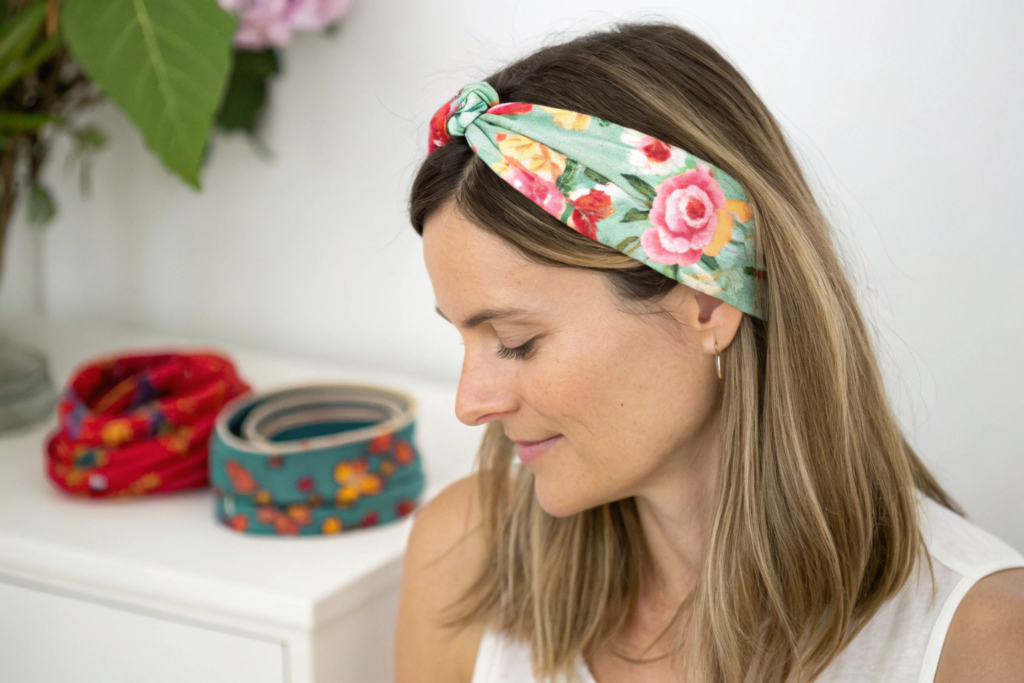
How does an internal silicone grip strip change the performance of a 2-inch band?
The silicone strip is a narrow, clear, slightly tacky line applied to the inside of the band, typically on the upper and lower edges. When the band is placed on the head, the silicone makes contact with the hair and the scalp, creating a high-friction interface. This prevents the band from sliding backward as the wearer moves. For a medium-hair band, the silicone strip provides the hold that the hair volume alone might not guarantee. The silicone is soft, hypoallergenic, and does not pull the hair when the band is removed.
Why is a flexible internal frame preferred over a rigid plastic core?
A rigid plastic core, common in cheap fashion headbands, creates a fixed clamping force. The band pinches the temples and causes a headache within an hour. A flexible internal frame made from a thin, memory-retaining plastic or a densely rolled fabric padding adapts to the individual shape of the wearer’s head. It provides shape and structure without a fixed pressure point. The band feels comfortable for extended wear, which is essential for a product positioned as a daily accessory.
What Width and Structural Features Do Thick, Curly, and Coily Hair Need?
Thick, curly, and coily hair types present a challenge of volume, weight, and texture. The hair itself is substantial. It pushes outward from the scalp. A narrow band will simply disappear into this volume or be pushed off by the spring-back force of the hair. A band designed for this hair type must have significant width to cover and manage the volume, and it must have serious structural integrity to hold its position.
The optimal width range for thick, curly, and coily hair is 4 to 6 inches. This is the category of wide yoga bands, turban wraps, and structured knotted bands. The width is functional. It covers the larger surface area of the head, and it provides enough fabric-to-hair contact to generate the friction necessary for hold. The internal construction must include an aggressive, continuous silicone grip strip, and the band itself must be made from a sturdy, non-stretch or low-stretch fabric that will not distort under the pressure of the hair. Stretchy, thin fabrics will warp and lose their shape. The closure must be robust: a wide, reinforced velcro panel or a secure, adjustable elastic with a heavy-duty slider.
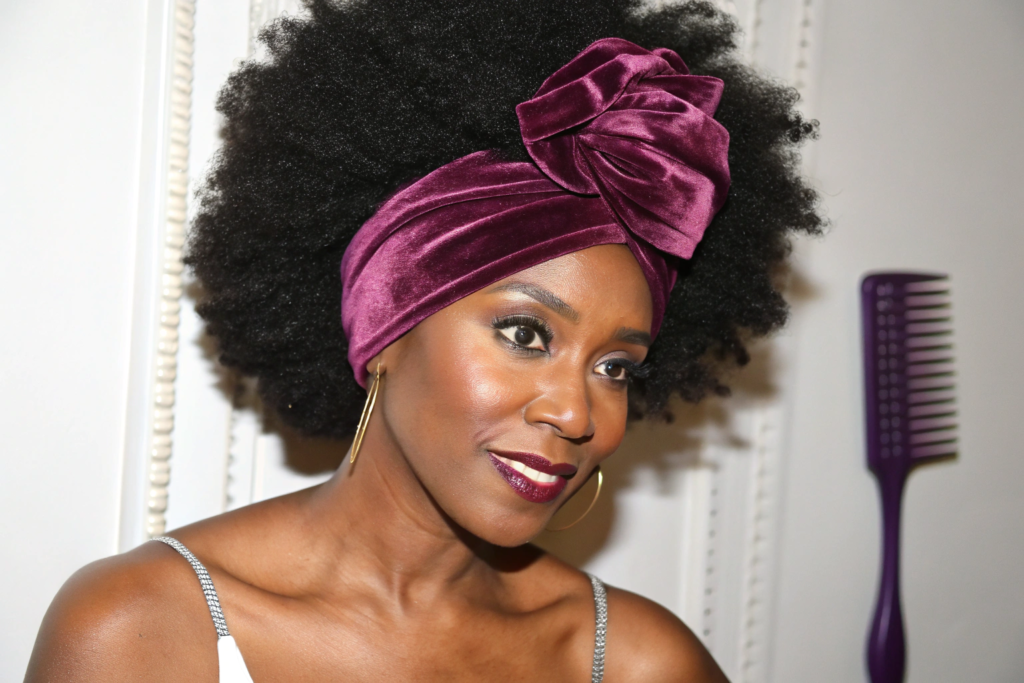
Why do wide bands need a continuous silicone grip line to prevent slipping?
Curly and coily hair textures have a natural tendency to push outward and resist compression. A band placed over this hair is constantly being pushed back. A small patch of silicone grip is not sufficient. The grip must be a continuous line, or preferably two parallel lines, running along the entire inner circumference of the band. This creates a full ring of friction that counteracts the outward pressure of the hair. The grip must be strong but not sticky or damaging to the hair cuticle.
What is the best internal padding for a turban-style wide band?
A turban-style wide band is a fashion statement as much as a functional tool. It needs to hold its shape—a rounded, voluminous dome on the top of the head—without collapsing. The best internal padding for this is a lightweight, breathable polyester fill encased in a cotton lining. This padding provides the pillowy volume that creates the turban silhouette without adding significant weight. The padding must be needle-punched to prevent it from shifting and clumping during wear and washing.
Conclusion
The width of a hair band is not a style choice; it is the primary functional determinant of whether the band will work for the intended wearer. A 1-inch band is engineered for the light volume and delicate proportions of fine hair. A 2-to-3-inch band provides the versatile grip and comfortable structure for medium hair. A 4-to-6-inch band delivers the structural integrity and wide coverage required by thick, curly, and coily hair. Each width category requires distinct internal features—grip strips, frame types, and closures—that are tailored to the specific holding challenge of that hair type.
We have walked through the specific width ranges, the hair types they serve, and the internal engineering features that make each width function correctly. A customer with thick, curly hair who has spent a lifetime fighting with narrow bands is waiting for a product that actually works. The right width is the answer.
If you are developing a hair band collection and want to specify the correct widths, internal grip features, and closures for your target demographic, we can provide a width sample set and a consultation on the best construction for each category. Our Business Director Elaine manages our hair accessory programs and can coordinate the sampling process. Contact her directly at elaine@fumaoclothing.com. Every head deserves a band that fits. Let’s build the collection that covers them all.