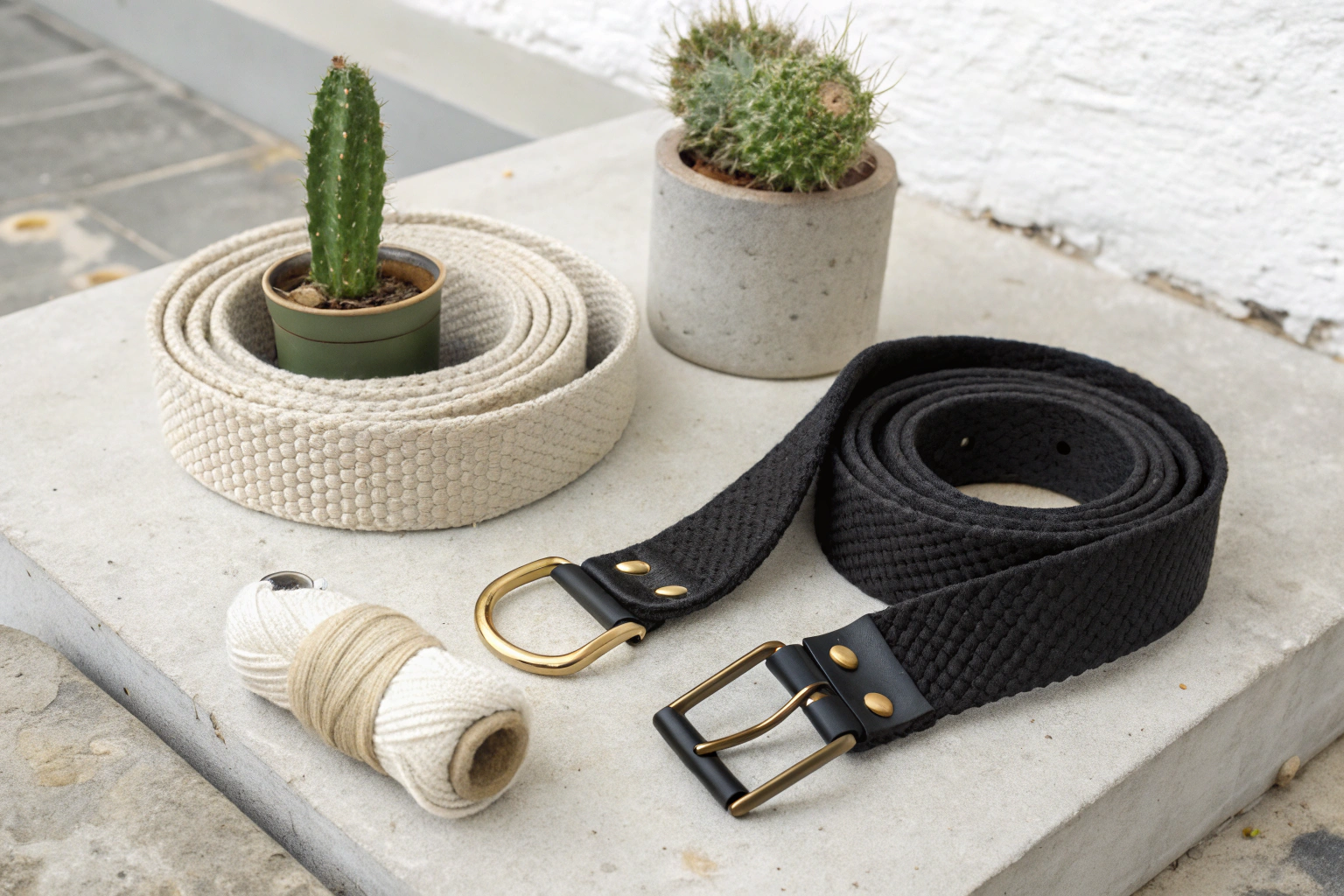
I recently had a conversation with a buyer for a Scandinavian sustainable brand who was stuck on a single decision. She had designed a unisex belt collection, but she could not decide between a heavy cotton canvas fabric belt and a smooth, animal-free vegan leather belt. Her customers wanted durability, but they also wanted a polished look that could transition from a casual outfit to a business-casual dinner. She held a sample of each in her hands, tugged on them, flexed them, and asked me the core question: "What is actually the difference under the surface?"
The fundamental difference between a fabric belt and a vegan leather belt from China lies in the material structure, the durability profile, and the aesthetic category. A fabric belt is a woven textile product. Its strength comes from the interlacing of yarns, typically cotton, nylon, or recycled polyester. It is inherently casual, breathable, and machine-washable. A vegan leather belt is a composite material product. Its surface is a synthetic or plant-based polymer layer bonded to a textile backing, designed to mimic the look and hand-feel of animal leather. It is inherently more structured, polished, and suitable for both casual and semi-formal settings. One is honest textile. The other is engineered leather simulation.
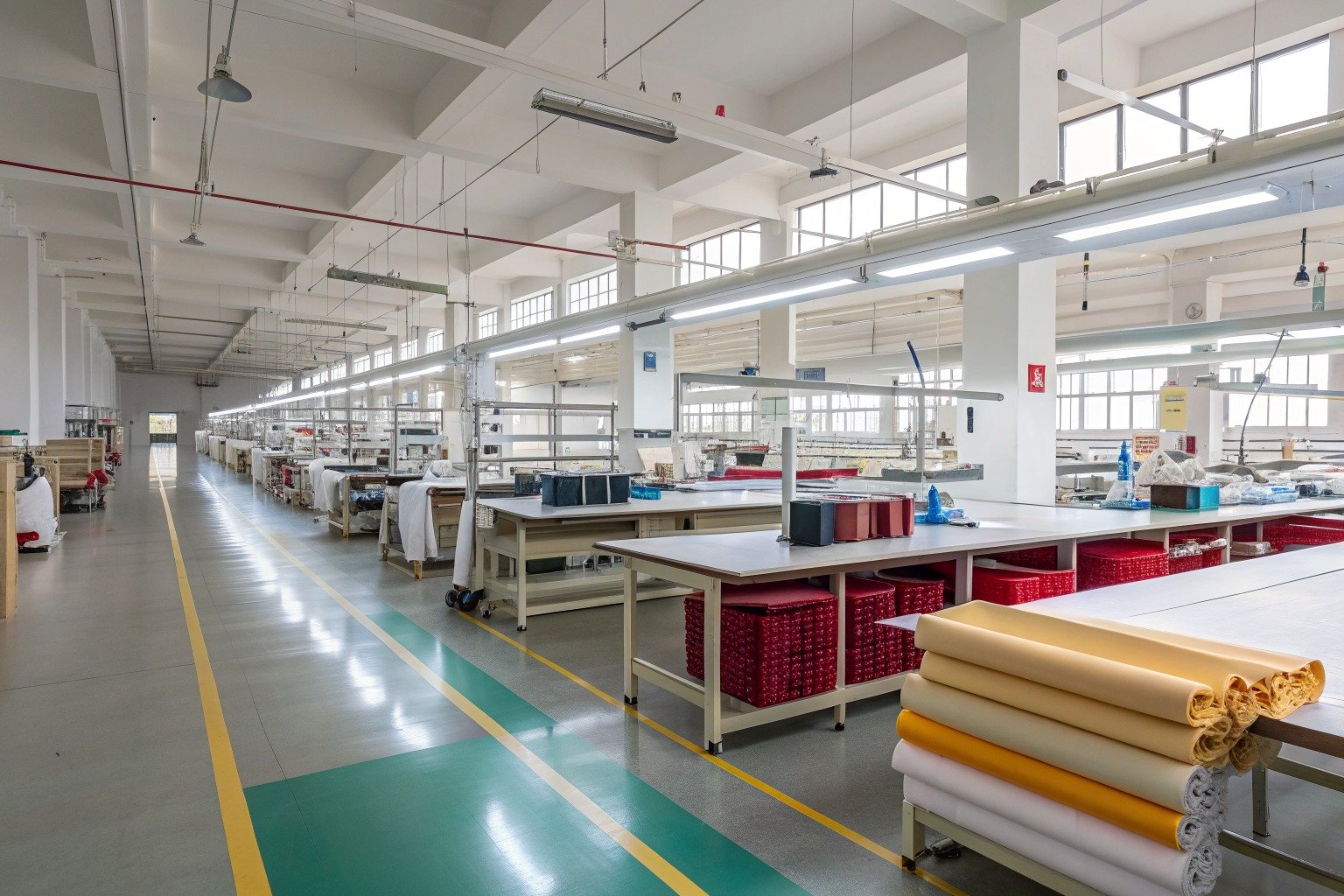
At our factory in Zhejiang, we are a professional manufacturer and exporter of accessories, and we produce both categories in significant volumes. I want to break down the specific material technologies, the wear characteristics over time, and the sustainability profiles of each, so you can make an informed decision for your brand.
What Is the Structural Difference Between Woven Fabric and Vegan Leather?
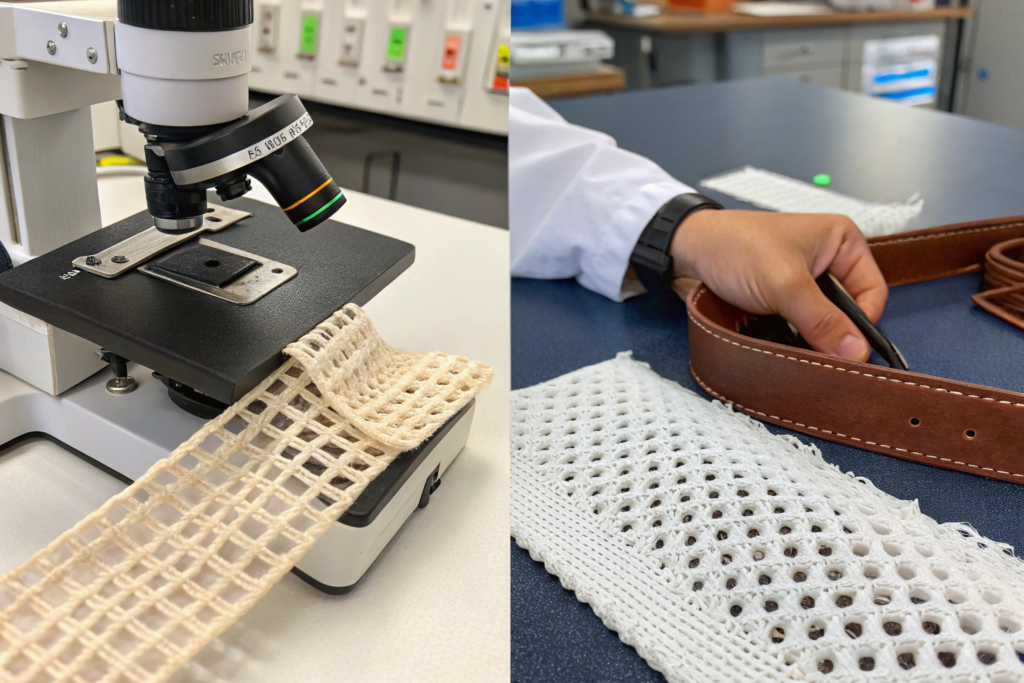
The difference begins at the microscopic level. A fabric belt is a textile. It is constructed from yarns—cotton, nylon, polyester, or a blend—that are interlaced on a loom to form a flat, flexible webbing. The structure is a grid. There are tiny air gaps between the yarns, making the belt inherently breathable and flexible. The edge of a fabric belt is finished by folding and stitching, or by heat-sealing if it is synthetic. The surface is the yarn itself. There is no separate coating.
A vegan leather belt is a composite. It consists of at least two distinct layers: a base textile layer for strength, usually a polyester or recycled microfiber fabric, and a surface polymer layer for appearance, usually polyurethane (PU), polyvinyl chloride (PVC), or a newer plant-based polymer like cactus or apple fiber composite. These layers are bonded together using heat, pressure, and adhesives. The surface layer is solid and non-porous. It is embossed with a leather-like grain pattern to create the visual and tactile illusion of animal leather. The edge of a vegan leather belt is finished with a painted edge coat, just like a real leather belt, to seal the composite layers and create a polished look.
How does the woven grid structure of a fabric belt give it strength?
The strength of a woven fabric belt comes from the interlacing of the warp yarns, which run lengthwise, and the weft yarns, which run crosswise. The tightness of this interlacing, measured in picks per inch, determines the belt’s tensile strength and its resistance to stretching. A high-quality cotton webbing belt has a dense weave that distributes pulling force across thousands of individual yarns. Each yarn contributes a small amount of its tensile strength to the whole. This distributed structure means the belt can withstand significant load before failing, and if a single yarn eventually frays, the surrounding yarns still hold. This tensile strength of woven webbing resource explains the mechanical principles.
Why is the polymer coating on vegan leather solid instead of woven?
A woven surface scatters light and creates a matte, textured appearance. This is ideal for casual wear but cannot replicate the smooth, glossy, continuous surface of polished animal leather. The solid polymer coating on vegan leather is applied in a liquid or film state and cured into a seamless, non-porous sheet. This sheet can be highly polished to a mirror gloss, deeply embossed with a crocodile or ostrich grain pattern, or given a matte, rubberized finish. The solid surface is what creates the "dressy" aesthetic. However, it is also what makes the belt non-breathable and more susceptible to surface cracking at the flex points over time, depending on the quality of the polymer and the backing fabric bond.
How Do the Two Materials Age and Wear Differently Over Time?
A belt is a high-wear product. It is pulled, bent, and rubbed against belt loops every single day. The way a material ages is a critical part of the product’s value proposition. A fabric belt and a vegan leather belt have fundamentally different aging trajectories.
A fabric belt wears in. The fibers soften, the weave relaxes slightly, and the color may fade gradually with washing and sun exposure. The result is a comfortable, lived-in look that many consumers associate with authenticity and heritage. The primary failure mode for a fabric belt is fraying at the edge or the tip, or the eventual tearing of the fabric if it is snagged on a sharp object. A fabric belt can last for years with proper care, and it can be machine-washed.
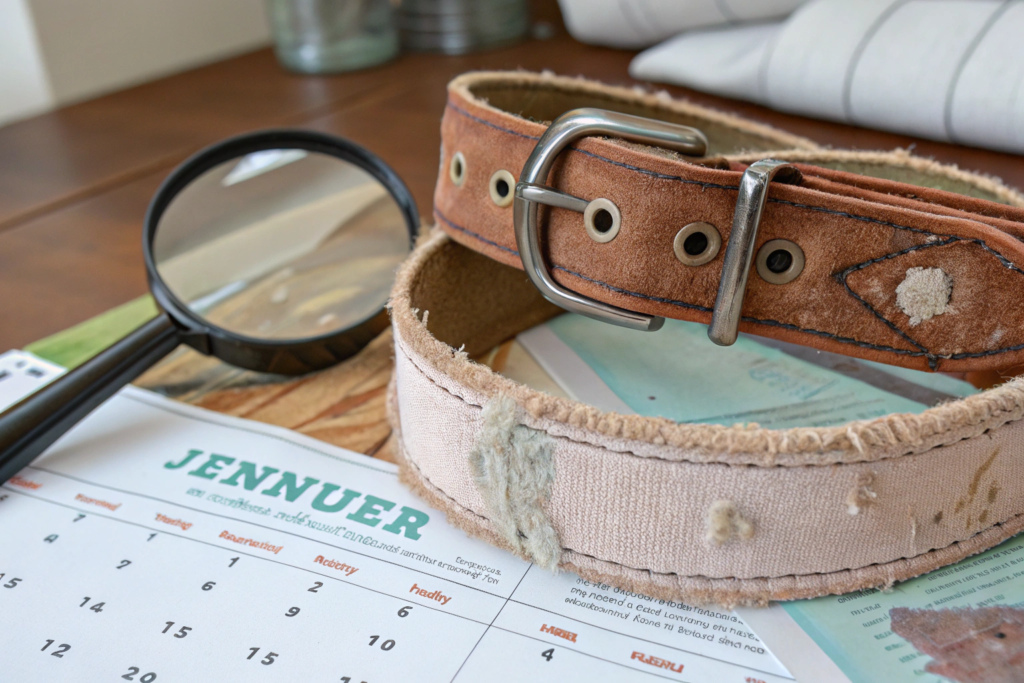
A vegan leather belt wears out. The surface polymer layer is subject to flex fatigue at the buckle hole, where the pin repeatedly bends the material. A low-quality vegan leather will crack and peel at this stress point within months. A high-quality vegan leather, with a strong textile backing and a flexible polymer formulation, will develop creases and a subtle patina of surface wear similar to animal leather but will eventually delaminate if the bond between the coating and the backing fails. The primary failure mode is surface cracking and peeling. A vegan leather belt cannot be machine-washed; it must be wiped clean with a damp cloth.
Why does a fabric belt become more comfortable with age, while a vegan leather belt may not?
Cotton and natural fiber webbing softens with mechanical flexing and washing. The fibers relax, and the weave becomes slightly more pliable. The belt conforms to the wearer’s body. A vegan leather belt’s polymer surface does not soften in the same way. The polymer’s flexibility is determined by its chemical formulation, not by mechanical break-in. Over time, the polymer may become slightly more flexible, but it will not develop the soft, fabric-like hand-feel of a broken-in webbing belt.
What is the "flex fatigue" point on a vegan leather belt?
The buckle hole is the most stressed point on any belt. Each time the wearer fastens the belt, the leather or leather alternative bends sharply around the buckle pin. A woven fabric belt can bend at this point indefinitely because the individual yarns slide past each other. A solid polymer coating on vegan leather cannot slide. It stretches on the outer edge of the bend and compresses on the inner edge. Repeated stretching and compression cycles cause micro-cracks in the polymer. Over time, these micro-cracks grow and connect, eventually becoming visible cracks. This is flex fatigue.
What Are the Sustainability Differences Between Fabric and Vegan Leather?
Both fabric belts and vegan leather belts are marketed as "sustainable" or "cruelty-free," but their environmental profiles are quite different. The sustainability of a product is determined by its raw material source, its manufacturing process, and its end-of-life pathway. A consumer evaluating these two belts through a sustainability lens should understand the trade-offs.
A fabric belt made from GOTS-certified organic cotton has a clear, simple sustainability narrative. The raw material is a renewable plant fiber grown without synthetic pesticides. The weaving process is mechanical and uses minimal chemicals. At the end of its life, a pure cotton belt can be composted or recycled into textile fiber. The narrative is circular. A vegan leather belt has a more complex narrative. The base textile layer can be made from recycled PET bottles, which diverts plastic waste from landfills. The polymer coating can be made from plant-based materials like cactus, apple, or corn starch, reducing reliance on fossil fuels. However, the bonding process involves chemical adhesives, and the end-of-life pathway for a composite material is industrial recycling, not home composting. The belt cannot simply decompose. The sustainability story is strong on material innovation and waste diversion but more complex on end-of-life circularity.
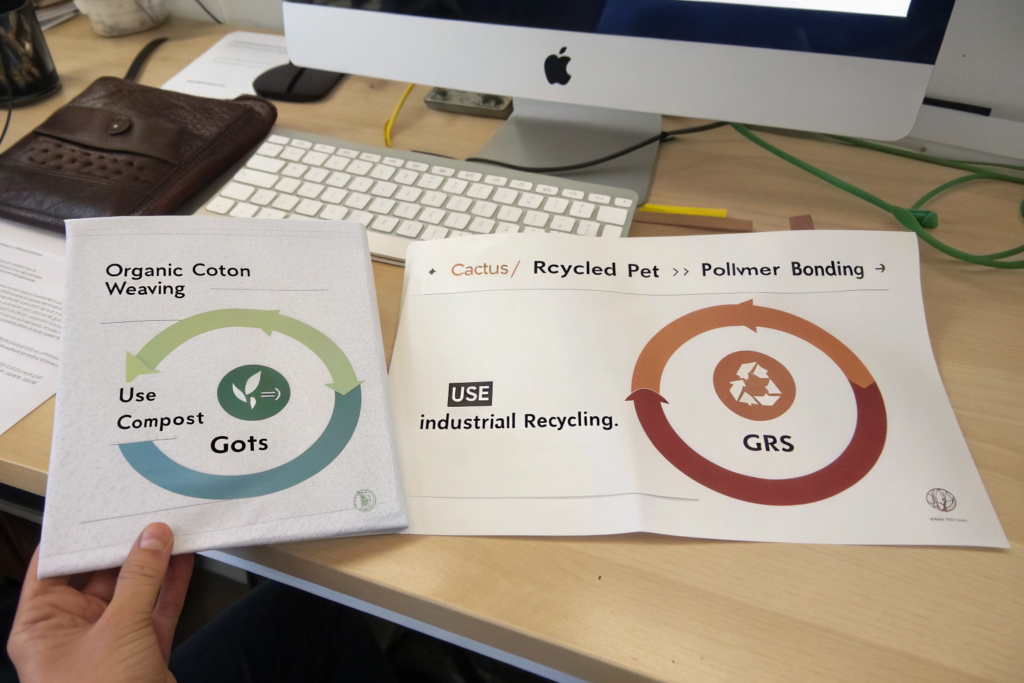
How does GOTS certification apply to fabric belts?
The Global Organic Textile Standard (GOTS) certifies that a textile product is made from organic fibers and processed in an environmentally and socially responsible manner. A fabric belt carrying the GOTS label tells the consumer that the cotton was grown organically, the weaving mill met strict environmental criteria for wastewater treatment and chemical use, and the workers were treated fairly. This certification is the gold standard for fabric sustainability. We can produce fabric belts with full GOTS chain-of-custody certification.
What is the difference between bio-based vegan leather and recycled PU vegan leather?
Bio-based vegan leather uses a polymer coating derived partially from renewable plant materials, such as cactus starch, corn dextrose, or apple waste. The carbon in the polymer comes from plants, not fossil fuels. Recycled PU vegan leather uses a conventional polyurethane coating, but the base textile layer is made from recycled polyester, and the PU itself may contain some post-industrial recycled content. Both are improvements over virgin petroleum-based materials. Bio-based has the advantage of a renewable carbon source. Recycled has the advantage of diverting existing plastic from landfills. The choice between them depends on the brand’s specific sustainability messaging.
Conclusion
The difference between a fabric belt and a vegan leather belt from China is a decision about structure, wear character, and aesthetic category. A fabric belt is a woven textile. It is strong, breathable, machine-washable, and ages with a soft, comfortable patina. It lives in the casual and outdoor world. A vegan leather belt is a composite material. It is structured, polished, and designed to replicate the look of animal leather. It lives in the smart-casual and formal world. It will not breathe or soften like fabric, but it will provide a dressier silhouette.
We have explored the microscopic structural differences, the divergent wear and aging patterns, and the distinct sustainability profiles of each material. The right choice depends entirely on your brand’s aesthetic, your customer’s lifestyle, and the story you want to tell.
If you are developing a belt collection and want to evaluate samples of our GOTS-certified organic cotton webbing, our cactus-based vegan leather, or our recycled microfiber vegan leather, we can provide a material sample pack with full specification sheets and certification documentation. Our Business Director Elaine manages our belt accessory programs and can coordinate the sampling process. Contact her directly at elaine@fumaoclothing.com. Every material tells a story. Let’s make sure yours is the right one for your customer.